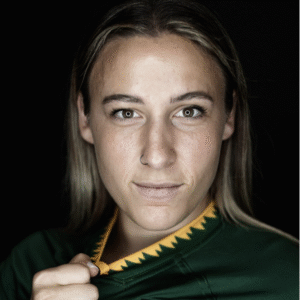

POCKET ROCKET – Exclusive interview with Para Sprint star Sophie Hahn
Team GB’s Sophie Hahn speaks exclusively to Helen M Jerome as she goes into the World Para Athletics Championships in New Delhi. She’s already won everything available in her impressive career across a dozen years, including an unprecedented Grand Slam of titles.
Now Hahn looks to the success of the Lionesses at the Euros and the Red Roses in the Rugby World Cup to spur her on. She’s reunited with her first coach and raring to go. But can she get into the finals – and even on the podium – in the T38 100m and 200m again…
Sophie Hahn is overjoyed. Like me she has just watched Amy Hunt winning silver for Team GB in the 200m in the World Athletics Championships in Tokyo. Unlike me she counts Amy Hunt as her friend, who was also her training partner. She recalls Hunt’s decision to take time out from competing to study for her degree at Cambridge University, followed by an horrendous injury, before her triumphant return to sprinting. “Hats off to Amy, to bounce back,” says Hahn, “and now you’re second in the world!”
Of course, Sophie Hahn is no stranger to setbacks herself. Now 28, she was born with cerebral palsy – which for her means that the right side of her body is weaker than the left – and she came into para-athletics aged just 15. She hasn’t looked back since.
As Hahn does her warm weather training to prepare for the 2025 World Para Athletics Championships in New Delhi, she can consider her many previous triumphs. I’ve been a fan and followed her closely since 2014, a year after she took gold in the T38 100m sprint, and set a new world record at the 2013 IPC Athletics World Championships.
At the Rio Paralympics in 2016 she won gold in the 100m, and grabbed gold in both the 100m and 200m at the 2017 World Champs in London. When she won gold again in the 100m in the 2018 Commonwealth Games on the Gold Coast in Australia, the coveted Grand Slam was hers. She became the first female track and field athlete to hold gold medals in the same event from the World Championships, Paralympic Games, European Championships and Commonwealth Games.
So no-one was surprised when at the Dubai 2019 World Para Athletics Championships she won gold and set new world records in both the 100m and 200m. And yes, at the delayed, post-Covid Tokyo Paralympics in 2021 she again won 100m gold.
Since then it’s been silver in the T38 100m at the 2022 Commonwealth Games back home in Birmingham, and bronze in both sprints at the 2023 World Para Athletics Championships in Paris. The competition is hotting up as youngsters inspired by Hahn step up.
Fresh from another training session in Dubai before heading out to India, Sophie Hahn spoke to me with her customary focus.
How do you feel when you’re going into a big competition like this in New Delhi?
It’s almost like every race you do no matter where you are in the world, it’s the same process, it’s the same warm-up, it’s the same training, it’s the same block stop.
In terms of the place, I think it’s going to be an experience, but in terms of the track, I just treat it like it’s training.
When you’ve been through the motions, and done this many times before, nothing’s different. If you stick to a routine, then you’ll be good to go.
I get nervous about two days before, but as soon as you get me to the warm-up, it’s: right. I’m zoned in, this is my comfort zone, this is my safe space, this is where I don’t get nervous
So are you quite single-minded when you’re going into a race, almost with your blinkers on?
Yeah. I believe some athletes normally get quite nervous on the day. I probably get nervous about two days before, but as soon as you get me to the warm-up, it’s: right. I’m zoned in, this is my comfort zone, this is my safe space, this is where I don’t get nervous.
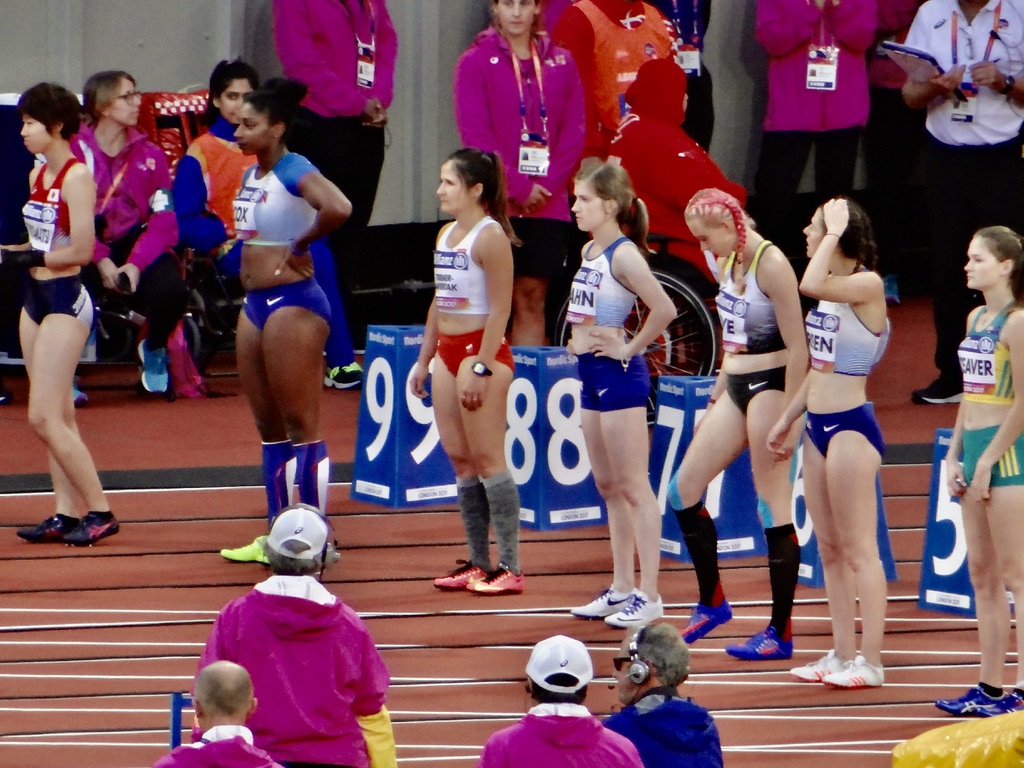
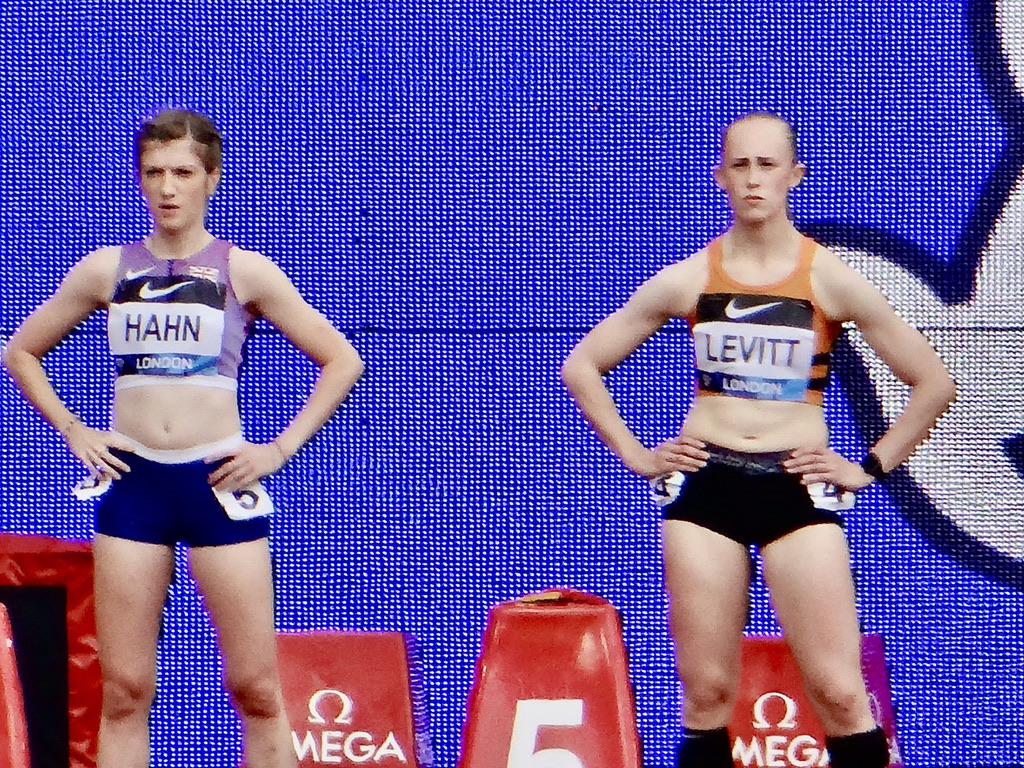
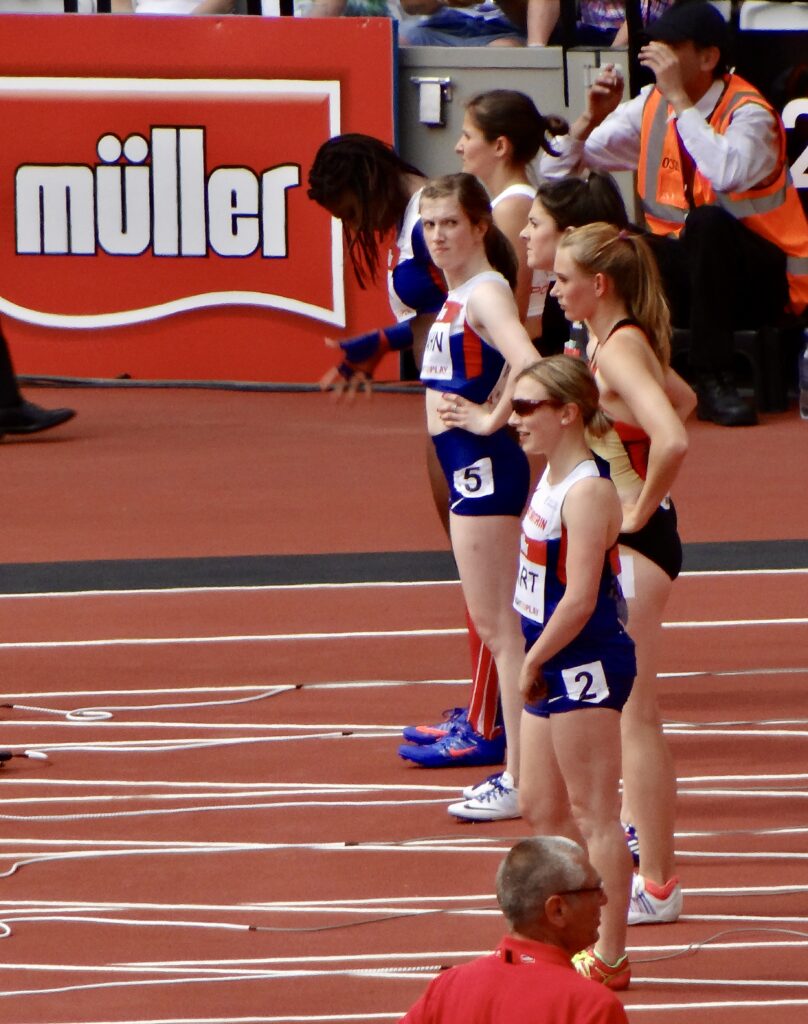
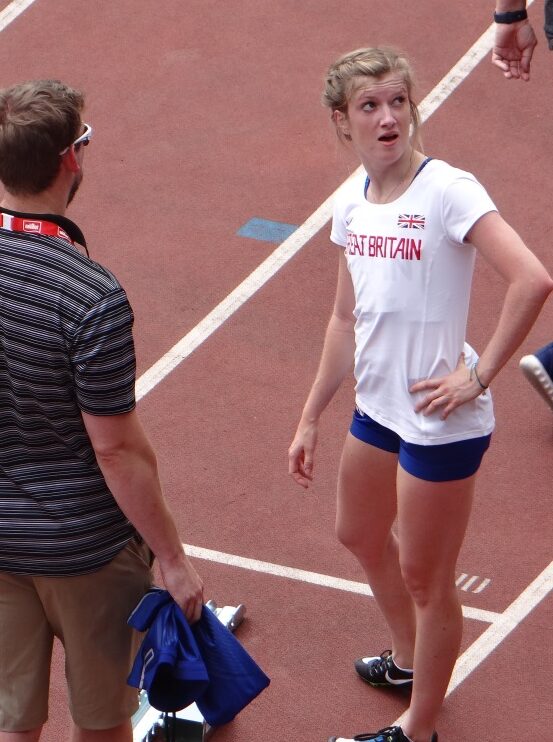
Of course, maybe a little bit of nerves creep up on the start line (below), but I’ve been doing this about 12 years now, so you learn experience. You’ve done this before, it’s not scary, you’ve been in the position before.
I presume, though, a few nerves help with things like adrenaline?
Yeah, I’d be worried if I’m not nervous at all, a little bit of nerves is good.
I think for the adrenaline, it’s almost like when you’re in the warm-up, you’re in the mindset, you get the music going, it’s like you and your coach.
Obviously the core are becoming nervous, but for me, I like to take myself away from my rivals and just focus on, let’s say, the colour of the carpet, or the colour of the spikes and just keep ticking over, just keep on clock.
So the colour can make you zone in?
Yeah, because sometimes sitting there for say half an hour, you get a bit nervous, but if you just focus on one thing or the last thing your coach said, like make sure we do tuck jumps to keep everything fired up or the muscles fired up.
So it’s just like small cues for everyone I think.
I like to take myself away from my rivals and just focus on, let’s say, the colour of the carpet, or the colour of the spikes and just keep ticking over, just keep on clock
When you go to these big meets abroad particularly, is there a difference in the quality of competitors and the setup?
Well, for sure, every year there’s always new athletes coming through, which is brilliant.
I think from the Paralympics last year in Paris, there’s been maybe six or seven of us that have all gone sub-13 seconds.
It’s amazing for the sport and of course it’s getting harder, because obviously I’ve been around a long time, I’m not getting any younger myself.
But I think it’s exciting for the sport that young people, young talent are definitely coming through to inspire the next generation.
What about the crowds – when I go to the Olympic Stadium, for the Diamond League every year, the crowds seem very knowledgeable. Is it the same when you’re competing abroad?
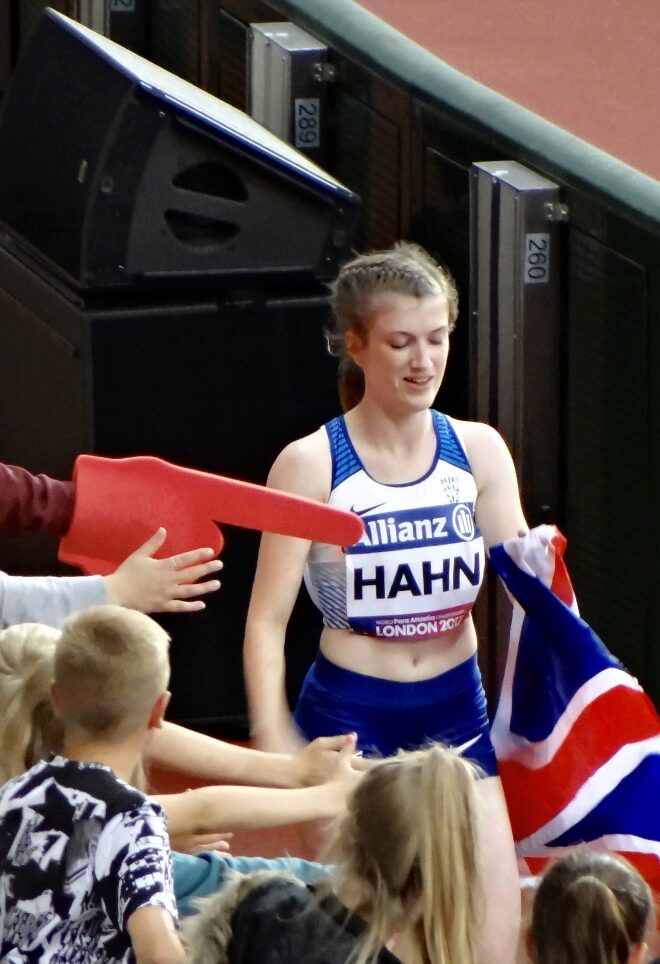
Oh, for sure. You know, the Diamond League’s always been my favourite from the competitions, with a home crowd, they really get behind you. The noise is incredible.
I can’t really explain it, but you get goosebumps from 60,000.
As a para-athlete, you don’t get the crowds like Tokyo, for example. I’m hoping in New Delhi, it’d be good to have some crowd, but they’ll probably get about half or three quarters of the crowd.
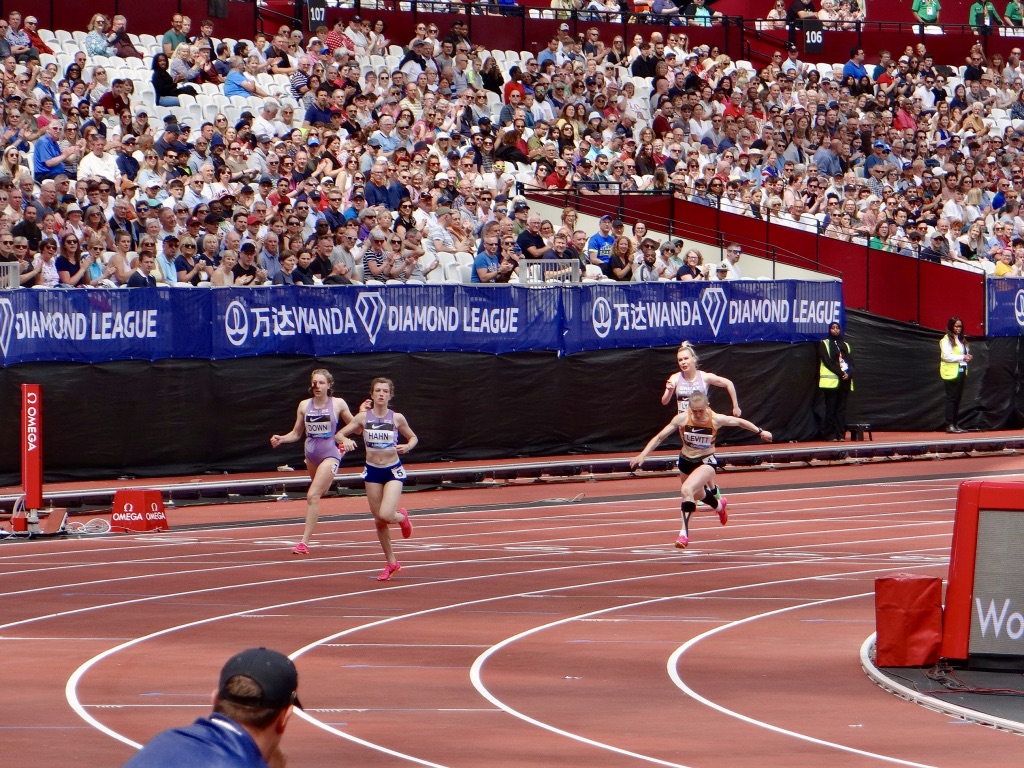
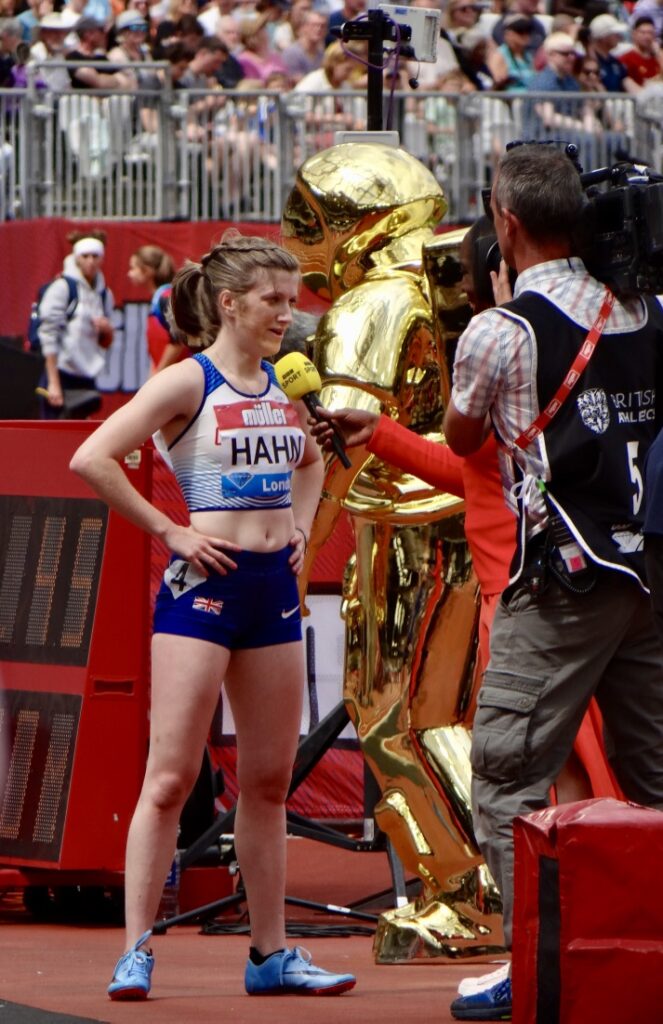
But for us, the Diamond League (below, left) is the sell-out. It’s exciting. It’s what we want.
Are you superstitious… apart from your tuck jumps, are there certain things you have to do before a race?
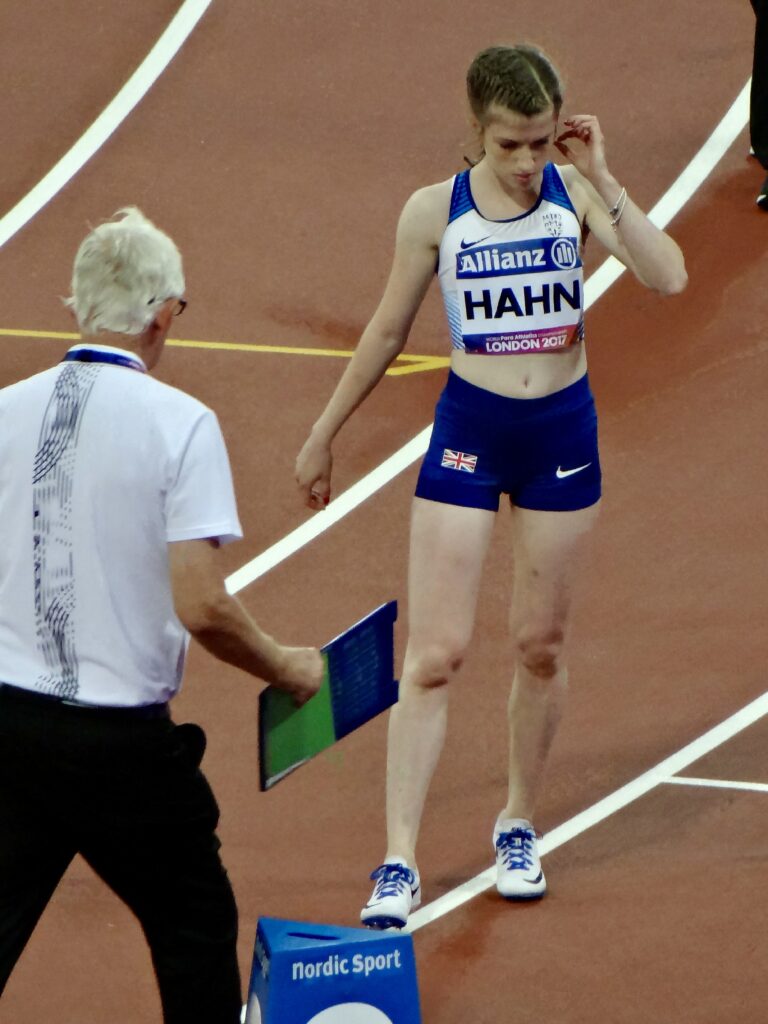
It depends on how long you’re waiting in the call room for. For example, I think we’re in the call room for about 30 minutes.
Sometimes I bring my heated trousers to keep warm, sometimes it can be quite cold in terms of air conditioning or if you’re sitting down for a long time. You’ve just got to keep moving.
Then maybe five minutes before you go to the start of the blocks, I think, right, it’s time to do a one block start, two blocks start and I’m good to go.
Do you have anything like motivational music or words, something you read, then tuck into your shoe or listen to something like ‘Chariots of Fire’?
Yeah, there’s something I say: work hard in silence and let success make all the noise. I feel like from day one I’ve always said that and as long as I can do that, that will help me a long way.
Of course, the last couple of years has been tough on the track, but it’s how you come back. And I feel like, yes, I’ve achieved what I wanted to achieve, and I’m on the comeback. But I’m like: can I get – not back where I belong – but can I get back on the podium?
With a home crowd, they really get behind you. The noise is incredible.
I can’t really explain it, but you get goosebumps from 60,000.
Are there certain things you’ve said to yourself or that people have said to you that you keep in your mind to push you forward?
I think it’s just like don’t give up. Basically it’s almost like I’ve achieved what I wanted to achieve in my life and my career.
But have I started what I’ve finished or finished what I’ve started? For me, in terms of motivation, that’s one thing that’s obviously key.
Of course it is getting hard, I’m not going to lie. But for me, if I make the podium, then happy days.
There’s two or three stages to your career. So before you started competing, how did you find out you were quite good at running fast?
Basically, before I started athletics, I did a Level 1 and 2 Animal Care and Equine, went to college to study, and started a BTEC.
Then, in 2012, the Olympic and Paralympic Games really inspired me, with the likes of Jonnie Peacock, Hannah Cockroft.
After the games, there was talent ID, so my older brother Jamie phoned up British Athletics, contacted the organisers, and said: look, how do we get involved?
Basically I went down for a trial, maybe the year after, and I met the head coach, Joe McDonnell, who is my coach now. Then from there it just literally took off.
We did just a couple of trial runs, then about a year later I was selected for the world champs for my first debut at 16.
That’s an amazing jump and going back to your equine stuff, were you running with horses?
Ha! I do miss my riding, I’m not going to lie. But I don’t ride anymore, just in case I fall off.
Once I’ve finished my athletics, I’d love to go back and maybe work in a vets or with animals.
Basically it’s equine, animal care, for example, you could be a healthcare assistant or you could look after the animals. It’s different from a vet or a nurse, it’s almost like the one just below that.
You mentioned 2012, which for us as fans, and you as athletes was a massive turning point. And I wondered if you, even before then, had role models or idols?
Obviously I have lots of role models, but I think maybe Shelly-Ann Fraser-Pryce. She’s been around for a long time. She’s an inspiration on and off the track and look what she’s achieved. She’s had an amazing career, so in terms of role models, I’ll probably say Shelly-Ann.
Of course it is getting hard, I’m not going to lie. But for me, if I make the podium, then happy days.
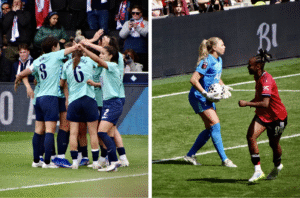
When you look around at the people in women’s sport, maybe you followed the football in the summer?
The Lionesses, yeah, of course!
Then there’s the Rugby World Cup… So are there certain people or teams you follow?
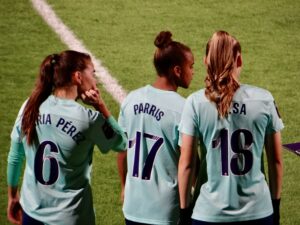
The Lionesses were incredible. You know, I thought Leah Williamson was an absolutely incredible captain. For the whole Lionesses team to do it once, but to do it again is absolutely amazing.
Women’s sport has been big this year. Because obviously, if England, fingers crossed, win the Rugby World Cup, that would be incredible.
Like, what a year of women’s sport, like no pressure guys, no pressure!
You must have to push away a lot of nonsense?
I feel like there’s a lot of noise. For example at the start of the 100m, you’ve got the crowd cheering, your competitors left and right, it’s almost like you’re surrounded…
For me it’s like a tunnel. Not to be like big-headed, but I don’t care for what’s going around me. It’s just me, the blocks and the finish line. That’s all I’m going to focus on.
I feel like from day one, I’ve had tunnel vision. So in terms of visualisation, it really helps. Like, okay, get out, transition, pick up and go and just run through that line. Do. Not. Stop.
The other person I was thinking of is Femke Bol.
Oh, she’s amazing.
What she did, was take her race apart and put it back together and change her stride pattern…
It’s incredible.
Have you ever got to that point where you’ve changed the way you either start or the midpoint of the race, as you say, transition and then the finish. Have you ever taken it apart?
Basically for the first time for this year, it’s almost like we’re breaking it bit by bit, for example, like how can we improve the start when you push out of the blocks?
You don’t fall, you push, and it’s almost like you maintain your stride length, your set length.
Probably from the start to the middle to the finish, it’s always like 10 metres, 10 metres, 10 metres.
In terms of this world champs, hopefully it’s going to be an experience, because I don’t think we’ve had enough time to do what we’ve been working on.
Basically I left my coach back in June and I’m now back with my old coach. So in terms of this year, it’s been a bit like, not all over the place, but my focus is to get a whole winter behind me for next year’s Commonwealth Games.
For this world champs, hopefully the things that we’ve been working on behind the scenes will work in the final here. And if not, then we know what to work and what we don’t.
I thought Leah Williamson was an absolutely incredible captain. For the whole Lionesses team to do it once, but to do it again is absolutely amazing. What a year of women’s sport, like no pressure guys, no pressure!
When you started out, how difficult was it to get support like training facilities, coaching, travel, sponsorship, all those things?
For myself, I feel like I’ve been very lucky and very supported. British athletics have been very supportive in terms of the National Lottery.
I feel like that with Nike as well. I’m a Nike athlete and they look after me very well and I’m very grateful. And I feel like the harder I work, and the work I show, I can hopefully keep that flow going.
The only time I saw you not win was that Horse Guards Parade meet in 2014? It was surreal, the surroundings and everything, and it was a short, 60m track. I wondered if that had something to do with it?
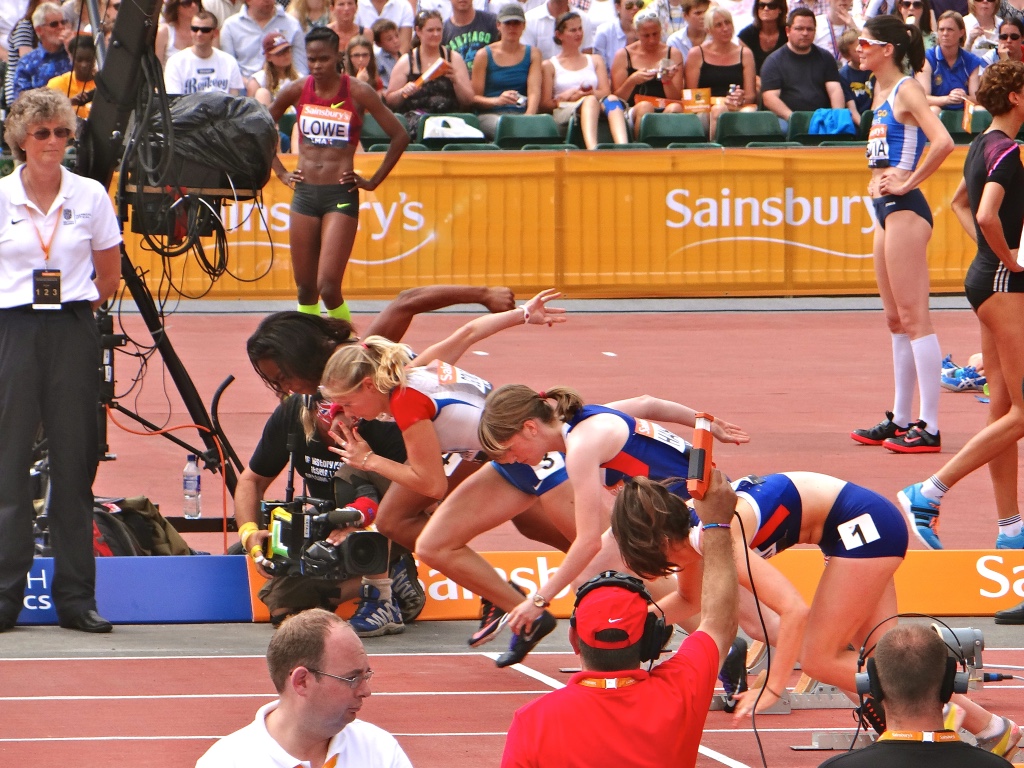
It sounds silly, but the starting gun was quiet. It’s not an excuse, but having an electric pistol (see photo below) – if you don’t quite hear it and you have a bad start for the 60m – then it’s hard to come back.
It’s all about the start. And unfortunately, on that day, the start wasn’t brilliant. So I paid the price.
So 60m isn’t normally a bad thing as long as you hear the gun?
Yeah, you have to get a good start in the 60m. That first step, as soon as you put your foot down, you have to go. Because if you don’t get an okay start, it’s game over.
In 2017, you won gold in the 100m and 200m at the World Champs in London, and can you tell me about the difference between running for you as an athlete, the extra difficulty of the bend?
Basically the last 200m I did was World Champs 2023. And unfortunately they didn’t have it in the Paralympic Games. So now the 200m is back in for Delhi. So I’ll be doing the 100m and 200m out in New Delhi, fingers crossed.
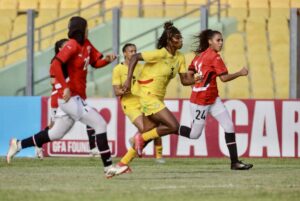
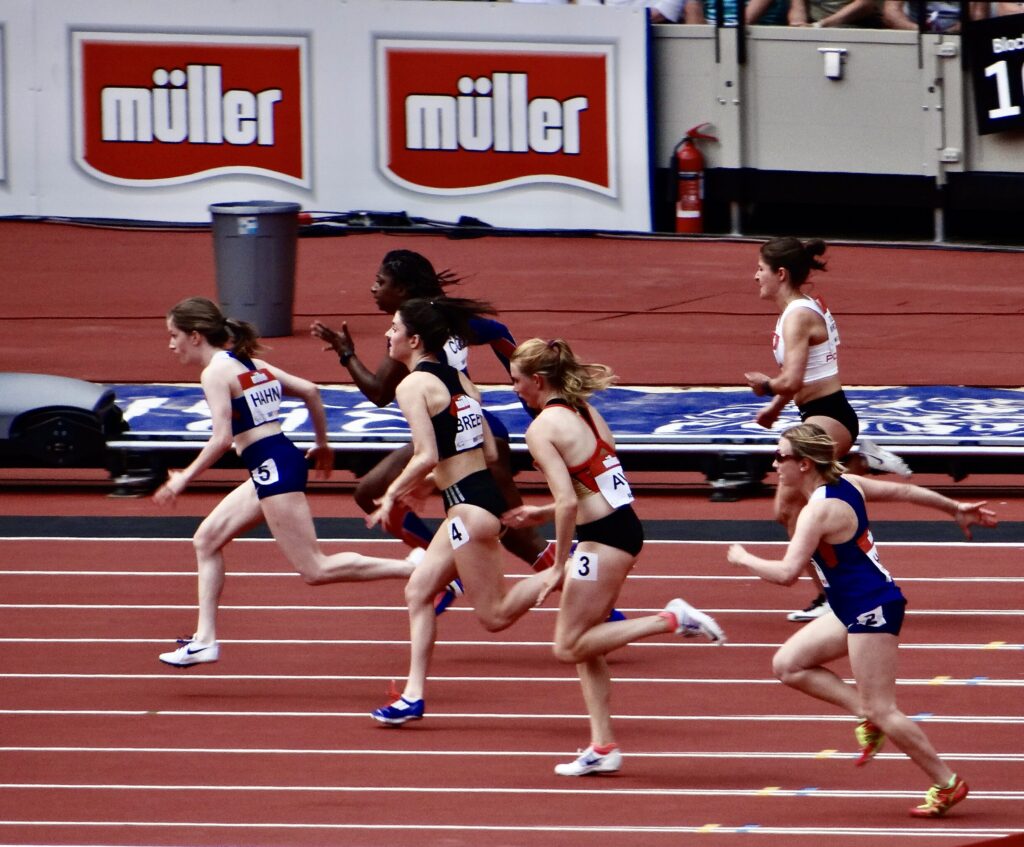
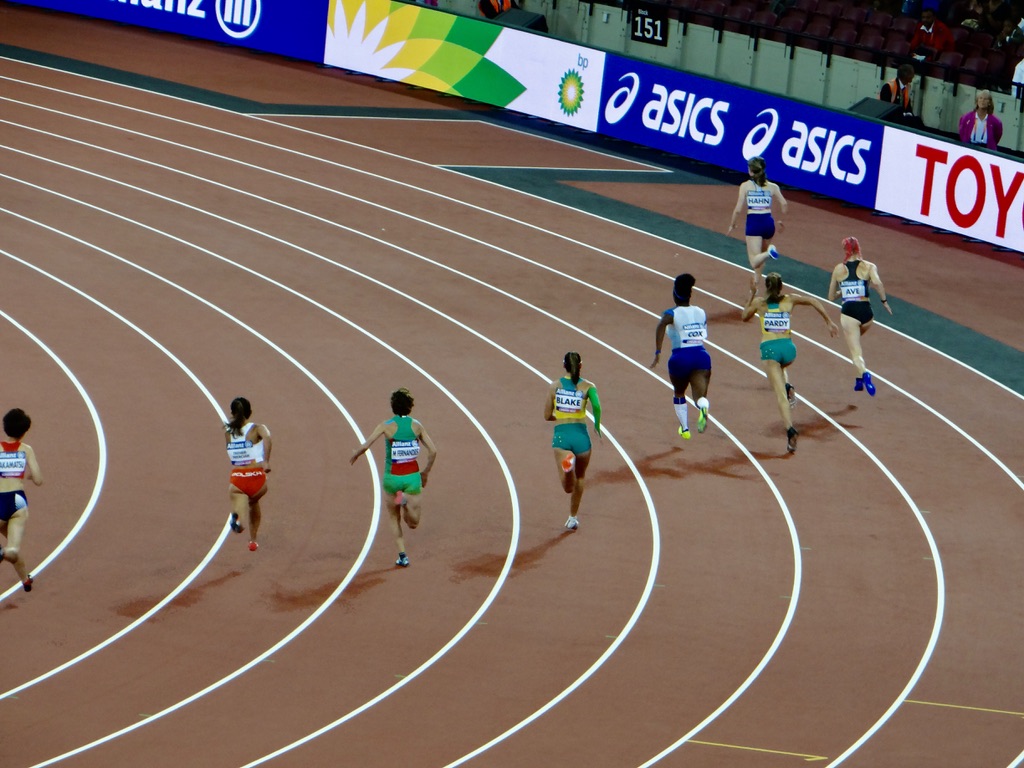
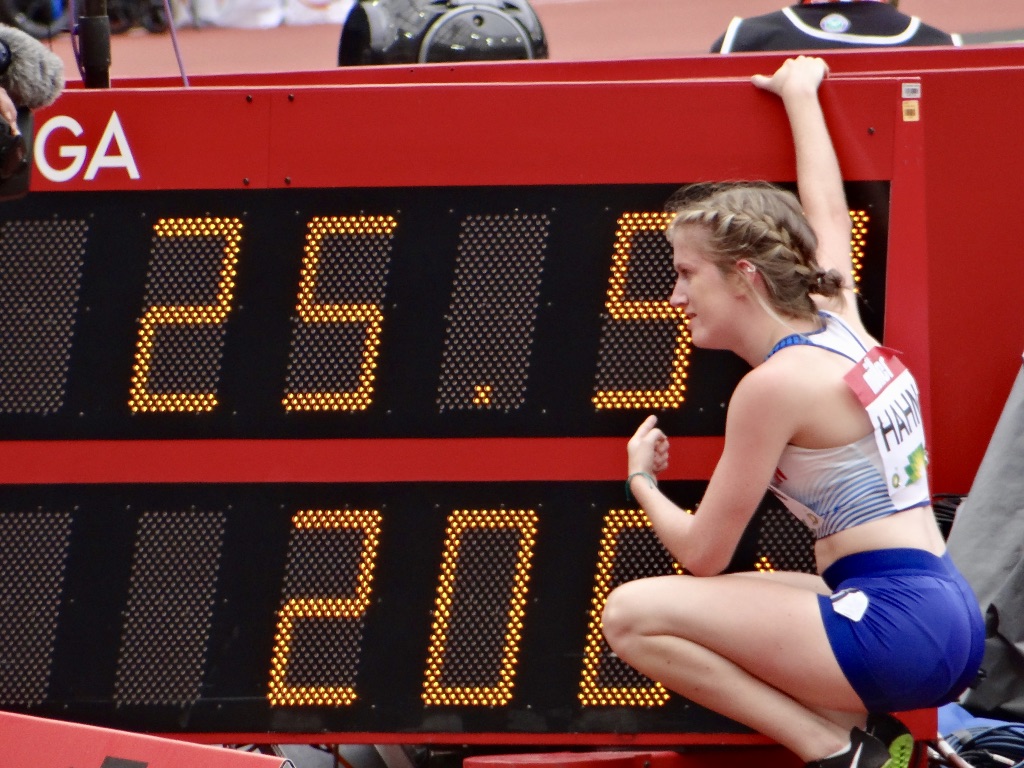
I feel with 200m (see photos below), it’s very tactical. You have to pretty much hit the first 150m hard. You have to get a good bend. You stay on the outside, you hug the bend round, and it’s called a sling slot. You go from the outside to the inside and just run straight. And you cut out the bend. So it’s very tactical.
Sometimes I get it, but sometimes I don’t. So I make it harder for myself because it’s a long way. But I feel like with the 200m, it’s not my strongest, but I’m willing to fight.
Because you are, I think stronger on one side than the other?
That’s correct. My right side’s weaker than my left. My left side’s my good side. My right side is not very strong.
You’re going around anti-clockwise, but if you ran clockwise, that would be easier for you, wouldn’t it?
Yep, correct [laughs]. That would help, if they change the rules!
You must have to seriously overcompensate on the bend.
Yeah, if you’re, let’s say, in the middle lanes, you’ve got more of a chance because being in lane nine, you’re on your own. You literally have no idea of your surroundings. You’ve got to get out and just hope for the best.
But if you’re in lane four, five or six, okay, you’ve got a person there and a person there. You can almost use that as a target.
If someone’s like, okay, I’m going to stay with you, stay with you, stay with you. And then someone’s like: who’s going to kick first?
Someone’s got to kick. And whoever kicks we all follow. So it’s all very impactful.
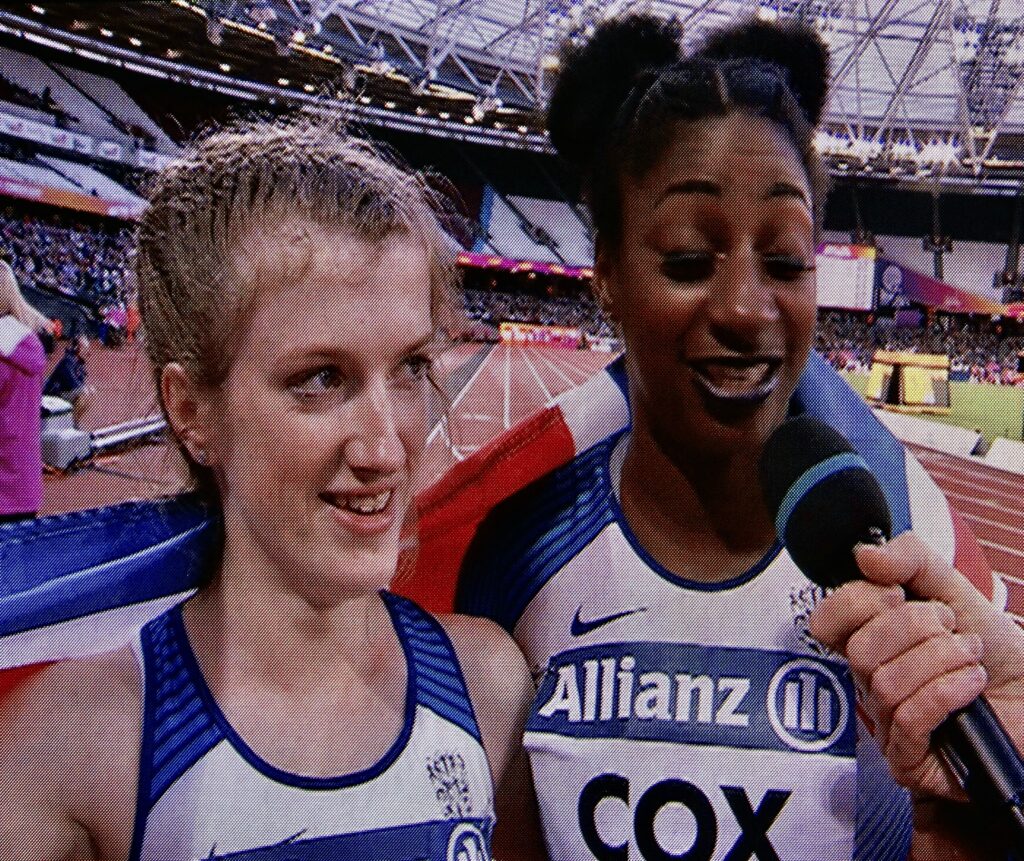
You talked about young people coming through, and you’ve had strong rivals. Two of them – not always at the same time – are long-standing rivalries with Kadeena Cox and Olivia Breen. I wonder what each of them bring to the track that make it fun and intense to run against them?
At the end of the day, you’re teammates, but I feel like it’s an individual sport. Like when I’m in the warm-up, I’m very focused.
I’m not one of those who’ll chat. I just like to focus on myself. I feel like on the start line, I might look a bit miserable, but that’s just because I’m purely focused.
After the race, of course, I’m like: congratulations, but how can I put this politely, I don’t mean to be rude, but I can’t talk right now. I’ll talk to you after, but before, I’m sorry, I’m just going to focus on myself.
Having really good people racing against you, whether it’s at home or abroad, that’s lifted you as well, hasn’t it? Because that’s meant you’ve broken records, as in 2017. It must raise you having brilliant people around?
Of course, and two of my rivals, Luca Ekler [from Hungary] and another girl basically said, we watched you, and we were inspired by you, and I think that’s very nice, but it’s making a lot harder for me to raise that next game, but I think if I can just inspire people, then the job’s done. Luca basically watched me in the London 2017 World Para Athletics Champs, and the next year she started, and said thank you!
Who will your main rivals be in New Delhi?
I’d probably say two Colombians, Karen Palomeque, and Darian Faisury Jimenez. There’s a Greek girl, Lida Maria Manthopoulou. And about six or seven others.
That’s pretty healthy, then?
Yes, it makes the sport even more exciting.
Do you see a few next generation Team GB stars, sprinters coming through?
100%. There’s a girl called Maddie Down. She’s 17, so the next generation is coming, and I feel like hopefully after Paris we can go into LA, and inspire the next generation and the generation after that, then the next future stars will come through.
Do you feel you can get a medal in the 100m, or even the 200m, this time?
I hope so. I really want it, but at the end of the day it’s ‘what will be will be’. I’m gonna fight, but to even make the final, that’s big for me.
In terms of the 200, it’s going to be difficult, don’t get me wrong, but I’m willing to give it a fight.
It strikes me because you’ve already achieved everything in your career, that all this now is maybe a bonus?
Yep. In terms of just enjoying the sport, because I’m a very hard critic on myself. I’m not negative, but it’s almost like a champion’s mindset. It’s like: no, we do it again, we do it again, do it again. I want to do it until we get it.
You’ve been doing this for a dozen years now, so you have a good inside view on para-athletics. In my mind, as a spectator, fan and journalist, there’s been a lot of changes. But I wondered what you’ve noticed?
I feel like from London 2012, every part of the game and the sport is growing even more. And obviously athletics is getting more competitive now. Every year there’s five or six new athletes. So that’s very exciting for the sport. The more young people can get involved, the more exciting it’s going to get.
Hopefully, let’s say when I retire, I’m not too sure yet about retirement, but okay, let’s find the next Sophie Hahn, the next Maddie Down. That’s the most important thing. For me, it’s all about legacy.
What do you think about the way it’s covered now, in the media?
It’s good. In terms of, let’s say Diamond League, to be shown on TV is massive. Probably one of the best competitions is the Commonwealth Games because it’s for all one team. We all represent Team England. So it’s good coverage and personally I’m happy with it.
In terms of things like the Paralympics, it feels like Channel 4 stepped up there and that made a difference that even if your friends and family couldn’t be with you, it was visible?
Of course, I feel like Paralympics did an amazing job in terms of coverage, like China was absolutely incredible. And every Paralympics Games I’ve been to – apart from Tokyo which was hard – but in terms of coverage, they did an amazing job.
You mentioned legacy. You’ve left a huge impression on para-athletics. And when you do finally decide to hang up your spikes, what do you hope people will remember you for?
I feel like just being an inspiration, even to one person, and being humble off the track.
Not to be big-headed, but I don’t care for what’s going around me. It’s just me, the blocks and the finish line. That’s all I’m going to focus on.
If you could take one race to your desert island, what would it be?
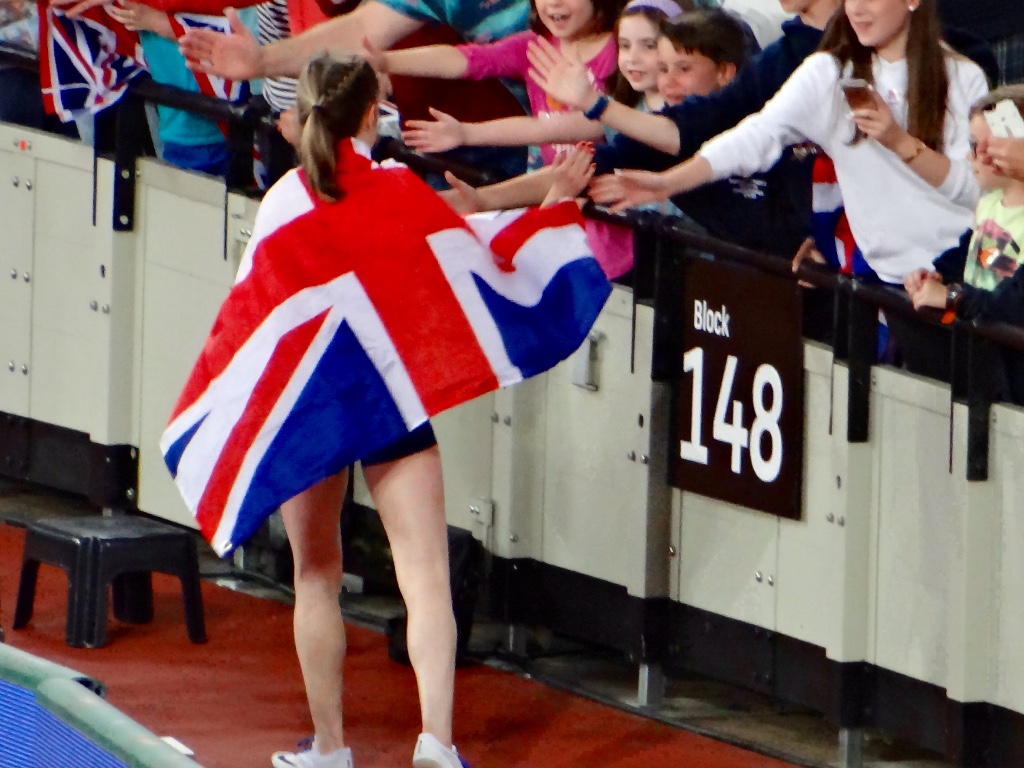
I think London 2017 – to be able to win the 200m for the first time and break the world record. But if not London, I’d probably say Australia Gold Coast (clip, below), because that was the last one to complete the Grand Slam.
You said you might go back to working in veterinarian, equine stuff, but would you ever think of being a coach yourself?
I’m quite a shy person, I feel I haven’t got the confidence to coach. I’d love to, but I don’t know. It could change, but I’m not too sure.
It strikes me the way you’ve talked about races, you’re good at breaking things down, you’d be very good at analysing, you mentioned some of these younger people, analysing where they’re going right and going wrong.
That might be something… So maybe being an advisor rather than a primary coach, I don’t know.
Yeah, that’d be good. Maybe an assistant coach. That could be an option.
Maybe you could do both – do the horses too…
Yeah, I’d be a bit busy, but happy!
Finally, if a young girl came up and asked about following in your footsteps, what would your advice to her be?
Probably never give up, give it 100%. Yeah, there’s going to be times when, especially in the winter, oh, I’m not feeling very motivated today, or the weather’s a bit poor, but just don’t give up…
Yeah, just work hard and silence and let success make all the noise. That’s my motivation.
Watch the Para Athletics World Championships live from 27 September to 5 October on:
https://www.youtube.com/playlist?list=PL6CBAXPeBajkMlDNBOgSj48MJcPNv8W7m
T38 100m final: Day 3, 29th September, local time 19.20 UK time: 12.59
T38 200m final: Day 6, 2nd October, local time 19.20 UK time: 14.50
All photos: Helen M Jerome