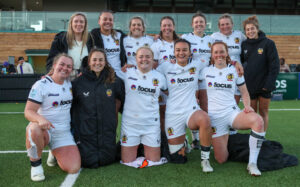

UPTOWN PUNK – Camden’s alternative route to the top
Camden Town WFC train at first-class facilities. They invest in UEFA-qualified coaches, medical staff, and sports psychologists.
They’re not backed by a men’s club and there’s no wealthy benefactor.
Currently in Tier 6 of the women’s football pyramid, they have grand ambitions to reach the WSL.
How is any of this possible?
Clare McEwen speaks with owner and chairman Richard Mahoney to learn about their ambitions, their methods, and how being independent provides a competitive advantage.
You’ve been very honest about your intentions to get Camden Town to the WSL, which by anyone’s standards, is a huge ambition. What motivates that ambition?
I said when I first came in, if we’re going to do this, let’s do it properly, you know?
I set ridiculously high, ambitious targets with the idea that if we fall short, we’ll have achieved something absolutely incredible. It’s not the be all and end all, but you always begin with the end in mind.
It’s storytelling. Since we were children, we have been told stories by our parents.
And Sir Christopher Nolan will tell you every story has the framework of a beginning, a middle and an end.
When you start a project like Camden Town, what does the end look like? What does success look like for you?
It’s a process I went through multiple times with many clients that I’ve worked with in the past, many businesses across a wide range of sectors and industries.
And I think with football, why not tell an amazing story? Why not set something really ambitious, really inspiring and really go for it?
Let’s face it, life is very short and the opportunity is here.
I set ridiculously high, ambitious targets with the idea that if we fall short, we’ll have achieved something absolutely incredible.
Where do you even start with mapping out that kind of ambition? That’s two really difficult things – getting the team performance on the pitch and raising funds. Where do you even start?
Great question.
Well, you start with phases. So there’s phase one, phase two, phase three, and all three phases are incredibly different in terms of what is required to be done at those levels.
So phase one was, you mentioned it yourself, and you’re absolutely spot on, how do you get really good players who can win you games?
Everybody says to you, you need to get really good players because good players win you games. And they’re not wrong, but they’re thinking about it backwards.
For me, how do you attract great players to your football club? That’s the question you have to ask.
And for me, very simply, it’s about infrastructure and culture.
It’s not going to happen overnight. It’s not easy to get a stadium, a training ground, great UEFA A qualified coaches, social media, commercial partners, investors, and that sort of stuff. All this is going to take a while, but let’s focus on how people feel when they come into the football club.
Do they feel welcomed? Do they feel inspired by what we’re doing? Does it excite them? Do they leave thinking, do you know what, I want to come back?
Let’s think about those things.
So that’s culture, the infrastructure, how much can we give the players?
Because basically, the competitive advantage you have these days is that the average salary for a professional footballer in this country is still only £25,000 a year in WSL1 and WSL2.
The competitive advantage you have these days is that the average salary for a professional footballer in this country is still only £25,000 a year in WSL1 and WSL2.
So actually, if you think about it, there’s a lot of players who could play professionally but can’t afford to because they have good jobs.
You can attract those players to your club by having the same professional standards and infrastructure that they are used to at the elite level.
Maria Paz Vera and Maxine Borden both played professionally. They’re used to a certain way of how things are done. They have really high paid jobs in the city earning £65-70,000 a year. To play professionally full-time, they’d have to take a huge pay cut.
So think about your competitive advantages in how you recruit players, but put things in place very, very quickly to make them want to come to you, if that makes sense.
Yeah, it makes a lot of sense. Like you say, the landscape currently makes it really achievable. If you were to compare that with the men’s pyramids, there’s not a chance, is there?
No chance, absolutely zero chance. This is the opportunity that we have in women’s football.
It will never exist again.
What’s your broad vision on and off the pitch, apart from getting to the WSL? What do you want to achieve? Do you want to help other teams see how this can be done?
Yeah, yeah, absolutely. I just see so much opportunity here.
For me, women’s football, when I first got involved about seven years ago, feels like a startup.
And startups are so, so exciting. I’ve worked with startups my whole career and I absolutely love it.
Established businesses, saturated markets don’t interest me at all. They’re fascinating in many ways and a different skill set, but I really like the beginning of a project. The idea of a plane being on the runway, it’s about to take off, we don’t know how high it’s going to go but we know it’s taking off.
My vision was always, I just want to be a great person to help women’s football in this country, and globally, if I can.
My club is Camden, absolutely, but I really do see the bigger picture.
So if I can do a crowdfund raise, why can’t you? And the more money that comes into the game, the better it is for everybody.
Women will start getting paid what they deserve. I think it’s absolutely shambolic that the average salary for a WSL player is £25,000. Unless you’re a Lioness, you’re not earning millions.
But that has to change because they’re putting in so much. I look at my players – they all have full-time jobs or they’re students. They have another life. And they’re essentially putting in another 30 hours a week to play for Camden.
And up until now, we’ve never paid them to do that, beyond base expenses. They do it for the love of the game.
I think we can do better.
My vision was always, I just want to be a great person to help women’s football in this country, and globally, if I can.
Digital storytelling is at the heart of getting buy-in and attracting sponsors, right? Explain to me how you’ve used that to your advantage and what advice would you give to other clubs?
Your social media, I don’t need to state the obvious, is so important. Your look, your image to the world. I want to pull my hair out when I see teams using ChatGPT to design their graphics.
The best signing I ever made off the pitch was Sophia Demetriades. I used to keep her a secret, you know, my best kept secret. She is a top, top designer. She went to the best school in London.
And she came to me when I was running a youth club about 10 years ago and she said to me – I love her directness, she was only about 18, 19 at the time – your football club is great, Richard, but your social media is terrible.
And I thought, okay, I want to work with you [laughs]. So I did.
She understands design, look, feel, consistency and messaging. She’s not necessarily a social media strategist, but she’s incredibly good at making us look absolutely beautiful.
And that’s your window to the world.
People see this before they come to the ground to watch a game, before they apply to potentially be a player or for a coaching role or any other roles that we have at the club.
It’s so important. And the advice I’d give to other clubs is to invest in that. It doesn’t need to be expensive.
There’s many talented designers out there, like Sophia, who are perhaps just graduating. It’s a project on the side. It’s not a tremendous amount of work, especially not in the early days, but do get that right. It makes a huge difference.
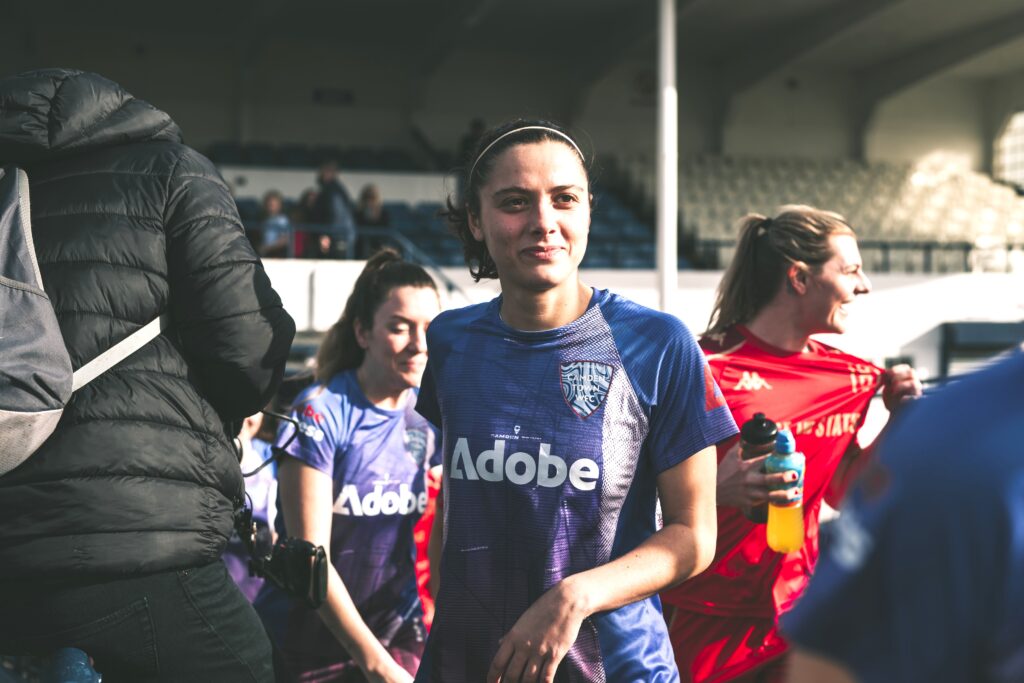
We would never, ever have got Adobe as a commercial partner and a sponsor if we didn’t get our social media right.
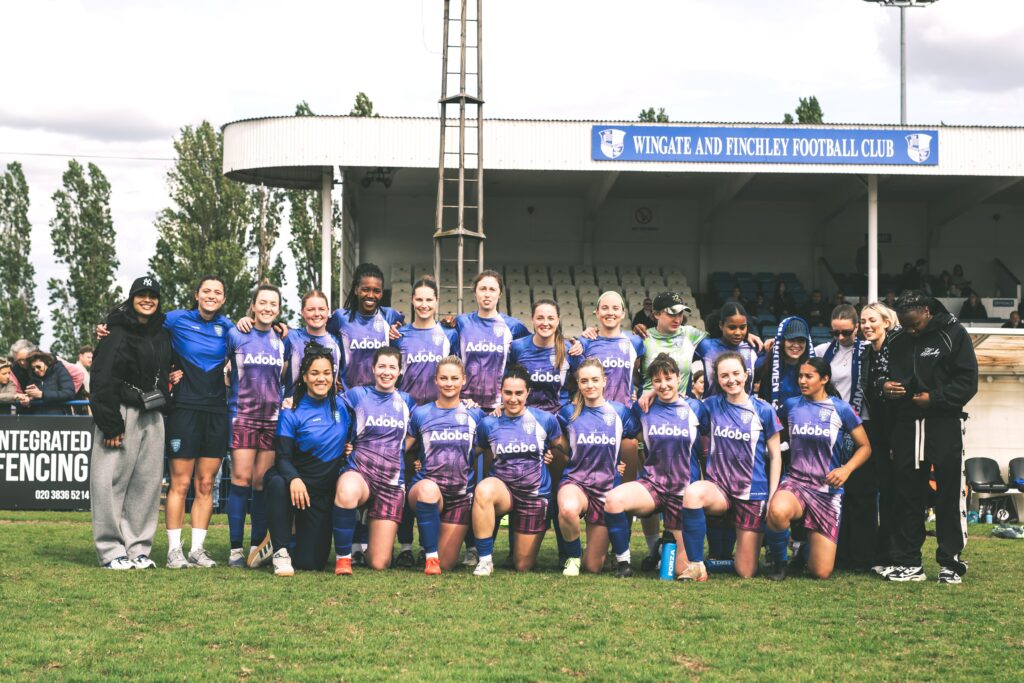
On Adobe, I mean, that’s a massive name. Your social media helped but it didn’t get you over the line. How on earth did you get such an enormous sponsor?
I can’t tell you.
No, I’m joking [laughs].
So how did we do it?
So basically – Adobe are great, by the way. They are obviously a global tech company, absolutely massive brand name, household name – but they’re an organisation that really understands the synergies between business and sport.
They understand what it takes. What goes on in the dressing room of a sports team is very similar to what happens in the boardroom of companies – team building, elite level performance, that kind of thing.
They invested in the sponsorship of the Women’s FA Cup – which they’ve had for two years now, and they’ve done a fantastic job with it in terms of engagement and activity – and they basically wanted to tell a story about the beauty of the FA Cup, which, let’s face it, is not about the elite teams.
Yes, the elite teams always win it because they’re full-time professionals. That is just natural.
That will always happen.
But the beauty in the story of the FA Cup is actually the lower league teams getting their chance to pit their wits against the big guys.
And they wanted to tell a story. It was called The Field of Dreams, a social media documentary played out across the season.
They tasked Versus, the online social media brand, to find a club that looked really good on social media, were very professionally run, were lower league, and they’d be essentially good enough to go on a relatively decent run in the FA Cup.
We got quite fortunate. I believe Versus approached quite a few clubs and one of the non-negotiables was you had to have the front of shirt sponsorship. I think a few of those clubs potentially had signed longer deals so it was a non-starter for them.
But ours was available. The front of shirt sponsor was my own accountancy firm so I was able to just tear up that deal and “welcome aboard” [laughs].
I get told all the time it’s really difficult to get sponsors or commercial partners in football.
It’s not, absolutely it’s not. It’s really remarkably easy if you can tell them a story.
But really, to answer your question, and this is the advice I would give to other clubs: I get told all the time it’s really difficult to get sponsors or commercial partners in football.
It’s not, absolutely it’s not. It’s really remarkably easy if you can tell them a story.
And they invited me to the boardroom of their offices in Shoreditch and I thought, well, this is my moment. It’s make or break here.
They’re probably expecting some volunteer to turn up who runs a very small club and they’ll go, we’ll give you a kit.
No, no. If we’re going to do this, let’s do it properly.
We’re going to be wearing Adobe on our shirts and you’re not going to want us to look bad, are you?
Map out the plan, tell them a story.
I don’t think they were expecting to meet someone like me with that kind of vision, if that makes sense.
But I tell my players all the time, be brave. Be brave on the pitch, so I have to do that in my dealings as well. I have to lead from the front, and yeah, it was the start of a wonderful relationship with such a great company.
Serendipity and bravery.
What you’re creating is completely different to a traditional ecosystem in football, which I love, by the way. I think it’s the way forward for women’s teams to be independent and to rip up the rule book and do it all very differently.
Tell me some of the things that you do to generate income and interest in Camden Town.
The football revenues are actually really small. We’ve got a decent fanbase – I think we had 400, 500 fans for our last game against Bromley.
For big games, big occasions, we get quite a few people through the gate. It’s absolutely overwhelming sometimes – FA Cup games and so on and so forth.
But the average spend per fan is only about £12 per head on things like beer – which we don’t take the full percentage of, we only get a cut of that – and of course, food, programmes, scarves, replica shirts, raffle tickets, all the things that every football club in the world sells at their stadium.
It’s quite small, it doesn’t bring in much revenue.
And we only play about 13 or 14 home games a season so there’s not that many opportunities to actually sell to fans.
So a couple of things, really. We found content creation to be the most interesting because a lot of brands who are aligned with women’s sport, women’s football, see football clubs as a great window into attracting audiences to their products or services.
It’s about aligning who they’re looking for, and really treating them as a client and not someone who, okay, you give us a bit of money and we buy a training kit.
No, no, let’s help you grow your business.
You’re a tech company whose business is sport data – we can help you with that. We can be your beta testing. We can get the players using the apps and so on and so forth. And for that, you can charge more because you’re helping them.
So the content creation and the commercial partnership, really seeing it that way is about 80% of our revenues. The football is actually a lot smaller.
I often joke with people, we’re not really a football club, we’re content creators. We just use football as the story – the window to the world [laughs].
But obviously, I’m being facetious when I say that. I don’t genuinely mean that, but that’s one way.
When I first got into it, I wanted to invest in women’s football. But there was just no vehicle for me to do that.
And then the other way is crowdfunding. There’s so much appetite for investment in football.
When I first got into it, I wanted to invest. I’ve been quite successful in business. I wanted to invest in women’s football. But there was just no vehicle for me to do that.
You can’t buy shares in Arsenal or Aston Villa, or London Bees we looked at. It’s virtually impossible. I had to start right at the bottom with my own football club.
So, opening up our equity to the world and say, well actually, if you want to be a part of this, I can’t promise you that it will make you a millionaire one day, but the worst case now is you’ll have a lot of fun being on the journey with us and you’ll feel closely connected and everything to it.
Yeah, our crowdfunding campaign, which we only started advertising last Friday, it’s been absolutely overwhelming. The numbers we’ve got on the pre-registration are incredible.
I’ve just got to convert that into actual cash now [laughs].
Are you building any other income streams to those you’ve already mentioned?
So merchandise is one.
We’re going to start streaming our games using a professional camera crew, which we did for the Bromley game. We’re looking at the Asia market for that, who have a real interest in community-based sports clubs. So very exciting things in the background going on there.
We’re going to run soccer camps for the US, South America market, Canada, Mexico – basically where the World Cup’s just been, really.
There is no-one currently doing it just for high school girls. There’s a lot of co-eds and a lot of boys only camps – like the big guns, the Arsenal, Chelsea, Man City’s – but no one’s doing it purely for girls.
So we’ve identified an opportunity there to build relationships with clubs in affluent areas of America whose high school kids have got dreams of playing in D2 or D1 at college.
It’s a great thing to put on their CV and their college applications that they’ve spent a couple of weeks in England, which is viewed as the mecca of football – which of course it is – training under Darren Smith, a UEFA A license coach and getting that recommendation from him.
And the prices you could charge for that are pretty good.
We’re going to host it all at Mill Hill School – that’s the plan. I had a tour around the building last Friday, so we’re really excited about the soccer camp side of things.
Merchandise, live streaming, content creation, crowdfunding, and of course the traditional football revenues.
There’s a few other ideas I have for slightly later down the line, but all to be revealed in due course.
Looking at our squad for the season, we’re incredibly strong. We fully expect not just to win the league, but to win it convincingly. That’s the expectation.
And the football on the pitch, what stage are you at with your grand plan to rise to the very top?
Well, the players are just incredible. We’ve got such a story.
We just signed Maya Brueckner, which we have not announced yet, by the way, a professional footballer from Australia.
She’s come over to England, but unfortunately can’t play professionally here because of visa situations. But she saw Camden as the next best thing, really.
She was wanted by so many clubs. It’s very overwhelming to have her.
Looking at our squad for the season, we’re incredibly strong. We fully expect not just to win the league, but to win it convincingly. That’s the expectation.
Considering that Bromley and Hammersmith have now been promoted. The league doesn’t look quite as strong as it did last year. There may be some surprises, we’ll see, but we’ll be going for it. We’ve set out very clear targets.
In terms of the players, I say to them all the time that these are the most impressive generation of women’s footballers that there will ever be. Because essentially, this generation grew up without heroes or without obvious heroes.
If you think about the young girls now, they’ve got the Lionesses and they’ve got Camden Town Women.
They’ve become the heroes they never had.
And we treat them like heroes because that’s exactly what they are.
They’ve become the heroes they never had.
And we treat them like heroes because that’s exactly what they are.
Do you have a youth pathway as well?
We do, yes, absolutely, an Academy.
We’re very proud to say that we’ve given 17 of our youth players their first team debuts over the last three years.
We’ve traditionally always been associated with youth clubs but we decided to run our own a couple of seasons ago.
The Under 18s last season were competing at the Junior Premier League (JPL) level, they’ve now come of age, really. Five of them have been offered first team places, although what we’ll very likely do is loan all of them out to a sister club relationship we have with Sporting Duet, who play in the division we won a couple of years ago.
We know it’s a really good division and they’re very professionally run. They’ve got a very similar culture and environment and facilities there. So it’s a really good fit to have that relationship with them.
It would be a dual registration – we’re hoping to have them available for Cup games or perhaps games that we’re not prioritising as much as the league, if that makes sense.
Is there something you’ve learned about running a women’s football club that maybe surprised you?
It’s really interesting because obviously I spent my whole life in boys and men’s football and the dynamics and the personalities and the requirements are extremely different.
It’s like two different worlds.
I find sometimes when you’re working with boys and men – and there’s nothing wrong with being confident – but sometimes you have to sort of bring them in a little, okay, let’s walk before we can run.
Whereas when I work with women and female athletes, it tends to be, you want to tell them they’re amazing, but they just don’t believe you [laughs].
It’s, I’ve just scored a hat trick, but I’m focusing on that pass I didn’t make or the yellow card I picked up.
No, no, you were amazing today.
I learned very quickly that you can’t just say you’re amazing, you’ve got to show them.
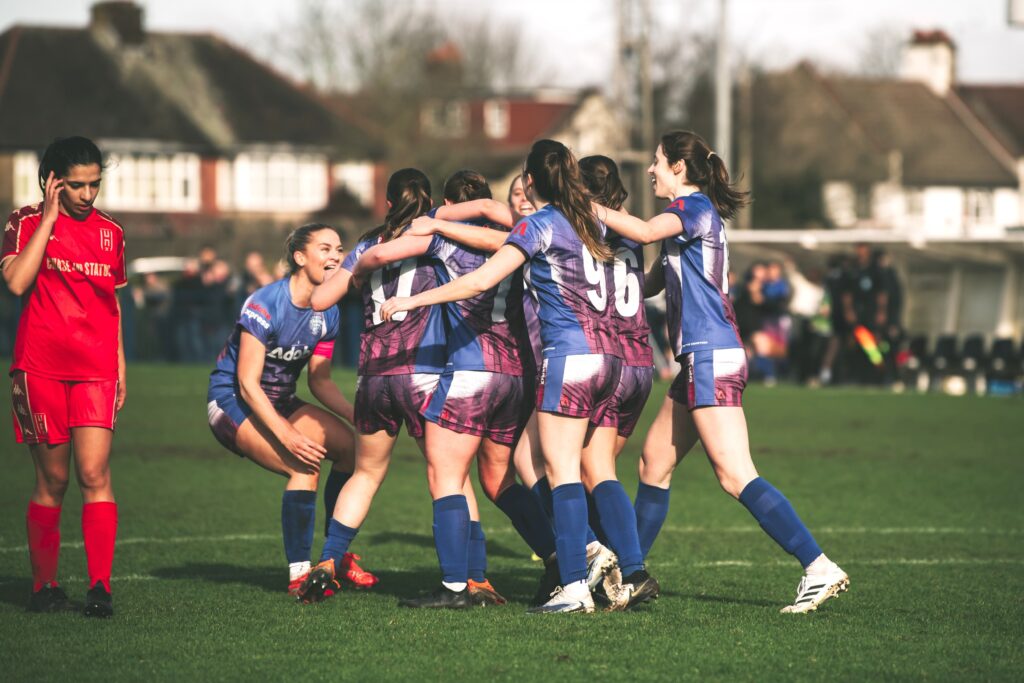
So the idea would be the star striker, pointing out just how many of her teammates ran to her when she scored and celebrated with her and the looks on their faces, that’s showing them that they’re amazing as opposed to just telling them – if that makes sense.
You can be lean, you can create your own deals, you can create your own identity, you can change stuff very quickly when it’s not working. These are the advantages for an independent. You can create your own destiny.
Where do you think the opportunities are for independent clubs?
The opportunities are you can move really quickly. You’re not waiting for approval from the CFO of the men’s team.
You can be lean, you can create your own deals, you can create your own identity, you can change stuff very quickly when it’s not working.
It’s just simply being able to make really quick decisions and just making sure you’re also working with commercial partners who move quickly.
The great thing about working with Adobe is they will respond instantaneously whereas a lot of corporations won’t.
So we don’t have that wait for the budget from the CFO of the men’s team, or the men’s team got relegated, so they’re going to cut the budget. We’ve seen that multiple times.
These are the advantages for an independent. You can create your own destiny.
I keep repeating to people, it will never be this way again: women’s football is growing exponentially. You’ll never see this opportunity again.
Do you think we’ll see more independent clubs in the future?
I hope so. If I can inspire a few, I’d love to, people reach out to me all the time.
But why not? The opportunity is here.
And I keep repeating to people, it will never be this way again: women’s football is growing exponentially.
When I got involved, Deloitte predicted women’s sport was worth a billion, globally. Now it’s four or five billion. Most sensible sports economists predict it to be seven to eight billion by 2035.
You’ll never see this opportunity again.
And do you think the men’s clubs who are cutting their women’s teams are just completely missing the opportunity that could help grow their revenue?
Yeah, it’s difficult for me to answer that question without swearing, you know [laughs].
Yeah, I will call them fools. You hit the nail on the head, they are missing an absolutely golden opportunity and the sensible clubs – I live in the old Arsenal Stadium, and David Dein – excellent visionary for football, ex-vice chairman of Arsenal, on the board of the FA, worked with the England team, appointed Arsene Wenger, did amazing things in the game – he started up investing in women’s football long before it was fashionable, back in the mid 80s.
He came to turn our Christmas lights on, I’ve met him a couple of times before, he’s such an inspiration. He’s one of my heroes.
And he was down on the pitch I’m just looking at now, and I said, Mr. Dein, you will have to tell me what made you invest in women’s football in the mid 80s before anybody was doing it.
And I was genuinely expecting some sort of window into the future, visionary sort of answer – that he predicted exactly how it was going to go.
But he genuinely, and I believe him when he said this, he said when I took over Arsenal Football Club, it was a very violent time. There was one demographic that watched football, that was 99% of the crowd.
Very occasionally, one of the supporters would bring their wife. But the next week she wouldn’t be there. The following week, someone else would bring their wife. But the next week she wouldn’t be there.
So he basically said he could see that women were wanting to watch football and be a part of this amazing sport that was going in such a great direction at the time – just before the formation of the Premier League – it just wasn’t the right culture and environment for them to do it. So why not set up a women’s team?
I was just bowled over.
I thought, okay, well, I can see now why you have the biggest fan base in the world and you’re the most successful club.
I model Camden on Arsenal, basically.
So clubs like Arsenal and Chelsea, and there are many others, I won’t list them all, who really can see the opportunity. They do a wonderful job for the industry.
But yes, there are clubs out there that have treated the game disgracefully and deserve to be left behind.
I model Camden on Arsenal, basically.
Photo credits: Annadel Staff Photography