

WHO ARE YOU? Does women’s football have an identity problem?
In which long-term fan Dakota Johnson looks back on a fortnight when she posted one frankly frustrated tweet – which took flight – with her vent quickly going viral.
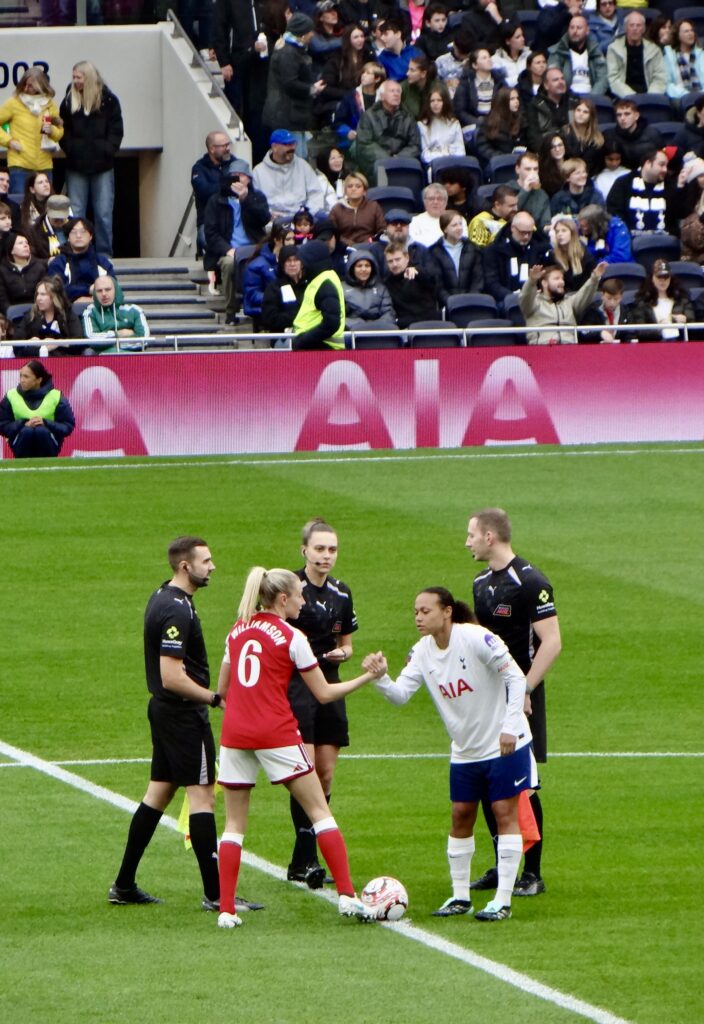
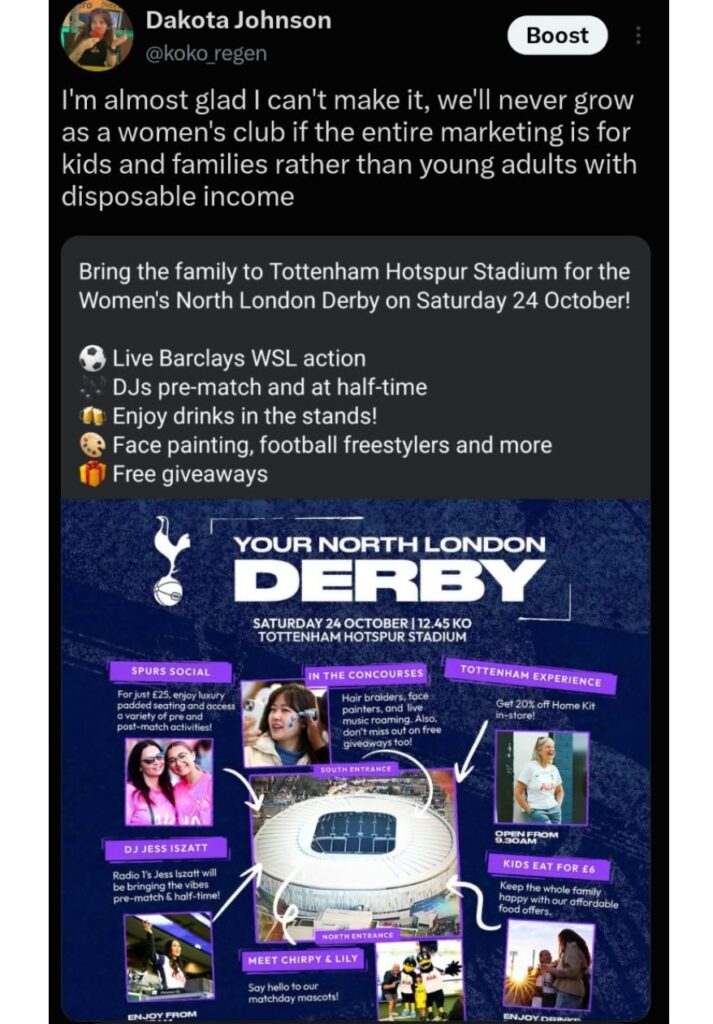

This should be the best time in history to be a 20-something women’s football fan. So why does it feel like my own team doesn’t want me there?
The algorithm knows me well – mostly. It knows I support Tottenham Hotspur, and women’s football more widely. Most of the time, it even manages to get its ads and other recommendations pretty age-appropriate. (Unless I’ve been looking at Miffy merch, but that’s on me.) So me getting advertising for the women’s NLD wasn’t really surprising at all. Another win for Zucc.
But not one for my club.
Because Tottenham, it feels like, don’t want me there. And nor do the people they advertise to. Most of our marketing is aimed at children, or rather their parents. FACE PAINTING! MEET OUR MASCOTS! GREAT DAY OUT FOR ALL THE FAMILY!
CIRCUS?
Are you selling me tickets for a football match or the circus? And as I learnt from Twitter, it’s not just Tottenham who have this problem, and despite me thinking I suffer alone, it turns out many other young women feel the same.
Replies to my original tweet (above) ranged from insightful to straight-up sexist, with men telling me that nobody other than a four-year-old could possibly enjoy women’s football anyway [Ed: no change there].
One of the quotes on my original post pointed out that Tottenham in particular as a club have an issue with criticism, and having kids there is lessening this (user @userthwfc). Another reply from @juza_23 suggested this way of marketing is putting a ceiling on the sport.
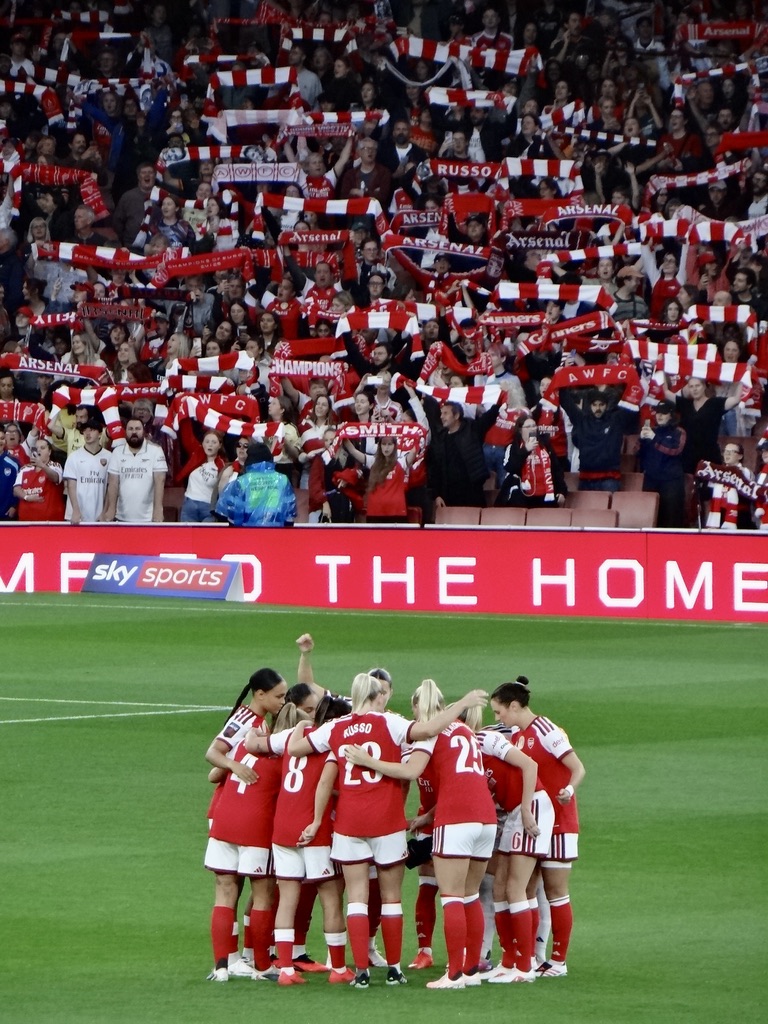
An Arsenal fan – a club that doesn’t market like this and see huge attendance figures – said that even at the Emirates parents have told people off for swearing (@violet_awfc). Our clubs seem intent on creating a culture that is sanitised so much for the sake of making money, it’s destroying why we enjoy a matchday so much.
The pull of advertising to families is simple – while an argument can be made that clubs simply want to engage fans from a young age, the reality is that they want to inflate the numbers, and the revenue. A family of four pays more and fills more seats than two young women attending their club’s game together.

FANDOM
But if it’s money and engagement they want, don’t they already have a prime audience in teenage girls and young women? We love fandom, and we love community. Nothing offers that more than a football club. We also have buying power, and are willing to spend on merch, club shirts, and just about anything really. Yet, our own clubs often refuse to acknowledge that.
Regardless of whether or not the club does or doesn’t target me directly though, until recently it hasn’t stopped me attending games. What changed for me, is almost embarrassing to admit. But I just don’t really enjoy the experience. Like, at all.
Mostly, I end up sitting near some kids, who if they are engaged in the game at all, aren’t that concerned with the result. Okay fine – we were all eight once. It’s the parents who are my final straw. In the men’s game, it’s generally accepted that if you bring your kids along and don’t sit in the designated family area, there’s a strong chance they’ll hear a bad word.
In the women’s game, if you so much as suggest that a player might be a bit crap, or that the ref might want to improve on their skills, you’ll be met with a filthy look. If you drop any explicit language, you may even be directly told off for it as if you’re back in school.
Now, nobody wants a mirror of the men’s game, where hate speech and generally pretty grim language is rife. Women’s football has provided us with a safe, welcoming community. Let’s keep it that way.
Nobody wants a mirror of the men’s game, where hate speech and generally pretty grim language is rife. Women’s football has provided us with a safe, welcoming community.
Let’s keep it that way.
But does it have to be so sanitised? Is booing a former player, or chanting about the opposition’s manager really that terrible?
WHOLESOME
But does it have to be so sanitised? Is booing a former player, or chanting about the opposition’s manager really that terrible? Is it such a crime to tell the ref to **** off after a dodgy call? Nobody asks this of the men’s game. As women though, we are expected to be “wholesome”. This isn’t a derby, it’s a fun show for the kids. The result stops mattering, because it was never about that. DIDN’T YOU HAVE FUN? It all makes our sport look deeply unserious.
For me, getting to the core of the issue requires a small confession. As established, I’m a Spurs fan. My partner on the other hand is not. Worse, an Arsenal fan. Because of this, I’ve on a few occasions gone to European away games involving Arsenal (who am I to turn down a trip) and sat in the home end of the ground, with the local fans.
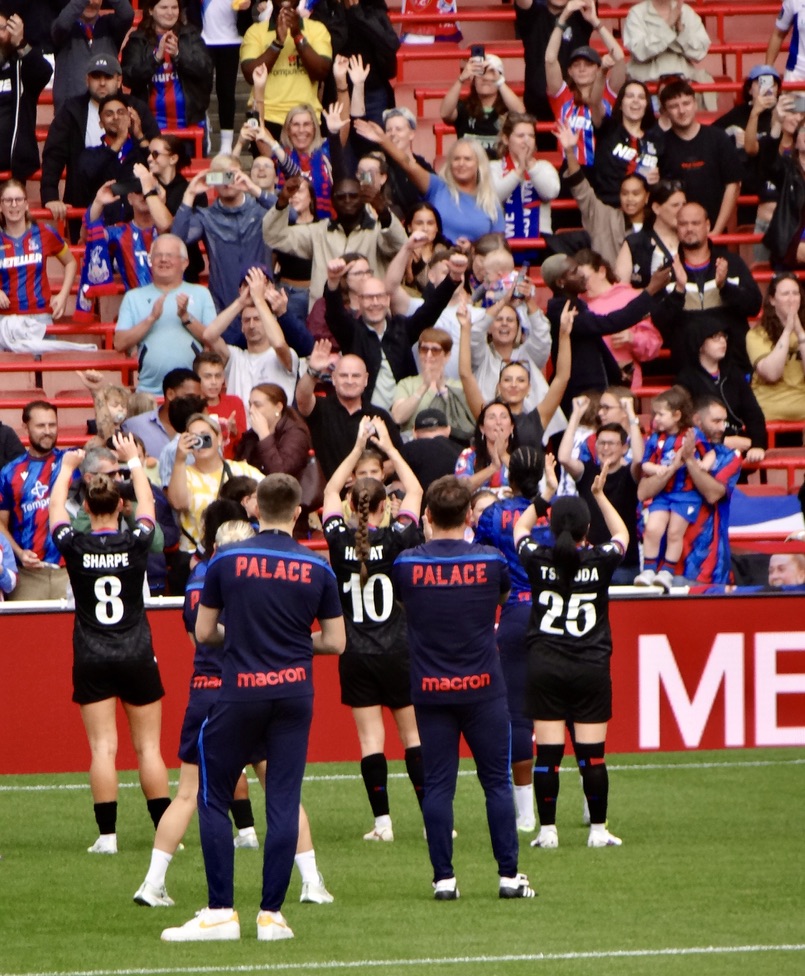
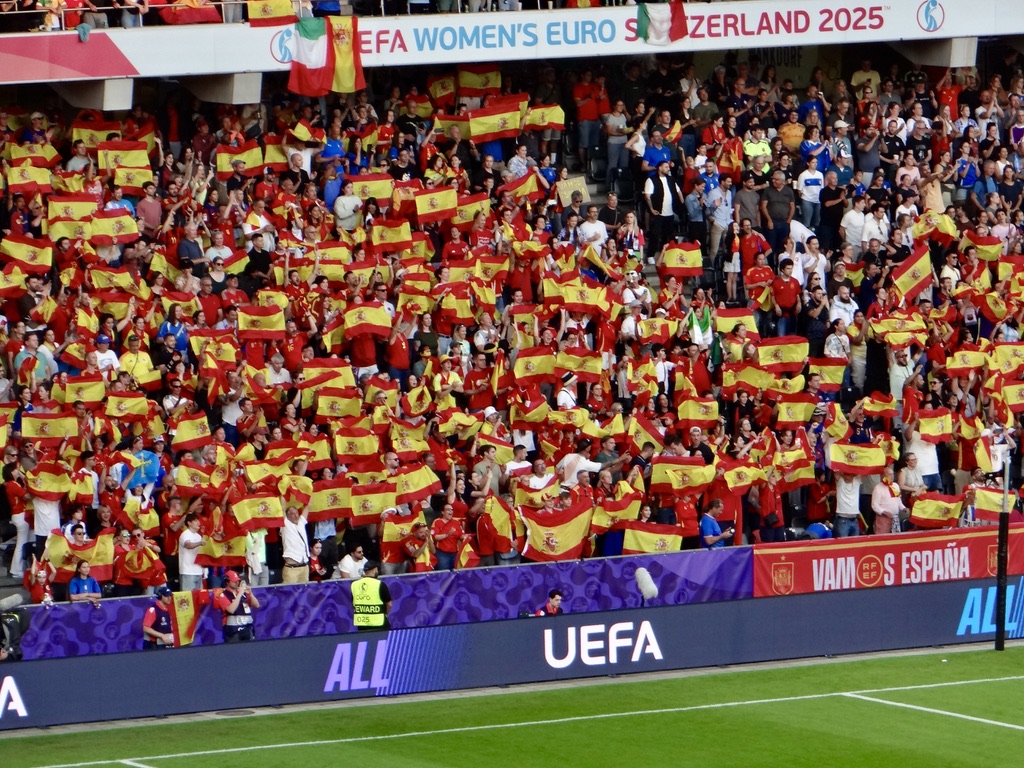
For the most part, they don’t seem to be suffering from the same fate as WSL teams, with most of the fans in attendance being around my age, and genuinely invested in the game. Even in grounds where the numbers haven’t been huge, it makes for a better atmosphere than I’ve experienced at most WSL games. Sure, people bring their kids along, but the entire match experience isn’t targeted at them [Ed: fans of Portugal’s Benfica seem to have a unique fan culture in the women’s game which they take home and away, as of course do the fans of Spain and Italy, below, in Bern, Switzerland].
This makes it all the more frustrating, because if we look abroad we can see that it doesn’t have to be like this, and it is a conscious choice to sell our sport the way we do. And the worst part? It’s not even working. Last season, attendance rates stagnated, and for many clubs dropped. Arsenal accounted for 41.2% of all WSL attendance, which should be hugely worrying for the league, as in the long term it will be hugely unsustainable.


SHORT-TERM
Should England do well at next year’s Women’s World Cup, we may well see another short-term peak, with people wanting to see their favourite #Lionesses in person, and beg for their shirts. Even this will only really benefit teams that have an England international in their squad.
New, early kick-off times have made life even harder, especially when we consider that some teams still play in grounds that aren’t even in their clubs’ town/city. Sky have put games behind a paywall, and the BBC have dropped their highlights show. Those who want to access the sport, both physically and on TV, are now struggling to do so.
Ultimately, there’s a plethora of issues surrounding the sport, and its ability to draw in regular match-going fans. I haven’t even explored the underlying class issues here, but many have, and I highly recommend checking out people’s work on the topic. The growth since 2022 has been huge, but clubs can no longer bank on this.
Even much of the marketing not aimed at children centres around being “inspired” – but me and my friends don’t want to be inspired, we just want to watch a football match. When did that become too much to ask?