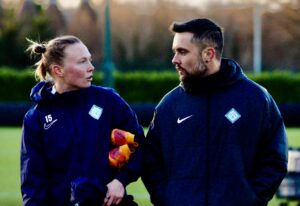

BIG IMPACT – how are we tackling mental health in rugby?
Physical prowess is only half the puzzle in the PWR. The other is mental health. Olivia Franks looks at how different clubs and players have their own ways of tackling the problem.
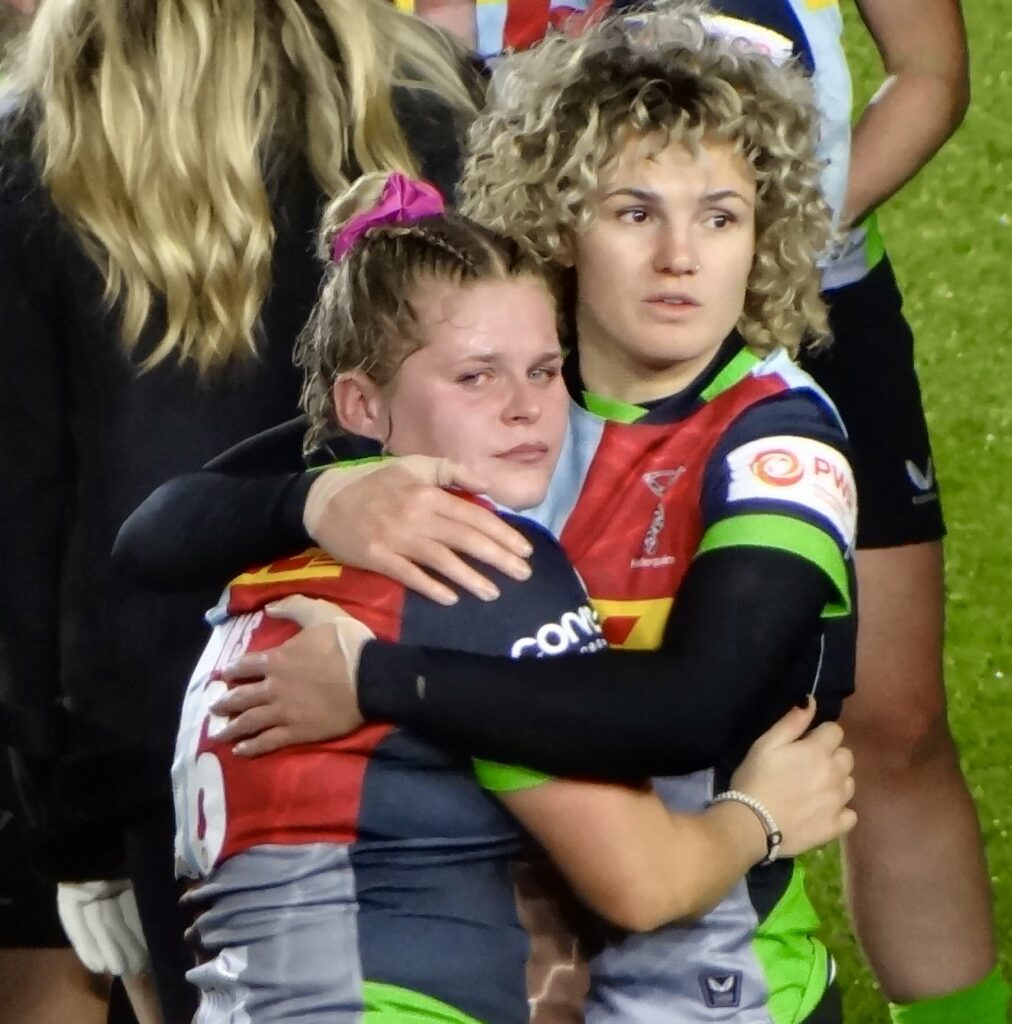
Whether it’s selection anxiety, injury-related issues, or struggles in their personal life – these impact the person as much as they impact the athlete.
Situating female rugby players within a wider societal context, research from the Centre for Mental Health announced that young women are twice as likely as young men to experience mental health issues. Anxiety, depression and eating disorders commonly feature.
This tracks with PWR statistics that 57% of elite rugby players who accessed Restart Rugby services last season were women.
However, Rethink Mental Illness’ analysis of NHS data suggests that people are eight times more likely to wait over 18 months for mental health treatment than physical health treatment.
To combat barriers like this, the PWR partnered with Restart Rugby for the first time this season. The charity supports current and former elite rugby players facing injury, illness or hardship.
Meg Jones, Red Roses and Trailfinders star – and a new Restart Rugby Trustee – says: “Having lost both my mum and dad last year I was given access to grief therapy regularly, helping me navigate through such a dark time.”
Despite this positive step, the clubs still face a challenge to keep on top of their squad’s mental wellbeing with the increasing media and monetary spotlight on the league.
meg jones, trailfinders and red roses
At The Forefront
So, how do different PWR teams look after their team’s mental health?
Bristol Bears coach, Scott Lawson, believes mental health equals physical health in its importance.
Lawson says: “It sits at the forefront of our programme. We’ve got full time safeguarding officers, both male and female.”
Bears also utilise the RPA’s officers that go out to the clubs and provide support.
“For myself, having worked in the university sector, and having young children, I think it’s a huge part of the narrative in society at the moment.
“As a rugby programme, I think it sits on a par with your physical development, and your skill development. It’s an integral part of your coaching model and your programme model.”
Genuinely Caring
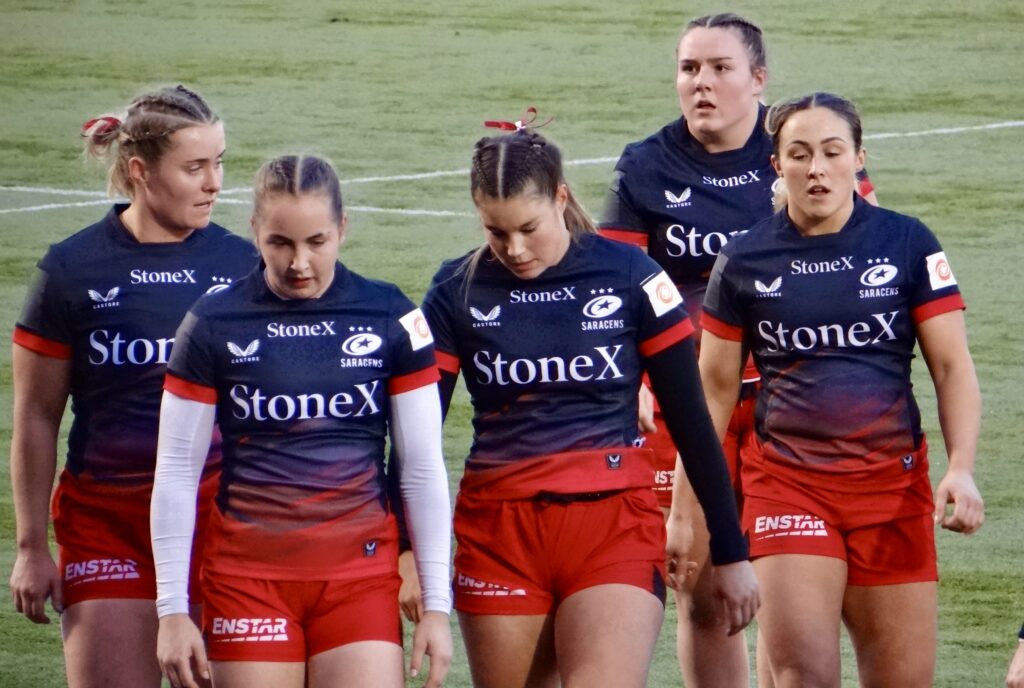
Saracens coach, Alex Austerberry, holds much the same opinion, believing a holistic approach is essential.
He says: “I don’t think it’s just one answer. It’s not: all right we’ve got a mental health well-being officer, right? Tick! That’s that one done, let’s forget about it.
“It’s about genuinely caring, having the support network there, players understanding how they can signpost and care for one another.”
This includes employing a lifestyle support officer who looks at a players’ pressures across their lives, not simply on the pitch.
Austerberry continues: “There’s lots of different pressures on players, and it’s understanding how we can support, manage timetables, manage them and make sure that there’s the robustness of coping mechanisms for when there are setbacks.
“Some people have studies, university, college courses, tests, exams. For other people, the challenges are balancing a full-time job with being an elite rugby player and the challenges of battling for contracts.
“If we look after the person, the playing bit becomes easy, and on top of that you know if a person is in the right space, the performance off the back of that is going to be better.”
Monster Puzzle
Gloucester-Hartpury launched a team room specifically for the women’s team for the first time this season.
New head coach of the current PWR champions, Dan Murphy, is particularly proud of the atmosphere cultivated inside the team room as being a place where the team can work, relax, and come together.
Murphy says: “We bought a 5000-piece puzzle of a circus act, and there’s 10 girls, around a ping pong table, but nobody’s using it – they’re putting the 5000-piece puzzle on it.”
Welsh international Kate Williams has revealed that the team aimed to have finished the monster puzzle by Christmas, highlighting Emma Sing, Tatyana Heard and Nel Metcalfe as particularly partial to puzzles.
Williams also affirms the importance of having this hub. The back-rower even calls the team room a ‘home’ environment that allows rugby jugglers like Gwen Crabb to finish work calls in peace before or after training.
Little Battles
Trailfinders captain, Kate Zackary, focuses on the need for little and often.
The American international says: “It’s lots of ongoing little battles, whether it’s during rehab, during selections, being away from family, dealing with the pressures of professional sport or the pressures of trying to get to a professional programme.
“Our coaching staff continues to ask those questions and get players to open up, because the more they know, the more they can also support players day by day on the weekends and in games.
“It’s always good just to check in on people.”
Express Yourself
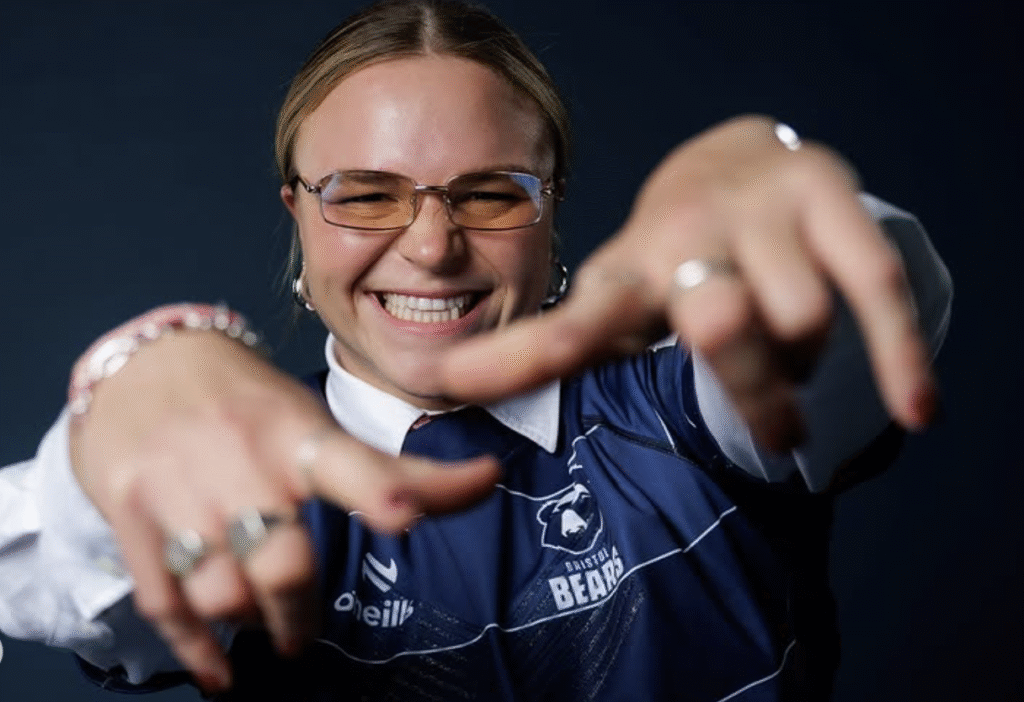
Research from the IOC in 2019 found that female athletes are at higher risk for depression and anxiety than their male counterparts. Issues regarding eating and body image are also prevalent, particularly amongst young women aged 17-25.
Bristol Bears’ Sarah Bern has spoken openly about her battles with body image and struggling with coming to terms with needing to be bigger to be an effective prop forward.
Talking to the BBC, the World Cup winner cited Ilona Maher’s suggestion of using social media to express herself as helping the Red Roses star become more comfortable in her own skin.
Chiefs Chaplain
Down in Devon, Exeter Chiefs have created a ‘Chiefs Orbit’ which gives players ownership over the structure of their programme.
Head coach Steve Salvin says: “We feel it is really important that the players do feel that they have that orbit of support around them.”
Coming into a women’s rugby environment after his time working in the Worcester Warriors and Rotherham Titans male environments, Salvin admits it is a “steep learning curve”.
“It’s very different in terms of how you have to manage women in comparison to men.”
Mental health issues present differently in women than in men, according to the British Medical Association. Which means a gender-neutral approach fails to recognise the nuances of a female squad of athletes and their particular needs.
Chiefs have even hired a chaplain.
While “not necessarily coming from a religious perspective”, she is a figure who players feel comfortable confiding in away from the team structures of power and influence.
“She’ll come in and do some crafts and games. She offers dog walks – so, just trying to remove the pressure of PWR rugby, so that players can let their hair down and be themselves.”
Safe Space
Leicester Tigers have also added to their staff, hiring a performance lead coach who can be a point of contact for the players, and help facilitate difficult conservations.
Fraser Goatcher also revealed that four members of their staff recently took part in a mental health first aid course to ensure they have the correct measures in place to support their squad.
Amelie Amstead, who frequently brings brownies from her café job into training for her teammates, says: “the rugby office is a very open one compared to settings I’ve been in before” and all the coaching staff encourage players to lead conversations.
The 22-year-old also credits leaders in the playing group, like Tess Feury and Jenny Maxwell, for creating a “very safe space” for people to “discuss how they are feeling.”
Life Balance
Helping players keep balance in their life leaps off the page as a clear trend across the league.
Whether that is working alongside rugby, getting used to playing as a new mother, or battling the relentless international schedule, the clubs all seem aware of the different pressures facing their squads.
The clubs who run their mental health provisions on a personalised, case-to-case basis should see the most positive outcomes.
However, a commitment to personalised treatment, though the correct way to go about mental health provisions, is a serious economic pressure – and one that will challenge the coffers of this emerging league.
It is vital that partnerships with charities like Restart Rugby and the RPA are sustained in order to help reduce the economic stress placed on clubs to ensure mental health services only increase, and don’t dwindle as they are doing within the wider context of the NHS.
No-one should tackle these challenges alone.
If any issues in this article have affected you, please see online resources from:
https://www.mind.org.uk/ or call 116 123 for 24/7 support at https://www.samaritans.org/
https://www.thepwr.com/news/pwr-announce-official-player-charity
https://pubmed.ncbi.nlm.nih.gov/31097450/ (IOC)
https://www.bma.org.uk/media/2115/bma-womens-mental-health-report-aug-2018.pdf (BMA)
Photos: Helen M Jerome, Instagram