
FUTURE’S BRIGHT – Quins Pat Metcalfe-Jones speaks
Previously Harlequins Head of Pathway, Pat Metcalfe-Jones has been there, done that, and is now forging ahead since being promoted to Head of Women’s Rugby just three months ago.
Helen M Jerome speaks to Metcalfe-Jones, and first Quins head coach Ross Chisholm, who says she’s had big shoes to fill since her predecessor left – and she’s been exceptional.
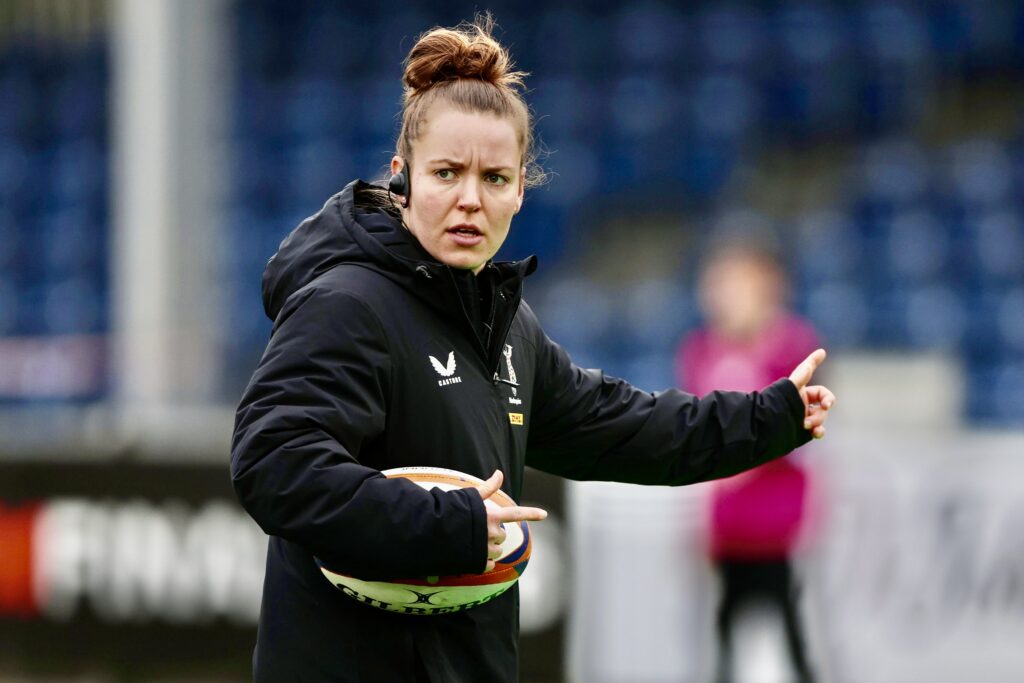
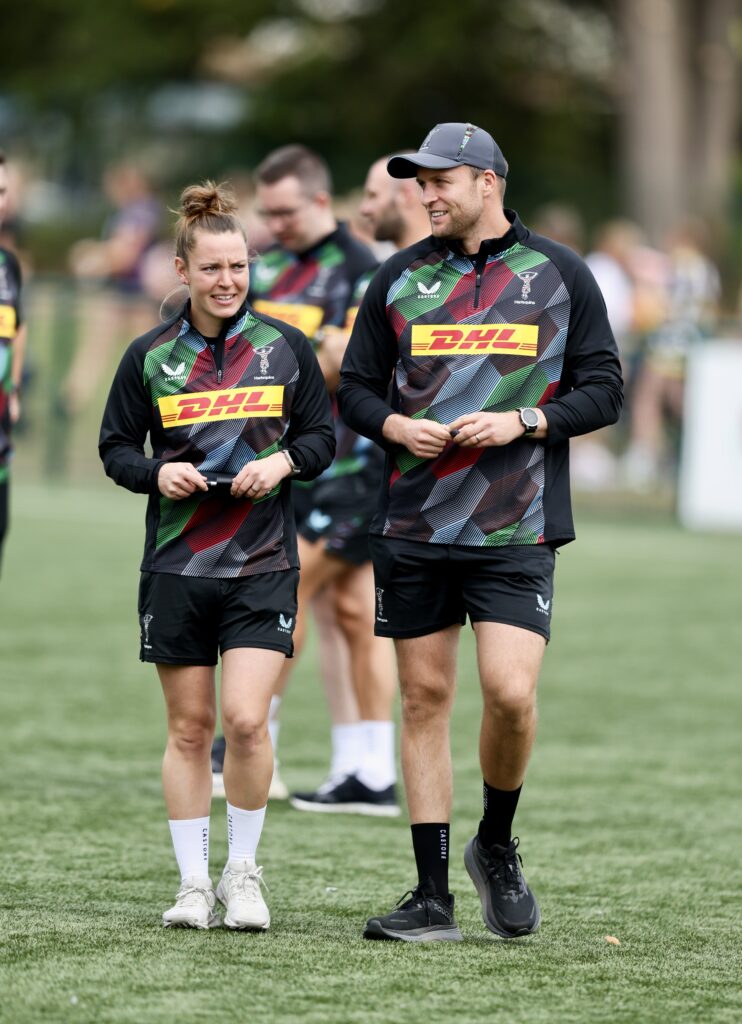
“I was really excited when she got the opportunity to step up,” says Harlequins head coach Ross Chisholm of his new Head of Women’s Rugby, Pat Metcalfe-Jones (below, both together).
“She was exceptional in the role before as Head of Pathway,” adds Chisholm, “and since she started this role, just enthusiasm-wise, understanding of the game, she played for Harlequins and understands it, and she’s extremely driven to be the best that she can be and deliver.
“And she’s really thriving in that role, bringing a lot of energy, enthusiasm, all those qualities she showed in the pathway.”
For Chisholm, it’s important that they work really closely together.
“We spend a lot of time discussing recruitment, and the infrastructure and strategy of the club.
“We obviously have our defined roles, but mine is more on-field, Pat is more off-field.
“But she’s really, really excelling in that role.”
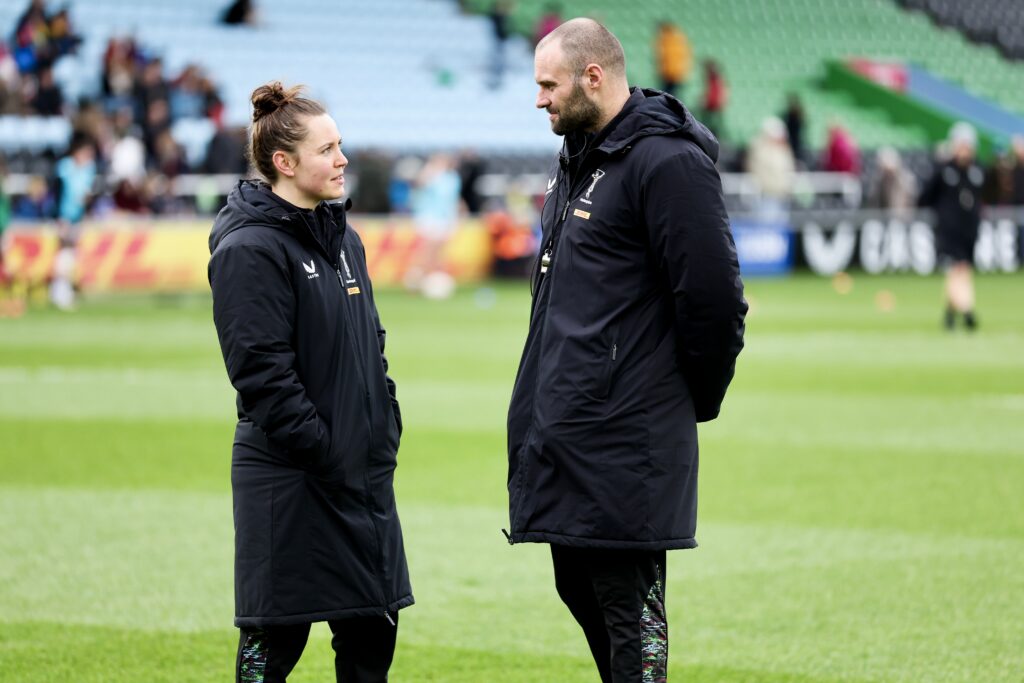
When talking to Pat Metcalfe-Jones herself, you soon catch some of her infectious enthusiasm.
First off, I want to know how she got there, when it’s quite rare, even in the women’s game, to have a head of women’s rugby.
I actually played for Harlequins back in the day, before the Allianz Premier 15, when it was the Tyrells Premier 15. So back at the early stages of the reformatted women’s premiership.
I was a student at the time, and I got into coaching after finishing my degree.
And made the decision to stop playing and really pursue a coaching career.
That was across a couple of different universities and then within the under-18s pathway that was my background before I came back to Quins as a coach in 2024.
I’d led an ACE program at the City of Oxford College, and led first the WASP Centre of Excellence, and then after they sadly went into administration, one of the RFU’s Centres of Excellence, which are now the PDGs.
I started to work my way into PWR environments in assistant coaching roles, first at Wasps and then at Trailfinders, came back to Quins in 2024 as the pathway lead.
And our pathway really was in its infancy then.
So a lot of my role was around setting up a partnership with the University of Surrey, strengthening our relationship with Worthing College, who are our ACE programme affiliate partner, then coaching and transitioning some of our younger players into the senior squad.
I was in that role for just under 18 months, and then this January took on the head of women’s rugby role at Quins, following Andy Rhys Jones departure.
That’s my full circle moment.
What I can offer is a female perspective and a different perspective having come from a game which isn’t – well, it wasn’t when I was playing – at the professional stage that some of the men coming from professional playing backgrounds will have experienced themselves.
So it certainly adds a different dimension and value to our staff.
So my background’s in coaching and pathway strategy.
And it lends itself pretty well to club strategy and looking after the senior women’s programme at Harlequins.
As women, we understand about women’s physiology, loading, that kind of thing.
Obviously, you know that much more in depth, but my impression is sometimes a woman in charge or as head of rugby, maybe sees other things. I wonder if you agree.
I can certainly lend a female perspective in the coaching office that my colleagues, if they are male, can’t.
We’re incredibly privileged at Harlequins. We’re well-resourced and well-staffed.
And across either our medical or athletic performance or welfare departments, we get some really good insights that from my coaching and pathway and playing background I can’t necessarily impart.
You touched on physiology there and yes, I share the experience that the players are living.
However, I’m not a specialist in those areas.
What I can offer is a female perspective and a different perspective having come from a game which isn’t – well, it wasn’t when I was playing – at the professional stage that some of the men coming from professional playing backgrounds will have experienced themselves.
So it certainly adds a different dimension and value to our staff.
We’ve got lots of those different perspectives.
What’s really important is that we come together as a group and that we make sure that we’re thorough and that we’re really player-centred in our approach to developing these athletes and prepping for performances each week.
You mentioned you went to two universities. What were you studying – and which universities?
I was coaching at Oxford Brooks University and Oxford University and then more recently having worked in the pathway at Harlequins, I coached at the University of Surrey.
What did I study myself? I actually studied French and Italian.
Hang on, tell me why you studied French and Italian. I studied English, so I can’t judge.
I really fancied a year abroad, and I thought that a degree in modern languages would offer me that.
I actually ruptured my ACL just before I started what would have been my third year at university, which would have been my year abroad.
I chose to stay in the UK to complete my rehab. So I ended up doing the modern languages degree without the year that I envisaged away from home!
Okay, looking at the pathway and what you’re doing now, are there players you were working on in the pathway that you can now see either breaking into or already in the first team?
Absolutely. And there are players coming through this season who I was working closely with, particularly at our University of Surrey partner programme last season.
There are also players coming through now who I had the privilege to coach when they were under-18s.
I spoke about the Centre of Excellence, and I also coached at the City of Oxford College.
A number of our players, Ella Cromack, Maddy Page, Millie Pearce, came through that programme as well.
So it’s incredibly fulfilling to now see them getting opportunities with our senior squad.
Obviously, Ella and Maddy have been involved this season in PWR fixtures and some of the others have had opportunities within the cup and the training environment as well.
So, yeah, it’s fantastic to see them coming through.
I think the future is bright at Harlequins.
We value their longevity in the game; they’re young players, we want them to have long futures and it’s important we get that right.
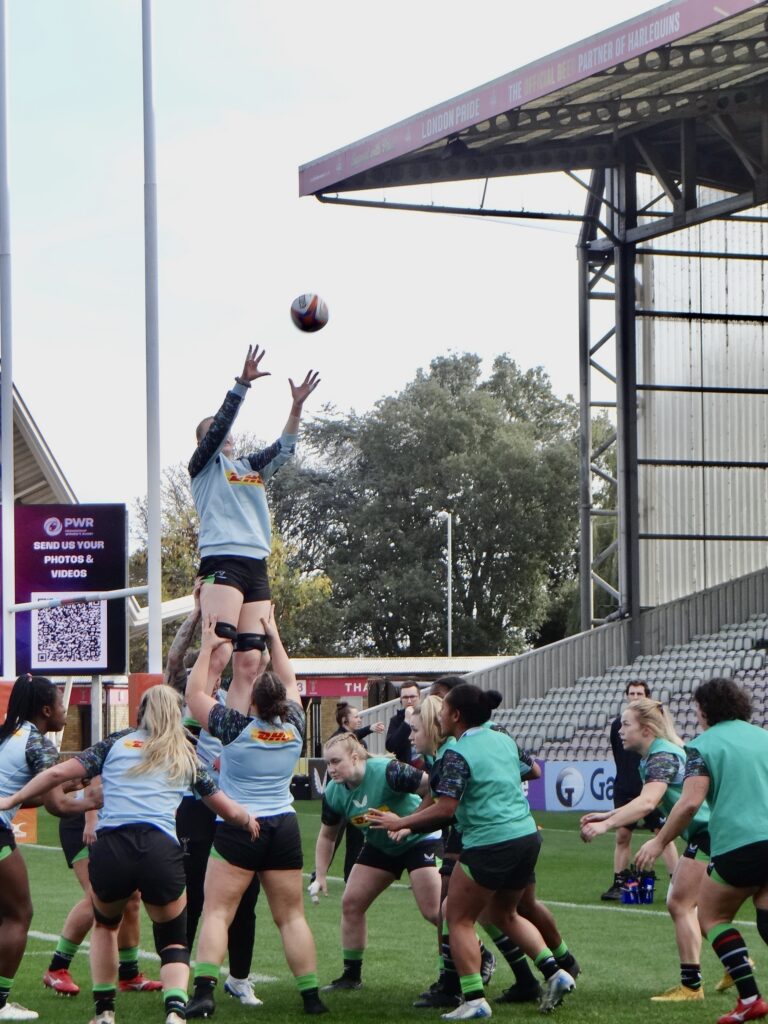
Again, we’ve got two young front rowers in Zara Green and Ruby Winstanley, who featured recently in our 23. And they’re 19, 20, and they’ve been involved in England under-21s.
We’re really seeing them push the senior players in both training and match day selection, which is fantastic.
It must be quite a benefit because you’ve seen how they can play coming through the pathway.
Can you see where they could suddenly fit in, and think: now is the moment?
When we make these decisions, they’re considered decisions, and we make them as a collective.
So there’ll be athletic performance input and there’ll be medical input.
We need those players to have the correct loading, to be robust enough to perform in the senior PWR environment.
And we value their longevity in the game; they’re young players, we want them to have long futures and it’s important we get that right.
From a rugby perspective, one of the strengths of our coaching set-up and staff at Quins is that our pathway coaches and senior coaches sit in the same coaching office and they’re constantly having those discussions…
How is X, Y and Z player getting on at the university or in the college game?
And can we facilitate training opportunities?
Can we make sure that they’re integrated into senior position specific sessions so that they’re getting the exposure and the training and coaching that they need to be able to make that step up?
And when we feel that all of those parts are right, then we’ll make sure that they have opportunities to put their hand up for selection.
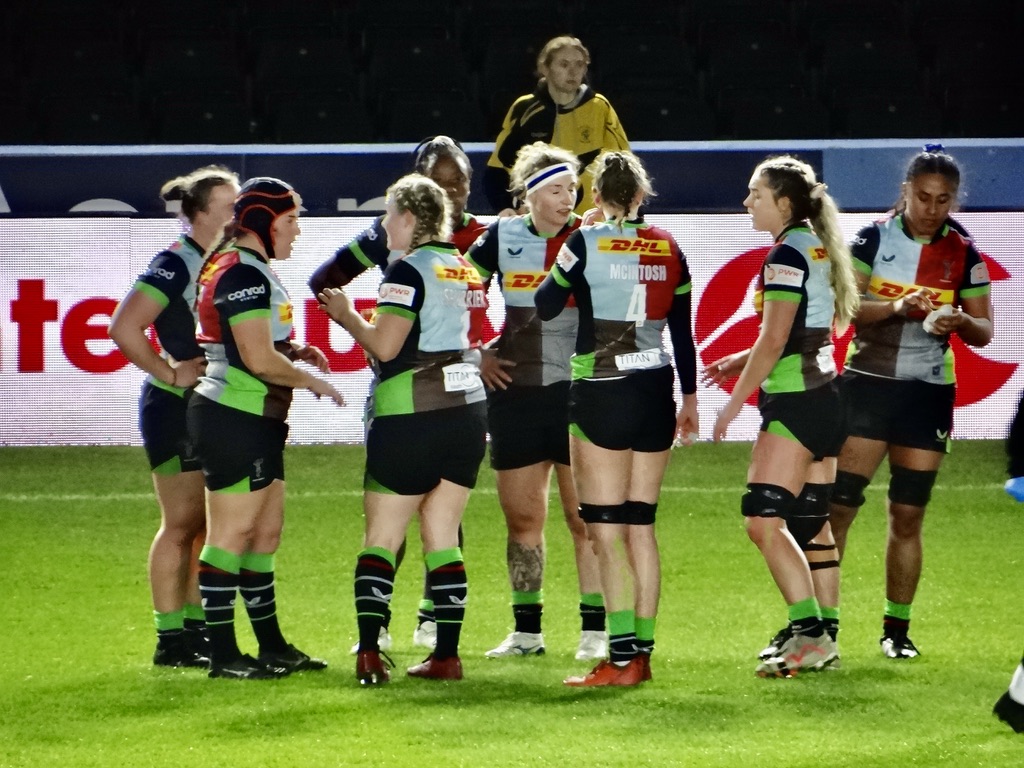
Are you someone who looks at the holistic, overall player, or looks at all the stats, how many carries, how many metres, that kind of thing.
Or are you looking more at what they’ve done maybe off the ball?
There’s a lot of stuff that goes on or you can see the way they may be guiding the play.
I think we’d look at we’d look at all facets of their game.
So again, our analysts would be in those conversations.
Yes, we would look at data.
The reality is it’s very difficult to compare perhaps a university fixture and some of those things you’ve mentioned, carries or metres made or meaningful distance.
It’s very difficult to compare those kinds of metrics to the metrics in a PWR environment because the conditions ultimately are very different.
So you have to be holistic in your approach, and you have to consider the athletic development, the medical side of things, the rugby development, the performance in training, the overall player and their readiness to make that step up.
How would you encourage other women to get into a coaching role? How can they get involved?
I think there are certainly avenues.
It’s really important, particularly in coaching, to just get coaching reps in, and for many years I coached across multiple environments.
The reality of coaching, whether you’re male or female, is it’s hard.
It’s hard work.
It’s long hours.
And I threw myself into that.
I would be coaching at a club; I would be coaching in the university space, in the pathway college rugby centre of excellence. And all those different experiences enabled me to hone my craft and build my network and connect with other coaches in the game who were generous in sharing their knowledge or inviting me to observe them in their environments.
The reality of coaching, whether you’re male or female, is it’s hard.
It’s hard work.
It’s long hours.
And I threw myself into that.
I know there are plenty of other female coaches in the game who are doing just that.
Ultimately, I think, there are opportunities available and female coaches just have to go for them.
Did you have somebody, maybe more than one person, who was a mentor?
Definitely more than one person, I’ve had several along the way.
Giselle Mather had a huge influence on my early coaching career. She offered me a huge amount of advice and support when I was working at the City of Oxford College, who were in partnership with Wasps. And then gave me opportunities to coach in the senior Wasps and Trailfinders environment. She was a big one for me.
More recently, I’m hugely inspired by my current and former colleagues at Harlequins.
Ross Chisholm is a fantastic head coach and generous with his experiences of both playing and coaching with everyone here at Quins.
Andy Rhys Jones, now at Scotland, was a huge support for me when I was in my pathway role at Harlequins. Again, very generous with his knowledge, and that support really enabled me to step into my current role.
Similarly, looking at players now, can you tell who might be good at coaching themselves?
I imagine a lot of players get involved in coaching kids, and I wonder if you can see the potential in just the way they’re playing.
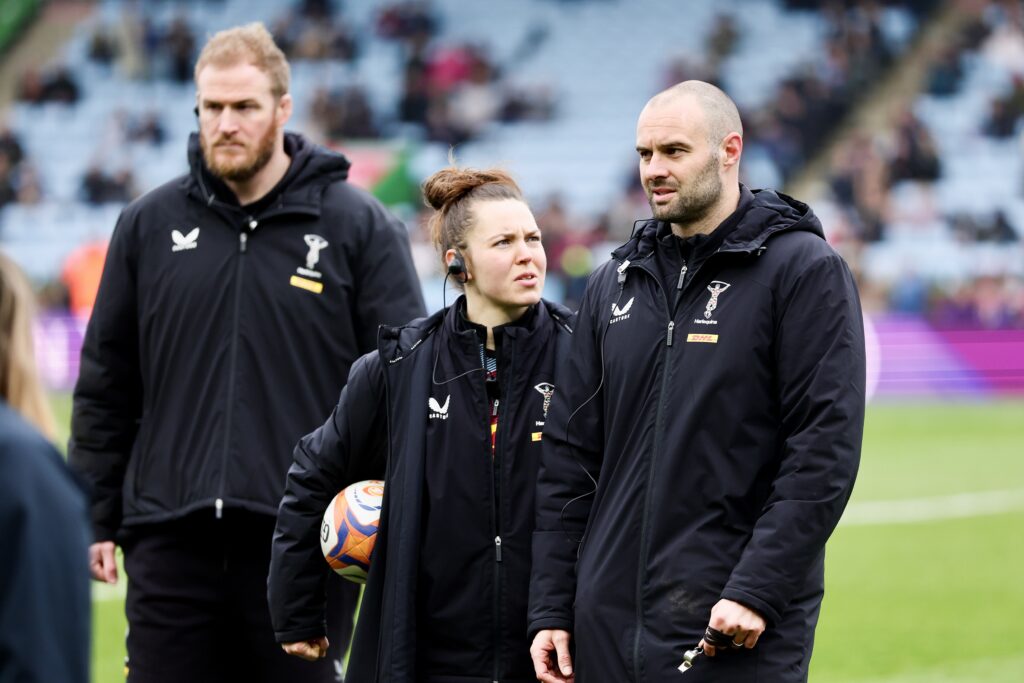
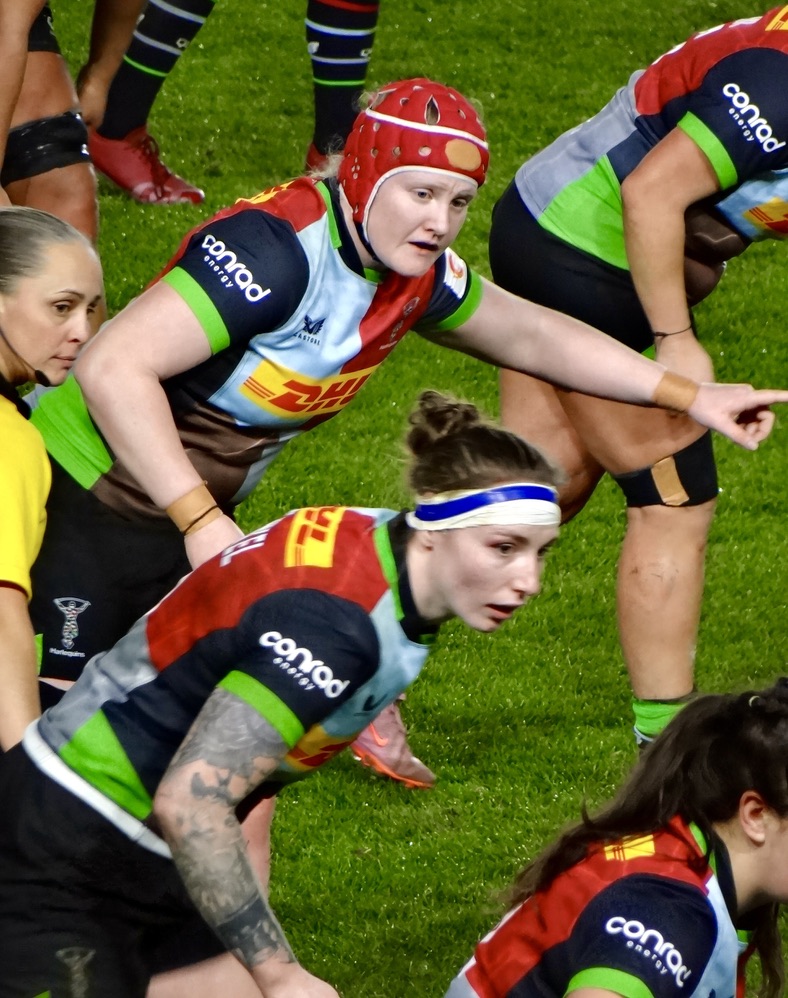
Someone like Aoife Wafer (below, left), I think she would be a good coach because she seems like a fulcrum, and you can see her directing the play; also she sounds like she’s quite patient, but I could be completely wrong!
I won’t comment on the patience!
No, listen, I agree with you.
I think Aoife would be a fantastic coach.
We’ve got a number of players in our environment who are really committed to giving back to the game and to sharing their knowledge with younger generations coming through.
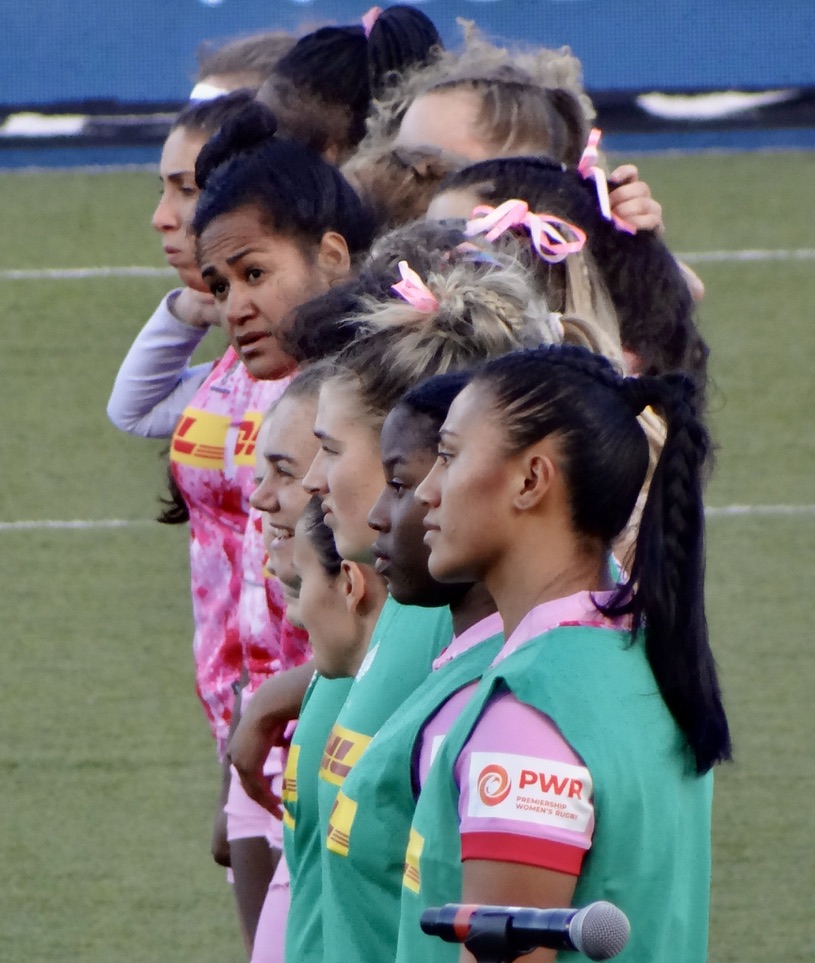
Lagi Tuima (below, right) is coaching on our university programme and Shaunagh Brown, obviously a former player, is also coaching with the University of Surrey.
So there are two prime examples of players who are stepping into those roles.
We’ve got a number of other players who are coaching across the community or the college or wider foundation programmes as well at Harlequins.
We’re constantly in dialogue with players over… what do their future aspirations look like and are there ways that we can support?
One of the challenges in the women’s game is the ability to juggle coaching and playing at the same time.
We’re really keen – as we are across all careers, not just coaching – to support current players with their career aspirations and with their dual careers, with the game where it is in its current professional state.
It’s something that that we’re constantly in dialogue with players over; what do their future aspirations look like and are there ways that we can support?
One of the challenges in the women’s game is the ability to juggle coaching and playing at the same time.
The university and college spaces lend themselves well to players doing both, because they can coach on a Wednesday and Friday and most clubs train on a Monday, Tuesday, Thursday.
Obviously the community game will also train in the evening. Ultimately our core sessions, tilted towards the afternoon and evening, would clash with players coaching in the club game.
So there are some logistical challenges around making it work, but I think certainly those pathway coaching opportunities have been fantastic for young aspiring players coming through the game.
On mentoring, is that something that you do yourself now, having had your mentors? Would you now be mentor to some of the people you’ve mentioned, the younger ones coming through?
Absolutely.
And given my pathway background, I’ve tried to be really available for those players.
My advice for the coaches out there – or programme managers, programme leads – if they’re interested in connecting, to reach out.
Whether it’s me or others in the game, my experience has been generally, we’re incredibly fortunate that professionals in our game are generous with their time and are keen to share and impart on that learning journey.
So, yes, I’d definitely love to give back in that respect.
Photos: Andrew Foster/Shutterstock, Helen M Jerome