
ONCE UPON A TIME – the Swiss Summer Fairytale and Euros Legacy
Looking back on the magical summer of 2025, we bring you the exclusive thoughts of Switzerland’s captain Lia Wälti, goalkeeper Livia Peng, and super sub Leila Wandeler.
We also hear from Swiss fans Fiona Schoch, Urban Krattiger and Peter Russenberger – plus one of the thousands of volunteers – on their key memories, how the tournament changed perceptions, and crucially, their high hopes for the future of Swiss women’s football.
Was it all a dream? What did it really achieve for the host nation? How does its legacy compare with its stated objectives? Helen M Jerome was lucky enough to attend seven games across four stadiums in Switzerland and got caught up in the euphoria.
So let’s relive the fairytale and see if its legacy is happy ever after…
The simple, but ambitious slogan of the Women’s EURO 2025 was: ‘The Summit of Emotions’, so who better to talk about this than Switzerland’s iconic captain, Lia Wälti, then of Arsenal and now of Juventus.
Wälti is in no doubt that the whole experience was transformative:
It’s hard not to agree with Wälti’s emotions, even as a spectator. And travelling around the country, you couldn’t help but notice Euros fever spreading like wildfire.
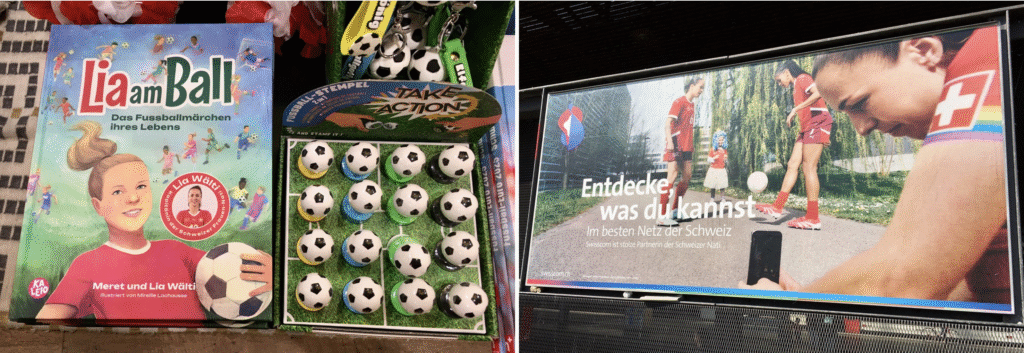
Lia Wälti herself seemed to be around every corner, her image on everything from huge billboards and transport hubs to paintings, magazine spreads, and even children’s games.
lia wälti, swiss captain
Town squares showed the Swiss team’s matches – and packed fan zones screened nearly all the other games, with stats showing that 1.2 million people enjoyed the fan zones’ atmosphere across the eight host cities, and there were many more in small towns beyond.
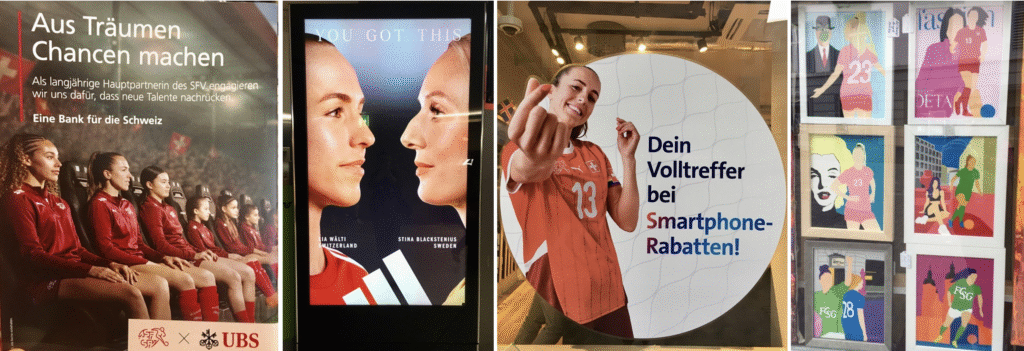
Walking into a branch of UBS (aka Bank Suisse) I was surprised, and almost did a double-take, when I saw that every single one of the employees – male and female – were sporting Swiss women’s team jerseys.
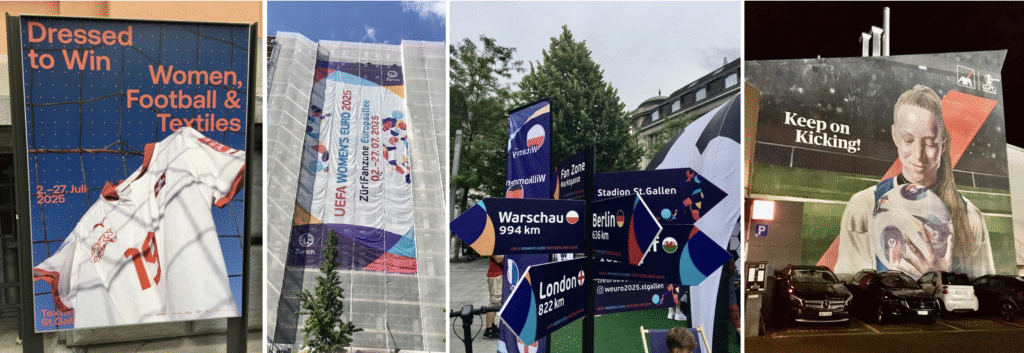
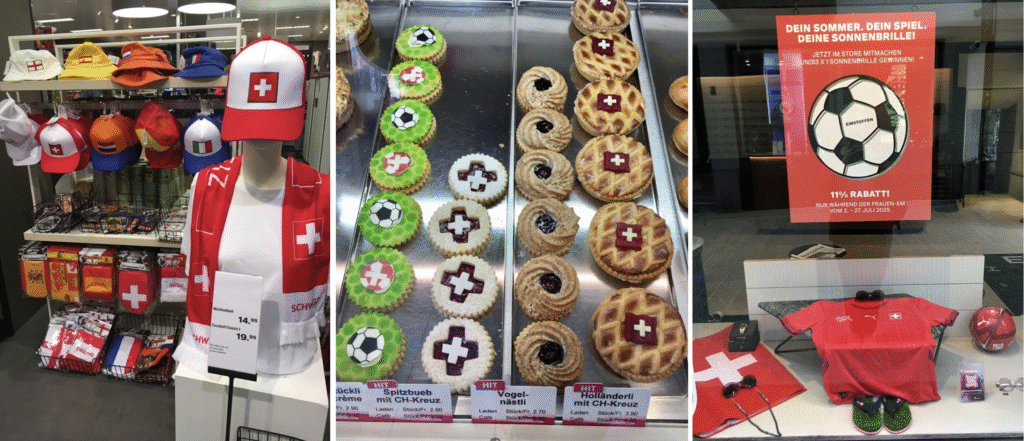
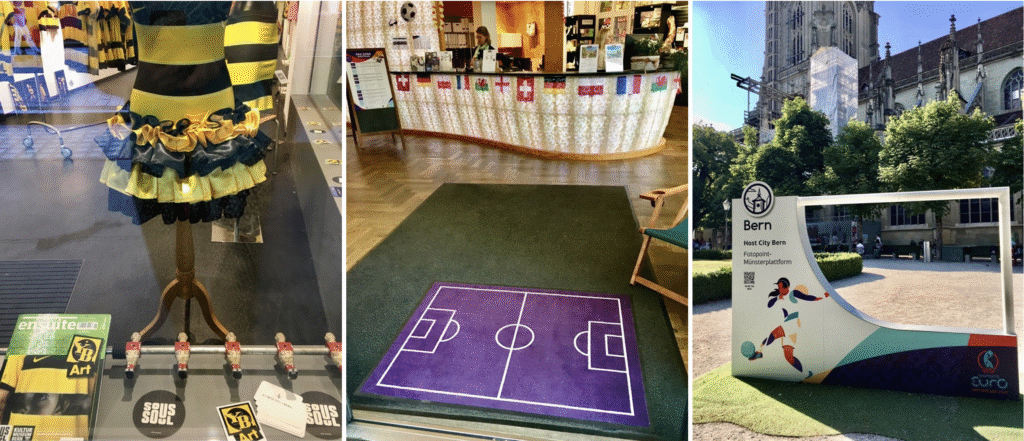
Wandering around the streets of old towns like St Gallen and Bern, it was amazing to see that all manner of shopkeepers were shouting about the Euros in general and the Swiss women’s team in particular.
Bakeries made special football-themed cookies. Information centres had mini football pitches as welcome mats. They were also helpful in explaining the various, regional kinds of würst we would find in each host city. My verdict: best of the würst was inside the St Gallen stadium.
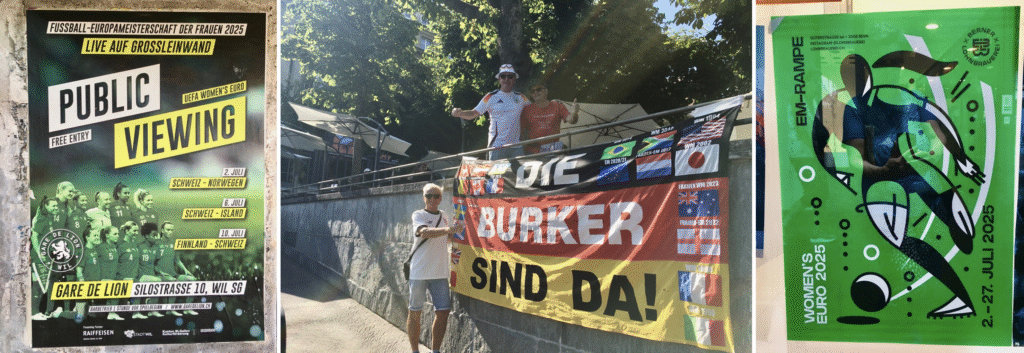
Signposts in host cities pointed towards the capitals of competing nations. Posters and billboards constantly reminded you of the Euros wherever you went.
The textile museum in St Gallen had a fascinating exhibition called ‘Dressed to Win’ on Women, Football and Textiles.
All the public transport – from double-decker express trains to trams and buses and even late-night bus-taxis – was connected, and pretty much every bit of your travel was free on the days when you had a match ticket. This meant 86 per cent of spectators arrived at the matches using eco-friendly options.
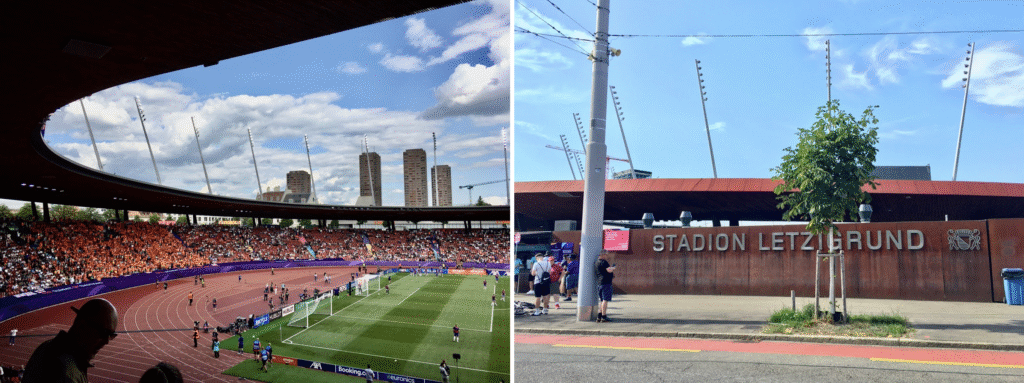
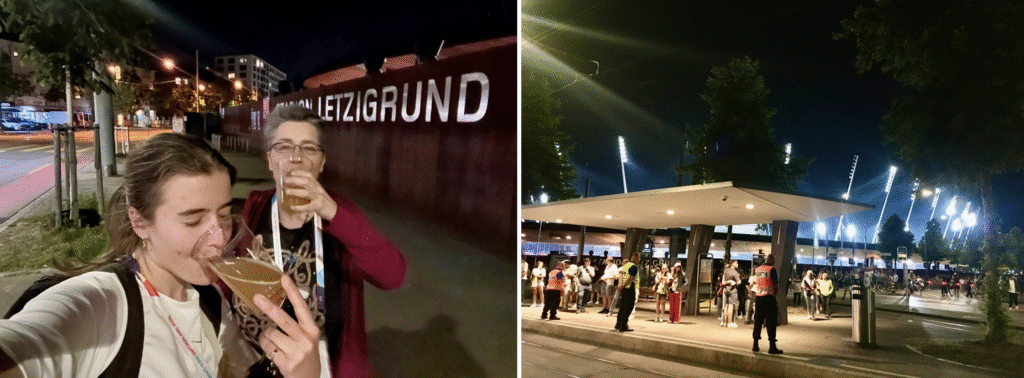
And I managed to share a local cider with fellow journo Jamie Spangher, after England’s big win over the Netherlands at Zurich’s rust-covered Letzigrund, before getting a tram and train back to my 15th Century Witches Tower accommodation (no, really). Win-win.
Walk This Way
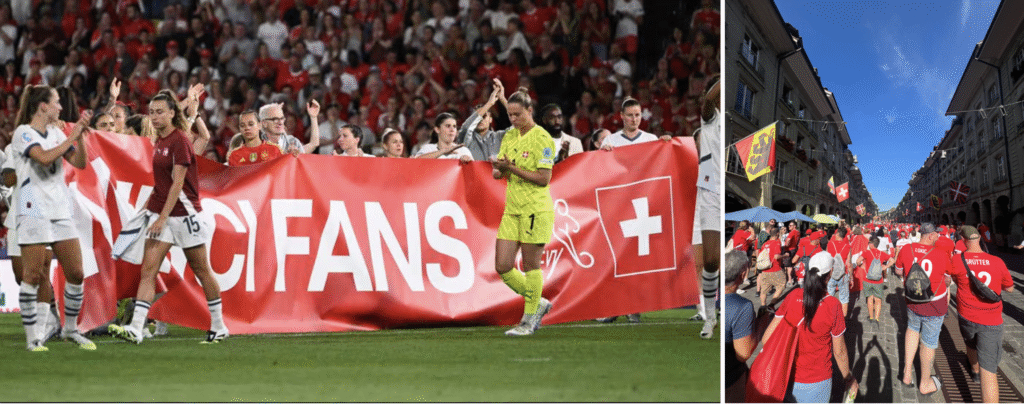
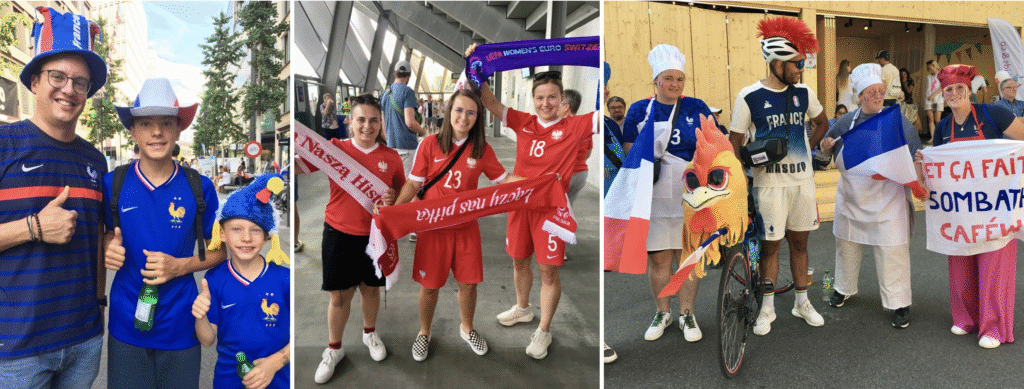
Another phenomenon was the fan walk. The Dutch already knew how to do it, turning all their routes into vibrant, orange rivers of people, jumping ‘links’ and ‘rechts’. The England fans gradually grew in number on their pre-match ritual routes to each group game, up to and including the final.
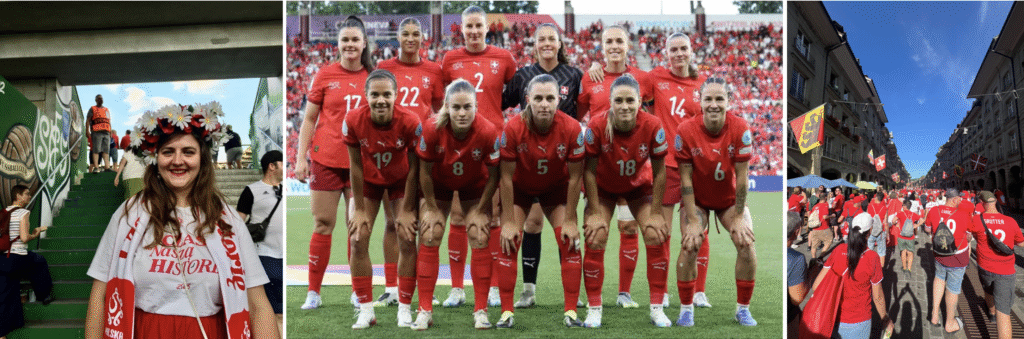
Most notably, the 20,000-strong fan walk (above, right) before Switzerland’s quarter-final against Spain saw the bridge in Bern turn red. In fact, almost 100,000 people took part in at least one fan walk during the Euros.
Fiona Schoch (below, left) is a long-time Swiss women’s football fan who managed to get tickets for three Euros matches and says she found the experience vibrant and emotional, and felt a great sense of cohesion and peace. We met while waiting for the tram to the Letzigrund to see Germany v Sweden.
For Schoch, her favourite moment from a Swiss-coloured perspective was immediate and visceral: “Without a doubt, the palpitations that shot through my body when Riola Xhemaili scored in stoppage time against Finland. This 1-1 equaliser sealed Switzerland’s place in the quarter-finals for the first time in the history of the Women’s Euros. It was a truly magical moment that electrified the whole country and created Wembley moments at home.”
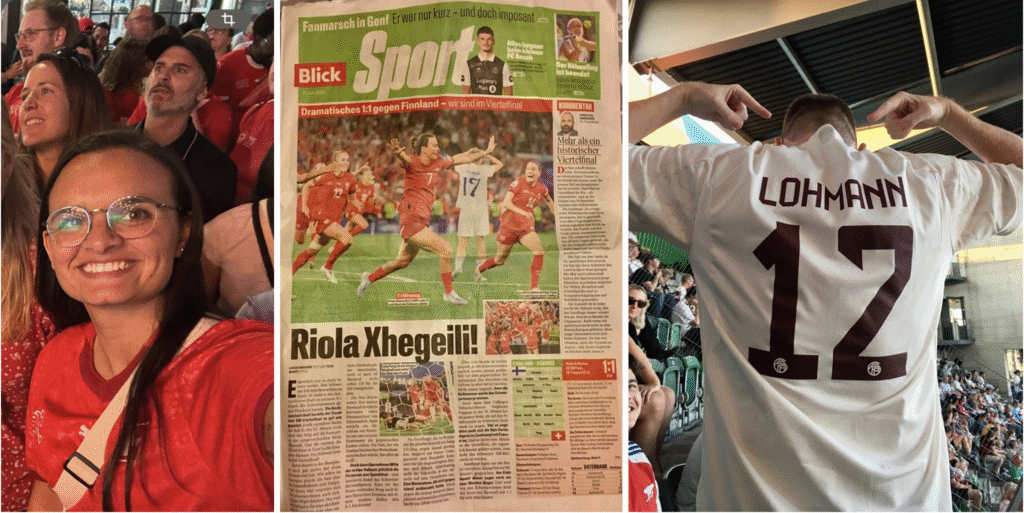
Urban Krattiger is a handball coach who wears a Sydney Lohmann shirt (above, right), but also supports the Swiss women’s football team.
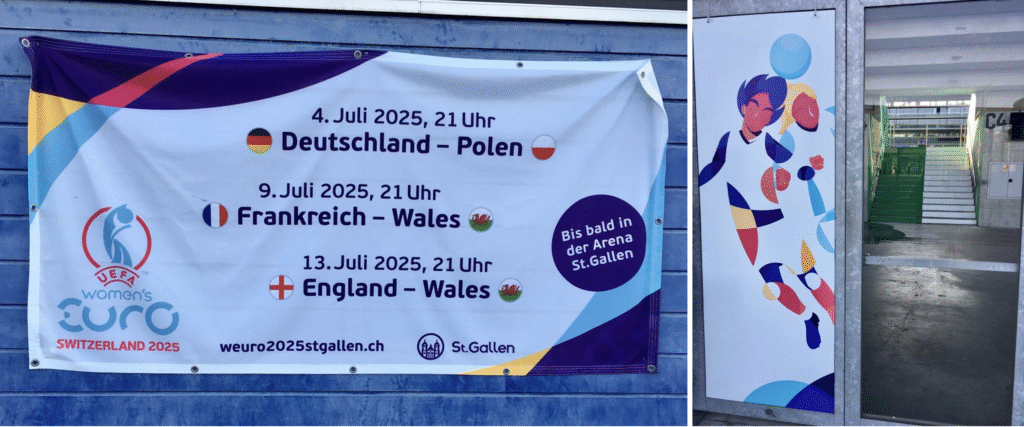
We met in the St Gallen stadium (below), before Poland made their Euros debut, against Germany.
urban krattiger, handball coach and swiss fan
Krattiger agrees that the last-minute goal against Finland was the highlight of Euro 2025. He watched the game at the Open Air Festival in Frauenfeld, his hometown, on a big screen.
Even though this is a hiphop festival – the biggest in Europe – and not really the crowd for women’s football, he says: “There were hundreds of people – men and women – watching and cheering. And when Reuteler’s cross found Xhemaili everyone held their breath before going wild.”
Peter Russenberger is a Swiss sports coach who found himself especially moved by the guard of honour from the Spanish team when they defeated the Swiss in the quarter-finals, declaring this moment “hard to beat.”
Russenberger was also enchanted by the way a new group of fans created a genuinely peaceful atmosphere, “transcending nations and lighting a fire of enthusiasm for all the players.”
peter russenberger, swiss sports coach
With his coach’s hat on, Russenberger adds that he is full of admiration for how the Swiss team believed in their capabilities. “They showed an impeccable attitude and fighting spirit. We can’t thank and honour Pia Sundhage enough.”
He notes how the team created an unexpected momentum for women’s soccer. But acknowledges that it will be difficult to support that momentum. What heartens him, though is how the Euros empowered more goodwill and respect for women and girls who want to play football.
New Era
“A new era has started,” says Russenberger. “and expectations are rising.” So the challenge will be to offer adequate infrastructure to develop an attractive women’s league, which he reckons will take some time.
Schoch says the Euros have given a huge boost to women’s football in Switzerland. The record number of spectators – over 600,000 tickets sold and numerous sold-out stadiums – gave the sport unprecedented visibility and enthusiasm.
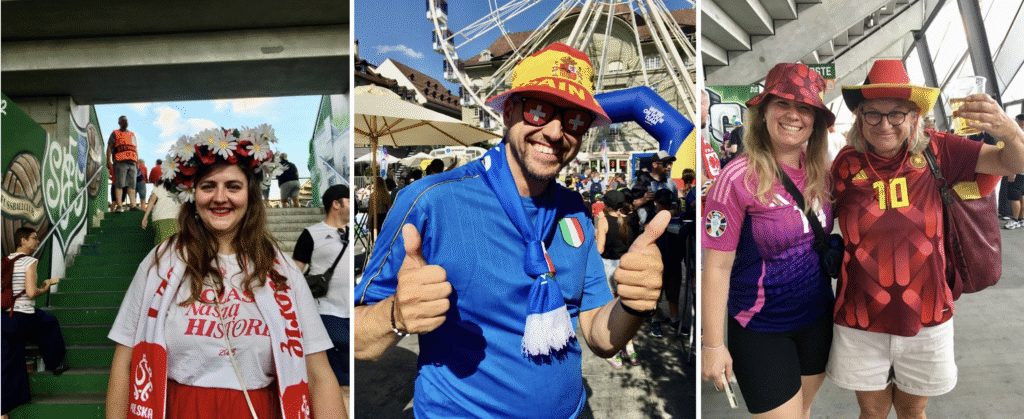
And over a third of them were fans from other countries, including Poland (left), Germany (right), and one guy hedging his bets by simultaneously supporting Italy (shirt), Spain (hat), and Switzerland (sunglasses).
She notes that the Swiss Football Association’s ‘Here to Stay’ legacy programme aims to double the number of active female players, coaches, referees and spectators by 2027 – and ensure sustainable development.
In parallel, the event has also had a positive cultural and economic impact, including innovation projects in the youth sector and a noticeable increase in revenue in tourism and retail sectors.
Krattiger says you can already see the effect on women’s football in Switzerland. “The successful Euros – and not only the Swiss team – is still a main topic in the news and all over social media. It’s here to stay.”
As evidence, he talks of Young Boys Bern Women reporting a record in season tickets sold, over 1,500. “At first, that doesn’t sound like a lot,” he says. “But if you imagine where they come from, it’s amazing.”
Krattiger has also noticed a palpable difference in the way people now talk about the players. “That might be the biggest effect. All of a sudden everyone knew Lia Wälti, Sydney Schertenleib, Geraldine Reuteler and even some stars from other teams.”
“I’ve followed women’s football for some time,” says Krattinger, “but now I can talk about it with my friends’ group. And some of them don’t even care about men’s football. I’ve heard the sentence ‘I prefer women’s football; they don’t dive, cry, act as much as men’ a lot.”
Schoch has also noticed the women’s national team is talked about differently now. “Players like Riola Xhemaili and Lia Wälti have become genuine figures of identification and are much more often at the centre of media reports and public discussions.”
Emotional Bond
“Instead of just being perceived as underdogs,” says Schoch, “people are now talking about their combative mentality, tactical strength and historic quarter-final qualification. As a result, the image of women’s football in Switzerland has shifted from fringe sport to a proud figurehead.”
The knock-on effect of Swiss success and increased media attention, makes Schoch hopeful that more fans will flock to the women’s national team and National League A matches in future.
“Many people who watched the Euros live in the stadium or on TV have now developed an emotional bond with the players.”
She sees how moments of identification – the late goals and determined performances against favourites – awakened the desire to support the team.
On top of this, new offers like fan events, youth programmes and an improved infrastructure are emerging, to make stadium attendance more attractive and easier.
fiona schoch, swiss super fan
Krattiger echoes these sentiments, adding that Swiss TV plans to broadcast more games and clubs are willing to let women play in the main stadiums.
“I think the hype will be real. At least in the short term – it’s now up to the clubs and the Swiss football federation to take this chance and invest in women’s football.”
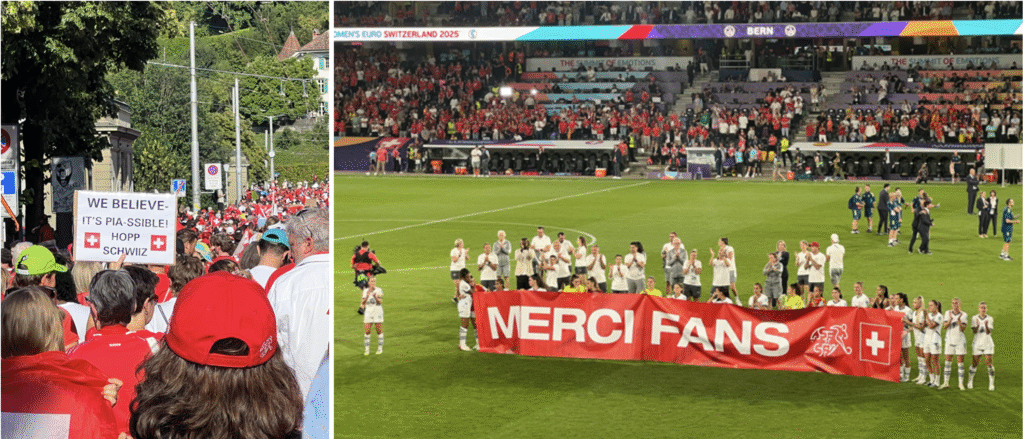
The worst part of Krattiger’s Euro experience was not being able to go to a Swiss game live. “I saw all these pictures and videos of the Swiss fan walk (above, left), especially the one before the Spain game. It literally gave me goosebumps. I was excited, hyped and also proud.”
His overriding emotion is feeling immensely proud of the Swiss team. “It gave its all on the pitch and lit a match and then the fans set the stadiums, the cities and the whole country on fire (in a good way).”
Perfectly Organised
“Our people are not well known for being loud and extroverted, but that was something else. What we are known for is organising and I think this was a perfectly organised event all over the place.”
To Krattiger, it was crazy to see how many foreign fans came to Switzerland. “Almost every game was sold out, and the fan bases of some teams were amazing. The Welsh team was staying around 15 minutes from my home and playing in St. Gallen, which is also close. It’s such a small country and they didn’t have the best of luck, but the fans were numerous and amazing.”
Schoch also loved how many smaller nations were able to seriously challenge the favourites – while observing how much the standard of play throughout Europe has risen.
In the end, however, she reckons that England’s triumph was absolutely deserved. “They played consistently, showed nerves of steel in the decisive moments and were convincing both offensively and defensively. Their victory underlined the fact that they are currently one of the most complete teams in women’s football.”
Russenberger declares that the most important effect of the Swiss Euros is clear: “A lot of youngsters are inspired, and the Swiss players enhanced that with all their heart.”
urban krattiger
Krattiger is 100 per cent certain that young girls have been inspired to play, seeing so many families at the games and public viewings, smiling and cheering.
“Today you can even see – and obviously buy – jerseys with women’s national players’ names. I haven’t seen this before. Football is the number one sport in Switzerland for boys. Now the door is open to achieve the same in women’s football.”
For Schoch, Euro 2025 has visibly inspired many girls in Switzerland to take up football themselves. “Role models like the Swiss national team show that Swiss women can compete at the highest level – that makes the dream more tangible.”
She says that clubs are already reporting an increase in enquiries from young female players since the summer. In the long term, she reckons, this new enthusiasm could lead to more girls not only starting, but also staying in football for longer.
Future Proof
So what about the young Swiss stars themselves? We spoke exclusively to 19-year-old West Ham and Switzerland impact substitute Leila Wandeler, and Livia Peng, goalkeeper for Chelsea and Switzerland, already an international veteran at just 23.
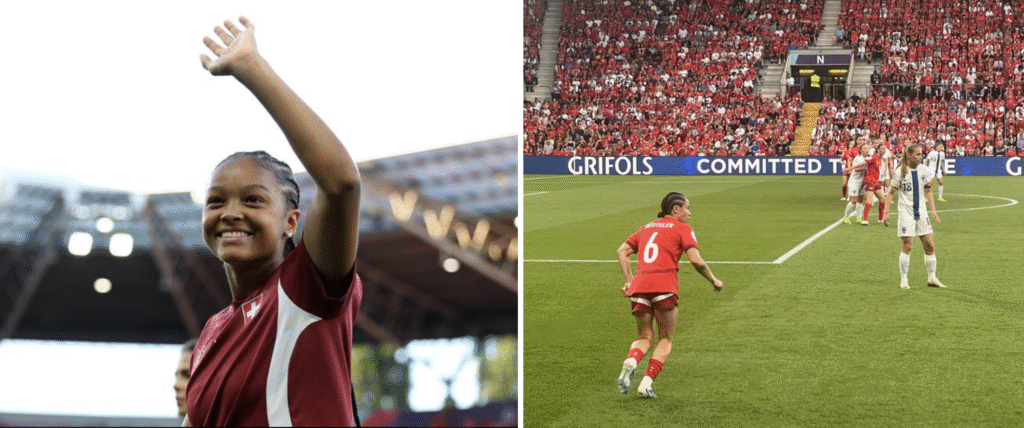
Leila Wandeler (above, left) beams when talking of the future: “In Switzerland, young girls saw it was possible to make history, because we made history. I think young girls are going to dream even bigger and see that everything can be possible when you believe it. Because we made it through to the group stage… so just more positive thoughts about women’s football!”
Much like the fans, Wandeler is optimistic about a resulting transformation for Swiss women’s football. “Yeah, of course, I think it’s gonna change for sure. I hope the league becomes professional and gives the opportunity to all women to just play football and not have to do another job at the same time.
“That’s the first objective, the first goal we have, but of course it’s gonna change, and people in Switzerland now know about women’s football.”
leila wandeler, swiss super sub
Livia Peng agrees, and hopes the level remains high. “We really need that in Switzerland. We need that in the league; it has to be more professional, and I think it grows now. With the support of the fans and the whole country, we can take it to a new level which is really important for Switzerland.”
Wandeler says the entire Euros brought her nothing but joy. “It was really amazing. Until now the best experience I’ve had in football.
“We felt like a big family with the crowd and everybody in Switzerland was on fire, so it was amazing.”
She adds that she honestly didn’t expect to be in the Swiss squad list. “So it was just good news coming… then the coach [Pia Sundhage] trusted me, and put me in the game… so even more amazing.”
Another big bonus for Wandeler was her nearest and dearest being able to see her play. “It was at home, and we had a lot of tickets, so of course I had all my family and friends, about 20 people for each game!”
Big Impact
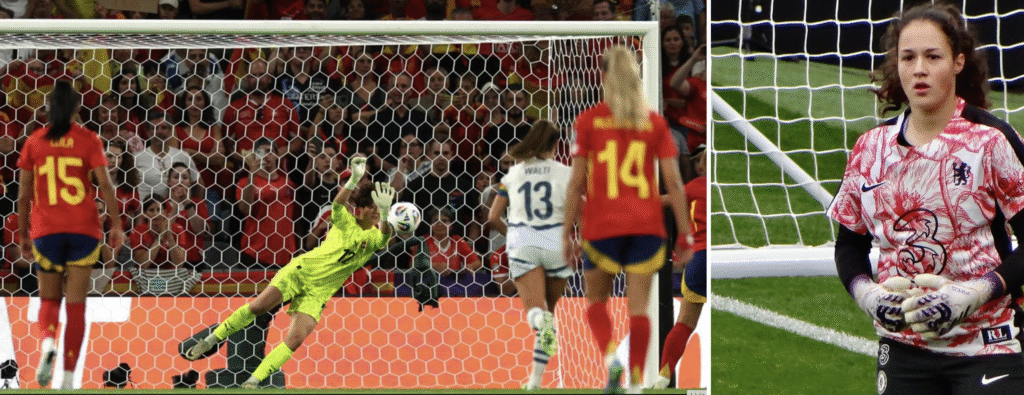
Livia Peng (above) says the tournament had “a really big impact for us, for the fans and for the whole country – because we never had a stadium sold out before.”
In fact, for Peng, the Swiss fans made all the difference. “So many fans, such a good atmosphere. It was fun to play because we felt the fans. They supported us a lot.
“There were fan marches – 25,000 people – and scenes like this never happened in Switzerland. It was different and special for us.”
Looking back now at the summer of 2025, Wandeler admits how overwhelming the home support was: “From the start of the Euros we felt the love the people in Switzerland had for the team and for women’s football. I mean at one training we had four thousand people watching… that was amazing.”
A few months on, Wandeler says that during this type of competition you’re just trying to focus on yourself and stay focused, “but after the tournament, that’s when we started to really enjoy it and realise…”
Peng is already nostalgic for the tournament. “It was so special. As a kid, you dream to be a part of the Swiss team. It’s your home country, a home Euros, it’s even more special with all the fans and my first Euros playing.
“It was emotional for me. I had goosebumps and seeing the fans, the atmosphere. It was so nice, and I was happy to play.”
livia peng, swiss national goalkeeper
The widest smile spreads across Wandeler’s face when she talks about playing alongside her iconic captain, Lia Wälti.
“It was amazing for me. I think she’s the most mature player I’ve seen – that I’ve played with – in my life.
“Of course,” adds the mischievous Wandeler, “I like to dance and everything and she’s more quiet. But I mean, an amazing experience.”
Her admiration for Wälti only grew as the Euros progressed. “She even had to play with a lot of pain sometimes and she was brilliant. She gave amazing performances, so I learned a lot from her, and she’s an example for every girl in Switzerland.”
Behind the Scenes
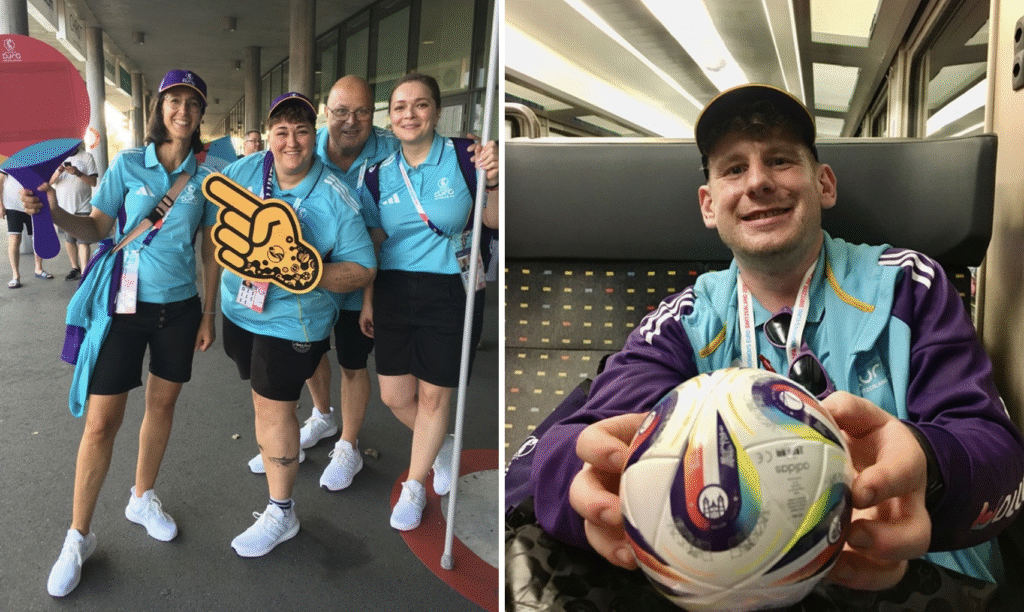
Everyone appreciated the tournament’s 2,500 volunteers, who came from 73 different nations and ranged in age from 18 to 82 years old. Perhaps surprisingly, 83 per cent of them were participating in a UEFA event for the first time.
Their big smiles and bigger pointy foam hands had a crucial role in welcoming fans, answering their endless questions, and boosting the vibes. One of these keen volunteers, Krystina Emmanouilides, was motivated to apply for a volunteering role because of her love for women’s football, along with a passion to increase awareness of the women’s game and women’s sport.
“If I could,” she says, “I would be out on the pitch making an impact, but I wasn’t blessed with the passing range and vision of Lia Wälti. So volunteering was the next best option!”
Everything, Everywhere, All At Once
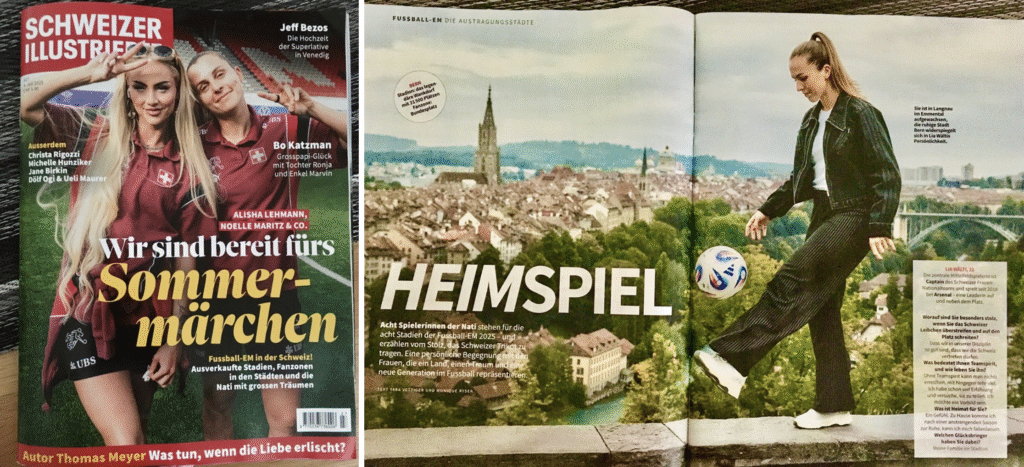
Swiss media got behind the tournament – especially when Switzerland played – in remarkable fashion. Obviously the sports mags went big on the Euros. And glossy magazines like Schweizer Illustrierte had cover features and great spreads throughout.
Alisha Lehmann and Noelle Maritz (above, left) were cover stars “ready for the summer fairytale” and inside they declared: “let us be strong as rocks” one for all, all for one.
Inside, players were dotted around the host cities, so Lia Wälti did keepie-uppies high above Bern (above, right); Ana-Maria Crnogorcevic was in Thun, Alayah Pilgrim in Zurich, Noelle Maritz in St Gallen, Sandrine Mauron in Geneva, Coumba Sow in Basel, Iman Beney in Sion, and Ramona Bachmann in Lucerne.
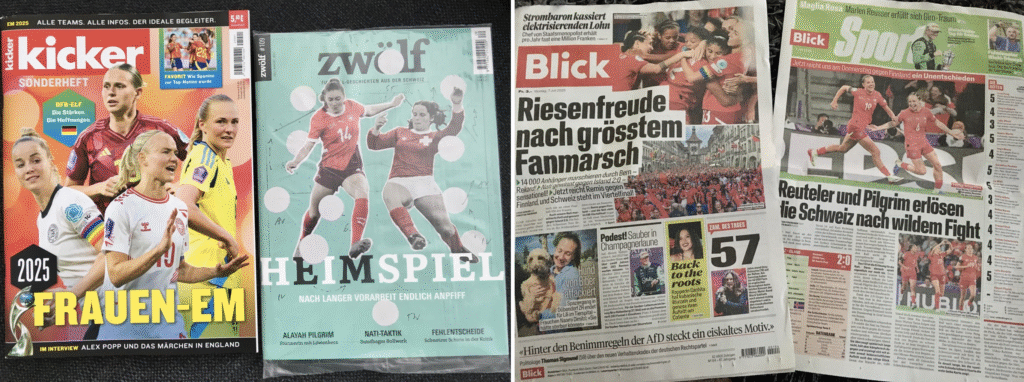
Daily newspapers, notably Blick, put their newly minted heroines on the front pages of their main and sports section with splashy headlines. “Huge joy after the biggest fan march” “Reuteler and Pilgrim redeem Switzerland after a wild fight”. And, of course: “Historic, this summer fairytale!” “With a 1-1 draw against Finland, the national team plays its way into the European Championship quarter-finals and into our hearts. Now everything is possible”
There were also intriguing features inside the main paper, including “On the road with SP National Councillor Tamara Funiciello (35) the biggest European Championship fan in the Federal Palace: ‘Women’s football was important for my coming-out’ and ‘women’s football cannot be anything other than political’.” demonstrating that the Euros impact went way beyond the pitch.
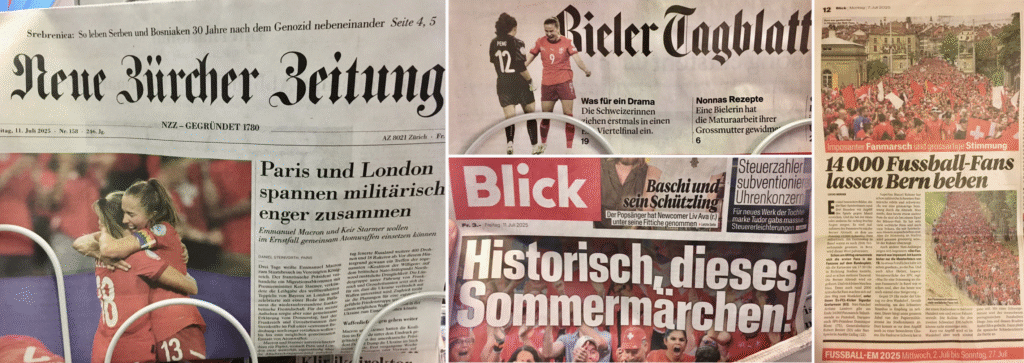
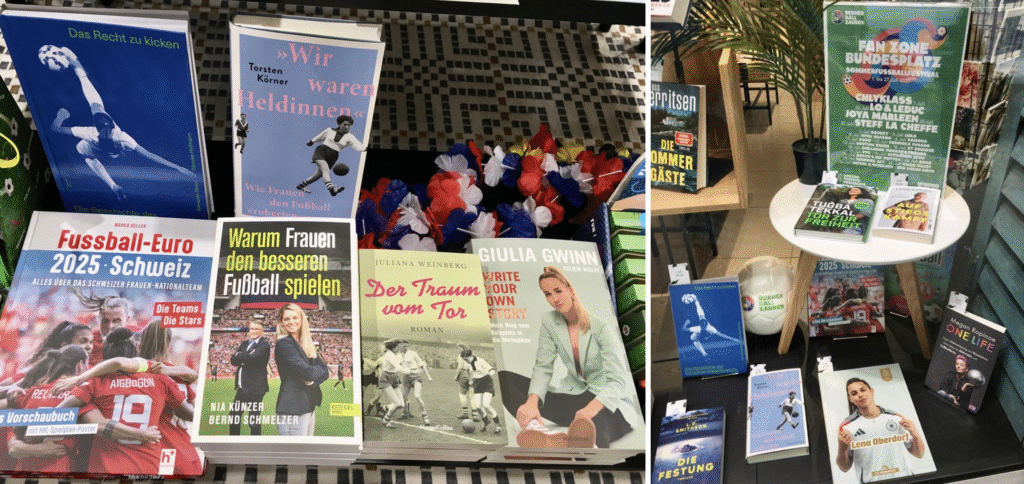
Even the Swiss bookstores in host cities proudly boasted window and in-store displays of female football histories and autobiographies.
So you could pick up Giulia Gwinn’s Write Your Own Life or Megan Rapinoe’s One Life – plus the highly recommended Das Recht zu kicken, telling the story of Swiss women’s football in great detail.
Not to mention an exhaustive guide to the 2025 Euros, and the novel Der Traum vom Tor, which starts back in 1954, tackles the ban on women’s football, and translates as Dream of a Goal!
Next, Please!
Of course, we must not get blindsided or even blinded by the heady romance of the tournament. The cold, hard truth is that progress will have its ups and downs.
Yet Swiss women’s football is aiming to level up, with the Swiss Women’s league – the AWSL – for the first time having more pros than amateurs stepping onto the pitch. And most players will hold contracts providing both pay and insurance. The ambition is also to spin off the AWSL as its own league, much like the men’s Super League. So fingers crossed.
In terms of support, concerted efforts to raise standards and increase the popularity of the AWSL started bearing fruit on the league’s opening weekend, with a 42 per cent increase in attendance at matches compared to the previous season.
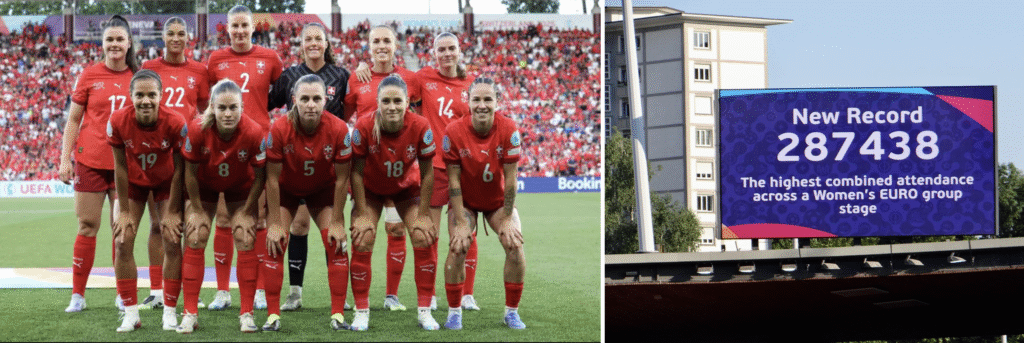
It’s going to be hard to match the stats for Euro 2025, which was the biggest yet. Filling stadiums was a key aim, and 29 of the 31 games were sold-out, while affordable tickets saw an average attendance of over 20,000 for the first time at a Women’s Euros.
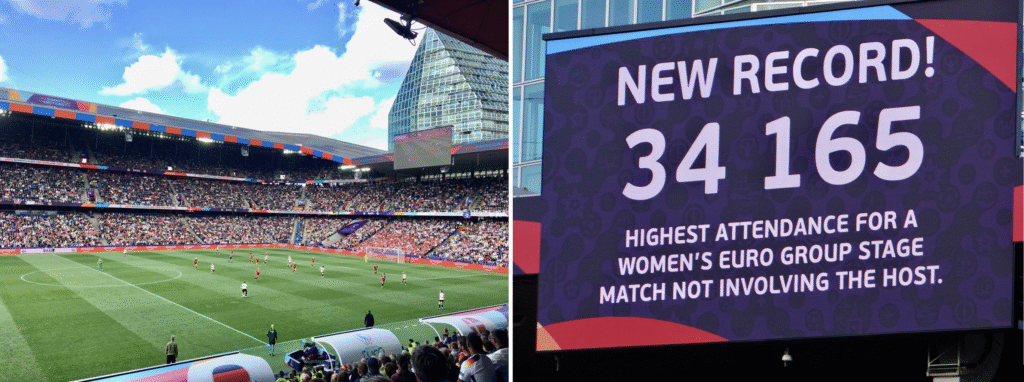
Simply put, the Euros were extraordinary in numbers alone: 106 goals, 657,291 fans filling stadiums, 412 million watching live on TV – each a Women’s EURO record. 205 million Swiss francs in total economic activity, plus 150% increase in tournament sponsorship revenue and €11M in funding for the SFA’s legacy programme.
If anyone can match or even surpass the Swiss Euros, then the next host, Germany (playing Denmark, above left) might just be in the sweet spot to do so in 2029. Germany’s semi-final against Spain was the most-watched TV programme of the year in Germany – averaging 14.57 million viewers – and their domestic attendances appear to be soaring.
So it feels that UEFA’s women’s football strategy, called Unstoppable – which aims to make women’s football ‘the most played team sport among women and girls in every European country’ by 2030 – might just be achievable.
We can only hope these ambitions come true, while giving all the support we can as fans and chroniclers of the women’s game. For there is a blueprint now, from the 2022 Euros in England, to the even more successful Swiss Euros in 2025.
So let’s raise a glass, and let the last word go to the player who has represented her nation since 2011, and whose quiet leadership by example leaves its own blueprint, Switzerland captain Lia Wälti:
“It felt like everything we’d ever fought for – with the whole country unexpectedly standing behind us!”
Photos: UEFA, Helen M Jerome