

RETIRED OUT – Where do new-look England go from here?
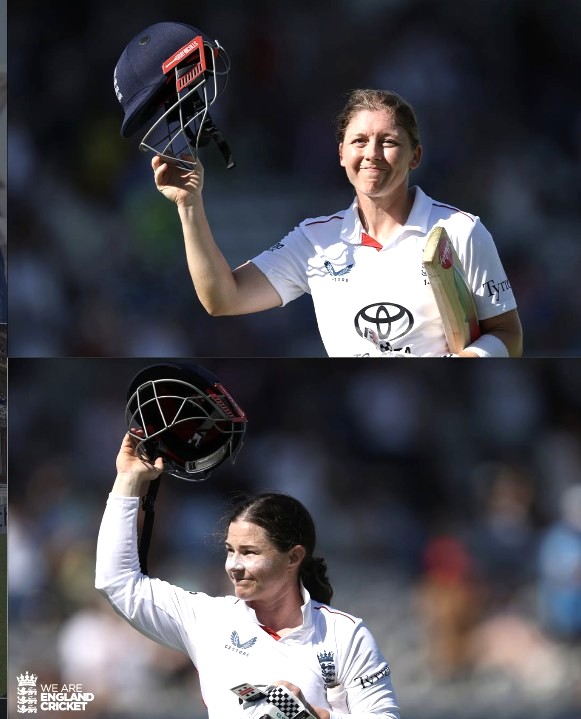
The recent maiden Test match at Lord’s saw England legends Heather Knight and Tammy Beaumont retire from international cricket. Gethin Thurlow considers the future for the game as a whole, and for England as they look to the future.
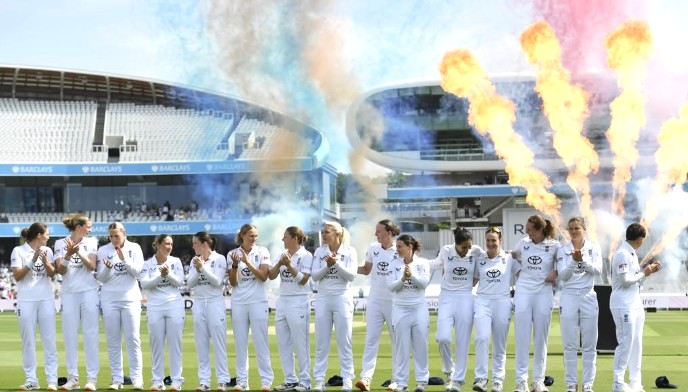
It was a strange week for England cricket. After all the positive vibes that built up from a successful home T20 World Cup, Australia – as they so often do – brought England back down to earth in a final with an obvious quality gap from the first ball to the last.
Soon after, England’s focus switched to the maiden Test match at Lord’s against India, with press conferences a couple of days later and the match itself starting the Friday after the T20 final.
There was no easing into media duties, however. On Wednesday night, legendary opener Tammy Beaumont announced her international retirement. Beaumont had been in and out of the England set-up recently – being dropped from formats, seemingly, more to mix things up rather than any lack of form – and not wanting to endure any more, she went out on her own terms.
From that moment there was a slightly unnerving feel about the whole match. Where exactly is English cricket now head coach Charlotte Edwards’ reign starts to establish?
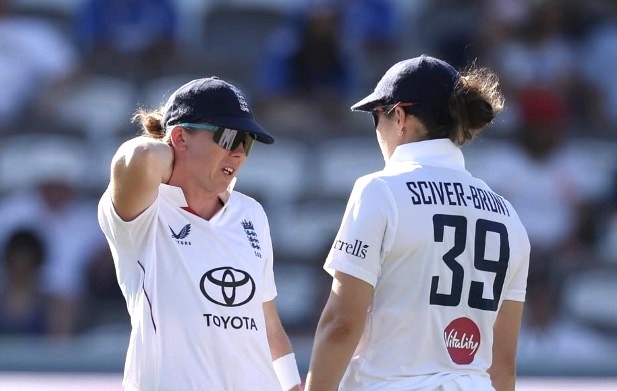
Captain Nat Sciver-Brunt did nothing to ease that when, in the blazing London sun, she chose to bowl first. Unlike with limited overs matches – where sometimes chasing can be better even if it’s a good batting wicket – the idea that you should bat first in Tests has been tried and tested across 100+ years of cricket and remains ever useful advice to this day.
The basis of this theory is that across a four-day playing period, the pitch will always wear out, making it harder to bat. In particular, it is thought that batting fourth will always prove the hardest, so if you’re going to bowl first it better be an easy chase at the end.
There are mitigating factors. If the pitch looks to be very bowler-friendly, it might be worth trying to get on top of the opposition straight away or if the conditions look better for bowling on the first day than the rest, take the ball. Neither of these were the case.
Day one was hard to read. The heatwave hanging over the ground all day could signify a glorious batting day, but the Lord’s pitch typically gives a lot to the bowler.
India always felt ahead and a final score of 285 reflected a below-average bowling effort from England. When Tammy Beaumont was dismissed late on in England’s short batting stint it was a close first day with India slightly on top. This was the last time the match was even vaguely equal.
The rest of the contest was a clinic of great batting, bowling and fielding by India, and poor batting, bowling and fielding from England.
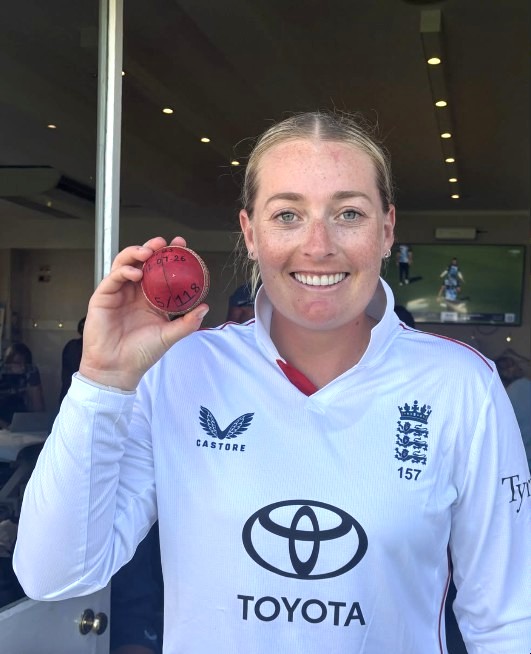
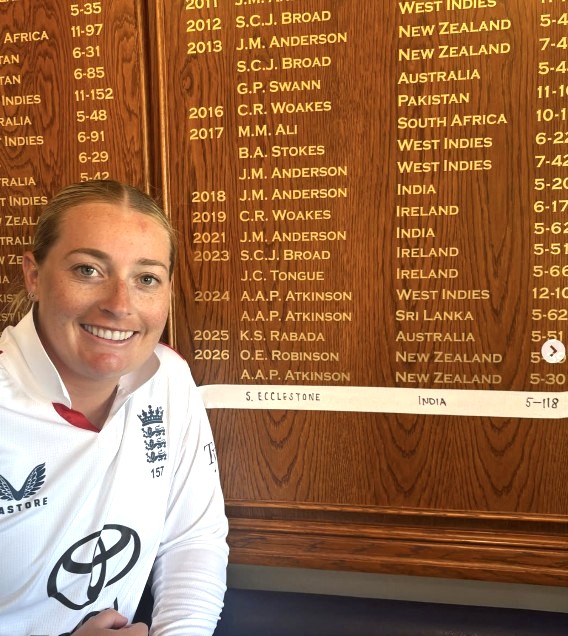
Sophie Ecclestone proved that she is ultimately just very good at cricket with a five-wicket haul and 50 runs in the second innings. Meanwhile, Amy Jones’ 50 in each innings was the only batting contribution from the top seven.
There were definitely areas for improvement in both the performance on the field and the team selection.
The bowling from England was simply not consistent enough, especially the seamers. Swing was there, and Issy Wong was moving it more than anyone, but it wasn’t controlled movement and wasn’t threatening to India’s batters.
In terms of the batting, there’s not much to say. Experienced, reliable and top-tier batters all just underdelivered. There were some overly aggressive, badly-executed shots, but the collective failure of so many quality batters showed that it wasn’t just a one-off.

When you spend the past six months, if not more, honing in on a home T20 World Cup, you can’t expect to be able to switch back into Test mode.
There were reasons for the game to be timed in this way straight after the World Cup, of course.
For example, capitalising on the momentum of women’s cricket in the country. Plus India were already here for the World Cup, so might as well stay for an extra week. And there was a relative gap between men’s Test series, so a chance for more focus to fall on the women’s game.
However, when Tests are scheduled in this way – to cram it in where it works for other people – then it’s never going to get the attention, focus and dedication it deserves from players. And matches will only continue like this.
I really don’t blame the players for how this match turned out. If I was them I’d put everything into T20s rather than Tests because it’s simply much more significant in terms of reputation, value and future potential with England and in world cricket.
If you can perform well in T20s on the international stage for 15-20 matches a year, it’s a sure-fire way of securing an ECB central contract. Smash it in a Test match and by the time the next one comes around it’s been forgotten.
Limited-overs cricket, both for England and domestically, will dictate team selection again.
There is also no way for players to hone and keep practising their skills.
In Tests you need to be able to hammer a consistent line and length when bowling. It’s that build up of pressure that can get you wickets, that line outside off-stump where you can swing it and get rewards. But those rewards only come from consistently bowling a good line and length.
Limited-overs cricket is so different – bowling is all about being unpredictable, stopping boundaries and bowling lots of different types of deliveries. The complete opposite to Test match bowling. So if you’re bowling unpredictably all year round for limited-over formats, you can see why England’s seamers might struggle to bowl consistently with under a week to completely change their bowling mindset and technique.
In shorter formats, bowlers also know they’ll bowl no more than four or 10 overs in a game – depending on the limited-over format – and so can push all out in those. In Test match bowling, though, they might easily bowl 20 overs or more, so have to manage the effects on their body and the lack of time to get used to it.
The story for batters is similar. It’s a big adjustment learning how to put together a Test innings: staying disciplined outside off-stump and learning what shots do or don’t work so well in red ball cricket.
There’s a lack of Test matches overall for players to do this, but also at the domestic level.
A county championship-esque competition would help address this gap. If all English county players got a fair chunk of time each summer dedicated to training for the longer format – and experience actually playing it and learning how to perform consistently – it would also allow for Test specialist players to be selected.
Instead, the current policy is more about guessing, based on white ball cricket, who might suit the longer red ball game, rather than who already suits Test match cricket.
The whole match saw more than 37,000 fans enter the Home of Cricket to watch the first such occasion at the venue.
While the historic first ever Lord’s Test match didn’t go to plan on the pitch for England, it was still a hugely significant occasion. On Saturday, the single day women’s Test match attendance record was broken, with 15,243 descending on St John’s Wood.
The whole match saw more than 37,000 fans enter the Home of Cricket to watch the first such occasion at the venue. Proof that people want to see more of it. ECB/ICC – it’s over to you now…
Photos: Instagram