

MIX IT UP. How training with lads lifts Lightning’s level
Girls and boys often play sport together when they’re young. But as they grow older, they’re increasingly divided by gender. By adulthood, there’s a clear separation between women’s sport and men’s.
Segregated because of their physical differences, they’re traditionally only considered as ‘opponents‘ by sexist agendas trying to show male dominance over women.
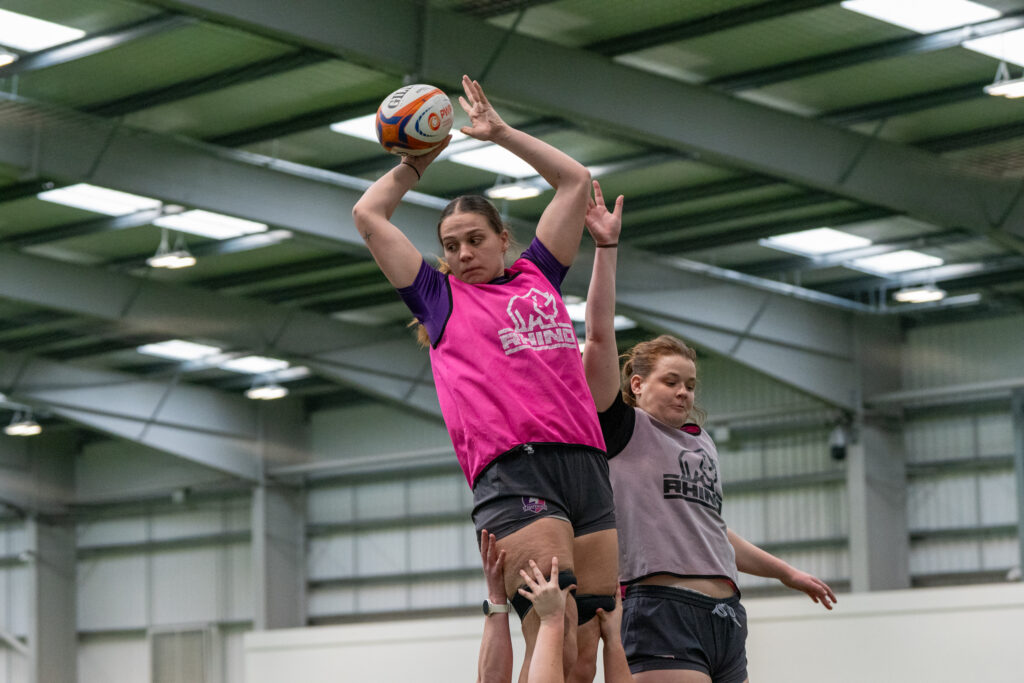
But one women’s rugby team challenges this stereotype. And they increasingly use mixed training sessions as a deliberate performance tool to level up skills.
Clare McEwen speaks to these training trailblazers – Loughborough Lightning – as well as exploring the wider, and sometimes surprising picture in rugby and other sports…
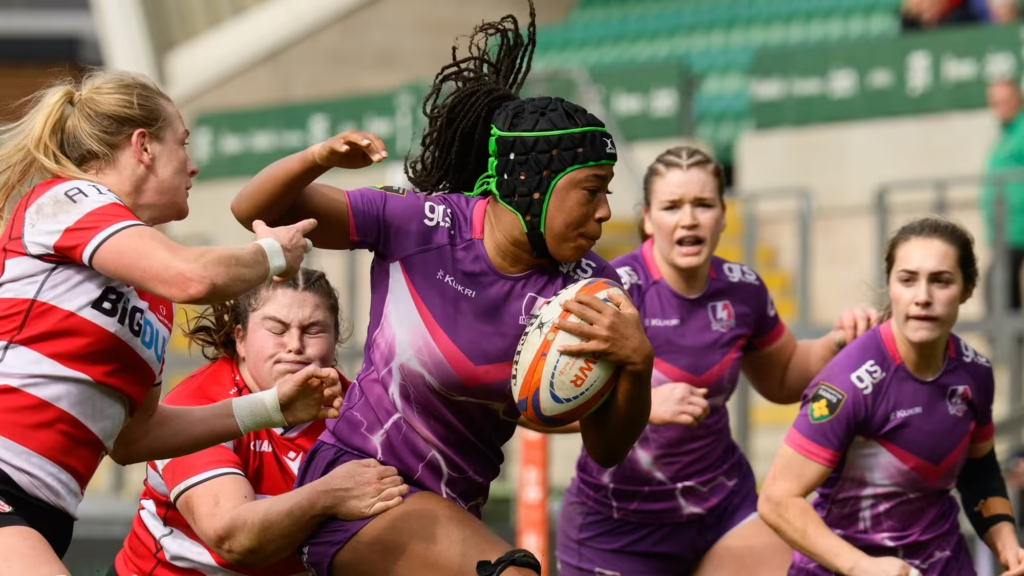
Up until recently, boys or mixed teams were usually the only option for girls who wanted to play rugby or football. Even now, with an increased number of girls-only teams, mixed youth sport is commonplace. Plenty of girls, for example, play in a mixed football team as well as their girls’ side to give themselves an extra physical edge.
But as girls and boys get older, mixed sessions tend to disappear.
It’s not hard to see why. Female and male bodies are different. Men are generally bigger, faster, and stronger than women.
But what if those differences are used to help players improve?
Enter Loughborough Lightning.
Crucially, Lightning head coach Nathan Smith returned to Loughborough after leading the University’s BUCS (British Universities and Colleges Sport) men’s team as head coach from 2018 to 2020.
Now, through the club’s partnership with Loughborough University, mixed training sessions are part of how the team improves.
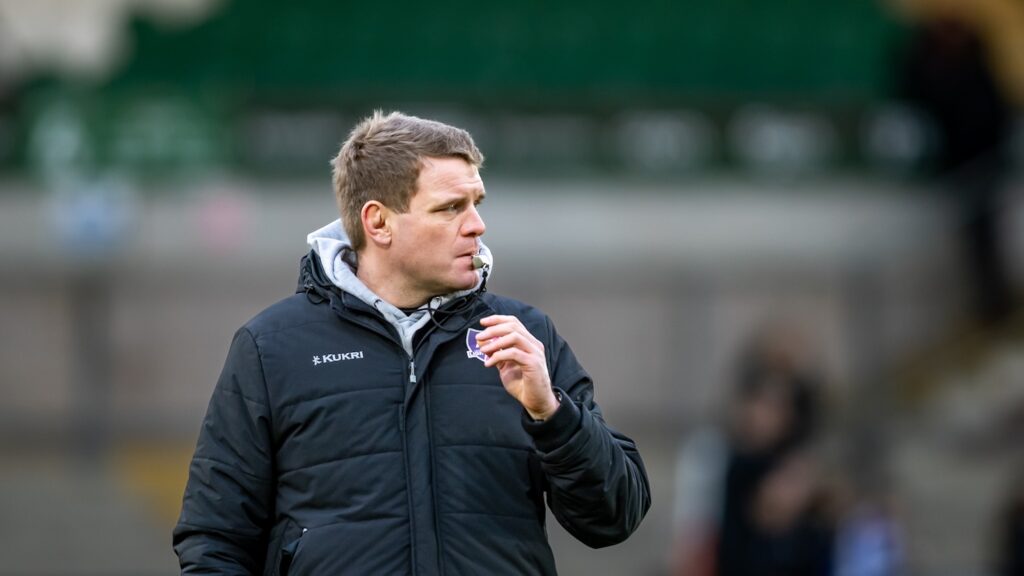
Nathan Smith explains how the sessions work:
“A lot of it’s based on speed and timing. The men will obviously be quite a lot faster than us.
“It’s not necessarily a contact thing. Basically, can we train against a faster opposition than we’re going to play against at the weekend? If they give you space that you think you can expose, then they’re going to recover quicker.
“The biggest difference is probably around wingers because that’s out-and-out sprinting competition, which essentially the men we’re playing, at that level, will win. We have to be extremely accurate to get any momentum within the game. That’s the main reason why we do it.”
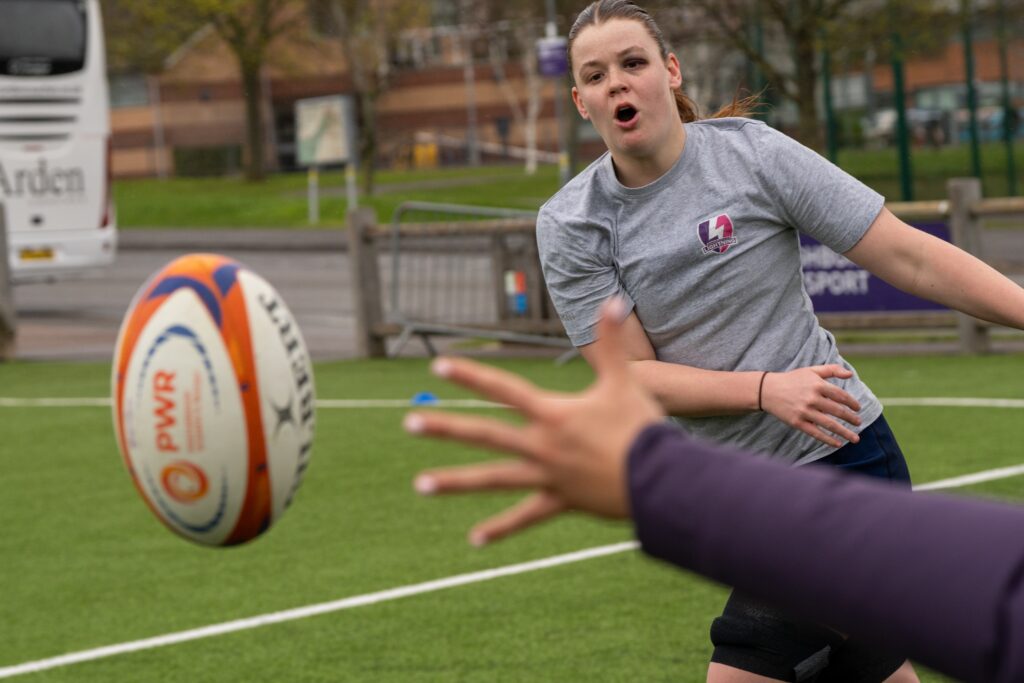
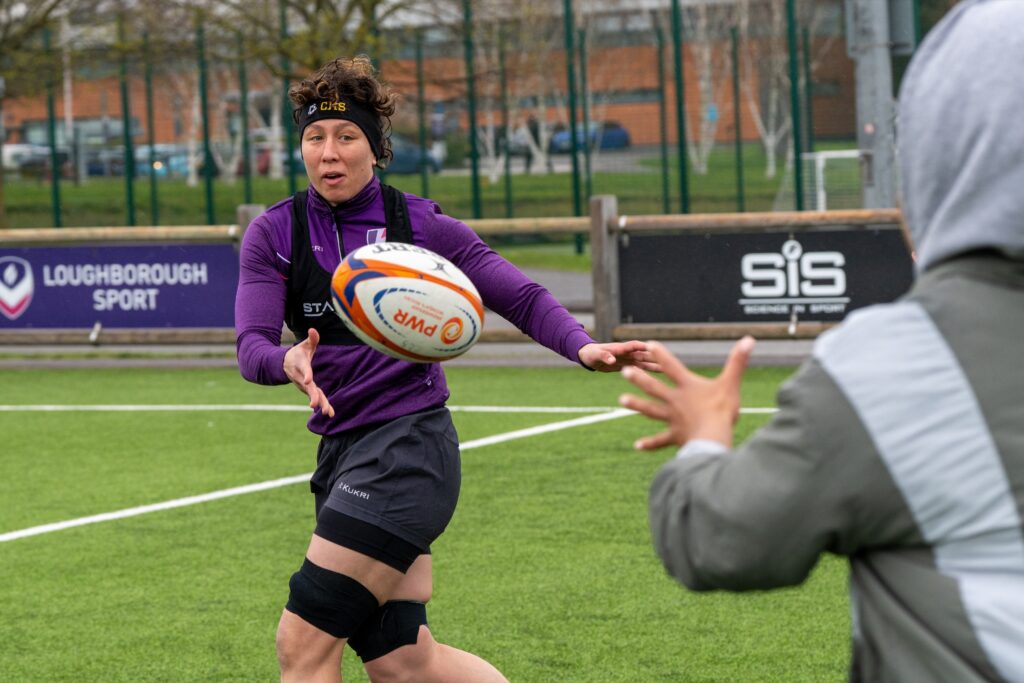
They don’t use full contact because as Smith says, “the context is too risky.” For him, the main benefit lies elsewhere:
“It’s more about speed and speed of thought. You see speed of thought improve pretty quickly because we just don’t have that time to think. It heightens the instinct around making a decision.”
It makes perfect sense when you think about it. Training against or with better players improves everyone, from grassroots to elite sport. By necessity, it makes you sharper. Figuring out how to beat a superior opponent is played out by coaches in sport every week. If players can test themselves in training, matchday becomes an extension of that.
So how do the players feel about these mixed training sessions?
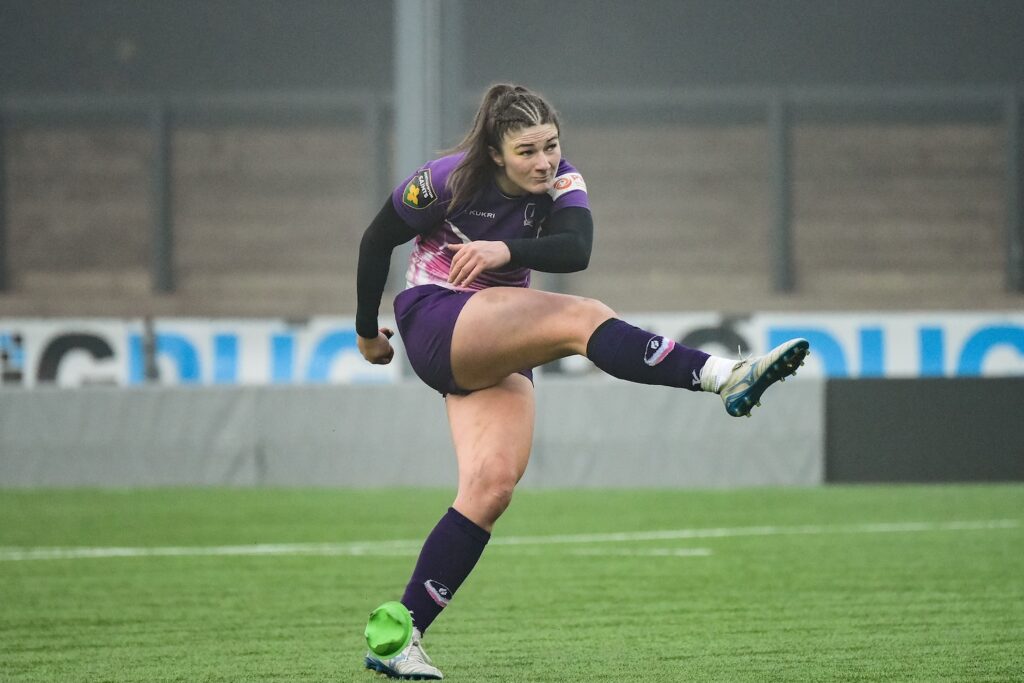
Helen Nelson:
“It’s been a different challenge for sure. I think the fact guys can move the ball so much faster, speed of pass, and the pace they run at is a lot faster than us. It’s been cool to train against that and test ourselves.
“I think when you constantly train 15 v 15 internally, you learn to defend each other, you learn to attack against each other. So it’s nice to see different pictures and get challenged in a different way.
“It definitely brings out a little bit of a competitive edge for both sides, so that’s been fun.”
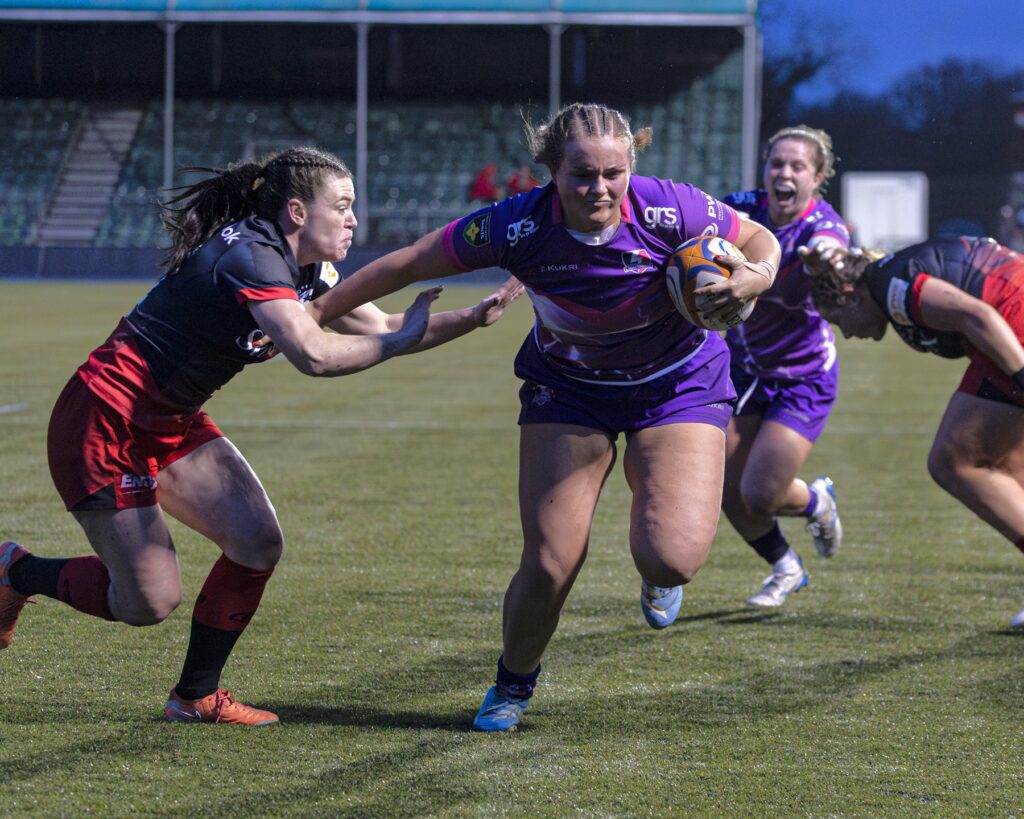
Lucy Calladine:
“It’s fun. It’s really beneficial. It’s a lot quicker paced, which is what we want to be as a team.
“I think it’s good to have that exposure with them and figure out ways to compete. It’s about trying to figure out how to manage momentum – how to manage that and control that. I think it’s transferring to our game quite well.”
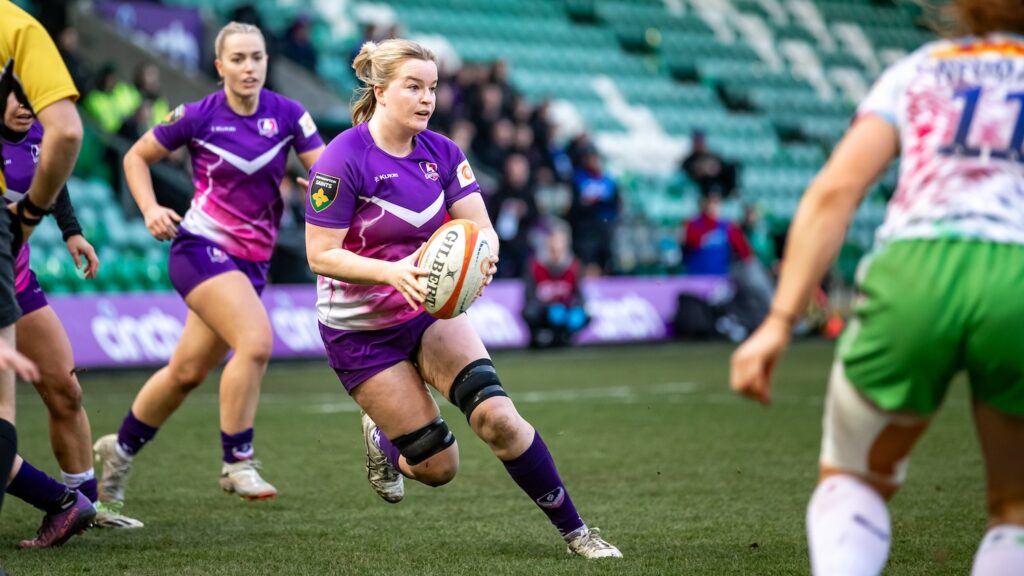
Daisy Hibbert-Jones, captain:
“It pains me to say that they’re faster than us biologically, but [training against them] massively helps us in terms of our kick return. Pretty much as soon as we’re catching the ball, they’re in our faces. So, it’s how can we adapt to find holes…
“They force us to play a much quicker game, they force us to be physical in defence, and I think everybody that’s been a part of those sessions have thoroughly enjoyed it. It’s quality to be able to really push ourselves, both sides of the ball, by training against them.”
“I know they found it beneficial as well. It’s not just us that get benefits from it. In terms of the way we play the options when we’re playing at the line, it really forced them to strengthen their defence to be able to read the picture.
“It’s a really nice session. A great way for us to push ourselves and a good way to make the most of the university links we have.”
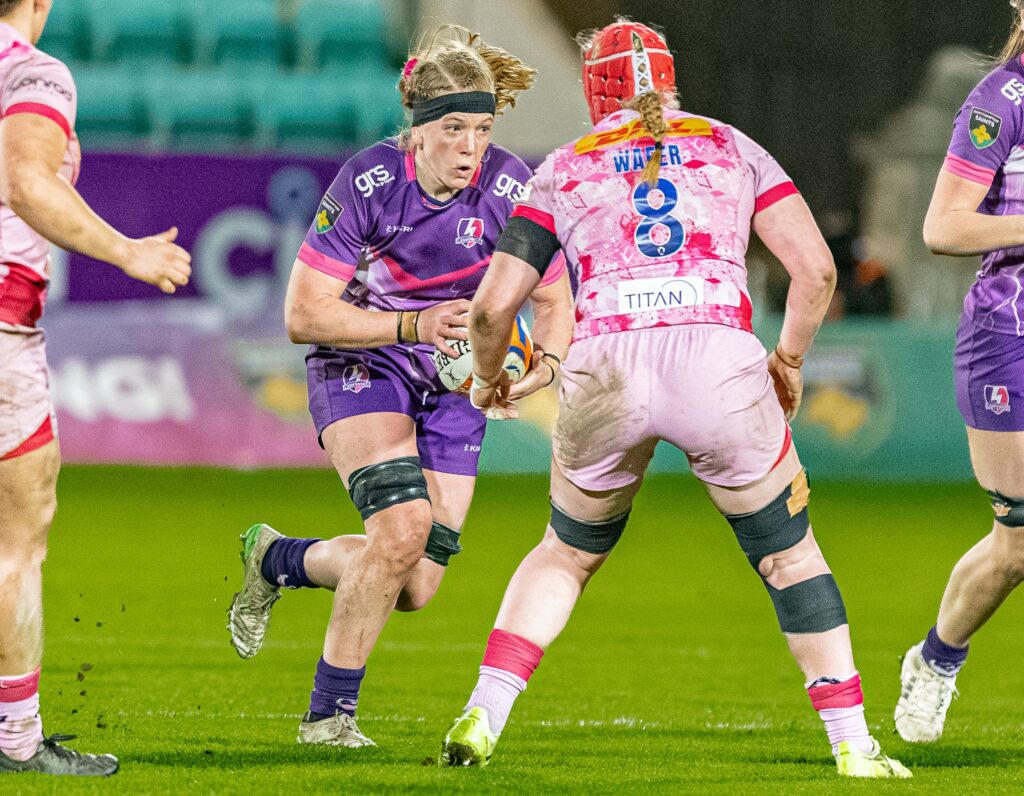
Rachel Ehrecke:
“We’ve trained against a few different teams. I really appreciate them coming out and training against us. It’s just a different pace. They pick up the pace a bit and it’s different pictures that we get to see and train against. So I love when they come out and we get to play some fast rugby.”
Elsewhere in the PWR…
Hearing these perspectives, it’s clear how useful these mixed sessions can be, particularly in speed of thought and physicality in rugby. Intrigued, we asked across the wider PWR to see if other players or coaches had been part of mixed training sessions and how they found them.
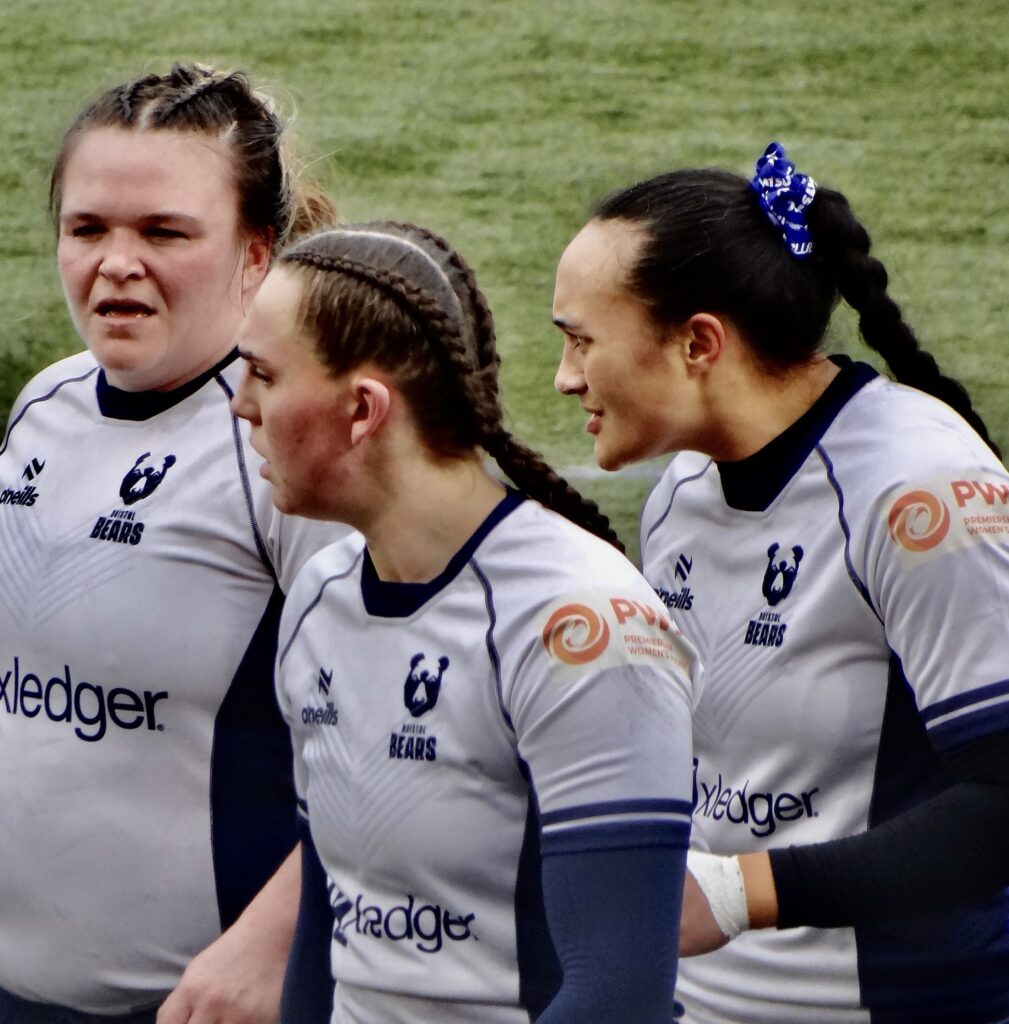
Sarah Bern, Bristol Bears (above, left):
“It’s definitely something we’ve done in the past. Just physiologically the men’s teams are generally quicker, faster, stronger. That’s just their makeup. That’s their genetics, so playing against them means you have to be on your toes.
“You’re probably chasing quicker plays and faster speeds of ball than we’re used to training against each other. So it does create a different stimulus, which is really effective from a forwards perspective.
“It definitely helps the men too. The younger men’s teams that we play are bigger, faster, definitely heavier and stronger, so they have that advantage. But in the women’s game we get a lot lower so it’s beneficial for both teams because we can get the height down, which they struggle with, but then we have to deal with their weight and load.
“It’s something we’ve worked on in the past but not something we’ve done too much of recently. I think there’s pros and cons to both sides of it.”
It enhances speed of thought – you don’t have time to dwell on things. The messages and the leadership need to work faster to navigate the challenges the opposition are presenting.
Ruahei Demant, Bristol bears
Bern’s Bears team-mate Ruahei Demant (above, right):
“Yeah, I agree with Berner. My only thing to add would be it also enhances speed of thought – you don’t have time to dwell on things. You’ve got to be fast with the way that you think of solutions, with the cues that you read.
“And the messages and the leadership need to work faster to navigate the challenges or the pictures the opposition are presenting. But then when you go back to playing each other or training against each other things happen a bit slower.
“So I agree, it can be, depending on the makeup of the team, really positive. I’ve also been in teams where from season to season sometimes that’s not what’s been best for the team. It really depends on the group and what’s best for the group at that time.”
Deni Ross, ex-Leicester Tigers:
“When I was with the Queensland Reds we would train with the academy boys. For a few years we’ve had a partnership with the academy boys coming and doing opposed sessions.
“Last year we were doing live contact games against them as well. It certainly has helped with that physicality – they’re fast, they’re not afraid to hit you, which is great because you need that battle.
“I don’t think I heard about any other teams training against boys, but I wouldn’t say it’s uncommon.”
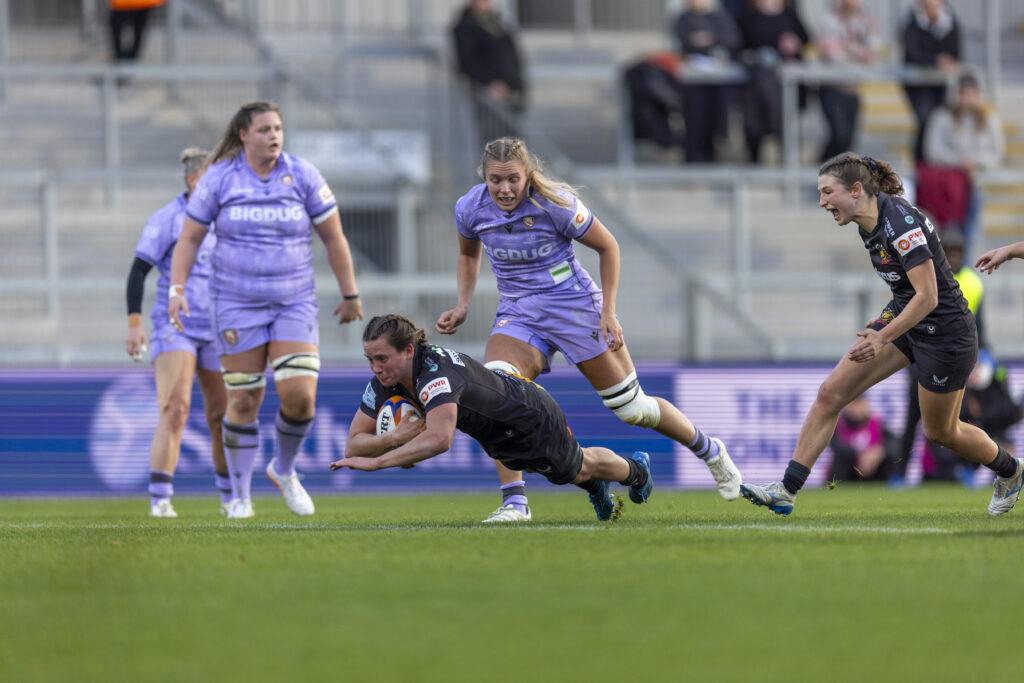
Exeter Chiefs Maisy Allen hasn’t had the opportunity to train against men yet, but sees potential benefits:
“I would love to [train against men]. The size and shape and speed of men is just completely different to women, it’s something we’ll probably never be able to replicate.
“We can be skilful and stuff, but in terms of physical attributes, in terms of getting to the top level, why wouldn’t you try and perform against the best? So, yeah, 100%, I’d love to.”
Maisy Allen may not get the chance to train against men any time soon, though. And as Ruahei Demant says, training with the men may not be right for every team.
In terms of physical attributes, in terms of getting to the top level, why wouldn’t you try and perform against the best?
maisy allen, exeter chiefs
Exeter Chiefs head coach, Steve Salvin doesn’t feel it’s right for his team at the moment. I ask if he’d ever considered his team training against men:
“The honest answer is no. We did it with the university team maybe two or three years ago and we felt the risk for injury was too high. We don’t want to put the girls in that position.”
“I think there’s elements of the game you can maybe look to do it, but I’m not sure.
“We’re fortunate, we’ve got a squad of 40 players, so we almost always train 15 v 15. And I think what’s really important as part of the programme is we’ve got a real broad spectrum of players.
“We’ve got world-class talent who are playing in World Cups, winning World Cups and playing in World Cup finals.
“But we’ve also got girls that are just starting that journey, who we want to get to that destination. So we need to make sure we’re investing in those girls – getting good, regular training time as well.
“Obviously, if you train externally it means those developing players, potentially, then miss out on opportunities to get good training minutes. So it’s not something we’re looking to do at the moment.
“I’d never say never. Maybe it’s something we’d look to do in the future, but I think where we are in terms of our depth of squad and recognising that we know players need training minutes to develop, we’re pretty happy with the way we’re doing it at the moment.”
Does mixed training happen in other sports?
After discussions in the rugby world, we wondered if this idea extended elsewhere, perhaps into football…

Sonia Bompastor, Chelsea head coach:
“For a club like Chelsea, what is really important is to make sure we have an environment in training sessions with the highest competition possible – because I think that’s how people compete against each other, having this healthy competition.
“I think having that environment helps a lot, for everyone to push, and to give their whole on the pitch.
“Sometimes, coming from Lyon, as young players and also with the first team during international breaks, we trained with boys or against boys. So, that’s something I’m used to.
“But I would say in this context, the most important thing is to always try to have the highest environment possible. One of the options in Chelsea is also to have depth in the squad – a lot of competitive players who can compete against each other with healthy competition. I think it’s something really interesting.“
Bompastor’s matter-of-fact answer about Lyon demanded further investigation. It turns out Lyon’s Academy has a mixed training model where girls and boys train and compete against each other throughout the age groups (something not routinely done in academies in England).
Their aim is to create an environment for ‘holistic player growth’ and to give players of both genders the best support and development opportunities. Mixed training is actually baked into the Lyon Academy system.
Right on cue, Sonia Bompastor mentioned in a press conference that Kadeisha Buchanan and Nathalie Björn had been training with the Chelsea boys’ academy during the international break to help get them back to full fitness after long-term injuries.
Although other Women’s Super League head coaches may not be training with boys at the moment, several have done so while coaching abroad.
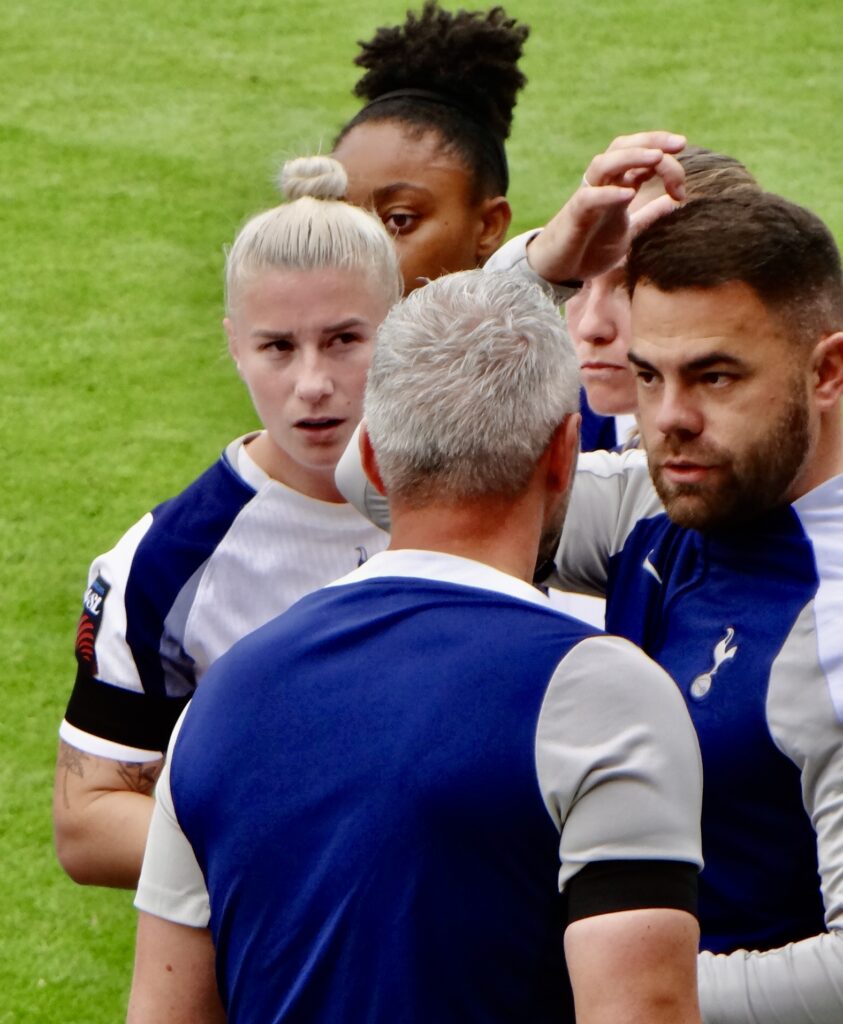
I asked Spurs head coach Martin Ho if training against males was something that could help his team:
“Definitely, and it’s something I did when I was in Norway [at SK Brann].
“We played against our senior team. We played numerous times throughout the season against the under-15s and the under-16s boys for speed of play, speed of reaction, the intensity to lift our games and we’ve done that going into Champions League games.
“We used it as an opportunity to play against players who have, maybe, more agility, mobility, speed. But also their smartness with the game. That helped us going into the mid to latter stages of the Champions League run we had.
“We continued that in my last year in Brann. It was a really good practice for being challenged at a higher level, compared to maybe what we’d face in the league; apart from the real top teams.
“So yeah, we used it as good practice and I think there’s definitely a space for it. Whether we would do it right now while I’m here, we’d have to look at what would work for us here against maybe the boys at the academy.
“I’m not against that at all. I think it’s actually got a lot of value.”

Aston Villa’s head coach, Natalia Arroyo also alluded to using the method in Spain, but was cautious in her reply:
“It’s a tricky one. But we did that once in Spain. I think everything can be explorable. You need to be smart in these types of games. Any opportunity to play, say, against foreign teams, stronger teams, or teams that can play the way you want – that helps.
“Anything that can help us to recreate the scenarios and to give the players the opportunity to be challenged and increase. I’m super open to that, but everything has pros and cons.“
When NWSL star Savannah McCaskill of Gotham was in London playing the Champions Cup tournament earlier this year, she spoke about the importance of this competitive match time during the NWSL’s off-season. She said that normally in pre-season they scrabble around to find other NWSL sides or play against boy’s teams to get ready for the league.
Savannah McCaskill talked about her experiences against boys’ teams:
“It’s usually youth, like academy teams. 15, 16. [We get] physicality, speed of play. They obviously are a bit faster, more physical, and technical.
“When I was little, I trained with boys’ teams to get up to a higher level than what I could get with my own age group from a local academy team and so I think it just adds in different speeds of play.”
You see speed of thought improve pretty quickly because we just don’t have that time to think. It heightens the instinct around making a decision
nathan smith, loughborough lightning head coach
McCaskill hit on a good point about training with boys when she was younger. As mentioned, girls in England often dual register with a girls’ team and a mixed (predominantly boys’) team so they can play both in a female environment and in a more physically demanding one. It’s also not uncommon in the UK for strong girls’ teams to join boys’ leagues to test themselves against tougher competition.
In fact, Football Association Wales (FAW) Trust Girls’ Academy decided to have some of their teenage girls’ teams competing against boys to help prepare them physically for future games against nations who have more developed youth structures.
Having found that players getting into the under-15s, under-16s, and under-17s squads for Wales weren’t physically able to compete with other nations, they introduced a programme in which they played against FAW boys’ academy teams in friendlies.


During the research for this article, we also discovered that other sports regularly use mixed training environments to push their athletes. Much of the ongoing success of the Team GB women at the Olympics is attributed to the mixed training set-up for Great Britain’s taekwondo athletes.
And GB track stars Keely Hodgkinson and Georgia Hunter Bell (above) regularly run alongside the top male runners at their M11 Track Club because the training is mainly mixed. It’s something they’ve both said they enjoy – it enables them to train with faster athletes. Hodgkinson has even called for male pacemakers in women’s races.
In cricket, Dutch captain Babette de Leede says that there aren’t enough girls for a girls’ competition in the Netherlands, so you have to play with the boys, adding: “That really helped the development of my game, and I still play men’s cricket for my club.”
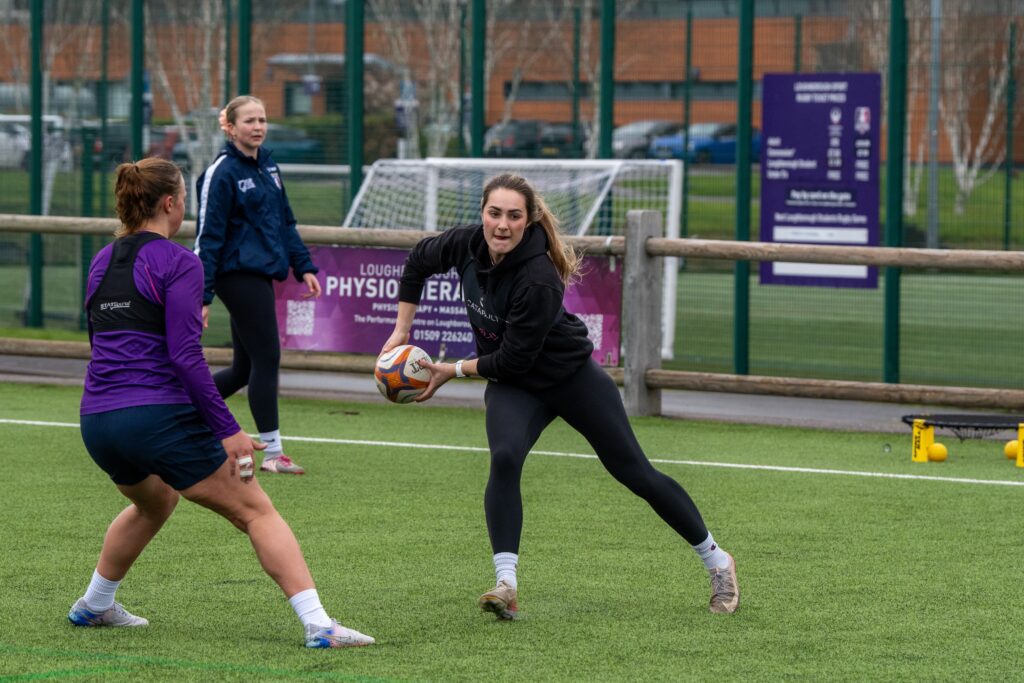
Lightning lead the way
There are obviously pros and cons to women training with men in contact sports. The risks have to be weighed against the benefits, and it has to be right for the team at the time. Of course, there may sometimes be caution because of stereotypes and prejudice. Consequently, Loughborough Lightning remain unusual among elite teams in making mixed training sessions a regular part of their season.
It may not suit every team in every context, but the value is clear: exposing athletes to different levels of speed, strength, and physicality can sharpen decision-making, skill execution, and resilience.
Mixed sport is often treated as something girls grow out of rather than something that could be integrated into development. But Loughborough Lightning show that physical differences between women and men need not end the conversation. Used appropriately, mixed training sessions can aid development and benefit everyone.
Photo credits: Loughborough Lightning, Exeter Chiefs, PWR, Clare McEwen, Helen M Jerome