
UNSUNG HERO. Can She Kick It? Yes, She Can! The extraordinary Emma Sing
Gloucester Hartpury are flying high in the PWR, and Emma Sing is a big part of it.
Helen M Jerome and Phoebe Music talk to the modest Red Roses star to find out what makes her tick – and kick. Plus how the Devon farm girl manages a relentless schedule as well as giving back.
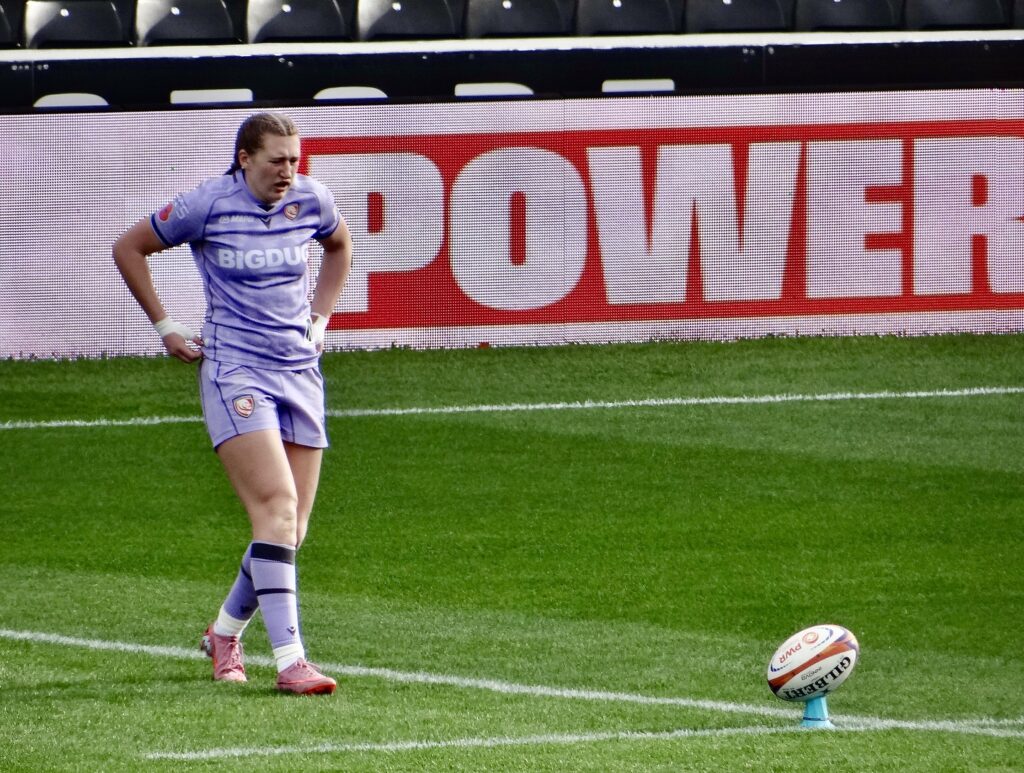
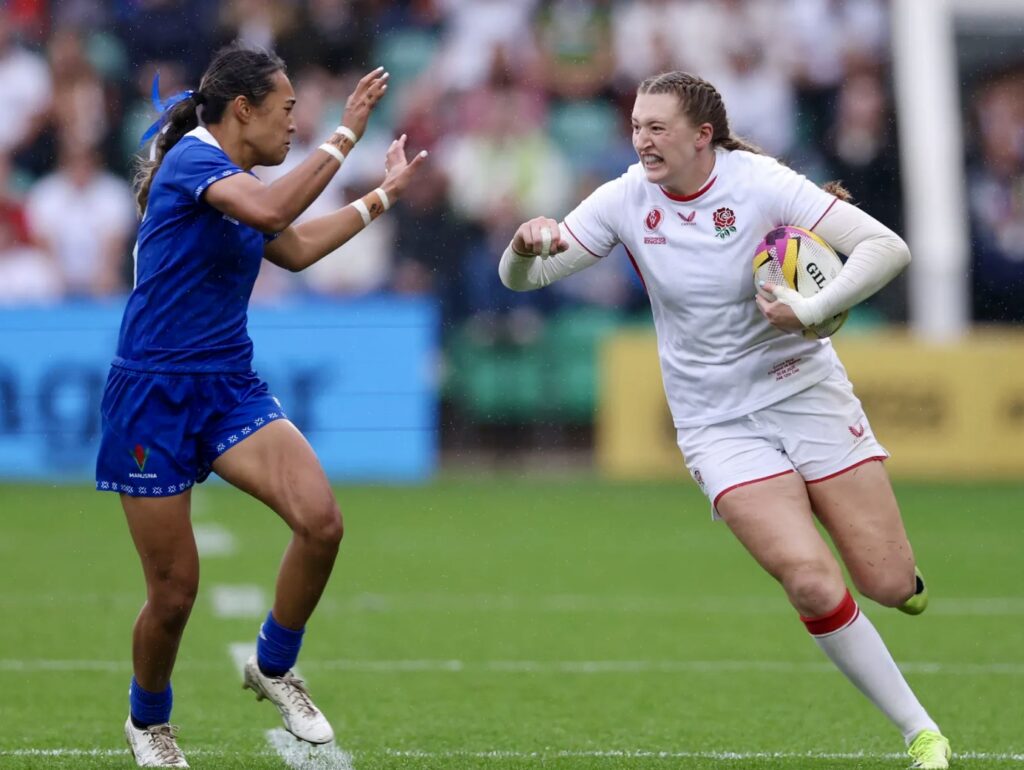
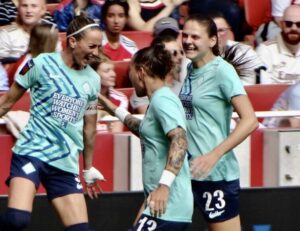
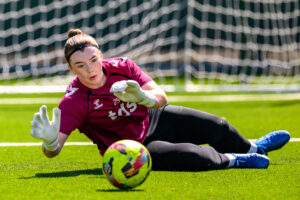
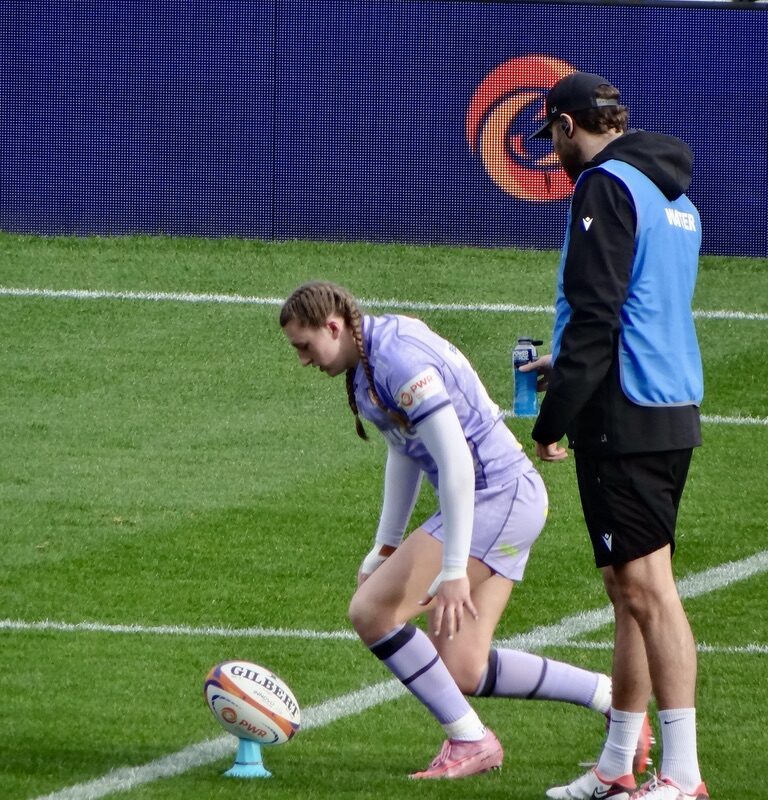
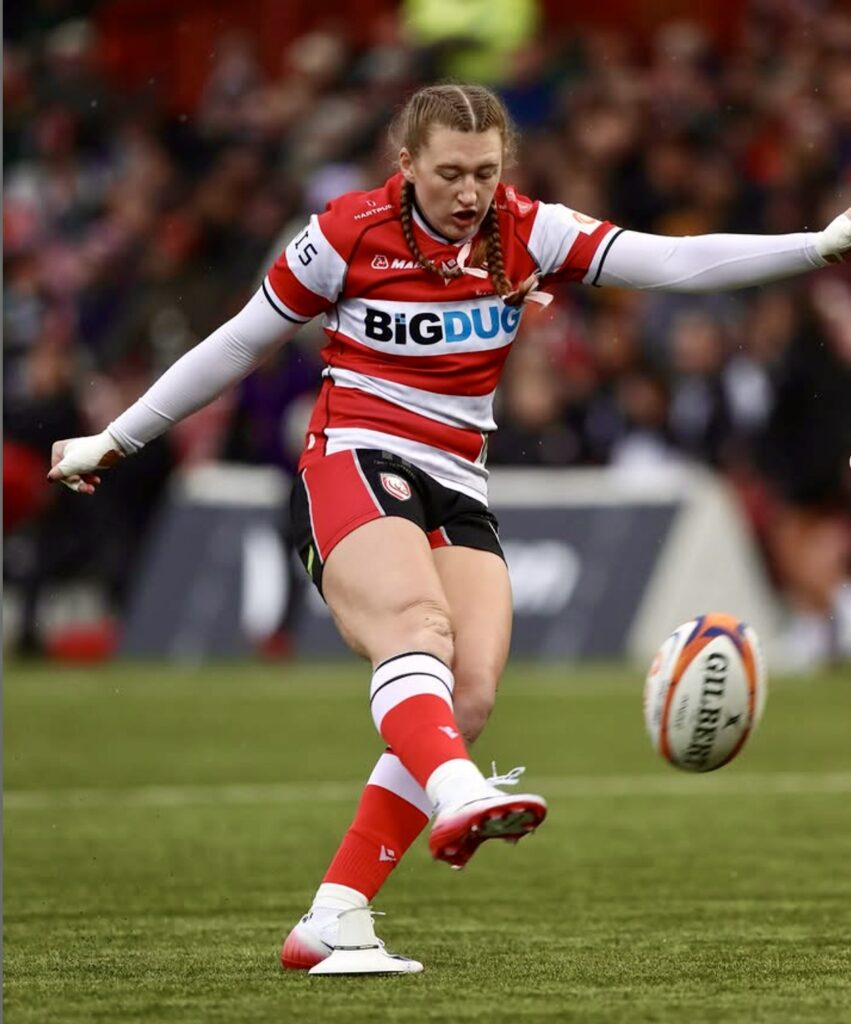
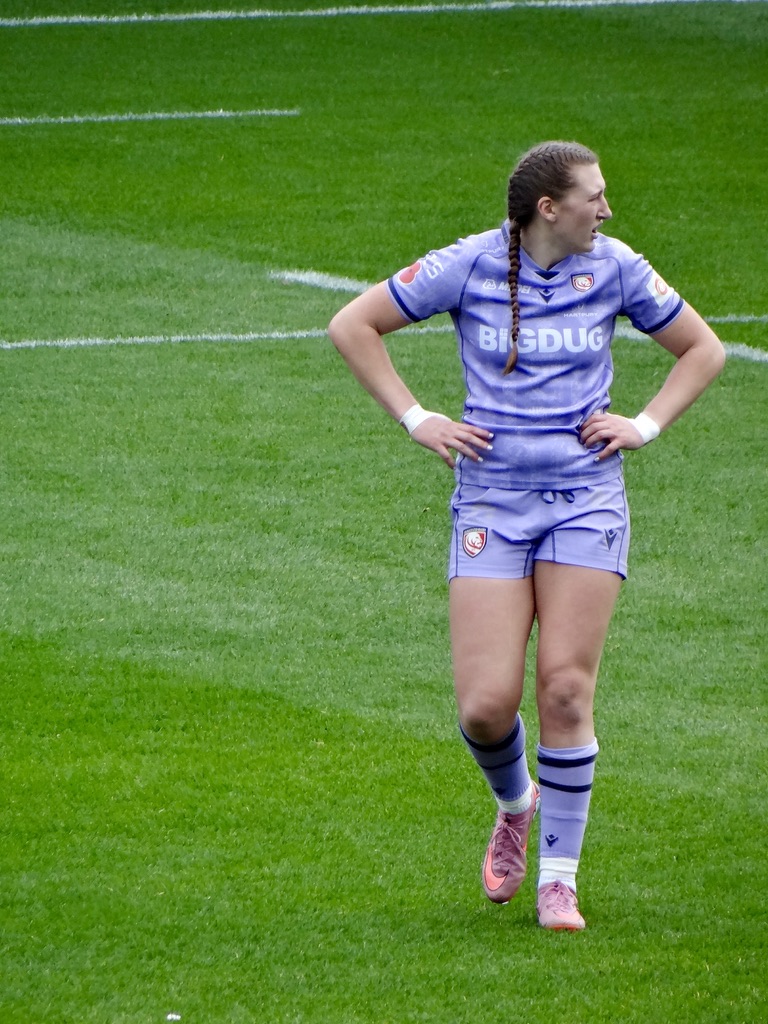
Player of the Match away at Bristol Bears, and almost flawless at Harlequins (above, left), Emma Sing gets universal praise. Co-commentator Ugo Monye calls her: “Absolutely sensational, astonishing in every part of her game. A wonderful counter-attacker and finisher.” Pundit Katy Daley-Mclean reckons she put on a “fullback masterclass.”
Gloucester’s head of rugby, Dan Murphy says ‘Singer’ has been consistent for a long time: “Her goal kicking speaks for itself. But what she does in the backfield, covering that backfield space catching the ball on a counter-attack and beating the first defender is key to her game.
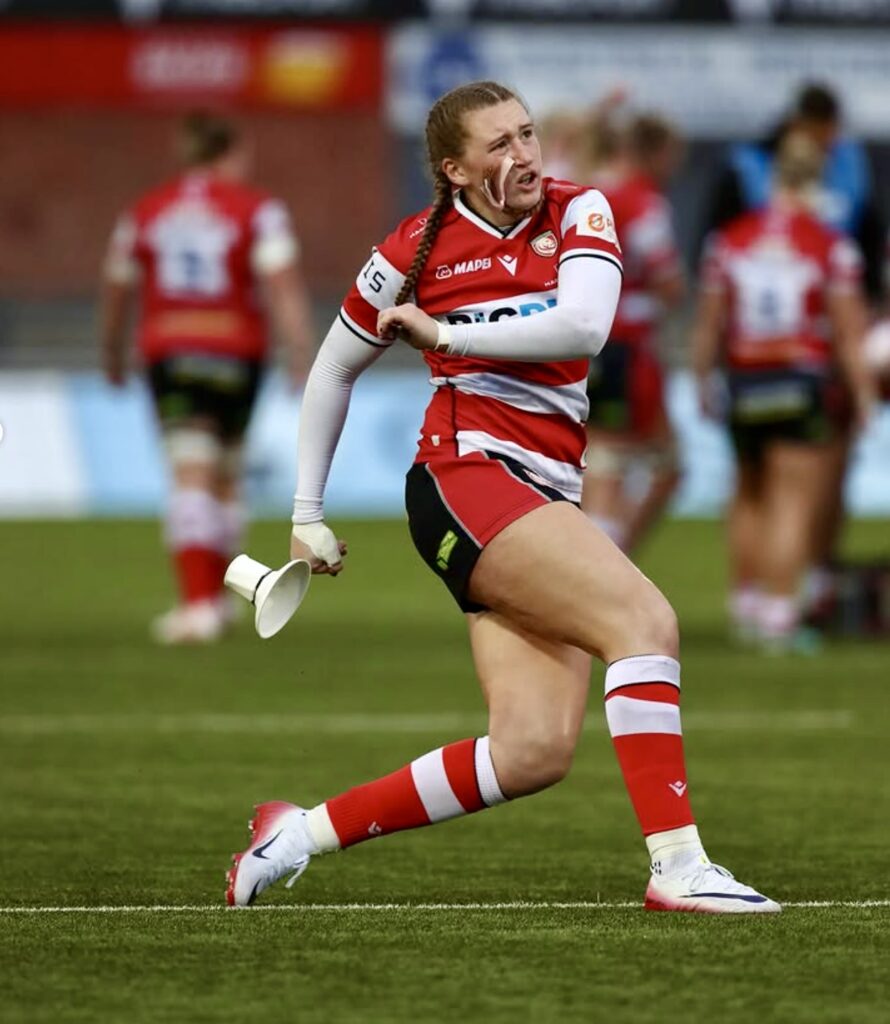
“She’s so strong. She’s got a big old fend (above, right) that can really buy time, and her decision-making about when to counter-attack and when to put the ball back into the opposition half is growing every week.”
Murphy agrees that Sing always keep calm, whatever’s going on around her. “Yeah, nothing much shocks Emma. She’ll say: okay, that’s fine. And we just crack on, which is very much like a lot of the group.”
On the extremely rare occasions Sing fumbles or makes a mistake, says Murphy, the rest of the side step up. “We’ve got such a supportive team that the line-out will go: right, we’ll try and stop them. We’ve got Kate Williams and Sarah Beckett in the backfield and Tatyana Heard going don’t worry, we’ll stop their strike.
“They’re a cohesive bunch and I said no-one no one tries to make a mistake, and we really emphasise how we bounce back from those things and get back on task.”
“She’s so strong. She’s got a big old fend that can really buy time, and her decision-making about when to counter-attack and when to put the ball back into the opposition half is growing every week.”
dan murphy, head of rugby, gloucester hartpury
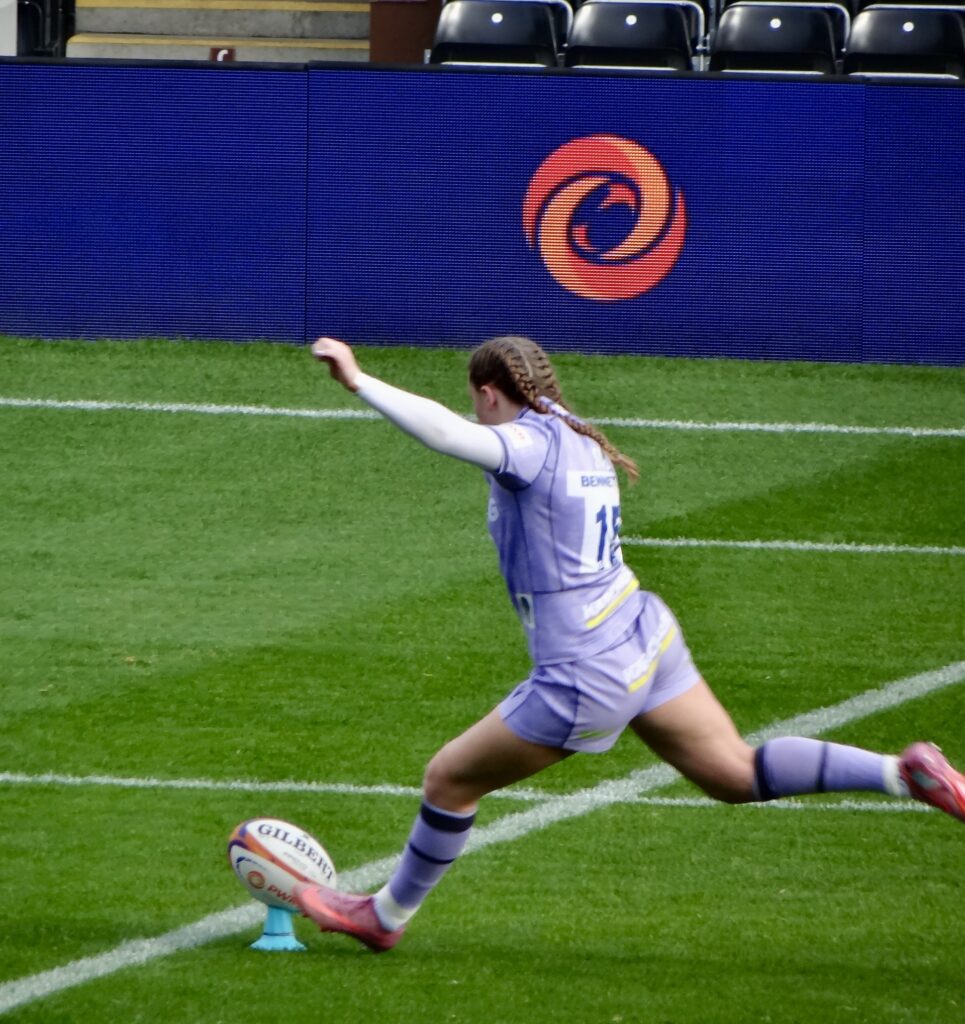
What everyone agrees on is Emma Sing’s kicking ability whatever the elements, and Murphy says it helps that it’s wet and windy down in the West Country.
“So she gets lots of practice. The last couple of training sessions have been wet and windy. We get a lot of different weathers out here. So it helps in their preparation.”
Emma Sing is unfazed when we put the experts’ enthusiastic comments to her, as we drill down into why she’s becoming one of the outstanding stars of the season.
What would you say yourself are your main attributes and skills?
I think personally counter-attack-wise, that’s probably one of my strongest areas, my physicality and then goal-kicking especially, you get these other things and then goal-kicking is there as well.
That’s a massive understatement!
You can’t think: oh, I need a goal kicker, so I’ve got to play. You need to have that in addition.
How do you deal with the wind in a stadium with open corners – and you’re kicking?
Before the match I always walk around the five-metre lines, and you can feel where the wind’s coming in. Then in the game warm-up you should be able to hopefully work out what the wind is doing on each side, if you can feel it.
It’s just judging what the wind could do and watching what other people are doing. So if we’re kicking the ball, if it’s the wind’s taking it miles, if the wind is stopping it, trying to work off clues.
Plus if you just pick up some grass and flick it in the air, seeing what that does. But sometimes if the wind’s that strong, you have to not put the ball through the post, but to the side.
But then, what if the wind doesn’t do what it’s meant to? Just put it slightly through in case the wind doesn’t do what you think it’s going to.
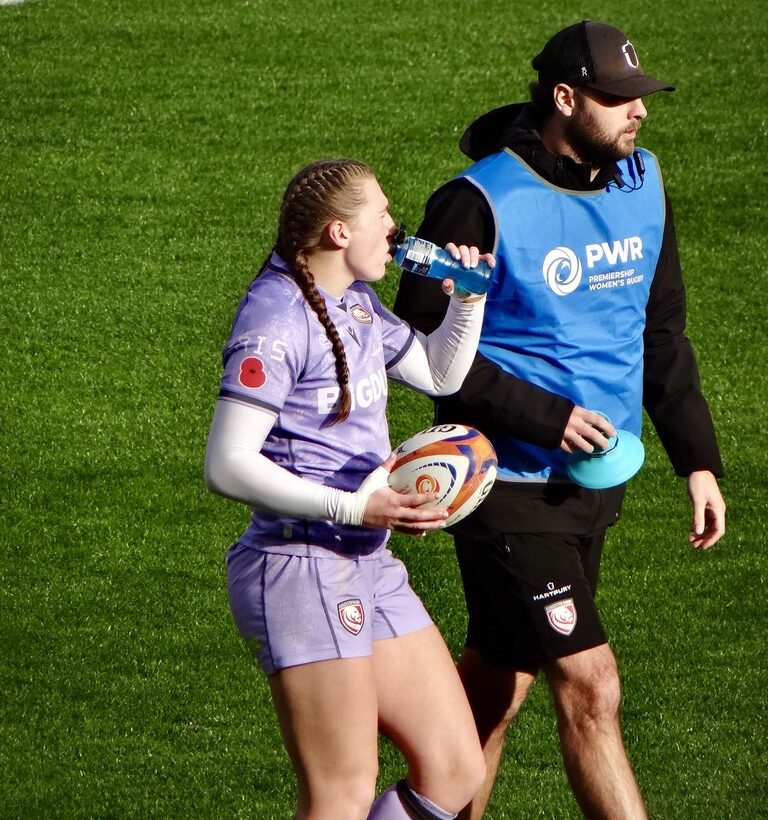
Growing up on a farm, presumably the weather doesn’t really mean anything to you?
No, all the work still needs doing, no matter if it’s snowing or if it’s sunshine.
You’ve just got to deal with it. Embrace the conditions.
If you’re looking at your entire skill set is there anything that you’re targeting to improve?
I feel work rate off the ball and especially coming back to Gloucester we play a bit differently to how we were with England, World Cup-wise.
I think just getting used to it and mainly focusing attack wise, because I think defensively we’ve been quite good. Though we’re running a completely different system here. All the calls have changed, so just putting my focus on the next few weeks.
Is kicking an art or a science and how do you perfect it?
It’s probably a bit of both. I think that everyone can probably learn how to do it, but I used to play a lot of football when I was younger, so I was brought up kicking. That helps you, because it’s quite a specific movement.
But Andy Holloway [specialist kicking coach] comes in as well and does a lot of work with us around kicking and lots of different drills. As long as you’ve got the basic movement there’s tips he can give you.
Obviously when we’re in camp there’s four or five different kickers and none of us get the same feedback, there’s always something else – different drills – because each of us have different points we need to work on.
Tell us about playing football when you were younger.
I played for community college and when I was at primary school I actually got scouted to play for Exeter City Football Club, but I couldn’t do that because I was too young.
At primary school I used to be the goalkeeper and then at secondary school, I actually used to play in the boys’ games, and I don’t know what position I played. Midfield probably. I was the only girl playing with the boys.
I imagine you’re good at penalty kicks?
No! I was quite good at saving them as a goalkeeper really. I was quite a well-rounded person then, I think I still am.
I presume with playing with the boys, at some stage they said, I’m sorry, you have to stop now?
I don’t think I was. I’m pretty sure, even when we got to year 9, year 10, I was still playing with the boys.
Did that make you more resilient?
Yeah, but I think because I started rugby when I was six and was playing with the boys, I wasn’t bothered really, and obviously was doing full contact with the boys.
So playing football was no different really. It’s not like they’re not going to pass to you because you’re a girl; they know you’re good enough, so they’ll get you involved.
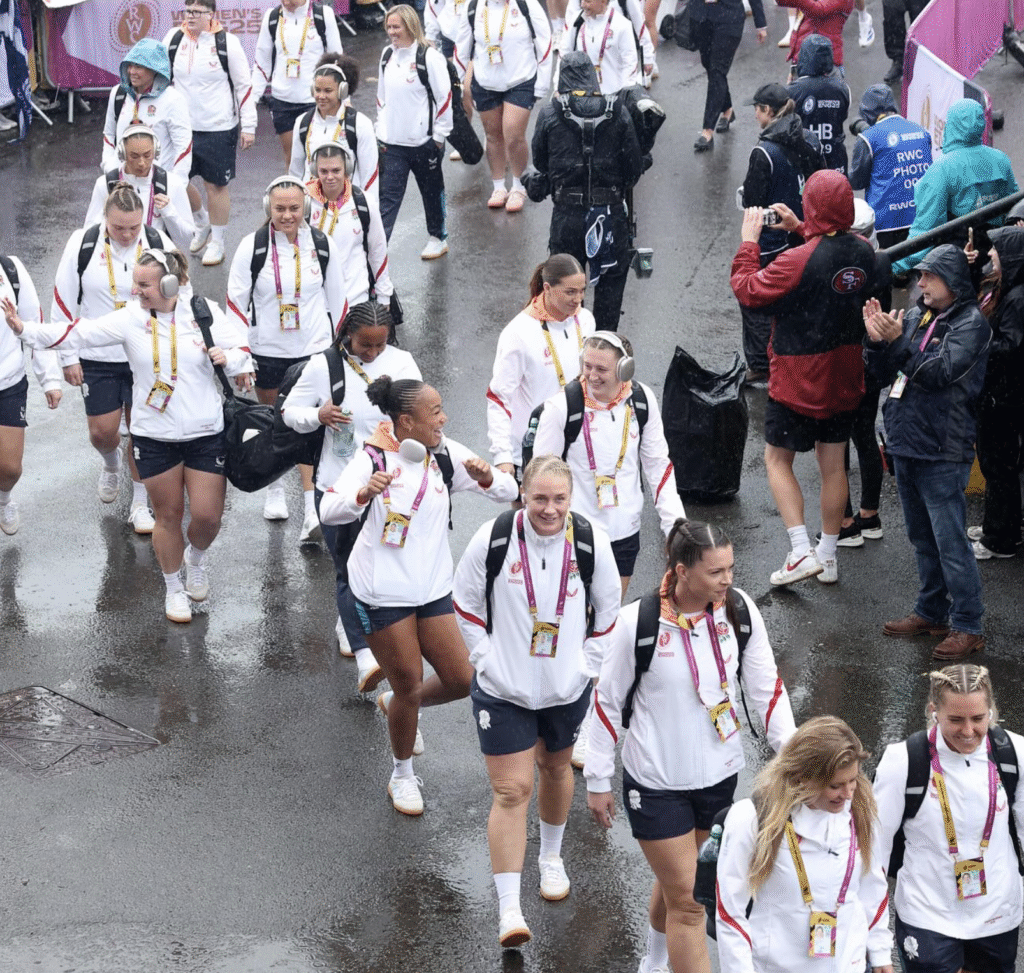
“The first game when we walked out ahead of the anthems against the USA, the atmosphere was incredible.
emma sing
I was like: bloody hell, this is real now! Even now looking back you’re like: did it actually happen?”
You mentioned the Red Roses, so can you tell me emotionally, the excitement, everything, how it felt playing in the World Cup?
It was a bit surreal really. Before it all happened, around selection, I knew that most people knew where they stood.
We went away to Italy, and I think there were maybe two spots left, and one of them was me.
So I was really unsure, and I think – especially after the last World Cup when I didn’t make the cut –you don’t want to get your hopes up. But when I got the call it was amazing… now we actually needed to get there, put the work in, and I was lucky enough to play in half of the games.
Especially the first game when we walked out ahead of the anthems against the USA, the atmosphere was incredible.
I was like: bloody hell, this is real now! Even now looking back you’re like: did it actually happen?
And everyone came to support us! Especially the final when everyone came out and cheered us in. That was pretty special as well, seeing that everyone was there for women’s rugby.
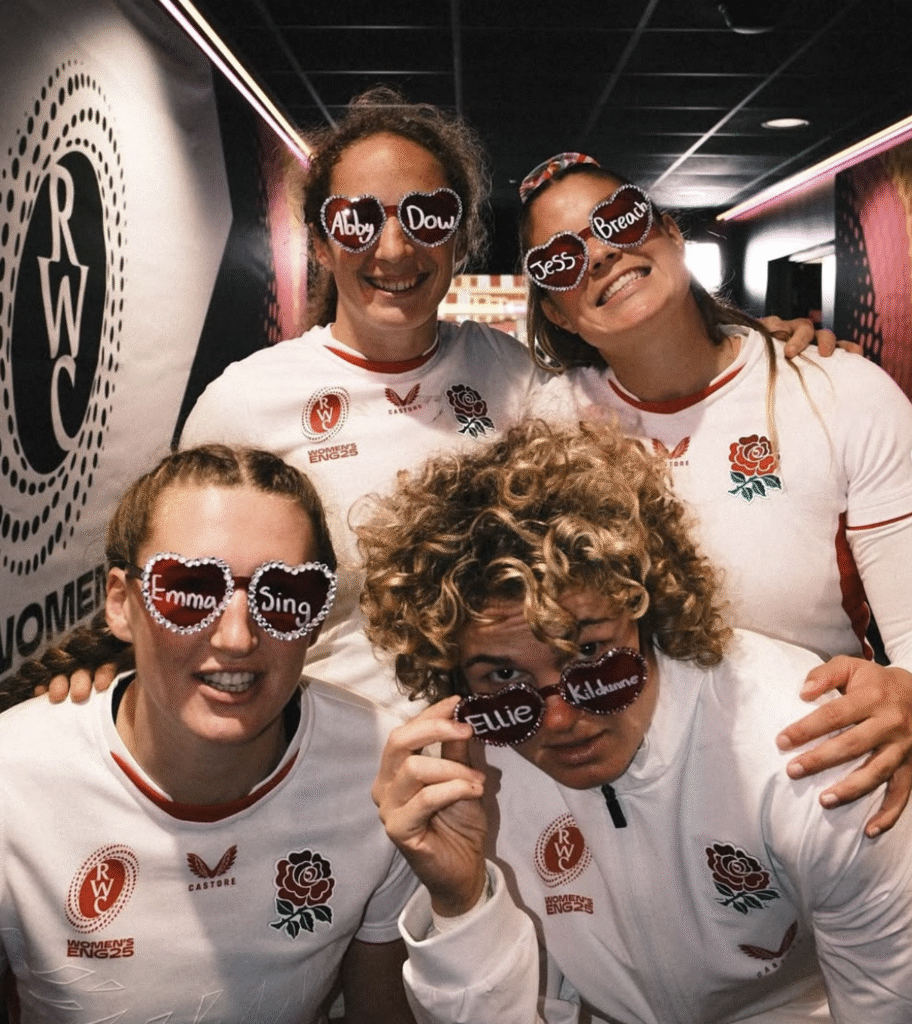
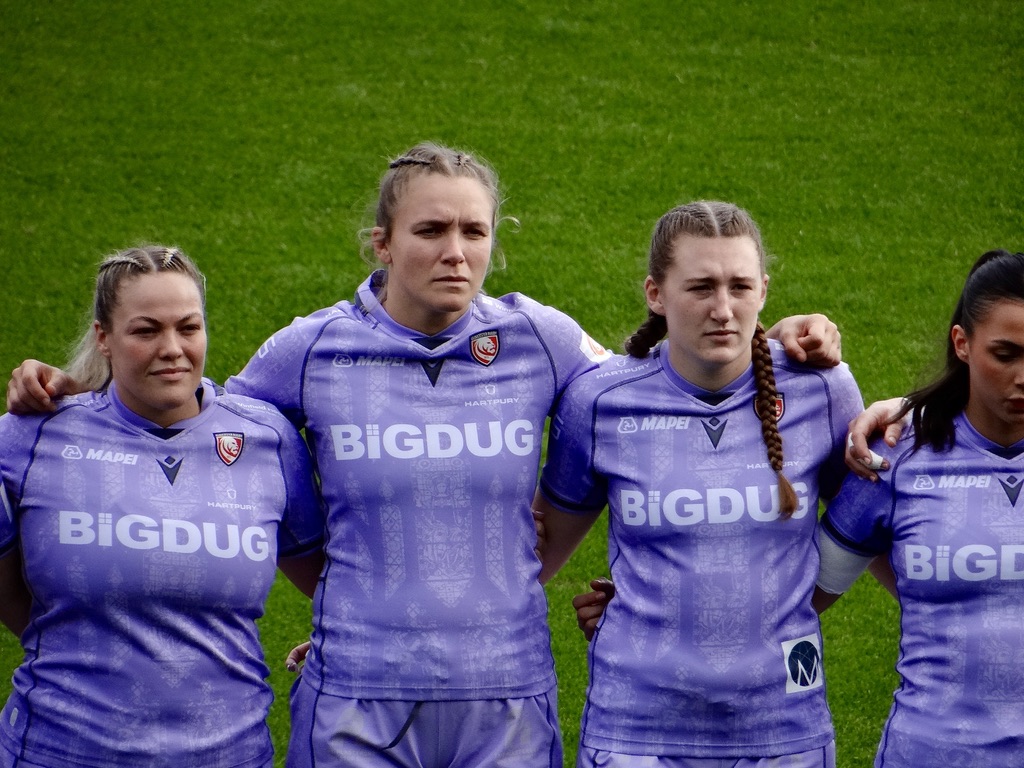
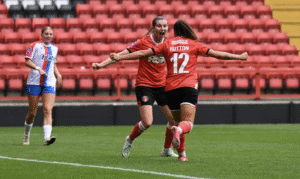
Does it help having people in the England team who are your club colleagues too, people like Zoe Aldcroft/ Stratford (above, right, with Sing)?
Yeah, definitely. Especially in previous tournaments when we’re not together for as long, you probably go to them more because they know if you’re slightly off. They’ll come up to check if you’re okay.
But this tournament, because we were basically in camp for probably a month and a bit before we even started the World Cup, you made a lot closer friends with everyone else as well…
It’s good to have club teammates too, especially coming back, there’s some stability. You’re going back to a completely new environment because all the coaching staff’s changed around here.
It’s more stability, and you’re used to playing with them, even though we haven’t played with our other Gloucester Hartpury teammates since March. So it’s a long gap to be away, but I’ve probably got a lot closer with a lot more people in England camp. Now when we see them on the weekends I’ll actually miss these guys so much.
“It’s good to have club teammates too, especially coming back, there’s some stability.
emma sing
You’re going back to a completely new environment because all the coaching staff’s changed around here.”
Did you have a lot of family coming up from Devon to watch you in the games, and some games were in the west country?
Yeah, my mum and dad came to all the games, apart from at Brighton, when I sorted them out tickets because there was a double-header at Sandy Park. It’s a lot closer for them.
Then, because Bristol wasn’t too far away, I bought extra tickets so my friends and family could come as well for that. So that was quite special.
Could you sense them and see them in the stadium?
For the Bristol games, I spotted them when we came back in after warm-up. I knew exactly where they were. Then after the game my mum said: you didn’t look at us once! I was like: I knew where you were, so I purposely didn’t look for you.
It’s nice to see them afterwards and especially my mum, who used to drive me two, three times a week for games and stuff.
So to be able to bring her along with me as well was really special.
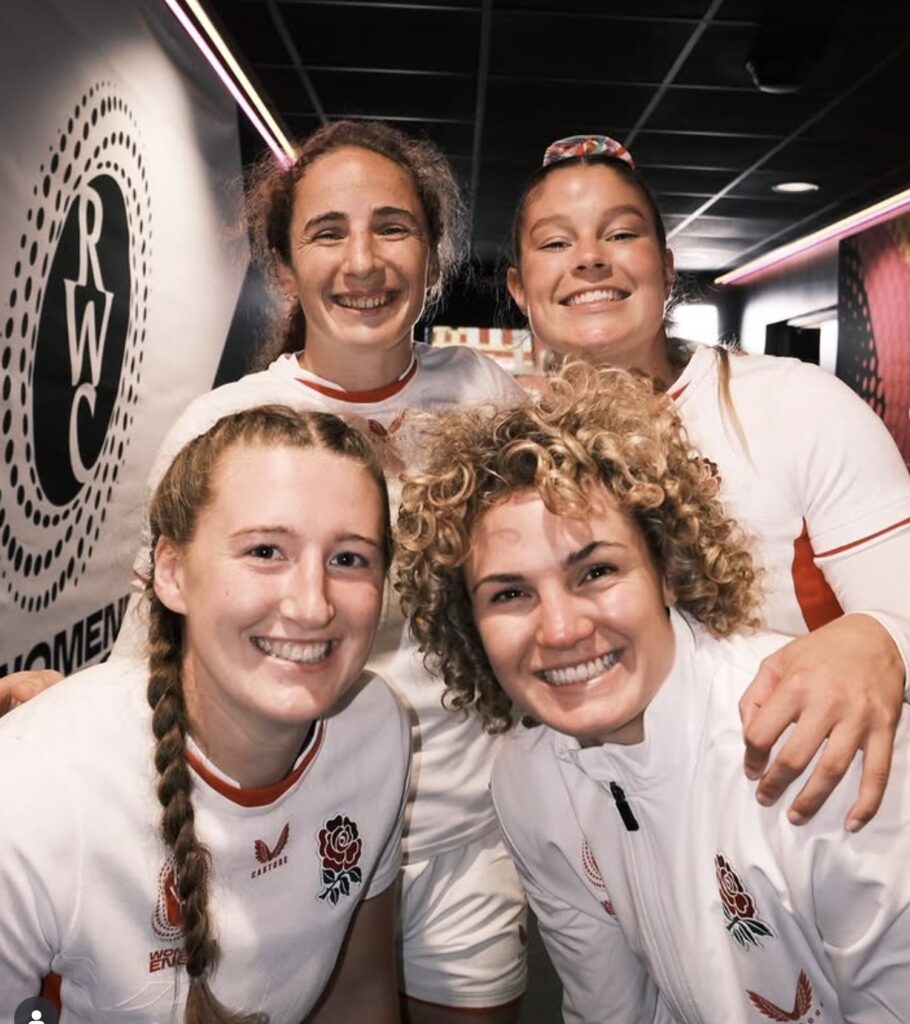
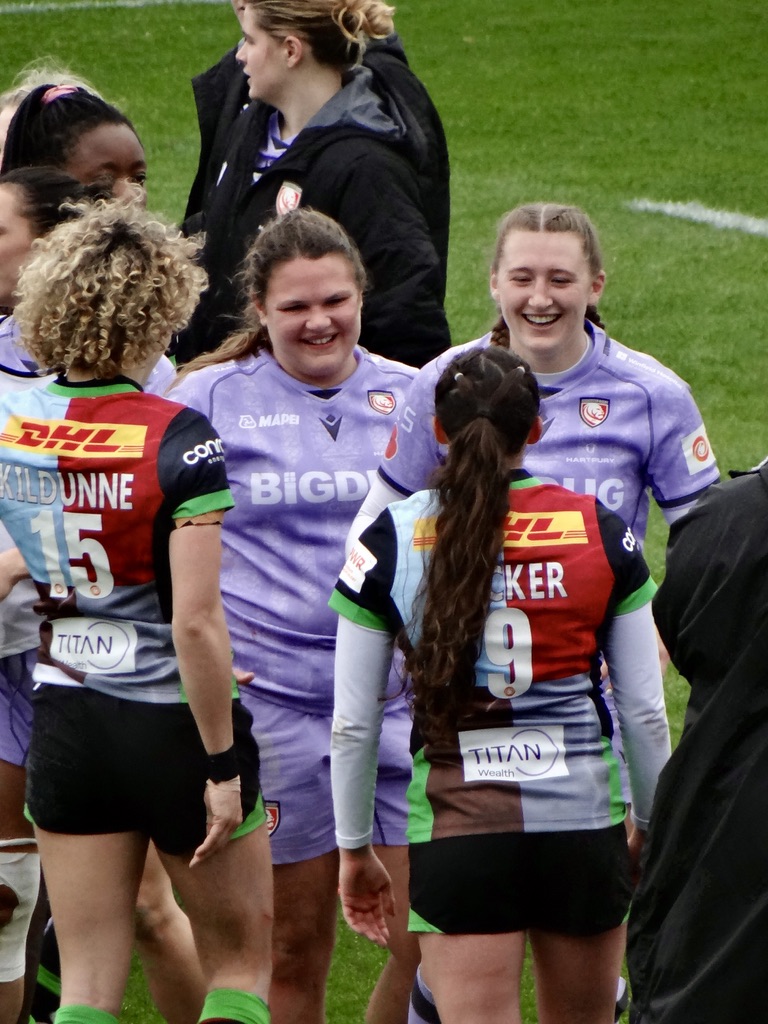
It sounds like being back at Gloucester hasn’t been so difficult. But talking to Jess Breach (above, left, with Sing, Abby Dow and Ellie Kildunne) she said she found the come-down, post-World Cup was tricky to deal with because suddenly you’re back to the day-to-day. I wonder if you found that tricky too?
Well, the week after we did media and stuff, and the following week I went on holiday.
So I didn’t have to really look after myself. Then we came back, and I still find it hard now, because we’ve been going for six-day turnarounds, eight-day, seven-day. And our schedule’s been all over the place. So it’s hard at the moment.
Getting in, I don’t even know what day it is, to be honest. We just look at the schedule and know what to do.
It’s been hard, especially last week when we had an eight-day turnaround.
“Getting in, I don’t even know what day it is, to be honest. We just look at the schedule and know what to do.”
emma sing
I was quite grateful because it meant post-Exeter, I was able to go home for a couple of days, so that’s the first time I was back in Devon post-World Cup, and I helped out on the farm.
We had TB tests on the Monday, so the cattle came through, and I helped with that.
It was nice to be home and then came back for three days of training before the Quins match and then a six-day turnaround.
You had setbacks – particularly with England – a few years ago, but you’re flying now. How did you take control of your own narrative?
Initially, when I lost my contract I was in a hole. I didn’t want to tell everyone and I really struggled. But one of my teammates, Lizzie, helped me seek advice from our performance psych.
She helped me; we made a plan.
“Initially, when I lost my contract, I was in a hole. I didn’t want to tell everyone and I really struggled. But one of my teammates, Lizzie, helped me seek advice from our performance psych. She helped me; we made a plan.”
emma sing
We still had the playoffs to do. I was like: what can I do to put myself in a better place for the rest of the season for the team?
Then I was invited for pre-season with the Red Roses so it was: what can I do to put myself in the best position to fight for my contract. And she massively helped.
Everyone was really supportive around me once I told them. Because it was quite hard, then I picked up a job with Gloucester Foundation doing some coaching, which allowed me to train full time, but I still had the income.
I managed to play well, but I didn’t go to WXV in Canada, I missed out on that. But then I was played in the cup and put together a good season and got my contract back.
So I think setbacks are going to happen, and initially you need to seek help, but then how can you make yourself better? I knew I needed to get better and needed to still be able to train full-time.
That’s something that working with the Gloucester Foundation allowed me to do.
“I think setbacks are going to happen, and initially you need to seek help, but then how can you make yourself better? I knew I needed to get better and needed to still be able to train full-time.
emma sing
That’s something that working with the Gloucester Foundation allowed me to do.”
And they knew I still wanted to be able to train full-time hours. They were really flexible with that.
At the moment, I still go and help out a few hours a week, to give back to the community.
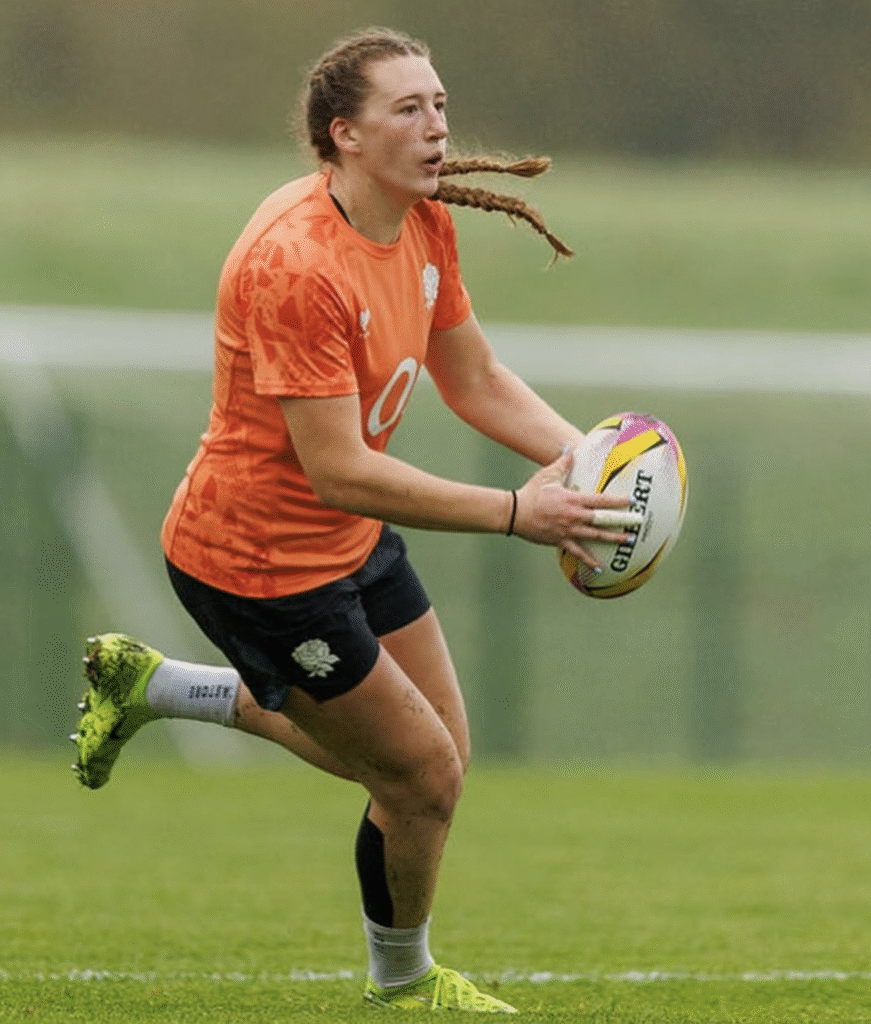
Your background is you grew up on a family farm, and I wondered if that helps you physically, I with strength, but maybe psychologically as well?
Probably. I used to work on the neighbours’ dairy farm and they’re up at ridiculous hours, so now when I go to camp, I can roll out of bed quite easily, get myself up and ready in the mornings.
There’s always something to do. When we’re lambing, that’s a really busy time. You don’t get much sleep; you’ve got to work together, deal with all of it. Then especially over Christmas, we’ve got all the animals in.
Before we even think about the family meal to organise, you think: we need to go outside, feed the calves, feed all the cattle, make sure things are alright before we go off to someone’s house for Christmas dinner. Then you’ve got the same to do in the afternoon!
So if we went over to my gran’s at three, four o’clock in the afternoon, we would always pop home for an hour and a half, quickly feed all the animals, and then pop back for the evening.
You can’t just switch off completely over Christmas like most families. You’ve still got something to do. The animals aren’t going to feed themselves..
“I used to work on the neighbours’ dairy farm and they’re up at ridiculous hours, so now when I go to camp, I can roll out of bed quite easily, get myself up and ready in the mornings.”
emma sing
That’s what you said early on, about routine. So maybe that’s how farming has shaped you?
Definitely. And quite lucky this year, I think I’ll be able to go back and help with lambing in January because we’ve got a block of time off.
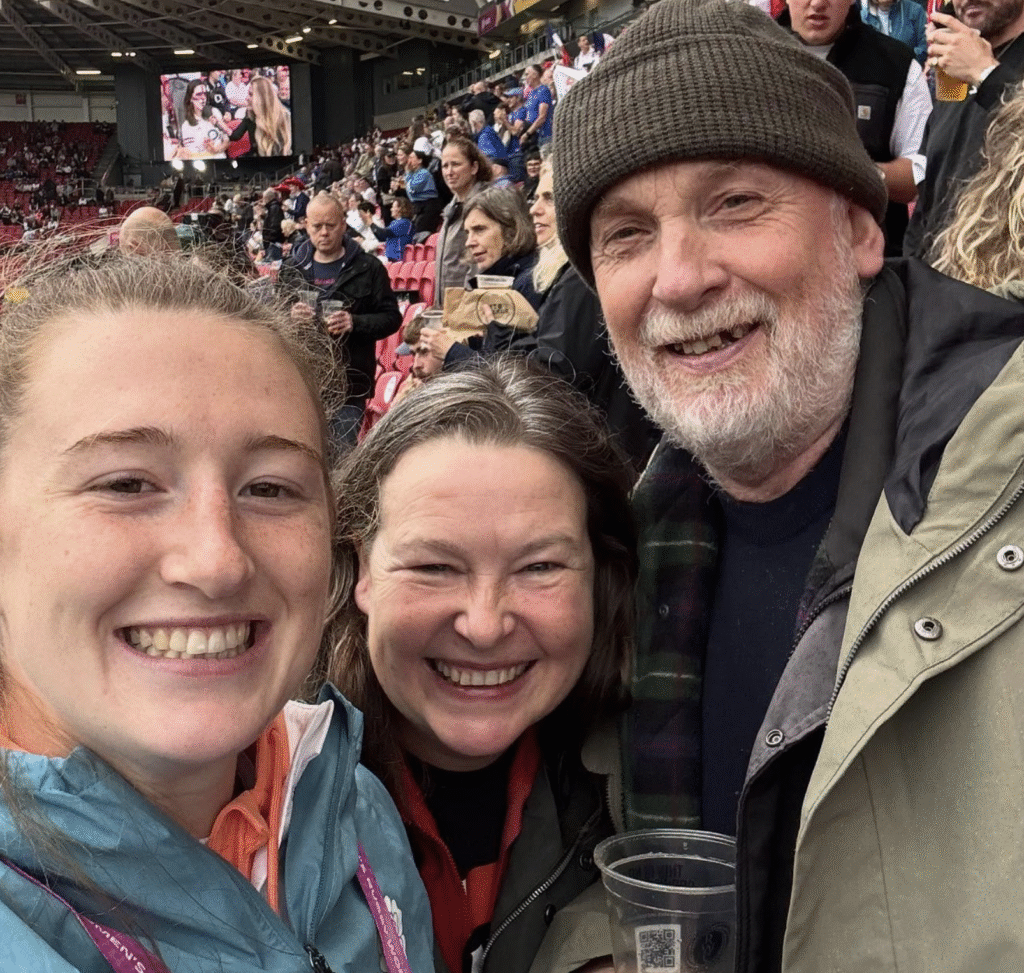
I’ll be able to give back to my mum, because she’s done so much for me. She normally does the six o’clock to midnight, one o’clock. Then my dad will do one, two o’clock to six in the morning (pictured above, with Sing).
So if I’m able just to do that and let her get some good nights’ sleep – because it is exhausting for her – and it’s a lot of work considering my granddad can’t do as much as he used to.
Do you practise your kicking out in the fields?
Not really, some of the fields get quite wet in the winter. And it’s nice to take a break from kicking, so over Christmas I’ll probably have a couple of weeks off. Just let the body settle and then pick it back up again in January, before PWR.
Is this why you decided to study veterinary science? You’ve got your degree?
Yeah, I wanted to do something I could take back to the farm, and initially wanted to become a vet, but because of how full-time it was, I decided to not go down that path as I’d have to give up rugby.
So I did bio-veterinary science, which has broadened my knowledge in the area. But at a moment I’m trying to see where rugby will take me.
“It’s nice to take a break from kicking, so over Christmas I’ll probably have a couple weeks off. Just let the body settle and then pick it back up again in January, before PWR.”
emma sing
Does that mean when you eventually retire you’d be able to become a vet if you wanted to?
I’d have to do a few more years at uni, but I won’t worry now. I’ve got an older brother as well, and he’ll probably inherit the farm, but we’ll see what happens.
At least you have something to fall back on if you need to. It sounds like you’re all digging together, the whole family.
Yeah, we do. My uncle’s got a farm and does contracting, so if my brother’s not got enough work or my dad has spare days, they’ll go and work for him. Then he’ll come and cut our crops if we don’t have the machinery.
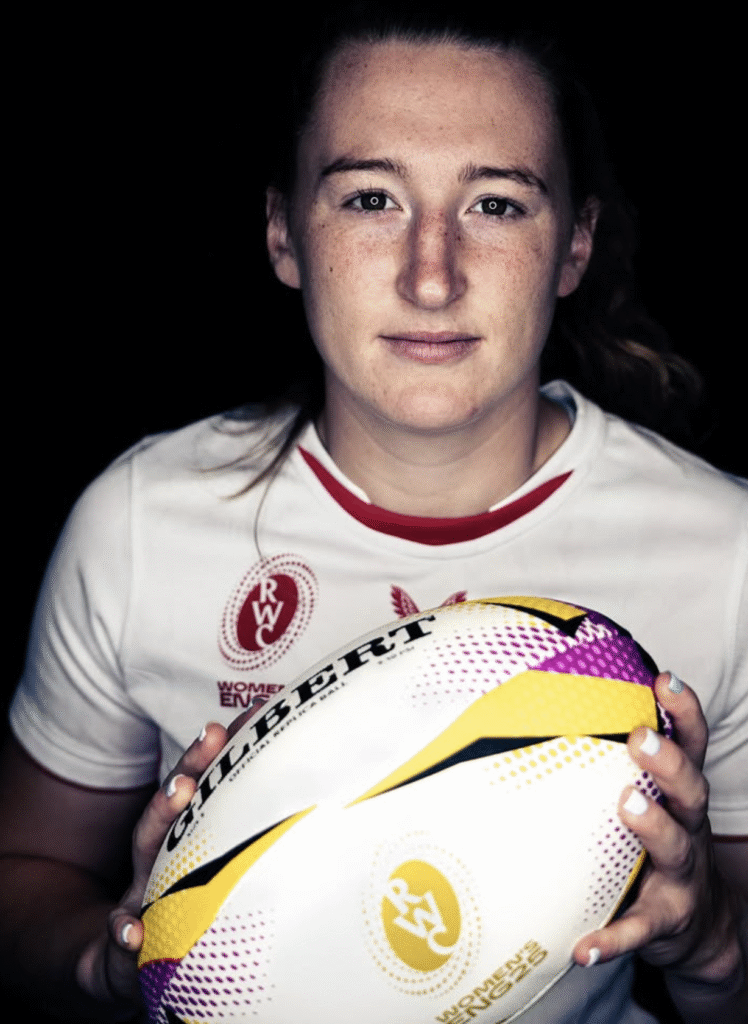
When you go out with the Foundation and meet these 10-year-olds, what do they want to know, and did they watch you in the World Cup?
A few of them at the assembly are quite awestruck. Tom George [primary education lead from Gloucester Rugby] introduces me: I’m Tom and this is Emma and she’s won a World Cup. And she just got back a couple of months ago… and they’re actually shocked.
I did say to the kids when we get towards the end of the term, I’ll bring my medal in.
They just appreciate getting advice… and if there’s any way I can inspire them to go to local clubs.
Are you the sort of person that game by game sets lots of targets for yourself?
Not really. In my head I’ve got a rough target of where I want my goal kicking to be.
It’s just trying to keep the error count as low as possible, then working with our analysts and seeing how well we can do as a backline, and individually how well I can do.
If you were giving advice to young girls wondering about playing rugby, what would you say?
Don’t be afraid.
Depending on the age, you may be playing with boys, and it can be hard. They may not want to pass you the ball, but don’t give in.
Just go. You’ll make friends for life.
“Don’t be afraid. Depending on the age, you may be playing with boys, and it can be hard.
emma sing
They may not want to pass you the ball, but don’t give in.
Just go. You’ll make friends for life.”
I still keep in contact with my old coaches who I used to play with when I was aged six and seven. I can see how far they’ve got in the men’s game and a lot of them are still playing. I’ve made it to the senior women’s team, so I think you can still go far.
The weather may not be nice all the time, but just have a laugh. You make some of your best memories on the pitch.
You’ve spoken about going into schools and there’s been a lot of talk about seeing the women’s game as its own brand.
How important is that accessibility and connections with fans and what kind of impact do you see it having as the game keeps on growing?
It’s massive, you can see especially compared to the men, a lot of women’s players go out, we take time to take pictures, sign autographs and stuff with all the people who come and watch. I think in the men’s game they probably wouldn’t stay out as long as us.
But it’s massive to give something back and especially how many people came and supported the World Cup. Now we’ve done that, think how many more girls we can get to clubs.
It’s good here in Gloucester, the other week we had 300 girls come for a tag rugby day organised by a school, these students doing little drills with all the kids.
We went down and showed our faces and it’s massive for the girls to see if you want to become a rugby player you can; there’s people here who are giving back.
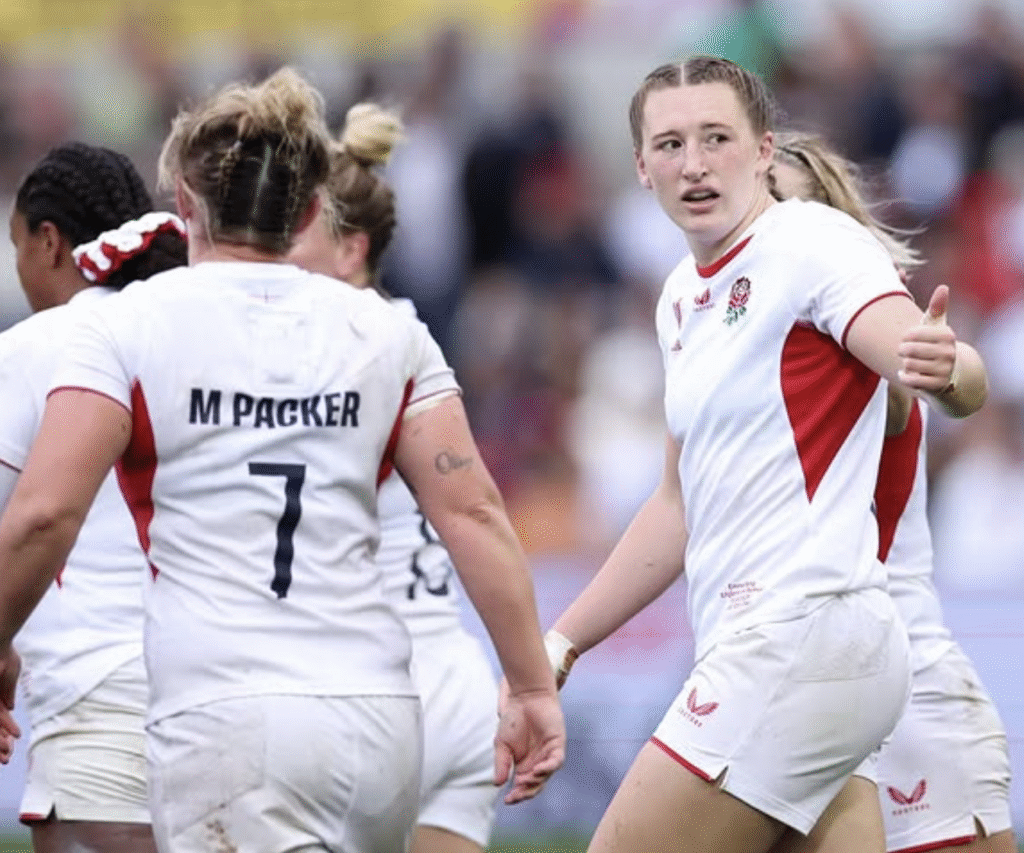
Leading on from that, the women’s game is still shifting towards professionalism, how has your day-to-day life as an athlete changed from when you first started?
Initially, when I started I was at university, I didn’t have a job, but still had my uni work to do, so I think I’ve been quite lucky that I went straight from uni to being a professional athlete. Then when I lost my contract I worked with the foundation, which was really flexible.
I’m being recontracted again, so I’ve been lucky that I haven’t had to juggle a nine to five, then go and work come into training. I can only admire what the workers do, they do a full day of work, then they come to training and give it all.
I wonder how much better the league would be if it was fully professional, because you’d have people who would be able to put 100% of their energy into rugby instead of doing eight hours at work, then drive themselves to training and then even when they’ve got home they’ve got to sort everything out because they’ve got to wake up at crazy o’clock the following day.
It’d be massive to get it fully professional so everyone’s supported, and can do it as their full-time job.
“I wonder how much better the league would be if it was fully professional, because you’d have people who would be able to put 100% of their energy into rugby instead of doing eight hours at work, then drive themselves to training. Then even when they’ve got home, they’ve got to sort everything out because they’ve got to wake up at crazy o’clock the following day.”
emma sing
Injuries are a massive talking point across women’s sports. Have you seen the game improve in research and player welfare, and what do you hope continues improving?
I think it’s good how much money is being put into research – and with being linked to the Gloucester men, currently we’re doing a big study on concussion. So once they’ve got the results for that that’ll be crazy, because they’re putting their time and effort into us.
We’re lucky with the medical team here; we’ve got three amazing physios, and we’ve got good insurance. So if you need a scan you get one.
Finally, what’s the goal for the whole season Gloucester Hartpuryy?
Top four, and I reckon we want a home semi, then win the Prem again…
And if you do win the PWR again, what will it be called? Because you’ve got the three-peat…
Hmm. Four-peat? I don’t know…
Back to back to back to back!
Photos: World Rugby, Helen M Jerome, Instagram