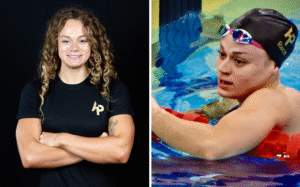

Why I Love… Triathlon
A classic three-act love story. A wetsuit. A bike. A footrace.
How Georgia Hamblett fell head over heels in love with the triathlon.
It’s 2012.
I’ve watched the Olympic torch pass through the street behind our house, seen the Queen parachute out of a helicopter with James Bond into the Olympic stadium (apparently), and now it’s time to watch two brothers from Yorkshire take Olympic Gold and Bronze in triathlon.
Aged 11, having just started swim club, and with the excitement of running down the finishing straight at school sports day fresh in my mind, I was mesmerised by this sport called triathlon.
It seemed to go on for ages – how did they did keep going for so long? (I have since learnt this is one of the shorter triathlon distances) – and I was spellbound by the frequent outfit and shoe changes.
I felt like I was watching the epitome of human grit and endurance, and that was something I was in awe of. I wanted to be able to do that sort of thing. One day, I’d do a triathlon.
The Basics
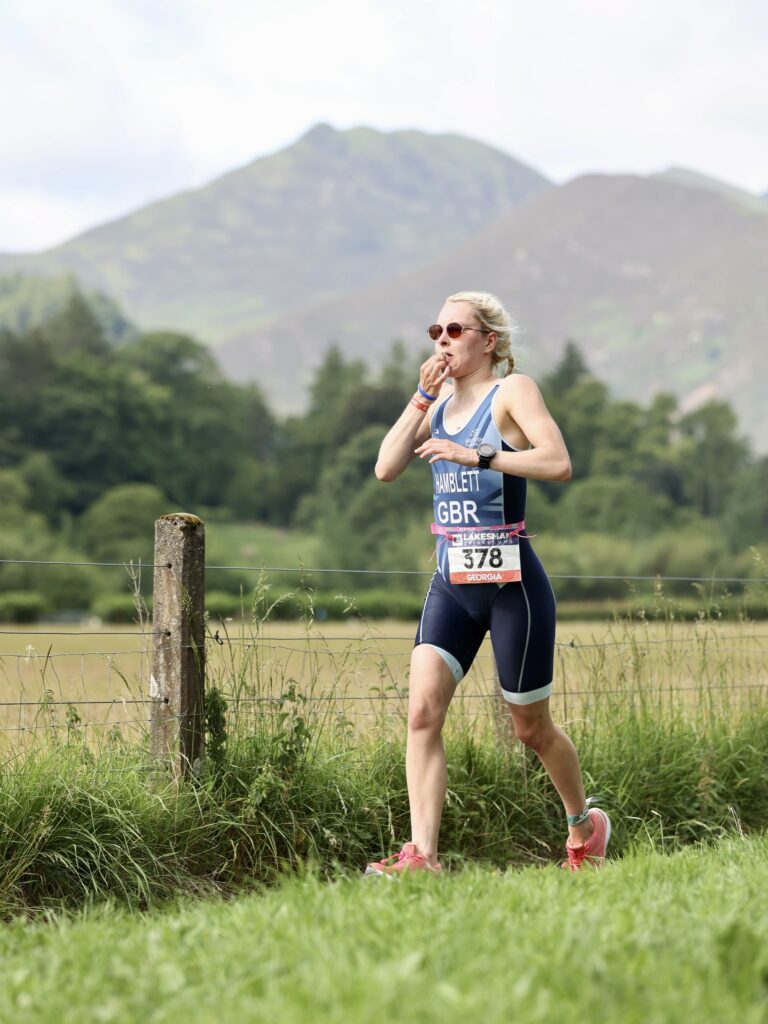
Before I get too into it, it’s worth me going over some of the basics.
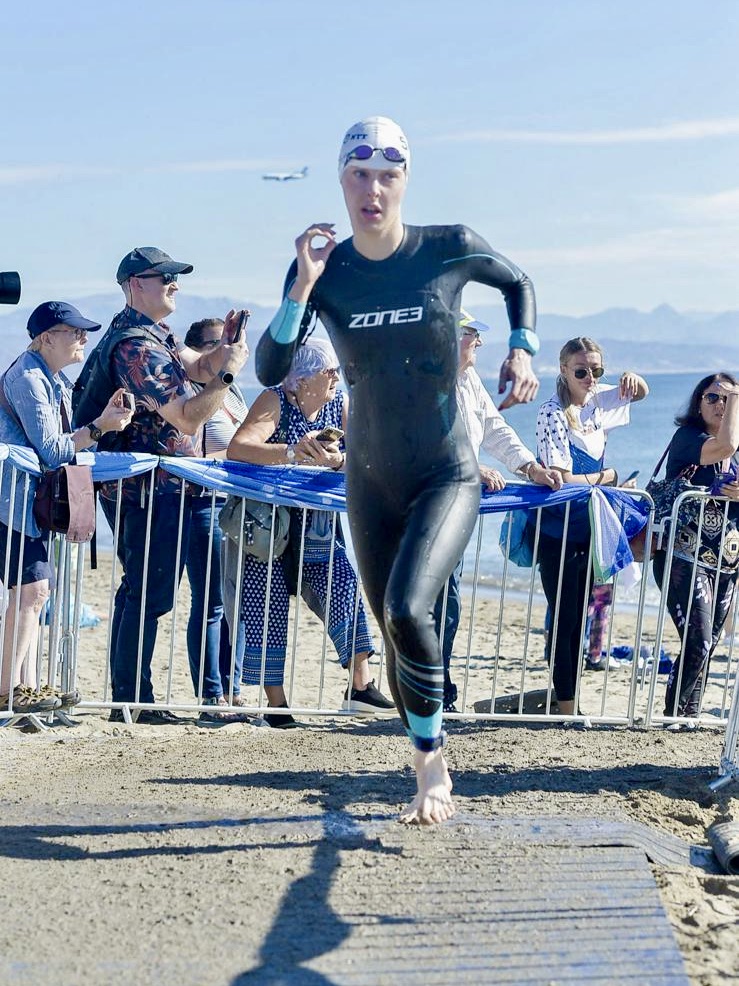
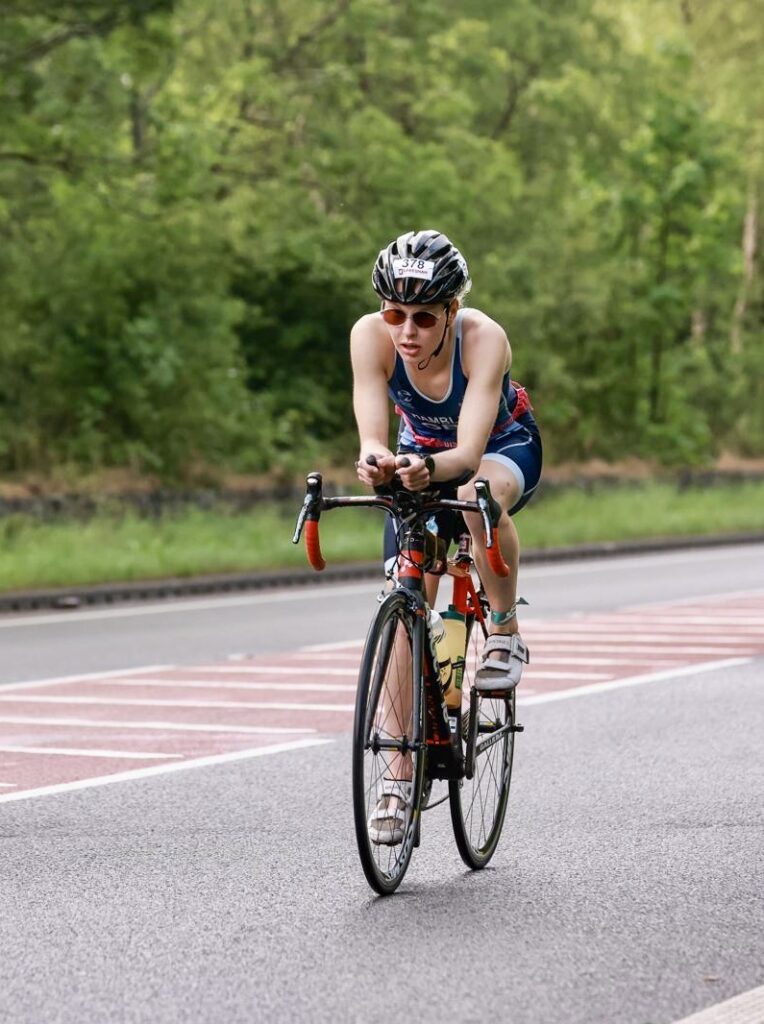
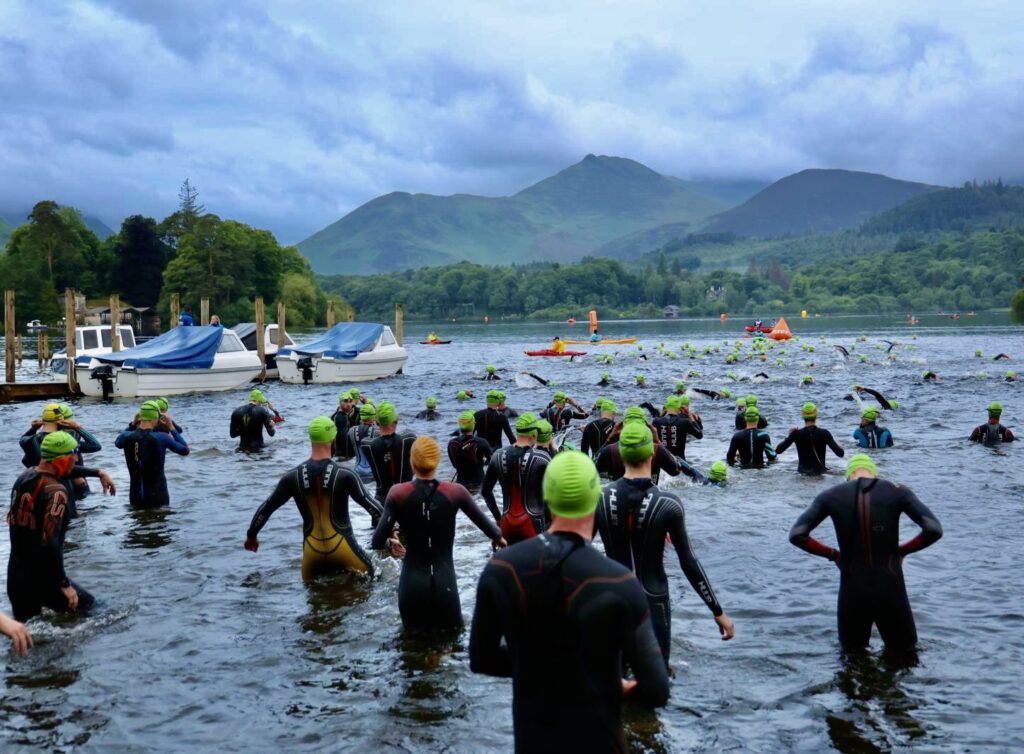
Triathlon is swimming, cycling and running, in that order, with no rest in between. There’s a ‘transition’ between each sport, which is when you run from the water to your bike, or off your bike to rack it and put on your running shoes.
Transitions are arguably where the most mesmerising part happens – the ‘costume’ changes – most notably clambering out of your wetsuit whilst putting on your helmet (you get slightly more graceful at this with practice). Beginner triathlons may be held in a pool, but typically competitive triathlons will be held in open water.
The shortest distance is a sprint (750m swim, 20km bike, 5km run) and the longest distance a full, or ‘Ironman’ (3.8km swim, 180km bike, 42km run). The Olympic distance, or standard distance, is 1500m swim, 40km bike, 10km run, and takes the fastest athletes under two hours.
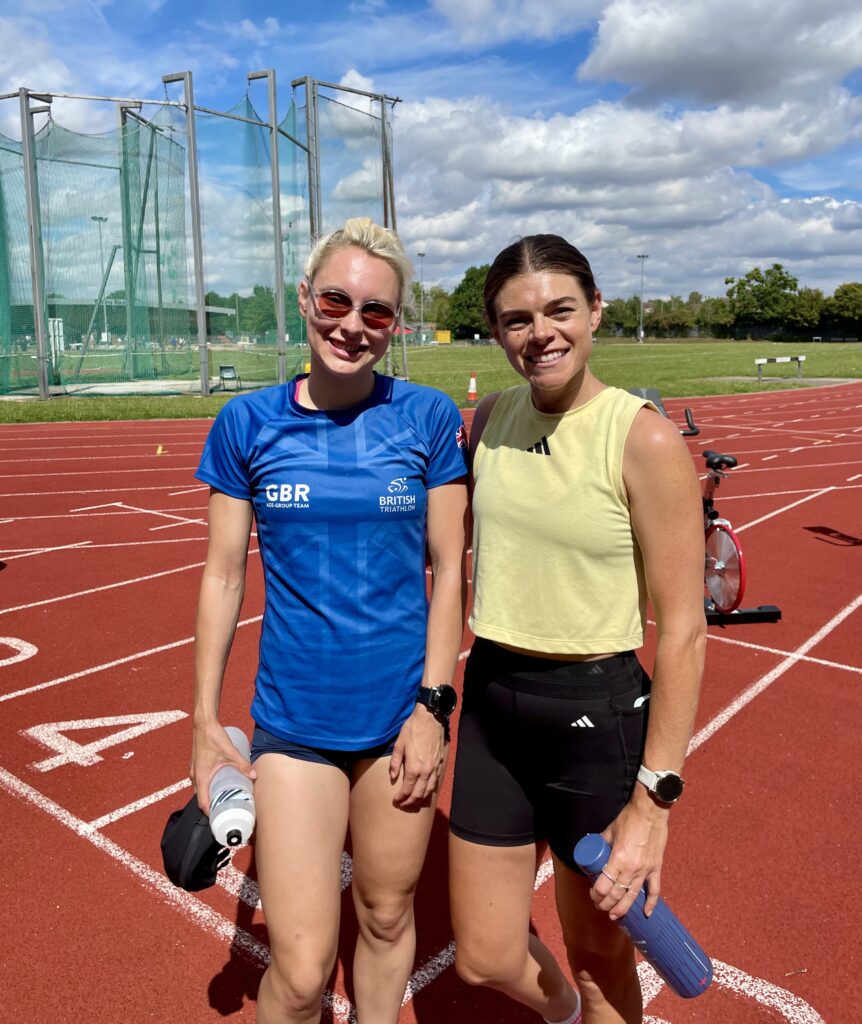
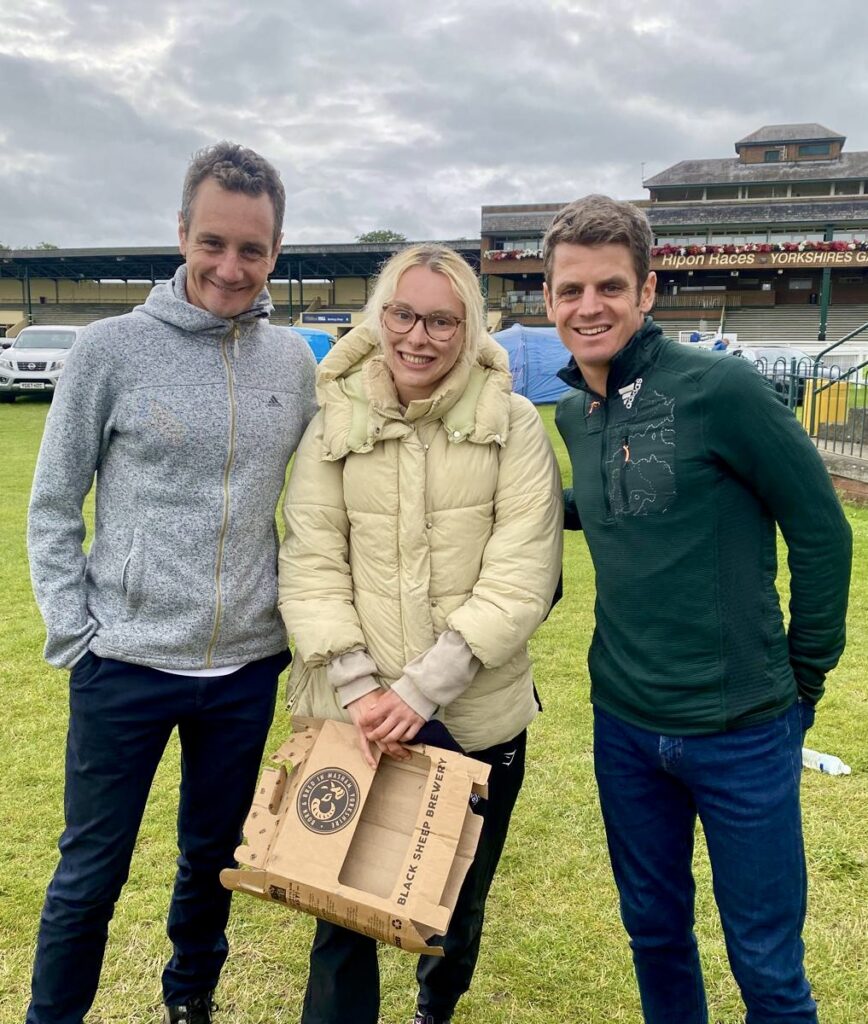
Triathlon was first included in the Olympics back in 2000, but it wasn’t until the Brownlee brothers in 2012 that Team GB really began to assert their dominance. Since then we’ve had medallists at every Olympics and Paralympics, including some incredible female athletes in Vicky Holland, Georgia Taylor-Brown, Jess Learmonth, Beth Potter, and Lauren Steadman (below, with Georgia). Plus those ubiquitous Brownlee bros (below, with Georgia).
My Triathlon Journey
Seven years after I watched my first triathlon on TV, I walked through countless aisles of stalls at the university freshers’ fair. I, however, was tunnel-visioned. I wanted to do triathlon.
Given my background in competitive swimming, and being a half-decent runner, I quickly made it on to the university performance squad, a squad which has since produced multiple elite and professional athletes. This was an incredible experience, but probably wasn’t right for me at the time, given some ongoing health issues, my inexperience in the sport and the demands of training alongside a busy degree.
I trained at this level for a few years, before moving to Northern Ireland for a placement year. It’s here that I truly fell in love with triathlon.
Travelling around the country for races was a great way to explore new places, and having overcome many of my health struggles and training in a way which worked for me, I found I was progressing much more rapidly than when I’d been at university. Triathlon Ireland have a great National Series, and I loved racing against some of the fastest athletes in the country.
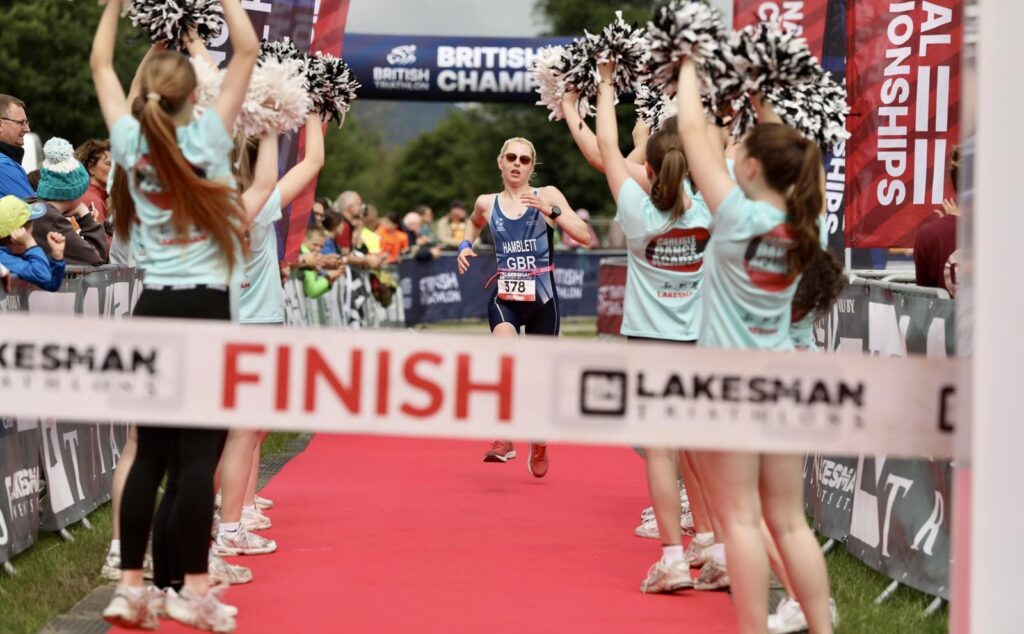
Over the past few years, my focus has shifted to Age Group racing. Triathlon can be quite complicated in terms of the different pathways for performance athletes, but essentially age group racing allows you to compete against the best athletes in your age group at a national and international level. My proudest achievements to date include winning the English Middle Distance Triathlon Championships and the European Aquabike Championships.
I love Age Group racing because, just as I had found in Ireland, no one hosts a triathlon in an un-scenic area. Within the UK, I’ve raced in some of the most beautiful places, including the Lake District, Northumbria and Scotland.
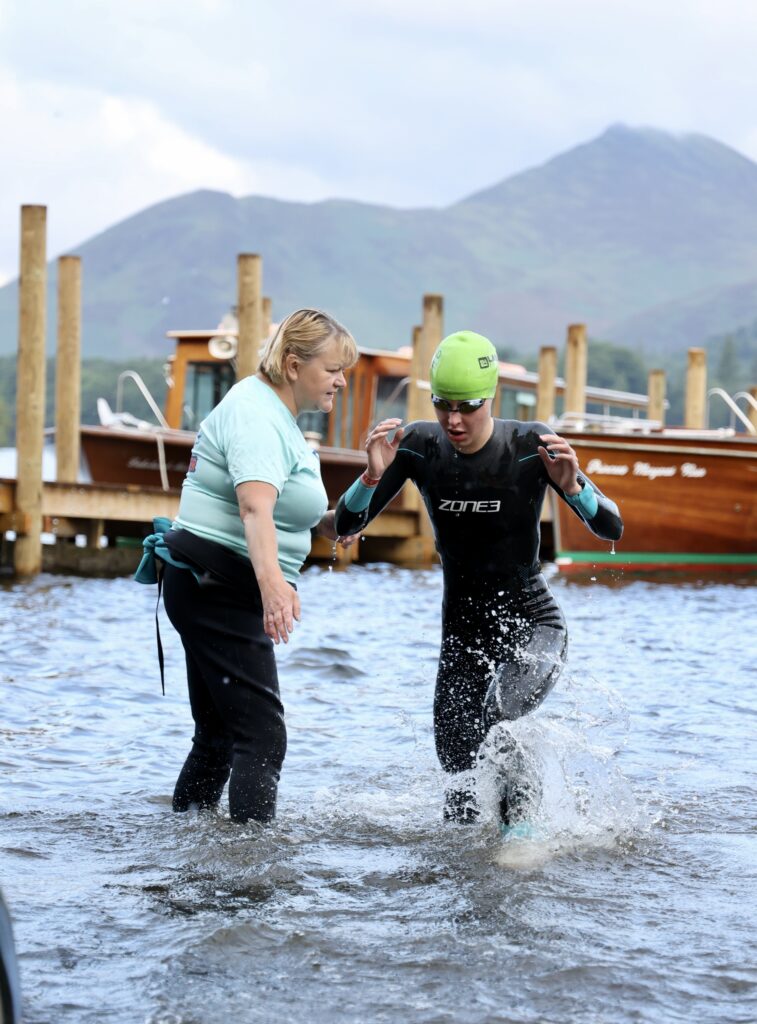
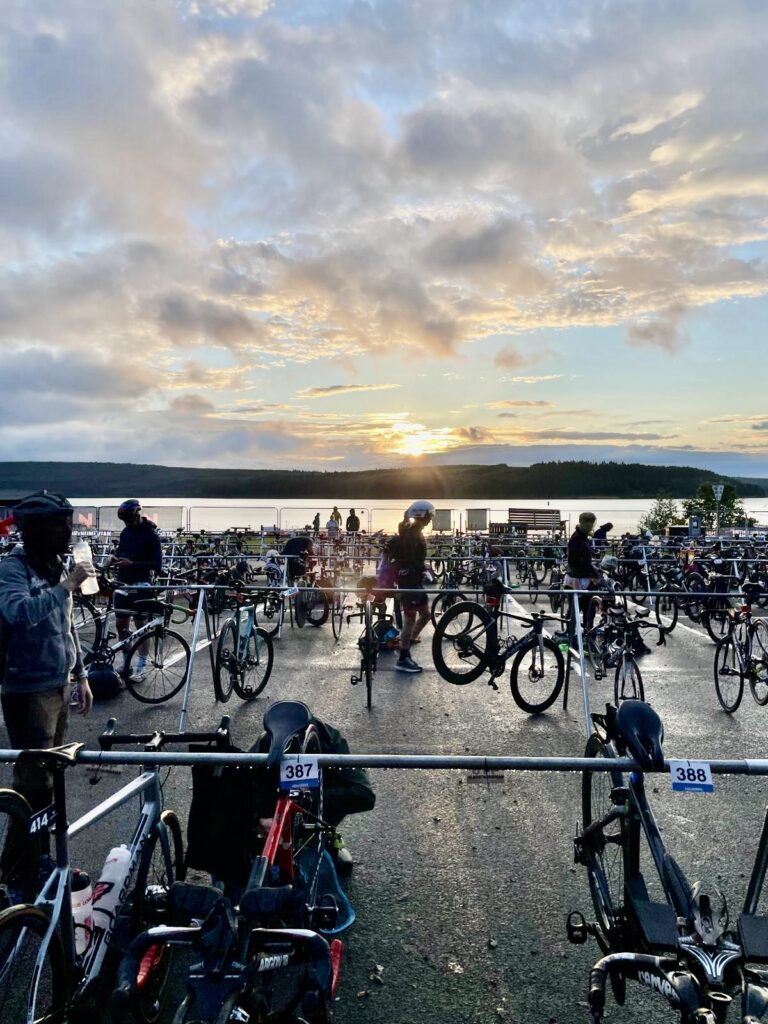
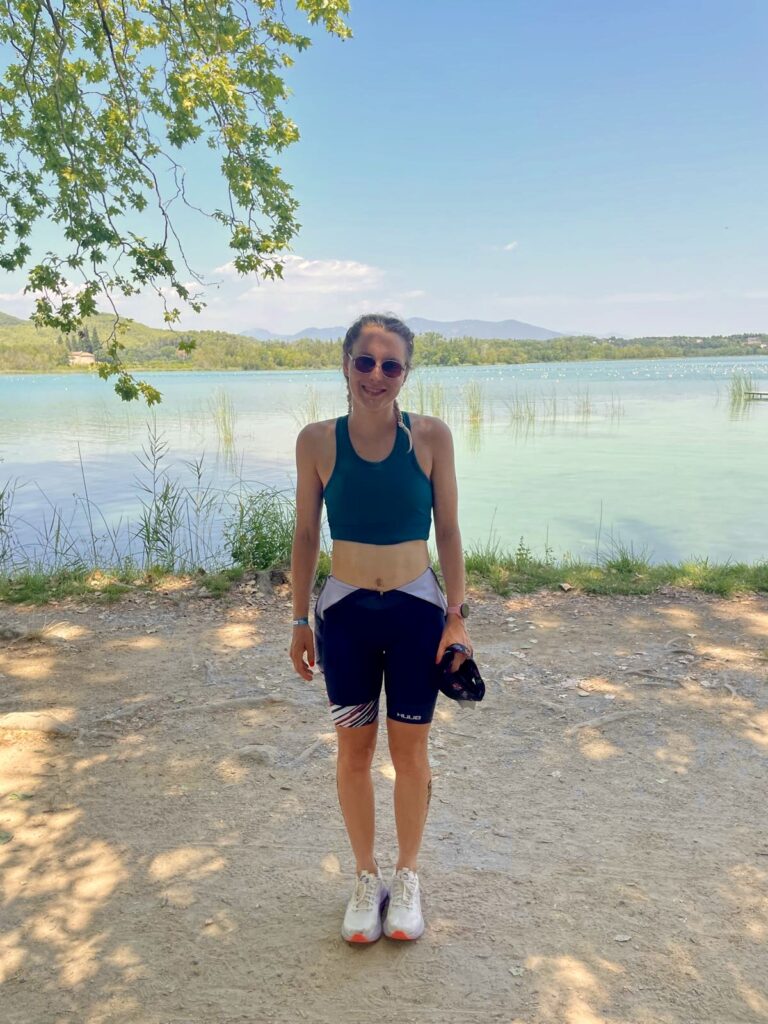
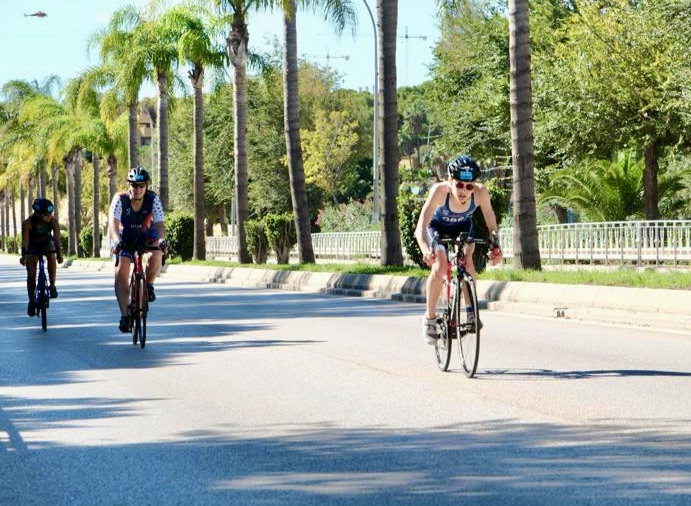
With the GB Age Group team, I’ve raced in Spain twice, and these are probably my favourite two races so far. I travelled to both on my own which, with a 30kg bike box, adds a whole new level of stress and complication. It also adds another level of accomplishment though, when you step back and look at how much you’ve done.
The atmosphere at these races is incredible, taking over major cities for the week, with athletes from all over the world brought together by their love for sport. Seeing an 85-year-old run across the finish line is just one of the inspiring and heartwarming things.
Super Seven: Advice for a Beginner Triathlete
- When it comes to triathlon, the sky’s the limit when it comes to kit. You don’t need anything too fancy to get started. A wetsuit, trisuit, swim hat and goggles, basic bike, helmet and trainers are all you need to get started. Save purchase of the sports watch, HR monitor and mega-expensive-spaceship-like-superbike until you’re sure you’re into it.
- Nutrition and rest are just as important as training. Pre- and post- workout food is so important in endurance training, and during it you’ll need gels, energy chews or snacks if the session / race is over two hours.
- Training two / three times a day isn’t uncommon for triathletes, but isn’t necessary for your first one (unless you’re doing a half Ironman / full distance).
- When you read the start time on your race pack for your event, it probably isn’t a typo. Race starts are typically 5am-7am, with race venues often opening a couple of hours before this.
- Most races do have toilets on the course (although many triathletes just wee as they race, and eat a very low fibre diet for a few days before hand to prevent anything else)…
- The question I probably get asked the most… no, I don’t get dry or put socks on in transition. For longer distances, some competitive athletes will put socks on, but this wouldn’t be the case in shorter competitive races. As a beginner though, I’d prioritise comfort, so whatever works for you.
- When you begin your triathlon journey, you may question why you’re voluntarily putting yourself through endless physical and mental pain, early alarms, and paying a respectable sum to do so. But constantly smelling of chlorine, having a bike chain oil tattoo on your leg and a new route to admire on Strava will all wiggle its way into your heart quicker than you may expect. And when it does, you will be hooked.
Why I Love… Triathlon
Lucy Charles-Barclay is possibly my favourite triathlete. She won the Ironman World Championships in 2023 in a record-breaking time of 8 hours 24 minutes, after finishing second four times in previous years. The championship takes place in Kona, Hawaii, and has an incredible prestige and history.
Racing in some of the toughest conditions, across a 3.8km swim, 180km bike and 42km run, the championship shows just how incredibly the human body and mind can perform. Lucy Charles-Barclay has had countless comebacks from injury, including a torsion fracture in her foot just months before her iconic World Championship win.
The 2026 Ironman World Championships take place on 10th October 2026 and, having pulled out of the Ironman 70.3 World Championships to focus on the race, is hard to believe Charles-Barclay has her sights set on anything other than the win.
We can’t all be the next Lucy Charles-Barclay, but I do think the triathlon is an incredible way to push ourselves to levels we didn’t know we could, and achieve more than we thought we’d be capable of.
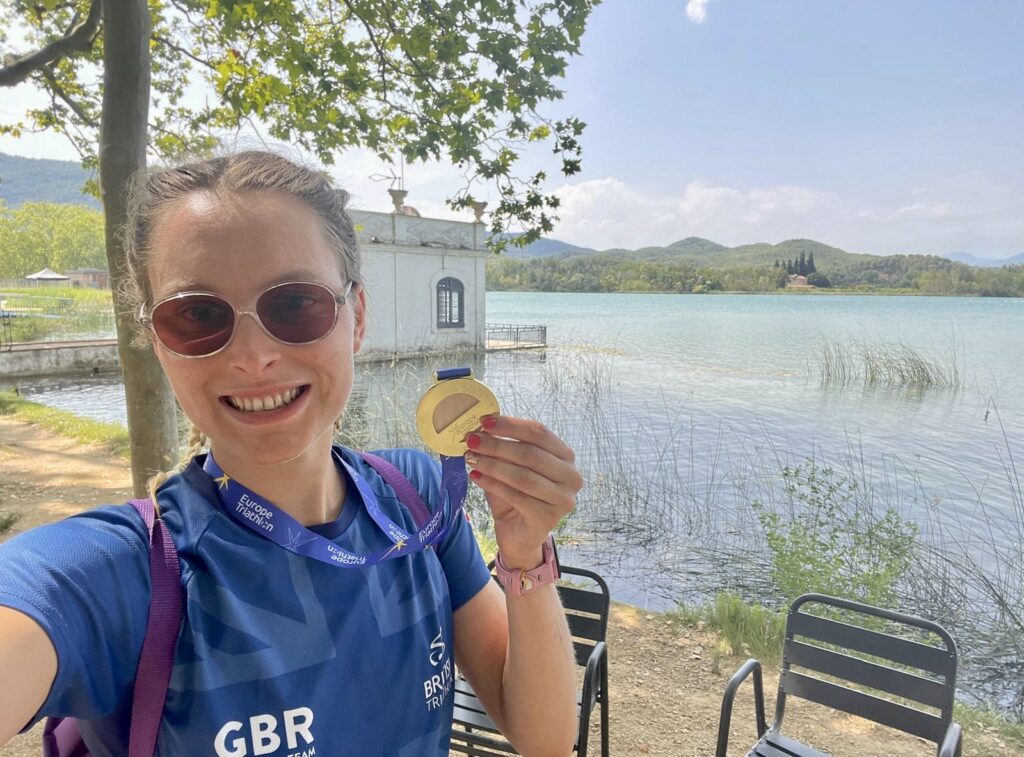
I recently got back from the European Aquabike Championships, where I won my age group. Am I proud of the win? Of course. But I’m also incredibly proud of travelling there alone, racing in a healthy body, and controlling my nerves and anxieties around the whole thing.
So, I didn’t just love the experience of racing, but seeing the incredible scenery, exploring local towns and meeting new people from around the world.
To sum up, the beauty of triathlon is that it opens your eyes to everything that you and the world have to offer.
World Triathlon Series finale is 26th-27th September. Like most Triathlon events, it will be streamed on TriathlonLive, and likely on BBC iPlayer.
You can watch the Ironman World Championships on 10th October from around 5pm (6am local time) live or on replay at IRONMAN.com/proseries, YouTube and DAZN.
Prewarning: it will be an over eight-hour race, so maybe one to have on in the background or, following the event, many platforms provide highlights.