
YOU LIFT ME UP! How Red Roses and Saracens star Rosie Galligan got her groove back…
In her decorated career – which now includes winning the Rugby World Cup with England’s Red Roses – Rosie Galligan has been knocked down. But she got up again… and again.
As she tells Helen M Jerome, rugby has always been her salvation, getting her through the hardest of times, and making friends for life at club and country.
She also talks about taboos, the mental side of the game, and having the world’s best player alongside her at Saracens.
Tell me what have been the highest highs in your career so far?
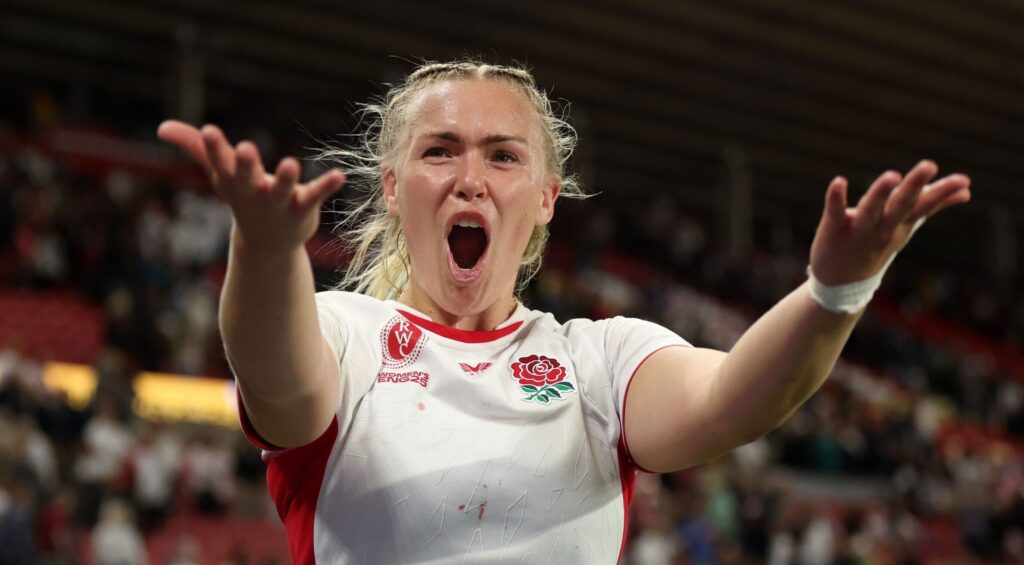
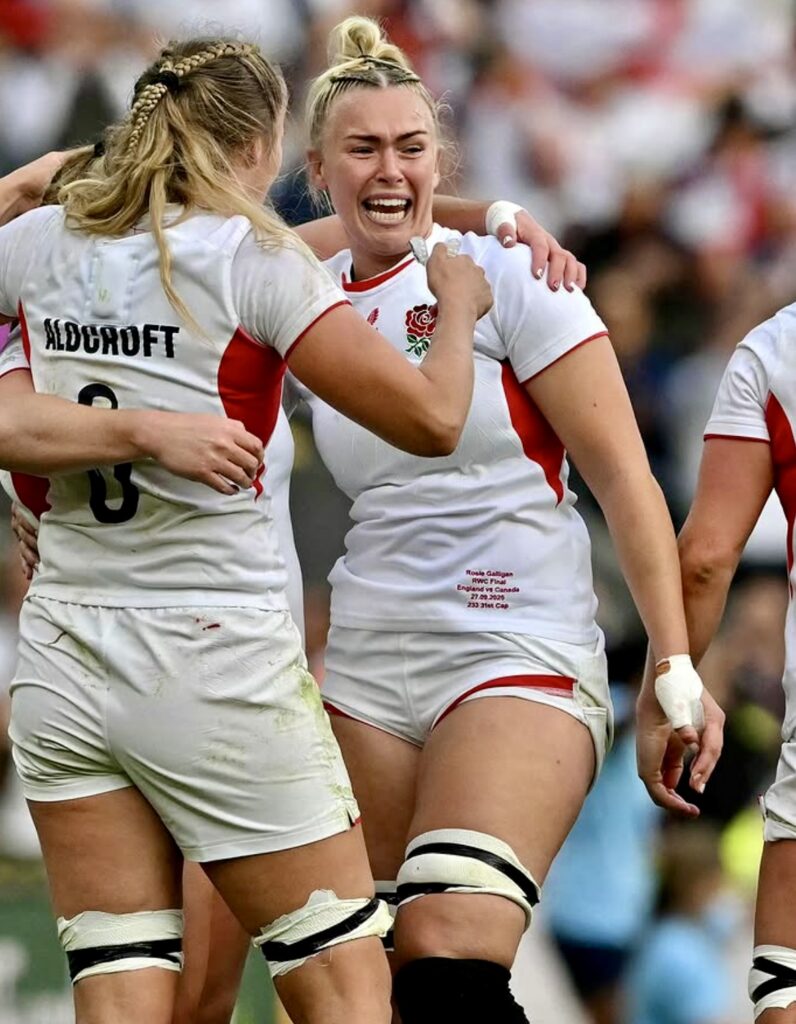
Very easy question for me, having just won the World Cup!
I think from the heartbreaking 2022 to winning at home in front of 82,000 people.
And there’s no better feeling than that final whistle going and being on the pitch and just feeling that sense of relief that we’d finally done it.
And what’s been the lowest low?
For me, the lowest point was probably September 2019, when I contracted bacterial meningitis.
In sport you have a lot of injuries, but illness was something that I’d never come across before, so that was quite isolating.
It took me a few months to properly heal from that, and then I broke my ankle in January 2020 where I was dropped in a line-out.
And I was sidelined for a year with that during COVID.
So that for me was a real low point. But I was very fortunate that I was surrounded by such good professionals at Saracens and so many good teammates and friends that they got me through some really hard times and managed to see light at the end of the tunnel.
I was surrounded by such good professionals at Saracens and so many teammates and friends that got me through some really hard times and managed to see light at the end of the tunnel.
What’s so special about the sport, is friendships like no other, and you go through thick and thin together on and off the pitch.
How did you get through that – people focus on the mental side of the game a lot more now, and I wonder if that was something that you really lent on?
Yeah, it was just as hard mentally as it was physically, probably a little bit harder.
For me, mentally, I knew what my body could achieve.
So having to then tell myself that I couldn’t fulfil what I wanted to do in that moment was tough. But it was just about riding the wave and knowing that although it was tough that day or that hour that there were going to be better times.
I really had a lot of support from my housemate Zoe Harrison at the time. She was really supportive in in my journey and just making sure that I was in a good headspace.
But I definitely think the mental side of injuries and illnesses sometimes gets overlooked and it’s really important to talk about.
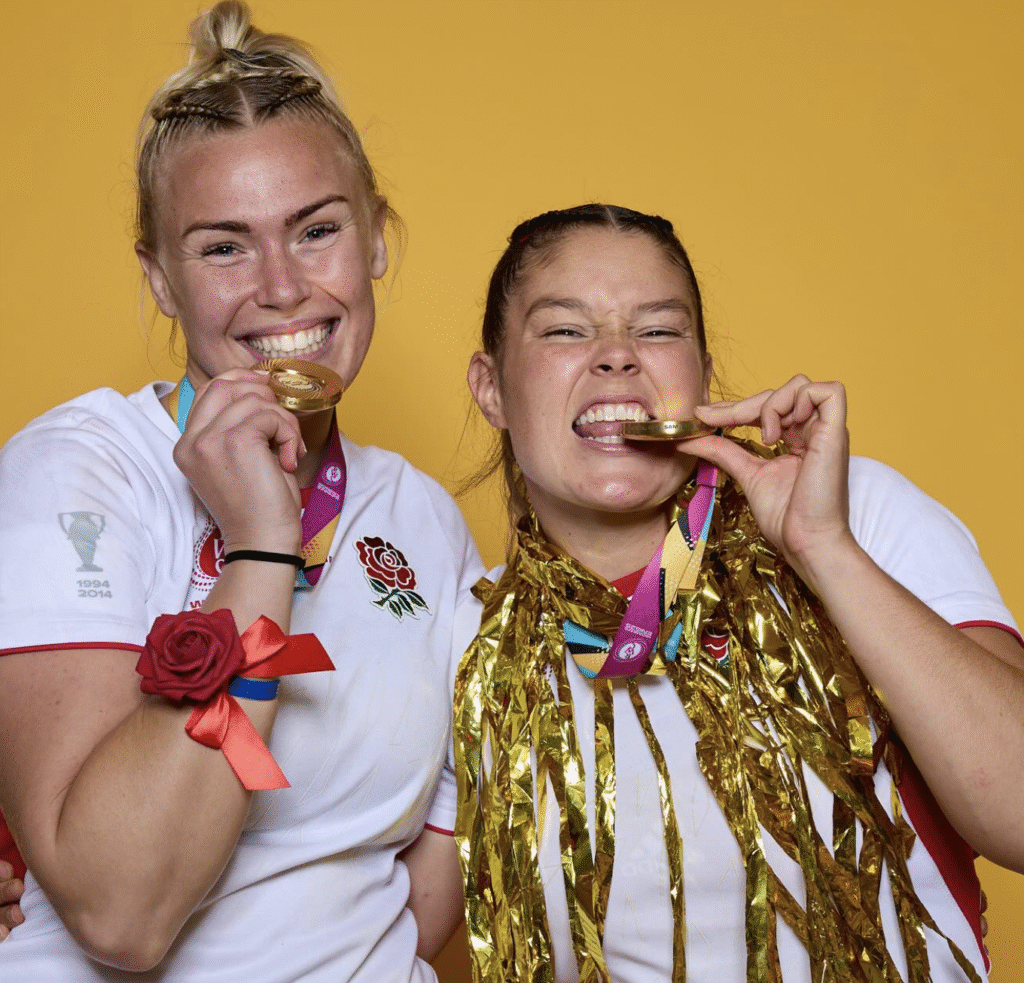
It must be amazing that you now get to play alongside Zoe, not only for club, but for country, with these huge wins.
Yeah, massively. One thing about rugby is that you make lifelong friends. Some of the girls that I met when I was 16, when I first started playing rugby, I’m still playing with now.
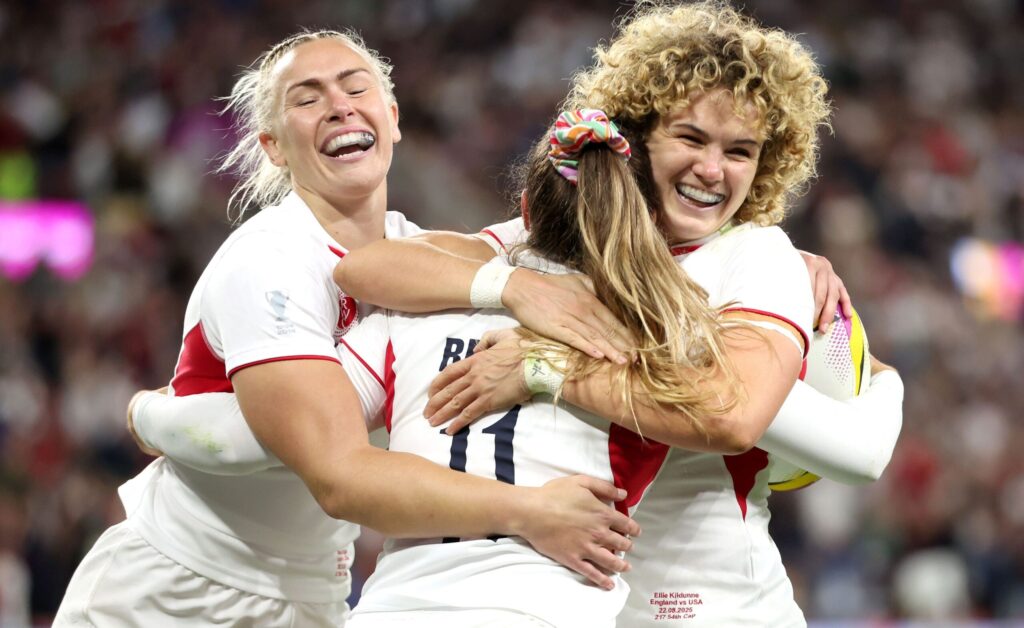
It’s so nice to be able to still play with the likes of Zoe Harrison and Jess Breach (above) – and be friends however many years later.
That’s what’s so special about the sport, is that it’s friendships like no other and you go through thick and thin together on and off the pitch.
The other comparison is with Chloe Kelly, because she’s famously had loads of setbacks with injuries and coming back. She left the club she started out at, Arsenal, when she was younger, went away, then returned. You did the same thing didn’t you?
Yeah, so after my ankle injury and COVID I found it really hard to get back into the swing of Saracens and I don’t think COVID really helped… in terms of we weren’t allowed to socialise.
There was nothing fun about being at rugby training and I just needed a bit of a switch-up where I could redefine who I wanted to be and re-find my feet in a rugby sense.
I set myself the challenge of leaving Saracens, moving to Harlequins and talking to the coach and just saying: these are my goals and are you going to help me or not?
He was like: of course, let’s go get you into England; let’s get you back to the top of your game.
Just having that change, and I think it was my first selfish decision as an athlete, to move away. And yeah, those two years were great.
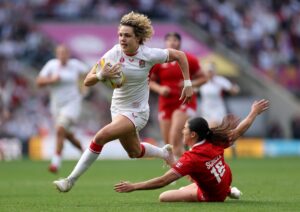
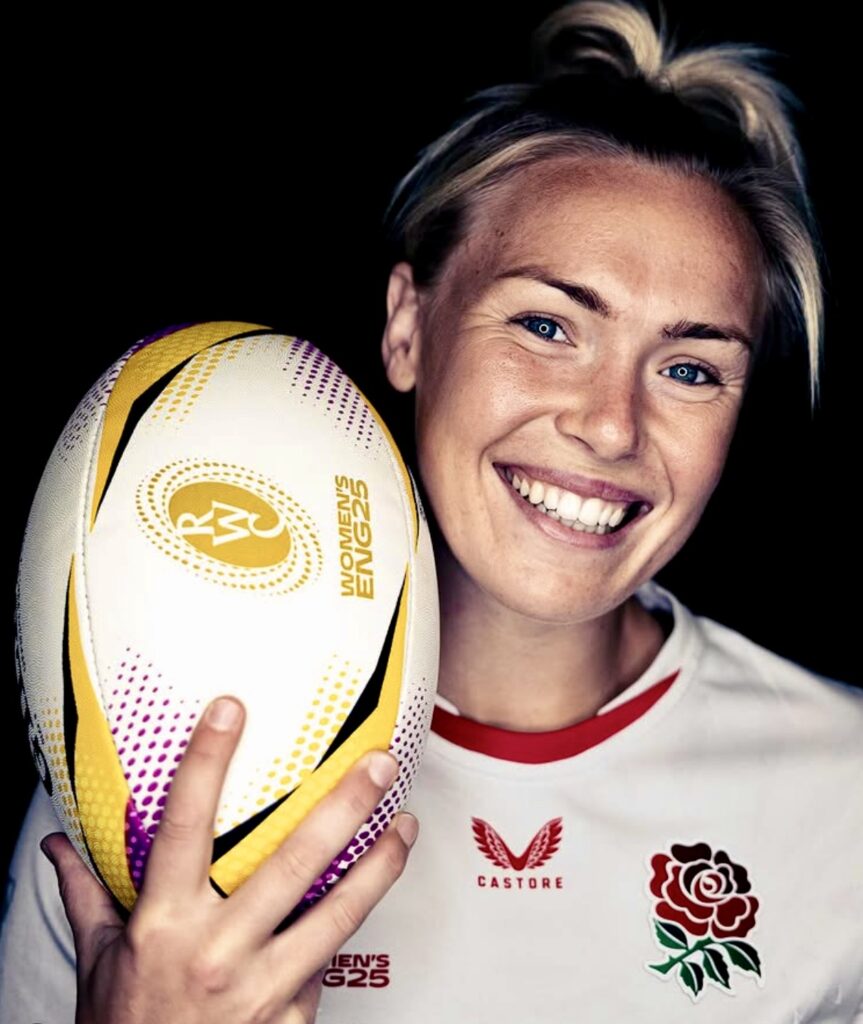
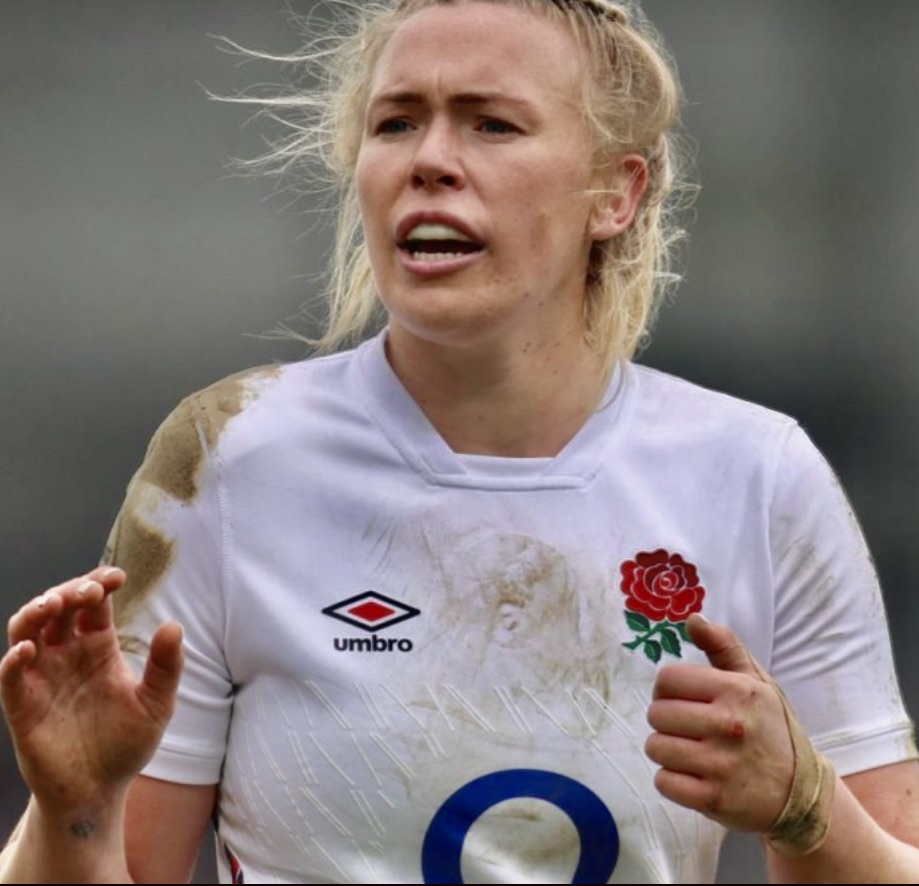
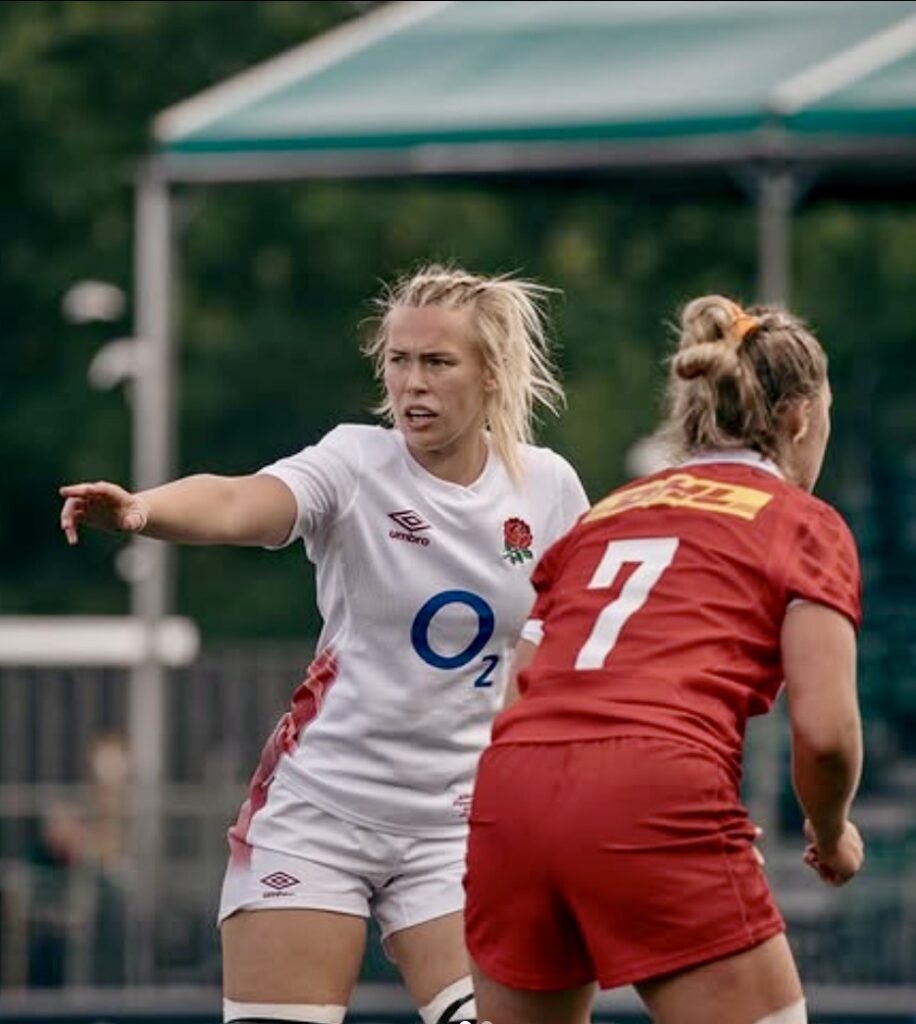
I got back involved in England (photos below), I played every game in that first Six Nations, managed to go to the World Cup in 2022, and then got my first professional contract.
So for me that change was great and definitely needed.
Obviously I came back to Saracens two years later, ready to go again and wanting to win another premiership title with them.
Do you ever look to people like Chloe or Leah Williamson, to see their progression and how they’ve overcome setbacks?
I wouldn’t really say that. You see so many people’s different journeys, and what’s so special about sport is no-one’s journey is the same.
There’s so many good athletes out there that are now at the top of their career, and you wouldn’t know what they’ve actually done to get there.
So being able to hear those stories and understand what they’ve been through was nice. Because you know what people have done to get to the top of the game and we’re similar, we’re the same in that sense.
I definitely think the mental side of injuries and illnesses sometimes gets overlooked, and it’s really important to talk about.
Has there been a turning point in your career and life where it could have gone one way and then it went another?
I think that was probably that 2019-2020 year of my ankle injury. It was quite a serious one where it could have been that I never really played rugby again.
So to be able to prove to myself and everyone else that I could do it and get back to the top of my game was that moment where it could have got either way I reckon.
The other thing I wanted to ask you about is your breast reduction, which is often considered taboo. I know Simona Halep, the tennis player had the same sort of op. That must have been a big decision?
Yeah, for me it was like a no-brainer, and my mum had one when she was younger.
I’ve always been from a ‘big boob’ family.
And for me, talking to my mum about it, it was a very normal conversation.
I can understand why it’s sometimes a taboo subject, because it’s not really that well known.
But mine was for performance factors as well as feeling a bit insecure in my body.
I had a bad back and wanted to try and make it as far as I could in sport, and I thought it was hindering me.
So for me it was it was a great decision and if there was anyone looking into it or wanting some support, I’m always there to reach out to.
This season looks pretty exciting, having Sophie [de Goede] back who’s now officially the best player in the world, what does that mean to the team – what does she bring?
Sophie just brings so much, she has such a high rugby IQ.
She’s also such an incredibly lovely person.
So being able to have a quality rugby player and a quality human in Sophie back at Saracens is something we probably missed last year.
She has such good vision on the pitch and is both a threat in attack and defence.
So it’s great to be able to play with Sophie again, and I can’t wait to work alongside her in the row.or that development, I’d like to think it’s there.
I wouldn’t be where I am today without just enjoying rugby as a hobby to start off with.
I never thought it was going to be my job.
If you were talking to somebody younger, who was thinking about going into rugby, what advice would you give?
For me, I always give the same bit of advice: do what makes you happy and play with a smile.
I wouldn’t be where I am today without just enjoying rugby as a hobby to start off with.
I never thought it was going to be my job.
So don’t put pressure on yourselves and just go out and do whatever makes you happy.
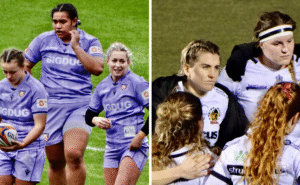
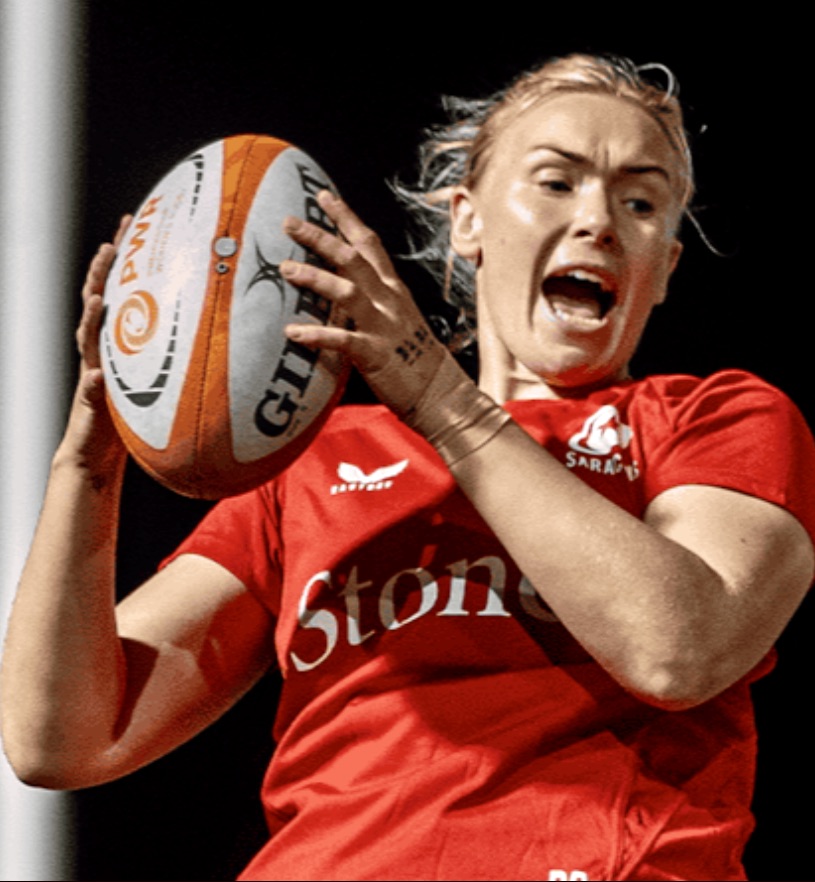
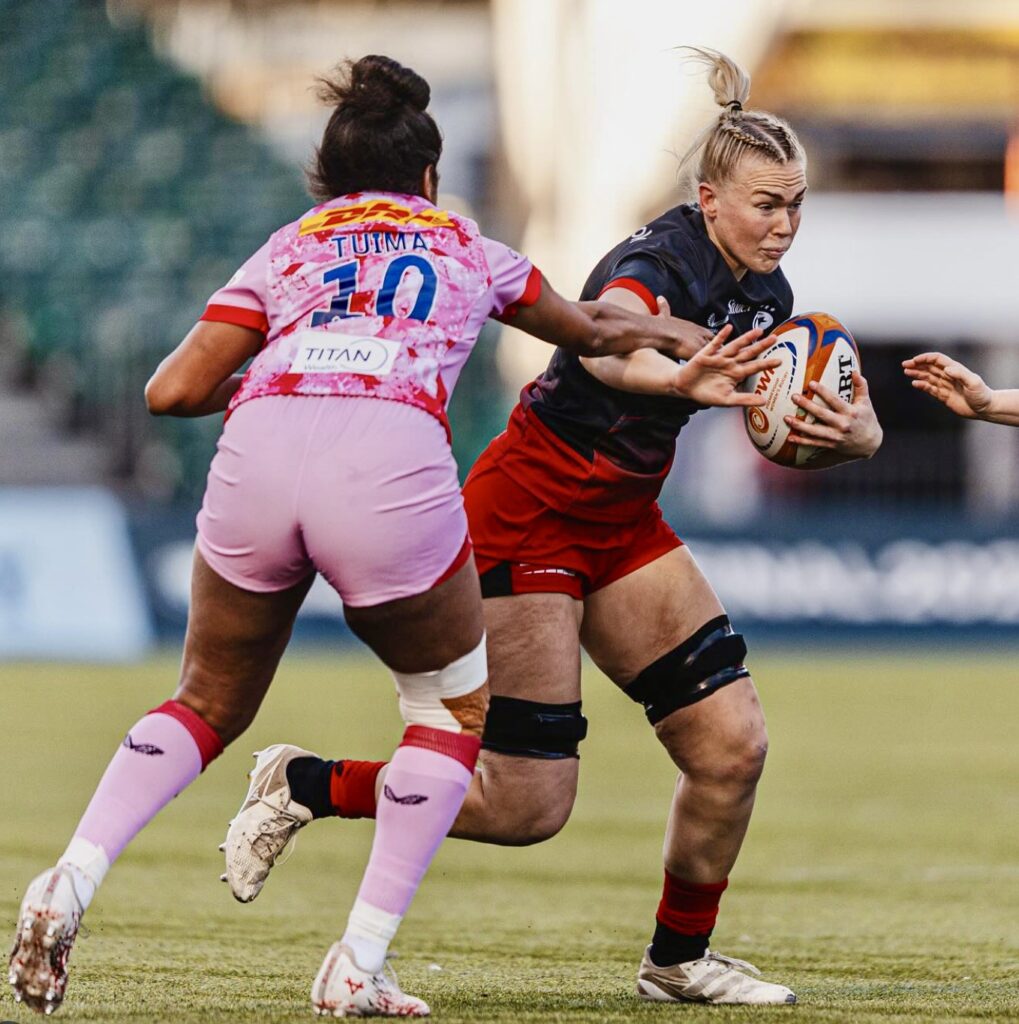
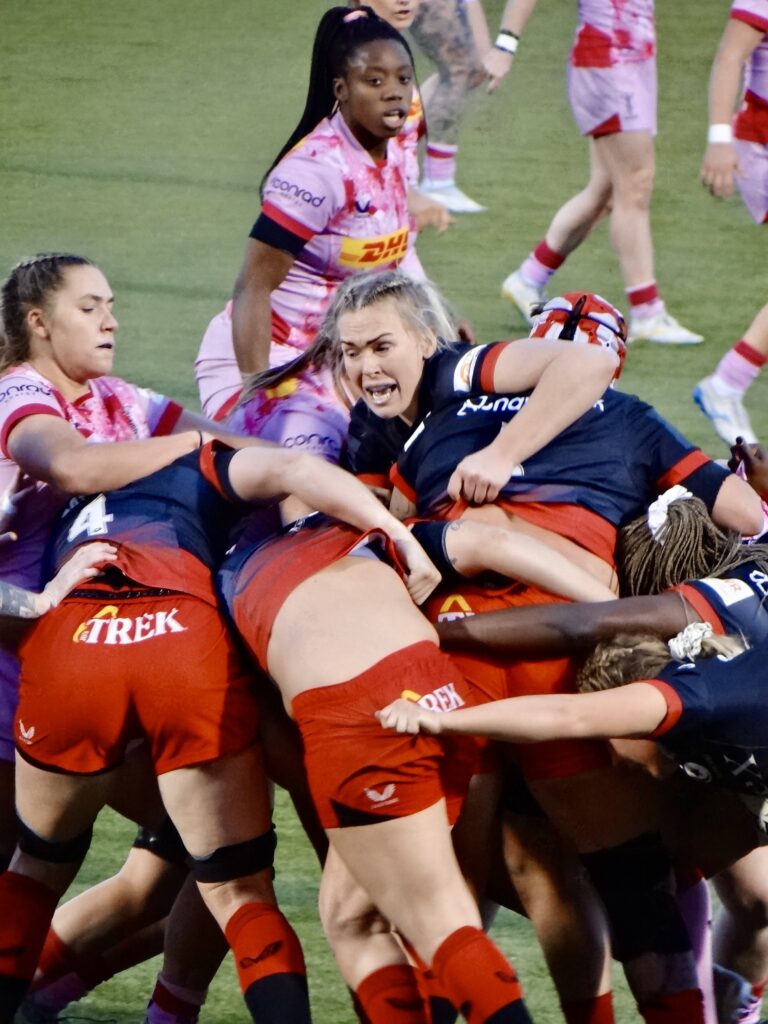
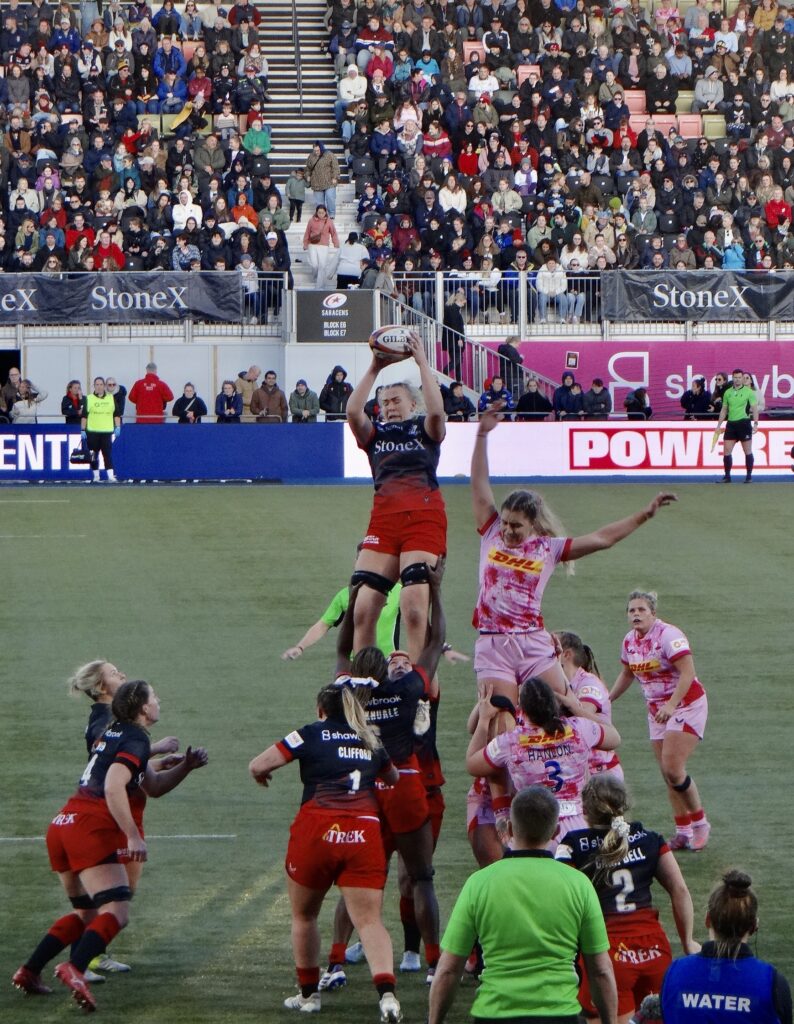
What’s the best thing for you about playing rugby for Saracens (below, in the thick of it, v Harlequins) and the Red Roses?
It’s probably that community, that family feel that rugby has.
It was the first place I fully felt like I could flourish and that for me is what’s so special.
Would you ever fancy being a head coach – because there’s a lack of female head coaches?
I’m a massive believer in the best person for the job, whether you’re a man or a woman.
I think if you’ve got the qualities and the expertise to thrive in that department, then go for it.
I don’t feel we should be putting pressure on having female coaches just because of fitting the mould, it should be actually helping them develop in order to then be the best in that field.
I’m a massive advocate for getting women into the sport as spectators, and in a playing and a coaching development space.
But making sure that the best person has the job is also key for me.
Is there a pathway then – for coaches?
Yeah, I’d like to think so.
We’ve got enough people that have done their level three.
I’ve done mine. And I definitely think there’s space there.
It’s just at the minute – how can we tap into it and make sure we’re supporting them.
So I definitely think there’s work to do in that aspect.
But at the same time, there’s opportunities there.
And if you go knocking and go looking for that development, I’d like to think it’s there.
It was the first sport I joined when I was 16. It made me feel like I could be myself, I didn’t feel out of place with my body, my height, my width, how boisterous I was.
It was the first place I fully felt like I could flourish, and that for me is what’s so special.
You’re quite local as well, aren’t you?
Yeah, I was born in Finchley.
So this is almost a stone’s throw away?
Yeah, this is 10 minutes from where I grew up.
I was only there for the first four years of my life, so not that much of a tie! But I definitely think North London is a special place.
Seeing this place and the stadium develop and evolve throughout the years I’ve been here has been pretty special as well.
It’s now an incredible stadium that we’ve made our home – and hopefully it’s a home to all the fans that come as well.
Photos: World Rugby, Helen M Jerome, Instagram