

Playing Through the Heat: Climate Change and Women’s Sport
We cannot ignore our changing climate any longer. In an urgent and must-read feature, journalist Beth McCowen puts women’s sport, climate change and equity under the microscope.
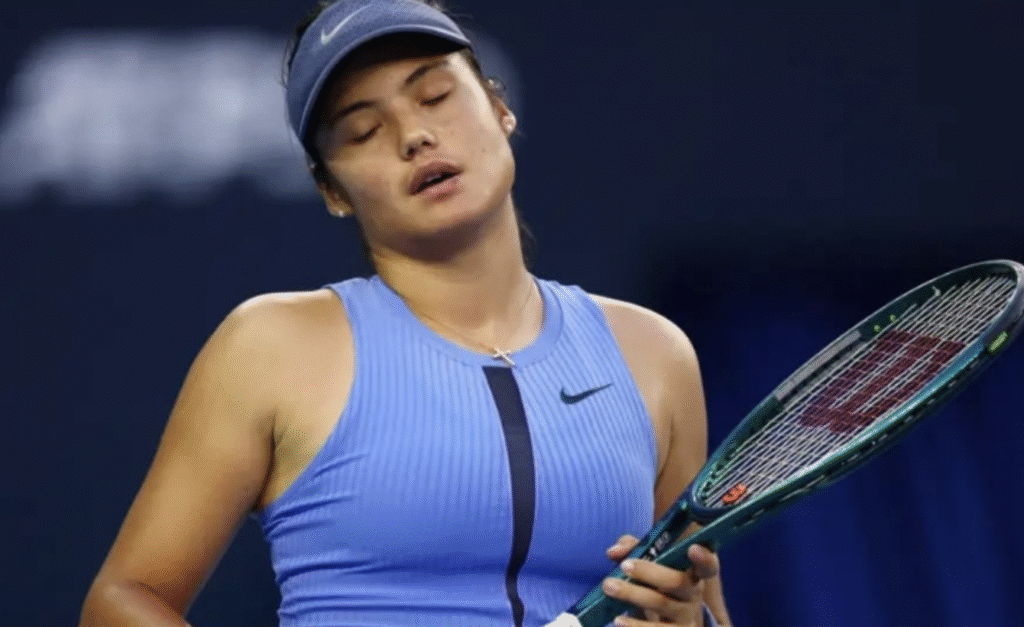
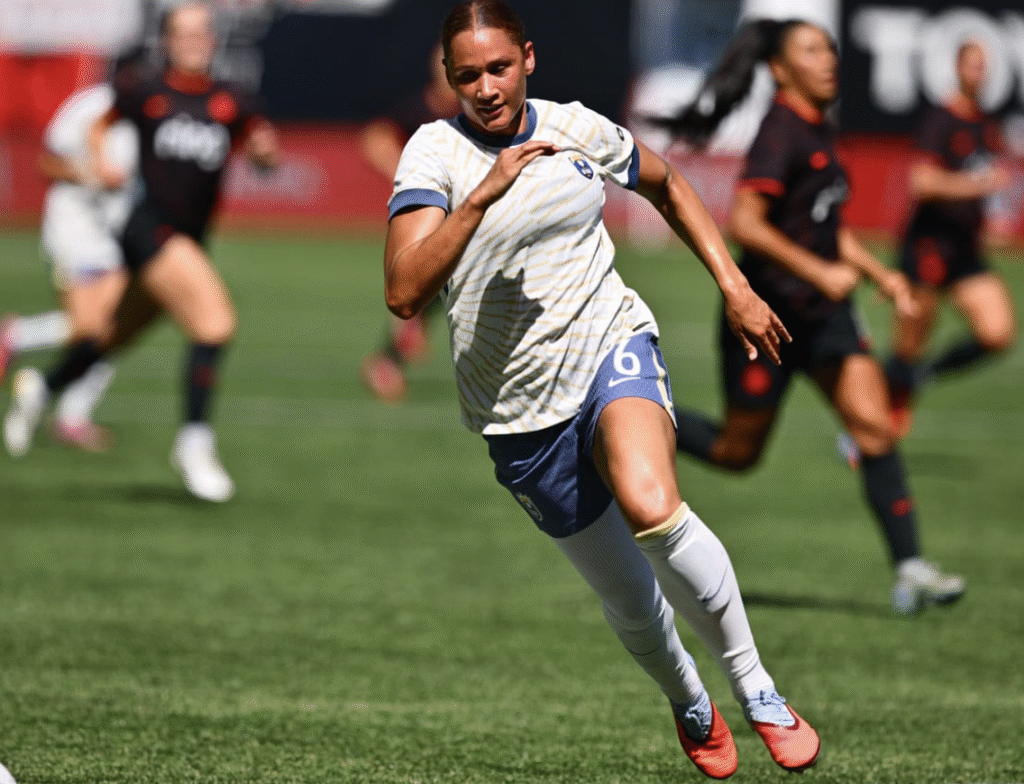
When players in the NWSL stepped off the pitch this summer and removed their boots, several discovered the soles of their feet had burned from artificial turf that reached extreme temperatures (notably in the Portland Thorns v Seattle Reign match, above right). In China, Emma Raducanu withdrew mid‑match (above, left), citing dizziness and having her blood pressure checked on‑court as heat and humidity overwhelmed her.
These aren’t one‑off accidents: they’re the early warning signs of how sport is being reshaped by a warming planet — and women’s sport is on the front line.
As climate change shifts the conditions in which we live, it would be naïve to think sport won’t be affected. It already is — and for women’s sport in particular, the challenges are two‑fold: adapting to rising environmental pressures and continuing the fight for equity.
Extreme heat, flooded pitches and cancelled or delayed fixtures are becoming more common across competitions. The climate crisis is no longer a distant threat; it is already shaping where, when and how sport is played.
For female athletes, the stakes are even higher. A recent Wired article revealed that extreme heat can accelerate ageing in the human body — raising serious concerns about athlete longevity and post‑career health.
Recovery windows shrink, performance becomes compromised, and physical strain increases. Combine that with gender inequality, and we have a compounded problem.
The climate crisis intersects with gender inequality — and this fact is all too often neglected. Women’s football teams, for example, operate on smaller budgets which restrict investment in climate‑adaptation measures such as cooling systems, heat‑protective gear or sustainable travel.
Excluded
Representation in sport governance, media production and climate strategy roles remains inadequate — meaning women’s perspectives are still too often excluded from decisions about climate‑proofing sport.
From a scientific perspective, sports medicine and research have historically focused on male physiology — meaning we still don’t fully understand how women athletes respond to prolonged exposure to heat, humidity and air pollution. This knowledge gap is dangerous at a time when extreme conditions are becoming the norm.
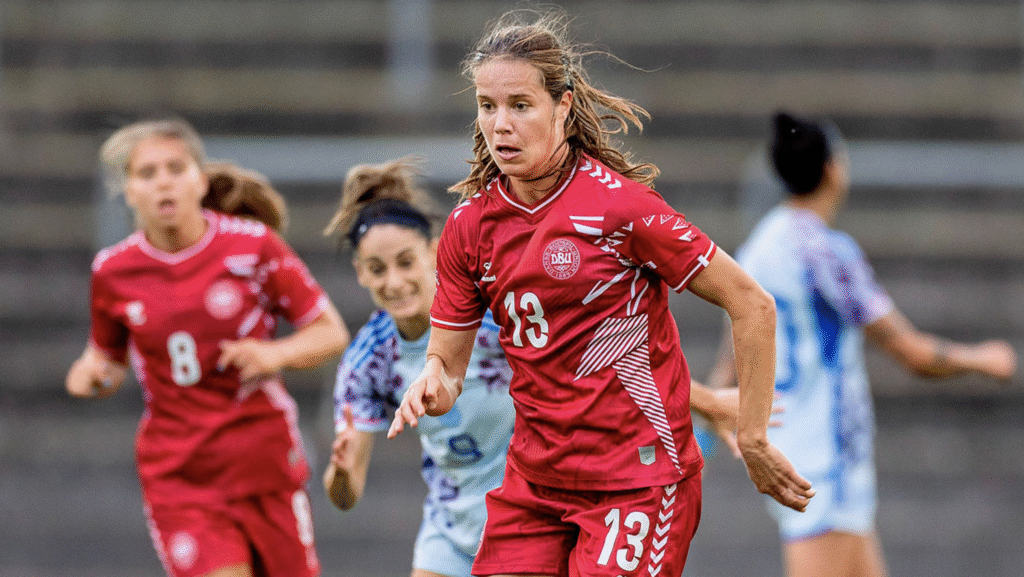
Yet despite these obstacles, women in sport are stepping up. Danish footballer Sofie Junge Pedersen (above) led a campaign backed by over 130 female players demanding that FIFA cut ties with fossil‑fuel giant Aramco — their message succinct: if sport wants to be part of a better future, it cannot take money from those destroying it.
On a 90-degree day we had to wear a full-on sweatsuit for 12 hours… the required fit is not letting any air in.
ilona maher, usa rugby star
A survey by Planet League found that 70% of female footballers say climate change has already affected their careers. These are not abstract fears, but lived realities.
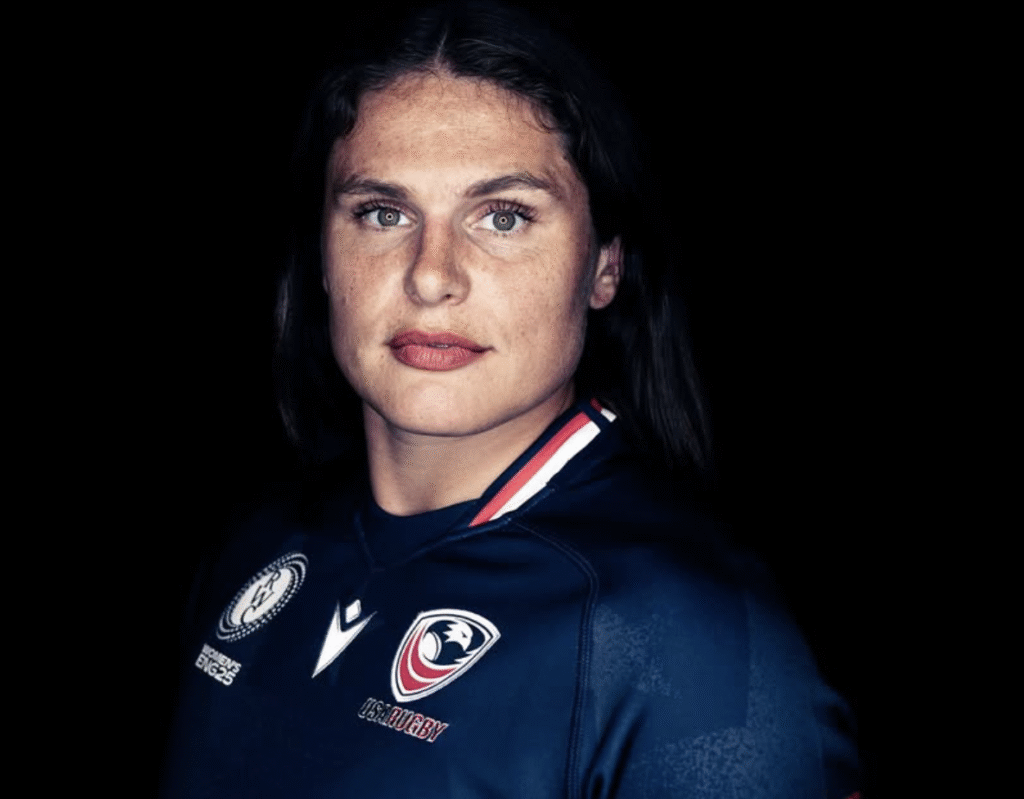
In the U.S., athletes such as Ilona Maher (below, right) have spoken out about the heat at the 2024 Paris Olympics: “On a 90-degree day we had to wear a full-on sweatsuit for 12 hours… the required fit is not letting any air in.”
Former professional netballer Amy Steel (below, left) described how a heat stroke in 2016 ended her career — and eight years later, she’s still dealing with cognitive and physical health issues.

Meanwhile in the UK, BAFTA‑albert is leading the charge with sustainability workshops designed for sports broadcasters, and has published Venue Requirements for a Sustainable Broadcast to reduce the environmental footprint of live‑sports production — from energy use to travel logistics to waste management.
Shifting the Narrative
BBC Sport has joined the United Nations’s Sports for Climate Action Framework, committing not just to emissions cuts but to embedding climate awareness in its content. These efforts matter; broadcasting and media production are major contributors to sport’s carbon footprint — but they’re also key to shifting the narrative.
When media platforms tell climate‑aware stories or highlight sustainability wins, they help change how fans think about sport — and their own role in a warming world. Recent coverage shows sports producers calling for a “better climate story.” Awards like the BBC Green Sport Awards are beginning to redefine what sporting excellence means: not just athletic performance, but environmental responsibility, too.
It means research that fills the gaps on how women’s bodies react under extreme stress. It means more women in decision‑making rooms shaping climate policy in sport. And it means moving past performative green‑washing — sponsorship deals and media campaigns should be backed by real carbon cuts, not just slogans
But the work is far from over. Investment in climate‑adaptation must reach women’s sport — not just men’s. That means funding cooling infrastructure, weather‑resistant venues and enhanced recovery resources for female athletes.
It means research that fills the gaps on how women’s bodies react under extreme stress. It means more women in decision‑making rooms shaping climate policy in sport. And it means moving past performative green‑washing — sponsorship deals and media campaigns should be backed by real carbon cuts, not just slogans.
Women’s sport has always been about more than the game — it’s been about fairness, access and opportunity. The climate crisis now tests those very principles. It’s not just about who wins or loses. It’s about who can even play safely.
The players of today — and the girls who dream of becoming them — deserve playable fields, breathable air, and a future worth striving for.
If we can’t play safely, we can’t play equally. Climate justice is gender justice.
Sources
1. TalkinSoccer Substack: ‘The league tried to prioritise viewership over player safety… players had burns on their feet.’
2. TalkSport: ‘Emma Raducanu has provided a reassuring health update following her withdrawal… forced to retire during extreme heat.’
3. The Guardian: ‘Extreme heat is changing how we play sport. It’s putting players’ health at risk.’
4. Harvard Gazette (2024): ‘If it feels too hot to run, maybe it is.’
5. Esh CJ et al. (2024): ‘Elite athletes will compete in extreme heat more frequently as global temperatures increase.’
6. Sofie Junge Pedersen campaign details (public domain).
7. Planet League survey results (public domain).
8. People (Aug 1 2024): Ilona Maher on Olympic heat: ‘On a 90 degree day we had to wear a full on sweatsuit for 12 hours.’
9. Business Insider (Aug 26 2024): ‘A heat stroke ended this pro‑athlete’s career… and eight years later she’s still feeling its effects.’
10. BAFTA‑albert sustainability workshops and publication (public domain).
11. BBC Sport joins UN Sports for Climate Action Framework (public domain).
12. SVG Europe: sports producers demanding a ‘better climate story.’
13. BBC Green Sport Awards redefining sporting excellence (public domain).