
PEAK PRACTICE – Alpine skier Molly Butler on her rise to the summit…
Milan-Cortina 2026 was Great Britain’s most successful Winter Olympics, including its first Olympic Gold on snow, but no British female alpine skier competed.
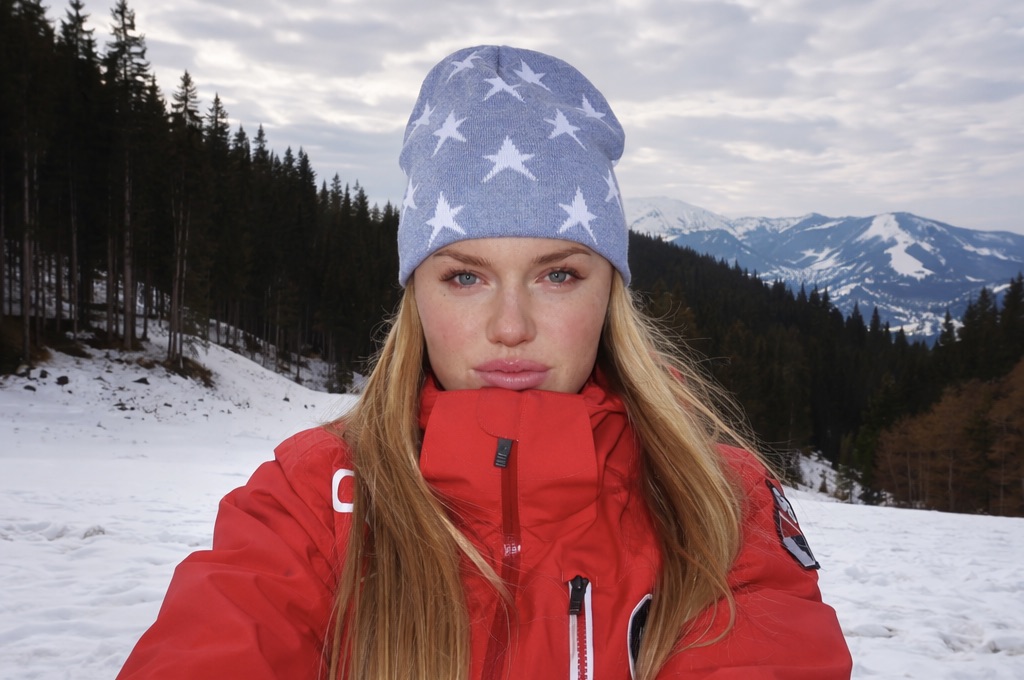
Molly Butler, aged 19, intends to change this come 2030. “GB didn’t take a woman this time, but they will next time.”
Ranked 5th in her age group globally, last season saw Butler selected to race at the FIS Alpine World Championships in Austria and the Alpine Junior World Championships in Italy. She also joined the GB Europa Cup Squad and recorded her first points, paving her way towards racing at the highest level.
Molly Butler speaks to Nicola K Smith about growing up between Surrey and the Alps, funding her own career, why her Mum cashed in her pension – and why she believes her moment will come…
Were you at the Winter Olympics to support fellow GB athletes?
Unfortunately not. I was competing and training at the time, so I had to put my career first. Britain didn’t send a female alpine skier to compete which was a real shame, but it was pretty incredible to see GB do so well.
Hopefully it will put a bit more focus on the Winter Olympics in future, and onto GB taking as much interest in the winter sports as they do summer sports.
The female athletes selected for Team GB were snowboarding and freestyle skiing. Does that inspire you to put slalom on the map at the next Olympics?
I’m happy for who went and obviously disappointed for who didn’t get the opportunity to go but it’s just the way things worked out. But yeah, for those competing in the Olympics it’s all inspiring. Just being at the Olympic Games is an achievement in itself.
They didn’t take a woman this time, but they will next time. It just makes me more determined.
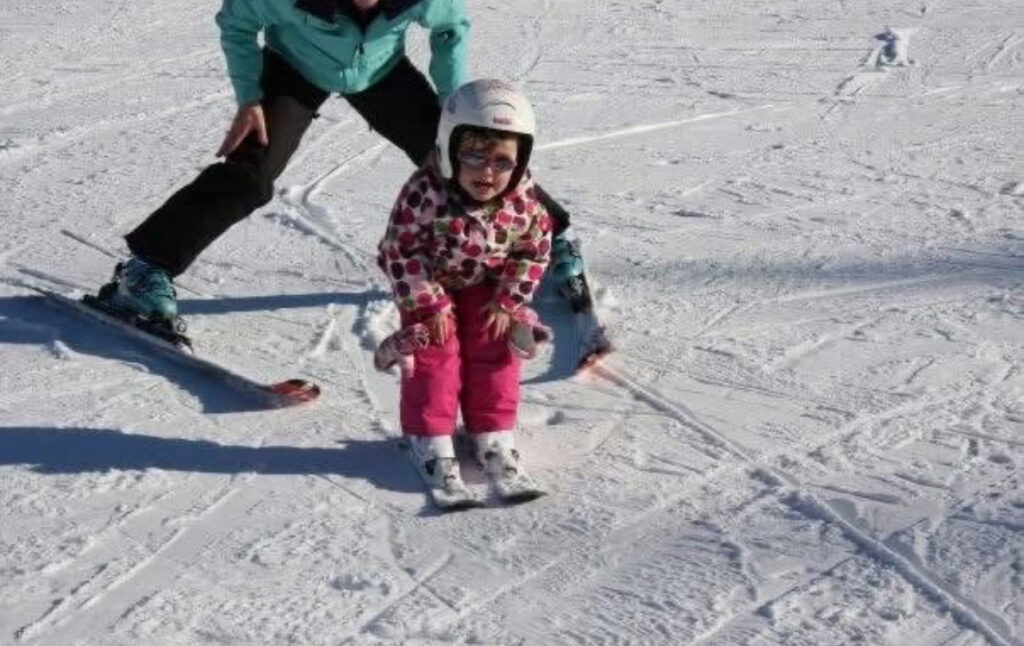
You were on skis at 19 months. What are your earliest memories of learning to ski and have you always felt at home on the slopes?
I remember being about three or four and being in adult lessons instead of childcare, and going through lots of trees all the time, and jumping.
Then, because both my parents were ski instructors, running their own business in Megève, in the French Alps, I’d be the five-year-old at the back of the snake following the adults having their lessons.
I remember just loving it.
Do you remember feeling any fear?
No, it was always the place I wanted to be. It’s actually something I look back on and try to develop more in my racing – I had no fear. I was just going as fast as I could.
When did you know you had real talent and the potential to forge a career in skiing?
I won the French Championships at youth level when I was about 13, and I started winning a lot when I was about 15. But I think it’s always just been there from a very young age.
You grew up between Surrey and France. What was that like?
Yeah, I spent April to November in England doing normal school in Shamley Green in Surrey, and then Prior’s Field in Godalming, and then I’d go into France for the ski season and do the exact same thing but in the French Alps. I loved going to the village school in Megeve.
In the UK, you do PE and play hockey or netball. In the French Alps it’s put boots and skis on and go skiing for the afternoon!
Was it hard to fit in being a part-time student in both France and England?
Not really, I love making friends, so that was never difficult. And it was pretty cool coming back to the UK and everyone saying, “Oh my God, Molly, where have you been?” and I’d say, “Oh, I’ve just been skiing!”
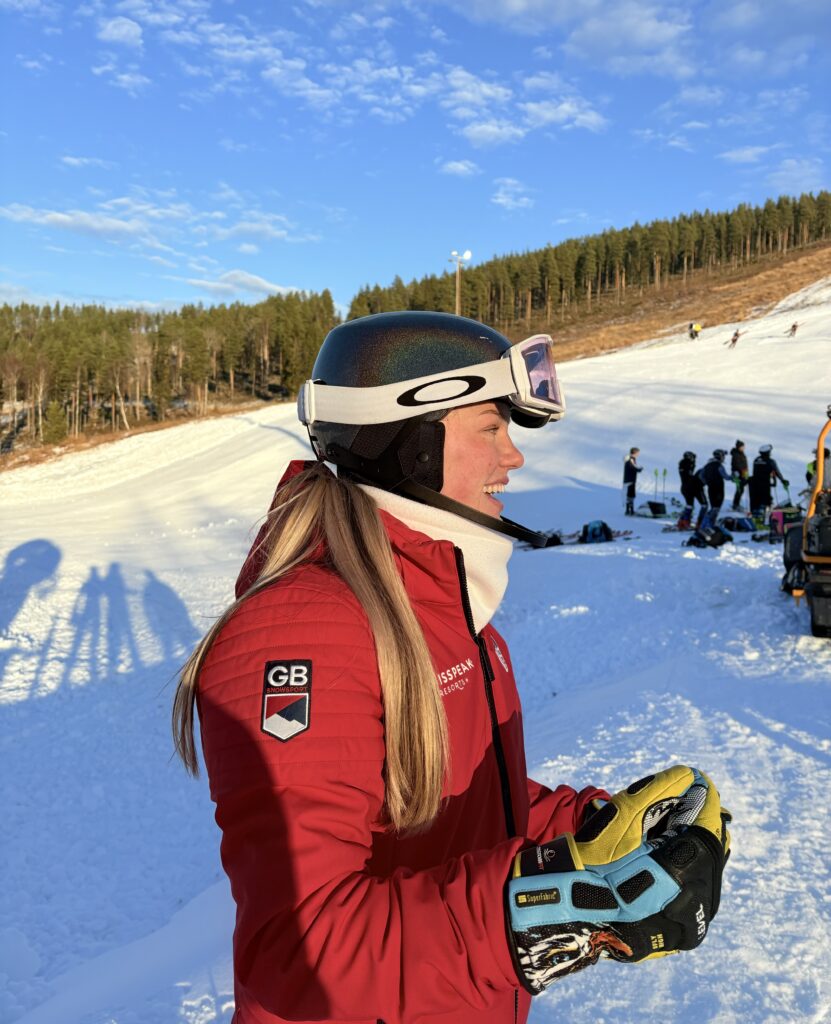
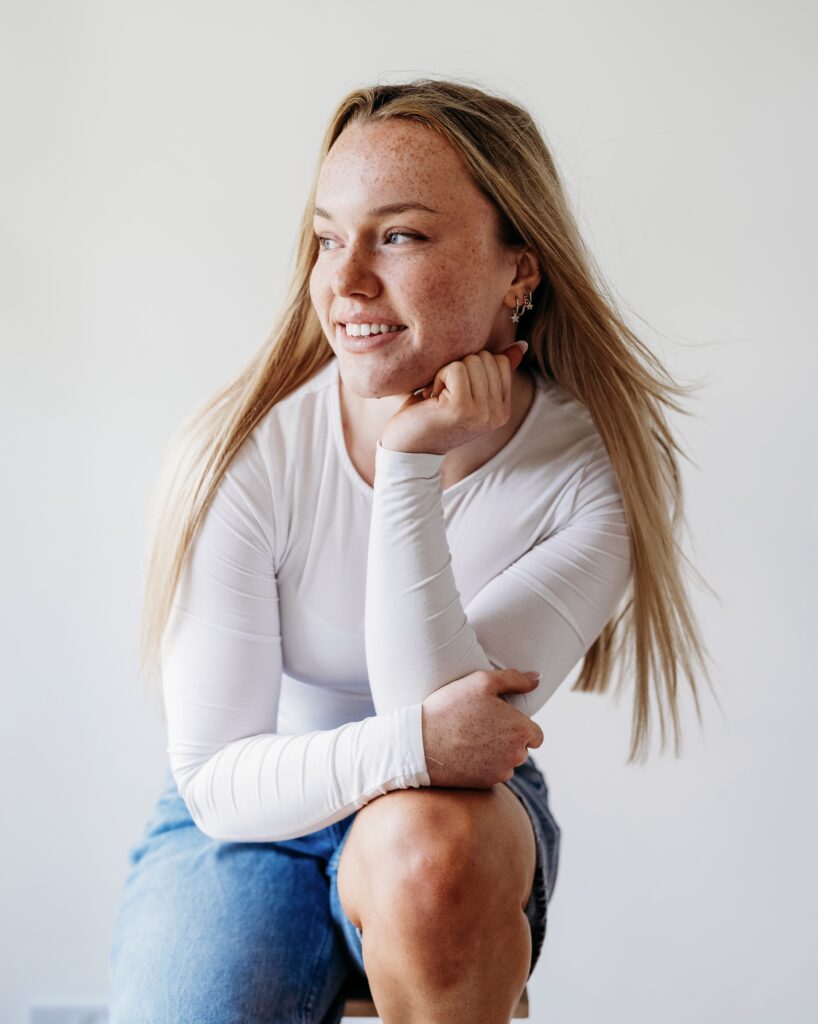
How did you manage to juggle GCSEs and A Levels with competitive ski racing – and did your schools mind?
I’d say from primary school time, no issues. But during secondary school and GCSEs, it certainly did get a little bit more intense. But I feel being an athlete, you’ve already got discipline ingrained in you so that obviously helps with studying and revising – you just need to get it done.
I was okay at GCSEs, it all went well, but A levels was a different story. I was never really an academic child. I just wanted to ski all the time.
French A-level was fine – that was a bit of a ‘cheat’ because I’m basically a native speaker from all my time in France.
You’re self-funded. What does that mean day to day?
It means my mum, Jay is my team, really. We’re based in Wagrain, Austria, an hour from Salzburg, and she’s always with me. It’s pretty difficult not to have somebody with you as a self-funded athlete because it’s only an individual sport when you’re actually skiing down the mountain – for everything else you need that team.
For example, we left the house at 7.45 this morning. Mum packs the van and puts in my four sets of skis. We head to the slopes and we’re lapping around doing runs. Mum’s carrying my skis, and we talk about which ones are working better. She’s not my coach so she won’t give me feedback, but I tell her what I’m feeling, and she holds onto that so she can give it back to me when I need it.
Does it get a bit intense?
Well, we have a close relationship, although that doesn’t mean we don’t drive each other mad sometimes! I think it’s just about knowing, OK, now she’s got her ‘mum’ hat on, now she’s got her ‘ski’ hat on and she’s talking to me as an athlete about my career.
So what support do you get from GB Snowsport, the governing body?
I’m a British athlete, I represent Britain, but that’s as far as it goes. Some other nations have everything funded by the sport’s governing body – flights, accommodation, coaching, a salary. We don’t have that. We get given a jacket, that’s it, and we have to pave our own way.
I’m incredibly proud, and always will be very proud, to represent Great Britain but sometimes it can be a little bit difficult when you don’t have the support to go along with it.
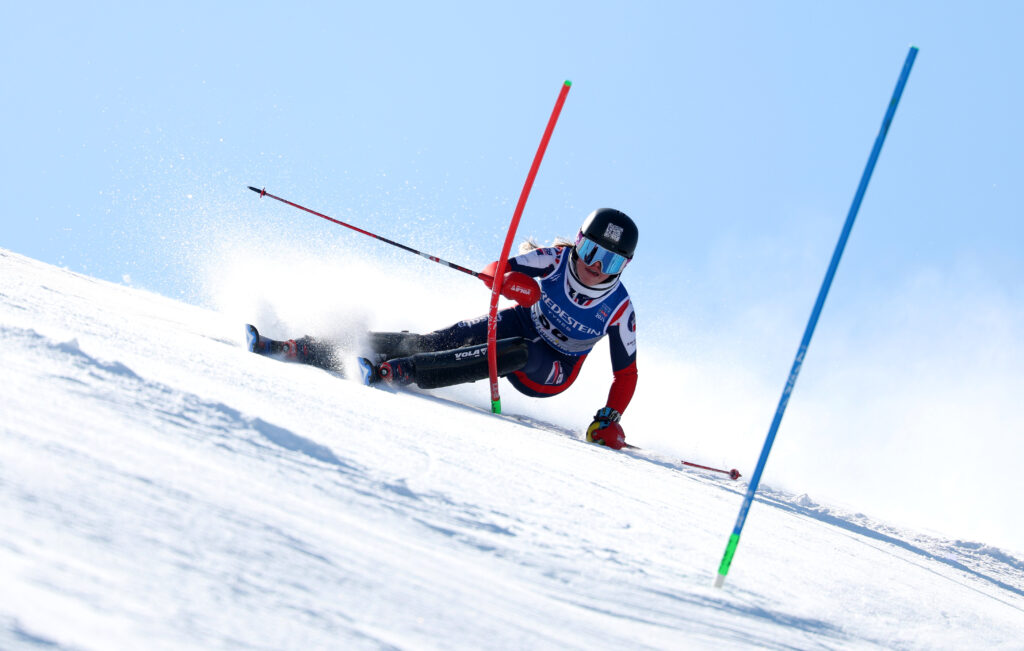
Does the lack of funding ever make you feel that it’s too much – that you want to give up?
Never. I absolutely love what I do. The lack of funding is just an added difficulty. We’re still competing at the same level as these nations who’ve got full funding and we’re reaching the same level as them, so it can be quite motivating.
Anything you need to overcome makes you stronger.
So how do you manage to live and fund your training, travel and competing?
My mum has savings and has cashed in part of her pension. If we really had to, she would sell the house in England, and we’d live in a van. As ski racers we have sponsors on our helmets – I should just have ‘MUM’ on my head!
My mum has cashed in part of her pension. If we really had to, she would sell the house in England, and we’d live in a van. As ski racers we have sponsors on our helmets – I should just have ‘MUM’ on my head!
Wow, that shows your mum’s faith in your ability. Do you ever feel that pressure on your shoulders, that responsibility?
I think when you have utter trust in your ability, in your future, you don’t really feel that pressure. If I ever do feel it, then it’s a privilege to be able to feel such big emotions.
We have also just started a GoFundMe campaign to try and raise £30k to help with training costs.
How’s it going?
We have just over £10k so far. I’ve also started designing and selling beanies online.
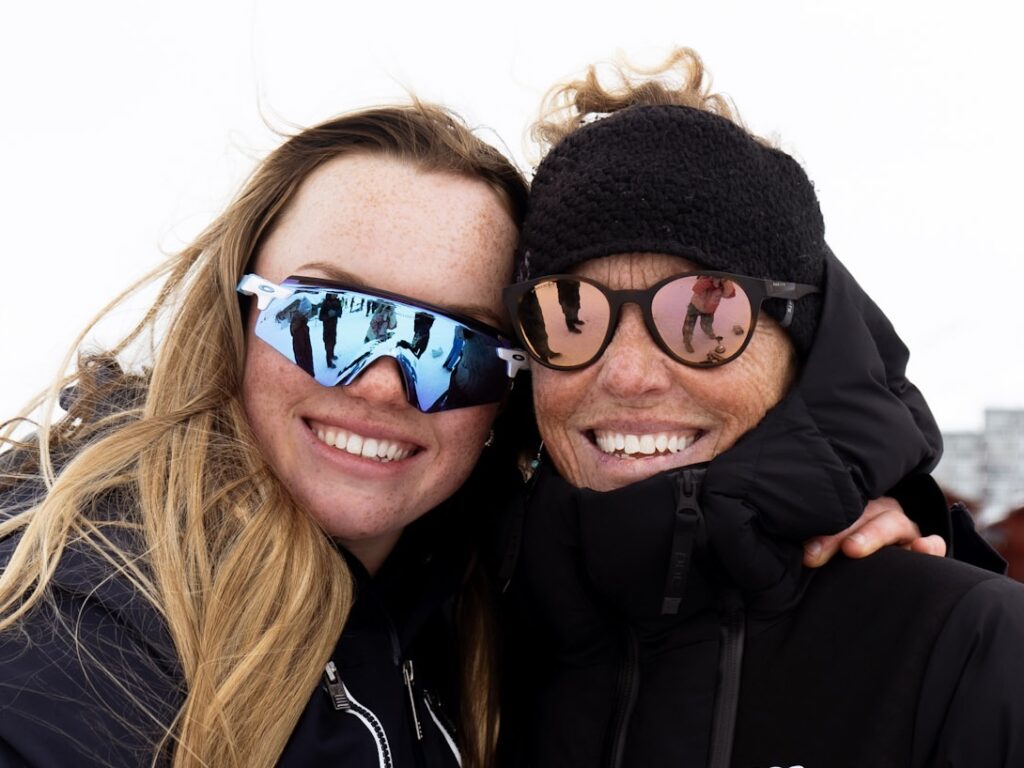
Does your mum (above, with Molly) ever mention her pension when she’s annoyed with you?
Ha, honestly, you’d think so but no. I suppose it was bit of a blessing in disguise because now instead of my mum working, she’s actually working for me, you could say.
We get to spend all day together. And today, there’s not a cloud in the sky, there’s gorgeous snow, we’re surrounded by mountains – there are worse places to be, aren’t there?
Do you still get nervous before a race?
100%. Everyone has nerves – even the best in the world. It’s more about how you handle them and who’s better at dealing with them.
What I’ve learned within the last year is that as much as we train our bodies, the mind is also a muscle, so you have to train that too. It’s certainly been an interesting journey.
And yeah, I’ve got my little techniques – sometimes they work, sometimes they don’t as much. I do a bit of self-talk. I look in the mirror and actually talk to myself – positively. So instead of ‘I will ski fast’ I say, ‘I ski fast, I already have’, that sort of thing.
It’s still a work in progress and I think it always will be but even on a day where you’re feeling pretty nervous, you learn that you can still compete at a very high level.
What I’ve learned within the last year is that as much as we train our bodies, the mind is also a muscle, so you have to train that too.
How does a great run feel?
To be honest, I don’t really know what’s going on, I don’t remember. I get to the bottom and it’s probably the most amazing feeling ever. I feel on top of the world.
Of course, ski racing can be brutal. Have you had any bad injuries or crashes?
I’ve been very lucky, touch wood. I did get concussed this summer, and I have had a few quite nasty crashes, but nothing I can’t overcome.
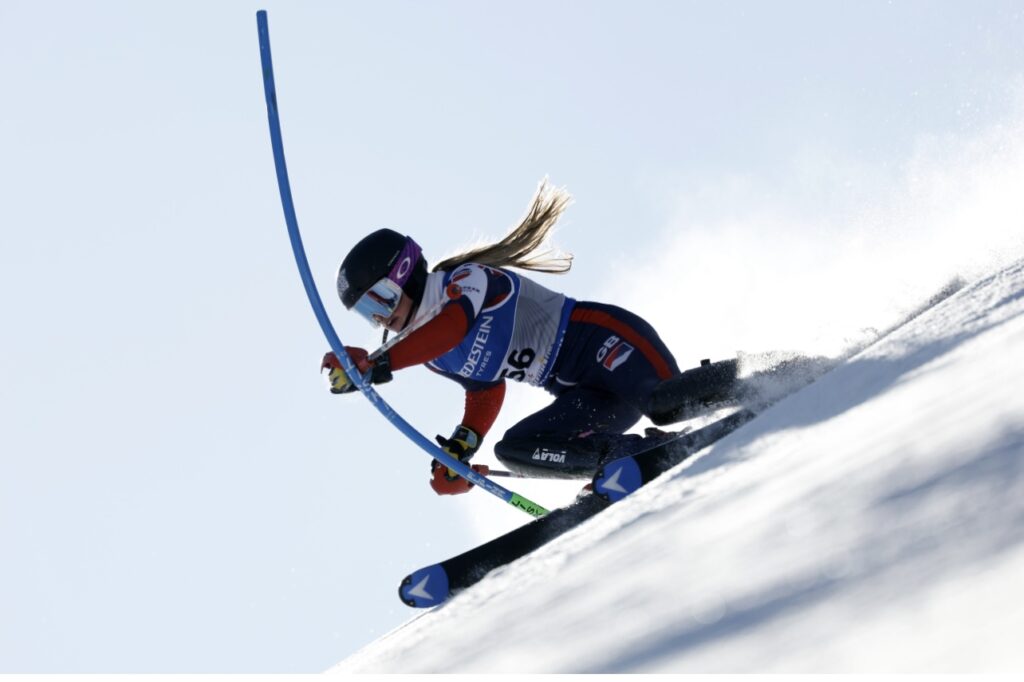
Did you sustain concussion in a race or in training?
It’s a bit silly really. Training had been cancelled because it was raining and the snow was soft. I was very early that day, so I was by myself on the hill when I heard on my radio that it was cancelled.
I was halfway down so I thought I may as well ski it. I fell and slid. I don’t remember skiing the second half of the run or getting the lift back up. It was quite scary. I had memory loss for about 20 minutes.
But you don’t worry about crashes generally?
I really don’t like thinking about it actually because then that fear can creep in and get into your subconscious when you’re skiing. That’s another exercise: to train the mind to only think about the positive. If you crash, you crash.
What’s next?
I’m racing at the Junior World Championships from March 11th-15th in Norway, in the Arctic Circle. I’m really excited for the event, it’s an incredible race, but also a bunch of my friends will be in the same place.
Results wise, I’m looking less on where I finish and more on performance – and I know where that will get me if I perform the way I want to…
Which is?
I can’t say because I don’t want to jinx it! But I’m feeling confident so, high!
You’re ranked 5th in your age category globally and 114th globally over all ages. Is it where you want to be at this stage of your career?
I’m my biggest critic so, yes, definitely. I’m always wanting more, wanting more, wanting more, which I suppose is what’s hopefully going to take me to the top.
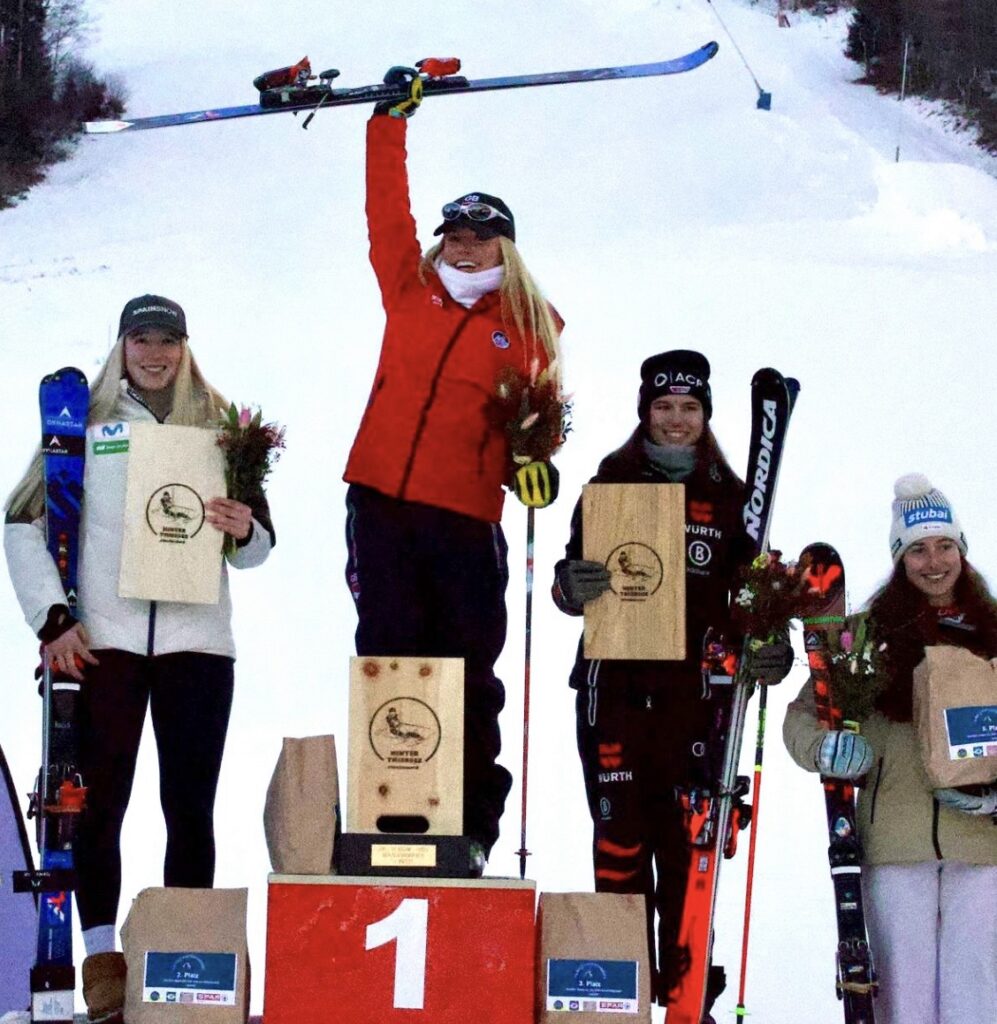
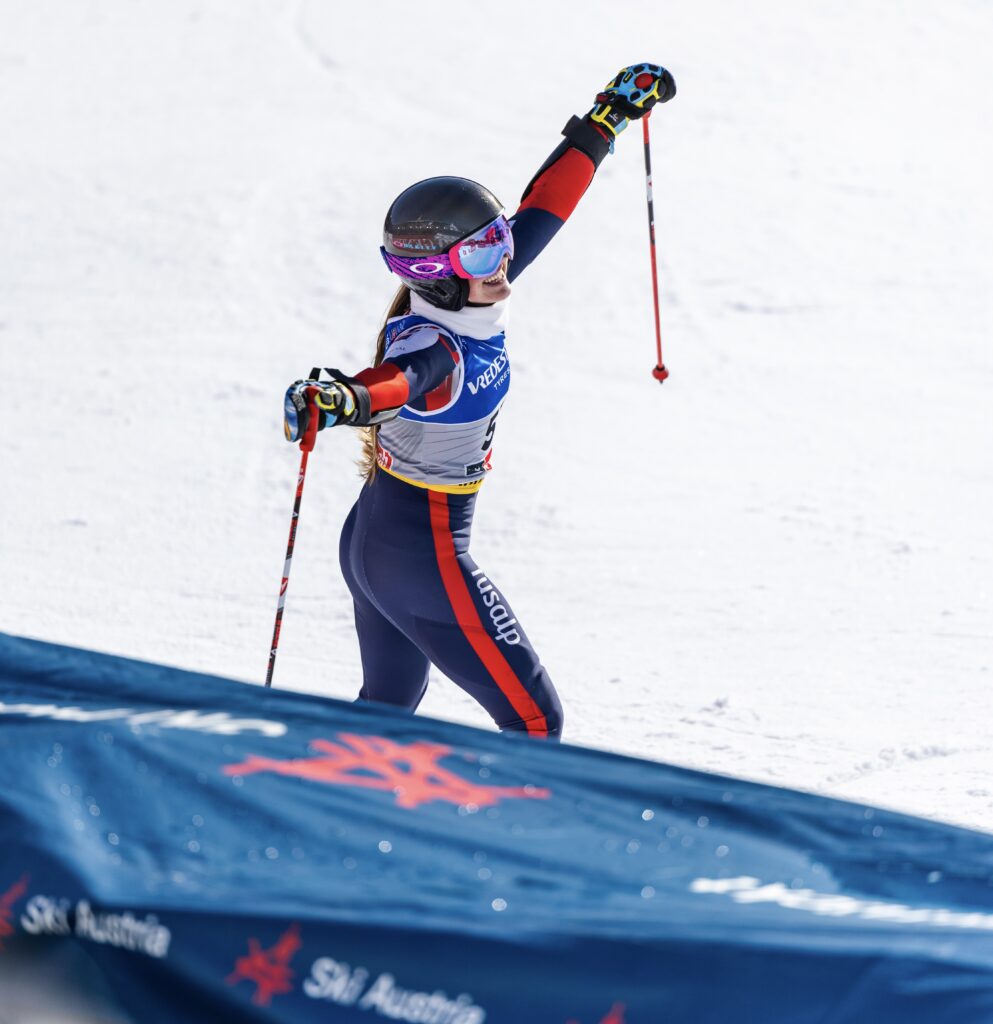
Talking of the top, the next winter Olympics will be held in the French Alps – pretty much home turf for you. How special would it be to compete there?
It would honestly be incredibly special if I was lucky enough for this to happen. The Alps feel like home to me, especially the French Alps – I’ve spent so much of my life training and racing there.
Competing at an Olympics in the mountains where I grew up skiing would mean so much.
I’m always wanting more, wanting more, wanting more, which I suppose is what’s hopefully going to take me to the top.
What else needs to happen to help to turn your Olympic dream into a reality?
We’re constantly looking for sponsorship and funding. It could be difficult if it keeps going the way it’s going because we do need to get down to the southern hemisphere — to New Zealand, Argentina or Chile — in the summers just to keep training because the glaciers in Europe aren’t up to par anymore.
But hopefully GB Snowsports will find enough funding to better support pathway athletes.
Either way, we’ll get it done.
The FIS Junior World Alpine Ski Championships take place in Norway from March 11th-15th, and you can watch here: https://watch.fis-ski.com/section/Alpine