

OLD GOLD. BRIGHT FUTURE? Wolves claw their way back
Wolves Women are a team with a long and proud tradition. In 2025 they celebrated their 50th anniversary.
But Wolves ended that same season as a team who’d been completely let down by their parent club. When their devastating story broke, social media quickly spread the word. Since then, they’ve managed to find the strength (and backing) to rebuild.
With another play-off this weekend, is this finally their time? Clare McEwen speaks to the club to learn more about their past, present, and future.
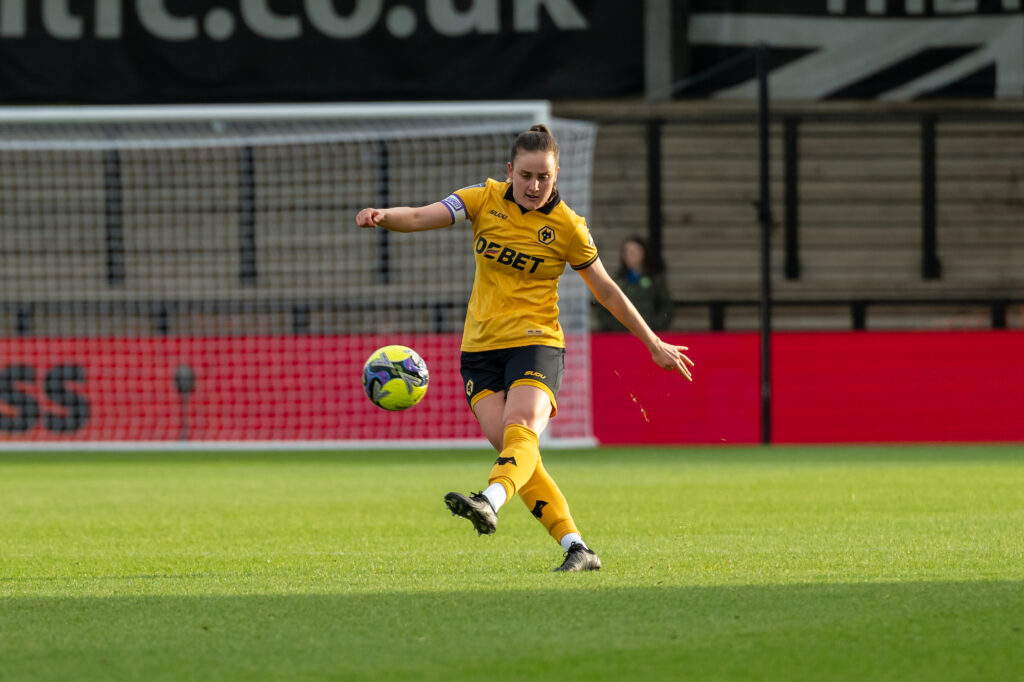
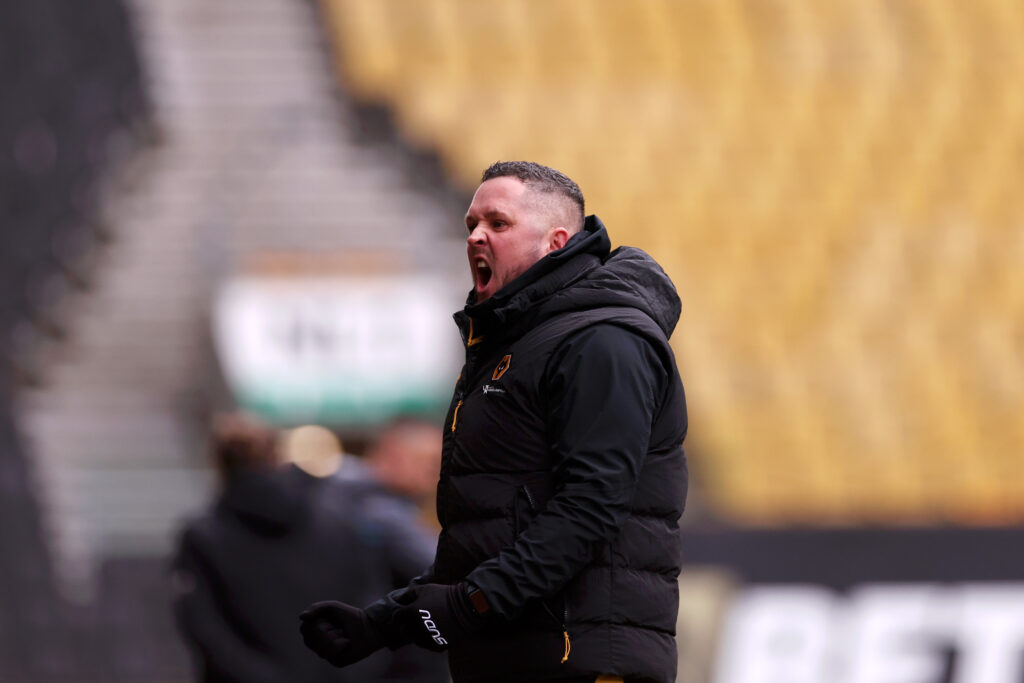
Wolves Women were fighting until the end of 2024-25 for promotion. A win in their last game – against Nottingham Forest – would have seen them go up to WSL2.
But they lost. Which as it turned out, might have been for the best.
Because what happened next shocked both the team and the wider football community.
It was left to their long-time manager Dan McNamara to break the devastating news that Wolves had not applied for the licence the team needed to play in WSL2. If they’d won that promotion game, they still wouldn’t have been able to play in Tier Two because the paperwork was not complete.
Everyone was devastated. None more so than McNamara. He thought it was the end.
But Wolves are a special team.
McNamara and his players decided they weren’t done, and this season have built something stronger after the disappointment.
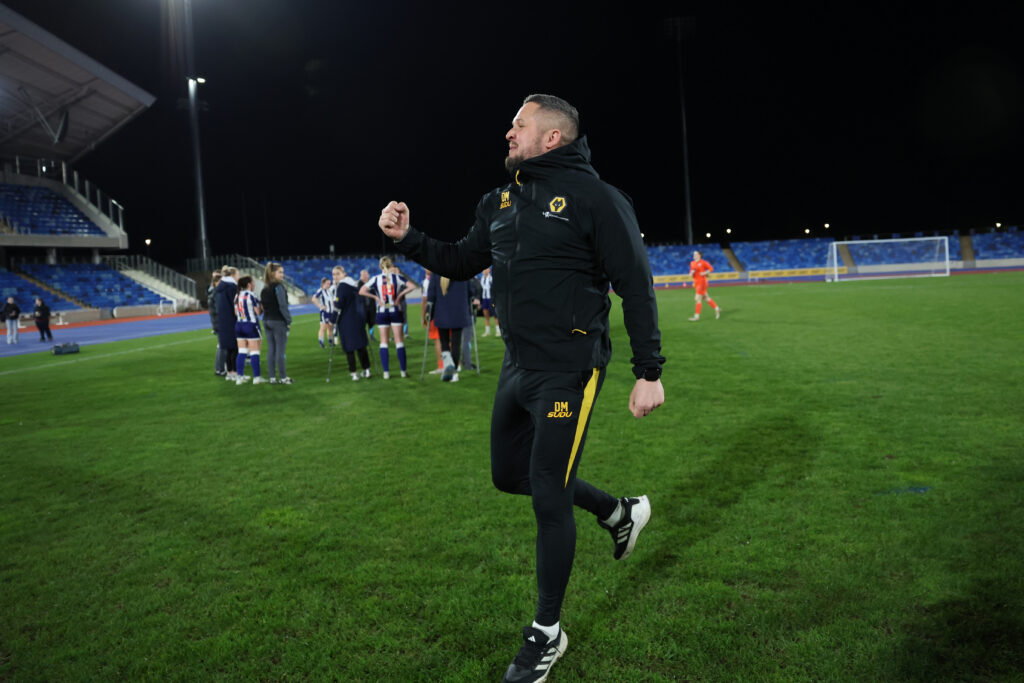
What’s the Story?
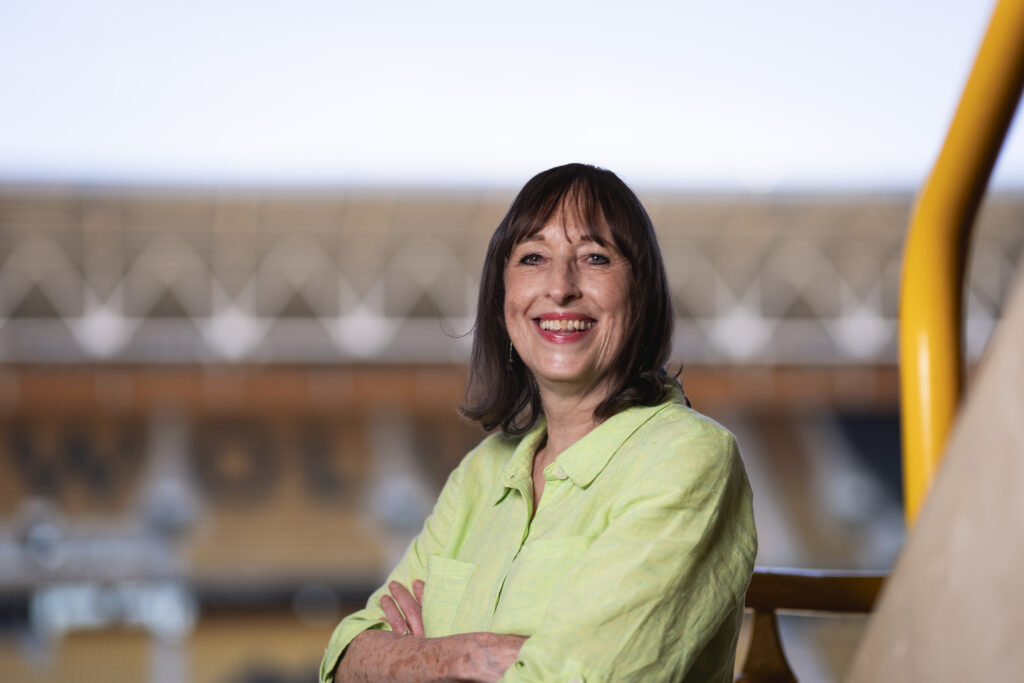
Jenny Wilkes is Wolves Women’s Chair. She’s been in the role since 1999; a dedicated 27 years of service. She now works closely with the club’s senior leadership team to make sure the voice of the women’s side is heard.
She describes the past 27 years as a “rollercoaster”, which probably describes the journey of women in football – or women in all sports – very well.
Wolves Women began, like so many others, by playing on local park pitches. Several of the players Wilkes talked to during the 50th anniversary celebrations remembered answering a newspaper advert to start their football journey.
When the Women’s Football Association began the first national league in 1991, Wolves were right there, starting in the second tier. They were promoted to the top flight a couple of seasons later and spent two seasons in the Premier Division before settling back into Tier Two.
When Wilkes took over the running of the side in 1999, the team had got the club on board, but were struggling for funding. Wilkes started a limited company, formed a board, and got more sponsors.
Over the years they gradually got closer to Wolverhampton Wanderers FC. Much more recently, they were taken on by the Academy, which Wilkes says “made all the difference.”
They were making progress.
And then last season happened.
After the bombshell, manager Dan McNamara was ready to leave it all behind. In the immediate aftermath, no-one thought they could come back from it.
But after a few conversations it became clear there was enough spark in the players and manager to give it another crack – although now they needed reassurances from the club.
Could the lowest point in their history be a driver for change?
We spoke to Chair Jenny Wilkes, head coach Dan McNamara and captain Anna Morphet.
Although the end of last season was devastating, have you managed to leverage that setback as a catalyst to push through changes and get more support from the club to drive you forward?
Jenny Wilkes: I think it has helped the club see things in a different light.
The answer we had from the club was, okay, perhaps we weren’t listening before, so it’s been about communication. We’re in a much better place now. We’ve got much better communication and the advisory board, which I’ve been chairing, can poke the club and say what are they doing about this, that, and the other.
We’re getting a really good response now and we managed to bring in quite a lot of changes. We started a fan focus group to listen to what the fans are saying. We got the club to put on a free coach when we were playing Burnley at Turf Moor. We’ve tried to make Telford more of a home ground so we’ve got a big Wolves banner there now.
It’s to let the club understand what’s important to us.

Wolves Women have been knocking on the door to promotion for several seasons now. First, the two Covid-hit seasons curtailed their promotion ambitions. Then in 2021-22 they were crowned champions in the Northern Premier Division, but lost in the play-off final to Southampton. They’ve come close to promotion into the Championship a couple of times since. And have been unfortunate to come up against teams heavily backed by their owners.
But within his eight years in charge, McNamara has built a resilient team.
You often speak about the grit of this group. How much of the spirit do you think is down to the resilience you’ve taken from last year’s end-of-season heartbreak?
Dan McNamara: Tough moments bring you closer together. That’s certainly what happened over the summer. Nobody ever imagined we’d be in the situation that we are now.
I’ve said to the group, I felt this year there was something different about it. We lost so cruelly in the playoff five years ago. Is it meant to be? I’m hoping it is. I’ve said it from the start of the season. I feel like this is our time.
We’ve used all those difficulties along the way. I’ve brought them up so many times. We’re out to prove a point. We’re out to make the club recognise us and put us on the map – because we do need them.
And when you’re talking about people, we have to use Jenny as an example of someone that keeps coming through adversity. The amount of times I’ve expected Jen to say enough’s enough. But she doesn’t. She keeps going, her and her husband Peter, are there week on week.
They’re people we look up to as a group. They’re the strongest of characters because eight years ago we didn’t have much, but 25 years ago I don’t think we had anything and the woman is still sitting there. Still giving up her time to try and put us in the best place possible.
So we don’t have to look much further than the Chair Lady to know one of those big leaders that we can all follow.

Someone else McNamara namechecks when talking about resilient people at the club is captain Anna Morphet.
Morphet has made 200 appearances for the Old Gold and was one of the first three players to sign a semi-professional contract with the club.
Having established Wolves 50-year history and talked about their resilience to continue after being so badly let down by the club, I wanted to ask Morphet about the future. Specifically, being a role model.
When you look at the young girls in the academy now, they’re obviously entering a different Wolves to the one you joined. How important is it for you to use your platform to show them what’s possible?
Anna Morphet: I think the growing platform in us as role models is a discussion that is starting to creep in a lot more.
It’s been a learning curve for us girls. Learning to become those role models and embracing that opportunity to be one.
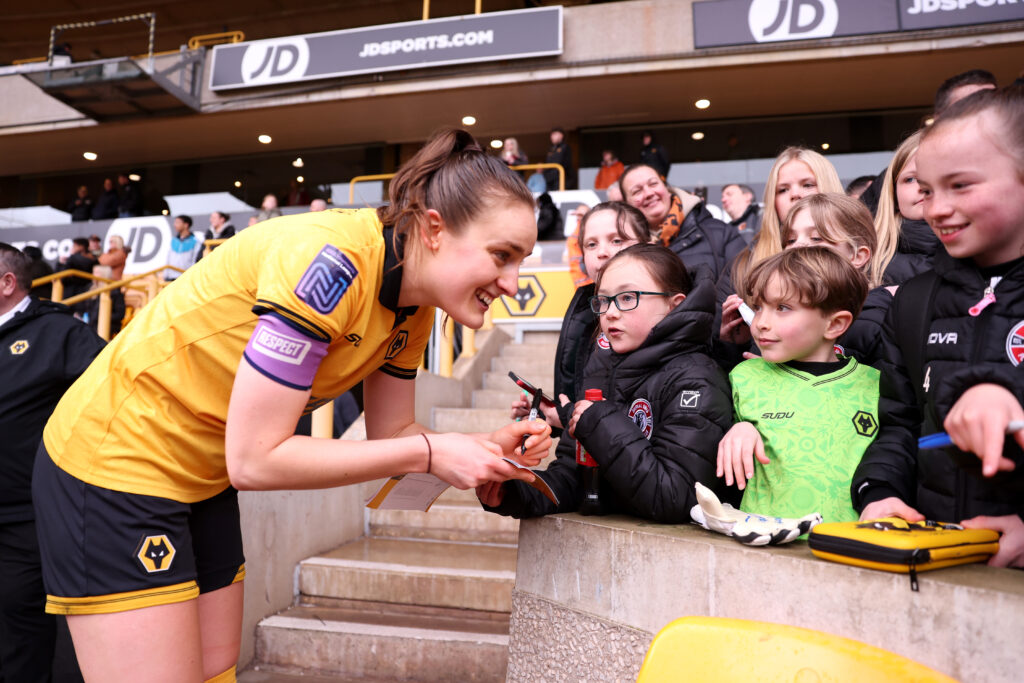
It’s fantastic to see the whole set-up growing. It’s brilliant because I was in the gym the other day with an under-11s girl who was rehabbing. I got to chat with her and it was nice to have that family feel and be a role model that they can aspire to be.
I look back when I was that age, it was only the England female players that you knew. It’s fantastic, whether it’s at Compton [the training facility] or after the games, when we get that chance to see the fans and meet young girls and boys who look up to us. It’s quite a surreal feeling at times because you don’t grow up thinking you’re going to be there, but we’ve learnt to embrace it and to really enjoy the feeling of what you can be for these people.
I know others have used the phrase ‘if you can see it, you can be it’ and alongside our focus of what we want to achieve for ourselves as a group, we’ve also got to enjoy what we’re building, and who we can inspire in the future.
The FA WNL Tier Three play-off final between Plymouth Argyle and Wolverhampton Wanderers is on Monday 4th May at the Pirelli Stadium, home of Burton Albion.
Kick-off is at 1pm and there are still tickets available here: https://ba6.glitnirticketing.com/baticket/web/stadiumg_b_svgw.php
Or watch live on the WSL2 YouTube channel: https://www.youtube.com/@BarclaysWSL2
Photos: Wolverhampton Wanderers FC