
BACK FOR GOOD! Team GB’s backstroke sprint ace Lauren Cox speaks
Swim star Lauren Cox is going for a medal at the upcoming Commonwealth Games – and she’s already targeting the podium in the LA 2028 Olympics.
She tells Helen M Jerome how important fellow Team GB star Adam Peaty has been in her career, why sprint swimming is her passion, and how she came back from almost quitting in 2024. Plus she reveals her one and only pre-match superstition…
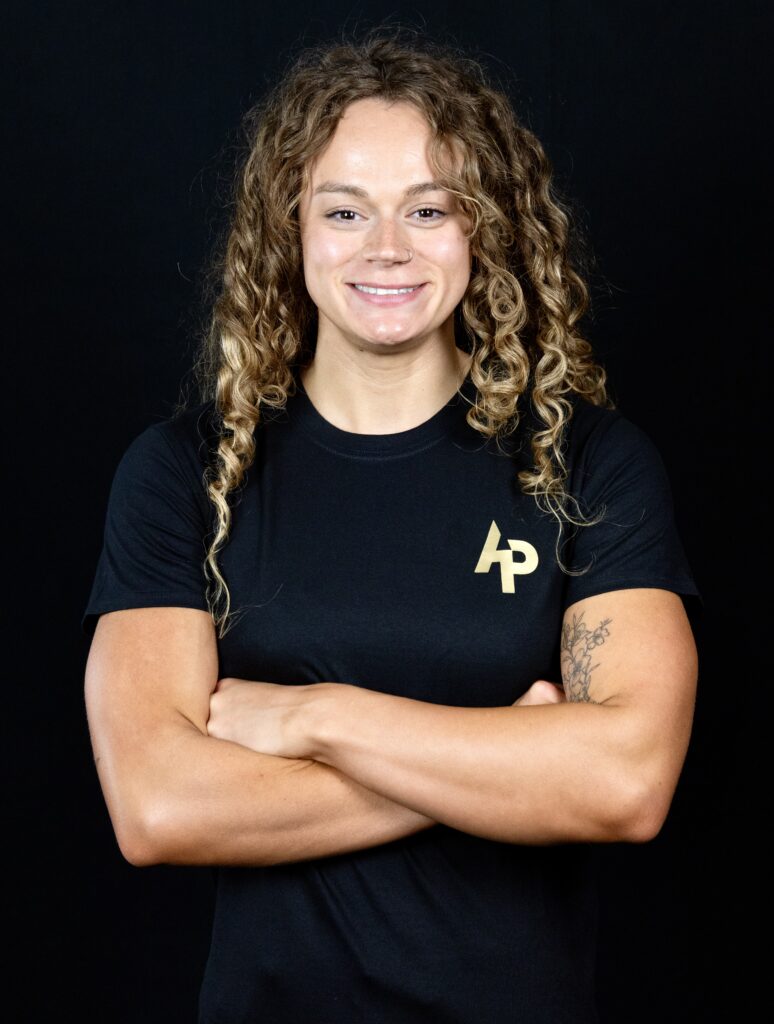
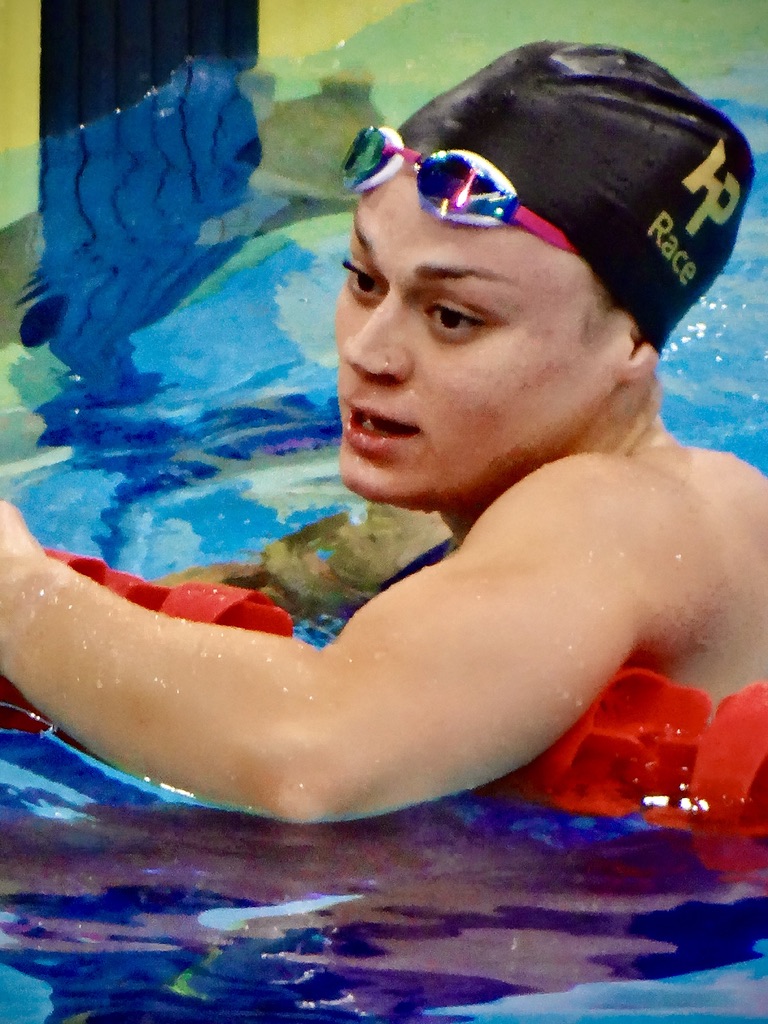
Lauren Cox is 24-years-old and reaching her peak as a 50m and 100m backstroke sprinter. She is bright-eyed and bubbling over with energy as we speak, enthusing about everything from her love for her sport to her coaching sessions for kids. But she is also happy to open up about the huge setbacks she’s faced, like just missing out on the Paris 2024 Olympics and almost giving up altogether.
Her swimming journey started in Coventry, continued at Loughborough University, and now sees her based in Manchester. She’s a record breaker, has won multiple medals at the British Swimming Championships, and was crowned European champion in Poland.
Now a full-time swimmer, Cox joined Adam Peaty’s AP Race organisation – with its swim clinics and annual international championship – post-Paris. And this has not only been vital to her own progress, but also enables her to pass on her skills to the next generations. Peaty himself helped her regain her self-belief and recapture her swimming mojo. And she’s now back for good…
Tell me what you really love about swimming.
I love the adrenaline I get before and after a race.
I just love the feeling of the nerves, everything.
I used to hate it, but in the past few years, I’ve really learned to love the emotion that I bring to my races.
And I just love how all of my close friends are swimmers as well.
The community I’ve got around me in swimming is just so lovely.
And I’m very fortunate that swimming’s given me that.
When you were starting out in swimming, did you investigate other styles and lengths?
Yeah, when I started, I did all kinds of events, just whatever my mum entered me in, I did.
My preferred stroke was freestyle, and I really wanted to be a freestyler, but as I got older, my coach was like: no, backstroke is your thing; we need to focus on that.
He did try and keep me going with the 200m for as long as possible, but I decided 50m and 100m were as far as I was going to go.
I love the adrenaline I get before and after a race.
I just love the feeling of the nerves, everything.
I used to hate it, but in the past few years, I’ve really learned to love the emotion that I bring to my races.
So why did you think the sprint was best for you?
Just the way my body type is and the way I train.
I really love working in the gym, which is obviously more favoured towards sprinters.
I think just my genetics… I’ve always been very ‘fast twitch’, and able to jump quite high.
I used to do athletics when I was younger.
So I’ve always had a bit more sprint in me, so I think I was just more drawn to the 50 and the 100 as opposed to the 200.
You mentioned athletics, so was that sprinting as well?
Yes, it was sprinting, and I did a bit of high jump and long jump as well.
I also played netball, hockey.
I did a bit of cricket. We even went on a cricket camp one time.
My parents had me doing all sports.
Me and my sister were never in the house for too long!
Do you still enjoy sports as a spectator now?
Yes, I do.
I absolutely love watching athletics.
I follow athletics closely.
That’s the sport I’m probably most passionate about watching, apart from swimming.
But yeah, I love watching all kinds of sports.
All my friends also enjoy watching sports.
I feel like we have a nice community of giving our thoughts on people’s performances.
Are there other sportswomen you admire?
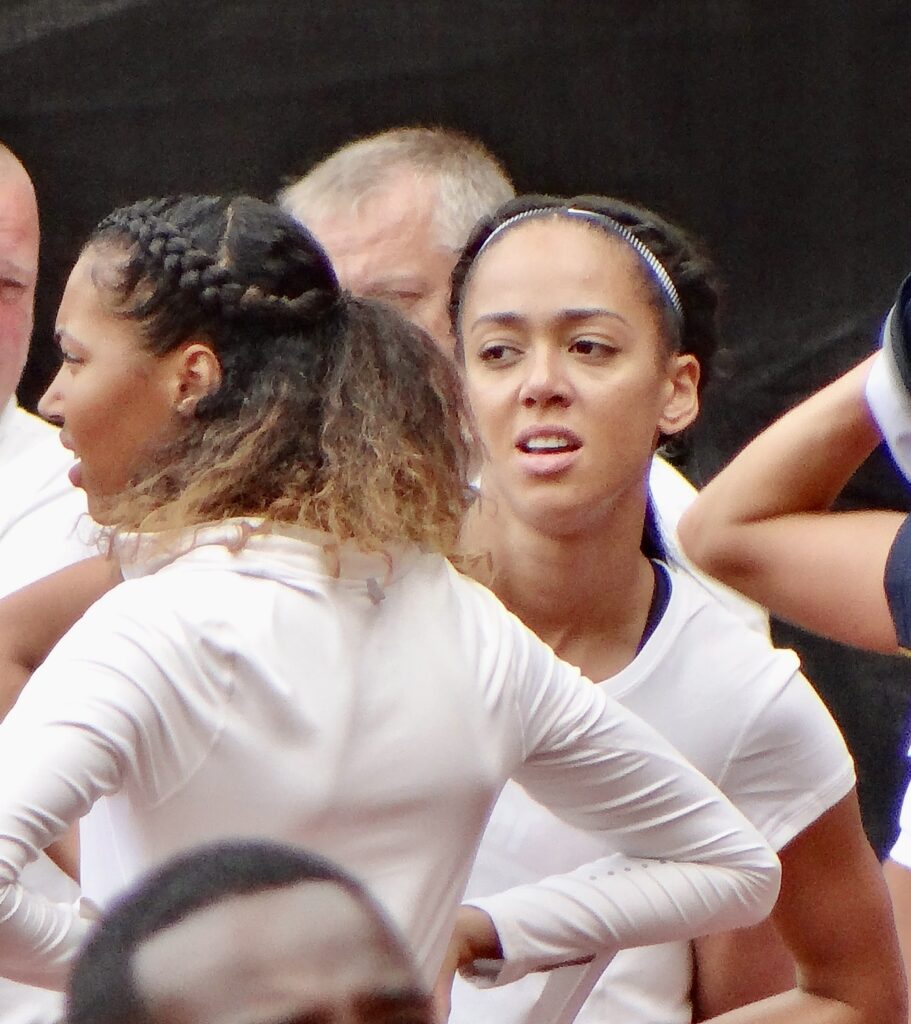
Yes, when I was younger, I loved, well I still do love actually, Jessica Ennis Hill.
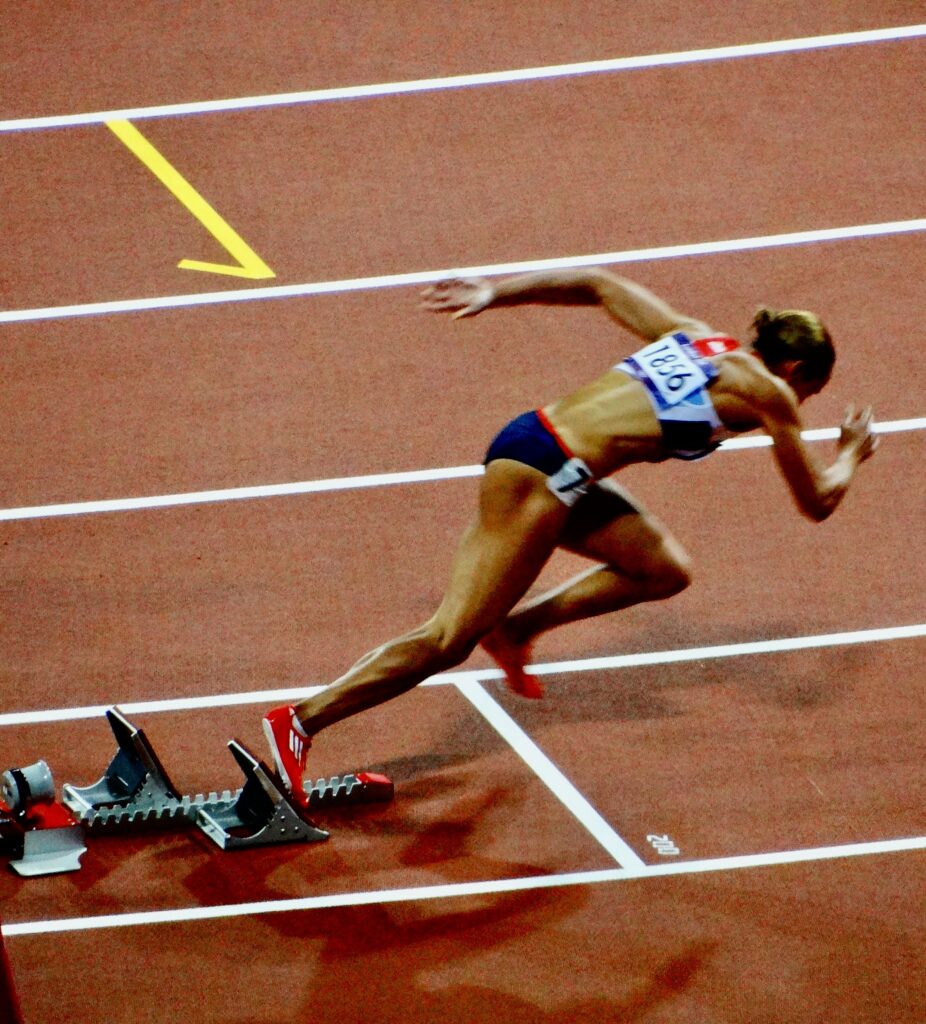
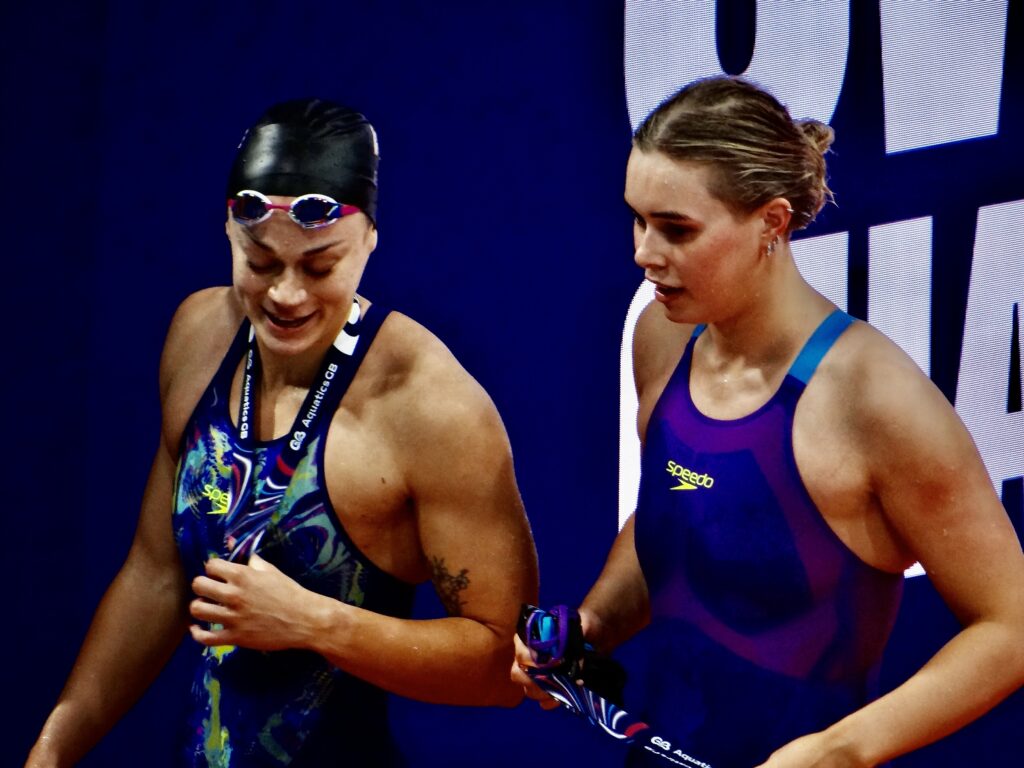
We watched her win gold at London 2012 (above, centre), and that moment for me is the peak sporting moment as a woman.
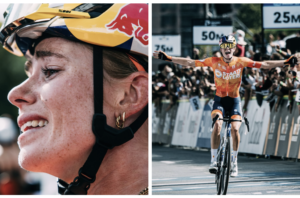
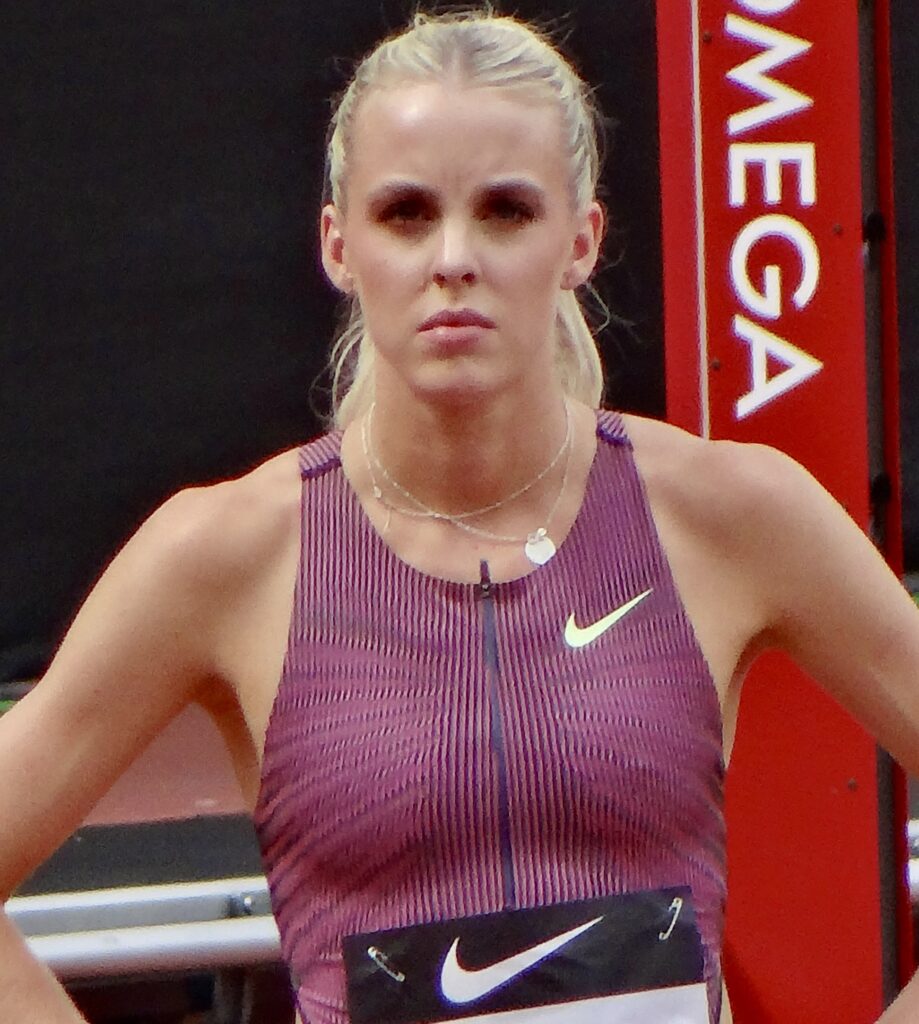
I also really love Keely Hodgkinson (above, left).
And Jasmine Sawyers, obviously, they’re all athletics people.
I’m a big athletics fan girl.
KJT (above, right0 as well, I just absolutely love.
I think the women’s athletics GB team is just so strong.
And I love watching them at every competition.
In team sports, are there any teams you follow?
Yes, I do, I like a bit of netball.
I’m trying to get into the netball Super League a bit more.
And I’ve recently moved to Manchester and obviously lots of sporting events go on here.
So I’m keen to try and get down to some netball Super League matches.
Can’t say I’m a super fan yet… but I’m trying to get there.
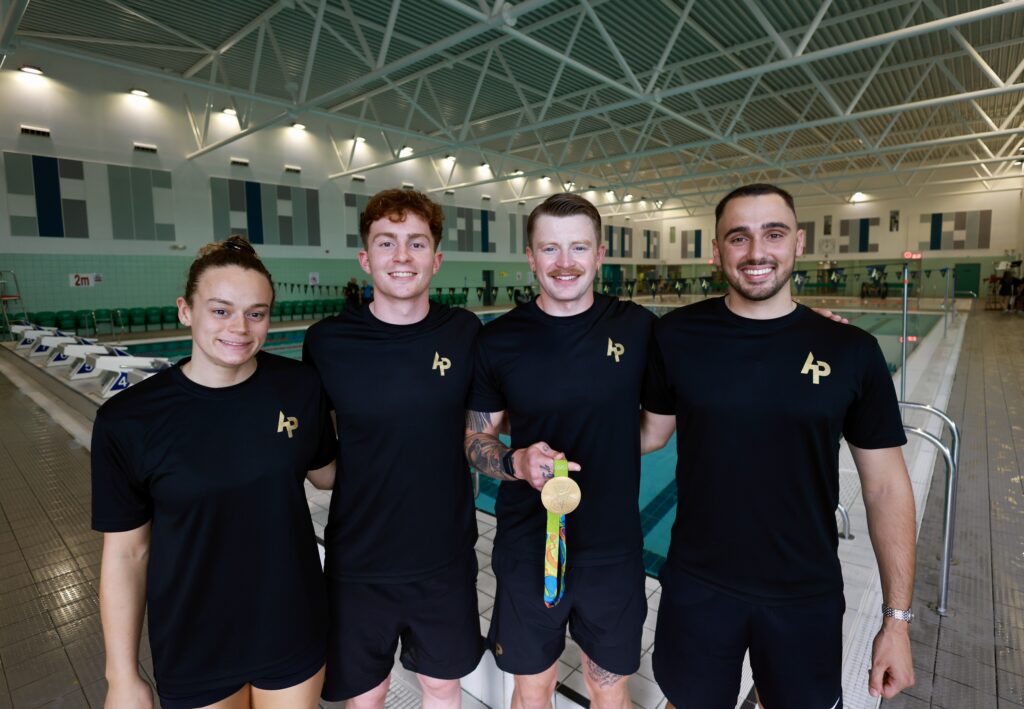
Can you tell me about your admiration for Adam Peaty (above, second from right) and his importance in your career?
Yes, when I was younger and Adam Peaty was breaking back-to-back world records and winning Olympic medals, he was a massive inspiration to me in the swimming world, because I just thought it was so amazing how someone one could be so far ahead of the rest of the field.
Then when I was fortunate enough to be approached to become an AP Race ambassador, I was over the moon. I really felt indirectly just from working alongside Adam and being around him a bit more, he definitely mentored me quite a bit. And I really learned off him talking about his own experiences and everything he’s been through.
It really hit home when he talked about it so casually, and I was like: wow, everyone really does have ups and downs, and even though you see people at like the peak of their career you also think it’s not just happened to them so easy.
He’s gone through a lot to get there, which was really inspiring to me and I’m really grateful that I was able to come into the team. And he just embraced all of us coming in and is so open and honest with us all, which makes you feel like you’re not alone in that sense of the journey.
Because swimming can be quite a lonely sport, but I know that everyone in the AP Race team has everyone’s back and it’s so nice that that support is there for someone like me who’s just now coming into their own career.
He [Adam Peaty] is so open and honest with us all, which makes you feel like you’re not alone in that sense of the journey.
Because swimming can be quite a lonely sport, but I know that everyone in the AP Race team has everyone’s back and it’s so nice that that support is there for someone like me who’s just now coming into their own career.
Were there specific bits of advice Adam gave you, either on swimming or your attitude to swimming that you can pick out?
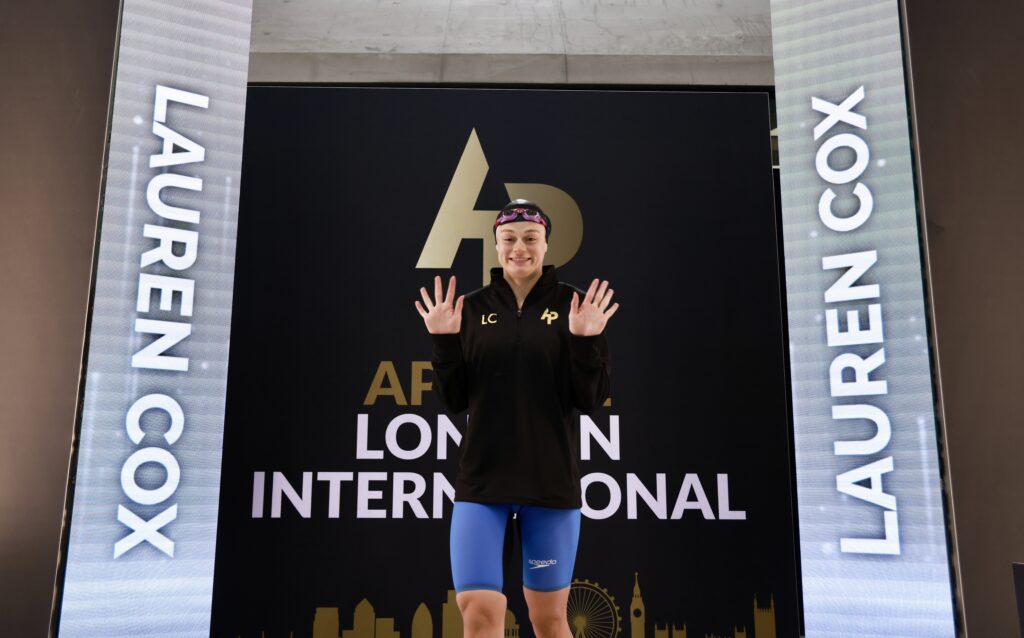
Definitely on my attitude to swimming. He said to me just straight up: you need to believe in yourself more. He said that to me before the AP Race London International (below) last year.
We did these interviews and after mine he said: you really just need to have more belief in yourself. Just fake it and eventually you’ll start believing it. And that really stuck with me going forward.
I presume now you are full-time swimming, your training routine in and out of the water must be pretty intense?
Yes, so full-time swimmer. I graduated from university last year, so I can spend all my time focusing on swimming.
I swim in the pool eight times a week for one and a half, two hours.
And then I have four gym sessions a week, and then two core sessions on top of that.
It’s pretty intense, but because I’m a sprinter, I’m definitely on the lower meterage side than say a 200, 400m swimmer.
So the biggest week I’ll do in the pool will be about 35k. And some people out there are doing 70, 80 kilometres a week, which does not appeal to me at all!
Are there things you love and hate about training?
Yeah, I am not a morning person in any way, shape or form.
So getting up early in the morning has always been really hard for me.
Luckily now my training doesn’t start till 8.30. So it’s not that early.
Because I don’t have school to get to anymore, I just have all day to swim.
So, that sense of routine is really, really big.
I know in the summer when we’ll have three weeks off, I get so lethargic by the second week, because I’ve not had the need to be at the pool this time; I need to have that.
I just have all day to sit around, and I find it’s really unproductive.
So the routine that swimming gives you is really good.
I think it makes you more disciplined, which you can then take into the working world because you’re used to just getting up and getting started with your day.
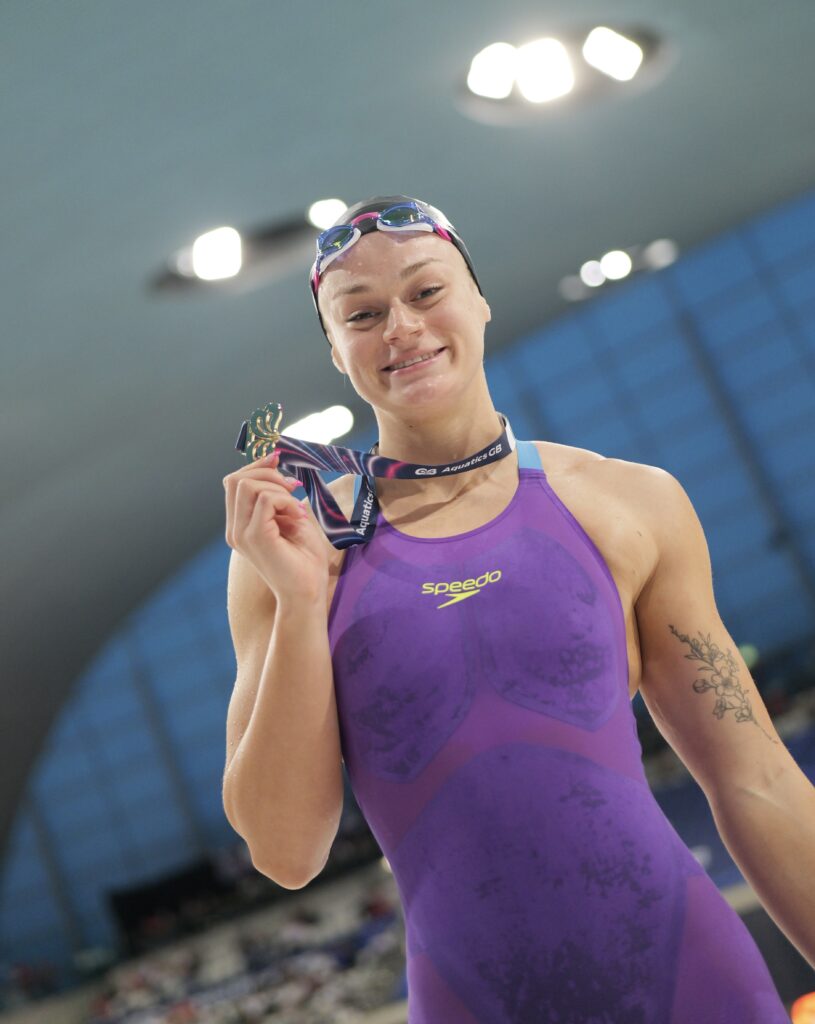
As part of your routine, you talked about your training, the gym, the core, but do you address the mental, psychological part of sport as well?
Yeah, I do a lot of psychological work that tends to be on my own or with a sports psychologist, and it’s often away from the pool that I do that.
I take 10, 30 minutes a day just to go over my positive self-talk, my breathing, my visualisation.
I use visualisation a lot, especially leading up to a big competition where I’ll visualise my race to get that muscle memory going and it just helps calm my nerves a lot more.
So I do a lot away from the pool as well as being at the pool because I do think, for me especially, when I’ve neglected my mental strength, I’ve definitely suffered in the pool, whereas now I make it quite a big priority that I’ll set time aside in the day to work on that.
Do you have any superstitions before you’re about to race?
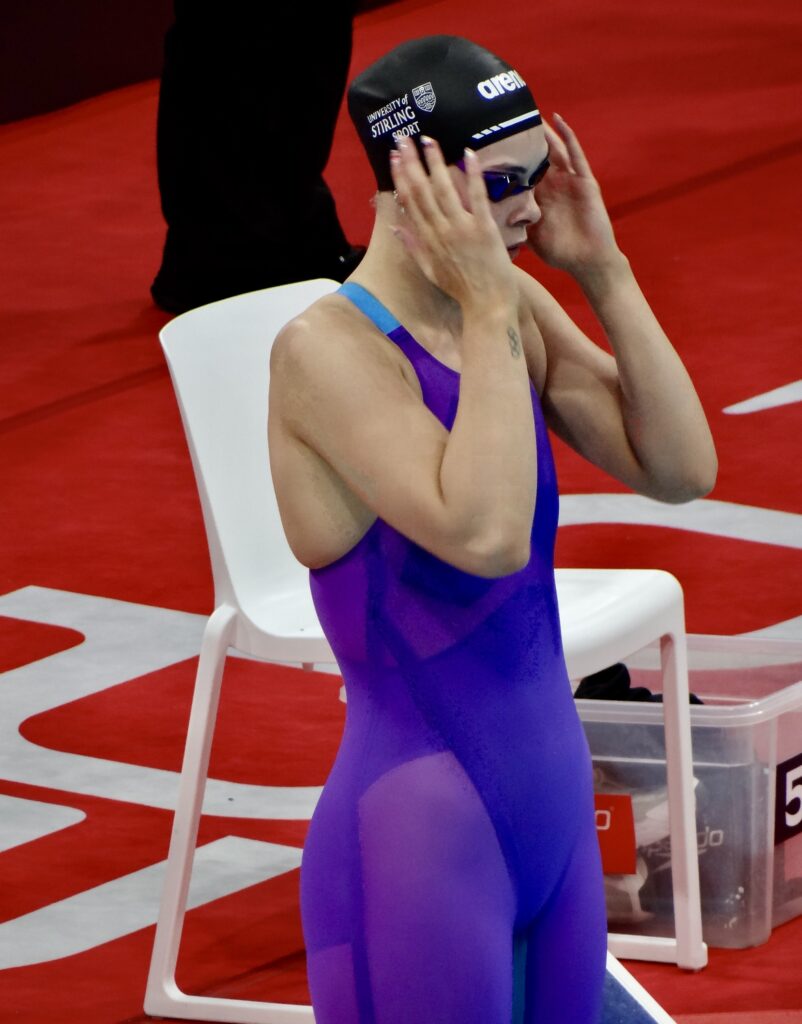
Yes, when I’m in position, I have to touch my goggles on my forearm biceps because otherwise I think my goggles are going to fall off.
But that’s my only superstition.
When I did freestyle, I used to have a superstition that the wedge that you move it on [at the start] had to be on my number or I was going to lose the race.
I had to really work my way out of that one because often the officials put it back to zero and I’d always have it on two, so I’d lose every race!
When I’m in position, I have to touch my goggles on my forearm biceps because otherwise I think my goggles are going to fall off.
But that’s my only superstition.
When you were younger, were there female swimmers you admired?
Yes, in my event, backstroke, I really looked up to Georgia Davies.
I was very fortunate that when I moved to Loughborough, she was also there for a few months.
And I’d do quite a few backstroke start sessions with her, so I owe my starts getting half decent to Georgia.
I really looked up to her, especially because she was so strong on the 50 and the 100. And that’s exactly what I wanted to do.
I know your big professional setback was not qualifying for the Paris 2024 Olympics. And at the time that must have been devastating, but since then has it fuelled or hindered you?
It’s definitely just made me really, really motivated.
It made me realise how much I want to go to the Olympics, because I thought as soon as I didn’t make it: I can’t do another four years.
Absolutely not.
I don’t want to do that anymore.
But then when I really thought about it, I was like: no, I do really want to go.
Four years… and even now, that was two years ago now, and they’ve absolutely flown by.
It just put things into perspective and yeah, it fuels the fire.
I think in the initial moment, it was the most heartbreaking thing that could have happened to me.
But now I’m just: I don’t want to feel like that again.
I’m going to do everything in my power, so when it comes to 2028, I’m going to be on that team and going to LA.
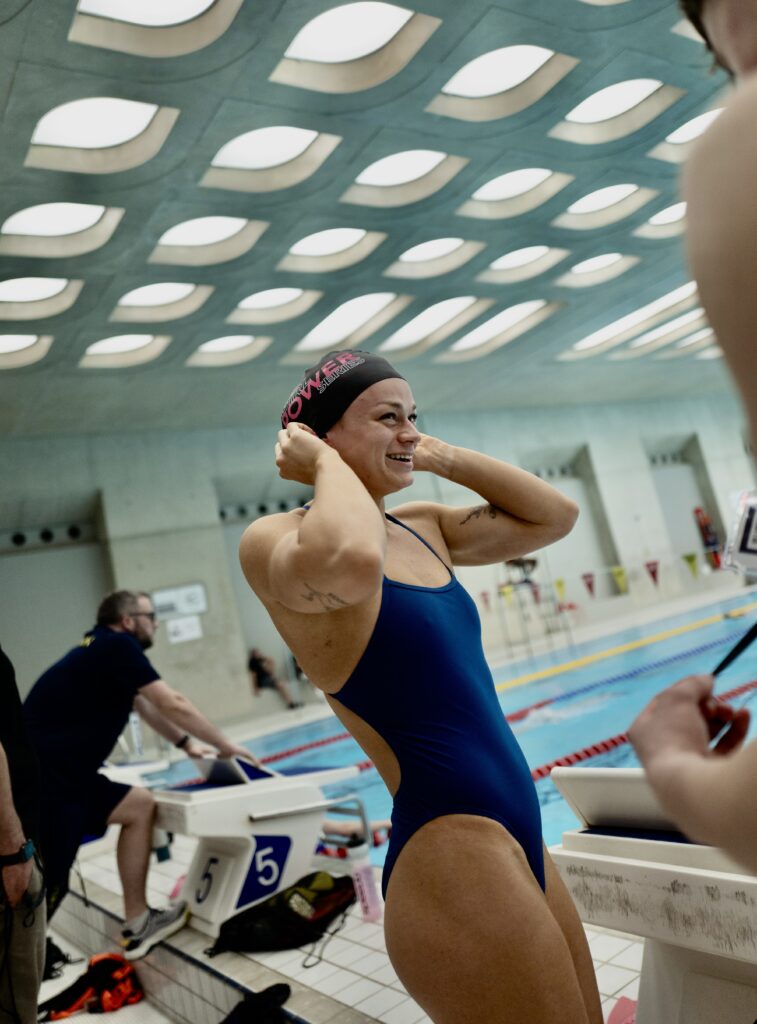
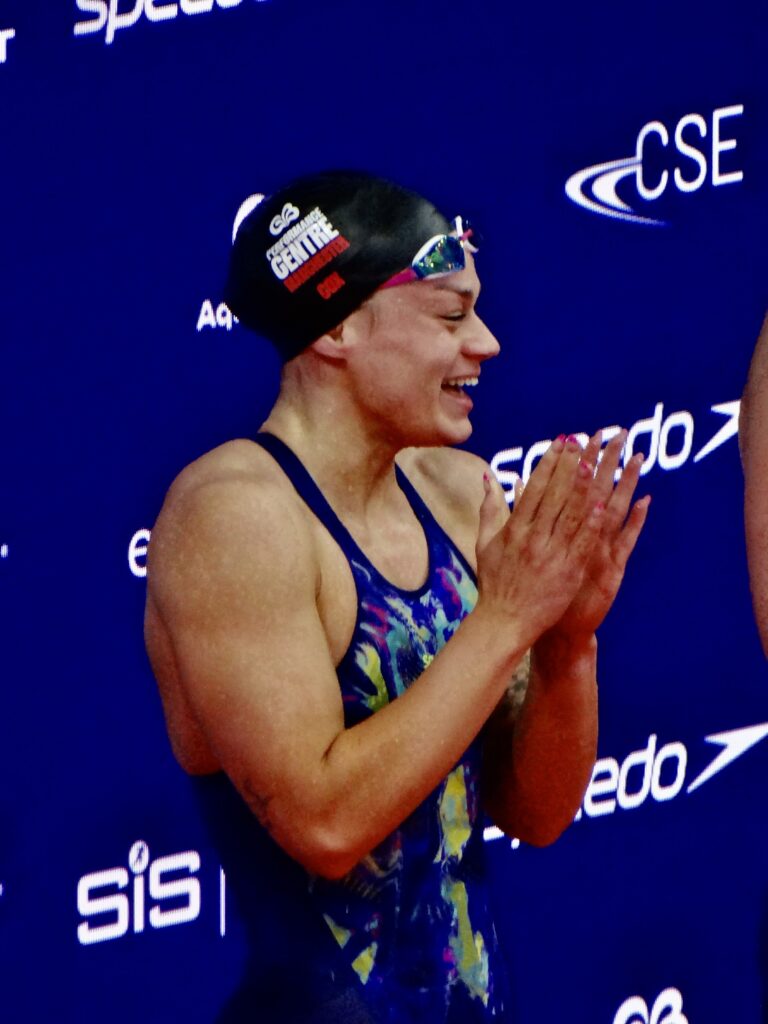
The next big thing obviously is the Commonwealth Games, which is a home games, so what do you think your chances are? You’ll be doing 50 and 100 in that?
Yes, I will be.
What are your chances and who are the other people, Australians and Canadians we should look out for?
I think the backstroke is going to be very strong in the Commonwealth Games.
We’ve got Kaylee McKeown for Australia and Kylie Masse for Canada.
They’re the top backstroke girls… as well as everyone else who’s going.
I think it’s going to be really hard, but last Commonwealth Games I came fourth in the 50 and fifth in the 100.
So now I’m four years older – and I’ve a couple more competitions under my belt – I’m really hoping I can sneak my way onto the podium and come home with some individual medals, as well as some relay medals.
I think the competition is going to be hard, but it’s hard everywhere. Every competition we go, it’s no different.
So I’m used to all the feelings and emotions that come with going to a major meet now.
I’m hoping I can use that to my advantage and get myself on the podium.
You mentioned LA as well, in two years time, so are there little tweaks you have to do? Everyone always talks about fine margins, marginal gains. So are there things about the way you race in 50 and 100 that you can do to get closer to getting on the podium?
Yeah, definitely.
My underwaters I’ve been working on for a long time now.
They’ve come a long way that there’s still more to go there, which I think is really exciting because I can swim fast, as I’m swimming at the minute, but if we can make those, as you say, small percentage margins… I can get a little bit further.
So my underwaters are definitely a big focus for me and my coach and all the Aquatics GB coaching staff, because I think that’s where I’m going to make the most difference.
I do think that I’ve not had the perfect race swim yet.
There’s always been something that could have been a little bit better, which for me on like the mental side, I know that I’ve still got more in the tank every time I go behind the blocks.
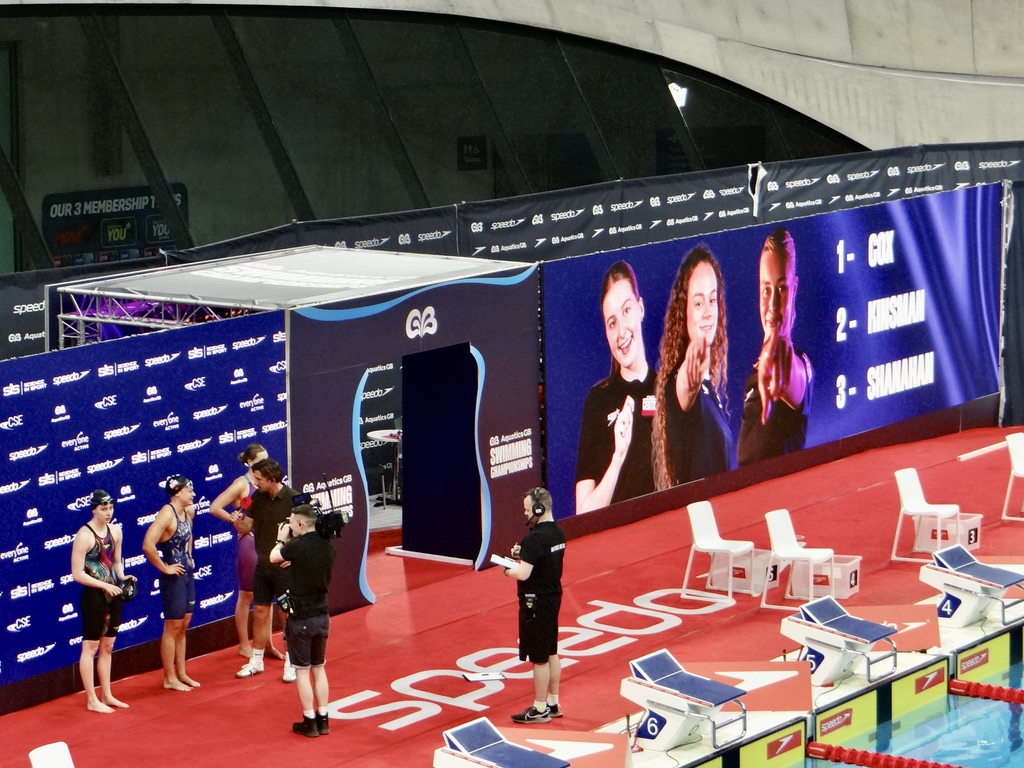
When you look back at your career, you’re reaching your peak now, is that right?
Yeah, I’d say so. I think I’m getting there.
I’m 24 now and I’ve had a lot of experience on the major stage.
So I do think I’m in a good position to be reaching my peak now and hopefully sustain that for a couple more years.
What’s are you proudest of in career your so far?
I think the proudest thing was after missing the Olympics, actually coming back and getting back to my best.
Because I did take quite a while out of the pool.
And it took a lot of mental work to get me back to my best.
But I managed to bounce back.
It did take me about a year, and a bit over a year actually to get back down to my PBs.
But I’m really proud that I did that because it was a fine line of me giving up swimming forever or coming back after missing the Olympics.
So I’m really proud of myself for sticking at it and still keeping going for my dreams.
I think I should give myself more credit for doing that because I very easily could have thrown in the towel as soon as it got hard.
It was a fine line of me giving up swimming forever or coming back after missing the Olympics.
So I’m really proud of myself for sticking at it and still keeping going for my dreams.
I think I should give myself more credit for doing that because I very easily could have thrown in the towel as soon as it got hard.
Have you got an overarching long-term ambition?
I do. It’s definitely at the minute to make the Olympics – and be in the Olympic final in LA for the 50.
But I think after I reached that, I don’t know if I’m going to be satisfied, and whether I’m going to keep going.
I’m not too sure.
Like you say, the Olympics is in two years.
I’m not ready to let go of swimming in two years.
So I’m thinking for now, that’s my main goal of where I want to be.
But then I think once I reach that, that will change, and I’ll very well be still around, and another goal will present itself to me or I’ll come up with one for me to keep going.
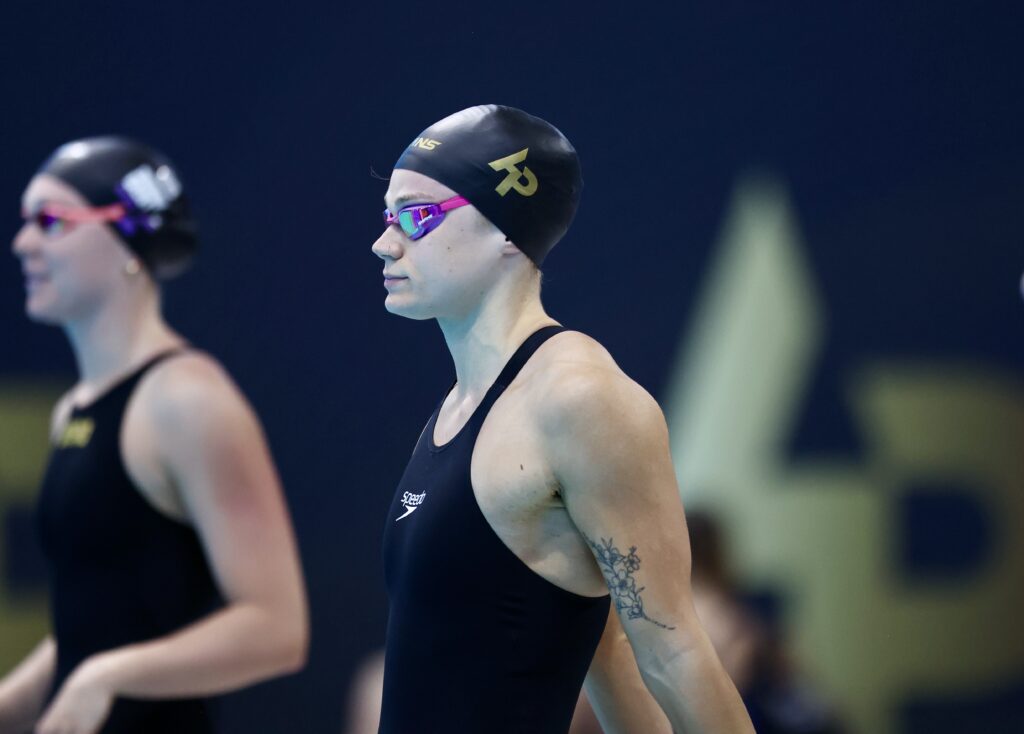
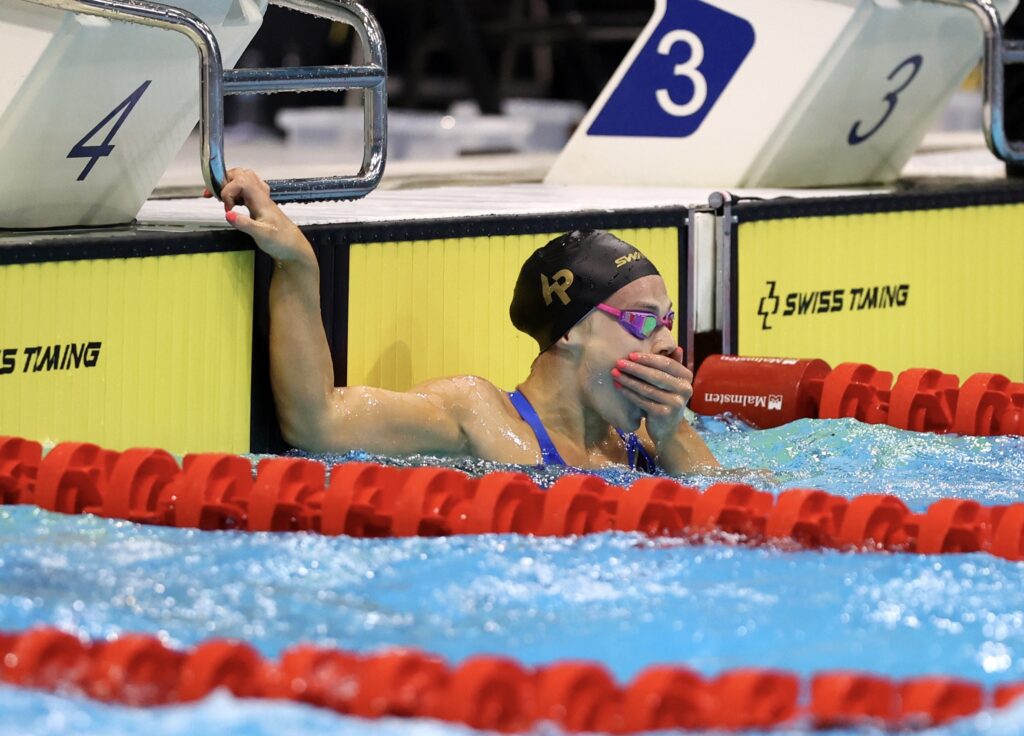
You talked just now about visualisation, which a lot of sports people do, like scoring a goal. So do you visualise yourself on the podium with the medal going round your neck?
I used to not do that because I thought it would be jinxing myself.
But I now imagine all of that.
I’ll never really openly say to people: I’m going to be on the podium.
But now, in my mind, when I’m training, when it’s a hard session, I’ll literally think: imagine yourself on that podium, how good that’s going to feel… you can get through this set.
So in that sense, I do imagine that… trying to spur me on in a session.
Now, in my mind, when I’m training, when it’s a hard session, I’ll literally think: imagine yourself on that podium, how good that’s going to feel… you can get through this set.
Do you imagine the crowd cheering, roaring, everything. Do you take it to the full Hollywood?
I do, yeah.
I mainly imagine my parents, because they come and watch me at almost every composition I do. So I just imagine them being there as well.
It’s probably too far ahead to think about it, but how can you give back to the sport as well?
I definitely think doing what I’m doing with AP Race – we go around the UK delivering world-class swim clinics, race clinics – I really, really love doing that.
That is probably one of the most rewarding things that I do.
The clinics are so good and the feeling when everyone’s gone home and the team’s reviewing the day…
I’ve never quite experienced that feeling before… I always said when I went on my first summer tour with AP Race, the way the kids looked at Adam really touched me and they are just in awe of him.
And it’s just amazing to watch.
I love seeing that, so I really want to keep doing this for as long as possible and hopefully keep evolving that so we can give back to the sport more and more.
I really do love doing that, those the AP Race clinics are very special and it’s hard work for us as staff, but it’s one of the most rewarding jobs ever
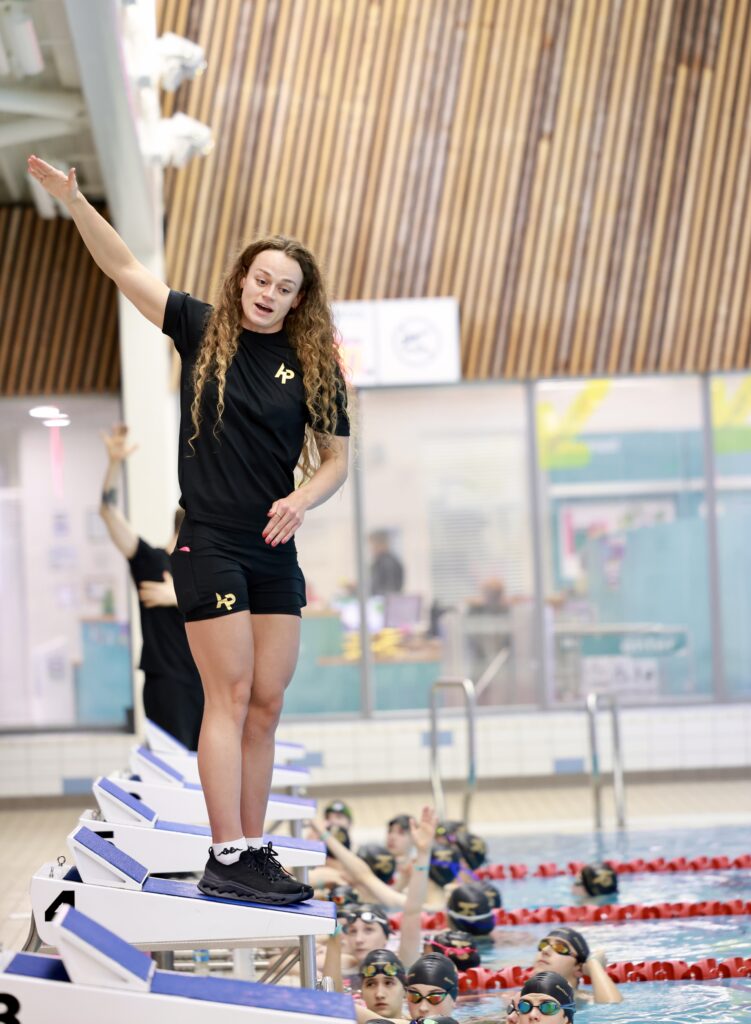
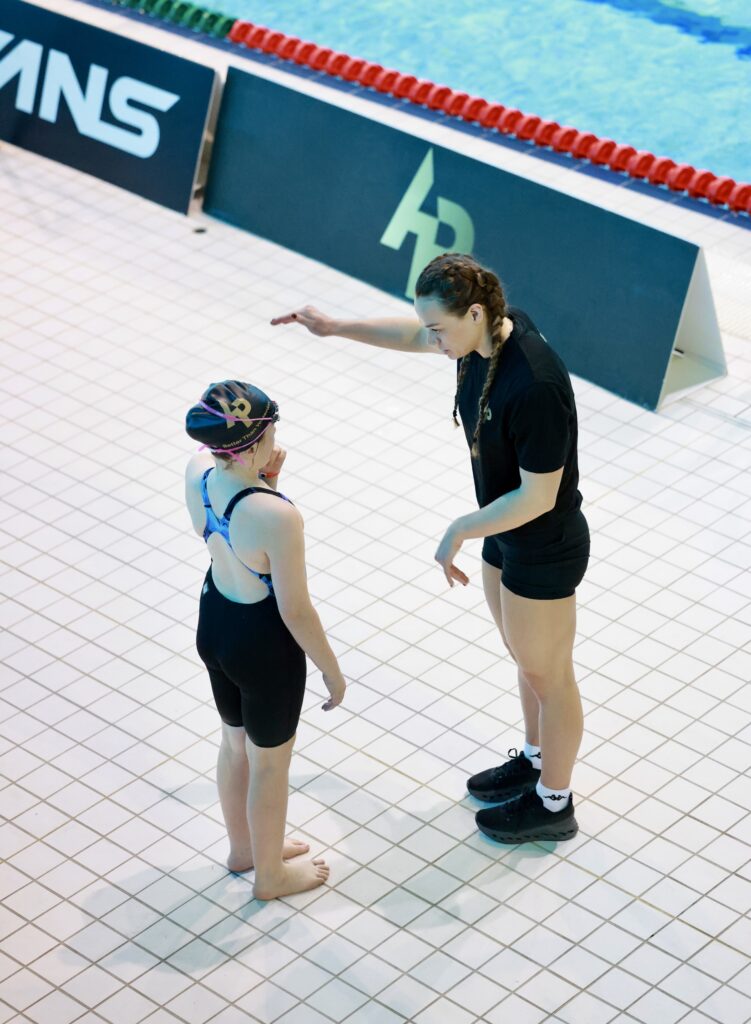
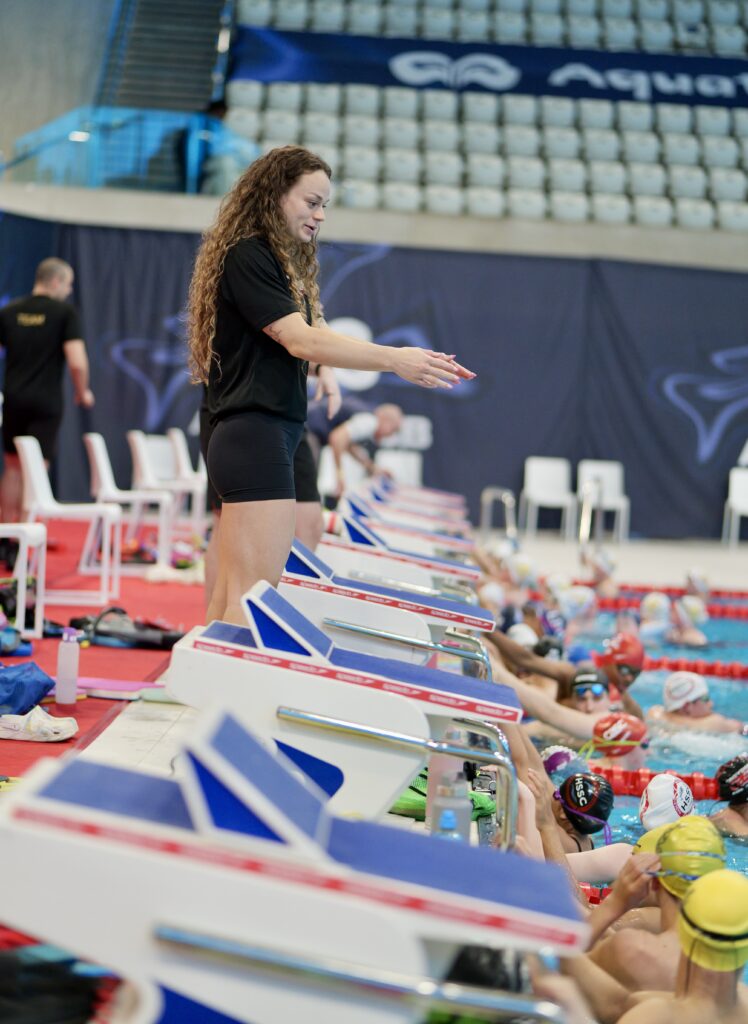
What sort of age are the kids in the clinic (above)?
They are from nine to like 16, 17.
Basically you’re a teacher, aren’t you?
Yeah, basically. And when I finish swimming, teaching is something I’ve thought about going into a bit more because I do really like working with the kids.
And for you, is the best thing winning or breaking records?
That’s actually quite a hard one.
I’m going to go with breaking records for now.
That answer might change, but I really enjoy breaking records, and I think sets you up in history.
Breaking records, I like doing that.
We’ve talked about your highs and lows, but are you quite a self-critical person?
Do you go back and watch and see where you could have done something different?
Yes, I do go back and watch a lot of my races.
I review it by myself, then I also review it like our coaching team.
It’s really important to do that because I do like to see, definitely feel my mental side of things.
I like to see: oh, I can improve there or there, right?
This is what I need to be doing in training.
I work quite logically like that, which is quite good.
The only race I’ve not really watched back was the Olympic trials in 2024. I can’t bring myself to watch that back still.
In our sport pressure is inevitable, I think you’re always going to feel pressure when you’re standing behind the blocks representing your country.
But it’s just how you deal with it and what you turn that pressure into that really makes the difference.
I think you should erase it!
So, are you a person who as you’ve got older, is good at dealing with pressure?
Yeah, it’s been a big learning curve for me, but definitely now I’ve gone through enough things to deal with the pressure and have worked with sports psychologists to have coping mechanisms in place to help me through that.
Because in our sport pressure is inevitable, I think you’re always going to feel pressure when you’re standing behind the blocks representing your country.
But it’s just how you deal with it and what you turn that pressure into that really makes the difference.
With your start, you talked about the fast twitch. And if you don’t get that, is the race gone?
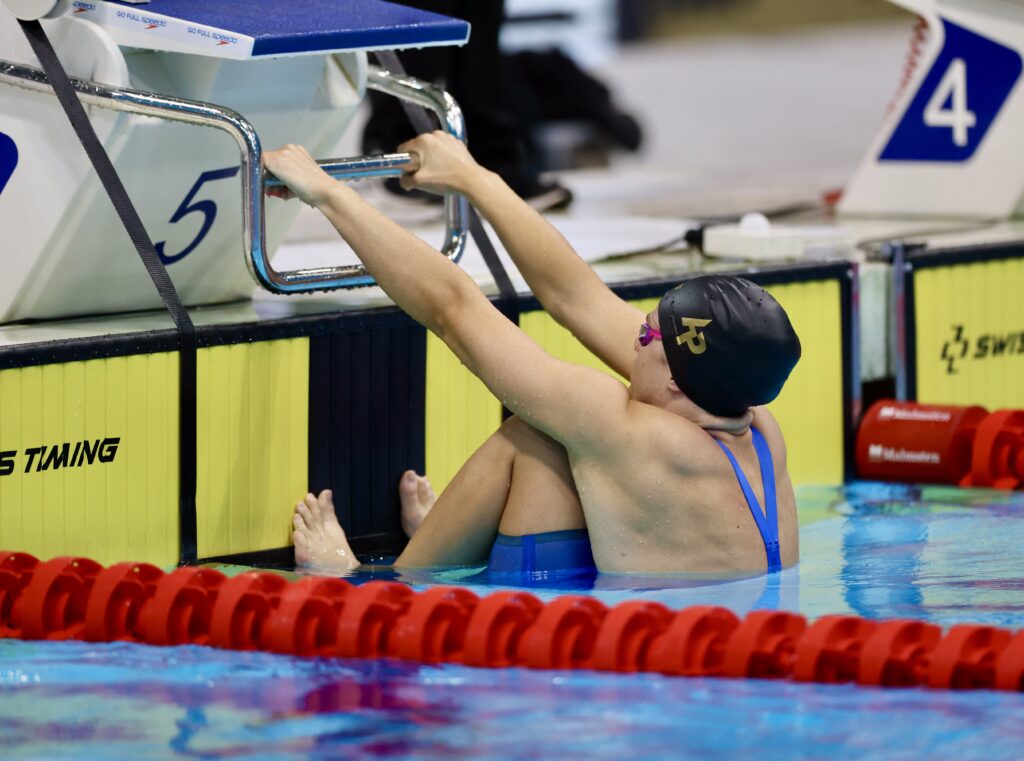
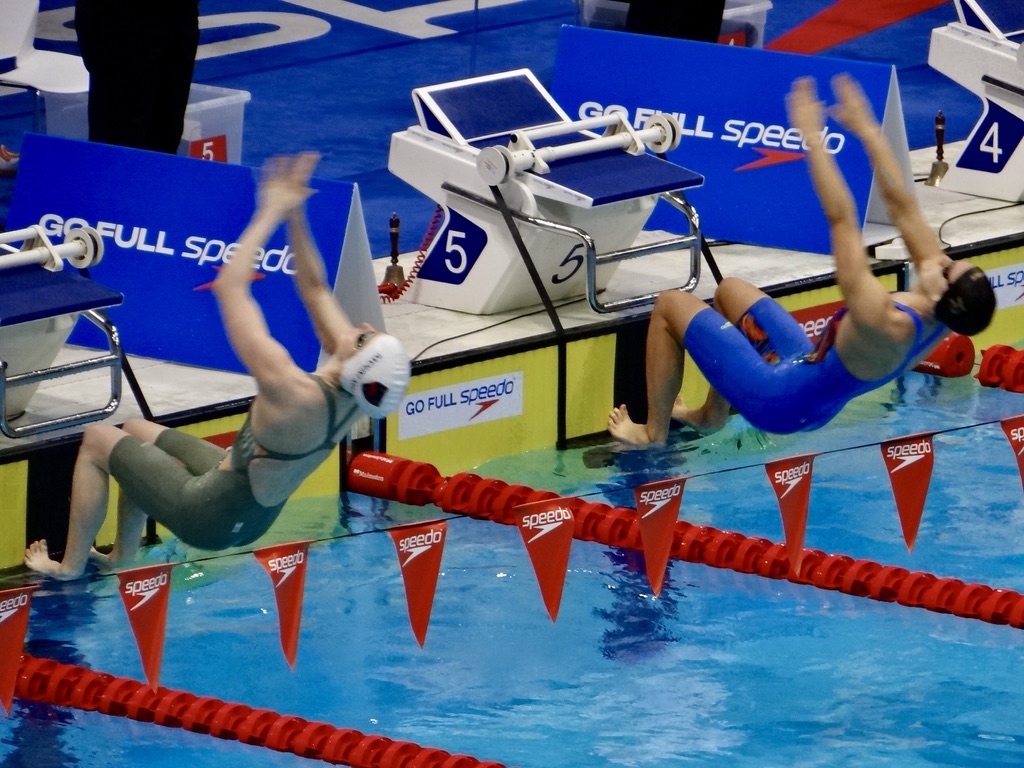
Yeah, for the 50, you’ve got to be on it from the beginning.
And I think I can tell whether my start’s gone good or not as to where I’m going to be in the race.
The start is the main thing, but that’s what I like about the 50 so much. The smallest percentage could go wrong and that’s fourth!
But if you get everything right, it could be really, really good.
I do love it.
I think there’s an extra added bit of nerves there, but that’s what’s helped my starts be better, because there is a bit more relying on it.
I’m guessing you don’t have a lot of spare time, but do you have hobbies outside swimming?
I do, yes.
As I’ve finished uni, my parents are very on it for me getting work experience.
So my hobby at the minute is finding work experience.
I’m doing six months with AP Race, working in different areas of their business.
I’m also doing some work experience for Sponza, which is an app created by Matt Richards.
I’m dabbling in the working world to try and set me up for after swimming.
They’re both businesses that I feel passionate about.
And I’m lucky that they’re in the swimming world so they understand the training needs and whatnot.
So it’s quite flexible.
But at the minute, if I’m not at the pool, I’m normally doing work experience.
Is there anything else apart from that that’s more like a fun hobby?
Hmm, I love reading.
That’s my way to wind down now.
Anything to recommend?
I love a romance book, anything by Anna Huang.
If you like romance books, she is my go-to.
Is there a good title you can recommend?
Yeah, her Twisted series, there’s four books.
They’re good, very light-hearted, I like everything light-hearted.
A lot of sportswomen seem to like romantasy, mashing fantasy and romance together.
Yes, like Acotar, by Sarah J Maas, I’ve just finished it.
I’m trying to get into the romantic world a bit more, but it’s quite a lot sometimes.
I prefer a nice 400-page, easy read.
I do think if you want to get sponsored or make money in this sport, you have to be on social media and using that to its full advantage.
My last question is how can we help competitive swimming make more of a splash, pun intended, outside of the Olympics, the Commonwealth Games?
You’ve done Sprint with the Stars [where punters swim against champions], but it’s the same problem as athletics, that people only watch it maybe once every four years. Are there other things we can do to bring swimming more to the fore?
I think social media is massive. I think there just needs to be more content creation around swimmers and what we do.
We need to find our way of having that viral moment where we could then have an army of people on social media wanting to watch all our meets, because we do have Sprint with the Stars, GB champs, the AP Race London international, and people do watch these…
We could – and maybe that’s on us as swimmers – be using social media to our advantage and putting that content out there, because when it’s out there, people do want to see it.
We just need to put it out there a bit more.
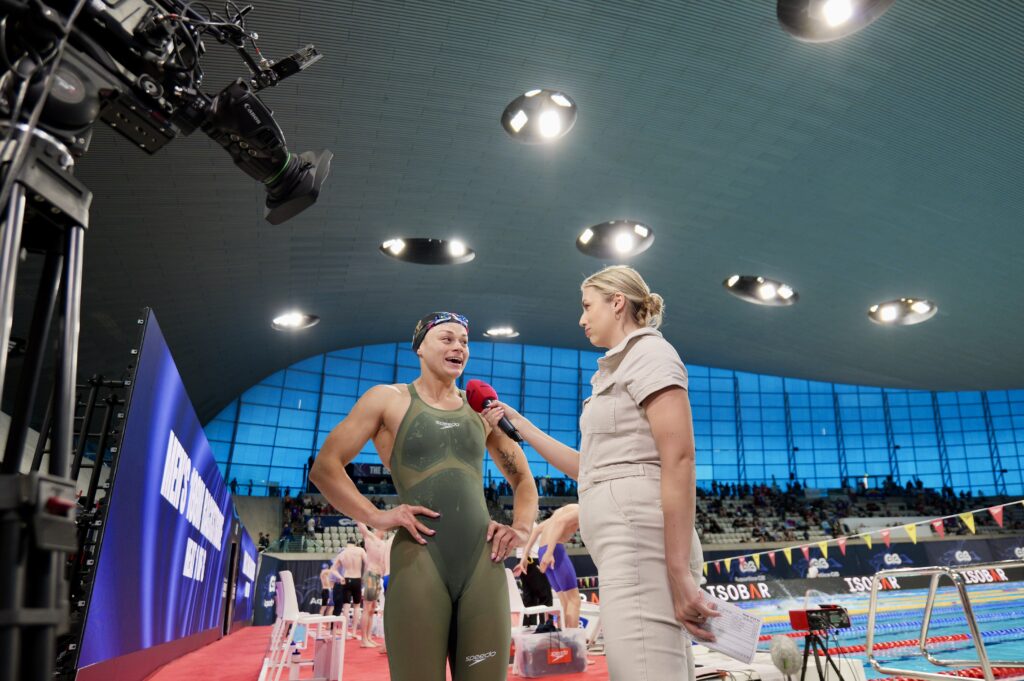
You do Instagram, but do you do TikTok stuff too?
Yeah, I do a bit of that.
I show ‘Day in the Lives’, and I do series, building up into a main competition.
And I show funny videos about us at training and at home.
That for me is a fun outlet.
I do think if you want to get sponsored or make money in this sport, you have to be on social media and using that to its full advantage.
That’s something that’s really ramped up in the last two or three years, hasn’t it…
Do you get feedback saying: I love the bit where you were eating your porridge in the morning, rather than you diving in. Are there certain things that people engage with more?
Yeah, one that does really well is seeing behind the scenes at AP Race clinics. People love that. And behind the scenes of a race day because you don’t always see what goes on on a race day, you just see the race.
They definitely like to know what I personally eat.
People always message me: what do you eat before a race, what do you eat before this, and everyone always thinks it’s going to be something extravagant… and as you say it’s literally just a bowl of porridge!
Photos: AP Race, Helen M Jerome
Commonwealth Games Glasgow 2026 run from July 23 to August 2. TNT will be showing events live, Channel 5 will show daily highlights.
Watch (hopefully) Lauren Cox sprint in 100m backstroke heats, semis and final on 25 July; and in 50m backstroke heats, semis and final on 27 July.