
BE PREPARED! Sara Orchard on the Art of Rugby Commentary
Sara Orchard is a very familiar voice if you’ve watched or listened to any rugby on TV or radio in the last few years. And she came further into prominence – and into our living rooms – during the Rugby World Cup in 2025 with her memorable commentary throughout the tournament.
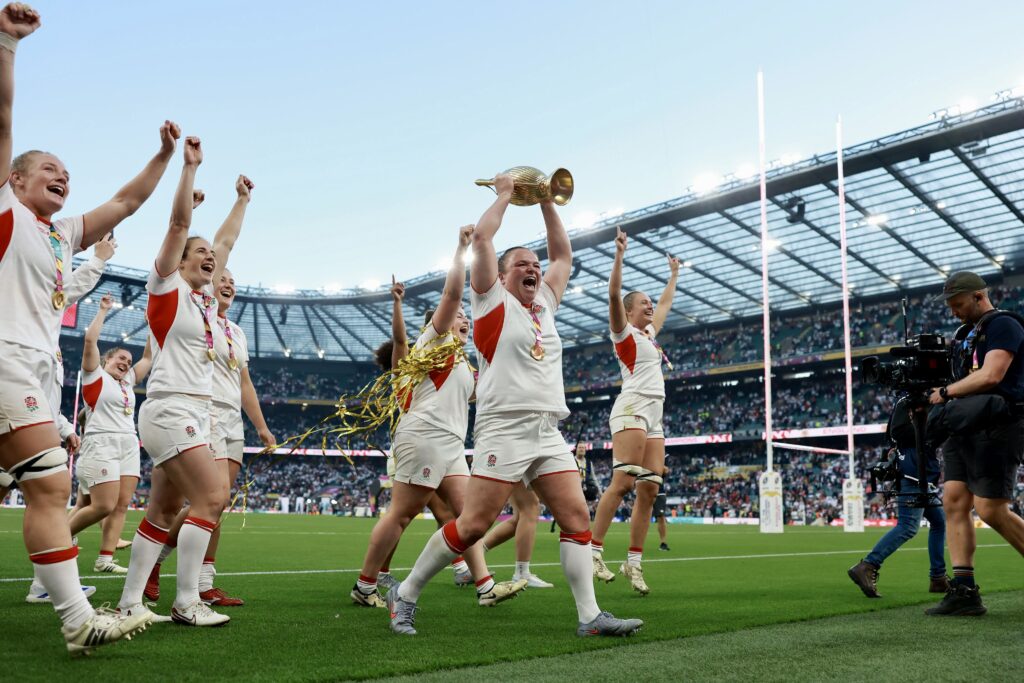
This, of course, culminated in the Red Roses winning on home turf at a sold-out Twickenham. And Orchard was there every step of the way on this journey – and for the millions of fans new and old tuning in – her voice now inextricably intertwined with the occasion in our collective memory.
But how did this ex-rugby referee get her start and achieve her position as a national treasure? What have been the challenges along the way for this pioneer? How does she stay neutral when the whole of England is crossing its fingers for the Red Roses to triumph?
What’s the difference between commentating for TV and radio audiences? And crucially, how does she keep warm when perched high up in wet and windy stadiums?
Sara Orchard sat down to talk with Helen M Jerome about all of this, plus her other sporting passions.
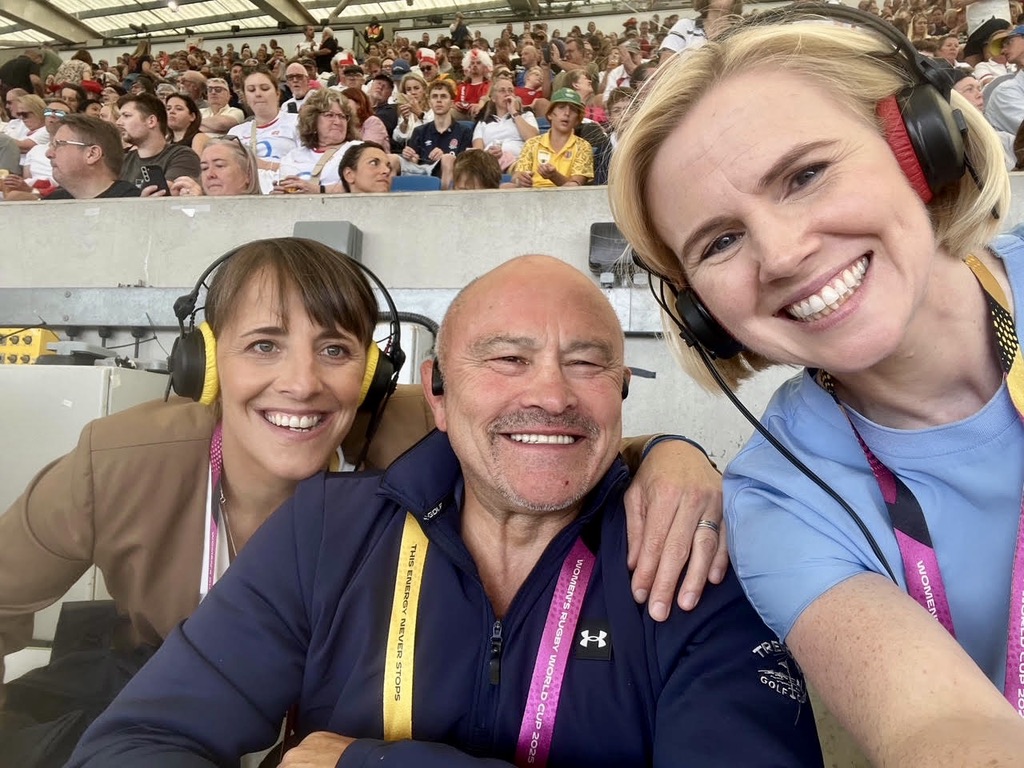
First of all, I want to ask you what it’s like for you as a person, not just a commentator, when you’re commentating on a home women’s Rugby World Cup, to go through the whole journey and to see them victorious.
Do you know what, you have to detach a certain amount of emotion from a team’s journey, which is hard.
There’s no two ways about it.
And particularly in my role, as much as I’m a commentator, I’m also a journalist.
This was the fifth women’s Rugby World Cup I’ve worked on.
I think every single World Cup I’ve attended England have been favourites.
And they’ve only won one of them.
So I went into this fifth thinking, well, on the balance of averages, England will go in as favourites and New Zealand will win it.
Because that is the story that I’ve witnessed three times out of the previous four.
That’s to take nothing away from the Red Roses.
I think every single World Cup I’ve attended England have been favourites.
And they’ve only won one of them.
So I went into this fifth thinking: well, on the balance of averages, England will go in as favourites and New Zealand will win it.
Because that is the story that I’ve witnessed three times out of the previous four.
But there has always in women’s rugby been an aura around the Black Ferns that the Red Roses have never had an answer to when it came to the big moment.
So to see from a women’s sport point of view that investment and funding into women’s sport be rewarded, that was a glorious moment.
That’s not to call me an England rugby fan, that’s for me to recognise when women’s support is properly nurtured and looked after and respected.
So to see them lift that trophy seemed like a fitting reward.
I get that, as I try to stay neutral when covering football. The dispassionate neutral thing is sometimes hard, but does it go out the window by the time you get to the final?
No, it can’t, or I wouldn’t have the job that I have ultimately.
If you want to be a fan, you can’t do the job that I do.
It’s not easy and it’s something that you learn as the job goes by.
I’ve been doing this for over 20 years now.
Particularly working for the BBC, something I really respect is the privileged position I am put in, and my colleagues are. And part of that is to tell a fair and even story and see it from both sides.
If you want to be a fan, you can’t do the job that I do.
It’s not easy and it’s something that you learn as the job goes by.
So yes, there are highs, of course there are.
But at the same time you’ve got to be able to see the whole picture.
If not you’re not telling the right story.
If you go back to that final day at Twickenham, what do you most remember from the day itself?
I was quite unemotional throughout the whole day.
I don’t know if it’s a personal thing, but I actually find when there is a big moment, whether it be professionally or personally, sometimes your body just goes into a zone.
I was in the zone most of the day. There’s a job to be done and we’ve got to get it done.
The only time I was actually emotional that day must have been a good hour after everything had finished.
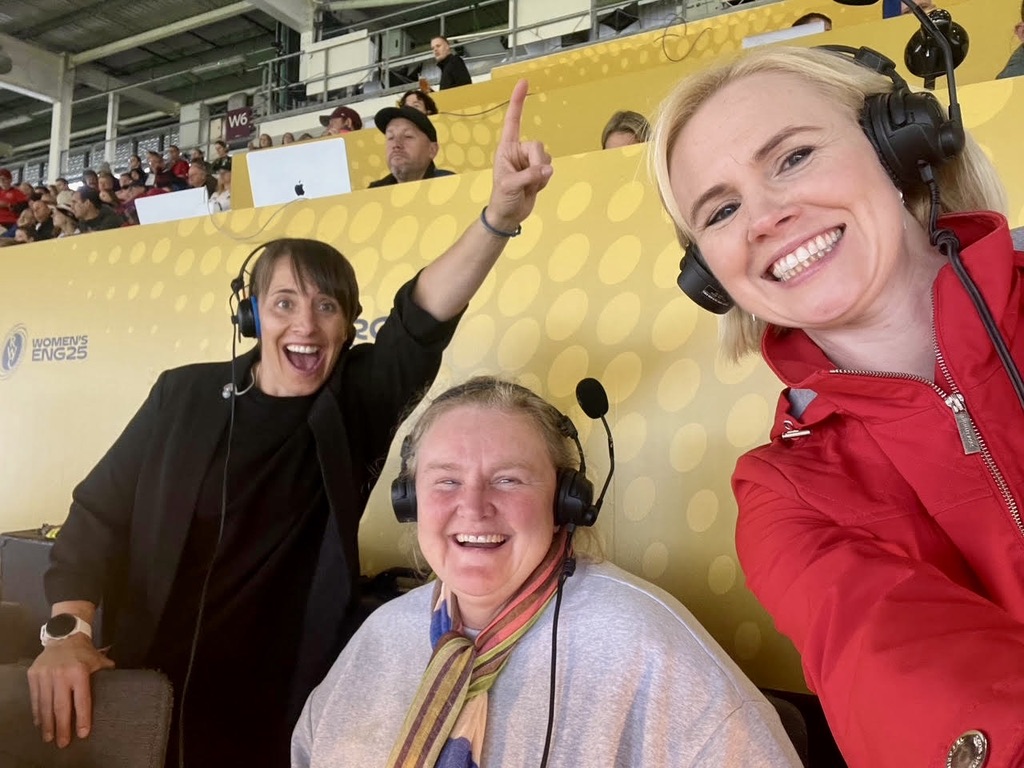
Claire Thomas, who did the Five Live rugby commentary, came along the commentary gantry to see me.
And it was when I saw her that actually I got a tear in my eye because… I’ve got to know Claire so well over the last three to four years, and she’s an incredible talent in the industry.
It’s the first time I’ve really gone through a World Cup with another woman doing the same thing as me, and trying to achieve the same things as I have been.
Essentially, I’ve never had that shared experience.
And I realised I’d actually shared this with someone who cared as much as I did.
That for me was the one actual moment I got emotional.
You could say that’s quite selfish in a way.
But that is how I view women’s sport; what goes on the pitch is a story, then what goes on off it maybe is what happens to me personally.
Can you remember a favourite line of yours from the commentary for that day?
No, it’s one of those ones.
Sometimes you prepare the odd line, but increasingly the more I do this, I don’t do that.
The only thing I prepare in advance will be to recognise a moment of significance, and that tends to be around final whistle moments.
So when that whistle goes, making sure that if a team has won or lost, making sure you get right what that represents.
So if Canada had won, I needed to recognise that they had come through, they’d upset the odds, that this was their first World Cup.
I needed to make sure I had something ready that praised them and recognised that achievement.
And in the same way for the Red Roses, I needed to make sure that I said something that recognised how long they had wanted something and had finally done it.
The only thing I prepare in advance will be to recognise a moment of significance, and that tends to be around final whistle moments.
So when that whistle goes, making sure that if a team has won or lost, making sure you get right what that represents.
That’s just commentary 101.
So, yeah, the biggest thing when a whistle goes in a World Cup final is you’ve got to say someone’s a world champion.
That’s just commentary 101. So you’d know that regardless.
But yeah, there’s nothing specific.
I mean, Ellie Kildunne kept on doing things in matches towards the end of that tournament.
And that was all coming quite naturally, which was nice because also you want to have a natural reaction.
How can a player keep pulling off big moments like that?
You have to allow yourself to be impressed.
If you’ve prepared something, you’re thinking about what your prepared line is rather than going: oh my goodness, did you see that?
Natural emotion is really important, as much as something that sounds really clever in the moment.
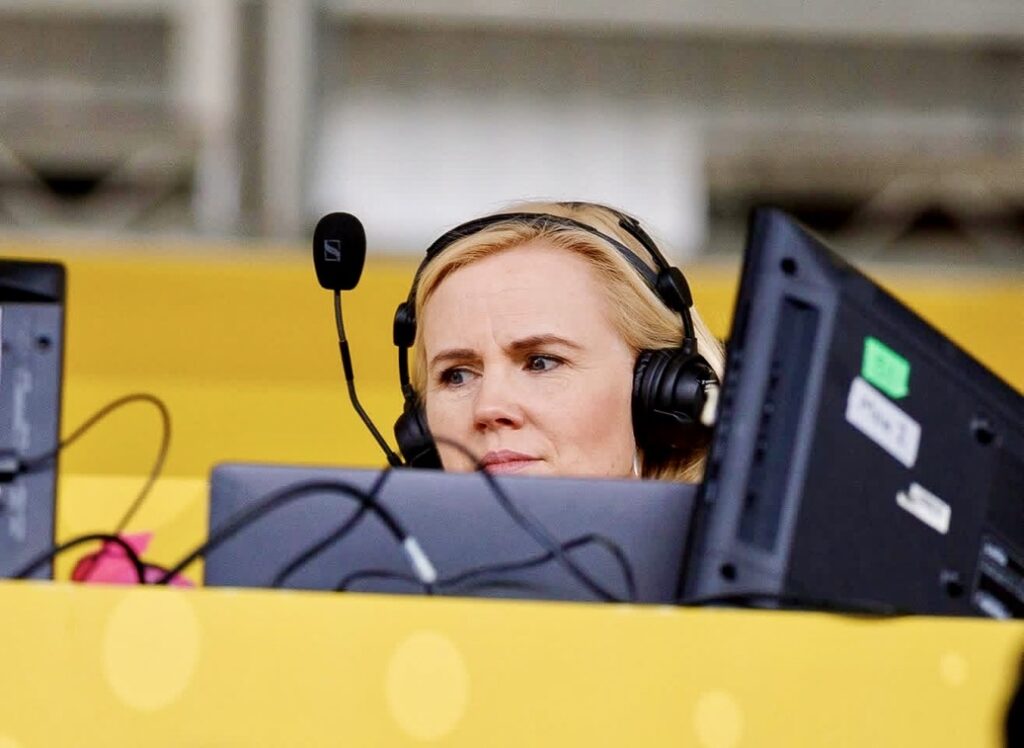
For a rugby commentator, when you’re perched high up in a stadium like Twickenham with the elements around you, what are the essential things you always take with you to wear, etc?
Well, in the winter, I have a philosophy of I can’t do my job if I’m cold.
If we’re talking about freezing temperatures, I have no care in the world what I look like.
I’m quite happy to be in full ski gear, an Eskimo.
I will put on about seven layers.
I wear snow boots.
I have warmers in the snow boots, I have warmers for my hands, and I always take a hot water bottle with me because if you are in a press room, as a bare minimum, you can always get hot water.
There tends to be an urn.
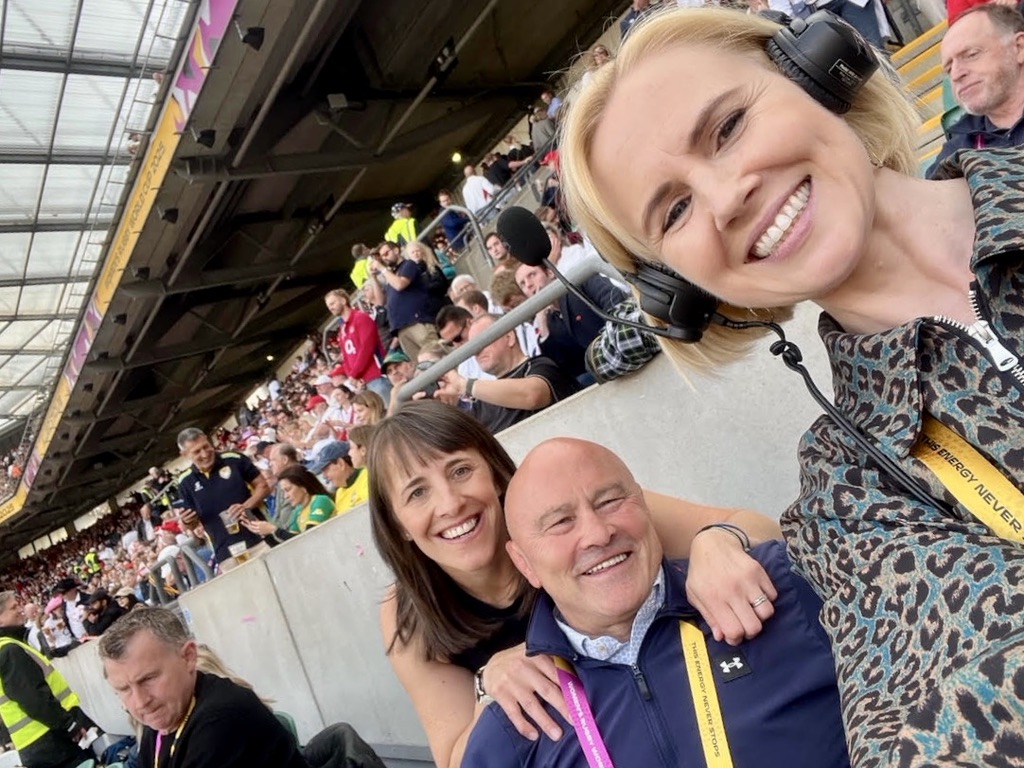
I always fill my hot water bottle up from the urn and I can stuff that one up my jumper, because you are sat there – it can be for four hours – without moving.
So that is not conducive to keeping warm, sitting or standing still.
I have a philosophy of I can’t do my job if I’m cold.
If we’re talking about freezing temperatures, I have no care in the world what I look like.
I’m quite happy to be in full ski gear, an Eskimo.
I will put on about seven layers.
I wear snow boots.
I have warmers in the snow boots, warmers for my hands, and I always take a hot water bottle
I have to be able to be in a stationary position and be warm.
If not, you just can’t do your job.
How much do you prep for say a Red Roses or a big PWR clash?
It depends if I’m doing a TV or a radio commentary.
A radio commentary is a minimum of a day.
That’s because when you do a radio commentary, it’s basically a lot of facts and figures that you’ve written down, but also what we describe as a lot of furniture in radio.
That’ll be me making sure going: don’t forget later on Five Live sport at 5.30, we’ve got West Ham against Everton.
That’s the furniture that builds around the commentary, because you are not just commentating on that match, you are part of a family, a sporting family, and you’re making sure everyone knows where the sporting family is going next.
Or if something else is happening, right now on sports extra, you can follow the cricket, so on and so forth.
So that takes a minimum of a day to build for radio.
Then TV is just so different because on TV If you’re watching a match, you know what the score is, you can see it.
You know what the time is, you can see it.
You know which team has the ball because they’re running with it.
So what is it that I’m going to say that you don’t know?
That’s what I’m working on. [see evidence below]
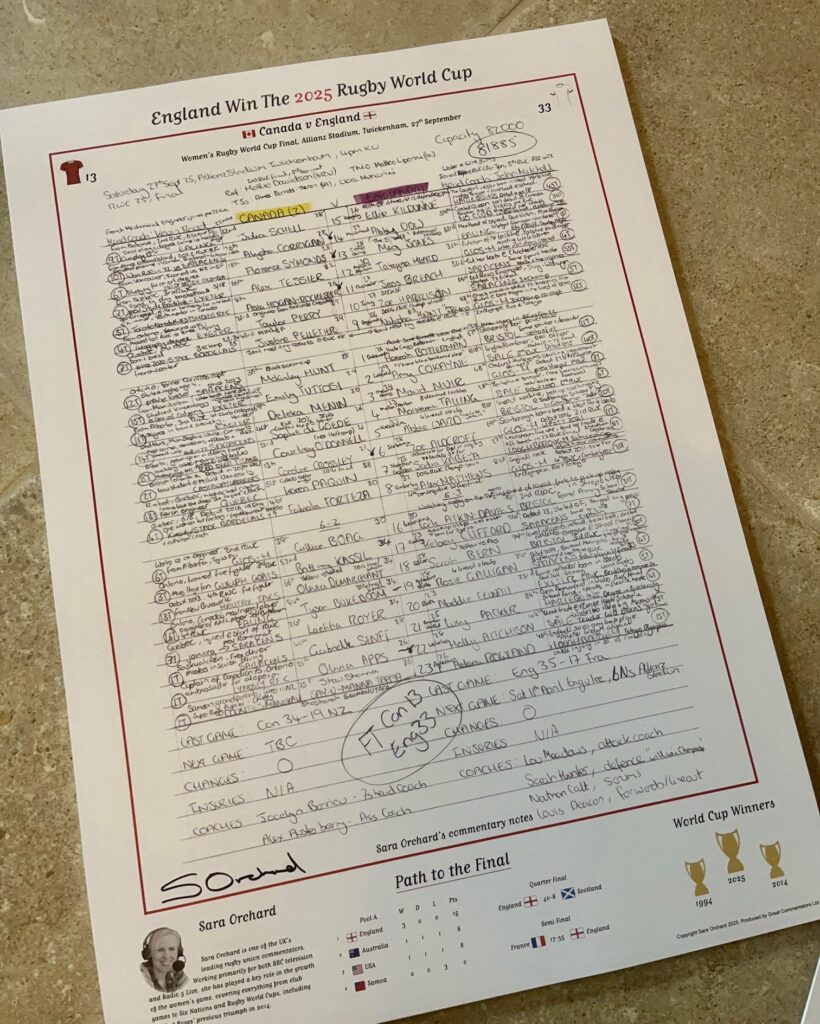
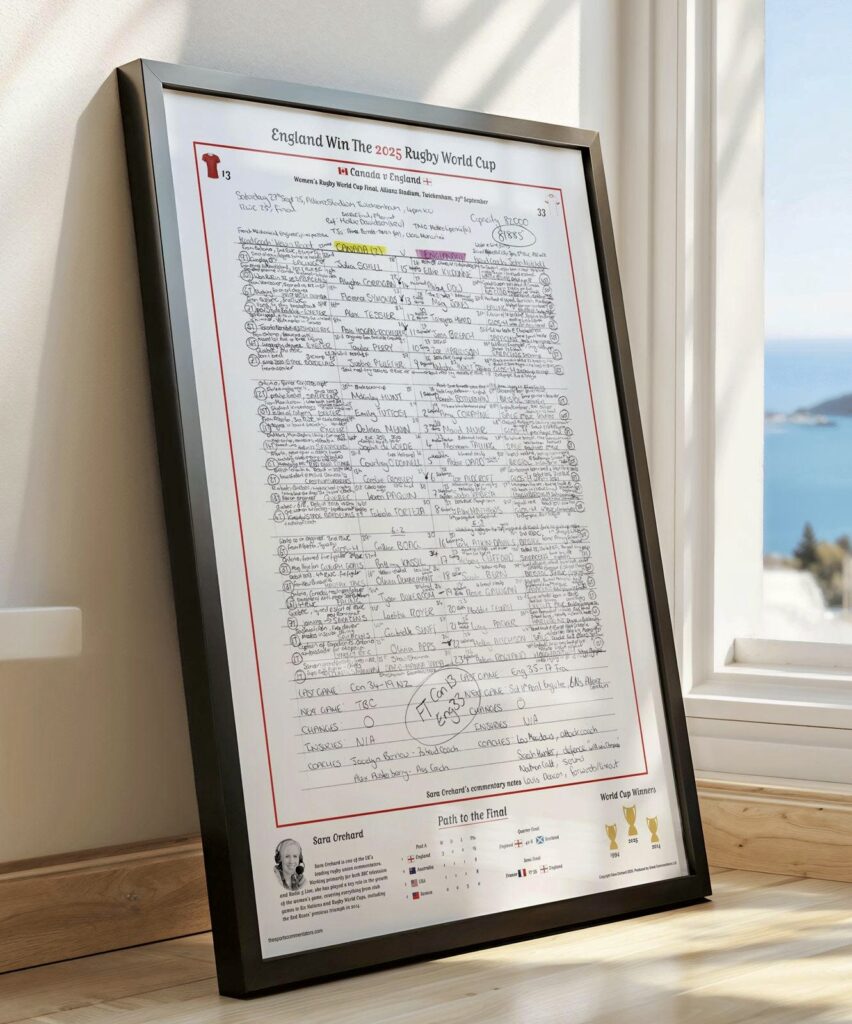
The first thing is player identification.
You might not know which player is holding onto the ball.
It’s my job to tell you who has it and what their communication is with the players around them.
I’m trying to think of an example. So Alex Matthews and Natasha Hunt, I know that they play together at club level.
So therefore it’s for me to tell you maybe that’s why the eight and the nine had that communication and that symbiosis together.
So making sure you know those bits.
And understanding physically what players look like, the style of play.
So I rarely turn up to a TV game without having attended training or previous matches.
That’s a day’s worth of work in itself; making sure that you’ve looked at what teams look like physically.
So there’s that side of it.
Then there’s just deciding what you’ve written down is relevant.
Some of it you already know, but you write down anyway the whole time.
How did you how did you first get into commentary? Was there a route with steps and stages?
Definitely not! I used to work for BBC Radio London and read the sports bulletins. And it was my job to get the commentators to go to Wasps, London Irish, Saracens and Harlequins because they were our clubs.
I used to go to the odd game, and you’d have a commentator – which is what I do, where you talk about the match. Then sat next to you, you’d have a summariser, which is the person who gives you the colour. That’s normally an ex-player or a pundit, as they’re sometimes called, who tells you what’s going on around it when the ball isn’t moving.
So the summariser didn’t turn up, and the commentator said: oh, Sara, you’re a referee. You do it.
And that was fine. I did it.
Then he just turned around and said: well, you could commentate.
There’s no reason why you can’t.
Going back over 20 years, it was quite unusual.
There weren’t really many female commentators.
The summariser didn’t turn up, and the commentator said: oh, Sara, you’re a referee. You do it.
And that was fine. I did it.
Then he just turned around and said: well, you could commentate.
There’s no reason why you can’t.
And that’s how I got my opportunity, somebody not turning up.
It was around the time where Jacqui Oatley was starting to get opportunities on Match of the Day.
And my boss came back to me about a week later and said: well, do you want to go?
Nigel has said: you’re good enough for it.
And I said, okay, yeah, let’s do it.
And that’s how I got my opportunity, somebody not turning up.
But it was also a really nice training ground to learn to be a commentator.
I think it’s a lot harder for a lot of people now, because sometimes you’re really thrust into big arenas, which I do not think is where you learn your commentary.
We used to do online streams on the BBC of every Prem game.
And I used to do a lot of those streams.
There was a stream for home team and a stream for an away team.
So there were loads of opportunities.
I did that for years before I was let loose on a bigger network.
And I loved it, absolutely loved it.
There are people that don’t like women commentating, and that’s fine.
You’re totally allowed to not enjoy it, no problem.
Some people don’t like some of the male commentators, and that’s fine too.
I think you’ve also worked across other sports too, but do you ever commentate on them?
Yeah, so every year I have the honour of commentating on Wimbledon.
I’ve never professed to be a tennis expert, but I have spent some wonderful time with the BBC tennis team, who are incredible at their jobs.
I’ve learned so much from them.
It is such a different sport to commentate on.
And I really have to get my head into it each year because it is such a different discipline.
But that’s an honour.
And I’ve had a couple of trips to the US Open.
I did Indian Wells one year.
That was a great year.
Amazing tournament.
So I’ve flirted around the edges of tennis.
But again, as I said, I do not profess to be an expert.
I’ll be honest, if you can commentate, you can commentate on anything.
I’ve done netball, which again, this is where you fall into things by accident.
When England won the Commonwealth Gold on the Gold Coast in 2018, I’d been commentating on the hockey that tournament.
Then I got a phone call from the boss saying: oh, Sarah, do you know much about netball?
I was like: well, I used to play it.
And they said: well, we need a commentator for this gold medal match.
Can you do it?
I was like: as long as there’s someone sat next to me who knows netball, yes.
If you leave me on my own, probably not.
So I had the amazing Tamsin Greenway with me, and she held my hand through it. Because obviously the rules of netball, if you played it at school, compared to what professional netball is these days, it’s very different.
She held my hand, and I asked her a lot of stupid questions before we began.
That was a radio commentary, so I’ve done quite a bit of netball since, dipped in and out, and have to get my head into it.
And I commentated on hockey – one of my first real gigs at the BBC for radio, where I got to go to the Olympics and I did the incredible gold medal match for Rio.
Just before that, they’d won the Euros over in East London, just that incredible golden period, and some wonderful moments with GB hockey.
I’ll be honest, if you can commentate, you can commentate on anything.
People say all the time: could you commentate on football? And I say, yeah, I could.
It’s not my choice.
If someone said, what’s your favourite sport, I’d never say it’s football.
There are some people who adore it and it’s their life.
And that’s why I’ve never really coveted it.
But I think if you can commentate and you do your homework, you can commentate.
Who has influenced you, people now or from the past, female or male, that you admire as commentators?
Oh, loads, loads.
So the first one is Bill McLaren, but everyone in Rugby Union is contractually obliged to say Bill McLaren.
We have to.
But it’s also because there was a Bill McLaren documentary that was done by the BBC by John Inverdale about when he went to meet him.
And it really stuck with me because Bill McLaren had flashcards for each player.
When I first started doing my first commentaries, I had this massive box full of flashcards.
And I had to be able to turn it over, say the player’s name, how many caps they had, their age.
But it got to a point where I’d been doing this about two years, and I had this massive box full of flashcards.
And I was like: this has got to stop.
It’s one of those things you’ve got to learn to pave your own way.
But his beautiful way of describing things, I think, stays with everyone.
Bill McLaren had flashcards for each player.
When I first started doing my first commentaries, I had this massive box full of flashcards.
And I had to be able to turn it over, say the player’s name, how many caps they had, their age.
But it got to a point where I’d been doing this about two years, and I had this massive box full of flashcards.
And I was like: this has got to stop.
It’s one of those things you’ve got to learn to pave your own way.
All of my contemporaries in rugby union are wonderful.
Doesn’t matter if I’m talking about Miles Harrison, Alastair Eykyn, all of them have helped me.
They’ve all been incredible, wonderfully supportive.
I’ve got huge amounts of time for all of them and what they do because it’s not easy.
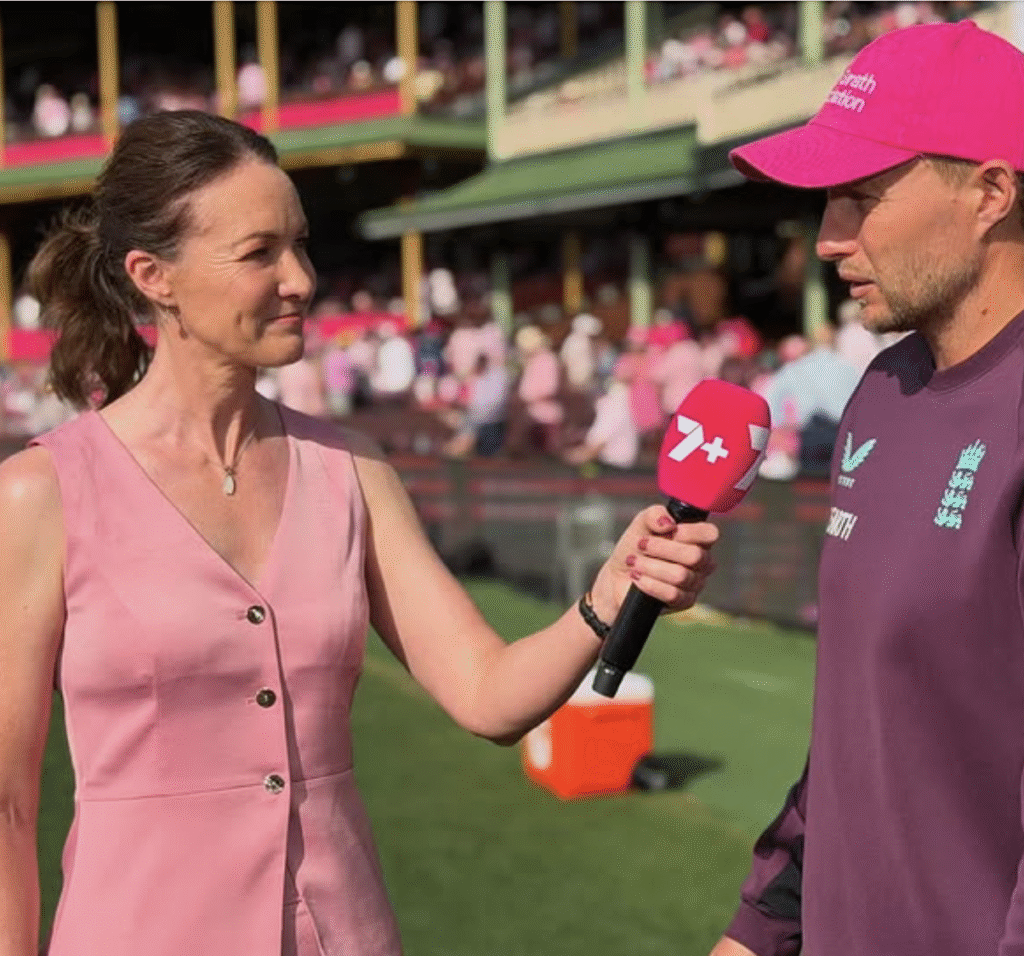
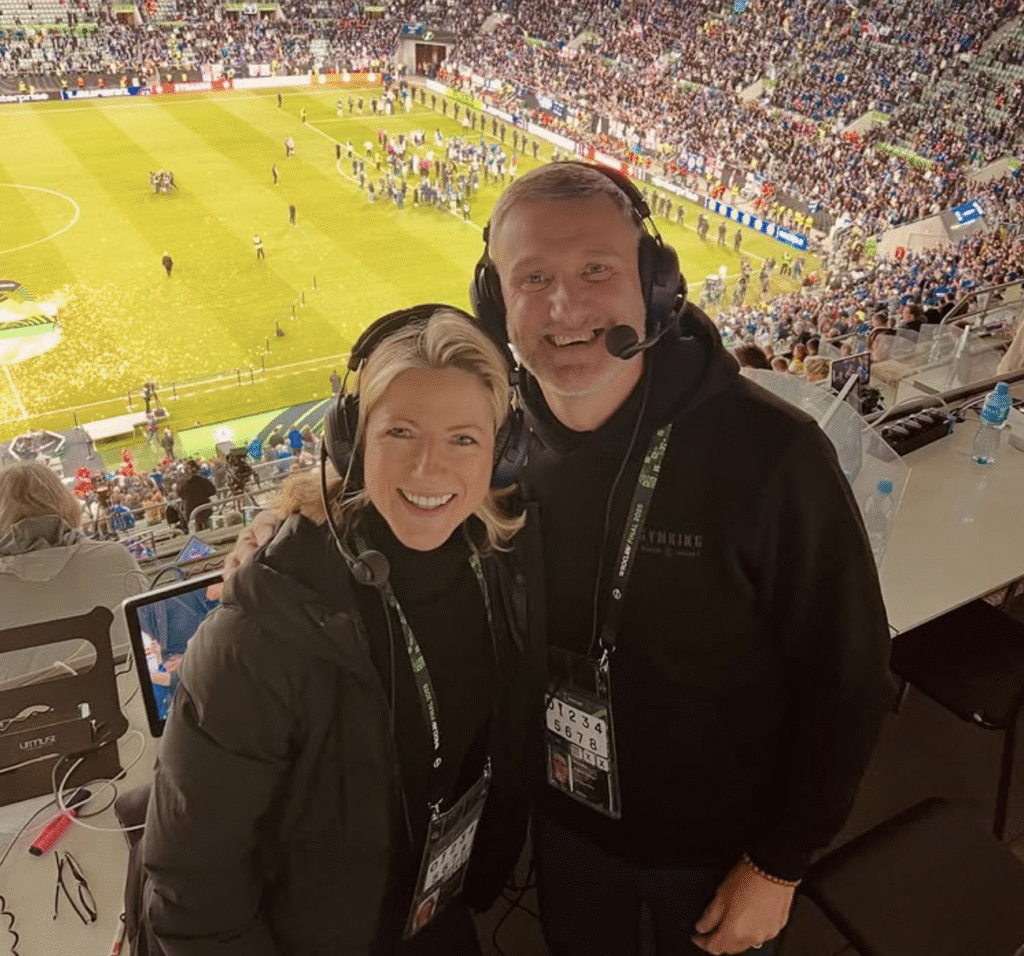
You mentioned Jacqui Oatley (above, right) as well, obviously football, but are there any other female commentators that you really rate?
Absolutely. Alison Mitchell (above, left), the wonder that is.
Just what she does in cricket, and she really was the first female women’s cricket commentator.
She just blows my mind, especially because she covers a sport that travels around the world permanently.
I could not do that.
I just find that incredible.
Then I got to work with Caroline Barker when I was starting out. She didn’t do much football commentary when I knew her, she was more of a producer and a presenter, and she moved into it. And she did the commentary for the BBC for the gold medal netball match for the Commonwealth Games.
That was amazing because you have this semi-licence in commentaries where – as much as you have to be objective – I remember when England were tracking back down the court, I watched it back and she says: Come on England, go on, take it, take it!
And it’s just something that’s really stuck with me of how sometimes you can just get away with moments like that.
She picked it just right to do that against Australia, the dominant force in world netball for years; to steal it in their backyard.
She picked a moment, and she got it.
And yeah, loads of the football commentators.
I love Robyn Cowen. She’s incredible.
Vicki Sparks, I absolutely adore.
They are just all-round good humans who do brilliant things.
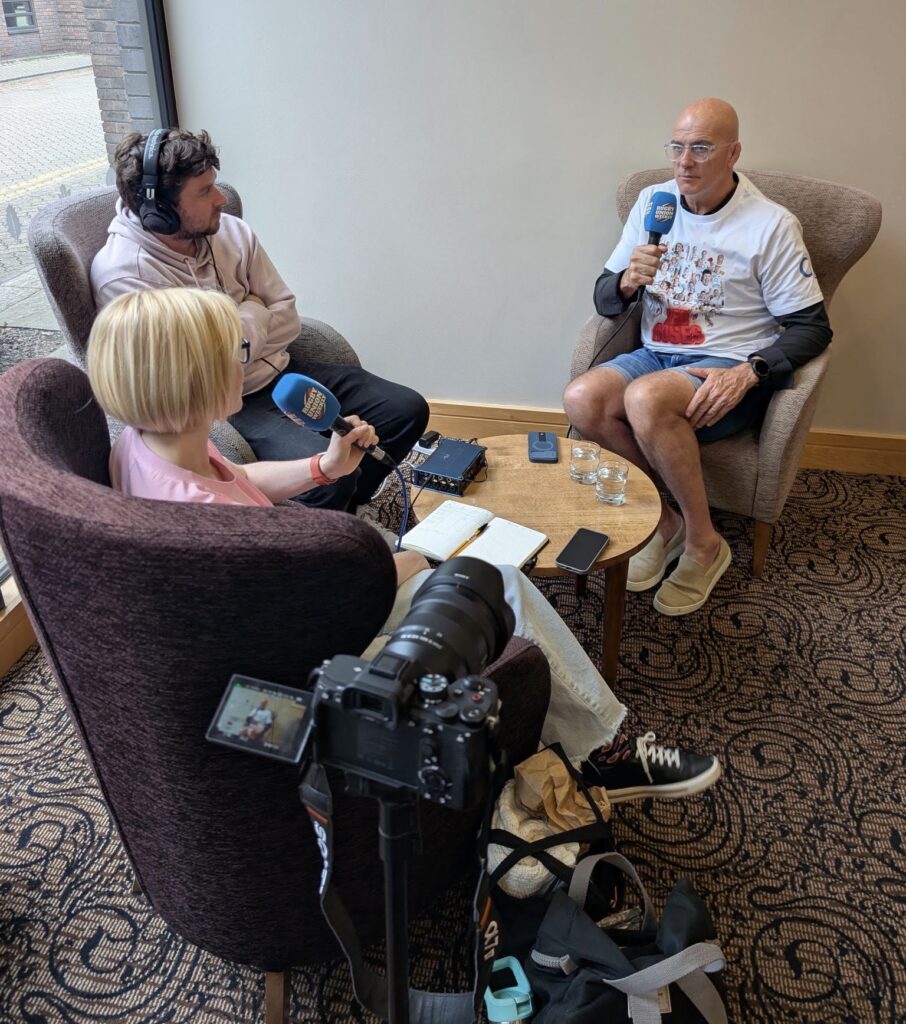
You mentioned the difference between radio and television. Which would you say you prefer and why?
Oh, always radio.
Radio’s so much more fun.
It’s enjoyment, it’s laughter, it’s a conversation.
If the match is appalling, you can have a lot more fun with it.
Whereas, if it’s bad on the TV, it’s really hard to try and sell it as any better than it actually is.
Yeah, radio is just such a lovely, warm, gorgeous family.
And it’s how I started out.
So that will always be where my love and affections lie.
Radio’s so much more fun.
It’s enjoyment, it’s laughter, it’s a conversation.
If the match is appalling, you can have a lot more fun with it.
Whereas, if it’s bad on the TV, it’s really hard to try and sell it as any better than it actually is.
Yeah, radio is just such a lovely, warm, gorgeous family.
TV comes with more pressure, more scrutiny.
And that’s something I hugely respect.
It pays better doing TV.
No two ways about that.
But at the same time, if you said where would I most like to spend my days, it’d be doing a lovely radio commentary.
You touched on this a little bit, but how important is it to have the right voice, the right tone and pace as well, for female commentators?
It’s really individual.
I think when you’re starting out, you’re told a lot of different things about how you should and shouldn’t be.
And I’d actually say it’s incredibly individual to you, what actually works.
I’d say there’s no hard and fast rules.
The only thing that I do personally is if my voice is getting high, I will pause, and come back in low.
Then also, particularly in rugby, if you think about a team that is pounding away at a try line and is going through phase after phase after phase, you can’t keep getting more and more excited as it goes because it could go on forever.
Actually, the best thing you can do is stop and slow down.
And that’s just as dramatic.
I think the biggest thing is learning the variety in what you can do.
The only thing I do personally is if my voice is getting high, I will pause, and come back in low.
Then also, particularly in rugby, if you think about a team that is pounding away at a try line and is going through phase after phase after phase, you can’t keep getting more and more excited as it goes because it could go on forever.
Actually, the best thing you can do is stop and slow down.
And that’s just as dramatic.
In that just saying one word like “TRY” is as significant as going “try for Jemima Bloggs on her 76th cap in front of an adoring crowd with her mother in the front row as her club Old Titaniums cheer on”.
That’s great that you know all that, and sometimes we all fall into the trap of going: look what I know look what I know rather than just going “TRY!”
She’s a very underrated player, Bloggs, isn’t she?
She really is.
Do you find you’ve changed as a commentator, and I also wonder if you’ve had either constructive or not constructive advice on commentating?
I’ve been really lucky with the BBC, because I wasn’t given too many big platforms too early.
Having said that, I did commentate on some big things.
My first commentary, I think, was 2007.
And the first time I was given a proper big platform – which is crazy to even say – I was given the women’s Rugby World Cup final in 2010.
But this is with respect to where women’s sport was at.
The general sporting population didn’t really care about the women’s Rugby World Cup in 2010.
So while I got that phone call and was bouncing off the walls with excitement, going: oh my God, I’m going to do a World Cup final, it wasn’t put on a major network…
It was on the internet; it was a choice whether you watched it.
So, any mistakes I have made along the way have been in safe places where – yes, I’m held to account on them and I’ve corrected them, but it’s never been on a stage where ultimately I’ve been exposed. I’ve been allowed to learn.
That’s something that I’m hugely grateful to the BBC for.
What’s the difference when you’re commentating on women’s rugby compared to a men’s game. Because you’re aware that maybe it’s a different audience that’s watching and listening.
I thought it was very useful that sometimes you explain things, because you’ve got different viewers for a men’s game. And they don’t necessarily explain it in the same depth, but I could be wrong on that…
You’re right and you’re wrong, because it’s two-pronged.
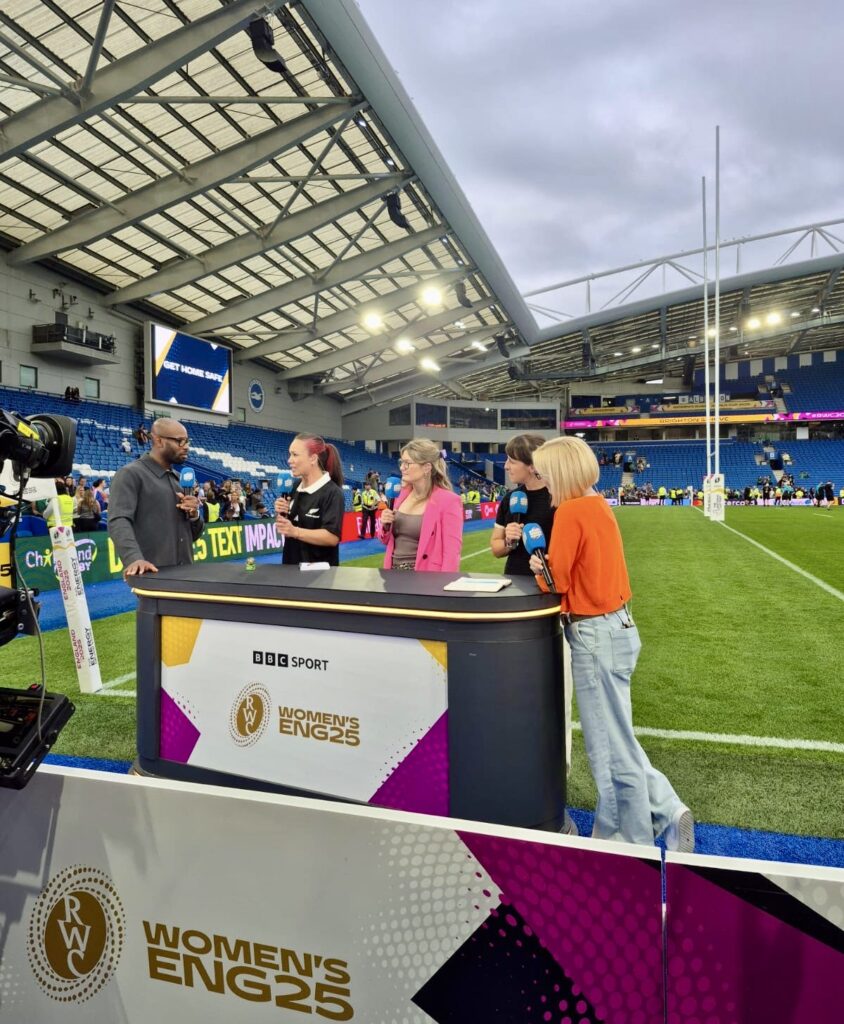
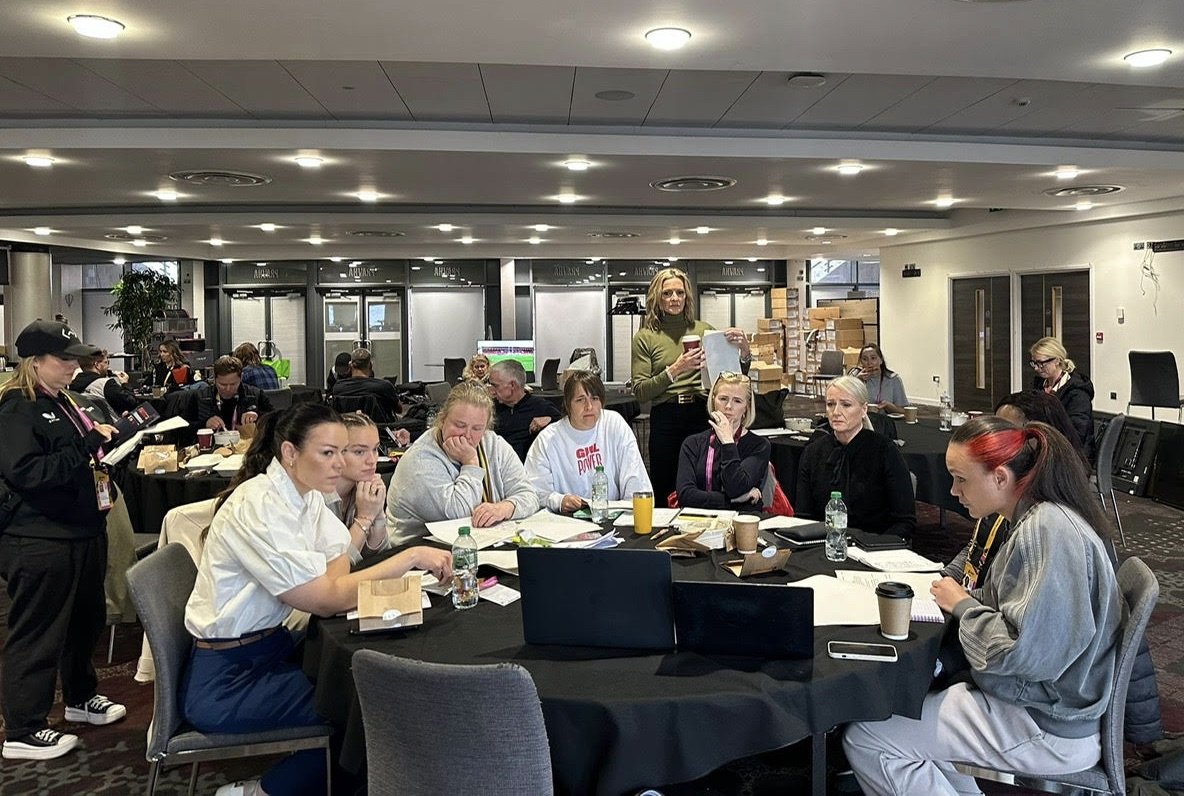
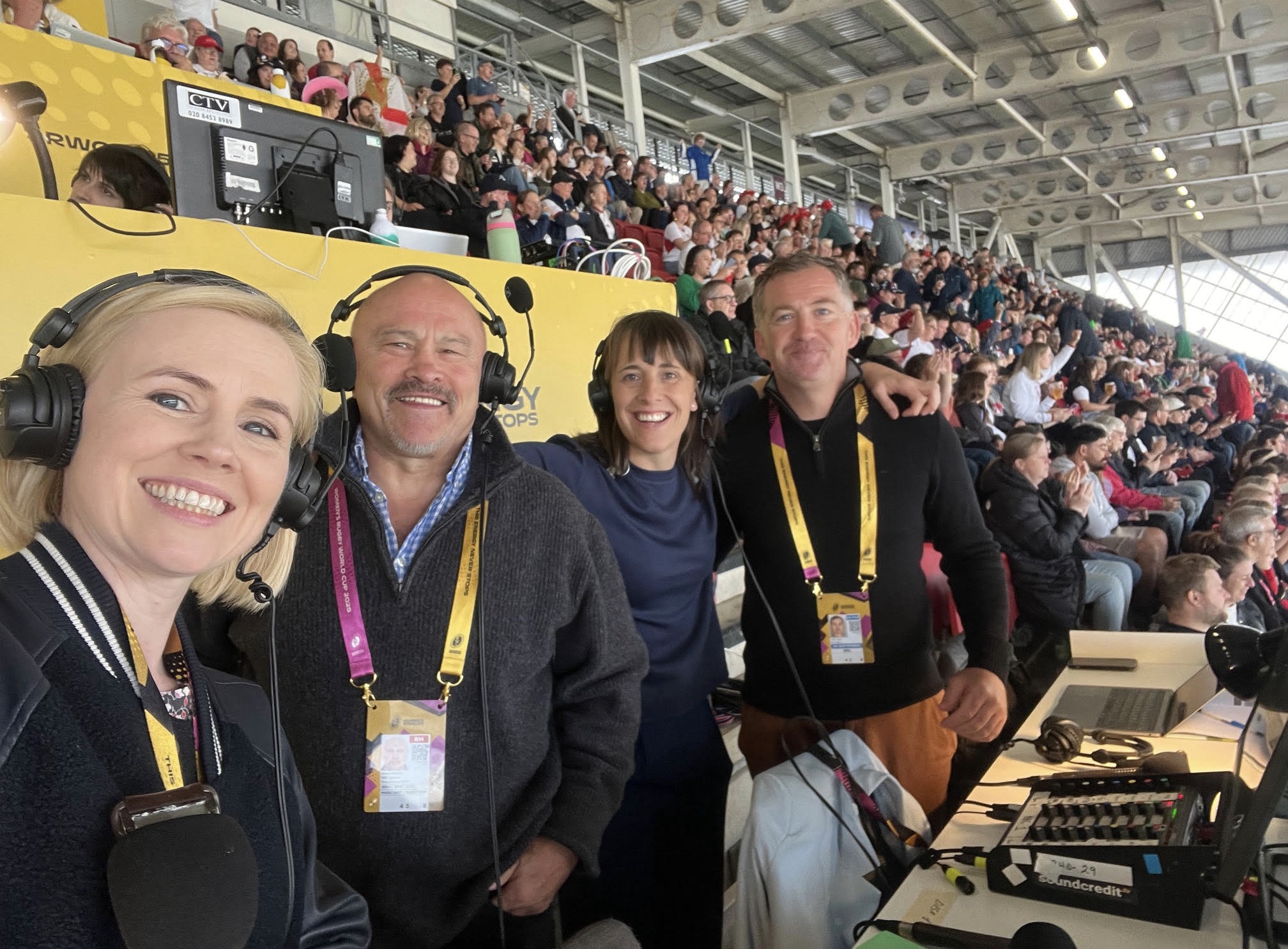
When we did the recent World Cup on the BBC, we had a lot of conversations in the build-up to it (as above).
We don’t just do the World Cup.
We talk about the audience that’s going to be watching that World Cup.
We were well aware there were going to be a lot of new audiences and a lot of old audiences.
But even the old audience might not know the players.
Even for the World Cup final, we had a discussion that there’s going to be people where this is the only rugby match they watch all year.
They might not watch anything again. That’s it.
So you have to make sure they are welcomed into that space and don’t feel excluded.
Because if you start excluding people, you’re not giving the sport anything.
You’re not helping them.
So we have a lot of conversations around about giving information. You know, five points for a try.
That might have been something that we did in the early, pool stages.
Andrew Cotter was doing it in his early pool stage matches with Scotland as well.
We make sure that we take people with us on this journey.
We don’t leave them behind.
Even for the World Cup final, we had a discussion that there’s going to be people where this is the only rugby match they watch all year.
They might not watch anything again. That’s it.
So you have to make sure they are welcomed into that space and don’t feel excluded.
Because if you start excluding people, you’re not giving the sport anything.
In particular for the World Cup final, it was: okay, yes, we need to tell this story.
Some people will be bored of the story, but we’ve still got to tell it for the people who are there for the first time.
And there were millions of people there for the first time.
So it’s hard sometimes, I think if you are a regular sports watcher and you’re deeply entrenched in your sport, they’re going: oh my God, what is this?
Why are you telling us this? We know this.
Sometimes the sell isn’t for you.
Sometimes the sell is for the person so that there are more of you, ultimately.
When it comes to men’s rugby, even in the men’s Six Nations, we will sometimes describe things, particularly around new law.
We have to make sure we explain new law; there is new law all the time in rugby.
I mean, well done, rugby fans, we all try and keep up.
So we always make sure we explain that as clearly as possible. And that’s not just for us as commentators; that’s for the presentation team in making sure they’ve explained it clearly enough.
It’s an ongoing discussion about where the line is, but ultimately you’re not just talking to one person, you’re talking to everyone and someone’s not going to be happy.
Now, you used to be a ref. I don’t suppose you do it anymore.
No.
So is it useful to you while commentating that the referees are often mic’ed up, especially in internationals? Does that add to yours and the viewers’ experience?
I think it’s vital.
Occasionally for a radio match, if there’s a communication breakdown, we don’t have the ref feed.
And it’s almost impossible to give an accurate reflection of what is happening if you don’t have that communication and information.
I mean, one of the simplest things rugby did in the last year was to mic up the refs so everyone in the stadium can hear them and the decision.
I mean, how can you follow a match?
If you’re not following that dialogue, it’s madness to me.
You have to have that information from the referee because it’s not just the outcome of big decisions, it’s the conversation with the captain.
We go out of our way, particularly in TV games, not to talk over the referee.
There’s the odd thing you can, but if you’re talking over the ref the whole time, you’re not following the story of the game.
Because you’ve watched for a long time, how much have the PWR and the Six Nations and the Rugby World Cup changed while you’ve been covering them?
Oh, it’s off the scale.
For women’s rugby, it’s just madness.
Before I was commentating, I used to go along to England, I used to do some match announcing for them at Esher and Aldershot, where it was just their friends and family coming to watch. Nobody was going to watch England women play, which is madness to think of it now.
No contracts; girls wearing enormous shirts that as soon as they got wet, were weighing them down.
Just madness.
To see where England are now is incredible.
You just want the rest of the world to catch up with them.
That’s the biggest thing.
When the Red Roses first played at Twickenham and they got that amazing crowd of 56,000, Everyone was like: women’s rugby’s made it.
And I was like: no! They’ve reached level one.
Which sounds really disparaging, but if you think about how far they’ve got to go to where men’s sport is – just that Twickenham game – I was like, no, that’s level one.
And everyone else has got to get to level one before we even think about going up the scale.
That’s for me what’s got to come next.
My impression is the skill level has increased massively, maybe in the last decade?
Yeah, definitely.
And part of that – and I think you’re right there – is when I played rugby, the majority of women around me that were playing, we all picked it up around 16, 18, when you went into sixth form. Or you picked up a ball when you went to university.
So footballing skills were very rare.
Some girls had played a bit of football in that time.
Handling skills were always good because of girls played a lot of netball, but actually the footballing element of it really wasn’t there, other than the odd specialist.
The biggest thing that you’re seeing now is just the all-round athletes.
Because there are so many girls in rugby clubs now coming through from a young age, whether they’re playing minis, having that time with ball in hand and ball at feet is just completely incomparable from when I started out and when I’d been playing at university and in sixth form.
Handling skills were always good because of girls played a lot of netball, but actually the footballing element of it really wasn’t there, other than the odd specialist.
The biggest thing that you’re seeing now is just the all-round athletes.
So yeah, I think it’s got another number of levels to go yet.
I think it will be incredible to see where it could end up.
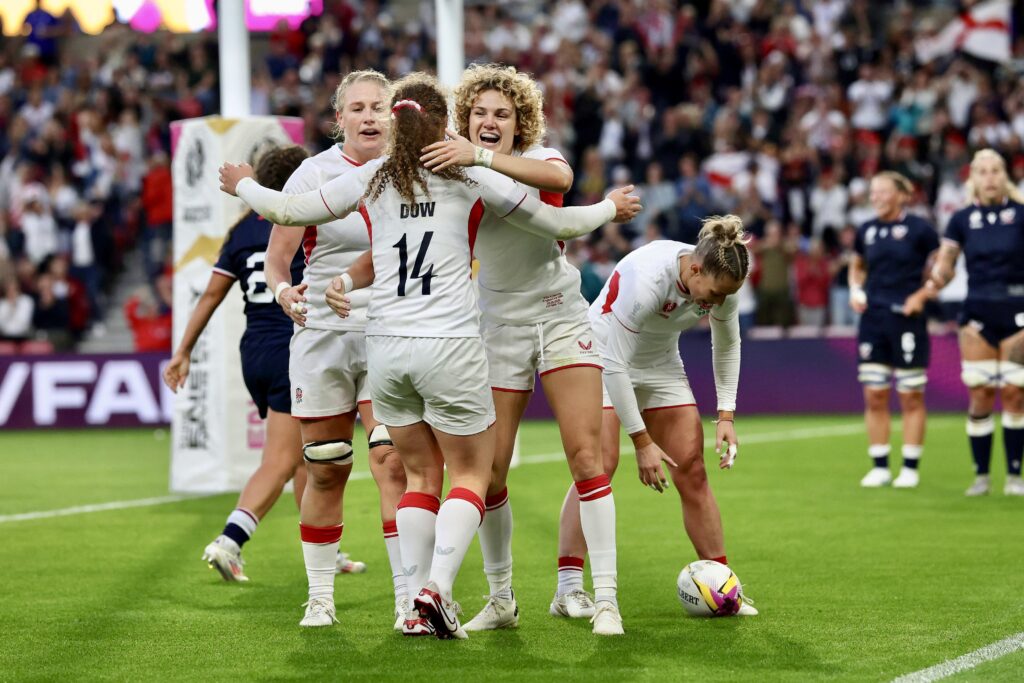
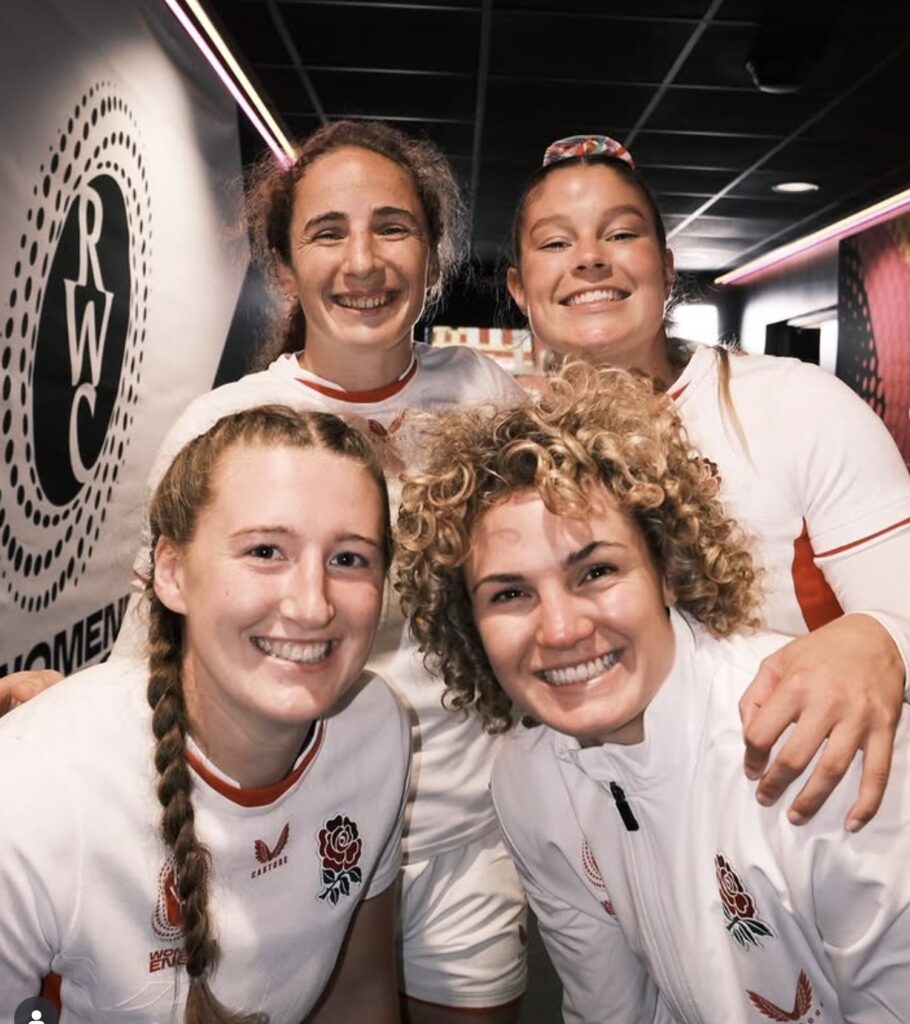
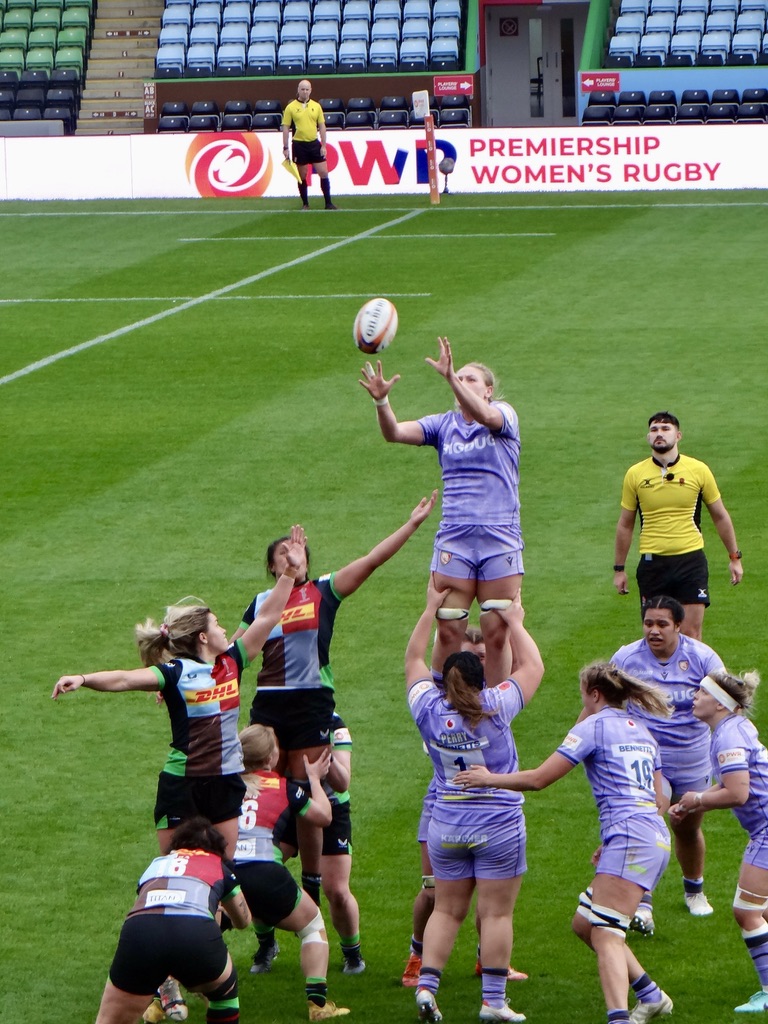
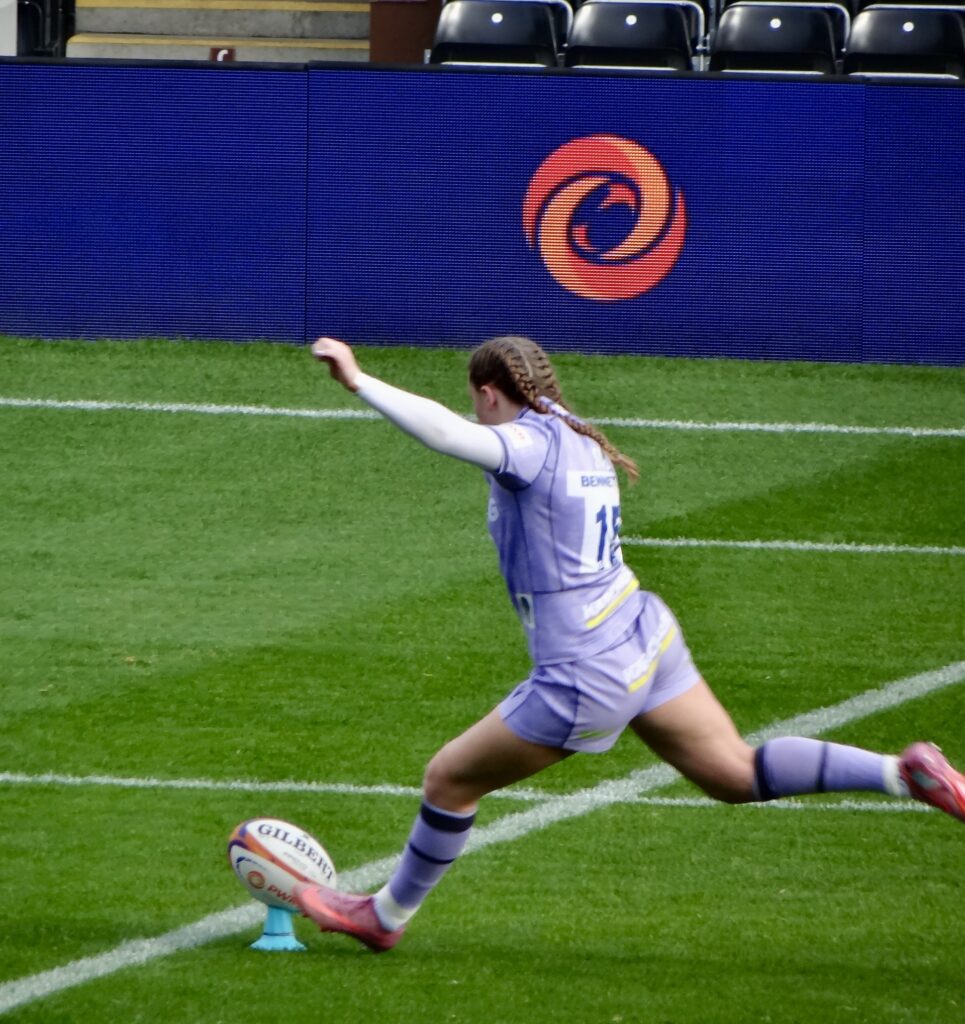
I love watching line-outs, the way someone like Zoe Aldcroft (above, left) rises up. The kicking game as well. Emma Sing (above, right) and Zoe Harrison are unbelievable. Pre-match, Sing walks around to each corner of the ground and drops a bit of grass, that kind of thing.
They prepare like you prepare for your commentary. They prepare so meticulously.
Also just the place kicking.
I can say, there’s incremental evidence of this, but the place kicking from when I started out, you’d be lucky if one international team had a reliable kicker.
Even then, reliability was questionable.
While as the distance and the accuracy they have now, again, is one of the massive incremental changes that we’re seeing from girls having started younger.
If I said there’s an art to commentating – which I think there is – what is it?
Be prepared.
As long as you’ve done your homework, not that much can go wrong.
I think maybe the art is also a passion for what’s in front of you and caring that you do a good job.
So I’d say homework and care.
Be prepared.
As long as you’ve done your homework, not that much can go wrong.
Maybe the art is also a passion for what’s in front of you and caring that you do a good job.
Remind me, what was your job title when you first joined the BBC?
Well, my first ever job was I read the Traffic and Travel for BBC Radio Devon and Cornwall.
In Exeter.
I’m from Cornwall, so I can empathise.
Well, you probably listened to me absolutely bastardising all the Cornwall place names and getting in trouble on a daily basis!
If there are any young women or girls who fancy doing the same thing as you, what would your advice be?
My advice is the same to everyone.
You need to have a background in some kind of public speaking or broadcasting.
Take any opportunity going in that arena; don’t think it has to be commentary.
As we just said, I read the traffic and travel for two years.
It’s an excellent art in being concise and accurate and making sure you do your homework and pronounce things correctly.
I did a lot of hospital radio when I was starting out as well.
There is no kind of broadcasting or speaking out loud that will prevent you from becoming a commentator.
And just take your time, be passionate, do your homework.
One of the reasons I trained as a referee was yes, because I wanted to stay involved in the sport when I couldn’t play anymore, but it was also because I wanted to understand the sport better.
That gave me a great training ground, and it’s been invaluable in my career as well.
Is there a way that we can get more women into jobs like yours?
It’s all about opportunity, as there are only so many matches ultimately that need a commentator.
I would say: being really honest, it’s not going to earn you a huge amount of money.
I mean, I love my job, which is brilliant.
Anyone who is interested, anyone reading this, send me a message.
I’ll talk to anyone about how you go about the different pathways.
There is no set way, there is no commentary school where you go in, you come out, you get a certificate and then you’re a commentator.
It does not work like that, unfortunately.
To get more girls into it, just hearing the female voice is massive.
I love when Claire Thomas is doing matches.
And we do need more women coming into this arena, but there is also a limit of what is available.
But anyone who is interested, anyone reading this, send me a message.
I’ll talk to anyone about how you go about the different pathways.
There is no set way, there is no commentary school where you go in, you come out, you get a certificate and then you’re a commentator.
It does not work like that, unfortunately.
Do you think – for women’s sports to grow – everything should be free-to-air?
A balance of free-to-air is always the answer to that one because you need a mixture of what that free-to-air looks like, whether that be BBC or ITV, because ITV can be funded through adverts, although that’s on the way down.
There is no one-size-fits-all.
Yes, an element has to be on free-to-air.
I think that’s really important, but at the same time, there is also value in paying for it as well.
Finally, what makes you love rugby and especially women’s rugby so much?
I played rugby, and particularly my friends from university are friends for life from the rugby team, and they are my easiest friends to spend time with.
There is something about being in a rugby team, where there are no airs or graces and it doesn’t matter what shape you are, what you look like, you will add value to a team.
Sometimes that’s not even playing on the team.
Sometimes it might be that you are the club secretary or social secretary.
Everyone can add value to a rugby team in some shape or form.
And the fact that rugby provides that platform is why I’ve always been hugely passionate about it.
There is a home and a family for everyone there.
Photos: Sara Orchard, Helen M Jerome, Instagram