
DISRUPTORS! – The Business of Football Summit
Now in its eighth year, the Financial Times Business of Football two-day summit was a rich mix of virtual and in-person events, and reflected the growing impact of women’s football in a handful of panellists and two dedicated events. Helen M Jerome attended and made notes!
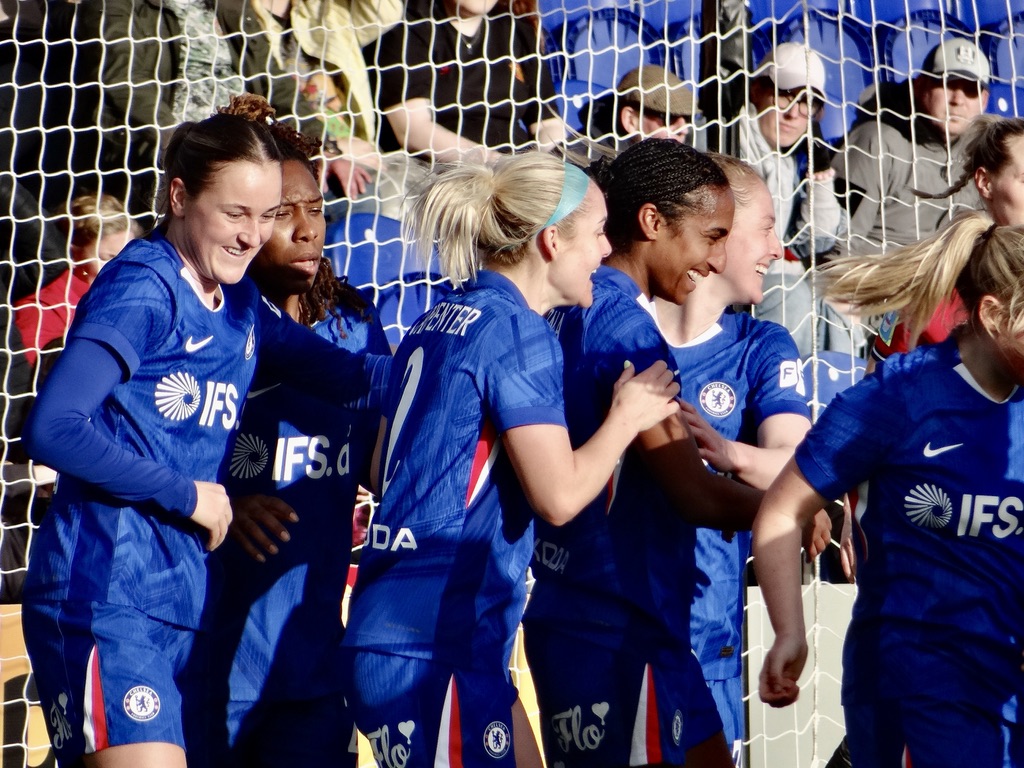
First off, let’s focus on the specifically ‘women’s football’ labelled events, both very different, but bundled one after the other. And the focus of the initial discussion, ‘New models for growth’ was pretty much 100 per cent Chelsea Women, as both panellists represented this same club.
Excellence
Seven Seven Six Founder and General Partner, Alexis Ohanian and CEO and President of Chelsea FC Women, Aki Mandhar had a wide-ranging discussion, starting with Ohanian’s admission that he got involved with women’s football after rage-tweeting. He received quick feedback from Alex Morgan, and next step was him helping Angel City with its launch and investment.
I knew I could market excellence in women’s soccer
Alexis ohanian, minority owner, chelsea women
“I knew I could market excellence in women’s soccer,” said Ohanian. And he was encouraged to invest further by the Lionesses triumph not once but twice in the Euros. So he now has a minority stake in Chelsea Women, and reckons they should be the first billion-dollar women’s club.
As for Mandhar, she says she stays away from the football itself, instead focusing on things like fans’ experience, adding that 50% of their fans have never been to any football game before. So they look at what happens pre- and post-match, as new fans want a whole day out. She also says that she doesn’t mind people talking about them, because it means they are relevant.
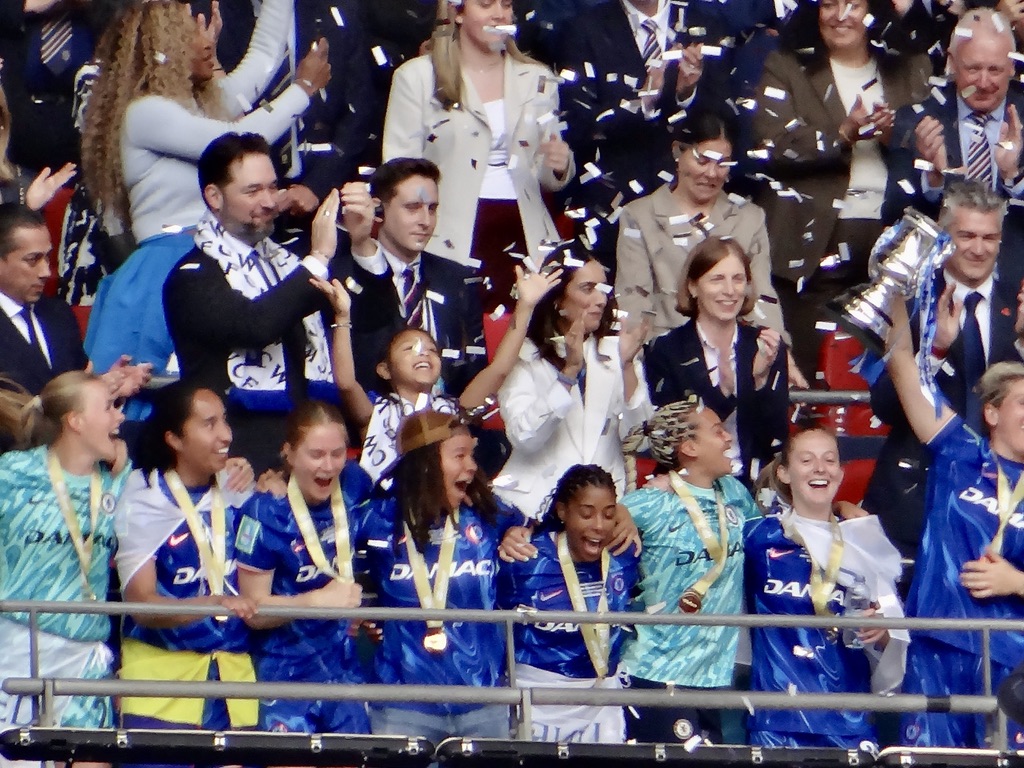
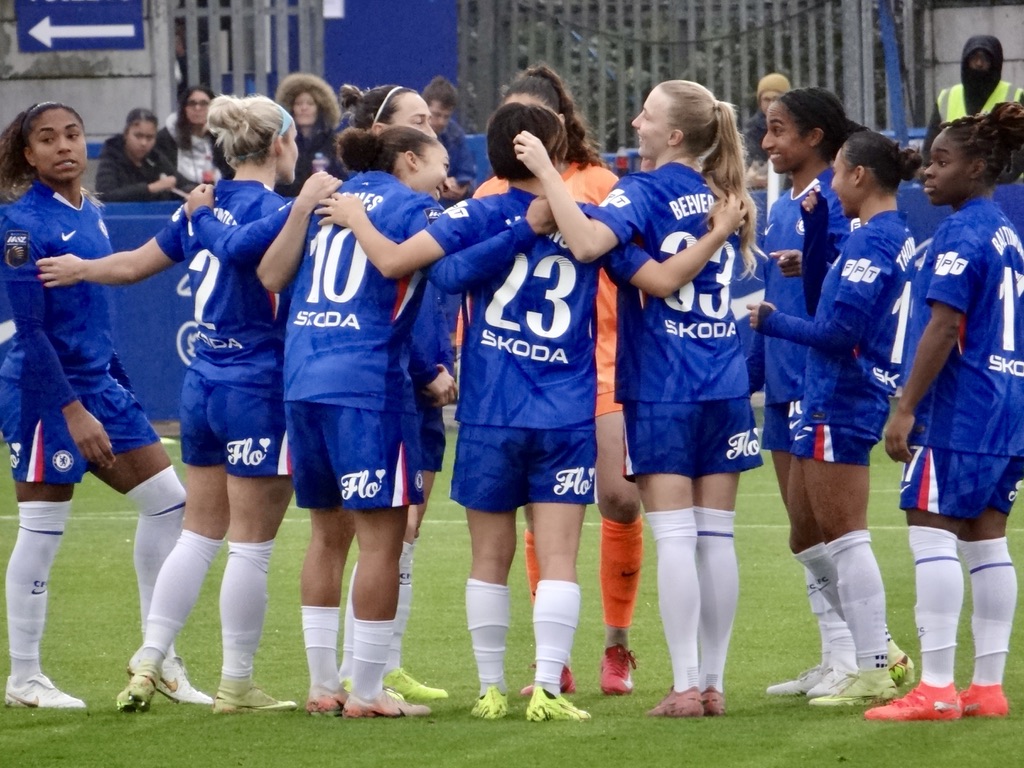
Ohanian (above left, with his daughter, celebrating Chelsea’s 2025 FA Cup success at Wembley) says the split away from the men’s team means they now have autonomy, with all those involved thinking only of the women’s team, “we underwrite the whole thing from the women’s side.” He also expects others to get involved…
Mandhar says the women’s team can focus on data, menstrual health and sleep, as well as marketing and commercial matters, describing Ohanian’s experience in this as “game-changing” for them. Proudly, she spoke of Chelsea Women having more social media followers than 11 Premier League clubs, with the players being more accessible and their authentic stories propelling this. So brands get more reach by association.
Finally, Ohanian feels pay equity will get solved, labelling anyone who doesn’t see value in women’s football as jerks!
Growth
The main women’s football discussion was labelled ‘investing in a major growth story’, which you might say backed up Ohanian’s declaration. Speakers included Nadine Kessler, UEFA director of women’s football and very familiar to those who watch the draws for each round of each European competition. She was joined by Kay Cossington, head of global women’s football, Sixth Street, and CEO, Bay Collective, fresh from her success with the FA.
Then there was lawyer Ian Lynam, Founder of Northridge, who has advised across many sporting investments, including Michele Kang on her acquisition of London City Lionesses. As for London City Lionesses themselves, they were represented by their CEO Martin Semmens.
All had their goals and visions, with many overlaps and agreements, and a few stats to back them up.
Kessler talked of the success of Euro 2025 in Switzerland defying expectations, with 97% of capacity sold across the entire tournament and a big increase in prize money.
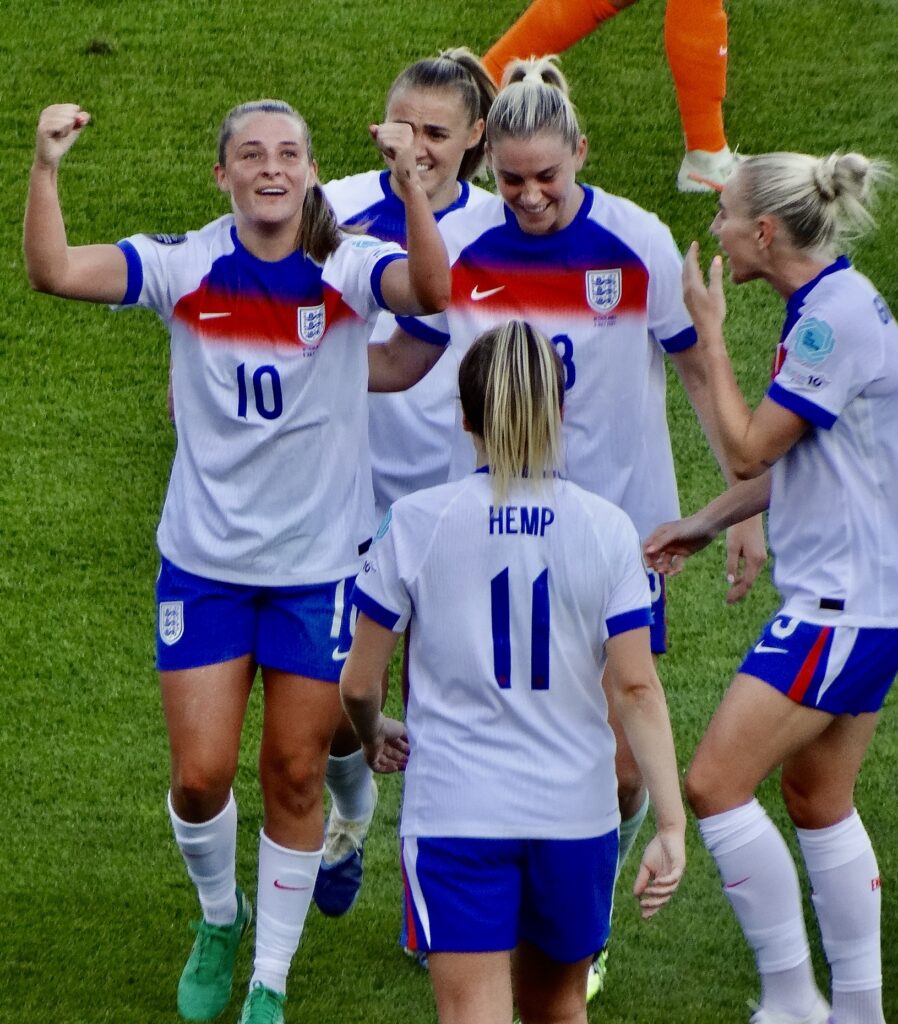
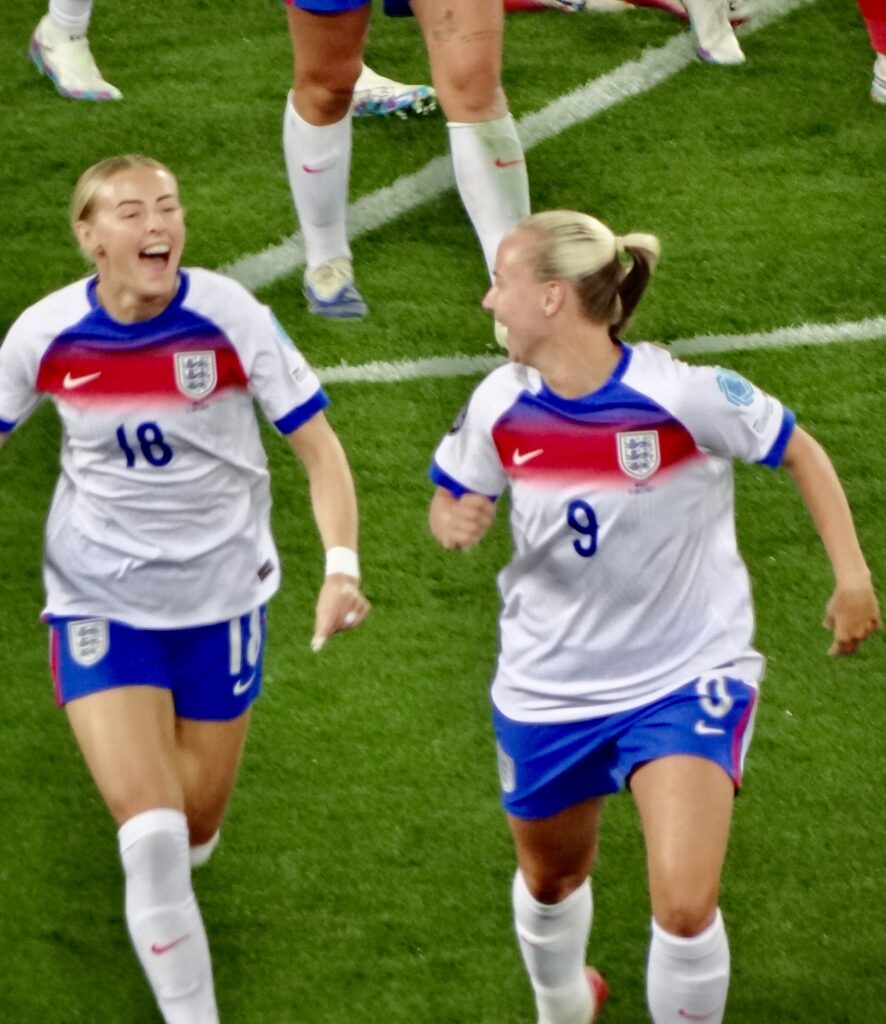
Cossington spoke of the FA aiming to create household names and fill stadiums, and says the Lionesses winning the Euros has transformed the game and given us role models. The challenge now is to replicate this in the domestic game.
Semmens noted where we are in the life stage of the WSL, and how we need to get to the European level – citing the example of watching Lyon take on Arsenal Women in a thrilling Champions League match – while admitting the domestic league is only eight years into the journey as professionals.
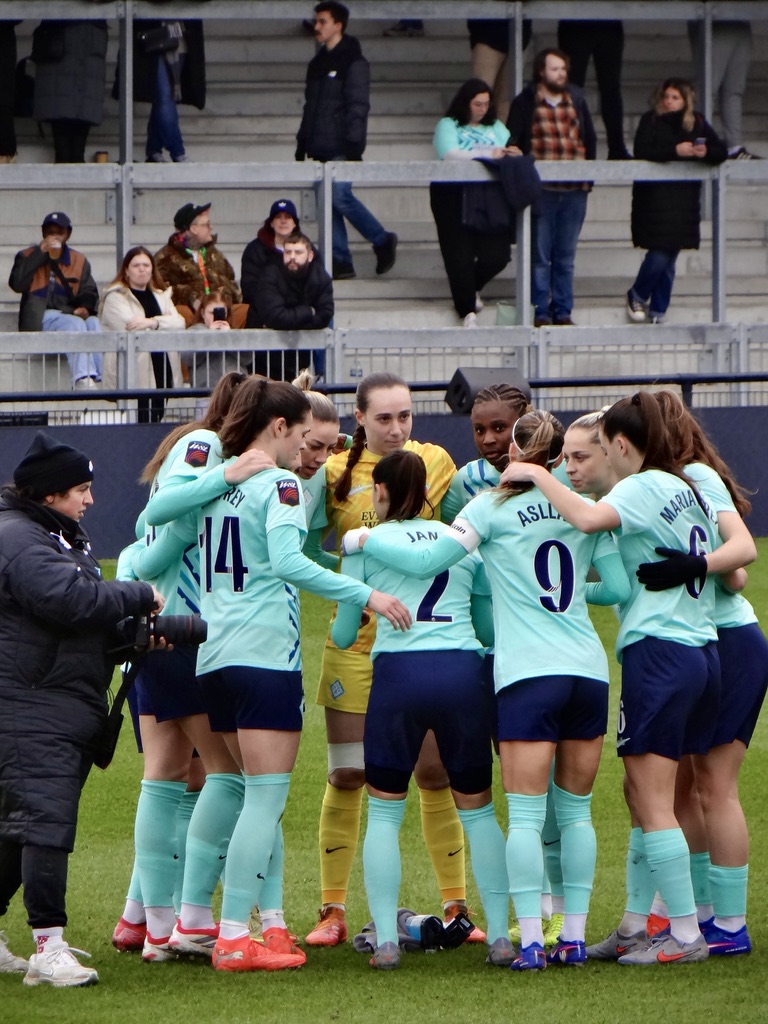
Lynam felt that it’s important to treat it differently, as it’s a nascent business, and said that people are investing because it’s different.
For Kessler, there is much overlap with European men’s teams, with 60% of women’s teams being affiliated with their male equivalents, although there is some leeway to do things differently.
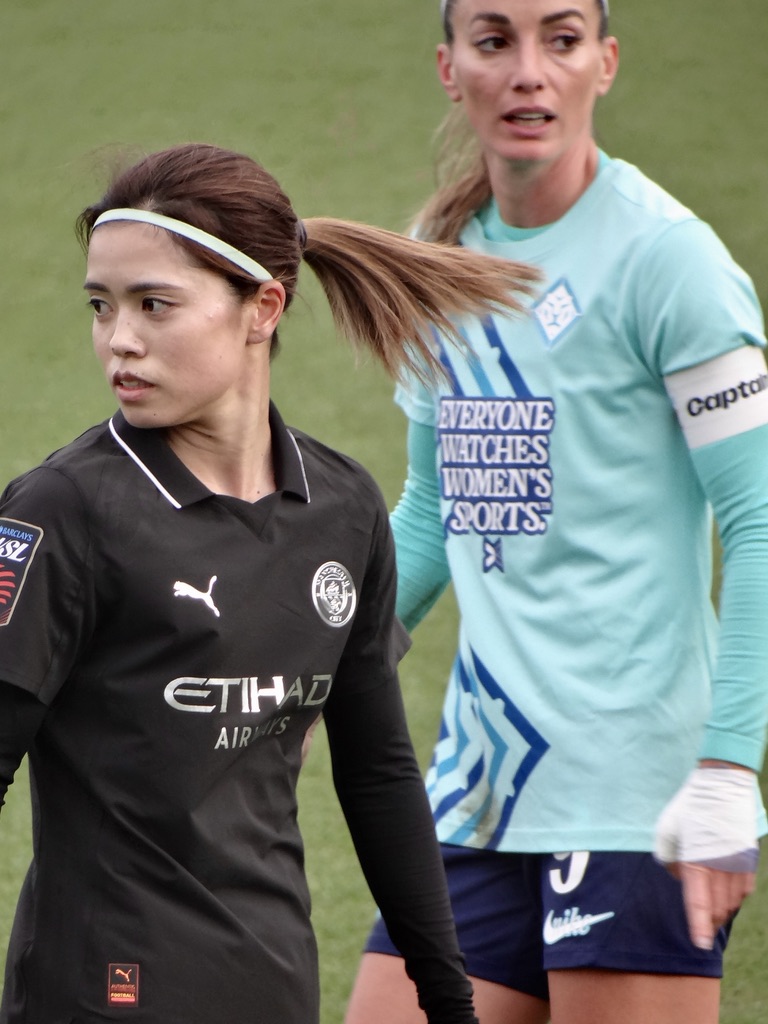
Semmens added that they don’t see themselves as a small version of the men’s game at LCL (above, v Man City). As an independent club they are all focused just on the women’s game and commercial partners and brands.
Independence
This was echoed by Lynam, who reckons it needs people running it who care only about women’s football, and he cited the NWSL as having the advantage of only featuring independent teams.
To sell it, you need to know it. It’s remarkably different. So don’t just shrink it and pink it!
kay cossington, head of global women’s football, Sixth Street, and CEO, Bay Collective
Cossington sees this as a natural evolution. Some leagues demand the men’s teams have a women’s team, and although there are now carve-outs, splits and separate independents, we shouldn’t rush towards this. “To sell it, you need to know it,” she says. “it’s remarkably different. So don’t just shrink it and pink it!”
People want to partner the Lionesses, added Cossington, because of what they stand for, with authentic partnerships. And all this is backed up by the rather brilliant statistic that 82% of purchasing decisions in households are made by women.
For Kessler, there is the question of where we allow the women’s game to exist, to thrive and excel. Can we challenge kick-off times for families? We need to get these right.
At LCL, Semmens says they think of investment before revenue, declaring that the club spent less on all their players in one year than Man United spent on just one agent’s fees. And yes, there will be wage inflation, but they need to keep it under control.
Semmens highlighted the importance of the personalities of the players, the strong characters, who bring in investment to every part of the game and by extension, help future Lionesses. Above all, LCL know they have a different fan base, and want to attract people who love the club.
Lynam noted the imminent salary floor for the WSL and WSL2 – both capitalist and “organic”, but also “the right thing to do”.
Kessler wondered if Financial Fair Play should come into the women’s game and said they need a holistic view across Europe. The goal is to drive investment, she said, but if the rule helps, why not?
Fostering talent, according to Cossington, should be their key, collective goal. “We are growing this together. We all have a role and responsibility. Where is the next cohort of players? Because if you can see it, you can be it.”
Influence
Dotted around other discussions across both days were various other women in influential positions in football. Here are some highlights…
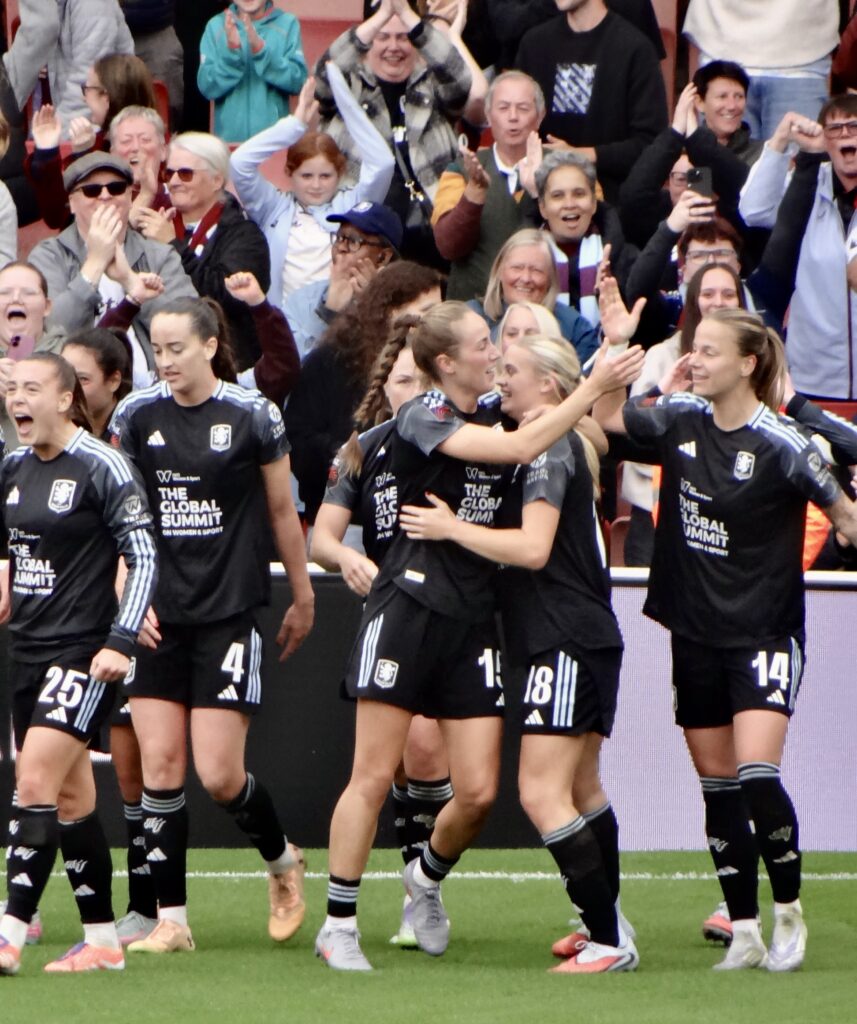
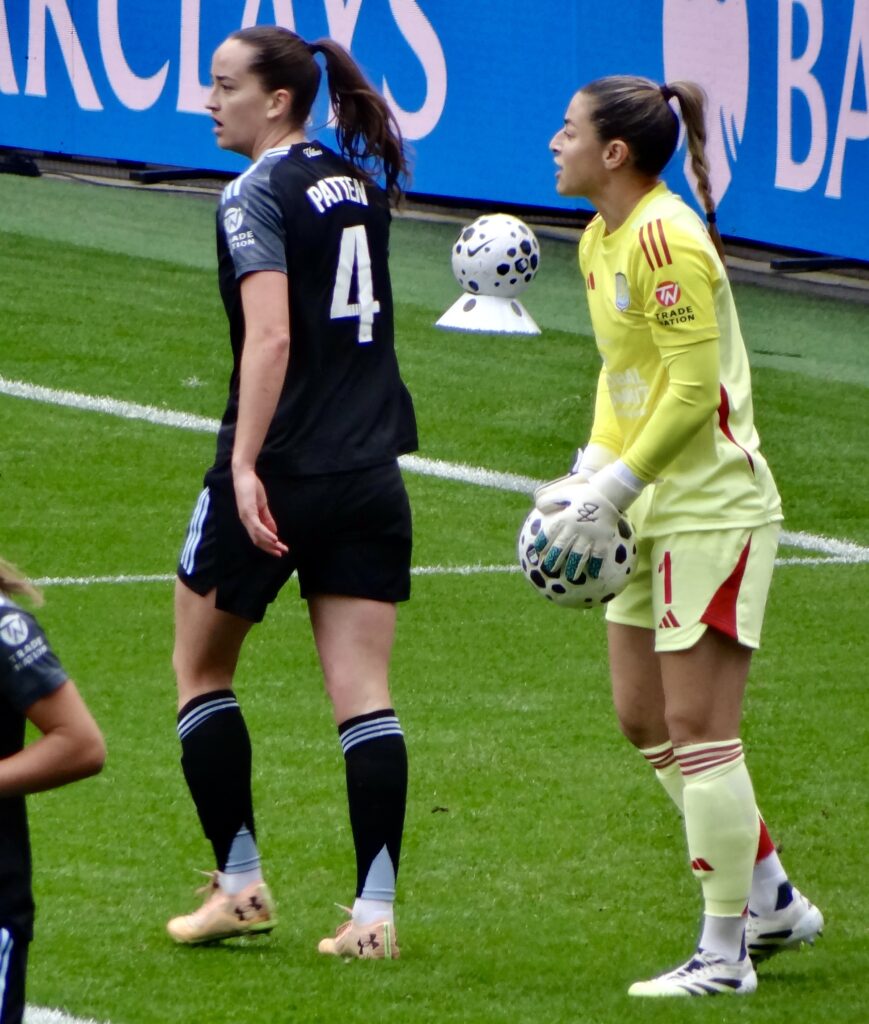
Maggie Murphy, CEO Aston Villa Women (below), previously with Lewes:
We’ve had investment on the sporting side, now we need it on the business side – and to build our identity and support.
Lina Souloukou, CEO Nottingham Forest:
Stadiums need to be multi-use, not just for 27 match days.
Anna Guarnerio, Serie A, International Media Rights Director:
The audience is scattered, segmented. We must be relevant to very different territories. For the US, showbizzy. For Japan, manga and anime content. We do in-house production and started ref-cam.
Iris Alameddine, Founder and CEO Grandeur:
Digital gives us the opportunity to connect daily with fans. They have a shorter attention span. The 90-minute game is not enough. We aim for the core sports fan and the casual fan, and it’s personality-driven. The more you engage, the more you can monetise. We have to create other milestones – apart from trophy lifts etc – that are in the DNA of the club, also heritage, values, excellence. We build reach rather than staying niche (…and tell a story, like Wrexham.)
The more you engage, the more you can monetise. We have to create other milestones – apart from trophy lifts etc – that are in the DNA of the club, also heritage, values, excellence. We build reach rather than staying niche
iris alameddine, founder and ceo grandeur
Jennifer Mackesy, Co-Owner, Gotham FC, Minority Owner, Chelsea Women, Co-Founder World Sevens Football (W7F):
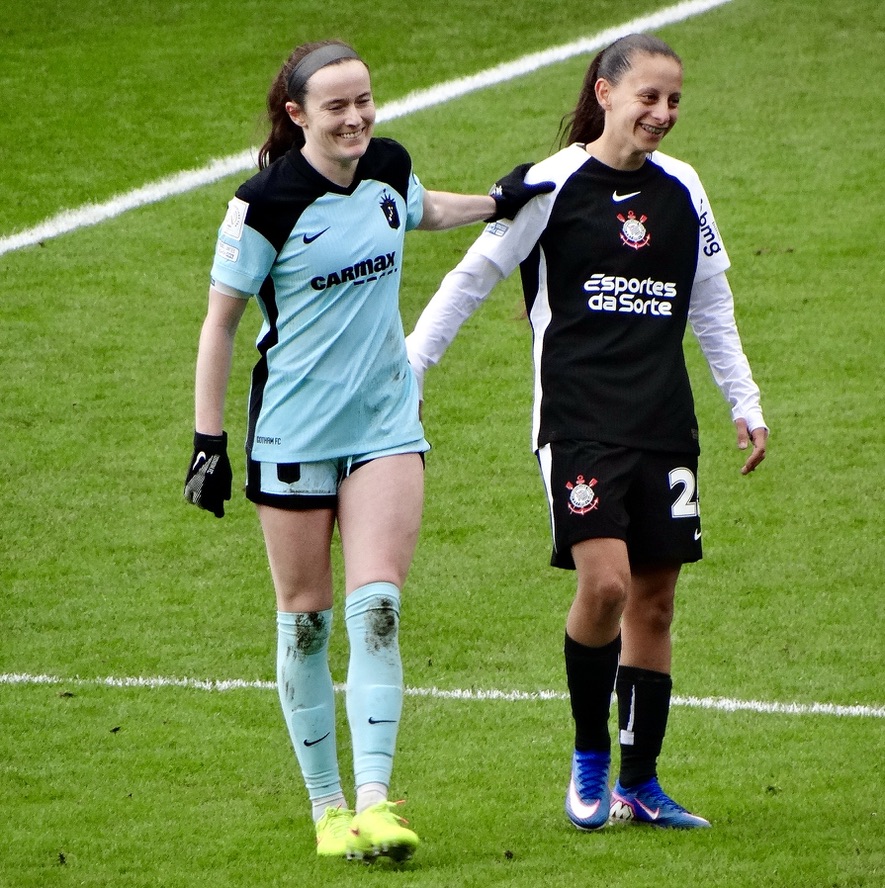
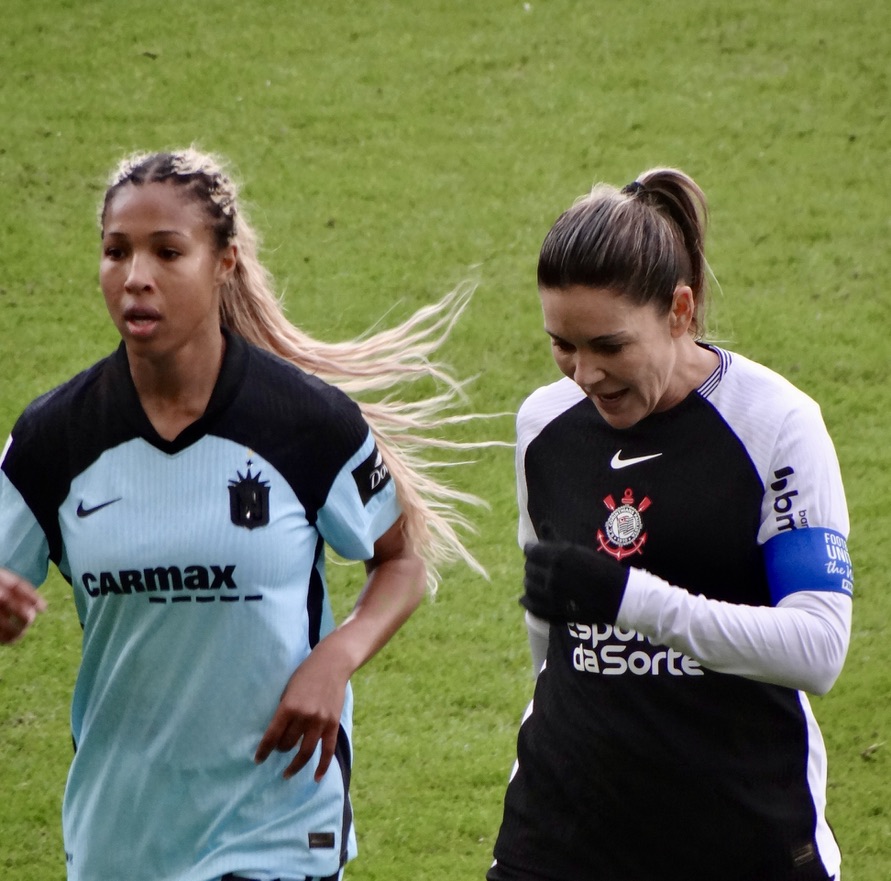
We started the World Sevens as a grand slam, three day event, inspired by beach volleyball. We made it fan-forward, creating an intimate experience with player walkouts and goal celebrations, bringing together entertainment and football. Women’s football is ripe for innovation… and Gotham (below) still feels like a start-up.
Maria Karlsson De Cecco, ex-player, agent and CEO, CMG:
Most at CMG are former athletes. We had no data in the women’s game when I was a player, like transfer data; it’s very recent. There’s still no data from Serie A, so you cannot get information on players for transfers from there.
Data on things like ACL injuries is work in progress. At FIFPRO they are getting more research and data, including players who have had, say, two or three ACL injuries. We can see return on investments now, with 24 year olds the key age for players – and this will go down in age as people see these returns. But with lack of data, there is risk, and we need data on marketing too.
There have been bonuses in the game for a while for goals and assists and there are now team bonuses for set-piece goals – the data can affect employment contracts – so teams may now celebrate corners!
Women’s football is in its heavy-duty experimental phase now. We want more people obsessing about women’s football at two in the morning… and investing
kara nortman, co-founder angel city, managing partner monarch
Lauren Holiday, ex-player. Director, Mercury/13; Adviser Avenue Capital:
We have expansion plans, I look at talent pathways. We don’t have to follow the men’s blueprint. We differentiate; our ecosystem has its own identity.
Kara Nortman, co-founder Angel City, Managing Partner, Monarch:
We are very hands-on. It’s smaller capital, but growing. We are building a fan base and excellent product. We run each club separately, but talk to brands across sports and clubs, best practices. Women’s football is in its heavy-duty experimental phase now. We want more people obsessing about women’s football at two in the morning… and investing.
Already looking forward to next year’s summit…