
DON’T MASK IT! Ex-Arsenal keeper opens up on autism.
In recent years, Lucy Bronze and Safia Middleton-Patel have spoken about how being autistic has shaped them. Their openness has helped create a safer space for other neurodivergent players to share their experiences.
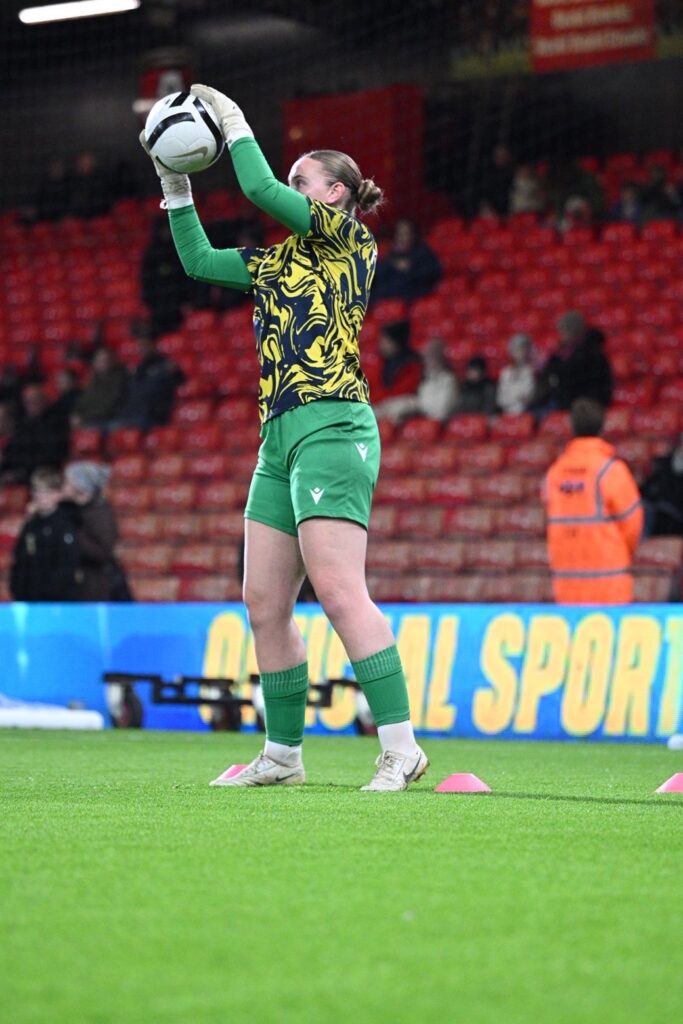
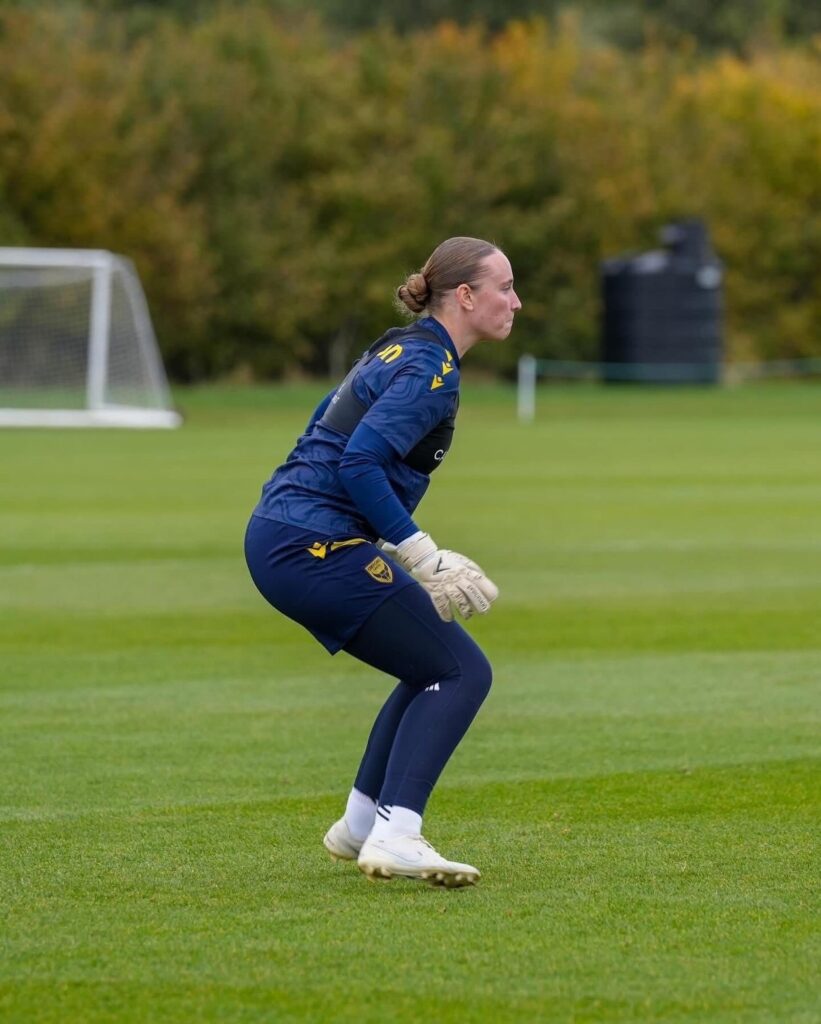
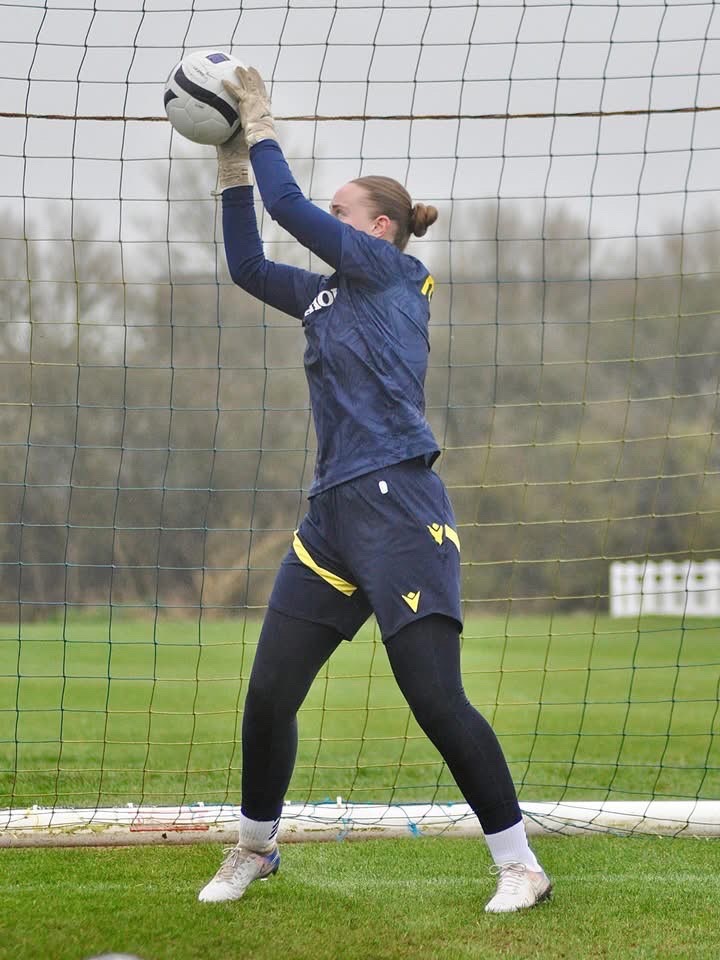
That visibility helped former Arsenal academy goalkeeper Maddison Millington-Stanbury share her own autism story. Having begun her senior career with Oxford United this season, Millington-Stanbury wants to pay it forward. In an environment where she feels able to thrive, the 20-year-old wants to be a role model for other young neurodivergent players.
In this exclusive interview, Clare McEwen speaks to the articulate young keeper about football, autism, and finding her place in the game.
How are you finding it with Oxford so far?
Really good. Yeah, I’m loving it there. It’s amazing for me.
Anything in particular or does it just suit you?
I’ve never been at a club where the players are so tight-knit. We all get along, there’s no drama, you know? Because normally in a girls’ team there’s always going to be some sort of drama, that’s just normal, but with us, there’s been none. We all just get along. It’s so nice that we are just one collective.
Tell me what you love about goalkeeping.
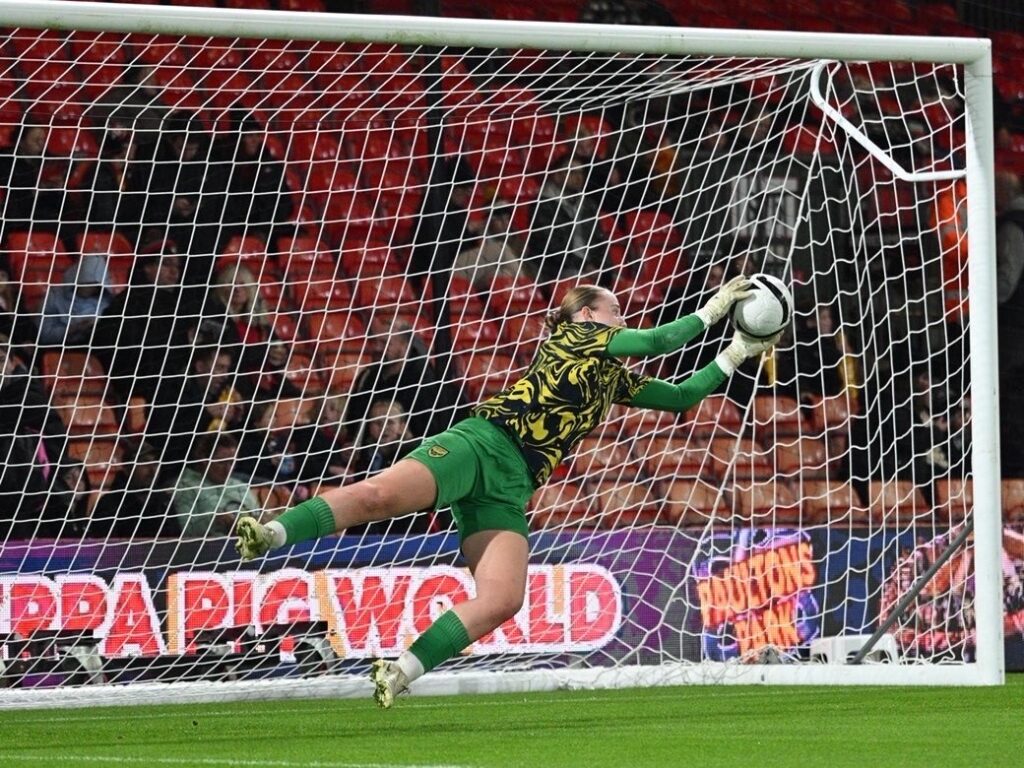
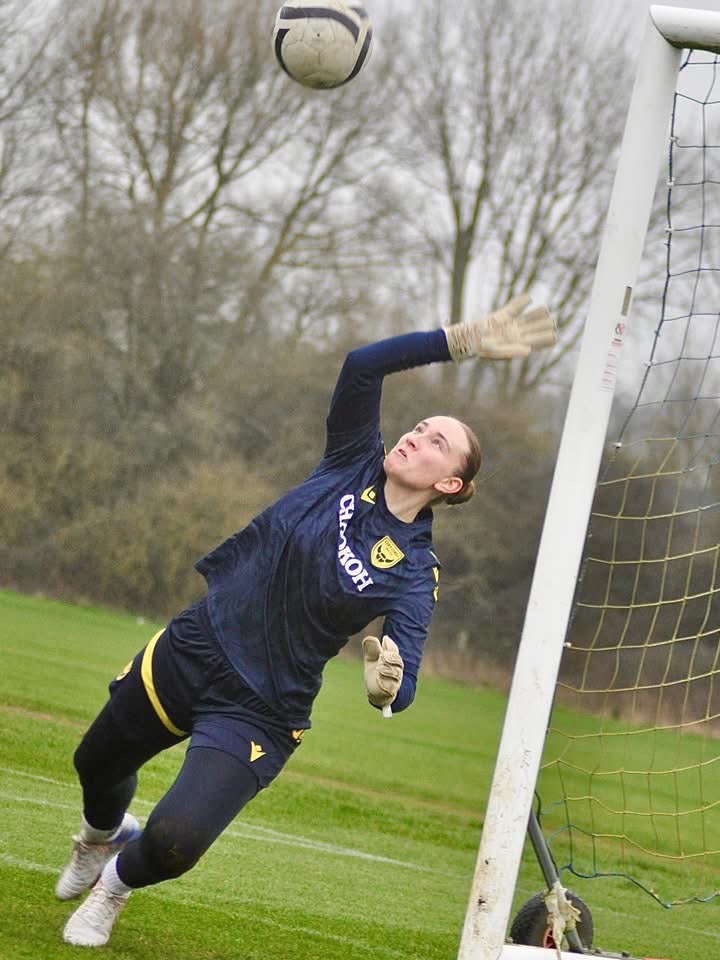
I like the fact that you can just dive. That you can put your whole body on the line for something. There’s basically no rules for goalkeepers apart from you can’t handle outside your box, and I like that.
I like that you’re the last line of defence. I like that there’s a lot of pressure on you. And maybe a lot of people might say the complete opposite, but I just love it because I thrive off the pressure.
There’s basically no rules for goalkeepers apart from you can’t handle outside your box, and I like that.
How important is football in your life?
It’s massively important. If I don’t have football, I don’t even know who I would be. Football is my identity.
People say, oh, you’re the footballer, aren’t you? No-one ever says to me, oh, you’re just Maddison. So yeah, it’s so important to me and I wouldn’t change it.
Have you got goalkeepers who you admire, who you look up to?
For me it’s Mary Earps. I’ve always loved her. I’ve always admired that even though she had setbacks with England, she’s now one of the world-class goalkeepers because of the Euros and the World Cup.
She’s someone that I admire a lot and I’ve read her book as well. Yeah, I would just say Mary Earps. She’s the main one.
Did you enjoy her book?
I did, yeah. It was really good. Fascinating. Obviously, with the repercussions of the Euros recently, I thought it was quite nice to read into it about how she felt, and all that kind of stuff.
You started speaking about being autistic when you got to Oxford. Was that just the right time or was there not an opportunity before?
I had the opportunity at Arsenal. I told a few of the coaches there, but I didn’t really understand myself as a player and as a person with it back then. And I always kind of felt I’d be judged if I spoke about it.
But then at Oxford it was a clean slate. A fresh start. No-one knew who I was so I could be open: this is me, this is who I am. And I wouldn’t change it for anything. They’ve all been really understanding, all the players, all the staff.
So it just feels like you’re able to be you?
Yeah, exactly.
My mind just goes blank when I’m at football. I don’t have any of the outside worries to focus on, I just literally have to focus on stopping the ball from going in the back of the net.
Have they done anything specific to help you at Oxford? Or is it just having that weight off your shoulder?
Shelly, who is Player Care, told me to send a list to her about the things I need. So that really helped and they’ve done everything in their power to fulfil that.
They also know that one of the things for me is I can’t public speak. So in analysis, every week someone new has to speak publicly to everybody and that’s always been one of my struggles. But after a few months now, I finally managed to do it.
Yesterday or the day before, I was standing at the front with a tactics board speaking to everybody, but I never would have thought in a million years I would be doing that. That’s because of the support of the players around me, who made me feel welcome to do that.
How does football help you manage your autism?
My mind just goes blank when I’m at football. I don’t have any of the outside worries to focus on; I just literally have to focus on stopping the ball from going in the back of the net.
I mean, yeah, that’s it. For me being a goalkeeper you’ve just gotta stop the ball going into the back of the net and your job’s done.
So it gives you calm. You’re just in that moment then?
Yeah, and it’s also very straightforward. It’s facts, it’s not it could be this, it could be that. It’s literally one thing. It’s that or it’s nothing.
With Safia Middleton-Patel and Lucy Bronze speaking out more recently, did that make it easier for you to speak out?
Yeah, it did. I think it was more when Safia was coming out about it. Me and her are goalkeepers, she likes Lego, I like Lego. So for me, it was very much seeing her at that high level speaking openly about it.
I’m still very young and I’m at the lower end of football, but If I speak about it now then, wherever I go in the future, they’ll know about me. People will have heard my name. It’s all just a positive.
And by speaking about it, for younger girls who are playing grassroots, if they see someone who’s in Tier Three, they’re like: okay well that’s reachable. Some kids may think that the WSL or WSL2 is unreachable at that age. Whereas if they see me at 20 and I’m here and I’m autistic then it helps them think, okay, that’s a reachable target for me.
What do you think clubs could do to help young players who are neurodivergent when they’re starting out? Because that’s probably not something they’d talk about or even know about.
I think it needs to be more well known. Especially at grassroots because there’s so many girls who may not have a diagnosis yet but may be going through the process of it. Also young girls mask it. I was one of them, I masked it really well, but if I was a manager or coach at that level, I would take time to individually speak to the players, because at that level you’re playing for fun, you know?
It’s not, you’ve got to win. All that kind of stuff, there’s no pressure. So I feel like you can afford to take time to understand each player and also speak to the parents. I feel like there should be an open platform for parents who may have worries about their child going into a new club or things like that, so they can openly speak to them about it and also have that same sense of security for them.
There’s differences for females and males too. It’s less obvious to see the signs in girls. Whereas boys it’s quite obvious for most of them, the signs of ADHD or autism. So I feel like there needs to be more understanding of how girls and women mask it and also to see the signs when they may not be clear.
Young girls mask it. If I was a manager or coach at that level, I would take time to individually speak to the players, because at that level you’re playing for fun, you know?
What would you say to young girls who maybe love sport, but find those aspects of being in a team environment a bit difficult?
I would say don’t shy away from it. Step out of your comfort zone, but also be open. If you’re struggling, speak to someone. If you need extra help – I can’t really say much because I always struggle to speak about it – but if you’ve got that safety net of a parent, speak to your parent and then see if your parent can speak to the coach or someone about it, to make your time at the club more enjoyable.
And just have fun. Don’t worry about what other people are going to be thinking of you. You’re at an age where you can just enjoy it. Have fun. You don’t have to worry about anything, just kick a ball or save a ball.
Moving back on to Oxford, how has the season been going, as your first senior season?
Yeah, it’s been good. It’s been a bit up and down, though. I had an injury at the start of pre-season so that was a little bit annoying. Now at the back end of the season, I’ve literally just come back from another injury, but I’m hoping we see out the season on a high and obviously finish as high as possible in the league. And we got really far in the FA Cup [fifth round proper] so that was really good.
The league has gone very well, hasn’t it?
Yeah. It’s a shame, though, because our manager got sacked in the middle of the season. But if we started with the manager we have now, I feel like we could have gone higher in the league. I think we’re hoping to sit fourth, we’re going to be happy with that.
How would you describe the brand of football you play at Oxford?
We have a lot of resilience. I think that’s probably the main thing: our resilience. We’ve had a few FA Cup games where we were losing, I think the main one was against Plymouth. We were losing 1-0 in the 20th minute from a penalty. It got to the 84th minute and we scored and obviously it’s 1-1. We could have just sat there and been like, we’re going to go to extra time and penalties. But no, we scored in the 92nd minute to make it 2-1.
Then it’s the same with Middlesbrough in the next round of the FA Cup. We were losing 1-0 again. We ended up scoring three goals in the space of 20 minutes. So I feel it’s resilience and that we do not give up. We’ll fight until the end. Same with Charlton [fifth round of the FA Cup]. Obviously, we lost 1-0, but that was only a penalty. We gave them a fight and we kept on pushing and pushing and pushing. So yeah, I definitely say it’s our resilience.
Don’t worry about what other people are going to be thinking of you. Have fun. You don’t have to worry about anything, just kick a ball or save a ball.
So, those are your highlights of the season?
Yeah. Plymouth definitely would be one. I think Middlesbrough would be another. I’d also say Charlton would be one [Charlton Athletic are fighting for promotion to the WSL]. Oh, and Bournemouth because we were the club that ended their unbeaten streak. So that was very entertaining and very good for us.
Finally, what are the team’s ambitions?
To go as high in the league as possible and go as far as possible in the FA Cup – which we’ve done. I’m pretty sure next season it’s going to be win the league. That’s going to be one of the main ambitions for next season.
Learn more about Maddison Millington-Stanbury’s journey by watching a short feature on the FA Women’s National League’s Behind the Ball series