
SPANISH INVASION! Why the mass exodus to the WSL?
Why is the WSL suddenly the chosen destination for so much Spanish talent – from players to head coaches – and what exactly do they bring?
Could the result be a perfect match of homegrown grit and organisation with Spanish flair and technical brilliance?
We speak to individuals across the league, including players and all three Spanish head coaches, plus those looking on with admiration and envy. Tom Davies sorts through all their opinions and ambitions.
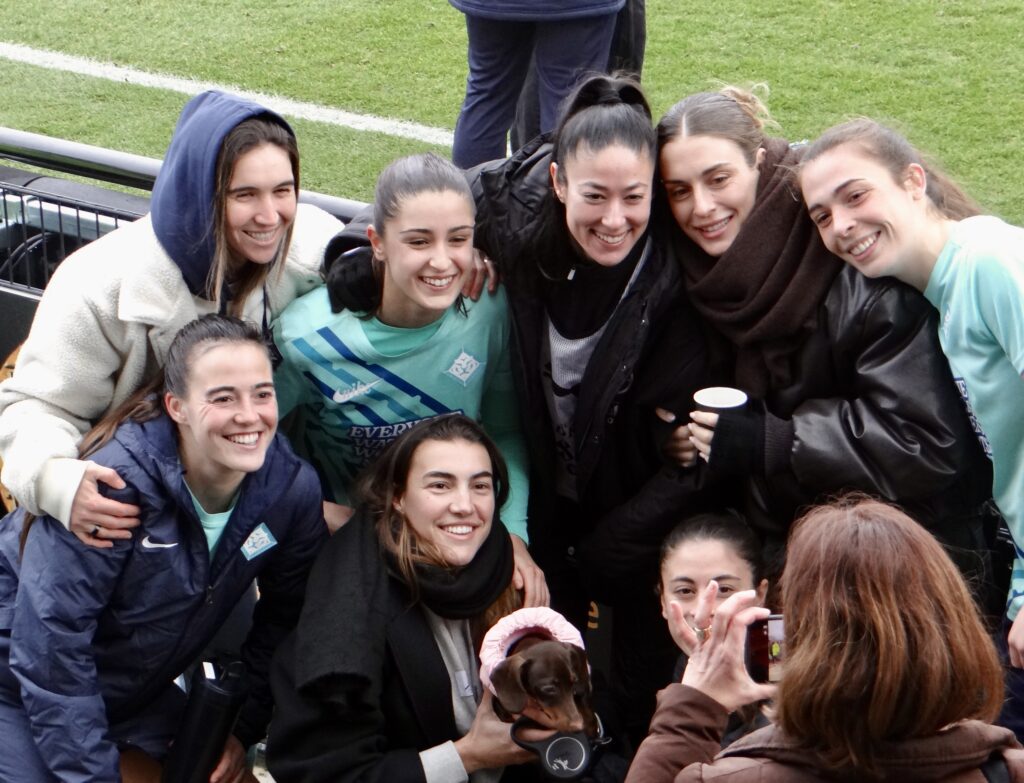
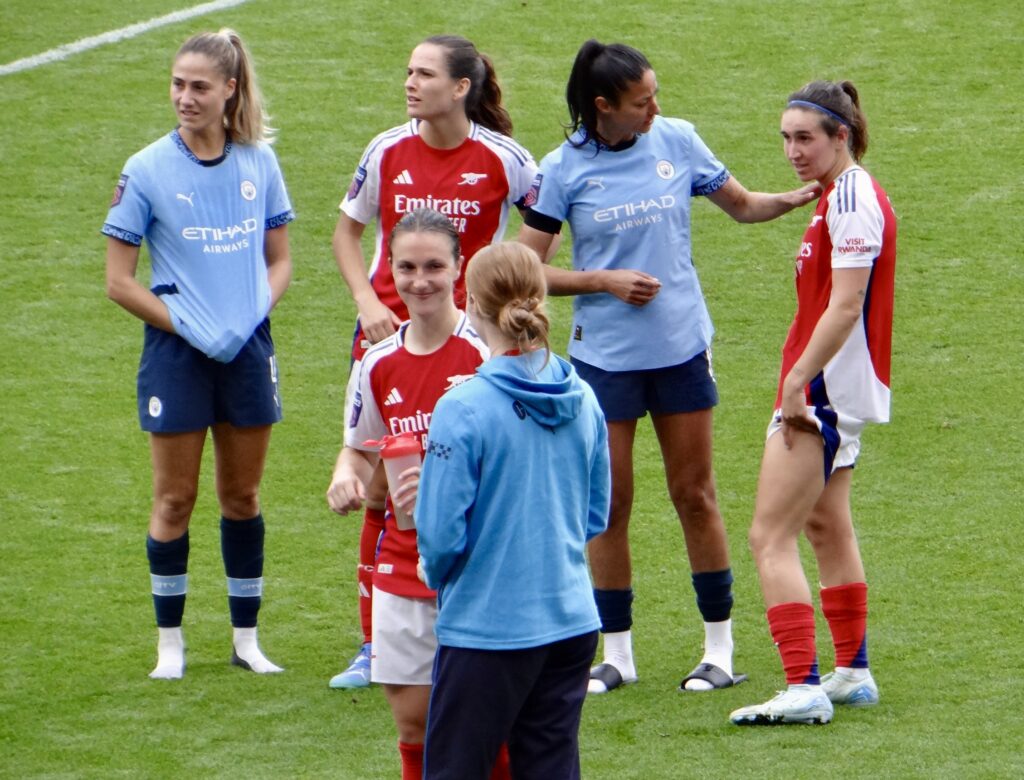
We’ve all witnessed the increasing influx of Spanish head coaches and players to the WSL in recent years. What started as a trickle – with stars like Vicky Losada, Marta Corredera and Natalia Pablos over a decade ago – has now become a torrent.
And since the arrival of Ona Batlle at Manchester United six years ago, 26 more Spanish players have arrived in the WSL, with 18 currently playing in the top flight.
Once the WSL was professionalised in 2018, the league became an increasingly attractive prospect, with the Spanish Liga F only professionalising in 2022.
After Batlle’s original move, the next high-profile Spanish player to make the change was Mariona Caldentey, who not only transformed the way Arsenal played, but also helped them win the ultimate club trophy, the Champions League, ironically against her old club, Barcelona.
Head coaches have followed the trend too, with London City’s Eder Maestre, Man United’s Eva Olid and Brighton’s Arturo Ruiz all coming to the WSL from Iberia.
Unlike the monopoly of Barcelona in Liga F, the WSL remains competitive in terms of finances, final standings and rivalries up and down the league. Since 2024-25 Arsenal and Chelsea have both surpassed Barcelona in terms of revenues, demonstrating how the WSL has become increasingly dominant in women’s football.
We ask WSL head coaches and players why the WSL has become such an attractive prospect for Spanish talent. We start with London City manager Eder Maestre, who currently has seven Spanish players in his squad, including current Ballon D’Or holder, Alexia Putellas.
EDER MAESTRE, LONDON CITY LIONESSES
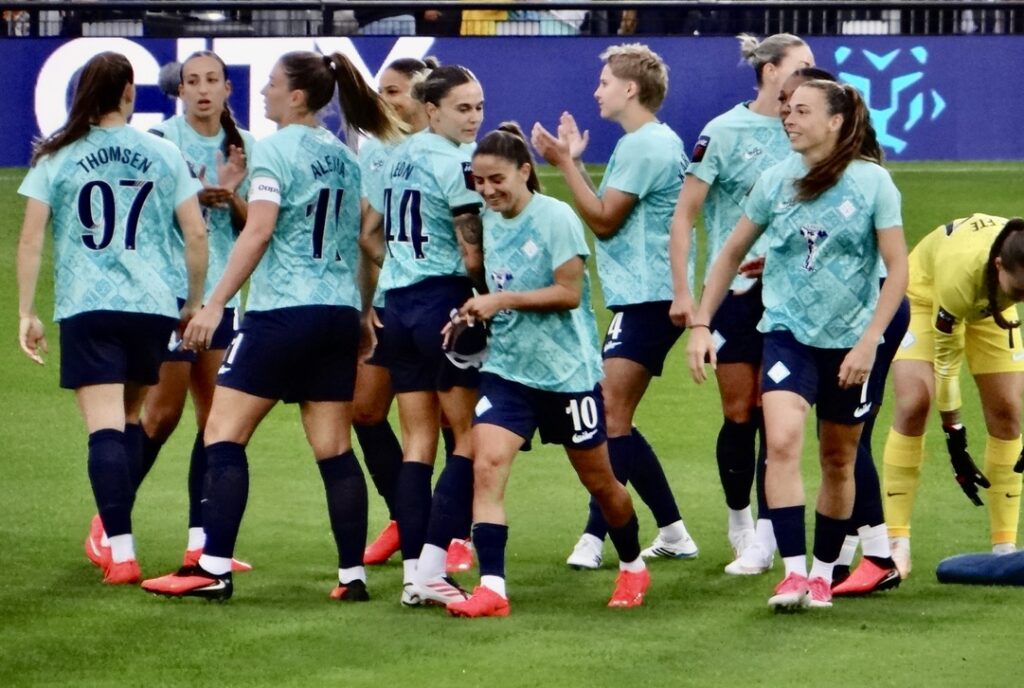
Can I first ask you about why you, as a Spanish coach, chose to come to the WSL?
I think the challenge to implement Spanish culture in the top competition is one of the most exciting things.
Since the first day of joining this project, I can recognise it as the most powerful and challenging project right now.
Trying to become something big, thinking about what we were years ago, and thinking about the strong steps we are making to become this club.
That ambition fits very well with my own values, so joining this process for me is a pleasure.
And as I mentioned, trying to bring that Spanish culture here, and trying to use it to feel dominant, is a good challenge.
I won’t ask you about every single Spanish player because you have too many! But if I can ask you about three very different players – Jana Fernandez, Dani Arques, and Alexia Putellas – who all bring different qualities. Could you tell me why those three are so important in their roles?
Well, first of all, I think due to their versatility.
Jana [Fernandez] is a fullback, and she’s very used to playing in the central channel. She can be more committed centrally, or in moments for potential overlaps from the wide areas.
She is so talented and understands what the game requires in every moment. The way she manages central wide areas, she can become a very unpredictable player to defend against.
Off the ball, she is a very, very aggressive player, very committed to defend spaces in the front. The energy that she can bring to the team is massive. Jana is very versatile player.
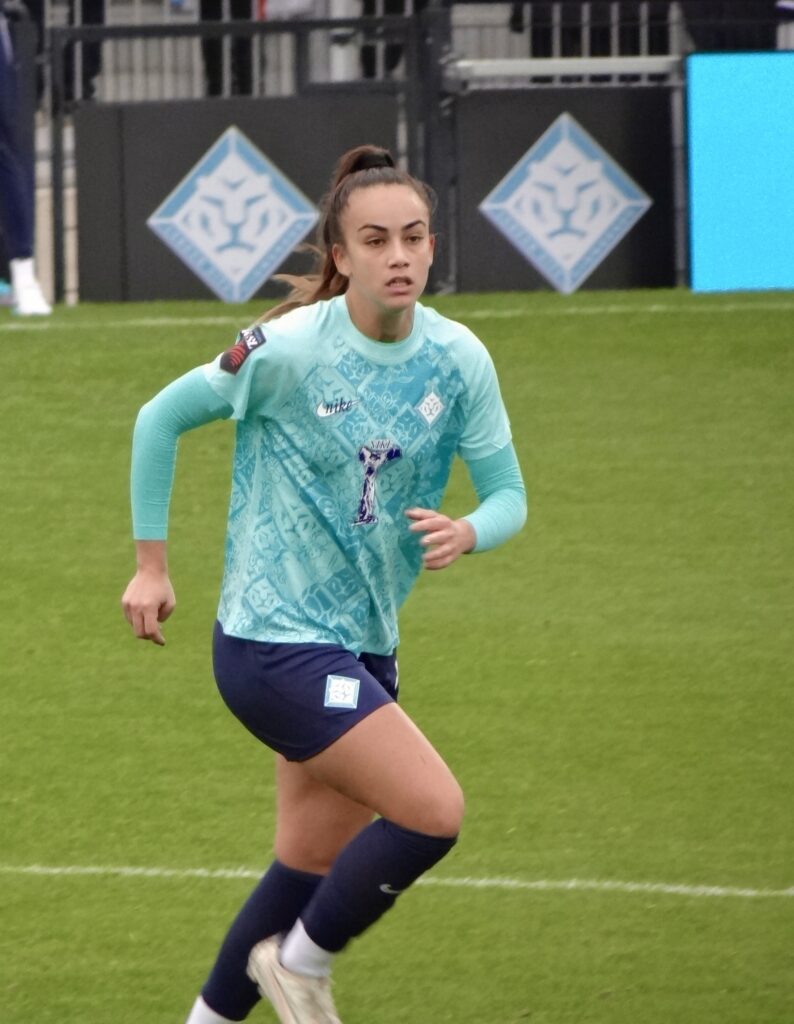
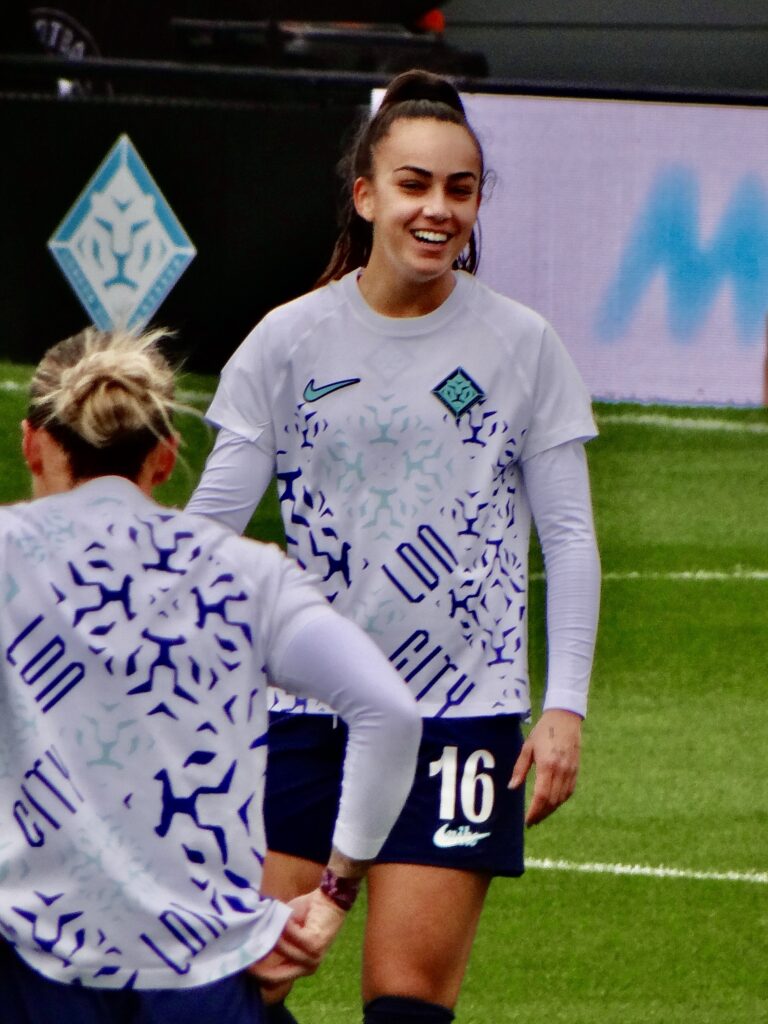
Daniela Arques is a baller, but is very committed off the ball as well, and she is very, very young.
EDER MAESTRE, LONDON CITY LIONESSES
She has a lot of weight on her shoulders.
I think the performance she’s having is massive, considering all these things
Daniela Arques (above) is a baller, but is very committed off the ball as well, and she is very, very young.
She has a lot of weight on her shoulders, so we need to understand where she comes from and the experience she had before.
Because I think the performance she’s having is massive, considering all these things.
And we need to keep pushing with her development without losing the focus that she is still young, and we need to surround her in the moments of maybe inconsistency, things due to her age. We need to support her every time.
But she’s very, very capable of managing the tempo of the game, and that’s why I think she is a different player as well.
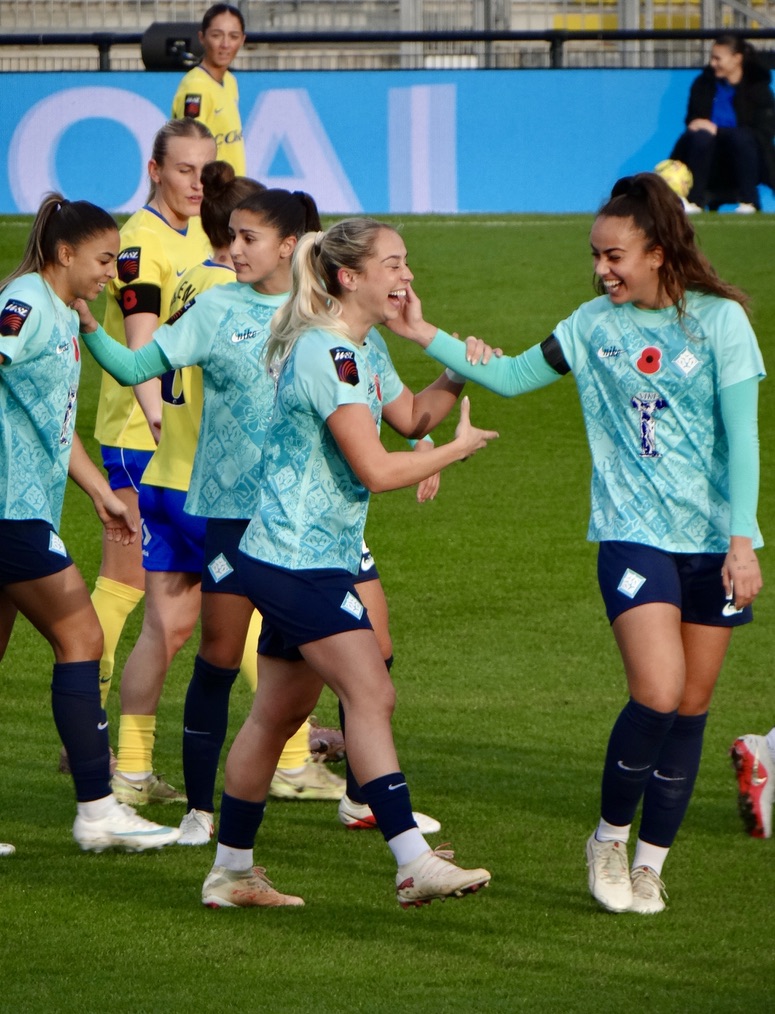
Alexia [Putellas, below] is triple Ballon d’Or.
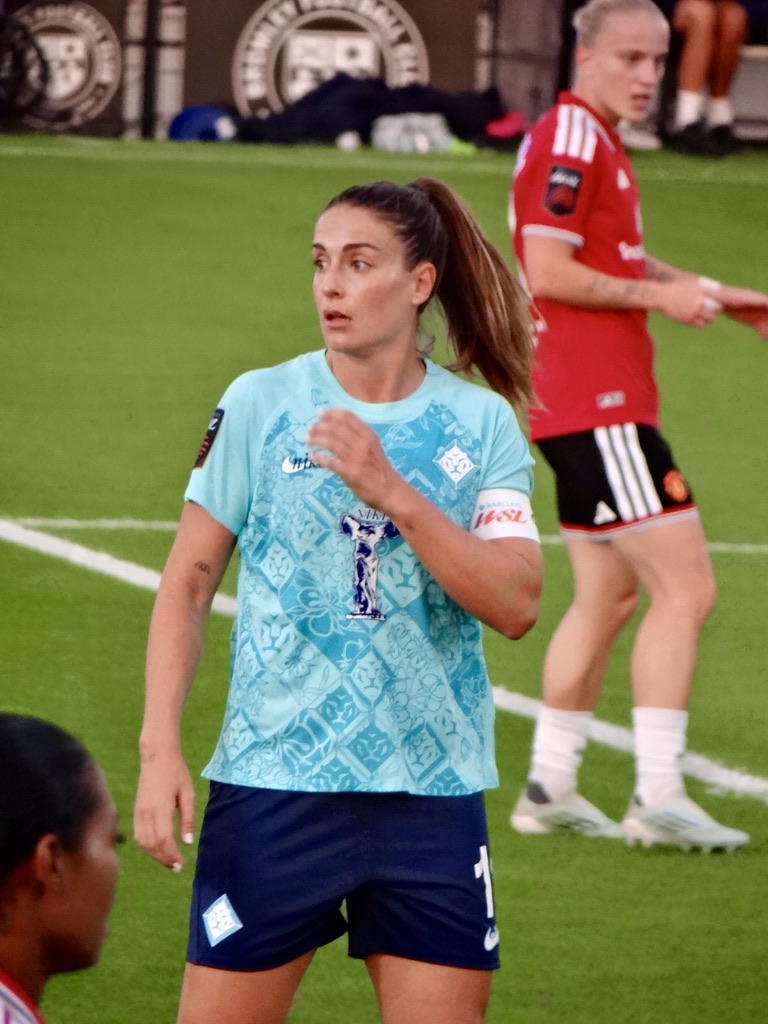
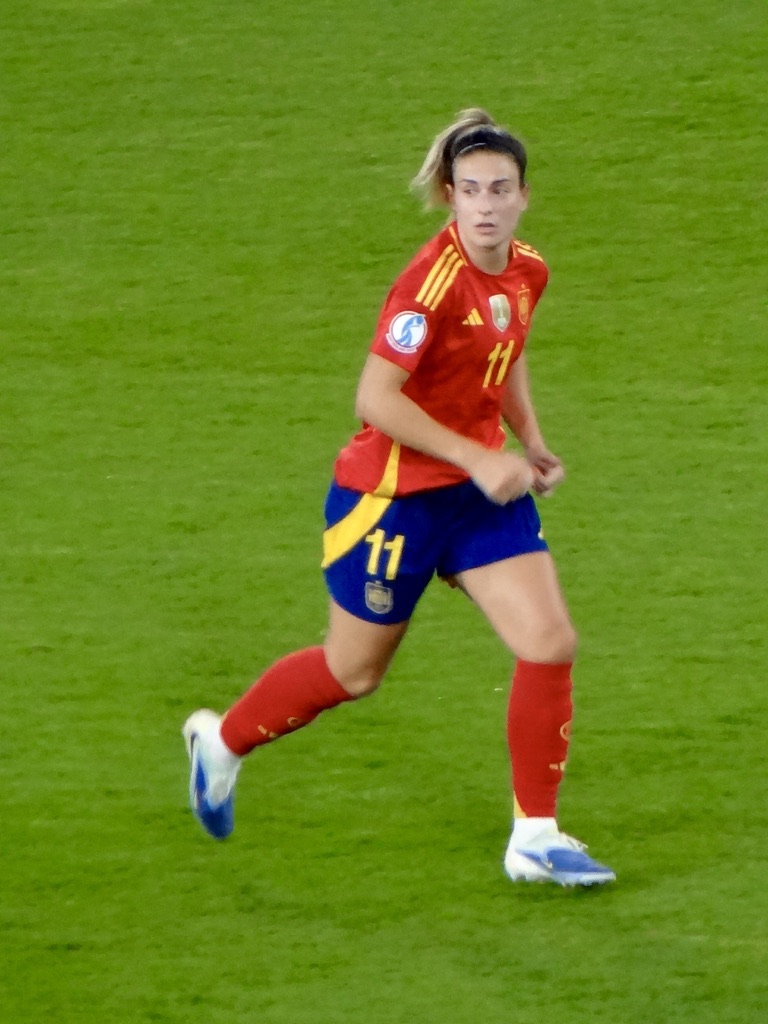
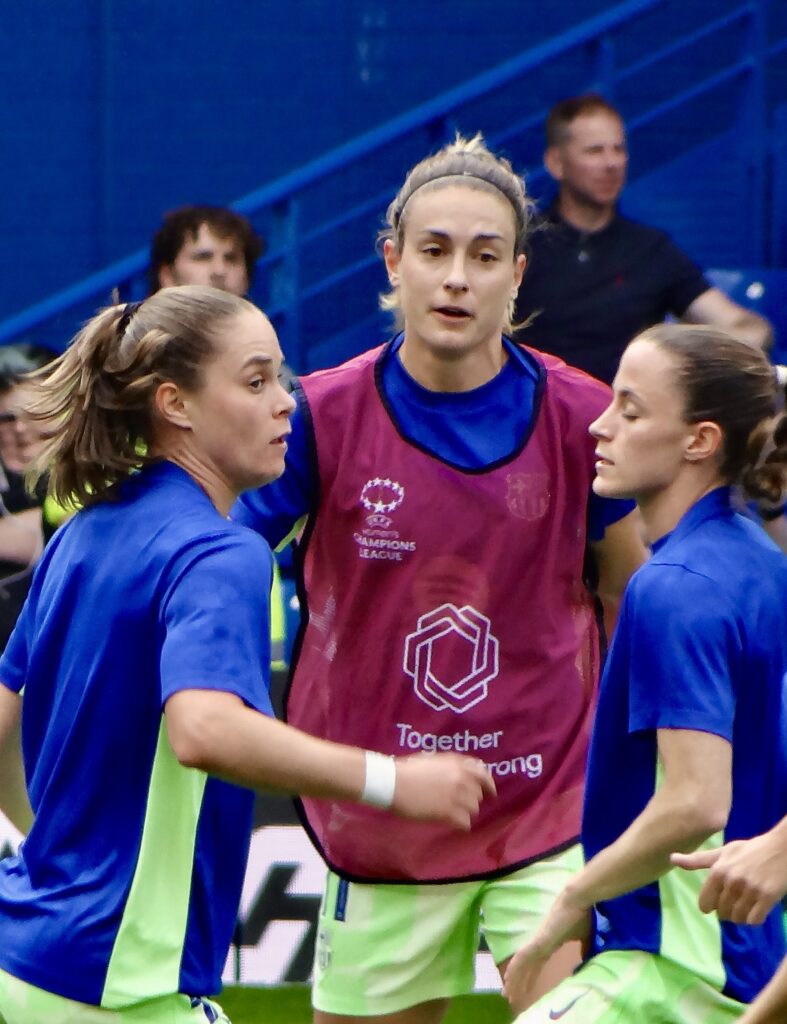
She can be in the final third. She can drop to overload the second. She can be the person to drive the build-up. She can be the player to take positional advantage to punish behind the midfield. She can drop wide. She can be more joined to the attacking line because she has the qualities in the box.
She has many, many registers to be the differential, and that’s why she’s Alexia.
She can be in the final third. She can drop to overload the second. She can be the person to drive the build-up. She can be the player to take positional advantage to punish behind the midfield. She can drop wide. She can be more joined to the attacking line…
EDER MAESTRE, LONDON CITY LIONESSES
She has many, many registers to be the differential, and that’s why she’s Alexia.
JANA FERNANDEZ, LONDON CITY LIONESSES
Do you think the partnership between your teammates Daniela Arques and Alexia Putellas has made a huge difference in the centre of midfield?
When you have two players who understand each so well, they speak the same language which helps, they understand the spaces, they understand football in a way that nobody else does.
In my opinion, midfielders are a big part of football in general so it’s super important that those two connect that well.
Everybody made a really good performance, but having players like Alexia and Dani make it so much easier.
I wonder what aspects of football from the English game you’ve added to your very Spanish style as a player?
Well, as a Barcelona player, as you may know, we used to have a lot more possession, a lot more of the ball, at least in league games. Something that here is a bit more tight.
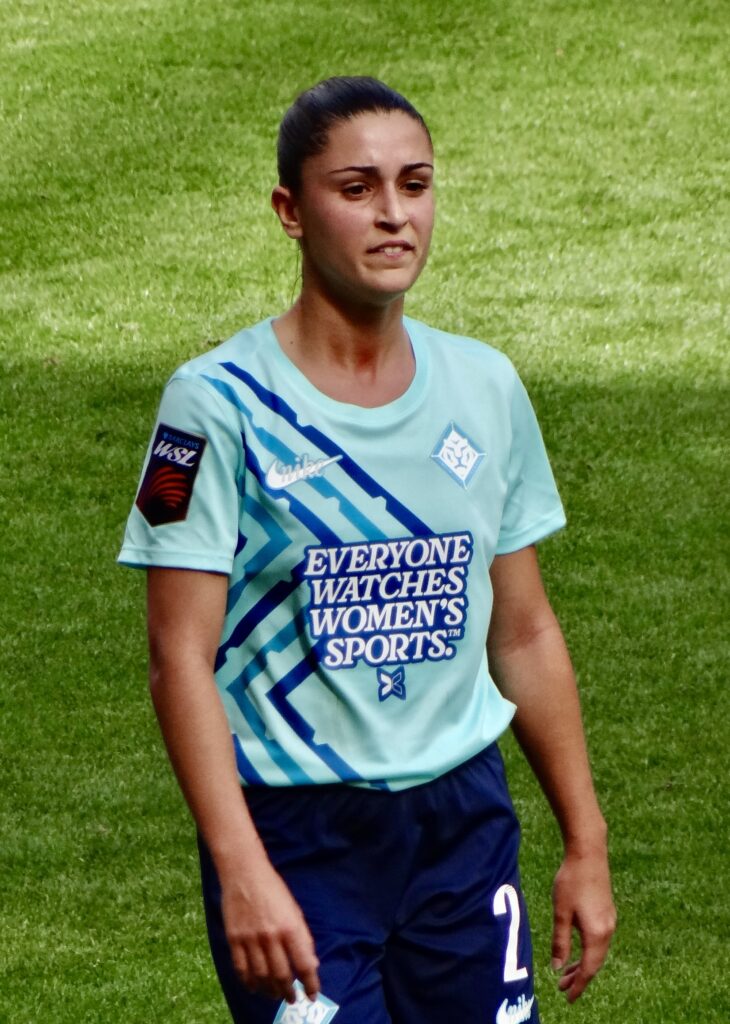
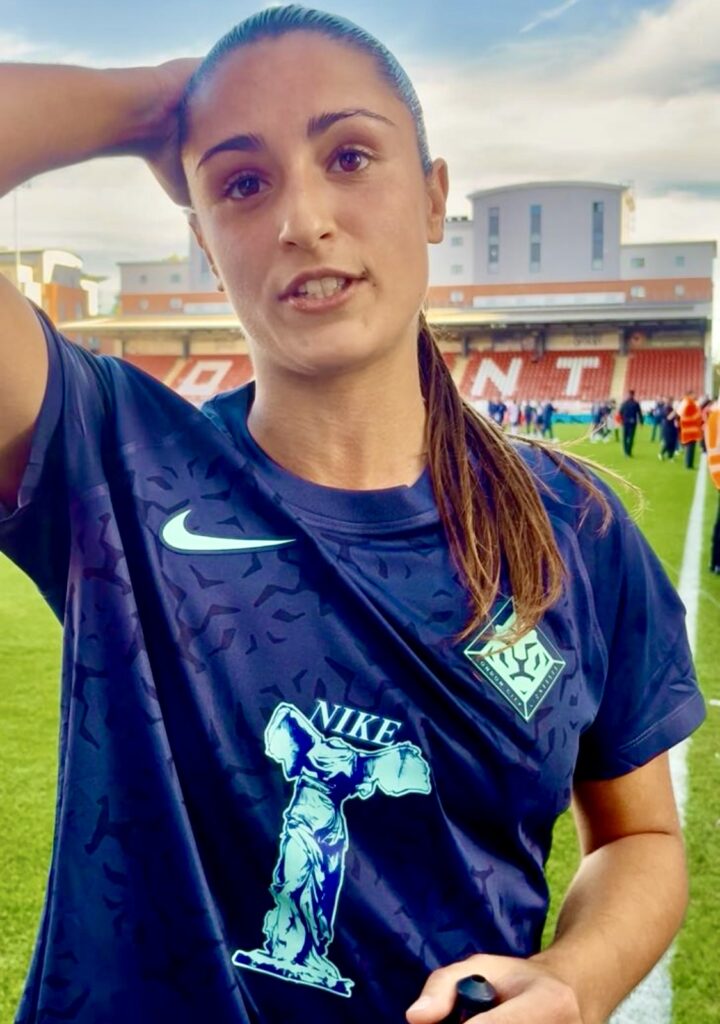
I’m trying to work on mainly my defensive aspects. Maybe before I would face one or two defensive actions at Barcelona. Now I have like 15, 20 per game, which means I have to be ready for it, you know.
JANA FERNANDEZ, LONDON CITY LIONESSES, RIGHT WINGBACK
Obviously our aim and our goal is to have that kind of superiority in those games, have the ball, do a possession game, but obviously it’s tough because the openings you have, they’re really good defensively…
I’m trying to work on mainly my defensive aspects. Maybe before I would face one or two defensive actions at Barcelona. Now I have like 15, 20 per game, which means I have to be ready for it, you know.
So yeah, I’m happy that I’m learning new things.
Also, I’m learning a lot from my teammates because some of them have a lot of experience and can help me improve as a player.
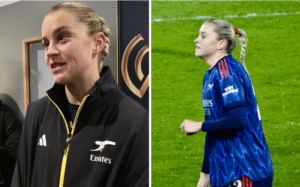
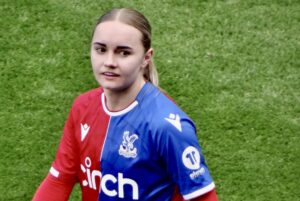
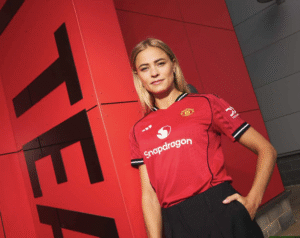
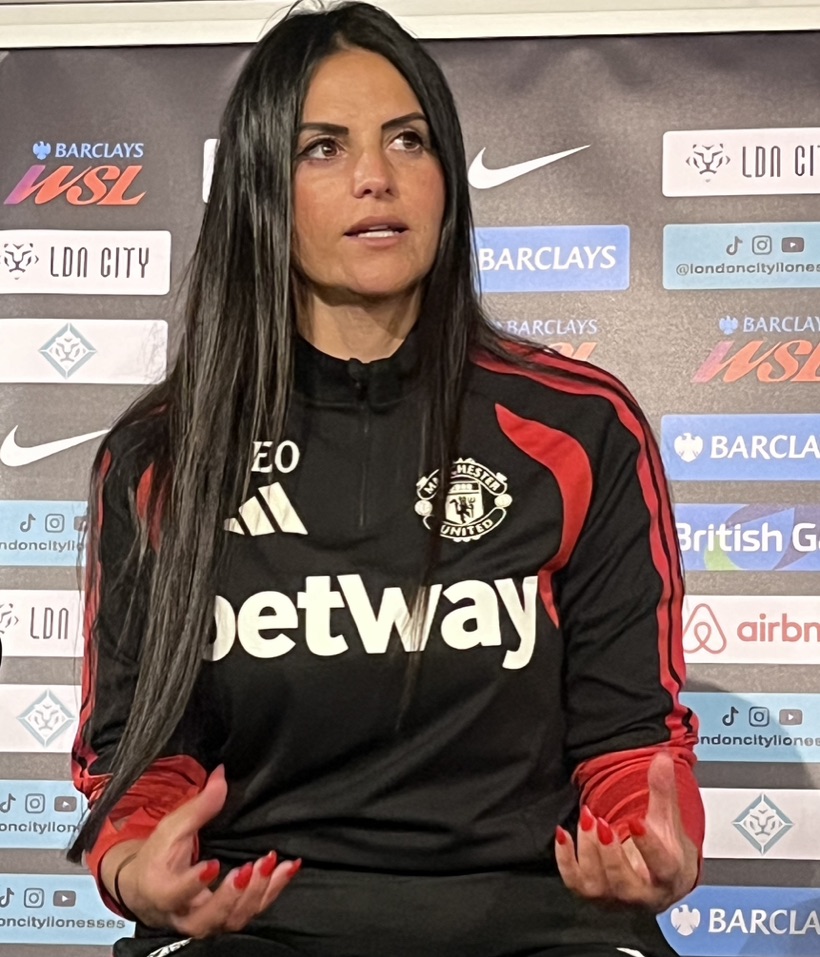
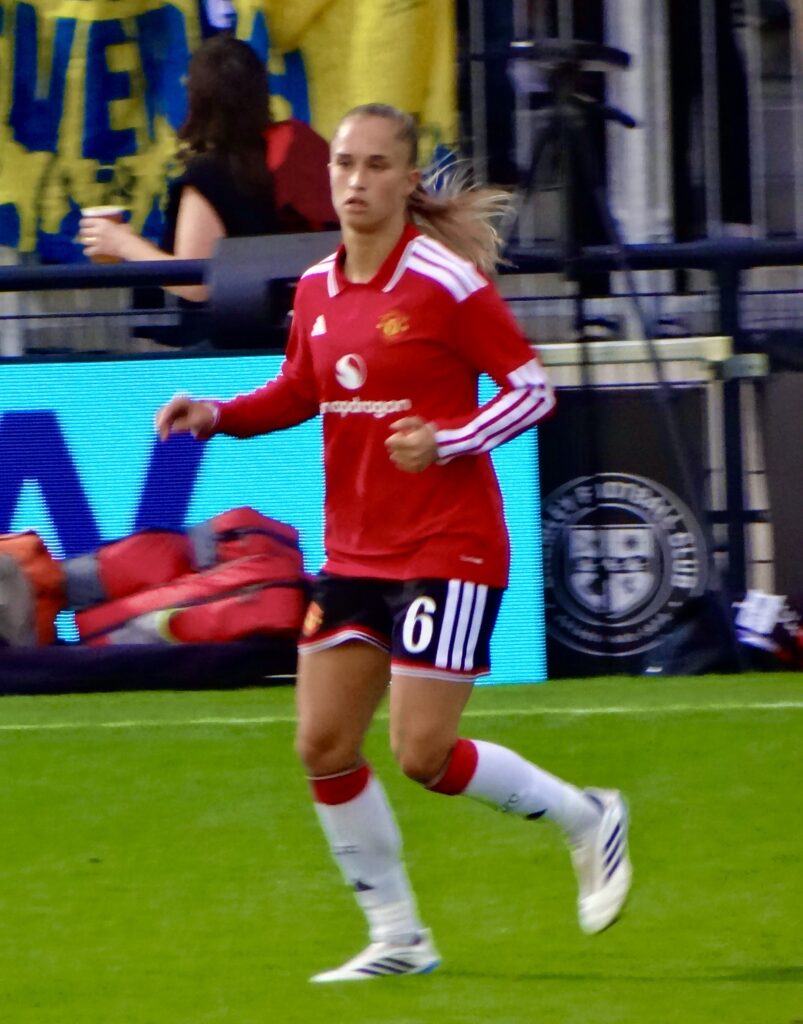
EVA OLID, MANCHESTER UNITED (below, left)
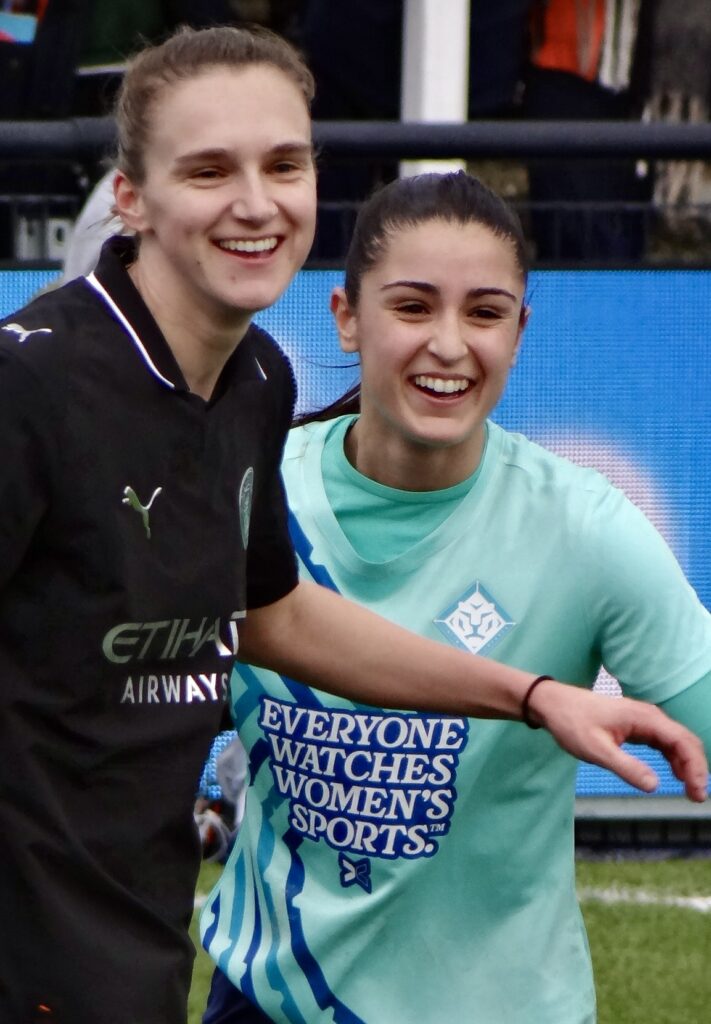
I want to ask you about all the Spanish talent coming over here… not just yourself, but Arturo and Eder, and I wonder what’s bringing all of you across – and also players like Andrea Medina (below, centre) who has done so well for you this season.
Yeah, Spanish players and coaches, we are doing well here, no?
But sometimes, for players especially, they need a period of adaptation, no?
Because of the culture, the weather, all these things are different, but I think that Andrea [Medina], for example, she adapted so good, and she’s so happy here.
And in my case, I was here five years in the UK [in the Scottish league at Hearts] before, but everything had been quite quick.
We feel inside this league and this football that you play here, that intensity in England.
EVA OLID, MANCHESTER UNITED
The players play football with our tactics and our technical ability.
That mix, for me, is so exciting to see.
We feel inside this league and this football that you play here, that intensity in England.
The players play football with our tactics and our technical ability.
That mix, for me, is so exciting to see.
And I guess it’s a bit more competitive, maybe?
The physicality makes the game more intense… that physicality with the tactics and technicality.
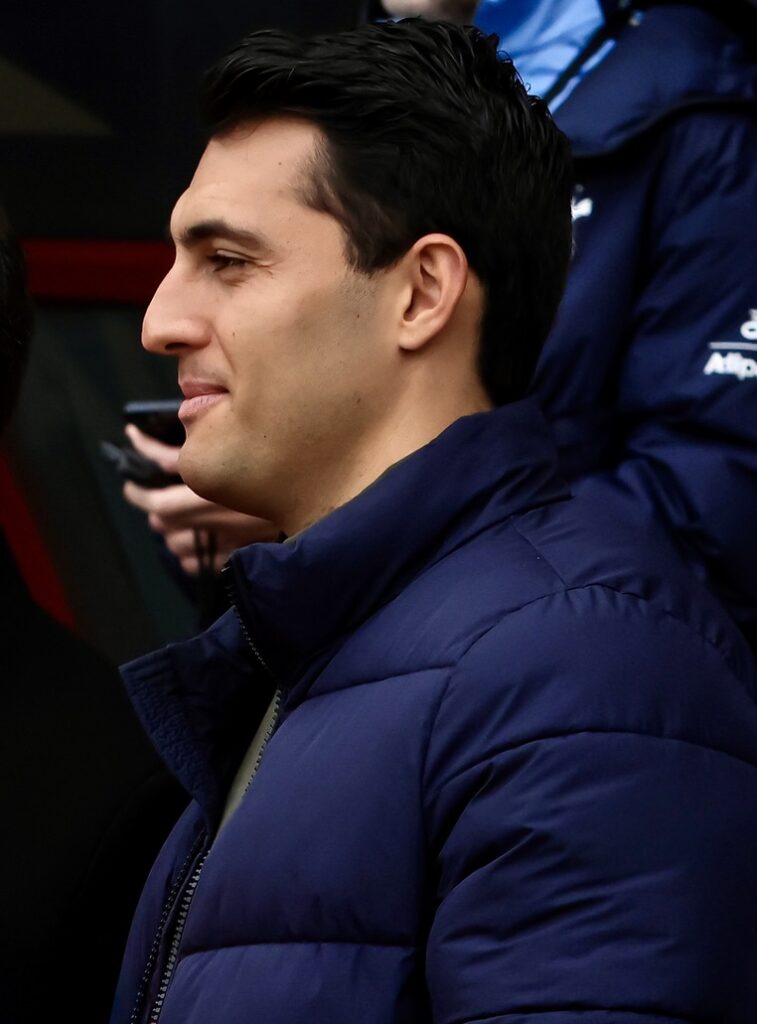
ARTURO RUIZ, BRIGHTON (above, right)
You won three of your last five games, after a tough start after your arrival from Spain. Would you say you have now adapted to England and WSL football?
From a psychological point of view, right now, I’m fully adapted. But it’s hard to say when you are fully adapted or not.
Because if the next result is not positive, maybe someone will say that I am not. But absolutely yes.
Now all the staff, all the players here in the training ground, after 10 games so far in both competitions I feel much better.
It was very beautiful since the very beginning, because I think all the adaptation process is about attitude and how you focus on them, how you go through them.
Yeah, I’m very happy about how we have been performing and how I have adapted.
Now you’ve settled, what would you say the major differences are between the WSL and Liga F?
I mean, here mistakes have more importance maybe than in other leagues.
Set pieces are key. Transition moments are key. You need to have – without the ball – your plan A, your plan B, how to be adaptable. So a lot of things in that.
The biggest challenge was to go through a big change and adapt and settle all the processes that are around here every single day in the training ground. That that was the most challenging thing.
Now I feel that we are completely settled with all of our roles clear, and the players also feel more calm. Like it’s normal.
We needed to go through that moment, and now we are a team that is very together, that is being completed, and that keeps growing every single day. That’s the best feeling I think I can have, and I have it
Why do you think so many Spanish managers and players are coming to the WSL, not just yourself but Eder Maestre and Eva Olid too?
Several ones. Maybe we don’t have that much time to speak about it.
But, the English League is doing things very well for coaches, for players, for staff, for everything.
We need to keep growing now here in in England, and I will be just one piece of the puzzle to make it keep growing. But obviously, all the countries need to learn from the WSL.
ARTURO RUIZ, BRIGHTON
So it’s something that the country and the league need to be very proud of, and other leagues need to learn about.
That doesn’t mean that all is negative abroad from here and all is positive here. Absolutely not.
We need to keep growing now here in in England, and I will be just one piece of the puzzle to make it keep growing. But obviously, all the countries need to learn from the WSL.
I feel very grateful, and I appreciate having my position right now. And I’m trying to give it my 100%, apart from enjoying it.
JO POTTER, CRYSTAL PALACE
There’s now three Spanish coaches and a lot of Spanish players in the WSL. Why do you think they’re coming here? And what do they bring that’s different?
I think all three are very different in their tactics and how they go about it with the squads they’ve got.
This league’s obviously very enticing for managers and coaches now, with everything around it. You know, how well the league is run and the visibility of it and everything.
You can see it’s very different to other leagues, where you definitely have a top few and then the rest. So this league is definitely more competitive, and it’s a good place for them to challenge themselves.
This league’s obviously very enticing for managers and coaches now, with everything around it. You know, how well the league is run and the visibility of it and everything.
JO POTTER, CRYSTAL PALACE
Arturo Ruiz is still a very young coach, and I’m sure he’s still got a lot to learn and a lot to grow.
He’s at a very good club in Brighton that can help him along his way.
MARTIN HO, TOTTENHAM HOTSPUR
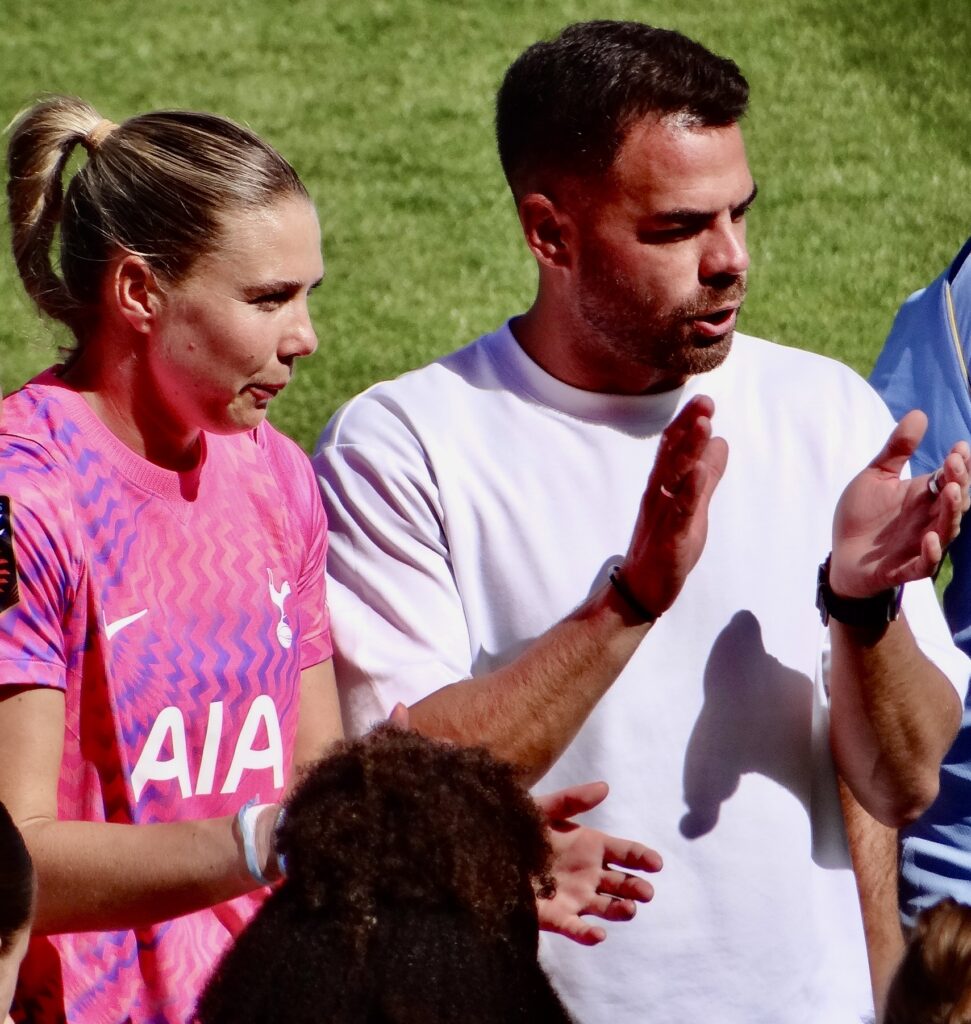
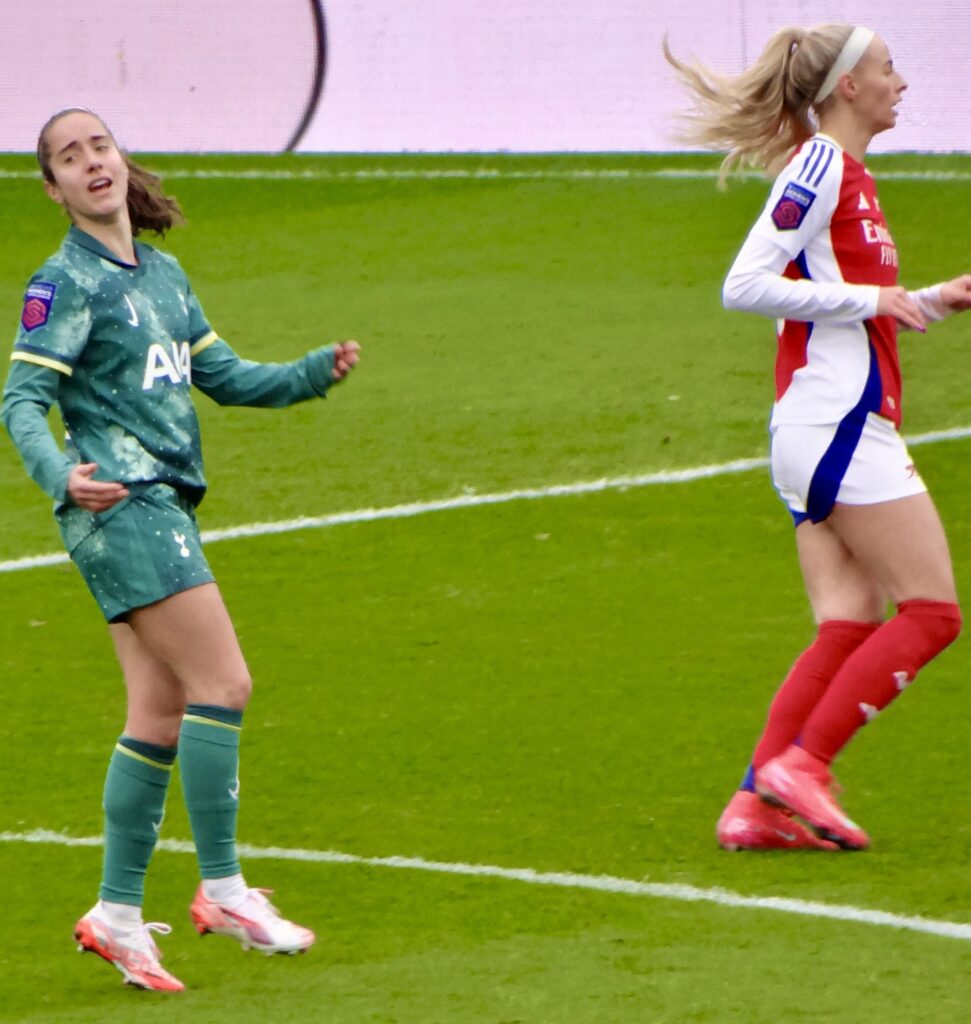
You’ve tried to build different player profiles, and Maite Oroz (above, right) has a completely different profile, which adds something maybe more unpredictable. What do you think Spanish players add?
Yeah, in terms of technical quality, intuition, creativity, game understanding… and Maite’s been here obviously since I got here. She’s played in games when I’ve been here.
She’s been unfortunate with injuries. Obviously, the ACL she got in the cup against Birmingham.
[What do Spanish players add?] Technical quality, intuition, creativity, game understanding
MARTIN HO, TOTTENHAM HOTSPUR
It’s just making sure that we can give her the best chance. But I think she has wonderful qualities.
And I think that midfield we have now is full of quality, if I’m honest.
SCOTT PHELAN, EVERTON
What does your Spanish star, Ornella Vignola, add to Everton?
Ornella is obviously a prominent part in our team so far this season. She brings some real good qualities, I think we’ve seen that in the cup game against Newcastle.
Not just the technical stuff in possession, she brings a real appetite to help the team out of possession and regain the ball often as well.
Her mentality is to attack, but she still doesn’t forget the impact on the team, and that contribution is important.
ONA BATLLE, ARSENAL (joining Mariona and Misa, below)
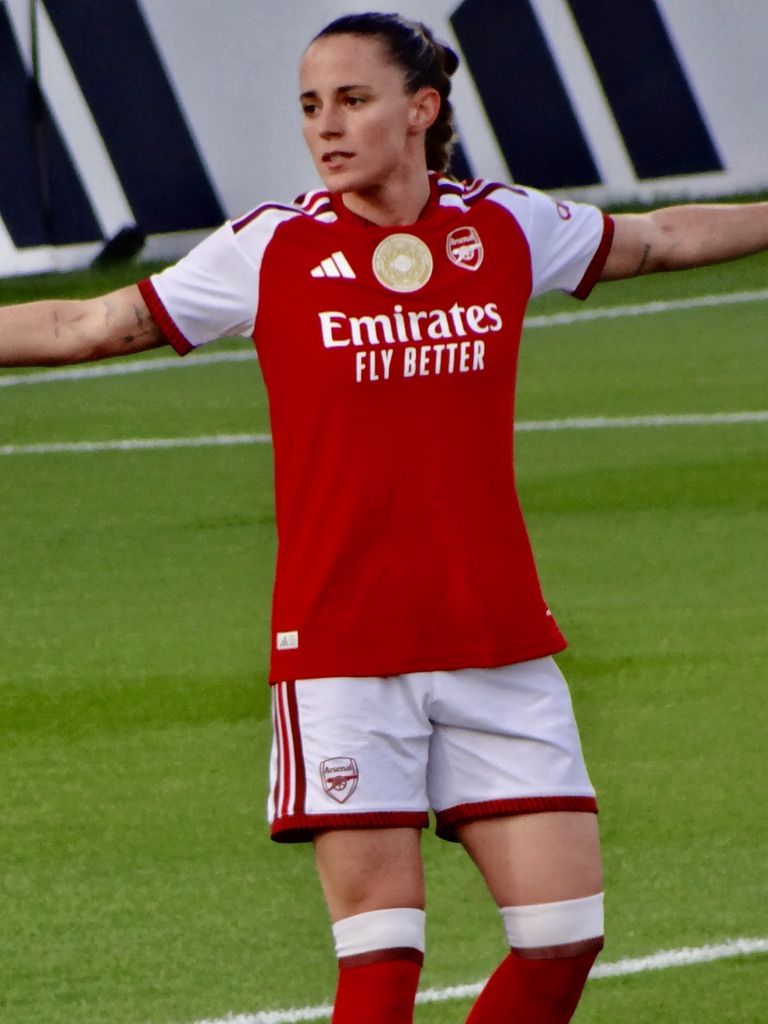
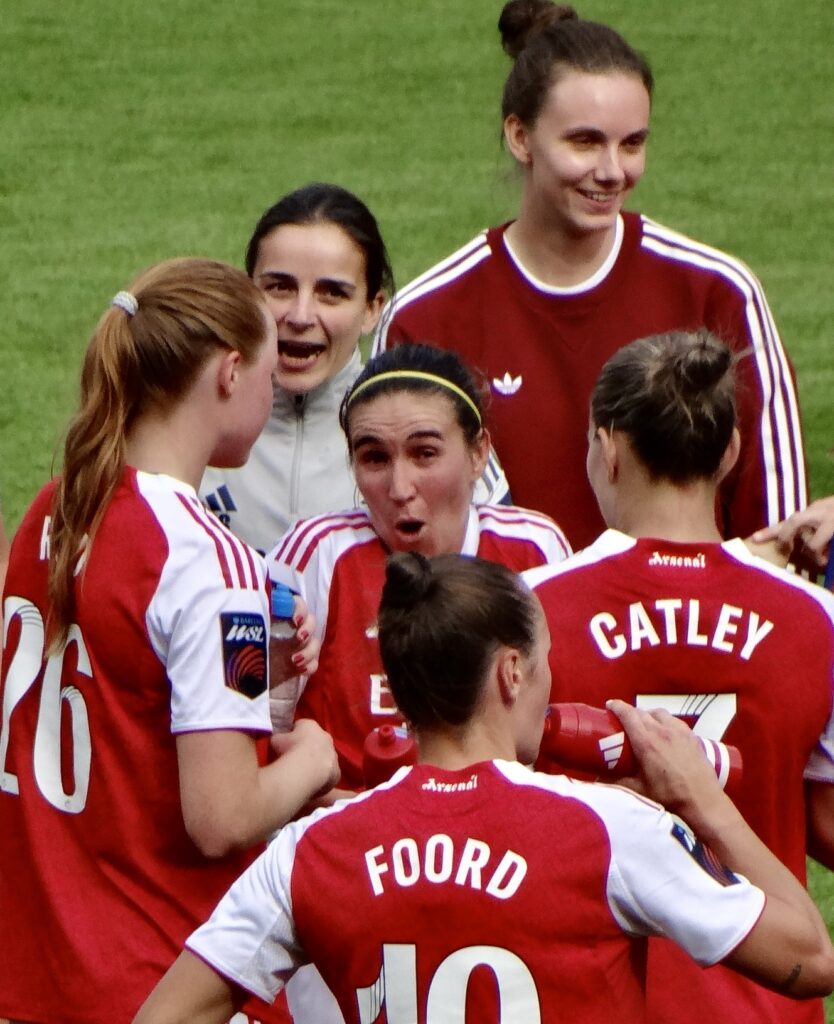
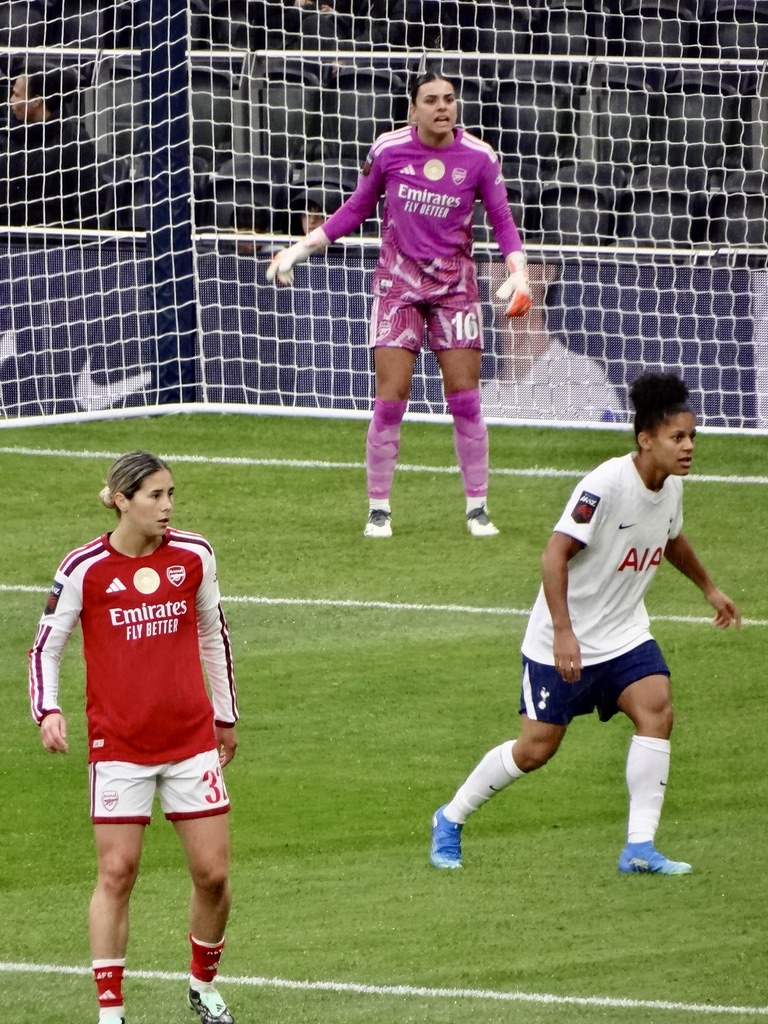
Having been at Man United before, then Barcelona again, what made you choose Arsenal?
Arsenal play the way I like to play.
I was very excited as well to be back in the WSL.
I think it’s the most competitive league and it was a new challenge I was really looking for.
I was very excited to be back in the WSL.
ONA BATLLE, ARSENAL FULLBACK
I think it’s the most competitive league and it was a new challenge I was really looking for.
There was a mass exodus from Barcelona last summer, everybody [Alexia, Mapi Leon, Salma Paralluelo] seems to be going. Is there a reason or is it just the natural scheme of things?
Well, I think every person has their own reasons.
But I cannot talk about them [the others]… everybody has their reasons I guess, and I can’t talk about them or their reasons.
For me, it was a new challenge I wanted to take, coming back to the WSL and especially to Arsenal as it’s the team that suits better the way I want to play.
Photos: Hanne Beeckmans, Helen M Jerome