
ULTRAS! Why ultra running is now booming for women
Women’s running is on the rise, so Georgia Hamblett investigates why this happening right now.
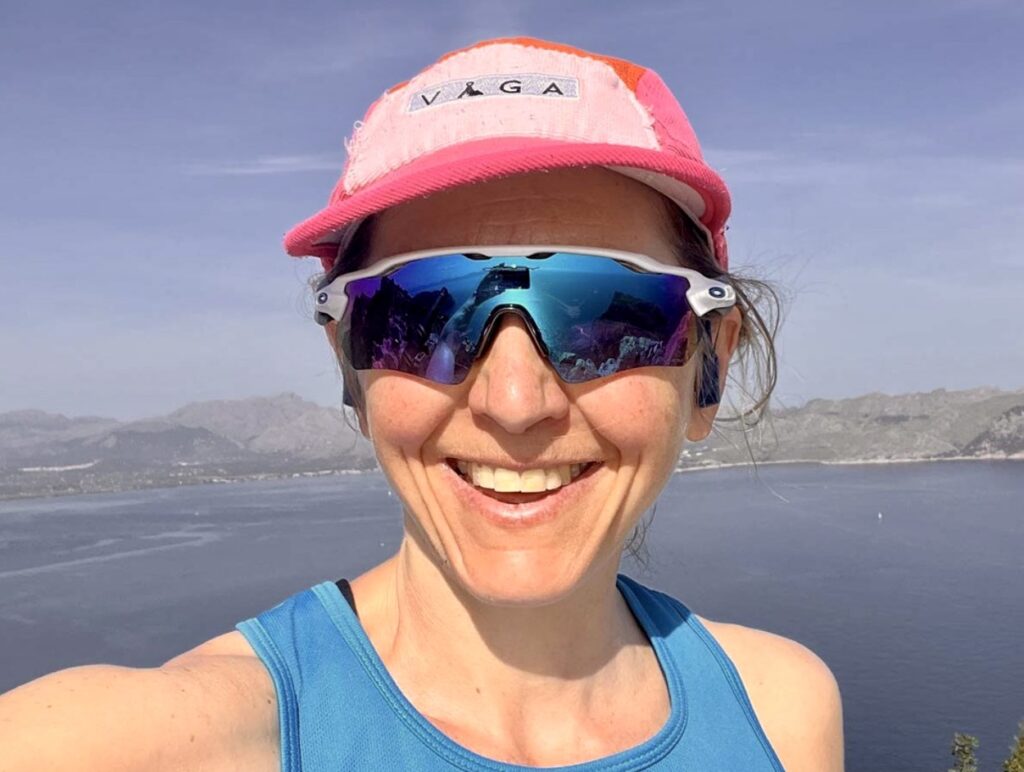
When I say ‘running’, your mind may turn to a Parkrun, or local 5k. Perhaps a half marathon, or marathon. The London Marathon, for example, had 1.3 million applicants this year, with the largest represented demographic being women aged 20 to 29 [1]. A far cry from what we may have expected to see even five years ago.
But for many of us, our comprehension of running distances ends at the marathon.
Not for some.
The growth of ultra running
Ultra running is any distance over the standard marathon (26.2 miles / 42.2 km) distance. Common distances include 50km, 50 miles, 100km and 100 miles, and then you’re into multi-day events for the extremely gritty, somewhat crazy, runners among us.
Unlike road marathons, most ultras take place on trails, mountains and other challenging terrain, and often involve significant elevation gain and night-time running.
When you get to ultra distance, it isn’t just about running. In fact, chances are a fair amount of it won’t even be ‘running’, but walking or scrambling uphill. Managing food and hydration, logistics, pacing and fatigue are all key factors in ultra running in addition to the usual mental and physical preparation.
Women’s ultra running has reportedly grown from 13% in 1997 to 46% in 2022 [2], and my guess would be that that number’s even higher today.
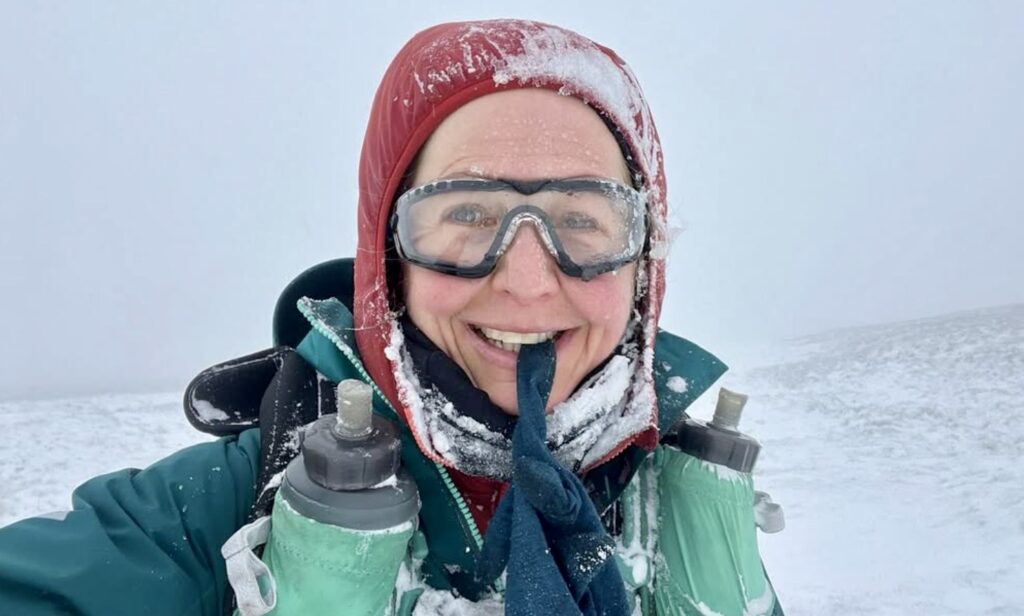
Why are so many women taking up ultra running?
Well, first off, it turns out we’re pretty good at it.
A recent BBC article [3], looked at this in depth, and suggested fat metabolism, muscle type and fatigue resistance may all contribute. Women naturally have a higher body fat percentage than men, and when exercising at a lower intensity for a long period of time, the body uses fat stores. Moreover, studies suggest women are better at metabolising fat during exercise which is an advantage in endurance events.
Research has also suggested women generally have more slow-twitch muscle fibres than men. Slow-twitch fibres are better suited to steady, long efforts, where as fast-twitch fibres are good at producing power and energy quickly, as is required for sprinting. Slow twitch fibres are more fatigue resistant, but there’s also a suggestion that women’s bodies are generally better at dealing with fatigue, regardless of muscle fibre type. Either way, women’s bodies appear to deal better at long, endurance exercise when compared to men.
In numbers, a typical male marathon runner is around 11% faster than a female. When the distance goes up to 50km, the difference goes down to around 5%, and by 100km men are, on average, just 0.5% faster than women. When we get to the seriously long stuff (as if 100km wasn’t long enough), events of over 200 miles, or 320km, women are actually faster than men by around 0.5%. This is very rare in sport.
But it isn’t just that we’re good at it
The community around ultra running is, widely, an inclusive and supportive one. It’s what hugely successful ultra runner Lucy Gossage (more on her below) cited as the key reason more women are getting into ultra running. She said ultra running feels “less impossible, and more achievable now”, thanks to a community of “uplifting, fun, supporting women” who are “doing it for the right reasons, for the challenge more than the result”.
Long, steady trail runs are typically seen as more sociable than blasting out reps on a track, and events often emphasise participation and personal challenges over reaching the finishing line as fast as possible.
And there’s the domino effect. As more women take up ultrarunning, it inspires even more women.
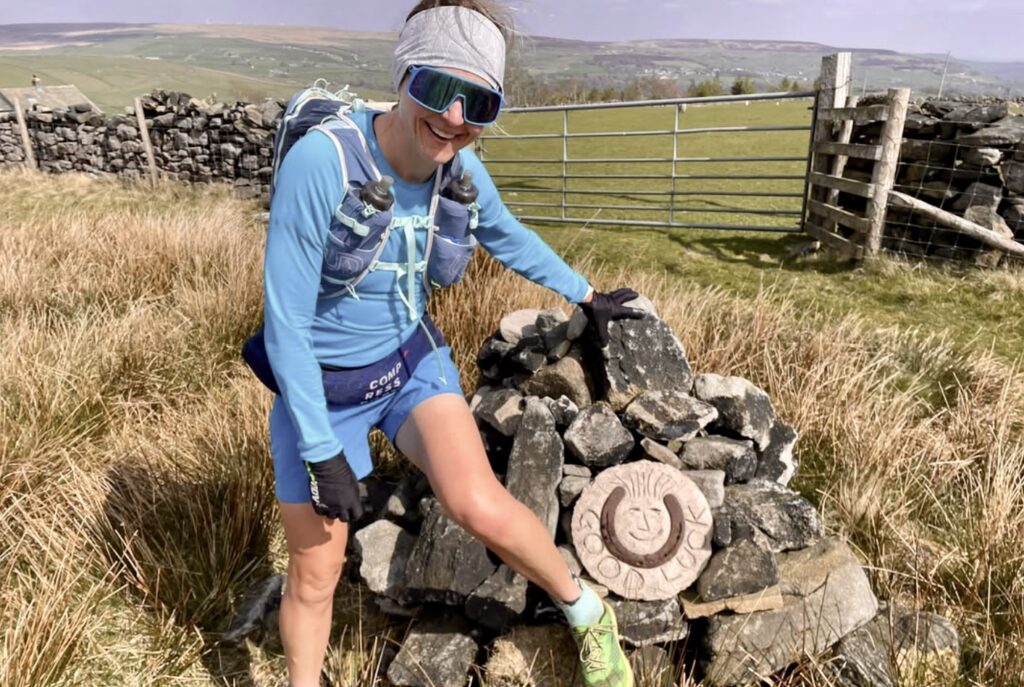
Talking of inspirational ultra runners…
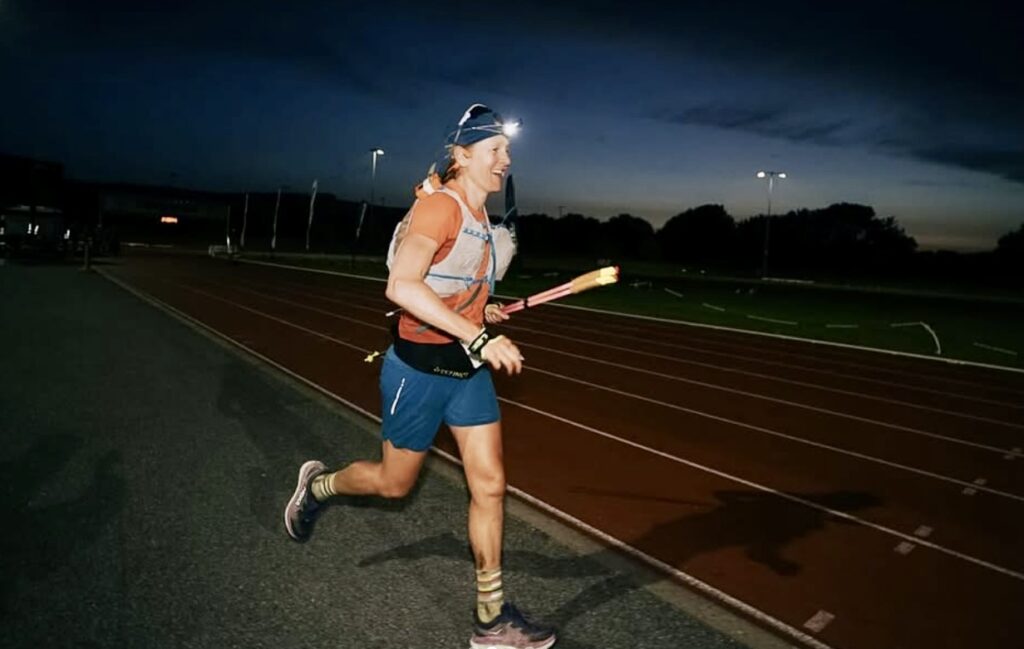
If you’re into your ultrarunning, you probably will have come across Lucy Gossage. Gossage is an ex professional triathlete turn ultra runner with some incredible achievements on her ultrarunning resume. She recently achieved a new FKT (Fastest Known Time) for the women’s supported run of the Trans Pennine Way. This 431km route took her less than 3 days, meaning she averaged less than 10 minutes per kilometre for the duration.
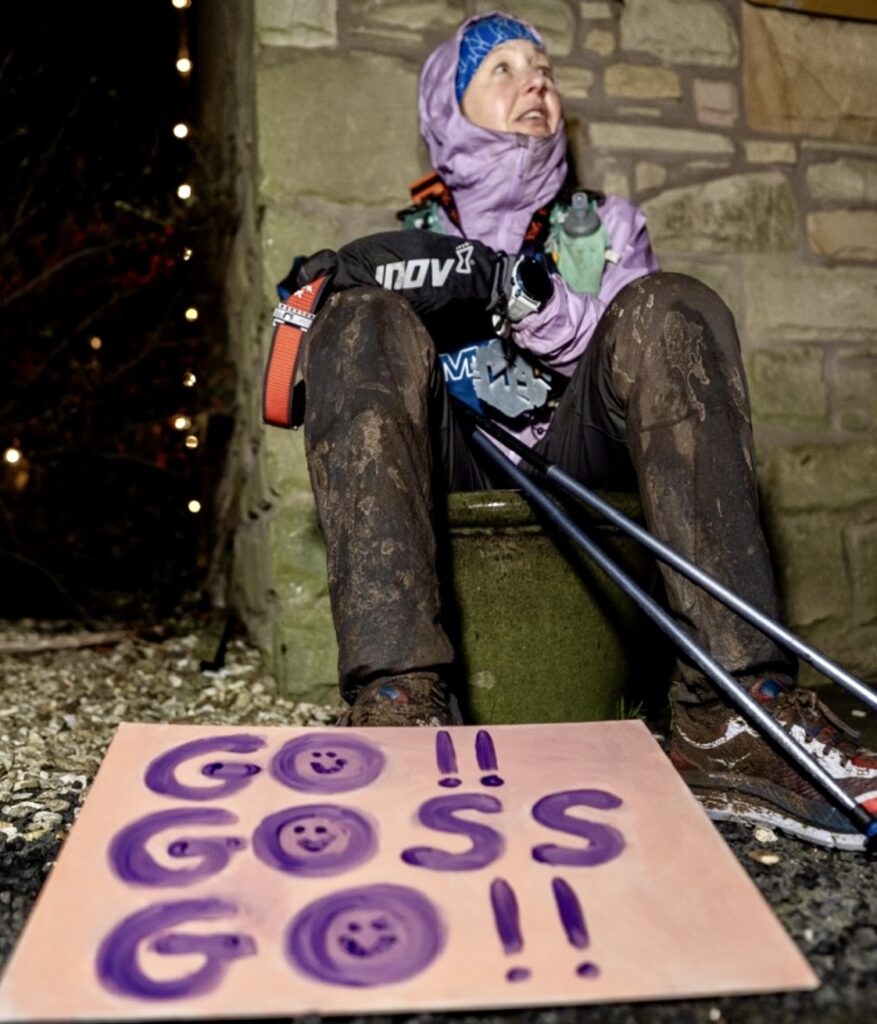
Gossage’s other accomplishments include winning (and setting a course record) for the South Down Way 100, and on her first attempt finishing third, and then a year later winning, the Winter Spine race. The Winter Spine race is widely seen as Britain’s toughest ultramarathon, taking place along the Pennine Way, running from Edale in Derbyshire to Kirk Yetholm in Scotland. It’s 430km, includes over 10,000 metres of elevation, is held on rugged trails, moorland and exposed hills, and takes place in January, when runners are likely to encounter snow, ice, wind, rain and sub-zero temperatures. It’s brutal. And Gossage finished it in three and a half days.
And the story doesn’t end there.
Gossage got into ultra running during lockdown with her partner. She had just retired from professional triathlon when the pandemic hit and, like a lot of us, embraced the British countryside. Long walks in the local hills soon turned into even longer weekends away walking, with a bit of running, in the Welsh mountains, and before long, Gossage and her partner had found themselves pulled by the idea of the Spine race.
They both completed the event in 2024 and although Gossage finished third female, she admitted she made many mistakes with sleeping and nutrition. She had got what she wanted from the race, but had no intention of doing it again.
But a few days after finishing the race in 2024, Gossage found out her partner had been cheating on her. She has previously said she felt like her “world came crashing down”, but, knowing Gossage, she has an incomparable ability to not give in.
In 2025, Gossage won the Spine race, although stated that “getting to the start line felt like I’d won.” No matter if you’re running your first 5km or tackling a humongous ultra, I often think the beauty of sport is in the journey, and what we go through and prove to ourselves along the way. In this sense, I think Gossage’s achievements are even more inspiring.
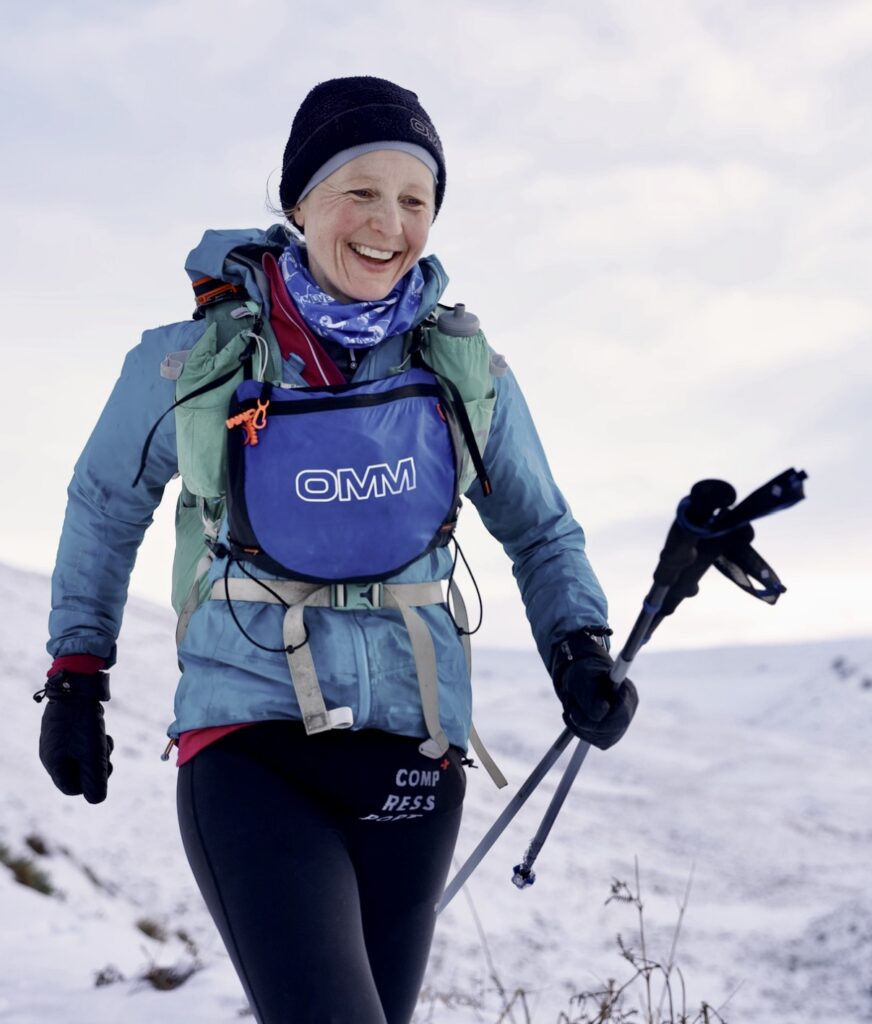
Doctor by day, ultra runner by weekend
Lucy Gossage works as an oncologist (cancer doctor), which she says gives her a good sense of grounding and perspective when it comes to her challenges, and has reinforced the mentality that “it’s a privilege to have a body that can do this stuff.” In addition to her own sporting accomplishments, Gossage co-founded 5k Your Way, a charity which helps cancer patients embrace physical activity.
You’ve probably gathered by now that Gossage is a busy person. It seems somewhat baffling that she manages to be such an incredible athlete while having such an important job. Gossage describes herself as a bit of a weekend warrior, going out for “some big days in the hills”, either alone or with friends. During the week, her training – apart from some strength and mobility stuff – is all done through commuting, as she cycles or runs to work.
In contrast with her pro-triathlon training, which would consist of structured, high-intensity sessions, Gossage says all her training now is done purely for enjoyment, which coincidently has turned her into, in her words, “a semi-decent ultrarunner.”
Gossage’s next challenge is staggering. Running around the British coastline – all 6000 miles of it. Her aim is to raise funds and awareness for Move Against Cancer, and over the six-month-long run, she’ll be joined by people living with and after cancer through pop-up Coastal 5k Your Way events.
You can find out more about Gossage’s upcoming challenge here: www.thelongestlap.com
I still think running 50 miles is crazy. I remember the first time I heard about someone running 100 miles; I could not get my head round it and yet somehow, I’ve now normalised it.
Can I get into ultra running?
You really, really don’t have to run around the entirety of the British coast to be an ultra runner. As with anything, the best way to get into ultra running is to build it up. Start gradually (to try and avoid injury!) increasing your running volume, and taking it out onto the trails and into the hills for longer runs and walks. Remember you don’t have to run all of it, and the speed doesn’t matter!
Gossage says: “I still think running 50 miles is crazy. I remember the first time I heard about someone running 100 miles; I could not get my head round it and yet somehow, I’ve now normalised it.” You too could be in this place one day!
There’s an ever-growing list of ultrarunning events and although some such as the Spine Race are aimed at the pretty hard-core amongst us, plenty radiate the inclusive, beginner-friendly ethos which is helping ultra running boom. Gossage says it’s “super important to find something that excites you, and that scares you a little bit”, mentioning that she loves challenges that feel “on the edge of your possibility”. I think the keyword here is ‘your’. Whatever excites, scares and feels testing for you right now, in every sense, is the challenge to aim for.
And I think one of the beauties of ultra running is seeing how this benchmark changes with time.
[1] Record 1.33 million people apply for 2027 TCS London Marathon | London Marathon Events
[2] Women in Ultra Running: Are Participation Rates on the Rise? – Run Ultra
[3] Are women better than men at endurance running? – BBC Sport
Photos: Lucy Gossage, @lucygossage on Instagram https://www.instagram.com/lucygossage/ and on Facebook