

BOUNCING CZECHS! How Does Czechia Keep Producing Tennis Champs?
It’s no coincidence. From Martina Navratilova and Jana Novotná to Petra Kvitová, Barbora Krejčíková and Linda Nosková, Czech women repeatedly reach the summit of tennis.
Tom Lorencin investigates – and discovers that the secret isn’t one academy or coaching philosophy, but a self-reinforcing ecosystem of clubs, coaches, competition and role models.
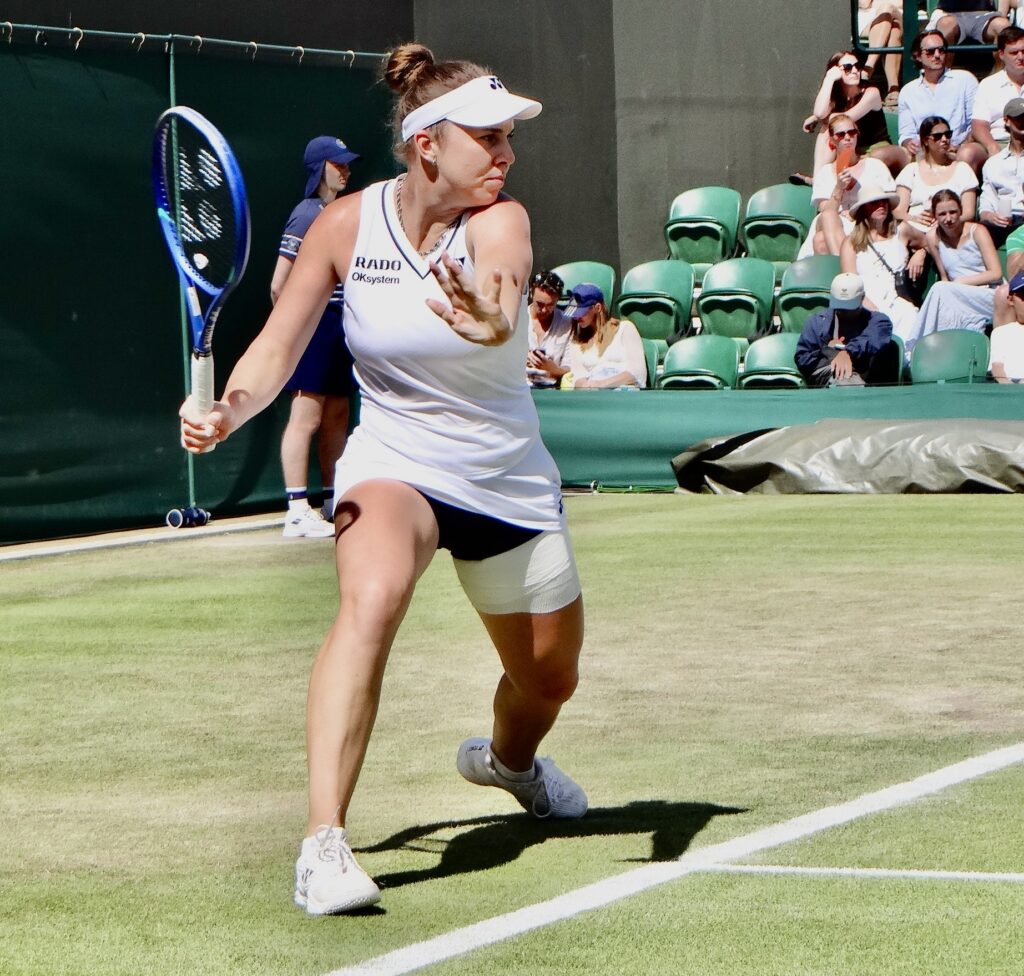

There was something almost surreal about Wimbledon this summer.
On Centre Court, in front of a global audience, Linda Nosková and Karolína Muchová were playing for the biggest prize in women’s tennis. Two Czech women. Two players from a country of fewer than 11 million people.
In a thrilling, topsy-turvy final, Nosková eventually prevailed 6-2, 5-7, 6-3, becoming the latest Czech woman to win the Wimbledon singles title. It was also the first Grand Slam final between two Czech women in the Open Era.
Nosková became the 11th Czech woman in WTA rankings history to reach the world’s top 10, reaching a career-high ranking of 7 following her victory. Muchová also climbed to a career-high of 6, making them the first two Czech players to be ranked inside the top 10 simultaneously since Muchová and Markéta Vondroušová in February 2024.
For a country of fewer than 11 million people, it is quite remarkable.
But this is not a phenomenon that began with Muchová and Nosková.
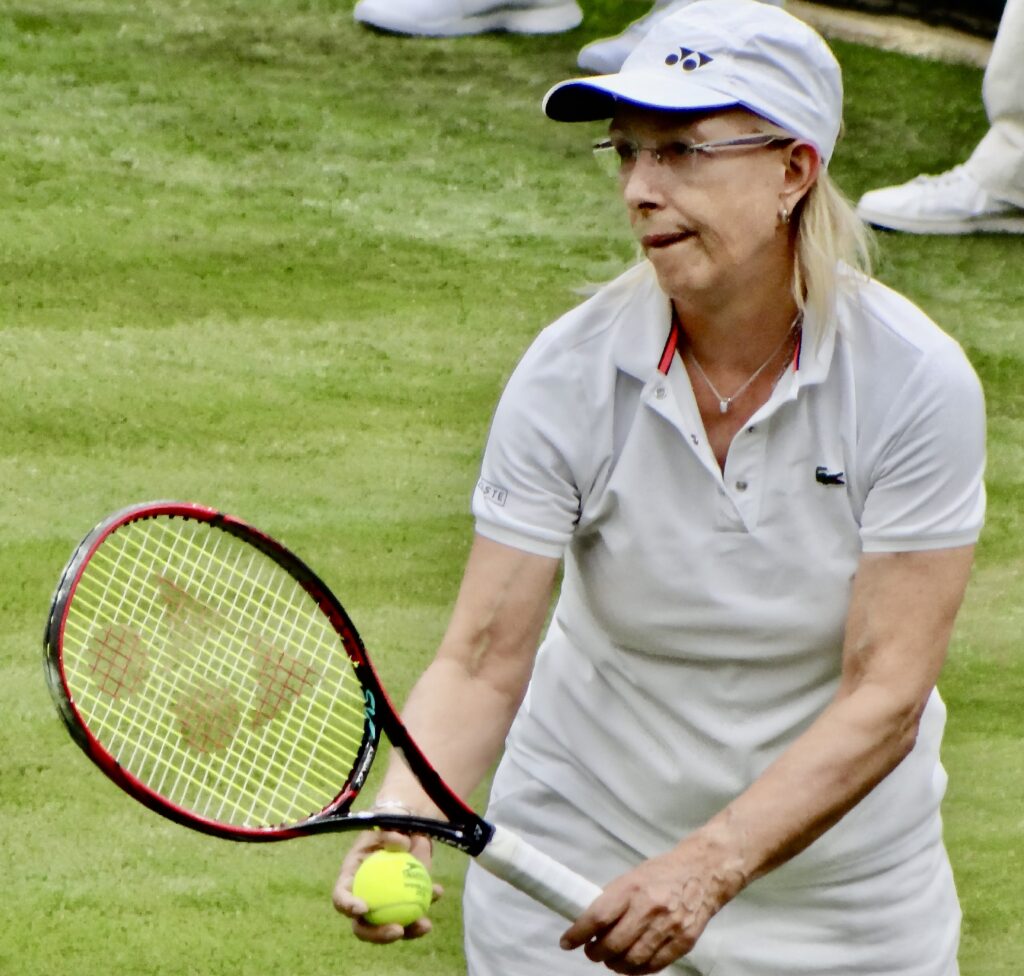
For decades, Czech women have been appearing at the business end of the slams. Martina Navratilova and Jana Novotná were the first to establish their country’s Wimbledon pedigree.
Nosková’s Wimbledon victory made her the fifth Czech woman to win the singles title, following Novotná in 1998, Kvitová in 2011 and 2014, Vondroušová in 2023 and Krejčíková in 2024 – who was also mentored and coached by Novotná. And Nosková’s victory also means that Czech women have won three of the last four Wimbledon titles.
So why is Czech women’s tennis so strong?
There is no single answer. There isn’t one secret Czech academy or one revolutionary coaching method that explains it all.
Instead, there is something arguably more powerful: an ecosystem.
Success is part of the culture
Ask what Navratilova means to Czech tennis and the obvious answer is that she was one of the greatest players the sport has ever produced.
But her influence goes beyond her record.
Navratilova spent years at the very top of the sport, becoming world No. 1 and winning Wimbledon nine times. Jana Novotná then provided another, perhaps more relatable, Czech Wimbledon story when she finally won the title in 1998.
Then came generation after generation of players who had grown up watching women from their own country succeed.
Nosková has spoken about Kvitová as an inspiration, while the presence of previous Czech champions has helped make the highest level feel attainable rather than mythical.
There is a difference between telling a child that she could win Wimbledon and being able to point at a TV screen and say: “Look! Someone from here just did it.”
That creates expectation. It also creates knowledge.
A country that has spent decades producing elite players accumulates something that cannot easily be measured in a rankings table: experience of what it takes to get there.
And that experience doesn’t disappear when a player retires.

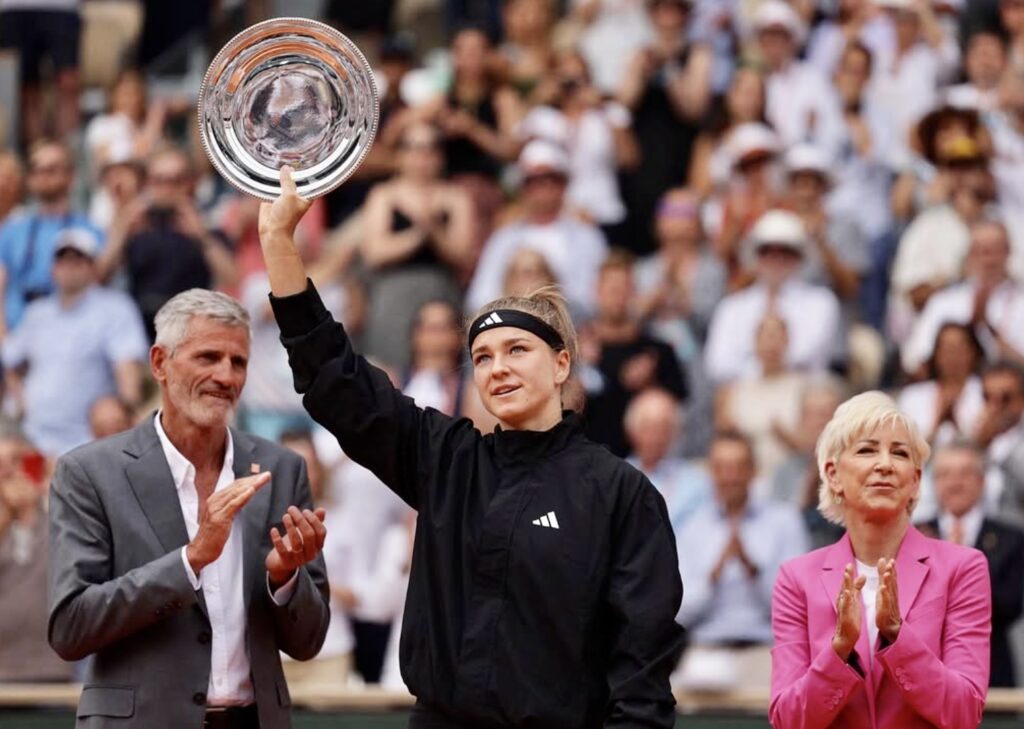
Knowledge is passed on
Perhaps the most revealing part of the Czech story is what happens to its former players and coaches.
Jan Stočes, the Czech national coach, points to the country’s technical preparation and the fact that many former players return to tennis as coaches, passing their knowledge to the next generation. He also highlights the network of local clubs and the country’s regional talent centres.
The Czech Tennis Association has built a structured network of talent centres across the country. Its development system begins with younger players and progresses through training centres for increasingly advanced age groups, with requirements around courts, qualified coaches, fitness support and winter training facilities.
That structure is important because it means a talented child does not necessarily need to be born in Prague or have access to an elite private academy from the age of five.
The Czech system actively looks beyond the biggest cities.
As Stočes explains, talented children can attract attention with their results at smaller clubs, and then be brought into the wider system. Three of the country’s principal centres are Sparta Prague, I. ČLTK and TK Prostějov.
That creates an interesting balance: local clubs provide the roots; the national system provides the pathway.
And there’s another crucial ingredient: competition.
When the player across the net at a junior tournament might one day become a Top 20 player, the standard rises for everyone.
The result is not simply more training.
It is a concentration of knowledge, competition and ambition.
The Prostějov effect
If you want to see the Czech tennis system in physical form, look no further than Prostějov.
The Moravian city is home to TK Prostějov, one of the country’s most important tennis centres. It has long been associated with elite Czech tennis and helped develop players including Radek Štěpánek, Tomáš Berdych and Petra Kvitová.
It is also home to the Tennis Europe Academy, established in 2018 through a collaboration between Tennis Europe, the Czech Tennis Association and TK Prostějov.
The Academy brings promising young players together for intensive training camps and places them in an environment surrounded by experienced coaches.
Its coaching team has included David Kotyza – former coach of Kvitová, Lucie Šafářová and Karolína Plíšková – alongside long-time Czech Davis Cup captain, Jaroslav Navrátil.
That detail is revealing.
The same coaching network that helped develop one generation of Czech stars remains connected to the next.
The facility itself brings together clay courts, indoor facilities, fitness and recovery infrastructure, and accommodation.
But the important thing is not simply the buildings.
It is what happens when players, coaches, national programmes and international competition intersect in the same place.
Prostějov is therefore less a single explanation for Czech success than a physical example of the wider ecosystem.
And while the success of players such as Berdych and Jakub Menšík demonstrates that the Czech model is not exclusively a women’s phenomenon, the women’s results remain particularly striking.
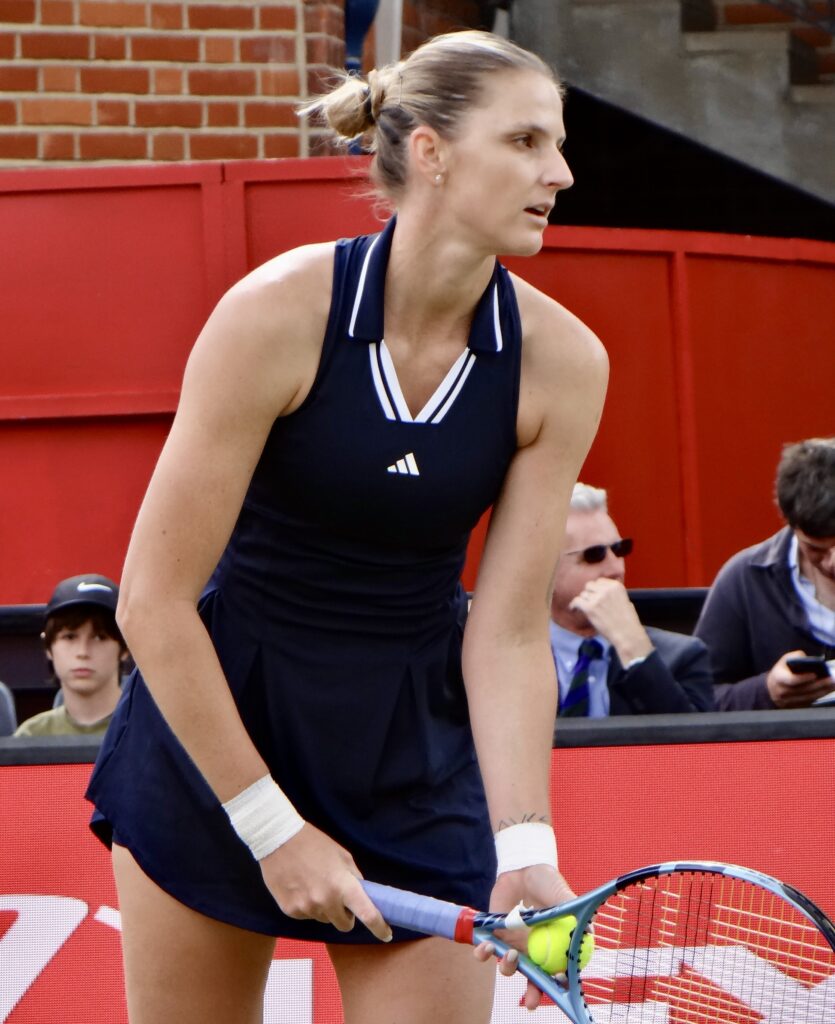


Why so many women?
This is perhaps the hardest question to answer.
The infrastructure explains part of it. The coaching explains part of it. The history explains part of it.
But none of those factors, on their own, explains why Czech women’s tennis has become so prolific.
Perhaps the answer lies in the combination of all three, and in the way they reinforce each other.
When young girls grow up seeing Navratilova, Novotná, Kvitová, Plíšková, Krejčíková and now Nosková succeed, tennis becomes culturally familiar.
When they enter local clubs, they encounter coaches with experience of elite competition. When they show potential, there are established pathways to stronger training environments. And when they progress, they compete against other Czech girls exposed to the same system.
The standard rises. Then the strongest players become the next generation’s role models.
Eventually, some of those players become coaches themselves. It creates a feedback loop: champions create role models; role models create participation; participation creates competition; competition develops players; players become coaches; coaches help produce the next champions.
That may be the most important part of the Czech story. It also helps explain why the success can appear disproportionate to the country’s size.
Czechia does not have the population or financial resources of the world’s biggest tennis nations. It does not need to produce enormous numbers of elite players. It needs to identify a relatively small number of talented children and give them an environment capable of turning potential into performance.
And because that environment has been refined over generations, it starts with a considerable amount of accumulated knowledge.
The evidence of that depth is visible at the very top. Nosková’s arrival in the Top 10 made her the 11th Czech woman to reach that level in WTA rankings history. Her achievement did not occur in isolation: within weeks, she and Muchová were at Nos. 7 and 6 respectively.
This is not simply a matter of producing champions. It is about repeatedly producing players capable of reaching the highest levels of the sport.


Past watching future
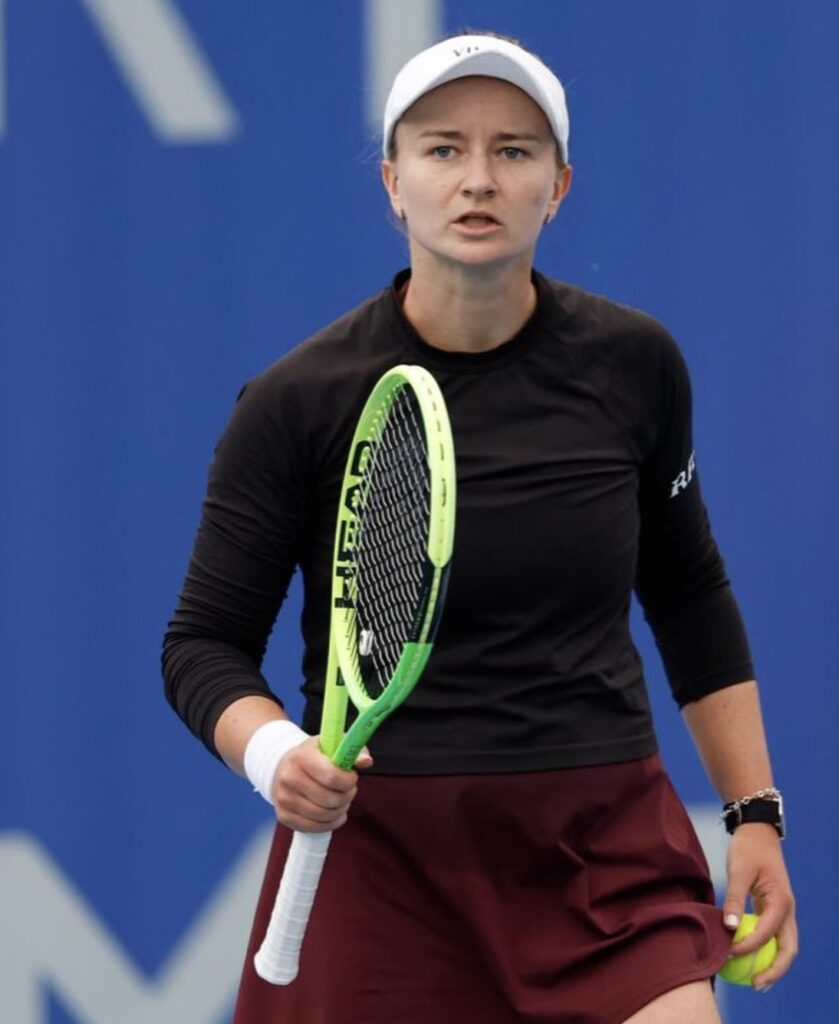
Nosková’s Wimbledon victory offered a remarkably literal picture of that generational handover.
Kvitová, one of the players Nosková admired growing up, was watching from the Royal Box as the 21-year-old joined her among the Czech Wimbledon champions.
The past was watching the future. That image perhaps captures Czech tennis better than any statistic could.
Navratilova’s generation established the possibility. Novotná made it tangible. Kvitová became the role model for another generation. Krejčíková and Vondroušová carried the tradition forward. And now Nosková has added another chapter.
The remarkable thing is not simply that Czechia has produced another Wimbledon champion.
It is that the conditions for producing one were already there.
In elite sport, where the margins are tiny and sustained success is notoriously difficult to reproduce, Czech tennis has built something unusually durable: a system in which experience accumulates rather than disappears.
That is the real secret. Not a conveyor belt. Not a single academy. Not one revolutionary coaching philosophy. Just generations of players, coaches, clubs, parents and role models passing the game on, and leaving the next girl to believe that the impossible is, actually, quite possible.
Oh, and look out for the next gen coming down the Czech conveyor belt. In true Venus and Serena style, it’s the Kovackova sisters, Jana and Alena. They already have a couple of Junior slams in doubles under their belts, so it’s surely only a matter of time…