
BALLS! – Billie Jean King’s Battle of the Sexes gets a new life!
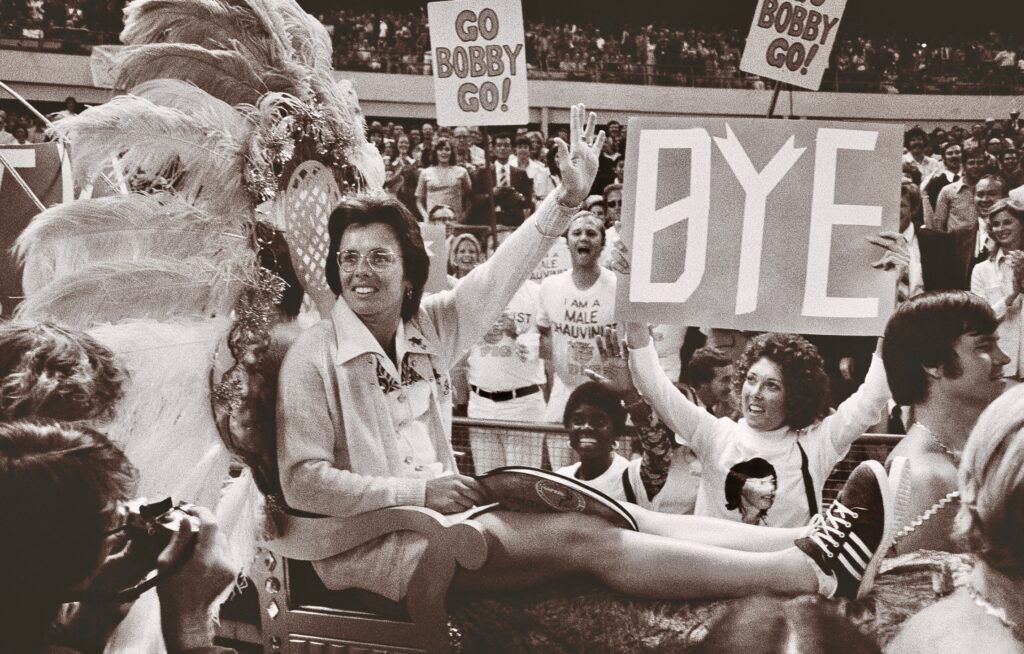
As we eagerly await the Battle of the Sexes Part Two – this time pitting Aryna Sabalenka against Nick Kyrgios – it’s worth remembering the defining decade in which the original Battle of the Sexes took place. A time when Billie Jean King was taking on not just male chauvinism, in the shape of her out-of-shape opponent, Bobby Riggs, but also in demanding equal prize money for female tennis players, which was finally achieved in 1973 at the US Open.
Now we get the chance to relive that precise time, place and box office event – also from 1973 – which was watched by 90 million people worldwide. It also inspired an Emma Stone movie, and now arrives as a remarkable opera called Balls, composed by Laura Karpman, and Helen M Jerome spoke to her ahead of its London premiere.
You can count the number of operas about sport on a couple of fingers, with Terence Blanchard’s Champion about boxer Emile Griffith probably the most famous, followed by Mark Anthony Turnage’s The Silver Tassie about football.
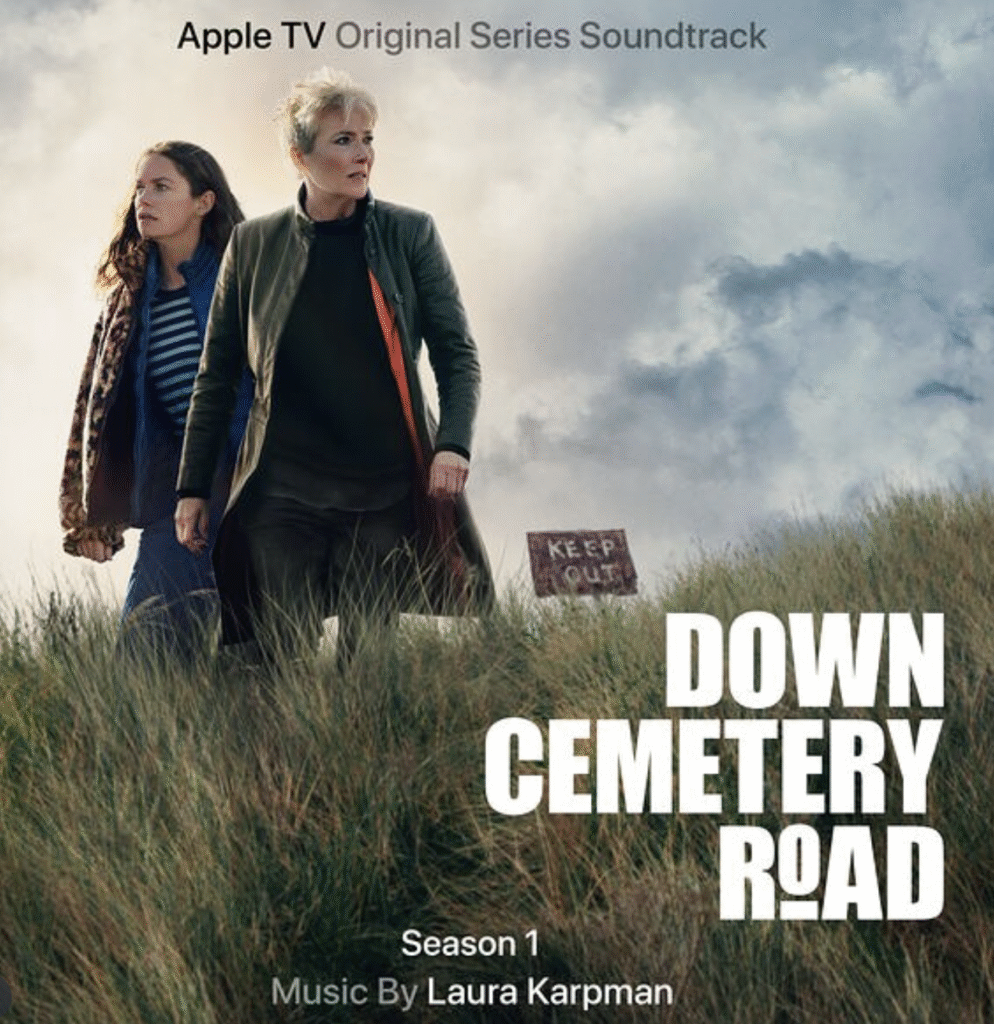
So I wanted to know why Laura Karpman (below, right) – who has won five Emmys, works with the likes of Steven Spielberg and JJ Abrams, and recently composed the music for the series Down Cemetery Road starring Emma Thompson – took on this epic challenge. And what to expect when the opera is performed by the London Philharmonia, conducted by Marin Alsop at the Royal Festival Hall this week…
First of all, how did your opera Balls come about? Was it a light bulb moment or did someone suggest it to you?
No, it was a light bulb moment. I had just done a piece at Carnegie Hall called Ask Your Mama, which was a whole different thing… it wasn’t quite an opera, but kind of what we’re doing with the London Philharmonia.
It was a staged, theatrical, music composition. Just a bunch of different stuff.
And I thought the Battle of the Sexes would make a fantastic opera.
So I reached out like a shot in the dark to Gail Collins, who’s the opinion columnist at The New York Times, because I really like her writing.
She’d written a fantastic book on American women. And she talked about feminism, but with a great sense of humour.
I mean, there’s so many messages in the match, and then, of course, all of Billie Jean’s work after.
But one of them was just… humour and the ability to communicate something that was very profound and in fact, not at all light. But able to do it in a light way that was digestible for a lot of people.
I think that’s a powerful tool.
I thought it would be a great opera, and she thought it would be fun to work on it and had never done anything like it. So it was: why not?
In opera you have certain vocal acrobatics, so you’ve got this physical performance singing, and it’s not unlike what it takes to do a sport.
It was the 50th anniversary in 2023 and I wondered if that nudged you a bit?
No, not really. I tried to get this thing off the ground for a long time. And nobody bit.
And then finally, Yuval Sharon, a great, great, great director who was around a small opera company here in LA, accepted it as a workshop piece, which was a big deal.
So we were able to workshop 15 minutes of it.
And an opera parallel, not even a year ago. We did a full performance of it.
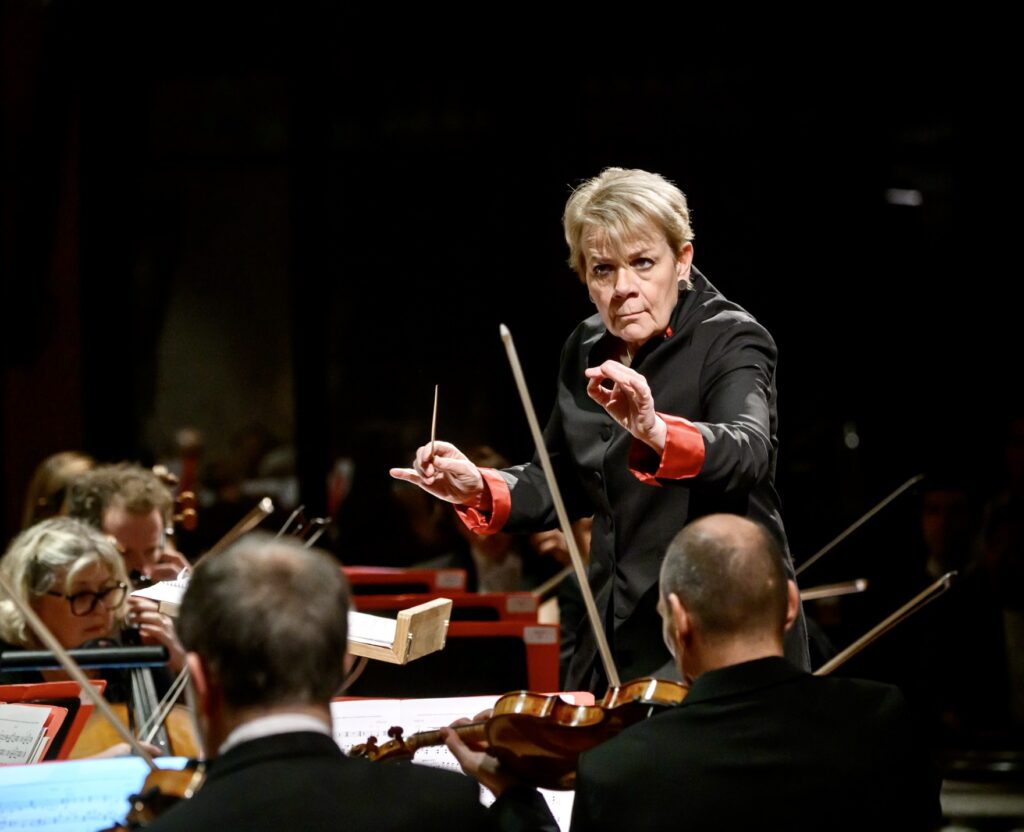
Then Marin [Alsop, below left] expressed interest in doing it, so I orchestrated it.
When I heard it in San Francisco, it was actually a re-orchestration, from what I had done with Yuval in 2015.
I expanded it a little bit, then when I heard it in San Francisco, I thought, oh my God, this piece needs to be for orchestra.
When this came up, I said, yes, let me make a couple of revisions based on the performance that we had and then let me orchestrate the whole thing. So that’s what we did.

So you started work on this years ago?
Yeah, little bits and bobs, but I didn’t really write it until they all said: let’s go.
The idea came in 2009, a bit got performed in 2015, then it was finished in 2023, and revised just a few months ago.
With all the arts, sport is notoriously hard to do. We’ve seen it fail in almost everything, film, drama, literature, and I wondered if you found that daunting.
Tell me where you think the failures have been.
Most sports movies are terrible because the one thing they don’t get across is the excitement of sport. It feels very static. Whereas sport, when you’re there watching it live, it’s the most exciting. So maybe something like opera is more suited to it?
That’s a really interesting perception. The reason I asked is because as a film composer – which is mostly what I do – I’ve worked on a couple of sports things.
You’ve got me thinking about a convention for scoring sports. If you think about that Mighty Ducks film, that was one of the against-all-odds films, and there’s actually a show that I think worked really well, Friday Night Lights.
Because it’s so long, you really get into the characters, you really root for them. I think that what film can do is get you into the interior of the individuals, right?
In sports, you’re rooting for a team. You’re not really thinking about what any individual is going through.
Maybe you are in a sport like tennis where you’ve got one person against another and if you’re at a match like Wimbledon, you’ve watched the whole thing happen. You’ve seen ups and downs, and it’s very dramatic, and I do think it mirrors opera in a certain sense.
First of all, in opera you have certain vocal acrobatics, so you’ve got this physical performance singing, and it’s not unlike what it takes to do a sport. So I do think it lends itself well to opera, but I tell you something funny, as another aside.
I saw the match when I was a teenager and it was hugely influential on my life.
I meet young female athletes, and I say: you know, you wouldn’t be doing this if it weren’t for Billie Jean; there would be no Title IX; you would have no funding for sports at your school.
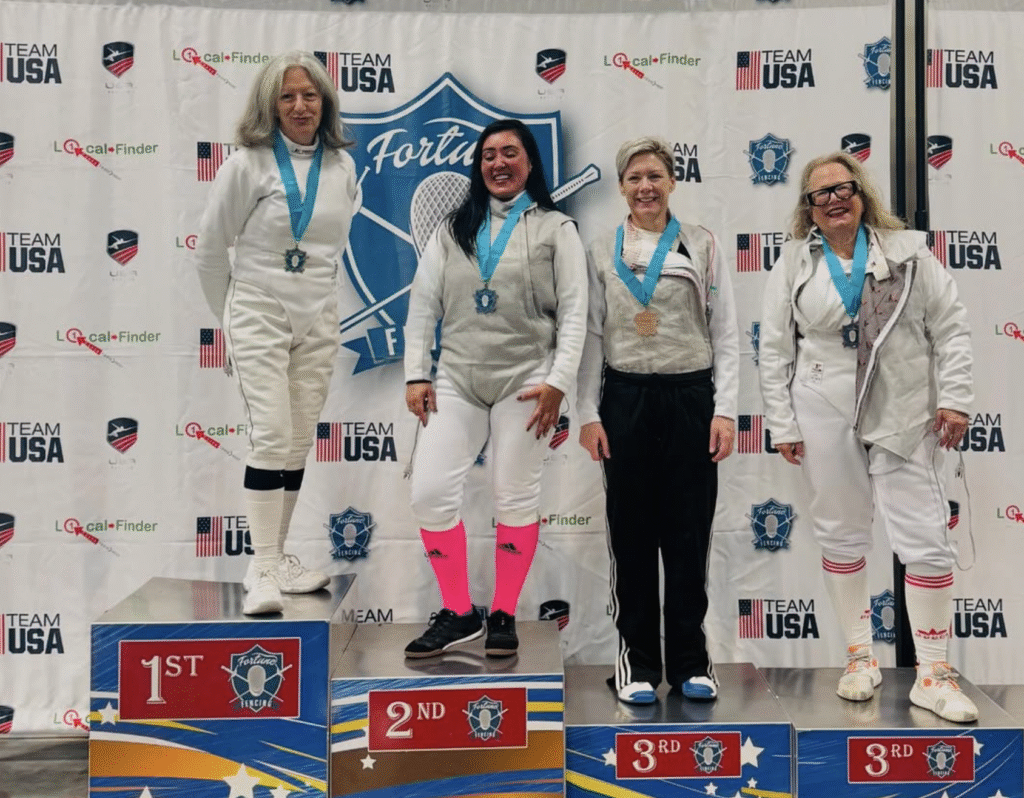
In the past few years, I’ve taken up competitive fencing. My son is a competitive fencer, and we just have been at a tournament with him for three days.
It’s just misery. And it’s funny because it’s kind of fabulous too.
Individual sports are really hard because it is about so many things.
It’s about what you’ve eaten, what good shape you’re in.
Are you lucky today? Are you having a good day? Did you wake up right?
In team sports, of course, it’s an issue, but when it’s an individual sport, it’s really hard.
And I do think it’s like singing, where these people are getting out there. They have to perform.
Some days are going to be better than other days. There’s no question about it because it is a physical act.
But it’s funny because as I’ve learned fencing and starting as a beginner at this point in my life, it’s like going back and learning how to play piano again.
Where do you learn the technique? Where does luck come into play?
Where does sheer grit come in? How can you channel grit into appropriate action?
It’s something I thought a lot about.

Something that’s just occurred to me is the individuals. When you go to an opera or musical, there’s often a different motif for each character. I’m thinking particularly of Hamilton where each character has their own style.
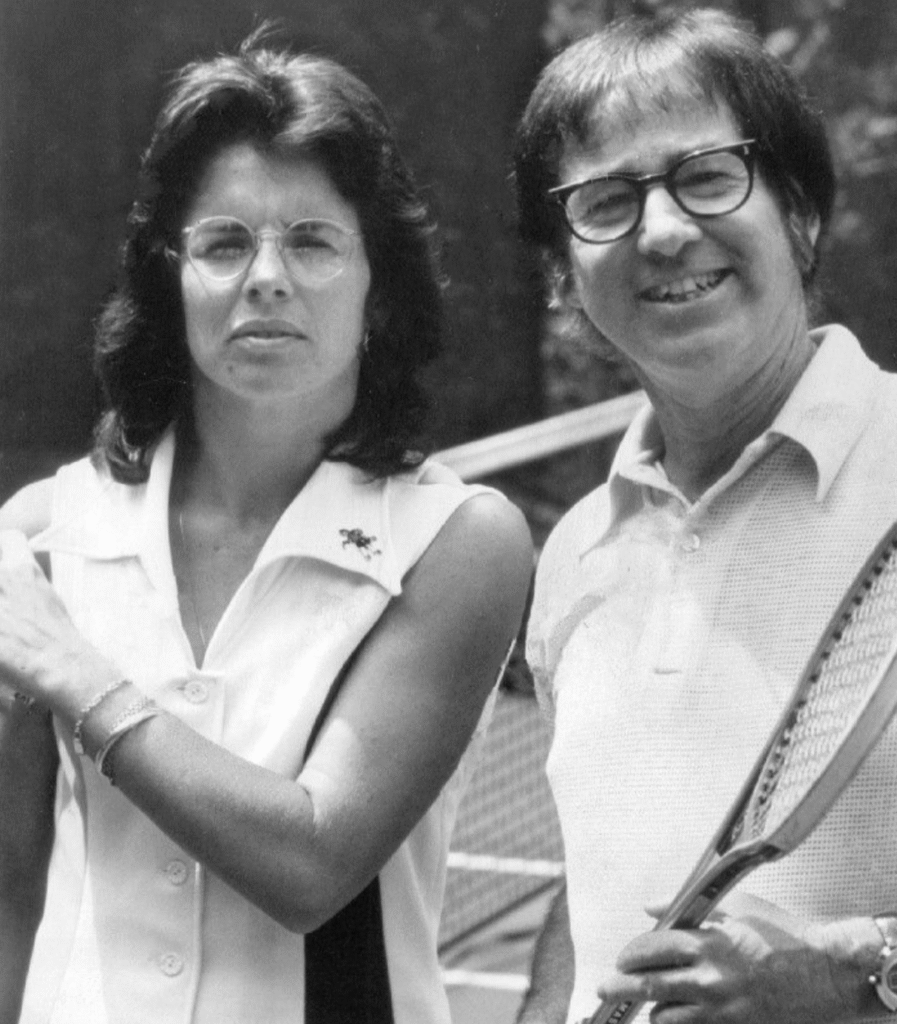
I wonder if with Billie Jean and Bobby Riggs (above left), you have a different feeling for each of them.
Yeah, I do. Basically you’ve got Susan B. Anthony, who is a coloratura soprano, which means it’s very busy and flowing. You might say it’s old-fashioned, but it differentiates her.
Billie Jean is a mezzo-soprano, and she is serious mostly.
You know, pressure is a privilege. This is one of her famous quotes woven through the libretto.
Bobby is a tenor. He’s singing a lot in his falsetto, but he’s the most musically theatrical of them.
There’s a number he does, “another dollar, another day, yay, oh that’s the American way” and it’s like a kick line you know. But he’s the jokester right!
Then you’ve got Marilyn, her girlfriend, who is the sexy seductive, jazz singer. She’s scatting, she’s seductive.
So basically what you have – the structure of the piece – is you’ve got the match, which is almost all completely quoted from the actual match.
I got a transcript of the whole thing, all of [broadcaster] Howard Cosell, I didn’t write any of it.
All of Cosell and [co-commentator] Rosie Casals is straight from the match. So a lot of that comes into play.
And then you’ve got these asides where you’re looking into the individuals.
They almost pull out of the action, and you go into how they all got there.
Pressure is a privilege. This is one of Billie Jean King’s famous quotes woven through the libretto
Did Billie Jean King get involved? Did she know about it early on?
I tried to get to her. I mean, 150 times in 150 ways!
So no, but Rosie Casals came to the San Francisco performance and – although this is supposed to be a surprise – apparently Billie Jean knows about this and sent something.
This is supposed to be my surprise. And [the conductor] Marin Alsop in another interview gave it away.
So I don’t know what’s happening. But I think she’s aware of it. Hopefully she won’t hate it.
I can tell you for sure though, I’m right now scoring a documentary on her for ESPN, and I asked the filmmaker to get her a note, which she did.
So I know that she knows about it. And Marin reached out to her.
We tried to get her there. I don’t think she’s coming, but tell your readers, there’s some surprise!
When you did this, had you already seen the Battle of the Sexes movie with Emma Stone?
Yeah, I had. And of course, I saw the match.
I saw the match when I was a teenager and it was hugely influential on my life, then there was, I think another film of it in the 90s by another filmmaker, a television thing.
I saw the Emma Stone one a couple of times. And I reached out to the filmmakers, that’s how I got the transcript of the match.

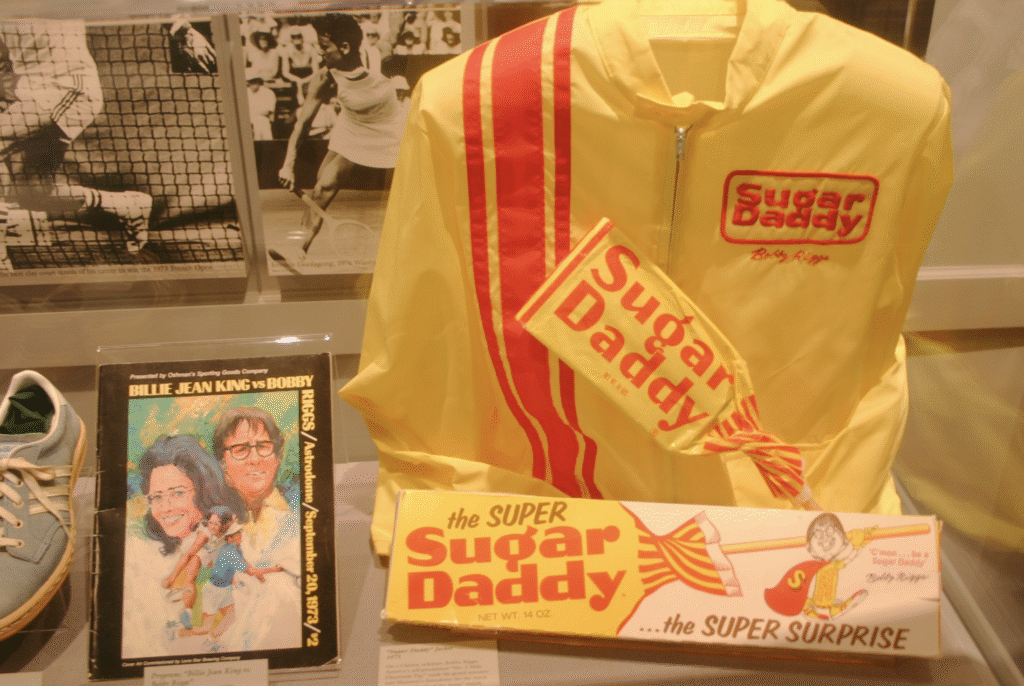
I saw the play called Balls off-Broadway – also about this match. Did you see that?
No! Was there a play about her called Balls? Oh, how funny, I knew nothing about that, so there you go. I stole something without even knowing I was doing it!
When working with Gail Collins, do you already have her words when you’re scoring it?
Yeah. Basically, people like to work a number of different ways.
I like to work on it with the words, make changes, ask for additions, make subtractions.
So I’ll have a basic text and then I’ll massage that.
When people see it performed, particularly at the Royal Festival Hall, what do you hope they’ll take away from it?
Well, a lot of things. First of all, a lot of younger people don’t even know who she is.
So, number one, finding out what an astonishing person she is. I meet young female athletes, and I say: you know, you wouldn’t be doing this if it weren’t for Billie Jean; there would be no Title IX; you would have no funding for sports at your school. Then they say: well, tell me about her!
I walked into a store, and some guys were watching the WNBA on TV, and I said: do you know about Billie Jean King, and they had no idea who she was. I said: none of this would be here… then they look her up…
So I think first of all to just proselytise about what an incredible woman she was. Not only as an absolutely astonishing athlete, but also using her field to really be an incredible advocate for sports and for the women’s movement at large.
For me, and I know for Marin as well, all of the advocacy we’ve done has been based on that model, which is basically work in your own backyard to make a change and then you’ll see that grow and bloom out.
I started doing my own advocacy for women film composers which sounds like a small world, and it is but it’s like women’s tennis in the 70s what there were 20 of them or so, a small handful.
To interject, you said it really influenced you when you were younger. How did it influence your values – maybe burgeoning feminism – when you were a teenager?
No, it was just, I was a woman composer.
There were no models. There was nobody.
It’s not like you would go to the concert hall and hear music by a woman.
There was nobody.
Constantly you’re being told: you can’t do this, or there’s no way you could learn how to do this.
Or you were the only woman in every room.
And so seeing Billie Jean King get out there and beat the guy.
That meant it could be done.
And she knew that.
I was a woman composer. There were no models. There was nobody.
It’s not like you would go to the concert hall and hear music by a woman.
Constantly you’re being told: you can’t do this.
Or you were the only woman in every room.
So seeing Billie Jean King get out there and beat the guy.
That meant it could be done.
And that’s why she was under so much pressure, especially after Margaret Court lost.
This was not playtime.
She had fun with it, and she came out on the litter, and played his game. But she played his game having trained, having been in perfect physical condition, having worked out how to beat him.
It’s like all of us; we come in uber-prepared and ready to show our stuff.
And that’s what she did.
I think that even as a very young person, I was able to see that and see it someplace in my mind as a method.
So sure, her influence was not only just in sports – I mean it’s Title IX, all of that – but it was about a way to actually do this, a way forward.
And if you were looking for that way, she was the only person at that time who showed a path.
Do you watch other women’s sports?
Yeah, I’ve gone to Angel City, I’ve gone to the WNBA, but mostly, honestly, my spare time is fencing or at fencing tournaments myself (Karpman, below right) or with my son.
I have been to the World Cups for fencing.
I’m getting quite involved in the sport and help them in whatever ways I can.
It’s such a small sport that my coach was an Olympic alternate. And basically the Olympic athletes train at our fencing club.
So you’re literally taking a lesson alongside the Olympic athlete with the Olympic coach. And it’s a massive privilege.
I saw Jake Heggie’s Dead Man Walking, the opera, which really works and hits home. It made me think you could adapt almost any story, real or fictional… so I wondered if you were tempted to do any other sports operas or compositions, or sports video game scores…
I’m working on a piece now creating themes for women who didn’t have themes in movies.
Because of course no women had themes because they were always sidekicks. It’s called Unsung and is basically correcting history. I’m working on a musical piece about Dorothy Arzner, who is still the female director who has made the most movies of anybody in Hollywood.
She was an out-queer woman in the 40s in Hollywood, dressing in a jacket and tie, walking around with a cigar, bedding all of her actresses and making genre films. So we got the rights to Dance Girl Dance which is really a pretty amazing feminist movie, a genre film with Maureen O’Hara and Lucille Ball. We’re gonna set that for the musical stage.
What I’m interested in is not so much just sports, but about telling stories of women who haven’t… I mean, Billie Jean King is hugely celebrated, but her story may not have been told in this exact way.
Dorothy Arzner, even you have never heard of her. That’s the whole point, is people in certain worlds don’t know who Billie Jean King is. People in other worlds don’t know who Dorothy Arzner is.
I have a piece that was a commission from the L.A. Phil called All-American. They asked me to write a piece for the Hollywood Bowl opener.
So I took the themes of three women composers that nobody has ever heard of. And one of them wrote Happy Birthday, the most famous song in the English language. And Margaret Hill, and you’ve never heard of her!
I’m interested in unerasing women’s erasure in history.
It’ll be a composition for orchestra, just themes.
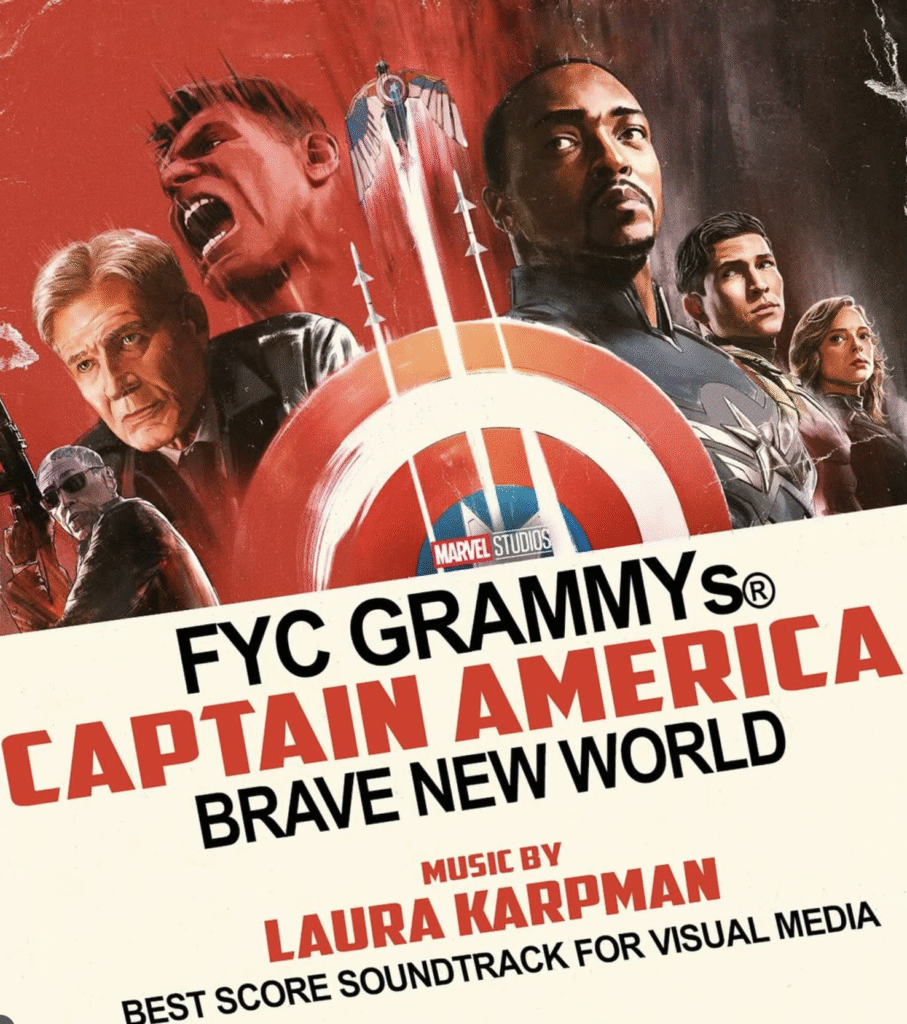
You know, I wrote Captain America (above), I did the Marvels. So it’s like writing superhero themes for women who never got them in films.
In my concert music work, I’m interested in unerasing the erased women of history.
I have a question about your Marvels work because with Serena and Venus, the Williams Sisters, I could see them both as Marvel superheroes. I don’t know whether that would appeal to you?
That would be awesome.
I mean, Serena’s crazy. She is a superhero. I mean, my God, what an athlete.
Both of them are incredible athletes, and they do so much stuff outside of sport as well.
Themselves and people like Coco Gauff and Naomi Osaka are really following in Billie Jean King’s footsteps, the things they say.
Yeah. They are doing it absolutely out loud, saying they are following in her tradition. That’s something that they’re acknowledging publicly. And I think in more ways than just being great tennis players.
I want you to do that Marvel thing, just so you know.
Okay, I got the message. I can see them like that.
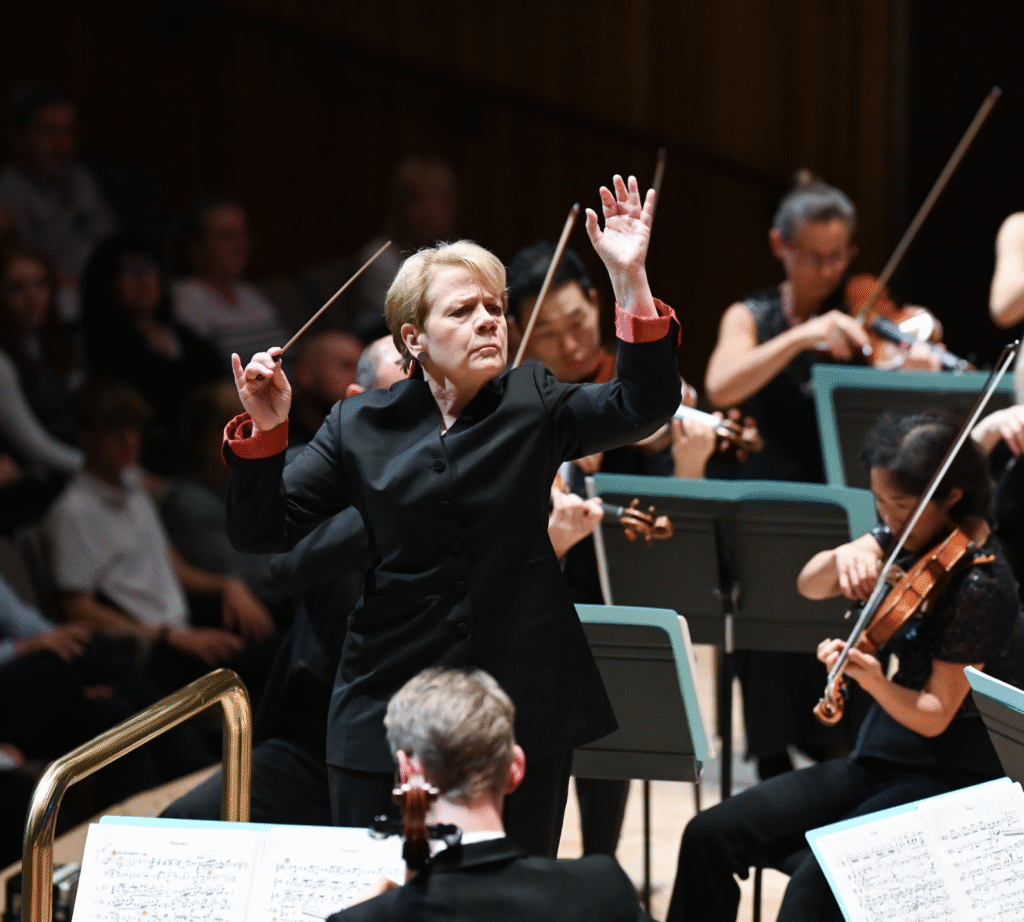
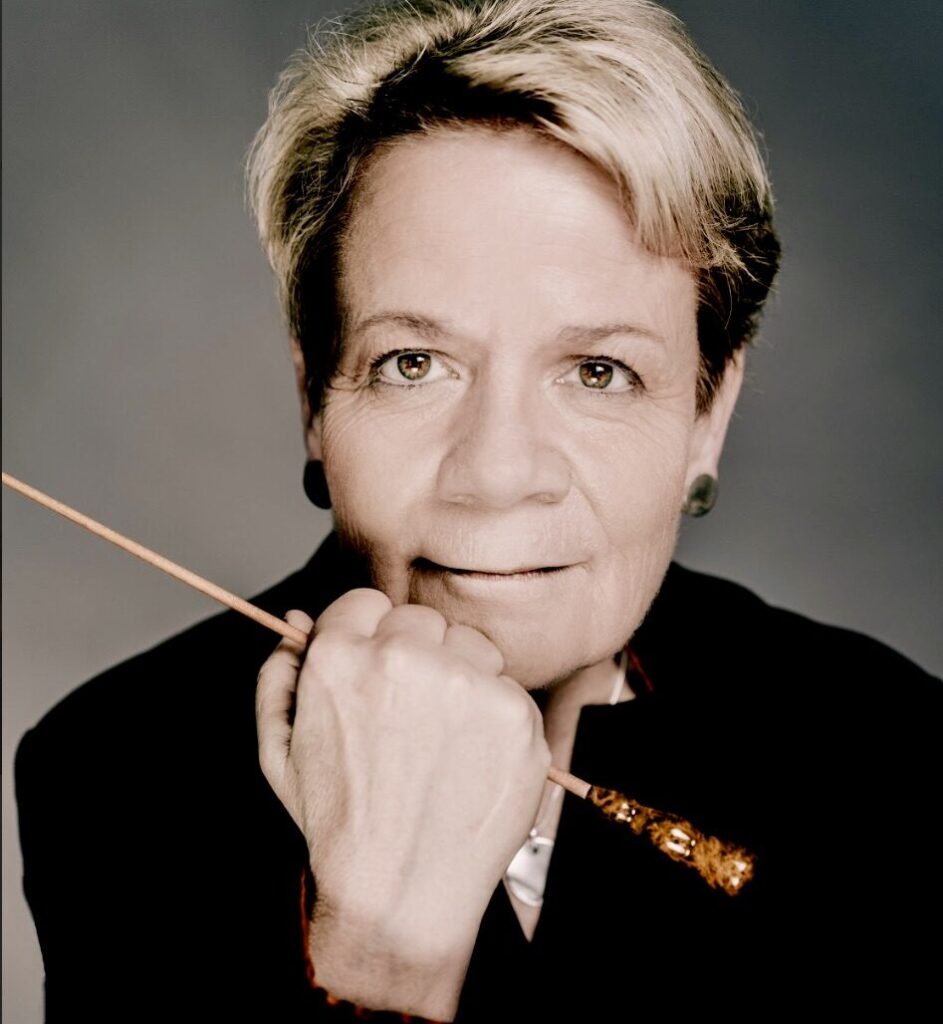
You mentioned [the conductor] Marin Alsop (below). Did you already know her? Because it’s quite a coup to get her to conduct this.
Yeah. We went to Juilliard together. I’ve known Marin for many years. She has performed a lot of my music, we’re friends.
I don’t know why she reached out about this. I think because she wanted to do something as the whole London Philharmonia season is about identity. So I mentioned this.
And one of the things I love about this piece too, is that you have two women who love each other singing together.
Look, the Marilyn story is complicated, obviously, and everybody knows that at this point.
But in that moment, they’re on stage, dreaming about living together, and that’s nice.
You haven’t seen much of that, if at all, in opera. So it was a pleasure to write that.
Marin reached out to me and said: look, I want to do identity. What do you have?
I mentioned this idea for Unsung. And then I said: there’s Billie Jean King. It would be great for orchestra; I would be happy to orchestrate it.
And she said: bingo, let’s do that.
What I’m interested in is not so much just sports, but about telling stories of women who haven’t… I mean, Billie Jean King is hugely celebrated, but her story may not have been told in this exact way.
I’m interested in unerasing women’s erasure in history.
You said about not everybody knowing Billie Jean King. But I think a British audience might be more knowledgeable – plus they’ll have chosen to come and see it.
Oh, a British audience, because the obsession with tennis, because of Wimbledon, because of how many times she was a champion there?
I think that’s right, that makes complete sense.
I mean, tennis is definitely a popular sport here [in the US], but it’s a religion over there [the UK].
Do you think a British audience will hear it differently and get different things from it?
Great question. I don’t know. I hope so.
Maybe for a British audience, the game of it will be fun rather than the message of it. Maybe the actual, literal and figurative bouncing of the balls will be the thing. That’ll be interesting to see.
Are you coming to London for the Royal Festival Hall performance?
Yeah, I’m coming over for a few days
I’ll be there for rehearsals and stuff beforehand.
I still think you should invite Billie Jean to come along.
Oh, I have, that’s why I had the filmmaker pass along the note, but I don’t know what’s happening.
So maybe she’ll be there, who knows.
But I will find her. I will track her down at some point in this life of mine and I’ll meet that woman.
That is a life goal of mine. It’s going to happen. I don’t know when, but it will happen.
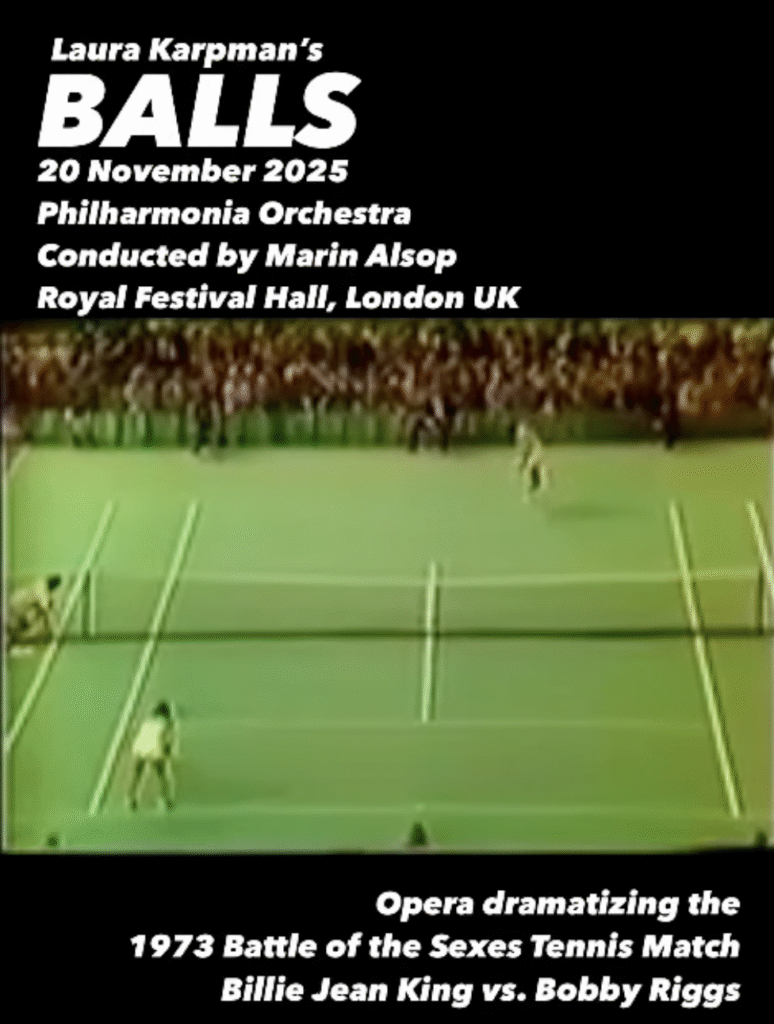
Laura Karpman’s opera, Balls, will be performed by the London Philharmonia, conducted by Marin Alsop, on November 20 at the Royal Festival Hall.
https://www.southbankcentre.co.uk/whats-on/battle-of-the-sexes-marin-alsop-conducts-balls/
There’s also a pre-show talk on gender at 6pm, details here:
https://philharmonia.co.uk/whats-on/philharmonia-debates-music-gender/