
BOX FRESH – are boxing and theatre the perfect match?
When Charlie Josephine’s play Bitch Boxer debuted at the Edinburgh Fringe in 2013, it felt like a resonant rallying cry, as just one-year earlier women had been allowed to box in the Olympics for the first time.
From Team GB’s Nicola Adams to Ireland’s Katie Taylor, names were made at London 2012.
Ollie Swetenham talks to Charlie Josephine about the genesis of the play, how it evolved, and what to expect from this welcome revival.
“Women can’t box? You watch!” It is in 2012, in the lead-up to the landmark moment for women’s boxing, that we meet Chloe Jackson. The protagonist of Bitch Boxer is preparing for a fight that, if she wins, will allow her to compete on the biggest boxing stage of all.
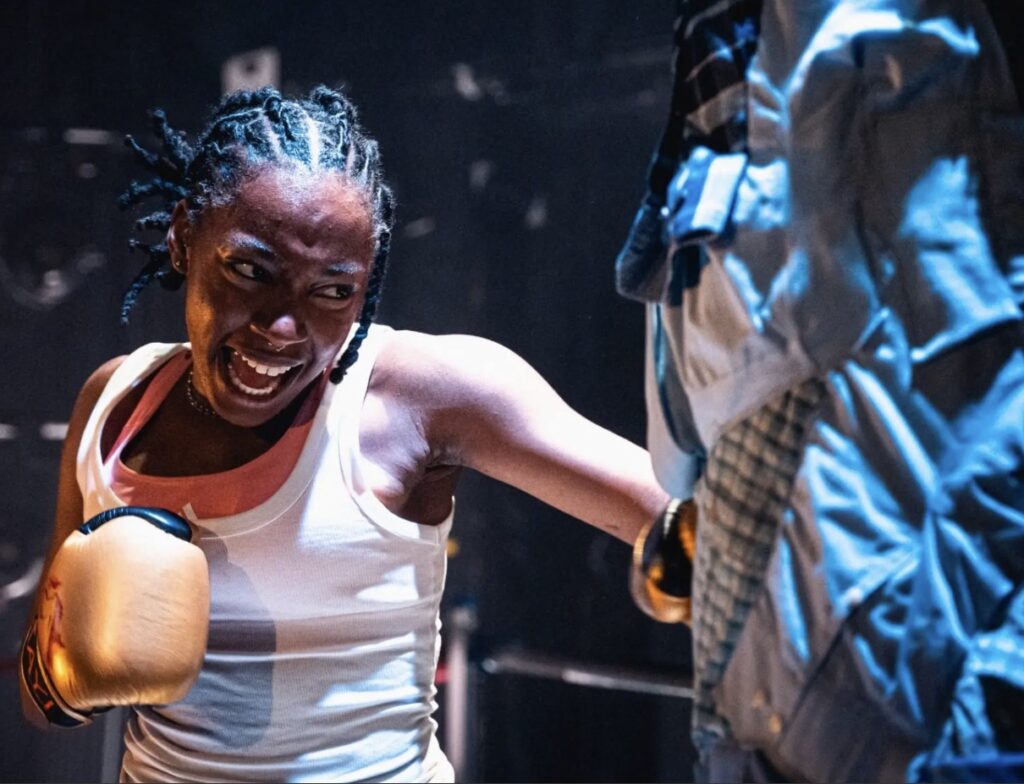
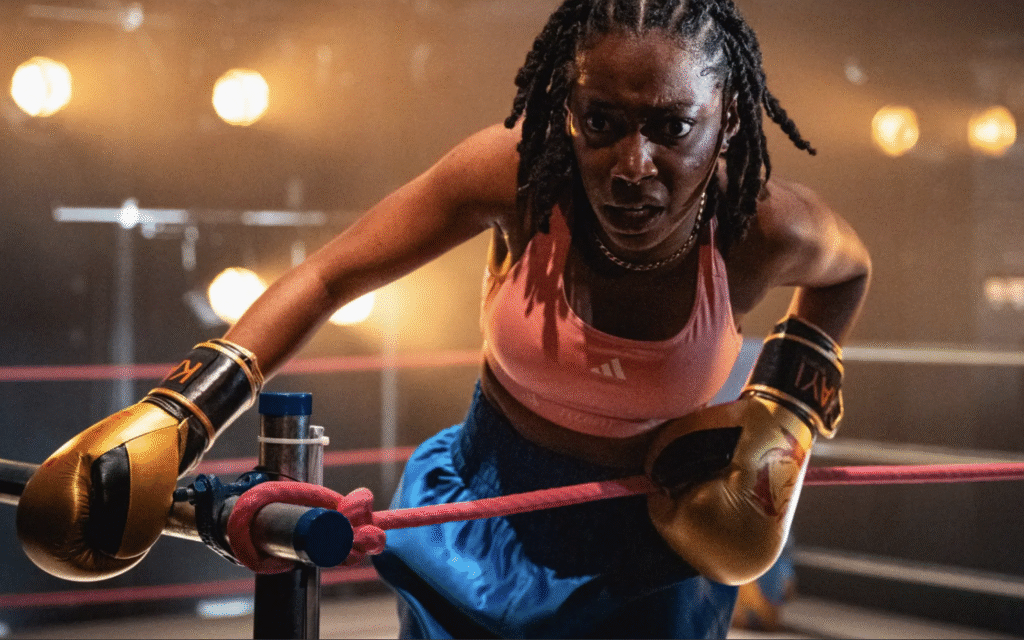
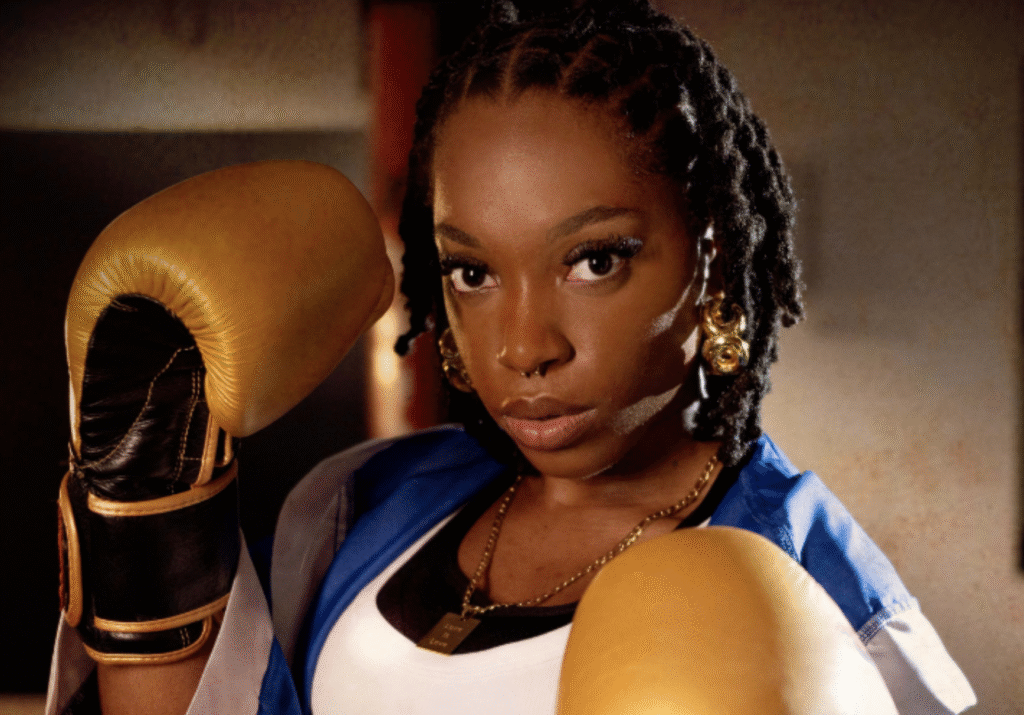
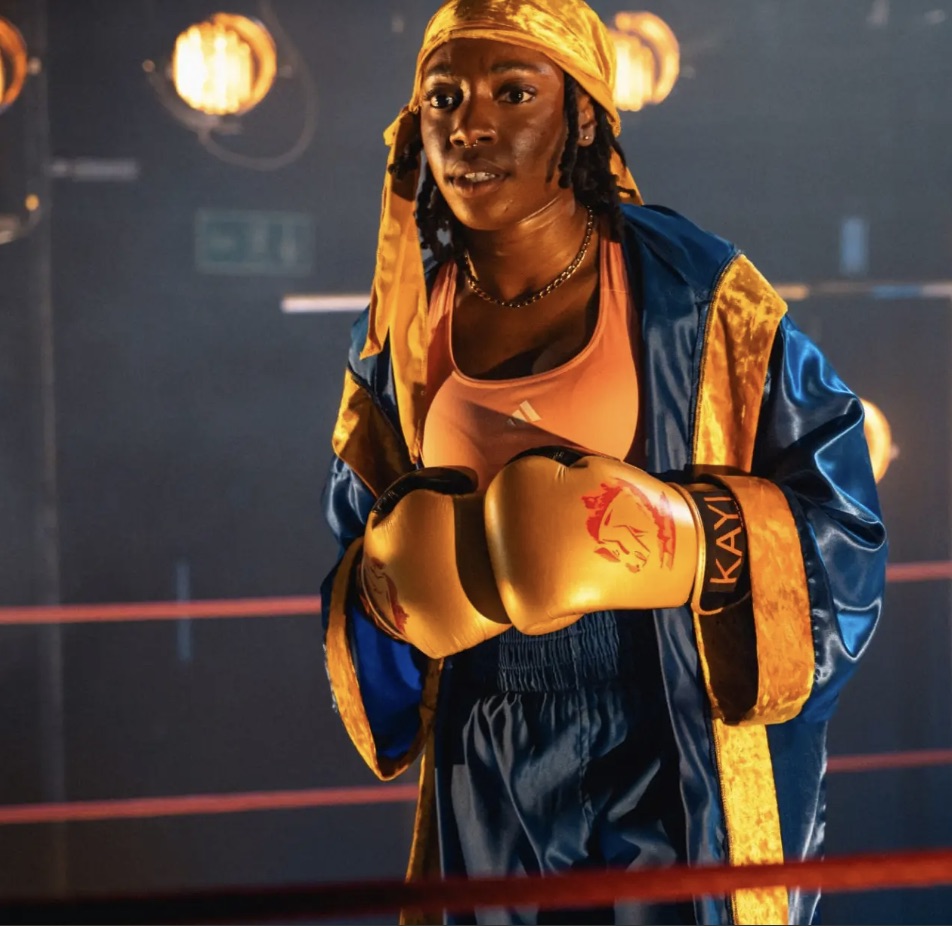
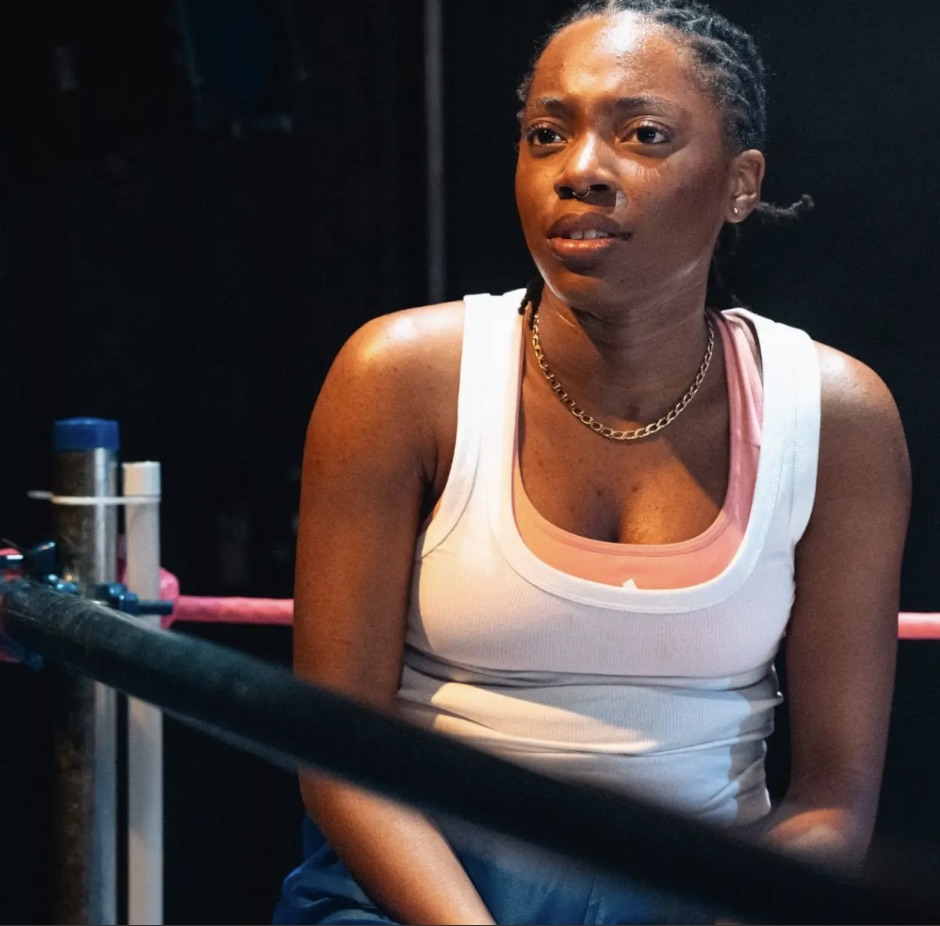
In this scorching one-woman show, Chloe, played by Boarders’ Jodie Campbell (pictured above left and below, in the production), outlines not only the physical challenge of this preparation – but the emotional weight she feels, exacerbated by the loss of her father.
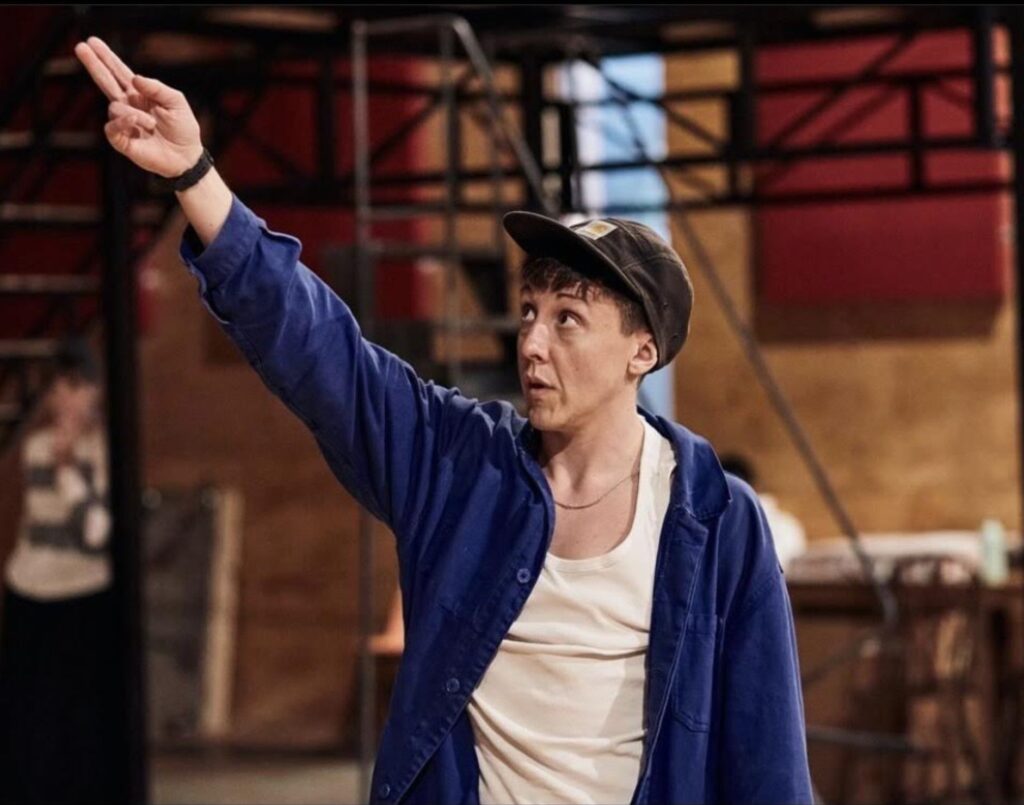
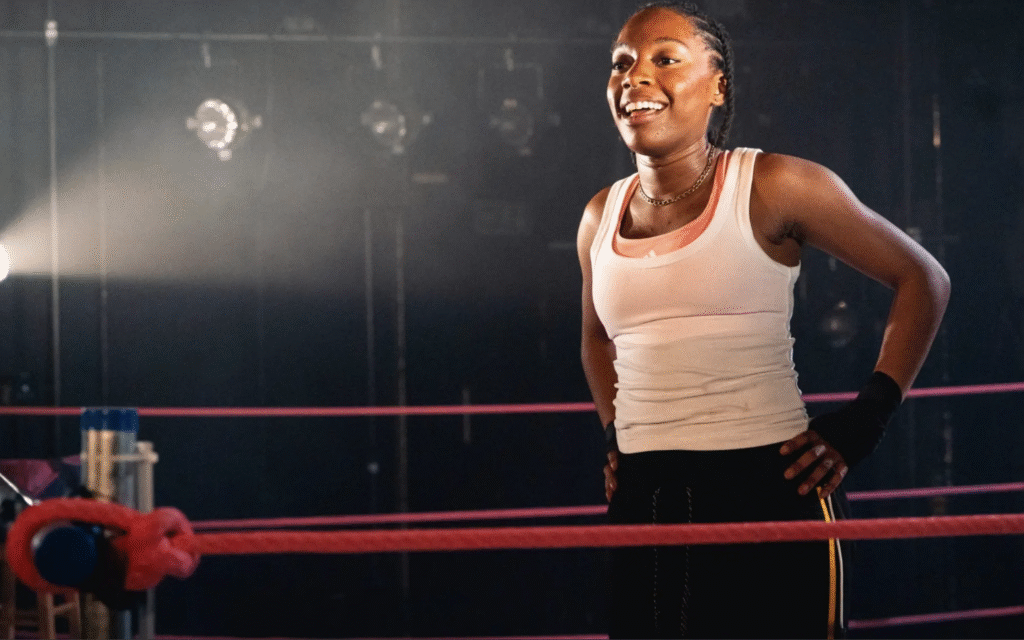
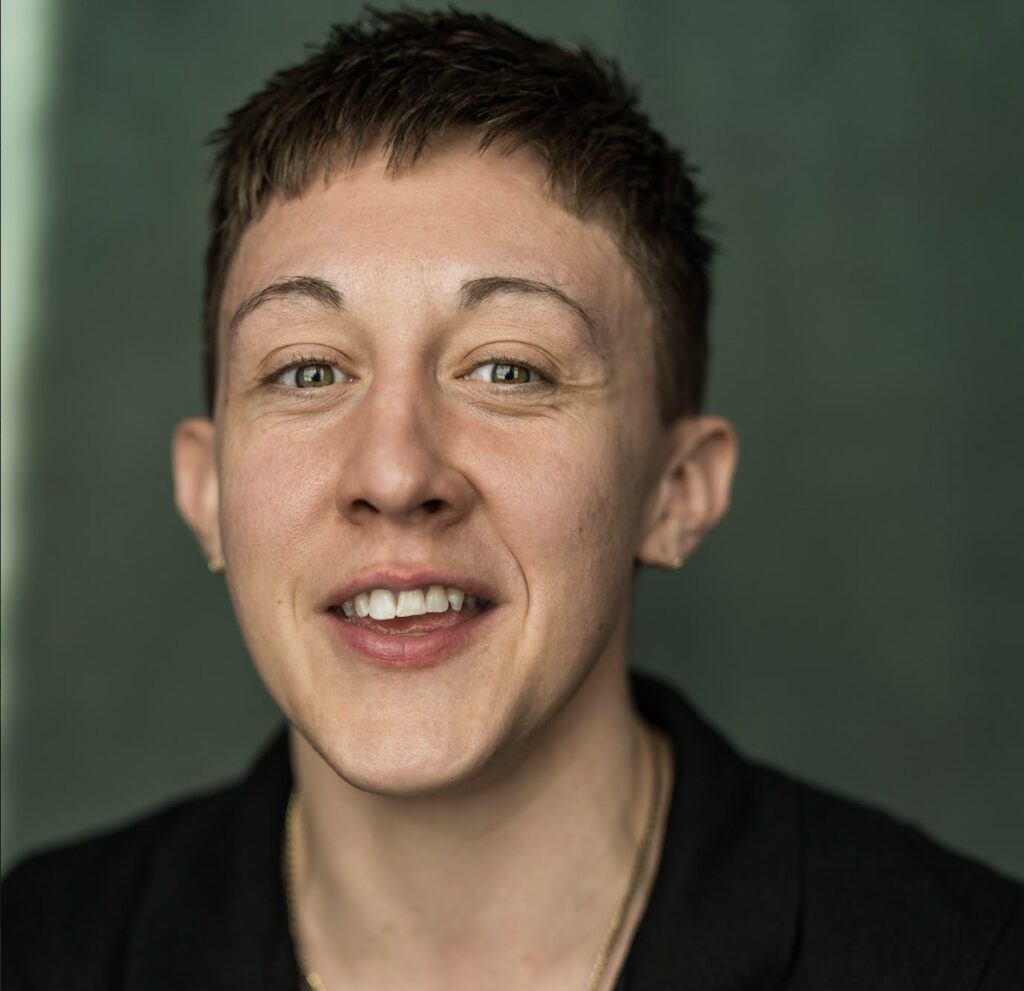
Charlie Josephine (above, right and bottom of page, centre) themself performed the lead role in Bitch Boxer’s first staging, seeing the play transfer to Soho Theatre and win numerous awards, before touring both nationally and internationally.
Since then, Charlie has continued to produce acclaimed theatrical spectacles – most recently Cowbois for the Royal Court, and Pinocchio for Shakespeare’s Globe.
Bitch Boxer is being brought back to the West End in a new staging directed by Prime Isaac, transferring from Watford Palace Theatre to the Arcola.
We asked Charlie about the staging of their new play, what has changed, and what hasn’t, in the world of women’s boxing since the Olympics and how the alchemy of theatre and sport can so often combine to create something truly magical.
Are you a fan of sport in general? Did you watch any of the recent women’s sport spectacles, like the Women’s Euros or Women’s Rugby World Cup?
Yes, I’m a fan of sport. I actually prefer doing it than watching it. But I keep up to date with women’s boxing and football.
I read that you trained for a year in a boxing gym in preparation for the first run of Bitch Boxer. Is boxing something you’ve kept up with?
Yes, I trained at Islington Boxing Club while writing and then rehearsing the play. I fell completely in love with the sport and the family community at IBC (big up the Haglands!). I ended up competing for IBC, telling myself I’ll just have one bout to see what it’s like…
They say it’s addictive and they weren’t lying. I ended up having 12 fights, winning 9 of them, including winning a National Title. I really loved it. It was hard for me to eventually hang up the gloves, and I miss it.
After the landmark moment of women’s boxing featuring in the Olympics for the first time in 2012, have you seen any changes in the sport since then?
Yes, there’s so much more acceptance, and respect, of women in boxing. I felt the change from the inside of the sport; it was a wild thing to experience.
Now women are headlining major boxing events to huge stadiums of fans. We have Katie Taylor and Nicola Adams in particular to thank for that, but there are many unsung heroes who came before them.
It makes me so happy to think that young women and girls have visible role models, and the gym doors are open for them now.

What are the ways in which you think theatre and sport can combine to tackle bigger subjects? Are there any particular examples that have struck a chord with you?
Both are of the body, immensely human – by that I mean really impressive but ultimately fragile, I think that’s what we love to watch – someone pushing themselves to their edges, full of heart and passion, trying to achieve something.
Also most sporting dramas have got some personal drama going on underneath, and so the sport can be a container for that private personal battle.
Bitch Boxer covers such a range of issues and themes in a relatively short runtime. What made boxing the perfect prism to approach these topics?
The three-minute rounds are in the structure of the writing – we don’t linger anywhere for too long.
That might be a working-class women thing – expecting the patriarchy to interrupt you any second so you speak really fast and be sure to laugh at yourself before anyone else can.
It makes me so happy to think that young women and girls have visible role models, and the gym doors are open for them now.
charlie josephine, bitch boxer playwright
Why did it feel like the right time to revive the play?
Prime is a brilliant talent. They were the assistant director for us on my play Cowbois at The RSC and the Royal Court. I really enjoyed working with them and so when Watford Palace Theatre asked to do the play I knew Prime would make a fresh new production.
What are the ways in which you think the play still resonates? What do you hope people will take away from it?
Patriarchy still exists, haha, no really, it’s shocking how little has changed in politics, so it still feels rare to have a woman centre stage, solo for an hour.
And now it’s a black queer ‘Chloe’, that feels even more of a treat to have that voice as our protagonist. It’s a heartwarming story, a brilliant fresh production, a great night out.
The play has been through a few iterations from its initial inception in terms of the performance space. Has the script itself changed?
It’s had some Prime Isaac magic sprinkled on it, but not much has changed.
How involved have you been in the production at the Arcola?
Not at all! I loved watching it at Watford Palace Theatre, so I’m excited to see it again at the Arcola.
Memories of women’s boxing at London 2012 immediately bring to mind the extraordinary success of Nicola Adams. Do you know if she’s seen the play? And if so, what she thought of it?
I doubt it as she lives in the USA now. I reckon she’d love Prime’s production.
You’ve just had another brilliant success at The Globe with Pinocchio. What’s next for you?
Thank you. I’m about to co-direct As You like It, and also play Orlando, at The Globe this summer. Before then I’m writing some new plays at other venues. All details are on my website.
Bitch Boxer runs at the Arcola Theatre, North London, from February 18 to March 14. Find out more and book at https://www.arcolatheatre.com/event/bitch-boxer/