
SPANISH MAGIC! Girls’ football, LALIGA style
Bloomsbury Football Foundation is one of London’s largest grassroots football organisations, working with thousands of young people each week across community sessions, school programmes, and long‑form leagues.
Since 2022, it has partnered with LALIGA and FUNDACIÓN LALIGA on a collaboration that brings Spanish clubs into Bloomsbury’s work. The clubs provide kits and support to the Foundation, giving kids the magic of football and a new team to get behind.
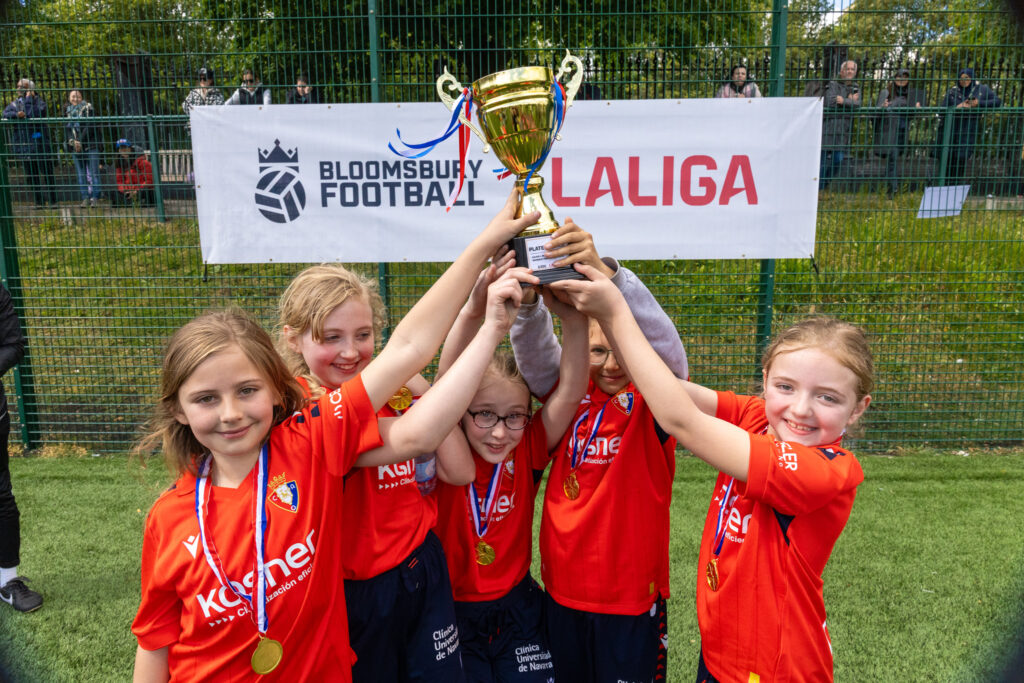
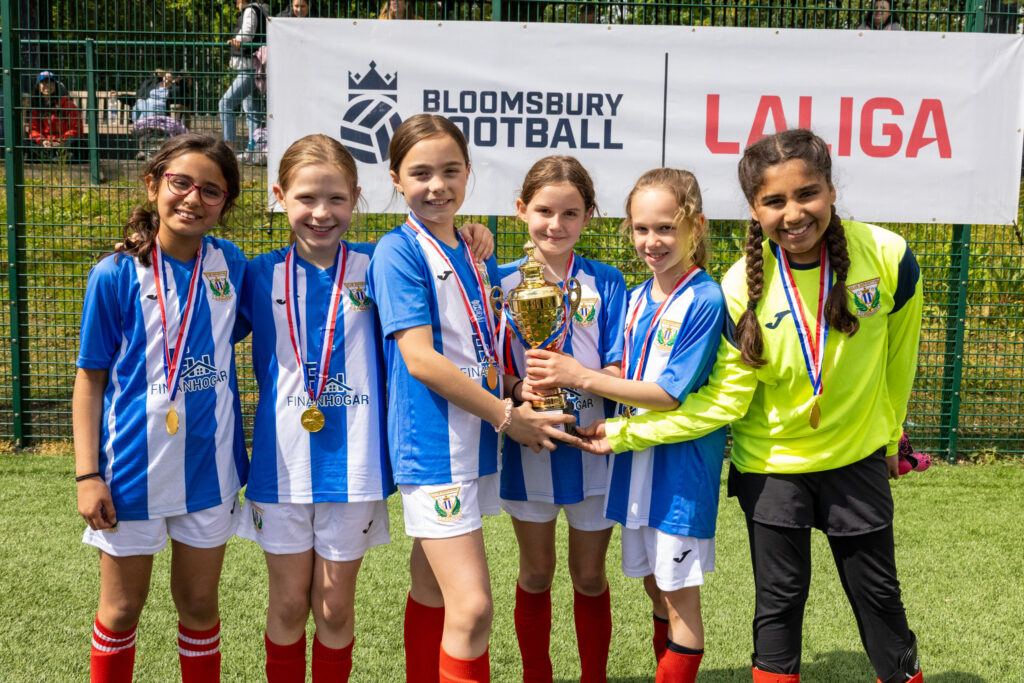
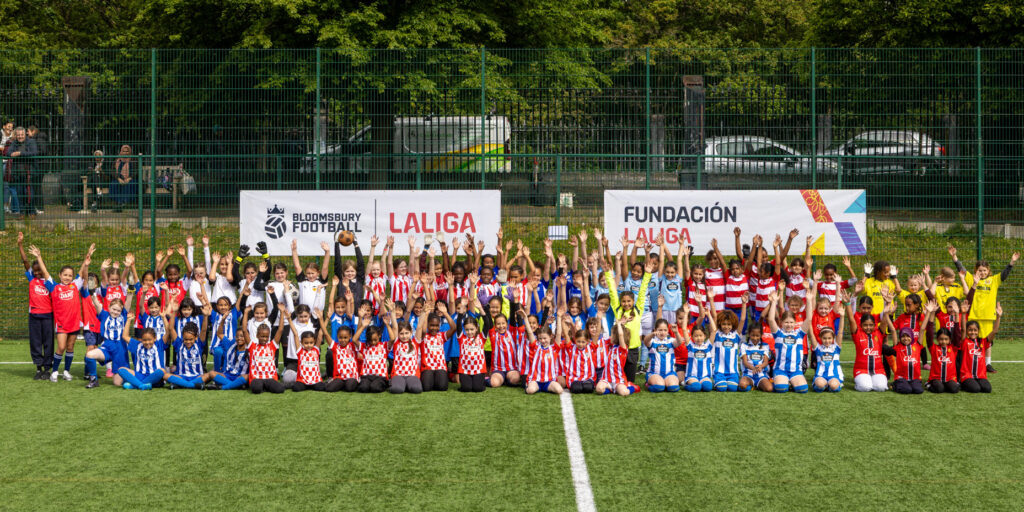
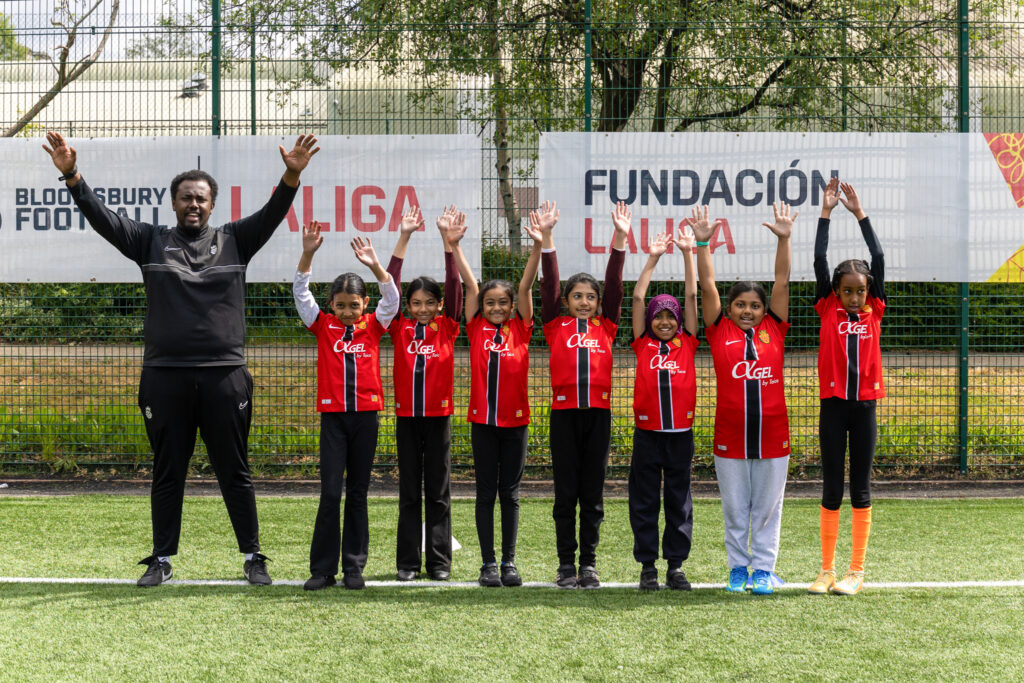
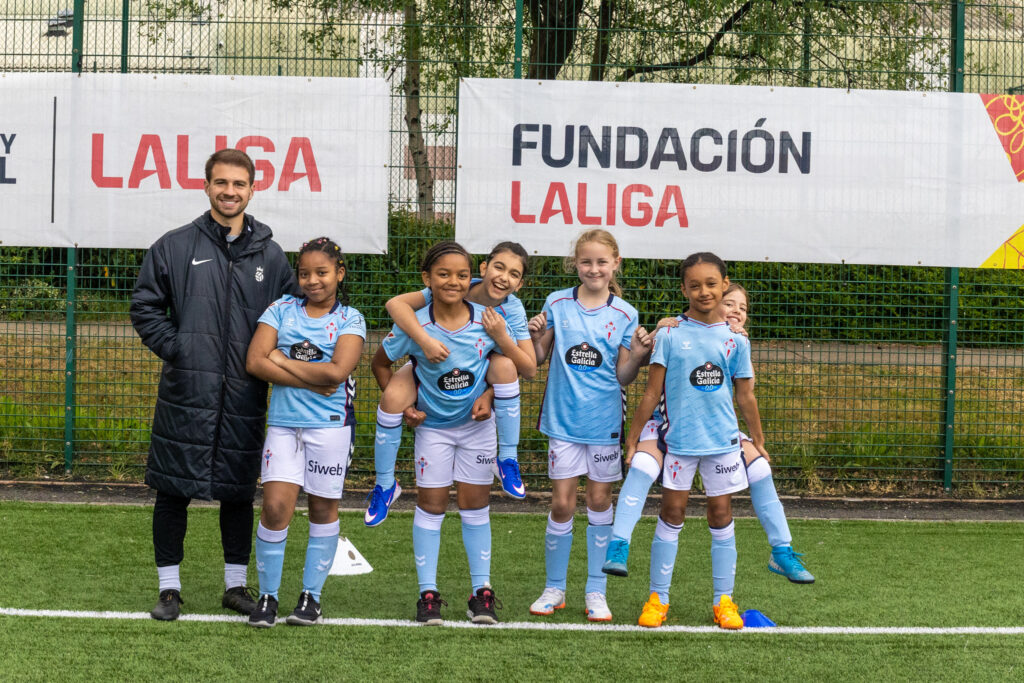
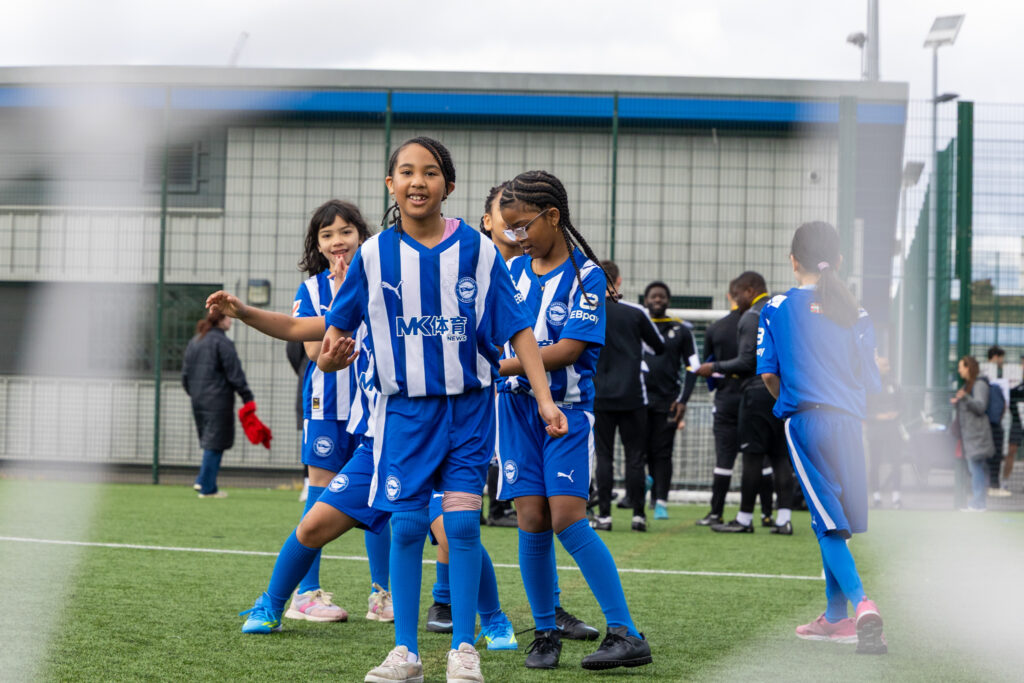
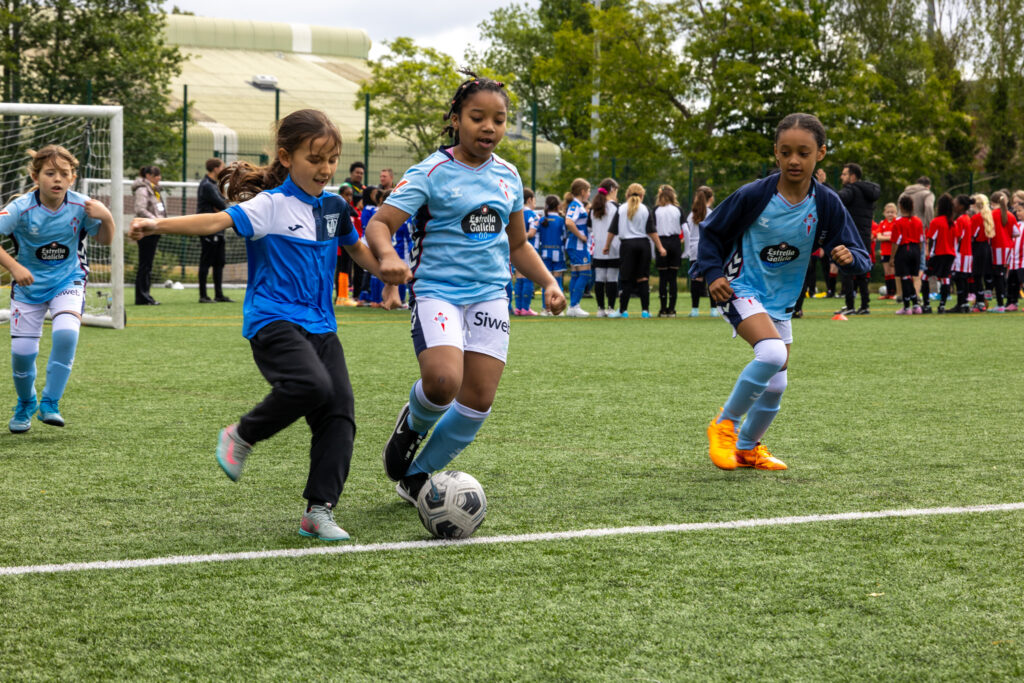
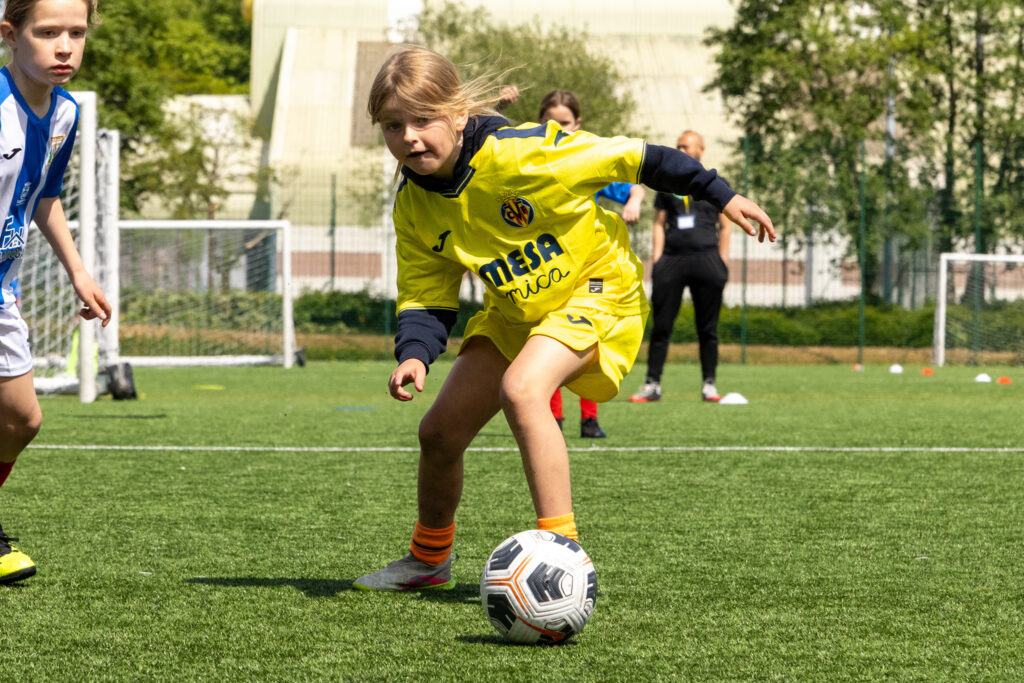
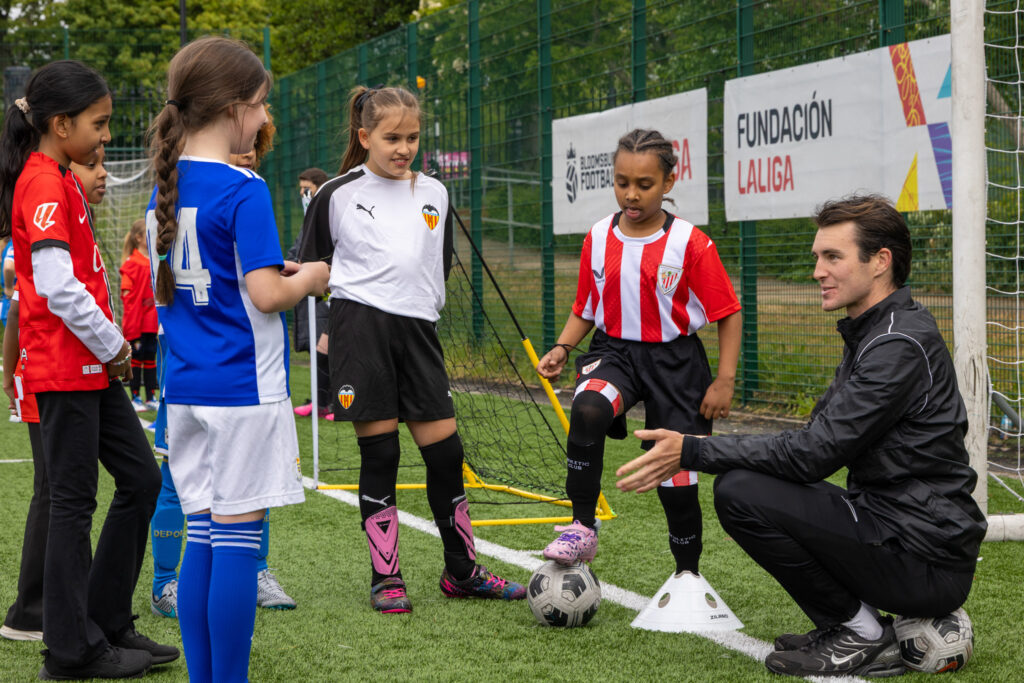
This year saw the third edition of their Girls’ Tournament where teams compete for Cup and Plate trophies, with 120 girls from 11 schools taking part, each representing a different LALIGA club.
Over an extremely shaky Zoom connection, Clare McEwen speaks with Imy Saunders, Senior Programme Operations Lead for Girls Strategy at Bloomsbury Football Foundation and Keegan Pierce, Director of International Relations at LALIGA, to learn more.
Can you tell me a bit about the Girls’ Tournament and how it fits into your wider ecosystem?
Imy Saunders: The girls’ tournament is what we see as an entry point for a lot of girls who otherwise might not feel that football’s for them.
In terms of our wider ecosystem, we’ve had preliminary rounds for this tournament. Over the last month, they’ve been taking part in a more friendly and relaxed environment, and then they build up to this opportunity to play off for the Cup and the Plate.
But we definitely don’t want that to be the final part of their football journey.
In terms of our wider programming, we have weekly sessions, we have an academy programme, and we also deliver in all of these schools. There’s a continuation of football for anyone taking part [in the tournament] today.
So we started a programme that lasted through the course of a season. It was on weekends and we didn’t say who it was for, but pretty much only boys signed up and we did an entire season of what was supposed to be a gender-neutral football programme, with only boys.
Keegan Pierce, Director of International Relations at LALIGA
Keegan Pierce: We decided to partner with Bloomsbury four years ago. We had just opened an office here in London and realised the importance of having operations on the ground in the UK to support the presence of our clubs, to support our partnerships, and our media rights sales, and our commercial partnerships.
We wanted to also do a community partnership to send the message that we wanted to be good neighbours here in London. And as we started looking at organisations that were doing grassroots football work, Bloomsbury just stood out immediately.
In terms of ambition, their willingness to address the needs through football, in terms of health, wellness, education, we knew that they were going to be a great partner for us.
So we started a programme that lasted through the course of a season. It was on weekends and we didn’t say who it was for, but pretty much only boys signed up and we did an entire season of what was supposed to be a gender-neutral football programme, with only boys.
Then realised that we really needed to signpost and make very clear that we were also offering opportunities for a girls football participation.
So we asked Bloomsbury, how can we make this fit within your ecosystem? They very quickly said, our work with schools is a great place that we could make a difference here – so they came up with this concept of a girls’ schools programme.
The same 16 clubs are supporting, now with additional kit and additional merchandise, the participation of the girls who play in this environment, which culminates in today’s final day.
How do you see this fit within the wider football ecosystem? What does your programme provide that, say, the normal FA youth football environment doesn’t?
Keegan Pierce: I think our programme offers something aspirational and also something, let’s say, cultural.
It’s an opportunity for players here in London who maybe know football recreationally, maybe know football because they support a club in the UK, to also have the opportunity to learn more about the identity, about the community, a little bit of the language as well, of clubs in Spain.
We don’t claim to replace people’s interest or affection for domestic football, but we want to make sure that every single one of these players feels that extra bit of attachment to a club from a little bit further away that can be their colours, their club in Spain.
We give coaches’ packs to all the coaches who participate in the programme. These have profiles on some of the stars, both men’s and women’s stars of the clubs, some of the key vocabulary used in Spanish football, and it’s a way of opening a little bit the mind and curiosity of young people to see the wider world of football, and hopefully fall in love with a new crest and some new colours along the way.
I think specifically for the kids in our programme, we always strive for them to feel like they’ve got a sense of belonging.
Imy Saunders, Senior Programme Operations Lead for Girls Strategy at Bloomsbury Football Foundation
Imy Saunders: Yeah, I definitely agree with that.
I think specifically for the kids in our programme, we always strive for them to feel like they’ve got a sense of belonging and I think having the league of kits, having a background in history and culture, as Keegan said, to relate to and connect with.
It’s a really easy way for kids to feel connected on the pitch when potentially outside of football they don’t have any common interests.
In terms of our programme, that’s why we really love the partnership with LALIGA.
How has it grown over the last few years, since you introduced the girls’ tournament side of it?
Keegan Pierce: We’ve been fortunate in that we’ve added layers to this partnership every single year.
The first thing we did was a pilot programme over the summer for boys and girls. That had six teams participating over six weeks.
Then we came up with the league concept that originally had 12 clubs participating – the clubs from across the first and second division of Spanish men’s professional football. But they also have women’s teams, the majority of them.
We did a full season, that’s when we learnt the lesson about trying to do something more specific to encourage girls’ participation.
So that second year we added the girls’ schools programme, which is now in its third year. We expanded to 16 teams last season and we’ve also got support, both logistical and financial, from LALIGA’s own foundation, FUNDACIÓN LALIGA. They run sessions on football, self-esteem, teamwork.
And then we got partnership and support, as of last year, from CVC Foundation. They’re a partner for LALIGA, a Venture Capital fund who invest in LALIGA, and they have a charitable arm. Just like us, when they saw the work being done by Bloomsbury, said, hey we want to be lending our support to this.
There are more and more people contributing to the mix and we aspire every single year to be bringing something different and adding new layers to give a greater impact.
Any thoughts on expanding it beyond London?
Imy Saunders: Yes. For Bloomsbury, our aim is to reach as many young people as we can, so expansion is always our end point.
I think we’re really trying to hone in on how we’re delivering in London and making it the best in class we can. But definitely keen to look at other areas – we know often London can be overly invested in and there are obviously other areas in the country that we hope to move to when the moment feels right.
What would you say the girls get out of the tournament?
Imy Saunders: I think just seeing 120 other girls playing football. I think that’s a very rare thing where you have a girl’s only environment at that scale. And all of a similar level, similar introduction to football.
The sessions we’re running give them an opportunity to test themselves beyond what we’re going to do in the game. So just having those different elements of football that they might not have had before.
But I think the main point is seeing other girls play, feeling like there is a space for them, and giving them a sense of self-worth to try football. I think that’s what they get out of it.
I also love this day as well, so I get a lot out of it [smiles].
I think the main point is seeing other girls play, feeling like there is a space for them, and giving them a sense of self-worth to try football. I think that’s what they get out of it.
Imy Saunders
Keegan Pierce: I think it’s great to see the connection they develop to the clubs whose shirts they’re wearing too. The idea that putting on that kit for the first time in this environment – they feel a sense of connection, a sense of responsibility and pride to be able to wear the colours out there.
You can just see that every player gives her all, that it’s really a day that they want to take full advantage of, to move to that next level of engagement with football and to learn some things along the way.
Is there any kind of selection based on skill or does everybody get a chance to go?
Imy Saunders: Everyone gets a chance to go. Obviously there’s a selection based on age but when we ask the schools to bring the kids, we do ask for a mix of abilities.
We know that naturally, if you put on a football tournament, the more sporty girls will probably be signed up first, but we actually try and make a point of saying this is for everyone.
We will have teams of all abilities so please don’t just select your top sporty kids – try and involve others that maybe haven’t had that experience before.
I think that’s maybe what distinguishes it from normal grassroots football, which is kind of where I was heading with that question.
Are there other barriers that maybe you break down that normal FA youth football doesn’t address?
Imy Saunders: I think in terms of schools, there’s no cost to them to be involved today – so I think that’s a huge one. They don’t have to balance the budget of bringing the kids down and being involved for the day.
Then also for the girls to get on the pitch, LALIGA and the clubs are providing the kits – that’s a massive entry point.
Now the girls have a kit to wear and a club to associate themselves with.
Where, potentially, they might not have felt too confident in school if someone says what team do you support, now they’ve got a team, they have the badge, and they know some history about it.
So I think that is one way that barrier gets broken.
Also, they don’t have to wear football boots, they can be wearing trainers.
We really try to limit any sort of barrier they might have so they can get involved today.
And because all the schools are quite local, we’ve actually sent our coaches to some of the local schools to pick the kids up and walk them to the pitch.
So that’s another element of trying to keep things local. The previous tournaments are held as close to the schools as possible – again to limit that transport entry point.
Now the girls have a kit to wear and a club to associate themselves with.
Imy Saunders
What does the Spanish style of football teach the girls that maybe the English style doesn’t?
Keegan Pierce: I think we’ve lived through a period of time, first of all, where both England and Spain are the leading lights of European football – both on the men’s and the women’s side. And I think there is a merging of styles and a mutual admiration that exists.
You talk to players from the Lionesses who had a chance to play in Spain. You talk to players in the Spanish women’s national team who are playing in the WSL. I think the deep affection that exists between both countries and both footballing cultures is something very real and very profound.
So I think, in many ways, that style is now almost one style.
If anything, Spain has brought to the game playing with the ball, using possession both offensively and defensively. The skill that you can see from the player, particularly, like Bonmati – my favourite footballer, man or woman, in the world right now.
I think that learning to play in close spaces, learning to love possessing the ball, and hopefully moving it around quickly and the opportunities that can create, we’d like to think that at least a few players might come away with some of that from their experience today.
What ambitions do you have for the future with the tournament and the wider partnership?
Keegan Pierce: From our end, at least, we want to continue supporting Bloomsbury on their mission and their work.
We know they’ve got a really talented team, people who work very hard and have the vision of taking this constantly to the next level.
So every time we sit down with them to plan for the new season ahead, our first question is, how can we help you to achieve your goals?
And we always like to see our clubs getting that much more involved. We’ve had clubs that have sent their mascots out here to visit the players during a summer camp.
We’ve had clubs who’ve sent coaches, who happen to be in London, who wanted to come give a session to the girls.
So I think, bit by bit, having our clubs not just receive photos and videos and putting them on their social media, but having that extra level of engagement with this partnership, for us, is a really important objective.
We really believe there is a magic to football. And days like today, you see it, you feel it, it’s just an energy.
Imy Saunders
Can you describe to me what tournament day looks like? I’m guessing chaos, but beyond that.
Imy Saunders: Happy chaos [laughs].
It genuinely is one of my favourite days of the year. We’ve been here for three years now, and I plan my annual leave around being here for this tournament.
We really believe there is a magic to football. And days like today, you see it, you feel it, it’s just an energy.
So I’m super excited for it to be honest.
Bloomsbury Football Foundation coaches over 6,000 girls and boys every week. Financial support is available to every one of them, making the magic of football available to many more young players in the London area. They run a range of programmes, including summer camps. Find out more: https://bloomsburyfootball.com/
Credits: LALIGA / Athanasios Psimadis