
ON THE RISE! Lynn Groenewegen in the spotlight
FC Twente and Netherlands midfield anchor Lynn Groenewegen tells Roos Schelen the only way is up in her career…
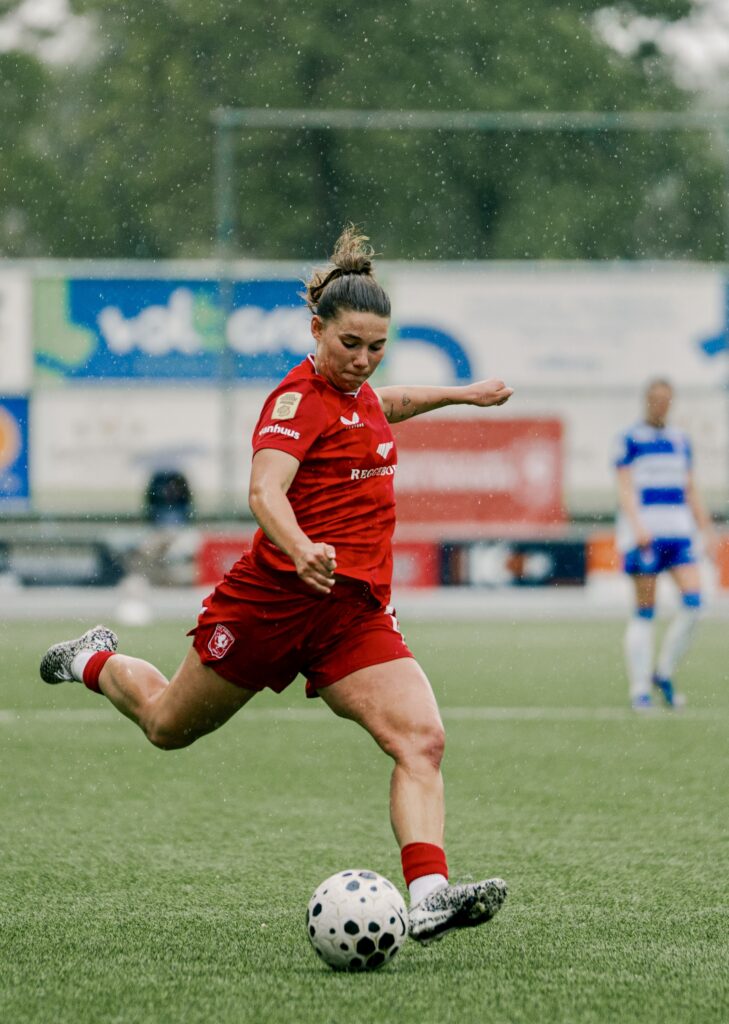
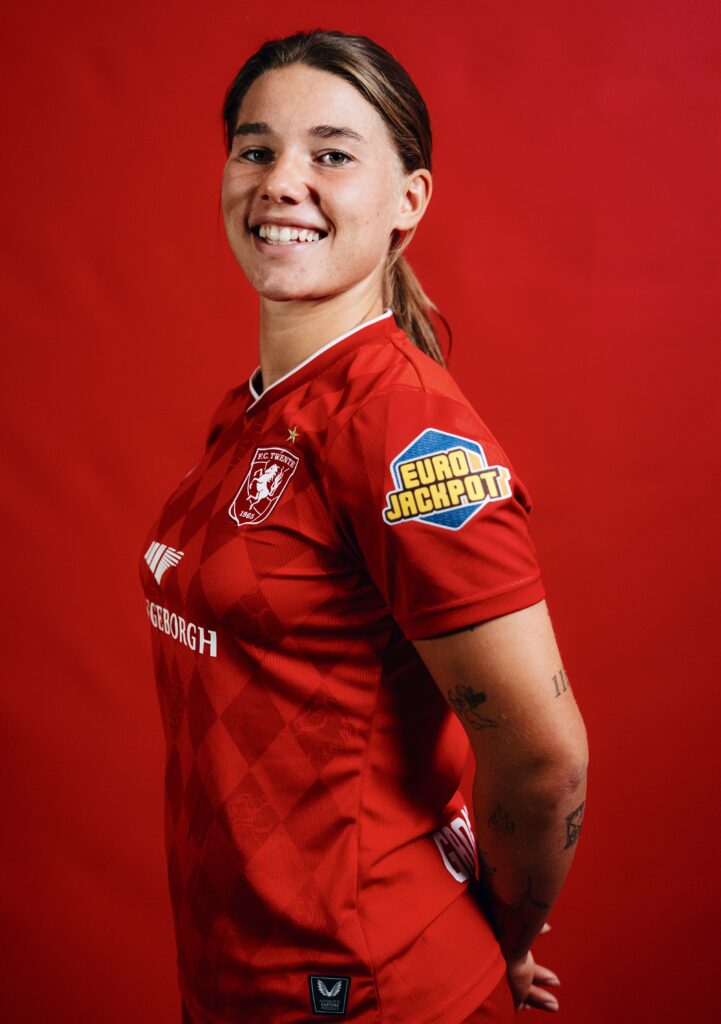
Lynn Groenewegen’s career has seen a steep rise over the last 18 months. She went from Excelsior, who are currently battling relegation at the bottom of the Vrouwen Eredivisie, to record champions FC Twente in January of last year.
Groenewegen was the first player for whom Excelsior received a transfer fee. That autumn, she made her debut in the UEFA Women’s Champions League (UWCL) and was called up for the senior Oranje Leeuwinnen squad and made her debut.
She always believed that a call-up for the Oranje Leeuwinnen would be possible, but never imagined it would come this quickly. “When I was still playing for Excelsior’s reserves, I remember thinking: I really want to make it to the Dutch national team. I didn’t care when or how quickly it would happen.
“I definitely didn’t expect it to happen this fast. And honestly, it didn’t have to for me either, because I’ve always felt that the faster you rise, the faster you can fall again. So I actually like taking things step by step.
“It was really amazing to suddenly be in the spotlight, and I saw it as a reward for all the hard work I had put in – especially the work I did behind the scenes, without people really seeing it.”
“It was really amazing to suddenly be in the spotlight, and I saw it as a reward for all the hard work I had put in – especially the work I did behind the scenes, without people really seeing it.”
Groenewegen has players like Jackie Groenen and Damaris Egurrola competing for the same spot in the national team. Therefore, playing at next year’s World Cup will not be a guarantee for her, although it is a big dream of hers. And it might happen, too. “But I do know for sure that – and I don’t mean this arrogantly, just because I truly believe it’s possible – I want to play at a European Championship or a World Cup some day.”
FC Twente had a good UWCL campaign in which they made it hard for Arsenal (a 1-0 narrow win for the Gunners) and held Chelsea to a draw at home. The latter was Groenewegen’s favourite moment of their UWCL stint, because they felt that they could get a really good result out of it. She does admit that she hasn’t enjoyed their run in the UWCL as much as she would have liked, as things were going very fast for her at that time.
Free Role
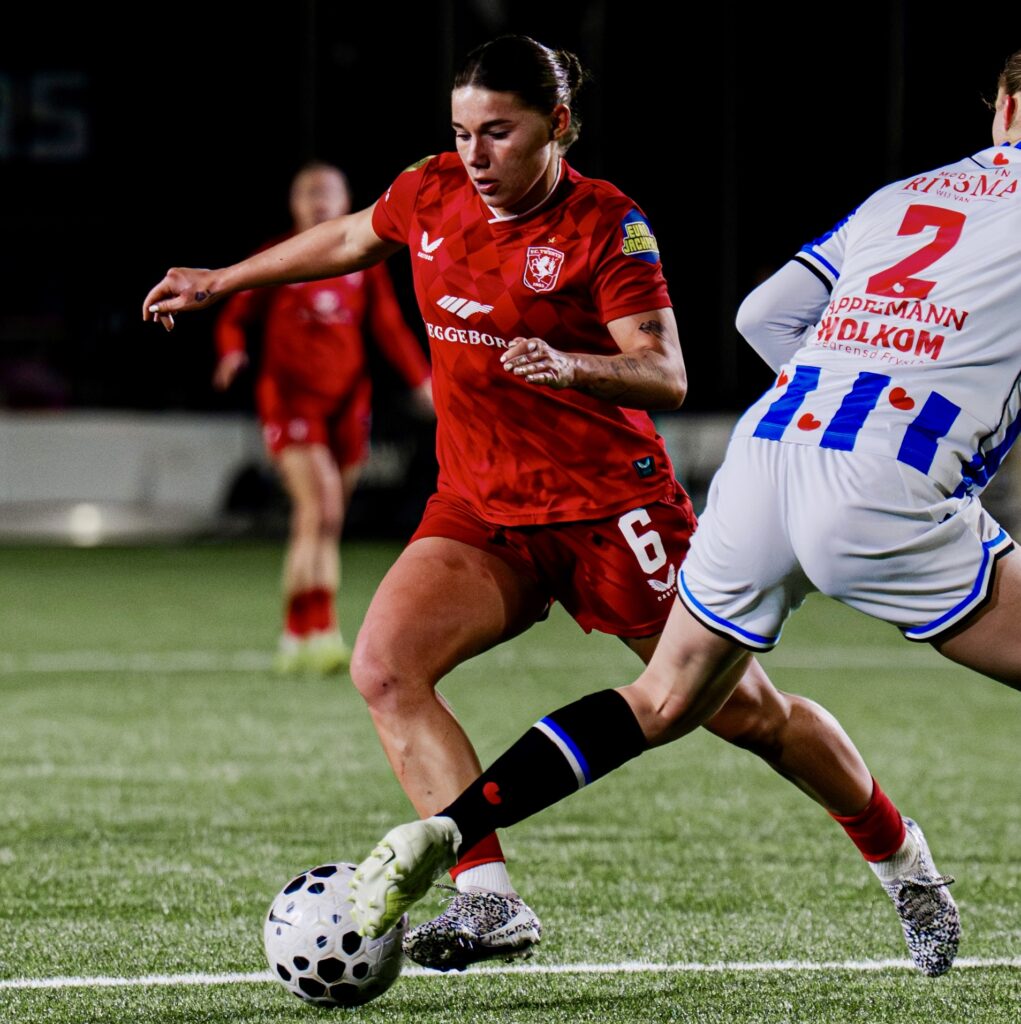
So what kind of player is Lynn Groenewegen? She loves to do the dirty work, as she describes it herself. “So I’ll basically always go into the challenge. I make a lot of tackles. I’ve got good stamina as well. So I’m basically… if I can play a bit of a free role – it also depends on the match – then I’ll pretty much always be where the ball is.”
Groenewegen grew up in a household where she was encouraged to take up a sport. She looked up to her brothers and mother in finding a suitable sport to play. At one point she had joined the scouts and played both tennis and football. They were all on Saturdays, so Groenewegen had to make a decision. Football it was. Why? Because the friends she made at football were her best friends. She loved how gezellig (cosy/friendly) it was there.
Back in primary school, Groenewegen was never picked first in physical education classes. It was her urge to show the boys that a girl can play football too, that made her become more serious about playing.
“They really didn’t want to get nutmegged by a girl, of course. So I definitely noticed that it kind of created a fire in me – like, I’ll show you that it is possible.
“From that moment on, I also started thinking that I really wanted to make something of it. And to show the people around me that it doesn’t matter whether you’re a girl or a boy – if you really want to achieve something, then you can.”
Satisfaction
That same determined spirit shows up in how Groenewegen carries herself on the pitch. She describes herself as someone who earns the respect of her teammates not through goals, but through the unglamorous moments – the interceptions, the tackles won.
“When you make a tackle and you actually come away with the ball, that gives me more satisfaction than scoring a goal,” she says, with a frankness that feels entirely characteristic of her.
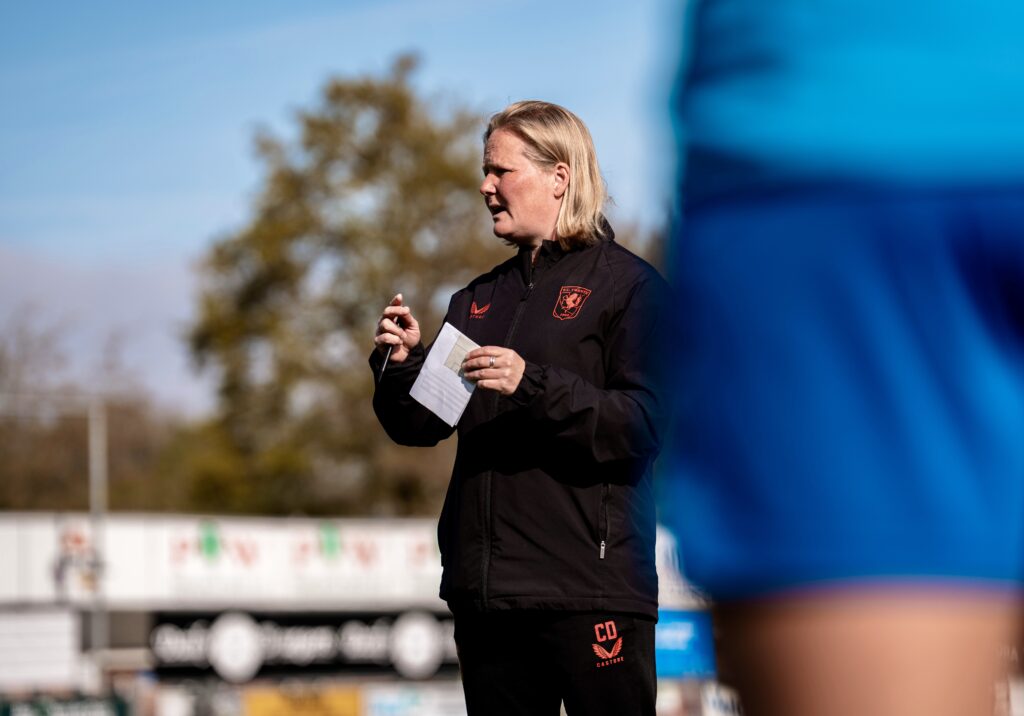
Central to Twente’s impressive Champions League run was the influence of head coach Corina Dekker (above). The relationship clearly means a lot. “She’s a people person,” Groenewegen explains. “Right from the start, she had really personal conversations with me – deep ones, too. I love that. I always want a personal connection with the people I work with, whether that’s my agent, my teammates or my coach.”
On the pitch, she appreciates the directness: Dekker is not one to coddle. “She’ll shout at you about what needs to improve rather than just pat you on the back. I really like that. You can feel that she genuinely cares, and that matters to me in a coach.”
Disrupted
It has been a season of disruption due to injuries for Twente in the second half, one that has left the title out of their hands after what looked like a strong start. Groenewegen is honest about her form in the second half of the season, framing it less as a personal failing and more as a structural challenge.
“When you keep playing with different combinations, you have to figure out what your teammates want. I know, for example, that when Jaimy [Ravensbergen] is in the striker position, she always wants the ball to feet. But with others, you have to adapt again.”
She also points to shifting defensive patterns as something that has pulled her attention away from her own game. “Last season, our pressing and our shape were really clear. I didn’t need to think about it – I could just do my own thing. This season, with the different formations, I’ve sometimes been so focused on organising others that I’ve forgotten my own role.”
Despite the wobble, qualification for European football next season remains the floor, not the ceiling. “Originally the goal was the title and the cup,” Groenewegen says. “But now, the most important thing is that we get into Europe. Feyenoord are right behind us. We cannot afford to slip to fourth.” The Netherlands have two spots up for grabs for the UWCL next season.
Stepping Away
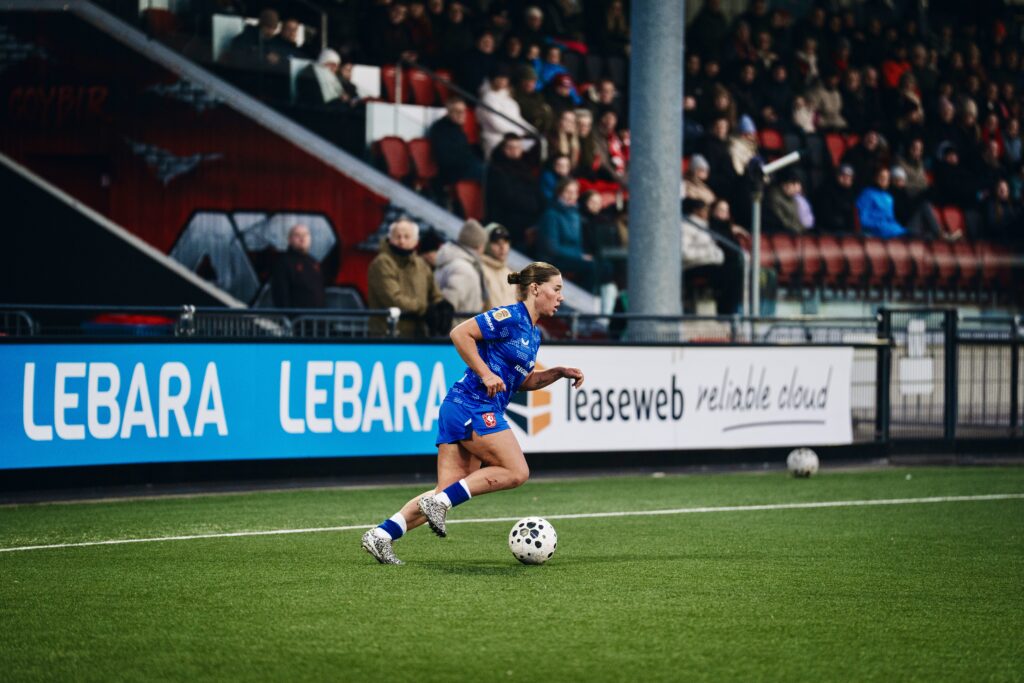
Away from the pitch, Groenewegen has spent the last period in a different kind of process – one that has nothing to do with football. She is one of the few players of her generation to have stepped back entirely from social media, and she is refreshingly candid about why.
“I’m very easily influenced,” she admits. “I’d spend an hour scrolling and come away overstimulated. I’d see someone with a camper van and immediately think I want that too. Then someone trying new recipes, and I’d think I need to do that. Then a new gym routine. It was never enough.”
The comparison trap, she says, is particularly insidious because people only share the highlight reel. “It just felt a bit fake to me.”
What followed was a period of deliberate self-examination, aided by a mental coach. “Everything around me was moving so quickly externally, and I started asking myself: if I were in a car accident tomorrow and lost both my legs, who would I be then? What’s left?” It is a striking question for a 22-year-old to sit with, and it led her somewhere meaningful.
“I’ve accepted that I’m quite a sensitive person. And I’m actually really proud of that now.”
Growing up with three brothers in a household where feelings were not easily expressed, Groenewegen had quietly learned to suppress her more sensitive side. “We were always about proving yourself, being the best – not really about talking about emotions. And I realised I’d been pushing that part of me down.” Working through it, she has come to a different conclusion. “I’ve accepted that I’m quite a sensitive person. And I’m actually really proud of that now.”
Her curiosity and desire to understand people extends beyond the coaching room. She is currently doing a course in psychology alongside her football, a course she speaks about with the kind of enthusiasm that suggests it is more than just a hobby.
Ambassador
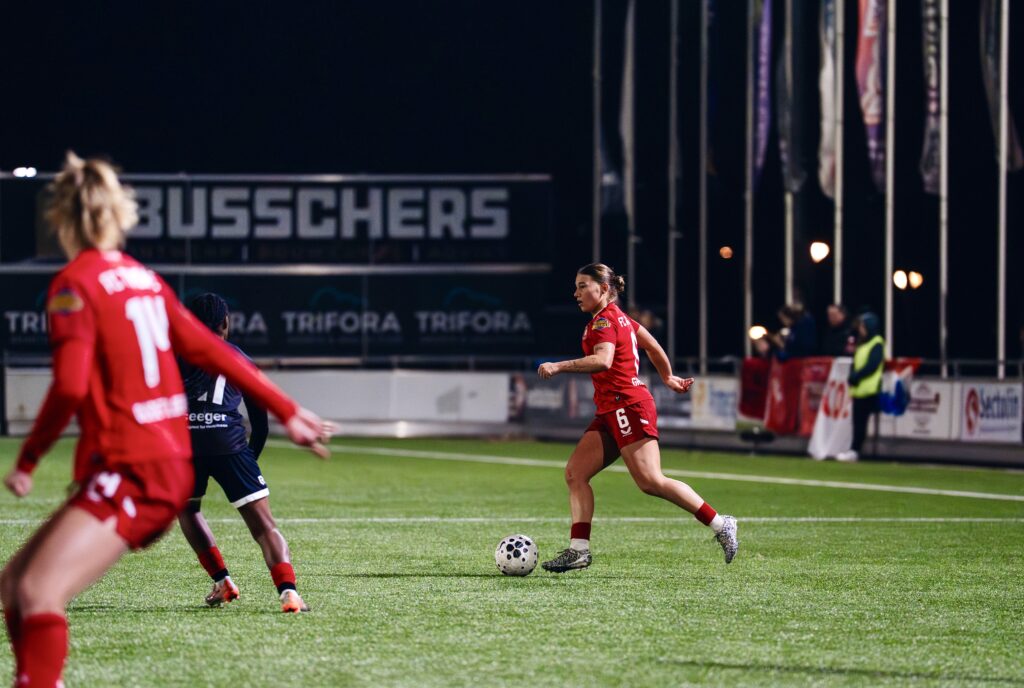
Groenewegen also volunteers with FC Twente’s community foundation, recently giving a presentation at a primary school about her own story – the journey from being released by Feyenoord’s academy, to Excelsior’s reserves team, and eventually to Twente and the national setup. She has also trained alongside teammate Jaimy Ravensbergen at community events and will be attending a tournament for players with intellectual disabilities as an ambassador of the FC Twente Cup.
Asked to describe herself off the pitch within a team setting, Groenewegen thinks before answering. “I adapt to what the team needs,” she says. “At the senior national team, I’m still quite reserved. But at Jong Oranje, I noticed I could really take the team with me on the pitch.” And off it? “I’m quite loud. A bit crazy, maybe. I’m always doing something weird that makes people think, what is she doing now? But yeah, I like talking to everyone.”
As for what comes next, the plan is characteristically grounded. She will stay at Twente for at least one more season – she is clear about that – because she does not yet feel she is the finished article there. The development areas she identifies are concrete: sustaining concentration for a full 90 minutes, growing as a leader, and continuing to improve in possession. “At Excelsior, we barely had the ball for two and a half years – it was mostly defending. I’ve developed a lot since then, but there’s still more to do.”
After that, she dreams of a move to Spain, ideally to a club that competes for the Champions League. She mentions it with the same measured confidence that characterises how she talks about almost everything – not as a given, but as something entirely possible if she keeps putting the work in, away from the cameras, just as she always has.
Photos: FC Twente