
HALFTIME SECRETS. Tales of hair dryers, custard pies, carrots and sticks…
Ten WSL head coaches tell us their halftime team talk secrets. How do they make their squad turn around, when every now and then they fall apart, and sometimes face total eclipse?
Chelsea’s Sonia Bompastor, Man City’s Andrée Jeglertz, London City Lionesses’ Eder Maestre, Arsenal’s Renée Slegers, Spurs’ Martin Ho, Villa’s Brian Sorensen, Palace’s Jo Potter, Everton’s Scott Phelan, Charlton’s Karen Hills and Brighton’s Arturo Ruiz spill the beans on their halftime team talk tactics.

“Halftime? That’ll be between me and the team,” said USWNT head coach Emma Hayes after she totally changed her formation to 3-5-2 and almost turned the match around against Spain.
But should it be an arm round the shoulder or a jolt in the arm to get the team going at halftime? A carrot or a stick? Short and sweet seems a popular option, but in that tiny slot of up to 15 minutes in the changing room before the players return to the pitch, there seem to be an infinite number of methods of revitalising, rejigging, and basically firing up the team.
We spoke to those at the summit and the sharp end of the WSL, who know how to get their players focused – from the head coaches who let the players sound off, to those who lay down specific challenges. And we start with someone who has been through literally hundreds of halftime team talks as a player for club and country, and since then as head coach at Lyon and now Chelsea, Sonia Bompastor.
SONIA BOMPASTOR, CHELSEA
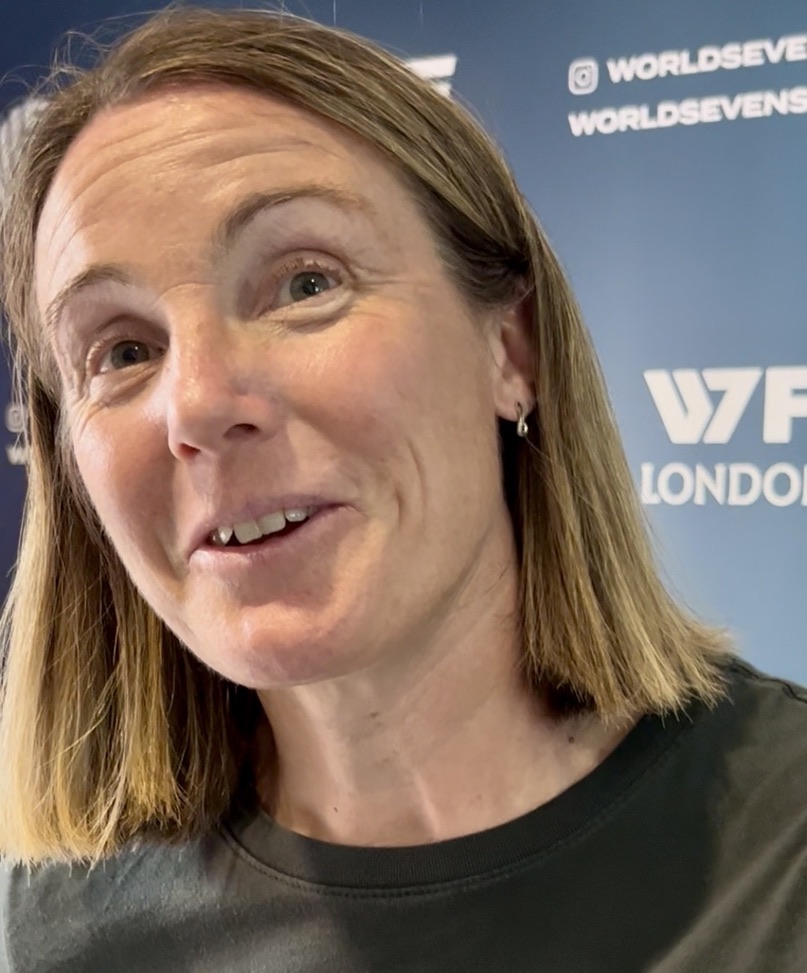
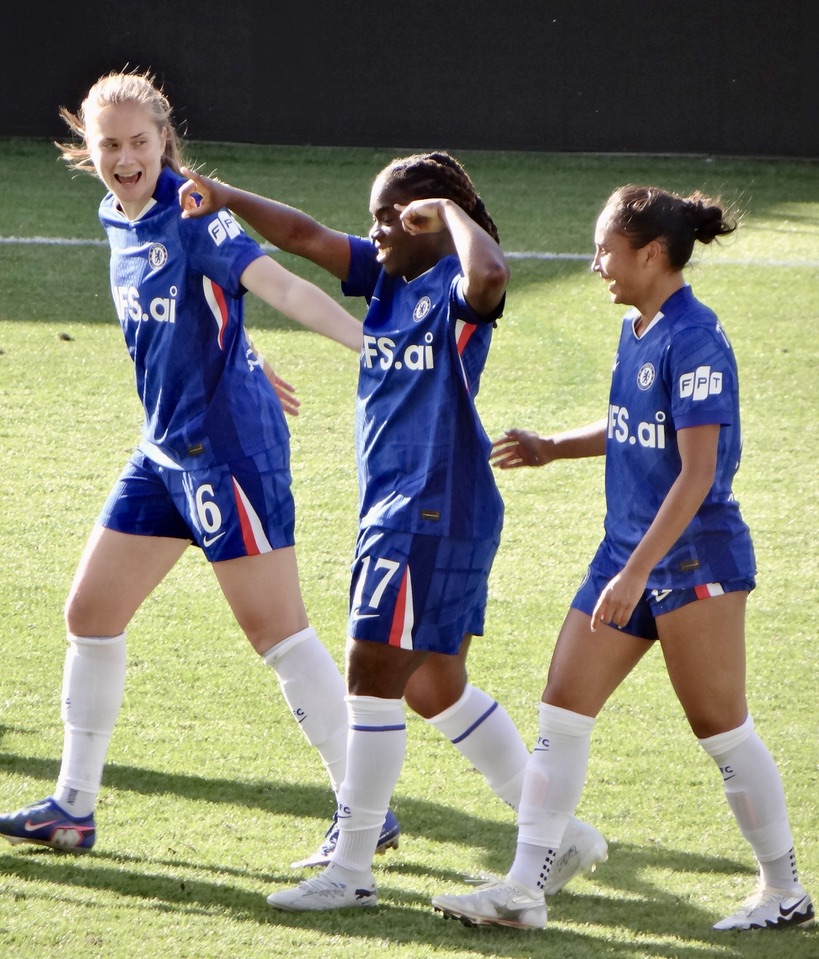
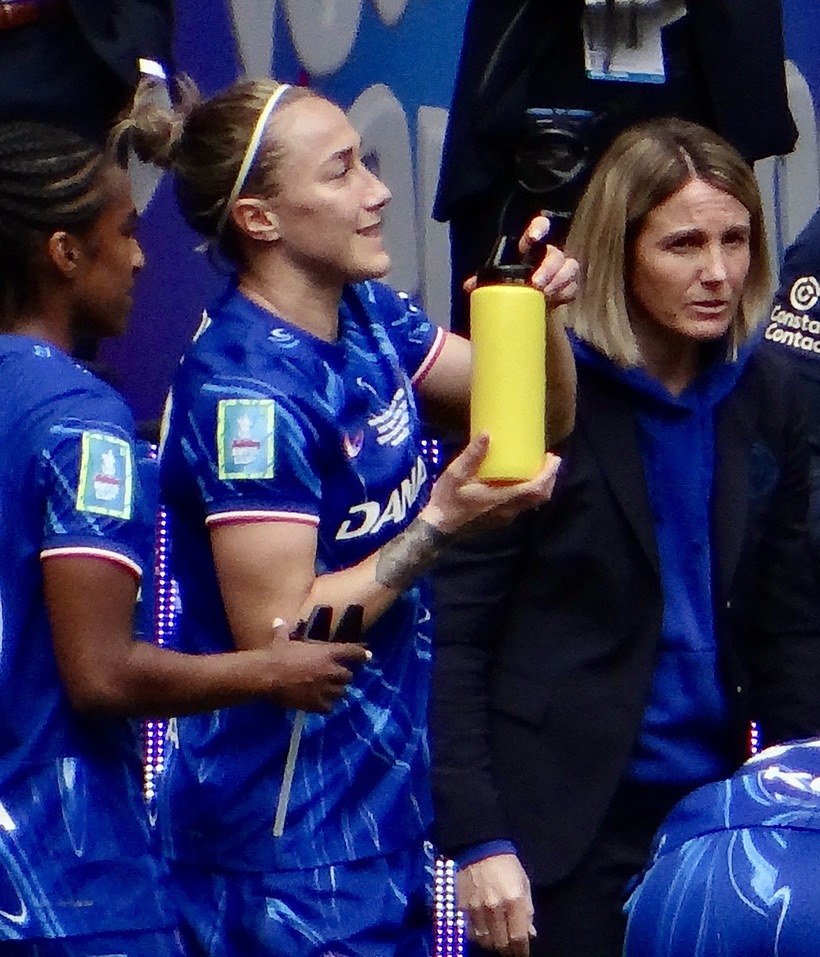
I wonder if you have a specific thing you say at halftime in high-pressure games – as against Lyon or Arsenal – and how much a captain like Lucy Bronze or Erin Cuthbert contributes to the halftime team talk?
I think we have a really good process in terms of bringing confidence to the team.
It comes from me, of course, as the head coach, but also from the players in the squad, in the group.
I am lucky to have great leaders in my team, on and off the pitch.
We have a lot of conversations on how we want to approach the games, and also the team talk before the game, halftime.
Who needs to speak and when to speak, what to say, and that’s important.
But you know, when we talk about some of the leaders we have in this team, they have a lot of experience and they also know what the team needs and when they need to speak up.
So yeah, it’s a good combination, and our process is good right now.
Can you think of a specific example of maybe a match where you’ve given a particular team team talk at halftime, where it’s changed the match? Maybe you’ve been drawing or losing at halftime, and you’ve turned it around second half because you’ve been able to impart your message.
I think I have many examples.
First, when we come into halftime, it’s really important, in terms of mindset and mentality, to just keep being confident.
Sometimes we follow the process because the things we are doing on the pitch are good enough, and it’s worth just reinforcing those messages another time.
When we come into halftime, it’s really important, in terms of mindset and mentality, to just keep being confident.
SONIA BOMPASTOR, CHELSEA
Sometimes I am the one who is talking about the tactical aspects and Cami is more talking about the mindsets. Sometimes we do it the opposite way around.
We always find the balance between talking about the tactical aspects, but also the confidence we need to have going into the second half and the mindset again.
And for me, it’s really important we find the right balance.
I always make sure we talk with Cami (assistant Camille Abily) with the players about the tactical aspects and the mindset.
So sometimes I am the one who is talking about the tactical aspects and Cami is more talking about the mindsets.
Sometimes we do it the opposite way around, and also I always give the opportunity to the players to talk at halftime to express how they feel and how they felt during the first half.
So I think we have experience enough in this group to know exactly what to say, what to do, how to do things at halftime, depending on how we perform in the first half.
SCOTT PHELAN, EVERTON
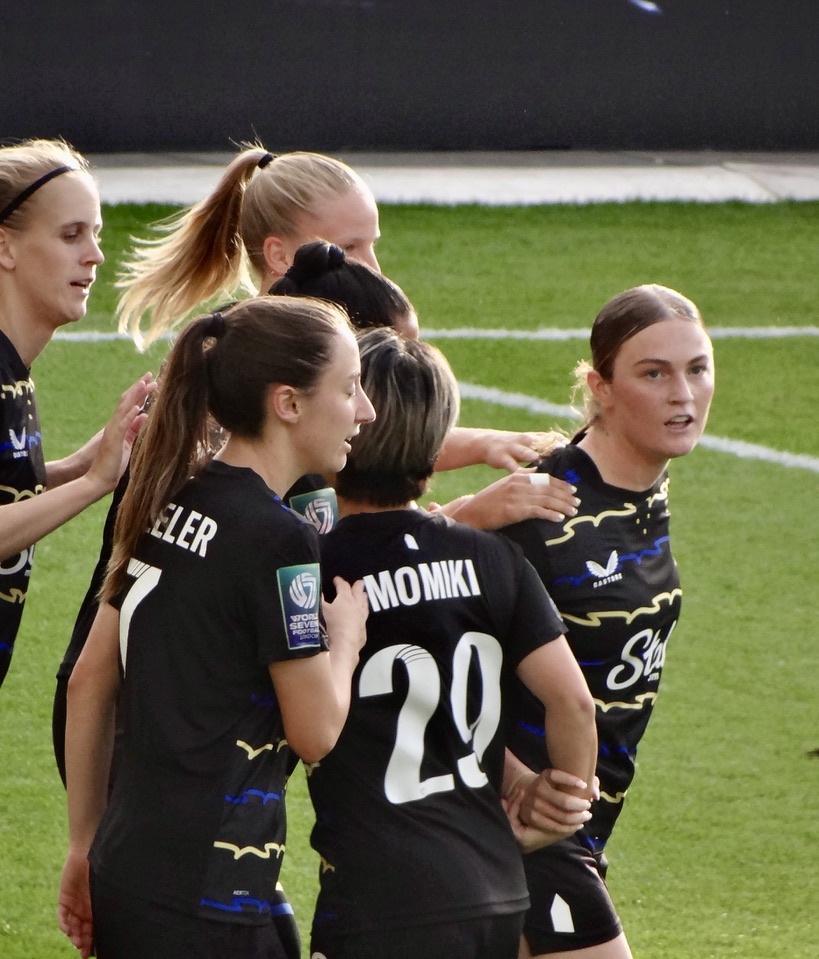
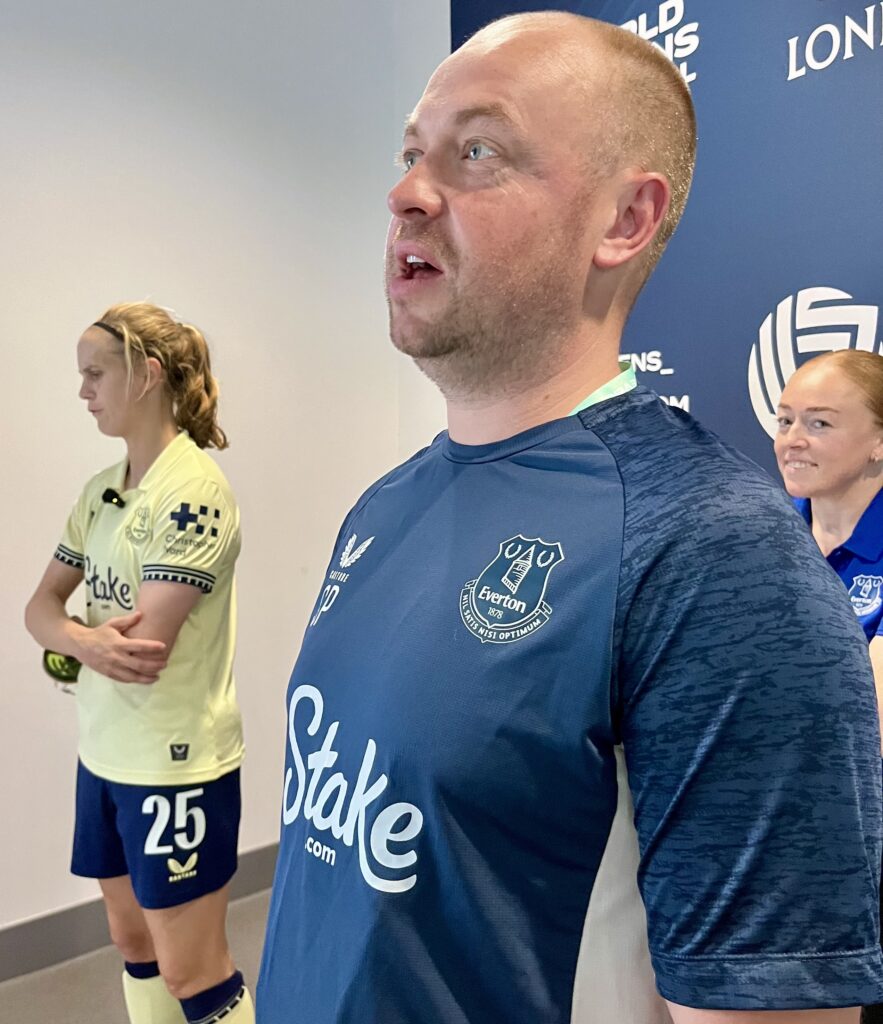
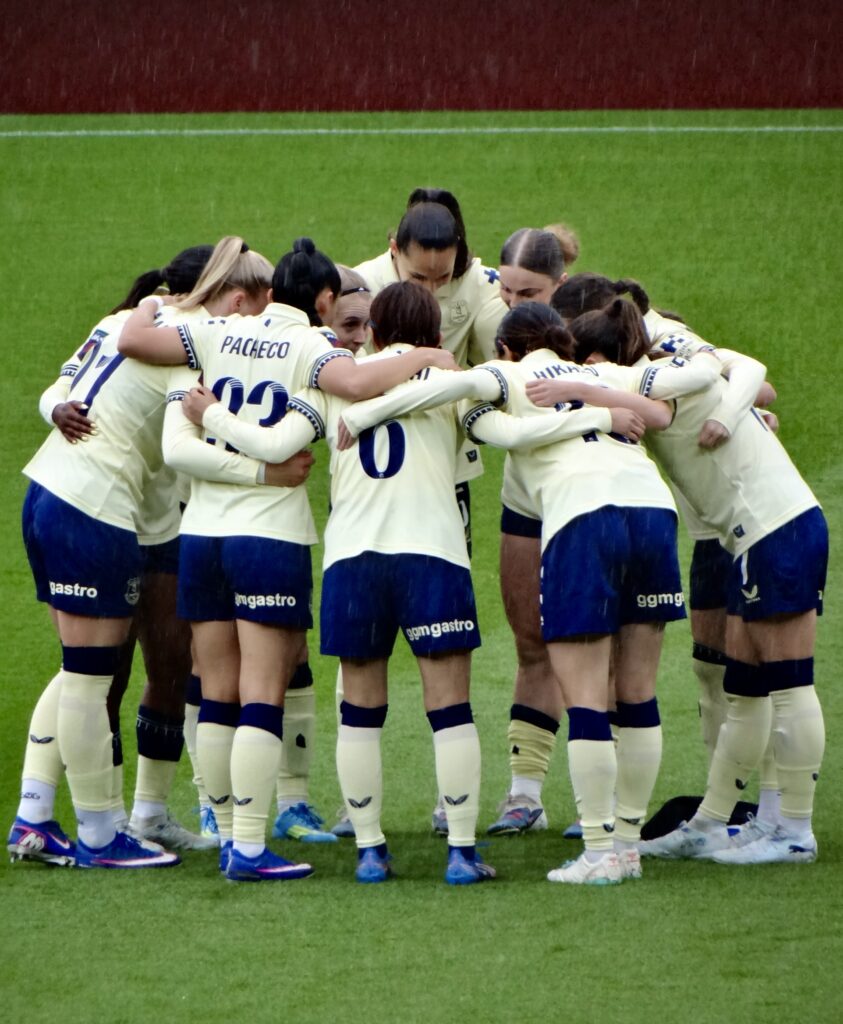
Tell us about your halftime team talks:
I think it’s dependent on the circumstances of how the first half has gone. The quality of a coach is to be adaptable and try at times to take the emotion out of decision making; but also use emotion at the right time to spike more enthusiasm out of the group if needs be.
The quality of a coach is to be adaptable and try at times to take the emotion out of decision making; but also use emotion at the right time to spike more enthusiasm out of the group if needs be.
SCOTT PHELAN, EVERTON
So, each halftime can look different. I think the main point is getting the information that is going to impact the second half across clearly so all of the players can understand that. That can be delivered in a number of ways. So it’s very much dependent on how the game’s going.
JO POTTER, CRYSTAL PALACE
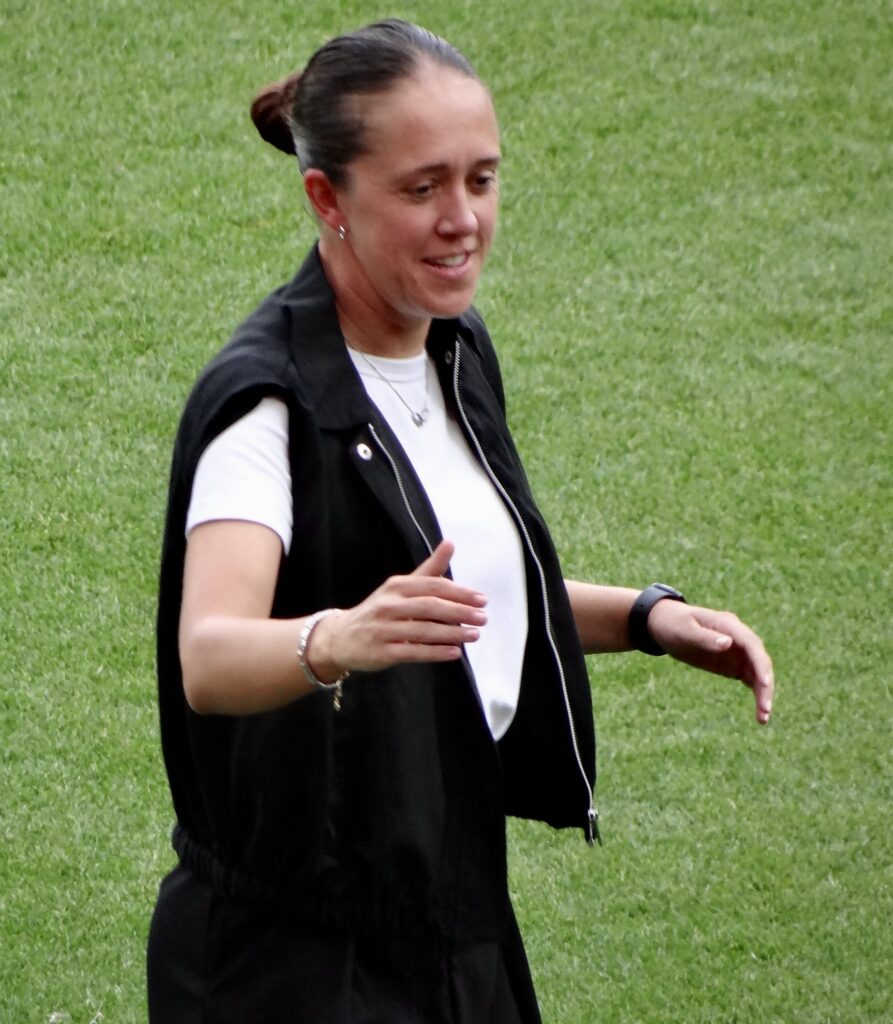
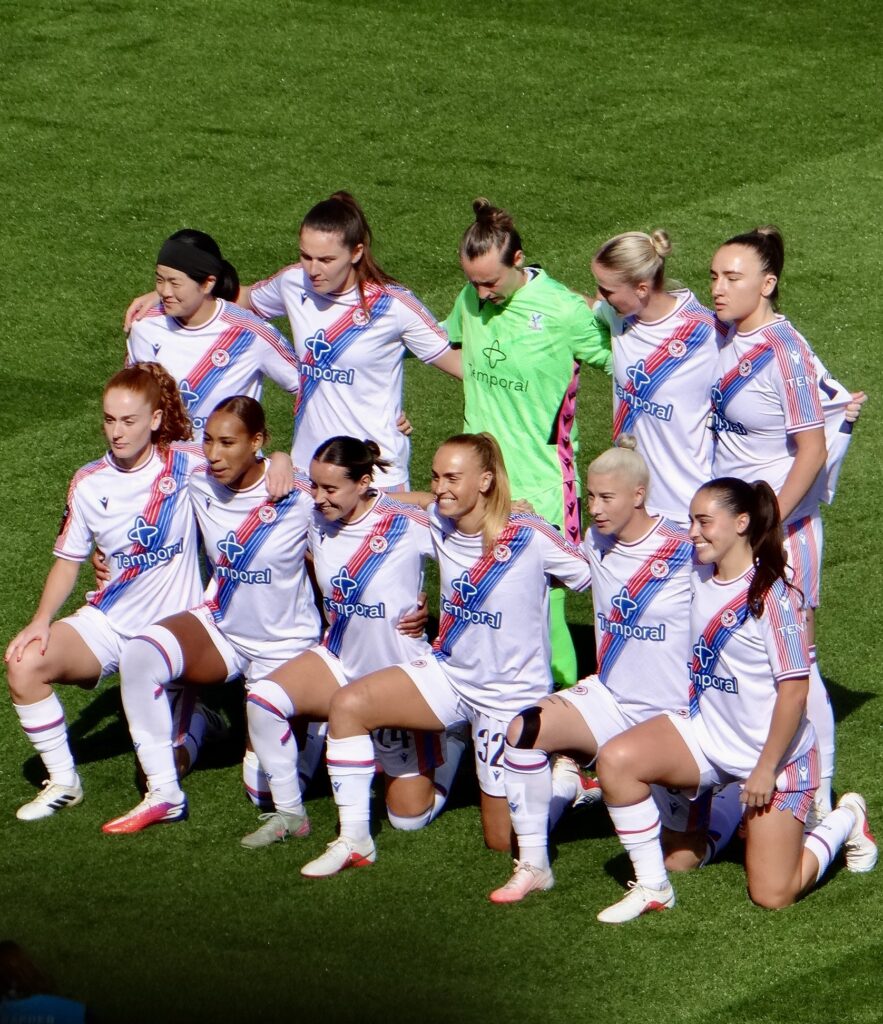
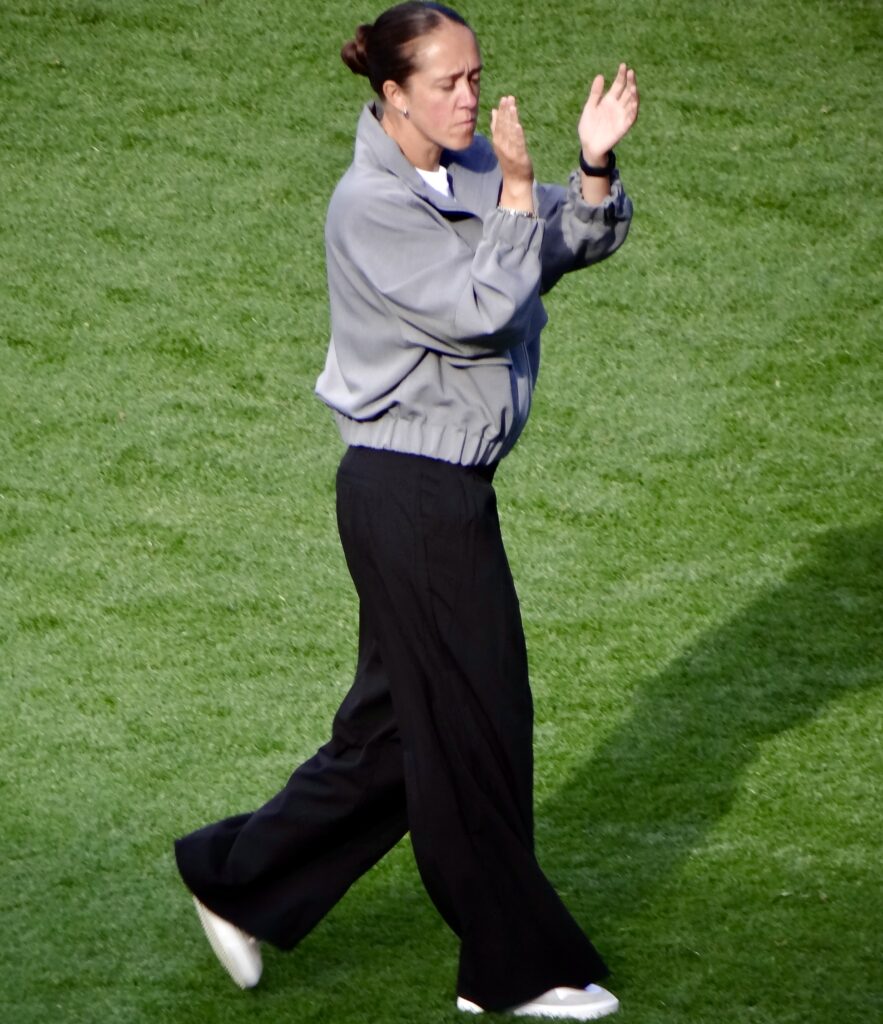
What’s your approach to halftimes, and that vital team talk you give. Do you bring in the captain as well for their input, whether it’s more of a collaborative thing?
I’m not going to give too much away of what we do in the in the changing room at halftime, but it goes pretty quickly, believe it or not by the time everybody’s got in and you can imagine how many people are maybe wanting to have a voice.
The players definitely have a voice at halftime.
There’s a space for everybody to give their opinions and what that looks like, and then we try and bring it back down and be quite concentrated on the task in hand, and especially if there’s anything that we need to tweak or change and get our messages across.
So it’s quite a lot to get through at halftime.
It can be quite a hectic time, so we just try to keep quite calm and have a process we go through that tends to work pretty well.
Can you remember from your time as a player for club, but also for England – of a halftime team talk that made a huge impact and maybe changed the game.
Well, you’re only taking me back some years now.
I think you always remember moments in a game, and I think there’s times where there might be a change that you make, or there’s something said that changes the game and has an outcome.
I feel like we had a very good one last week at Birmingham that changed things slightly for the second half and we had a different reaction, but I think it’s more of about what the players do on the pitch.
The players definitely have a voice at halftime.
jo potter, crystal palace
There’s a space for everybody to give their opinions and what that looks like, and then we try and bring it back down and be quite concentrated on the task in hand, and especially if there’s anything that we need to tweak or change.
You know, we can we can talk as much as we want, of what we expect and what we try to see.
I think sometimes you can you can do a little bit too much of it.
It’s the players that have got to bring it bring it to life.
So I don’t remember any certain instances to be honest with you, particularly for myself.
But I think that’s because I was trying to stay in line in my process and what I like to do to for the second half.
Is there a team talk you’ve given at halftime where the game has flipped in the second half?
We did that a fair bit last year [in WSL2], to be honest with you.
We spoke a lot about remaining calm.
I just remember there was one halftime last year where we were losing, and I think the players expected me to be a little bit more harsh at halftime than I was, and it was just a case of being relaxed and staying calm and knowing what the players needed at that moment.
And I think maybe a different thing to what they expected.
They’re the little ones that that stick out to me.
And it was just kind of reassurance and staying controlled and staying calm in that moment.
And trying to pass that on to the players and give that message, and they went out the second half and managed to turn it around.
So that’s one that I can think of off the top of my head.
ANDRÉE JEGLERTZ, MAN CITY
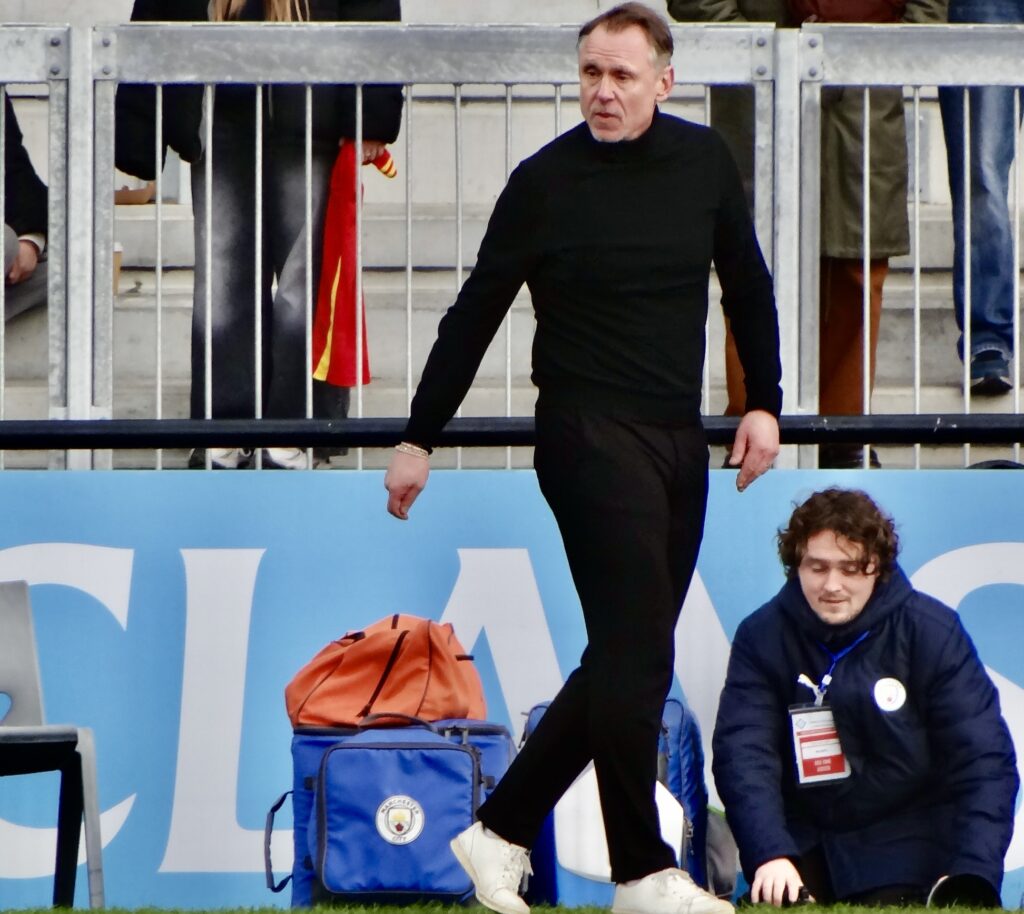
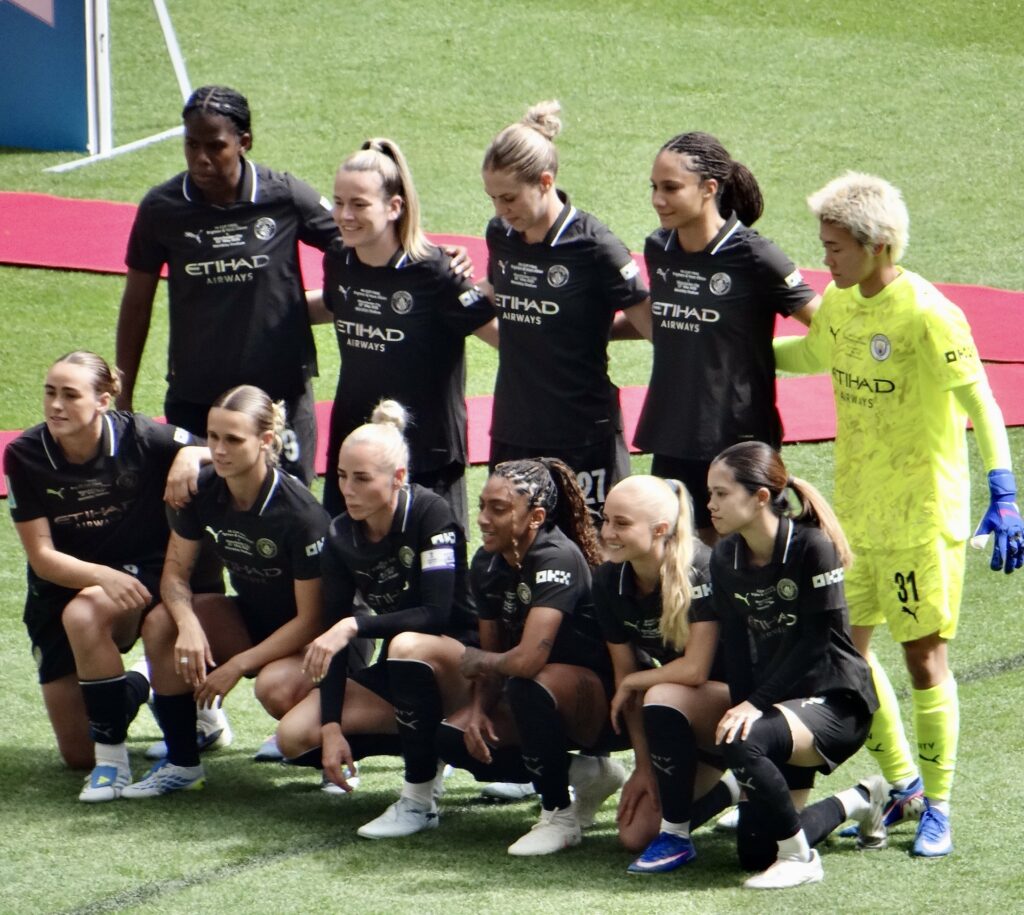
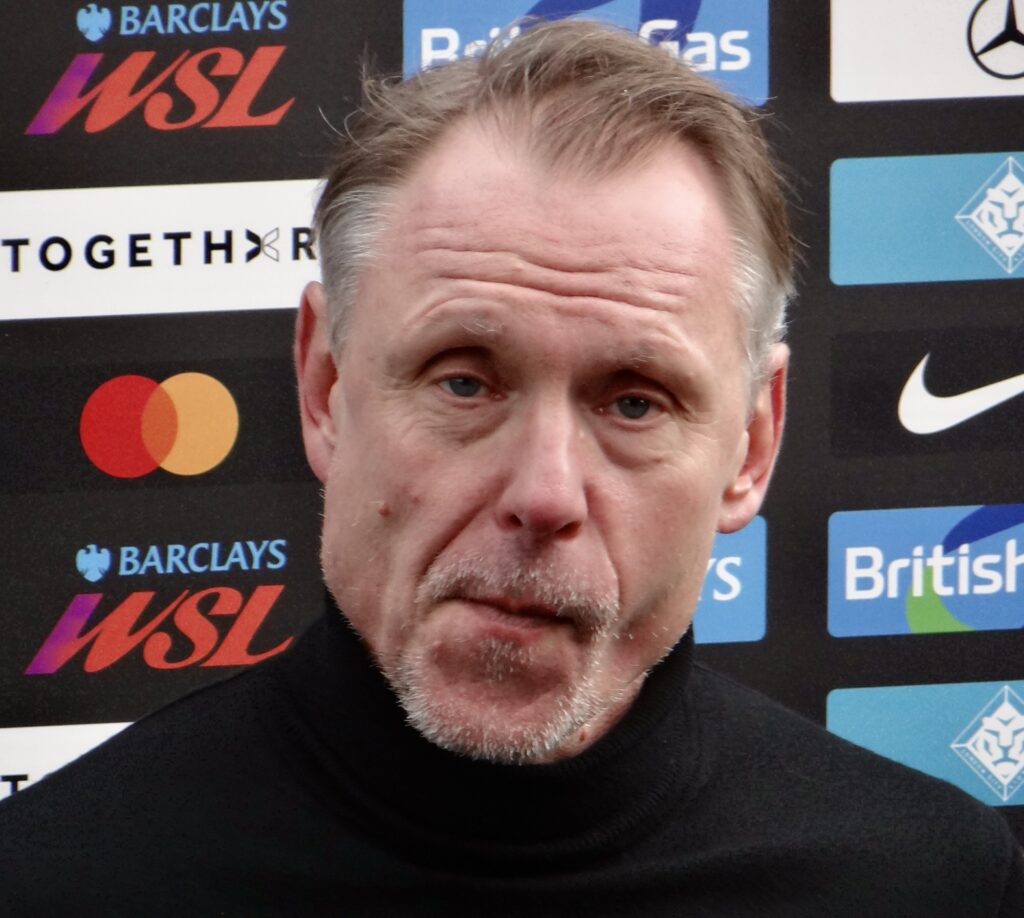
Can you tell us a bit about your halftime team talks:
First of all, I have maybe four or five minutes with the players, it’s a very short time so I need to be very clear what I want to say. It should be short and sharp. Sometimes it is tactical things, but sometimes it’s emotional things.
Against Birmingham we were not that good in first half, but it was more like the intention of how we were driving the game. We didn’t look at clips then, it was more of a team talk of how do we get more out of this?
The halftime talk is not for me, it’s for the players.
andrée jeglertz, man city
I always need to match the players’ mood.
Yesterday it was more tactical – how do we press a little bit different? How do we match up their box midfield a little bit better? And that had an effect. So, you need to be able as a coach to also feel what do the players need? Because the halftime talk is not for me, it’s for the players.
So, I also need to know how do the players feel? We always check in with one or two players, how is the feeling on the pitch? Because if I am coming in very high and the players are very calm, that’s not ideal, if I’m coming in very low and they are very high with emotions that’s not good. I always need to match the players’ mood. Our biggest challenge this year has been that we need to be better in doing those changes in the first half instead of waiting till halftime.
RENÉE SLEGERS, ARSENAL
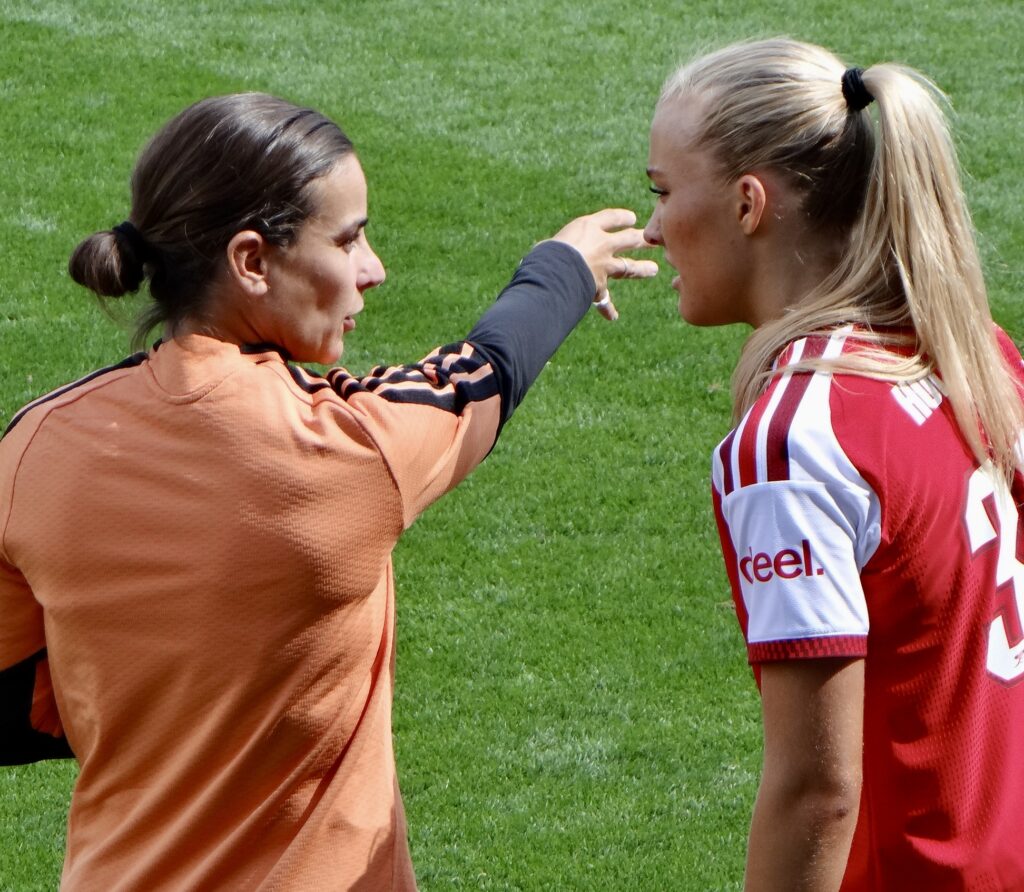
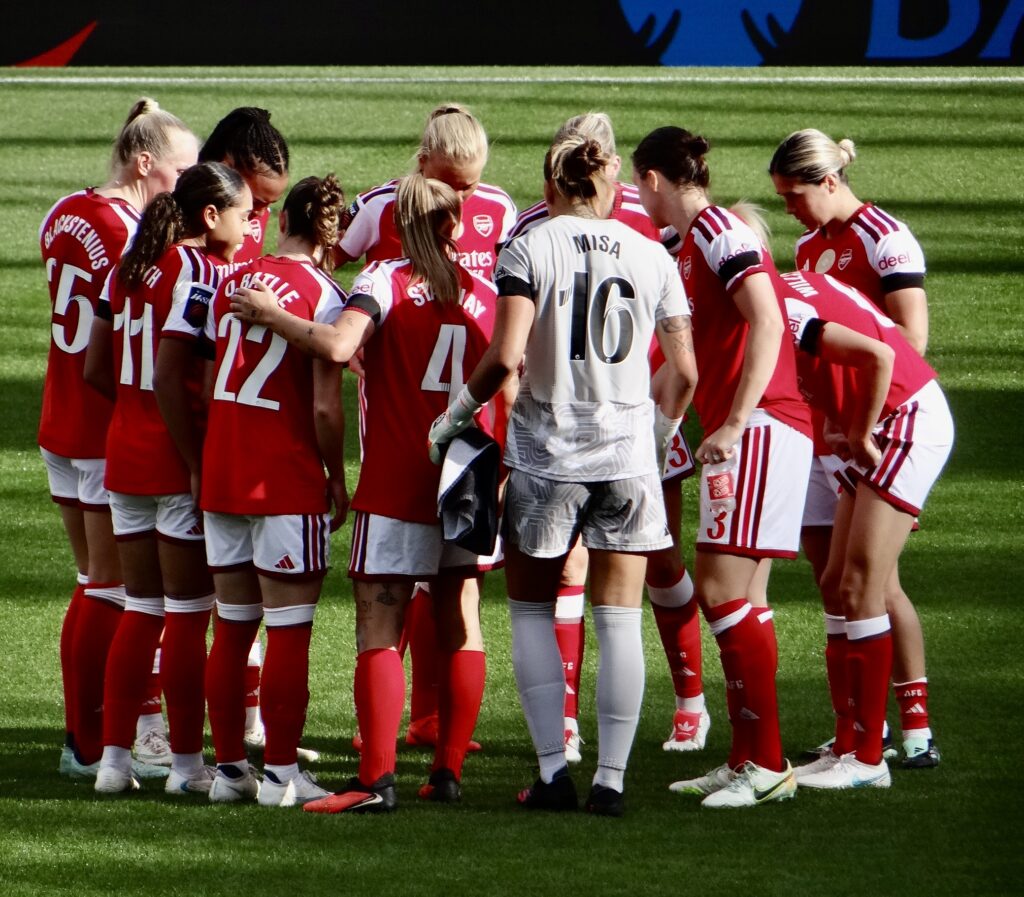
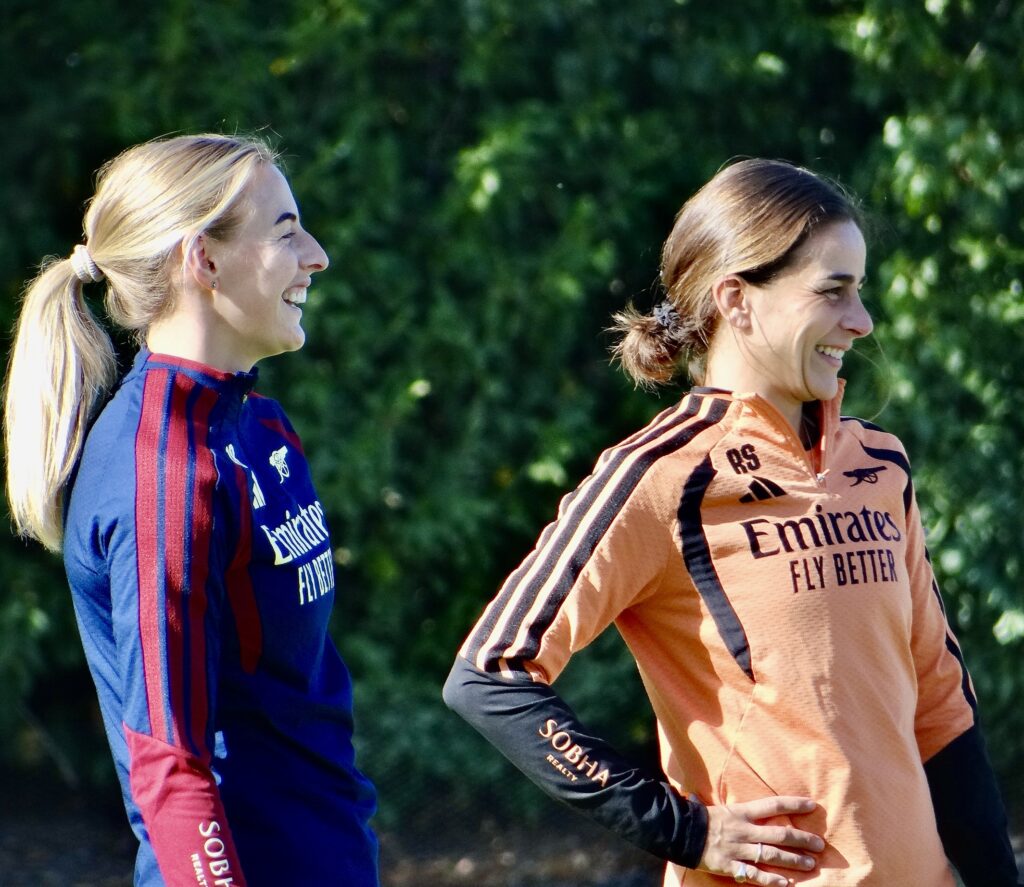
You’ce talked about the strong leadership among the team. And previously, you mentioned that you give them a lot of latitude in the dressing room.
So I wonder at halftime, how much do you lead the conversation, and how much do you let the players talk about pivotal points in the match, and how to address these in the second half.
They always spend some minutes by themselves where they can connect and talk about situations in partnerships, or as a team, and then we come in the coaches.
We have a clear split in our focus areas, and whatever is within that area, the coach would present the details back.
But I always start, end, or finish with a message to the team.
So it’s a collaboration of the team, different coaches, and me.
I always start, end, or finish with a message to the team.
renée slegers, arsenal
So it’s a collaboration of the team, different coaches, and me.
And then depending on what halftime needs, what we need to anticipate in the second half.
So that’s very much a collaboration.
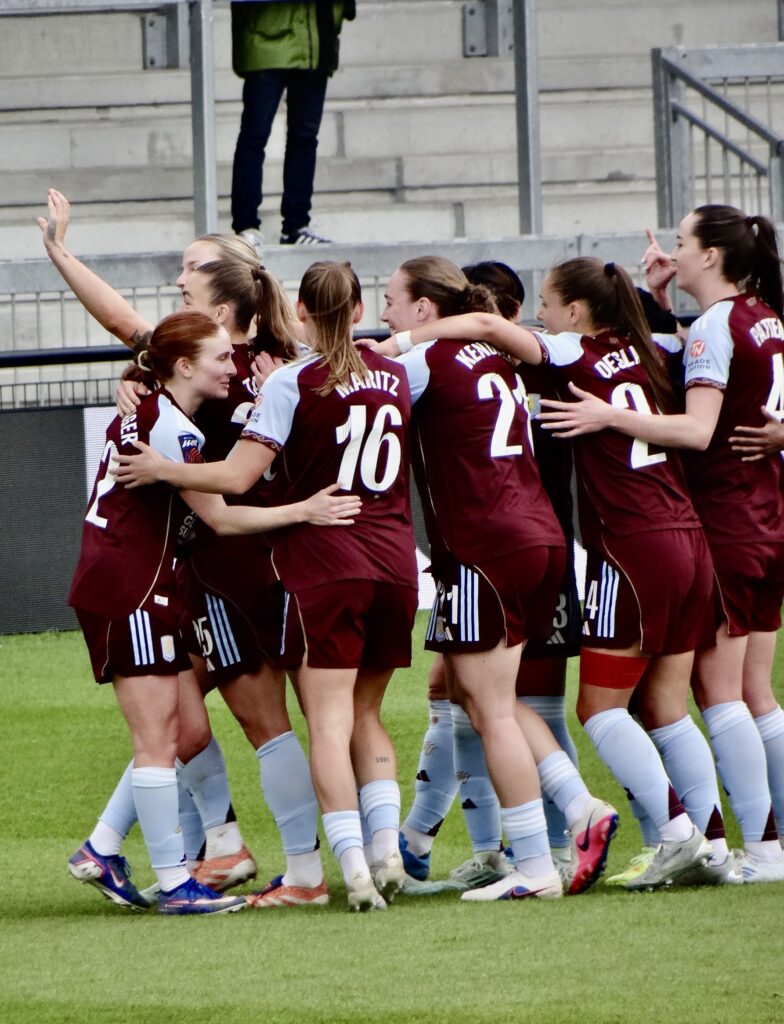
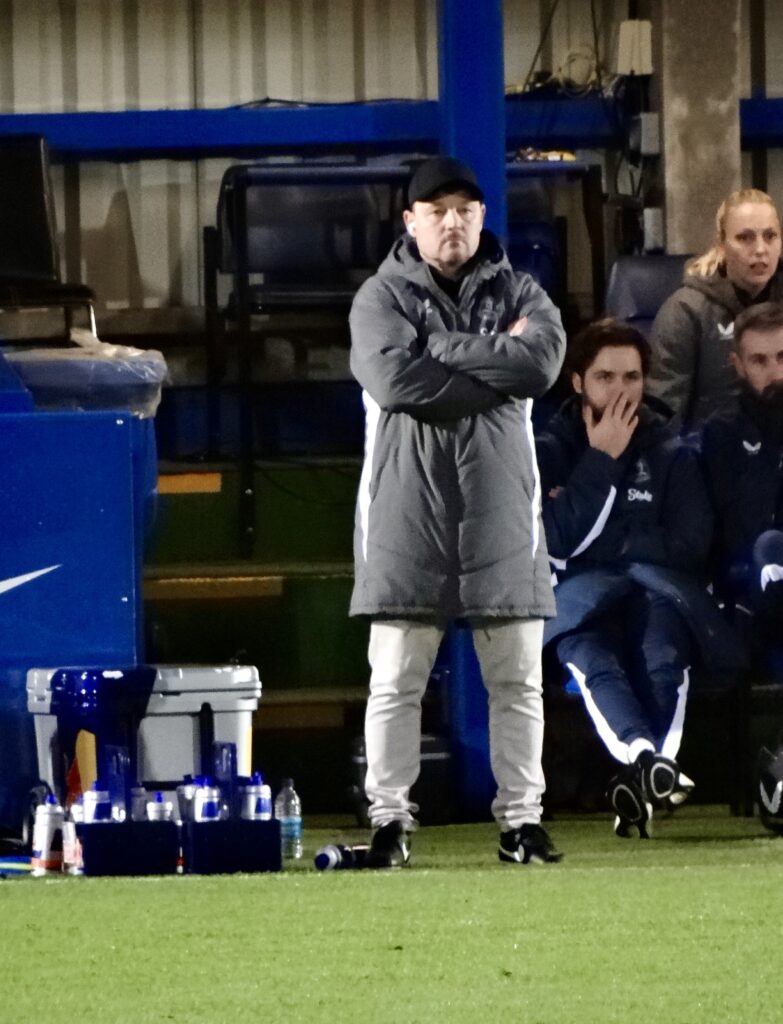
BRIAN SORENSEN, ASTON VILLA
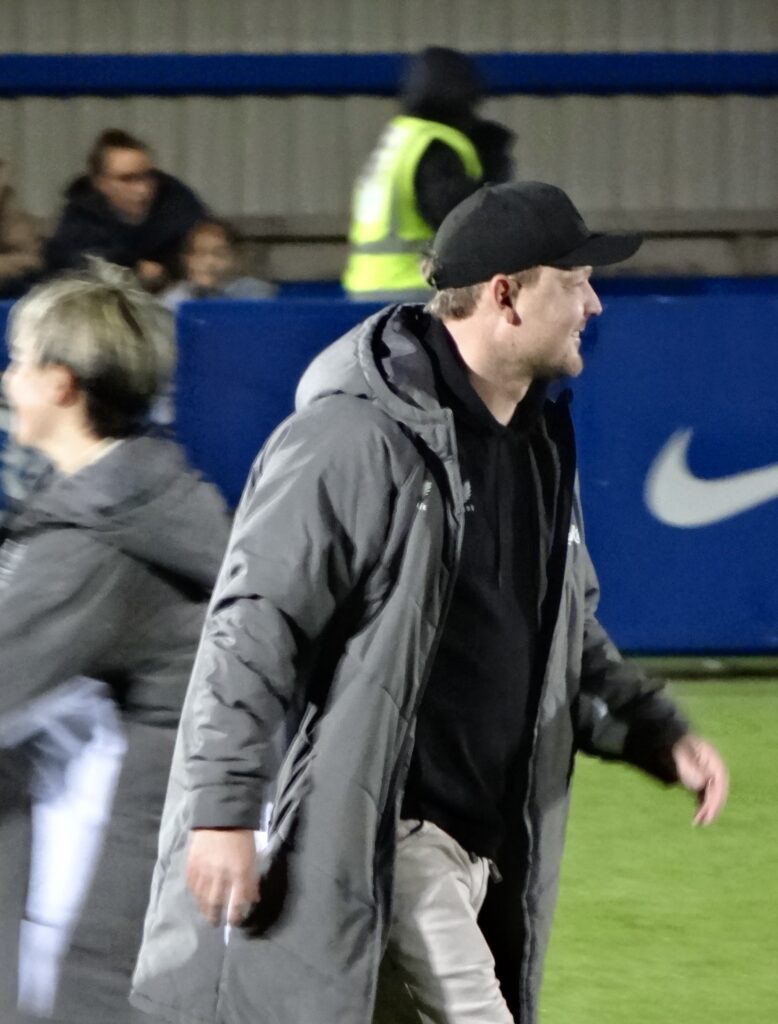
What approach do you take to halftime team talks? What sort of things do you focus on?
I have a mantra which is short, sweet and to the point. I try to do everything in my communication like that.
Just making sure nothing is stressed, we can all relax and align everyone.
You know, as short as you can do. In football that’s hard because it’s all the detail that matters but, at the end of the day, collective messages are super short and sharp and then individual messages can be a bit more detail-orientated.
I have a mantra which is short, sweet and to the point.
brian sorensen, aston villa
In football that’s hard because it’s all the detail that matters but, at the end of the day,
collective messages are super short and sharp and then individual messages can be a bit more detail-orientated.
What difference can a good halftime talk make?
Yeah, massive, massive. It’s how you start the second half – these are the things we need to be better at. Or these are the things that the teams were us hurting on and this is something that we can take advantage of.
Can you get across that super sharp and quick? It can change the game for sure.
Can you remember any specific incidents where it’s changed the game completely for you?
Yeah, Liverpool derby last year just to mention that. We [then Everton] were not trailing at halftime, but we were really bad in that first half and leading 2-1 quite luckily.
I was very direct and I think I made two or three subs in that halftime, even though we were leading.
Then we flipped the game around and we were the dominant force for the second half, and won.
So yeah, there are good half-time talks.
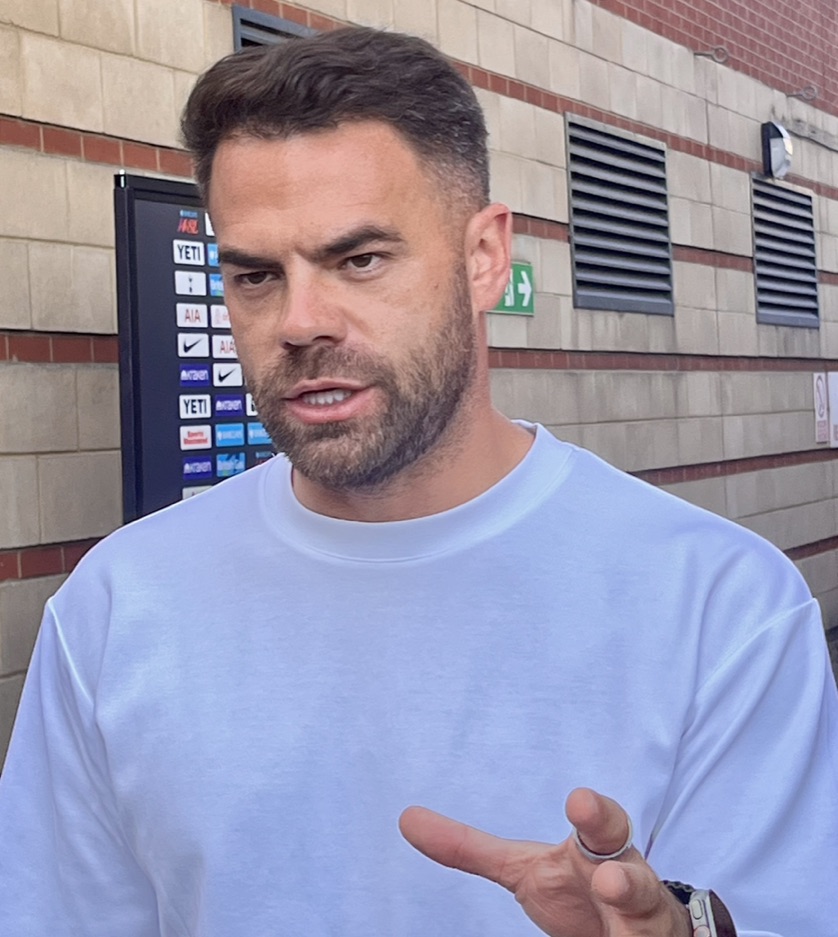
MARTIN HO, SPURS
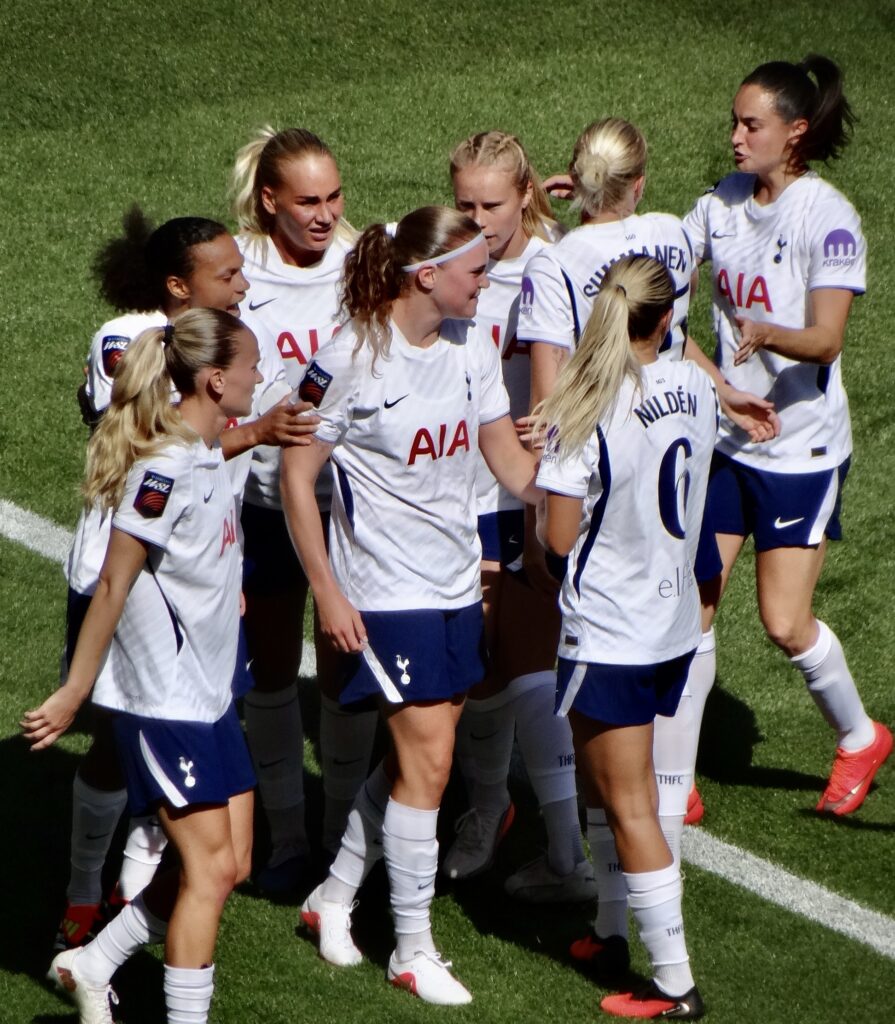
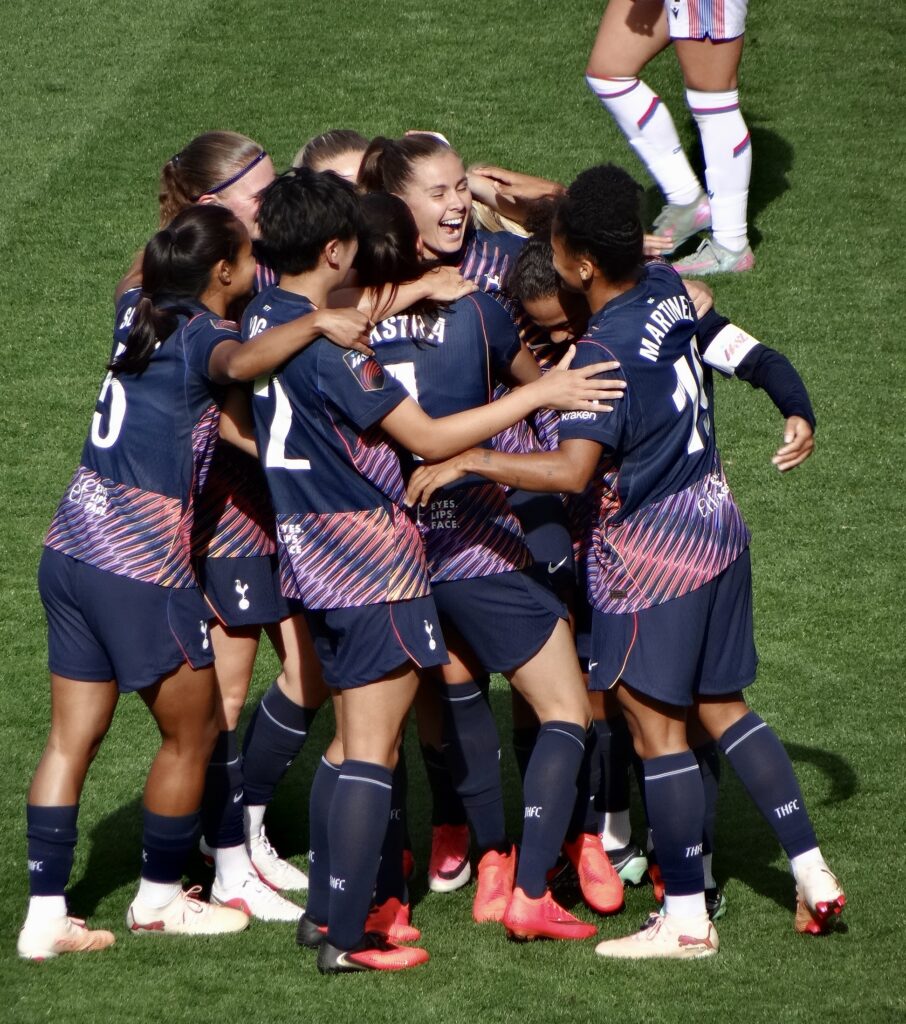
In two league games, you’ve been 0-0 at halftime, and won 7-0 and 4-0.
So, I wanted to talk about the secret of your halftime team talks, which must be electrifying. What is your approach to them?
[deadpan] First of all, it’s just a hair dryer. That’s all it is. Hair dryer treatments…
[laughs] No, it’s not! There’s literally no secrets.
I promise you now.
What I said after our Palace at halftime, the players will tell you.
I said the exact same against Aston Villa.
I thought we were creating chances.
We were in the attacking third a lot.
We were in the box a lot.
But some of our decision making, our willingness to complete the last action with quality or with intent wasn’t there.
And I thought Aston Villa was better.
We got into really dangerous positions, and we just lacked the actual finishing quality and a goal, even though one was over the line, and then you have a second half where I think we had more edge, more momentum, a little bit of a bit between our teeth because the players knew that we’d underperformed with the lack of quality in the first half in front of goal.
So it was just more getting to the same areas.
We adapted things structurally a little bit in terms we changed structure slightly to to try and enable us to sustain the attacks for longer.
And then you just give the players the spaces, the ideas of where you want to get into, and I think then once the first one went in, I think two, three, and four come quite quick.
And does the captain or the leadership group say much in the halftime team talk?
Yeah, I don’t go straight in a halftime.
I have three or four minutes. That’s all.
The players have a good seven or eight minutes themselves.
They discuss what they need to discuss. That’s between them.
Then I will come in and I will have a small conversation, give them some clear objectives of what to look at, and then they go straight back out.
So they will have their own discussions, and I think it’s a healthy way for the dressing room to make sure that they can iron out anything they want.
And then when the staff come in, and we’re going to give information that their focus is clear, they take the information on board as well as their own information that they’ve just discussed, and we go to the second half as a as a collective to push for the game.
At Palace I challenged the front five, and they won’t mind me saying that I said you have ten minutes to score… We have ten minutes to do it, or we have to try and change the game.
martin ho, spurs
And then I probably had custard pies in my face after about five minutes.
Can you think of one specific game where it really did turn the game around after what you or the players said at halftime?
Maybe Crystal Palace.
Just off the top of my head now because at Palace I challenged the front five, and they won’t mind me saying that I challenged them and said you have ten minutes to score.
Have ten minutes to show me you want to score, meaning the mentality has to be there, the willingness to shoot, to go in front of goal, to be brave, to show that kind of personality.
I said, we have ten minutes to do it, or we have to try and change the game.
And then I probably had custard pies in my face after about five minutes.
So, I’d rather be in that position.
With the players, you try and use reverse psychology.
To gee them up, to push them, to make them think, and the players will tell you that themselves.
They will say, and some of them did: it made me think, and come out second half with ‘I’ve got to score, I’ve got to create,’ and that was probably one of the moments where you just try and use a different psychology with them to try and bring something out different.
And luckily, in that game, it worked.
KAREN HILLS, CHARLTON
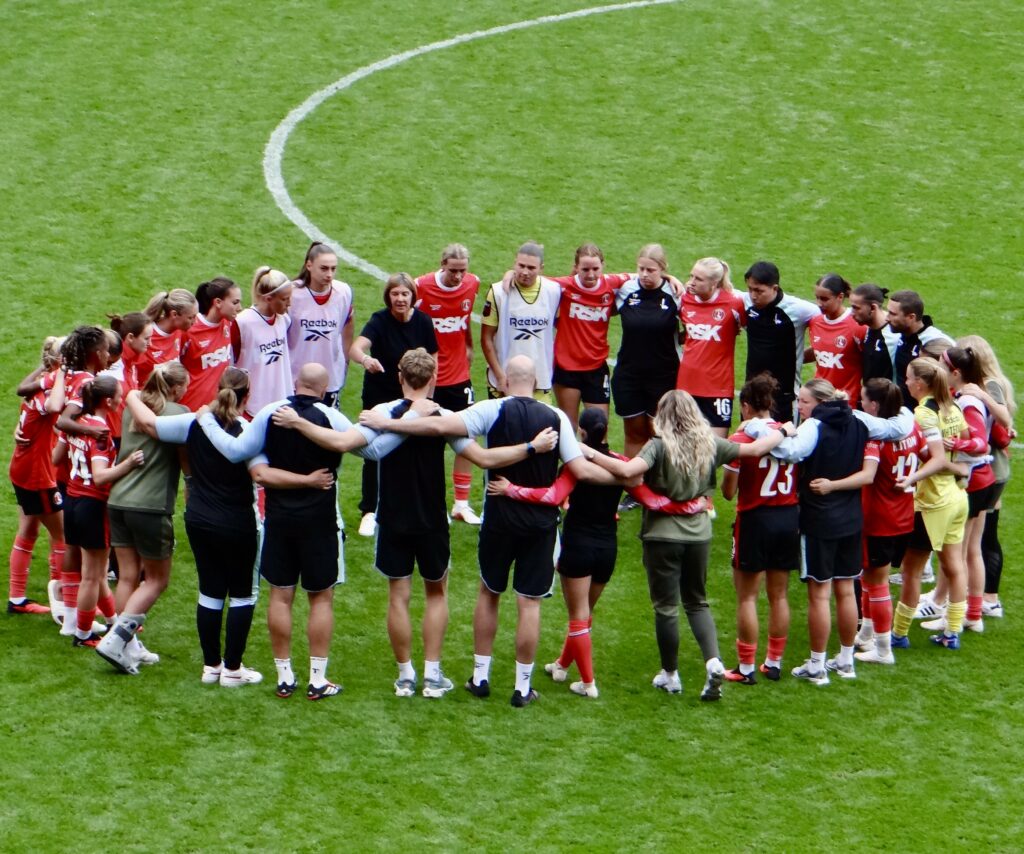
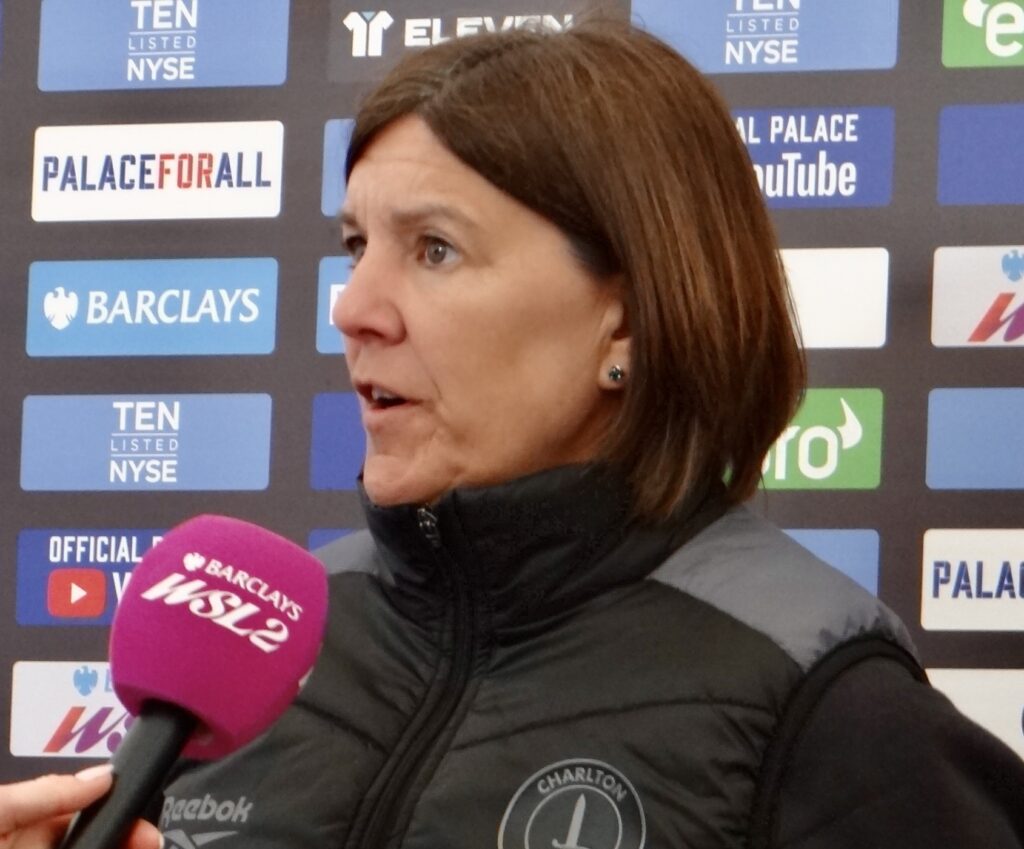
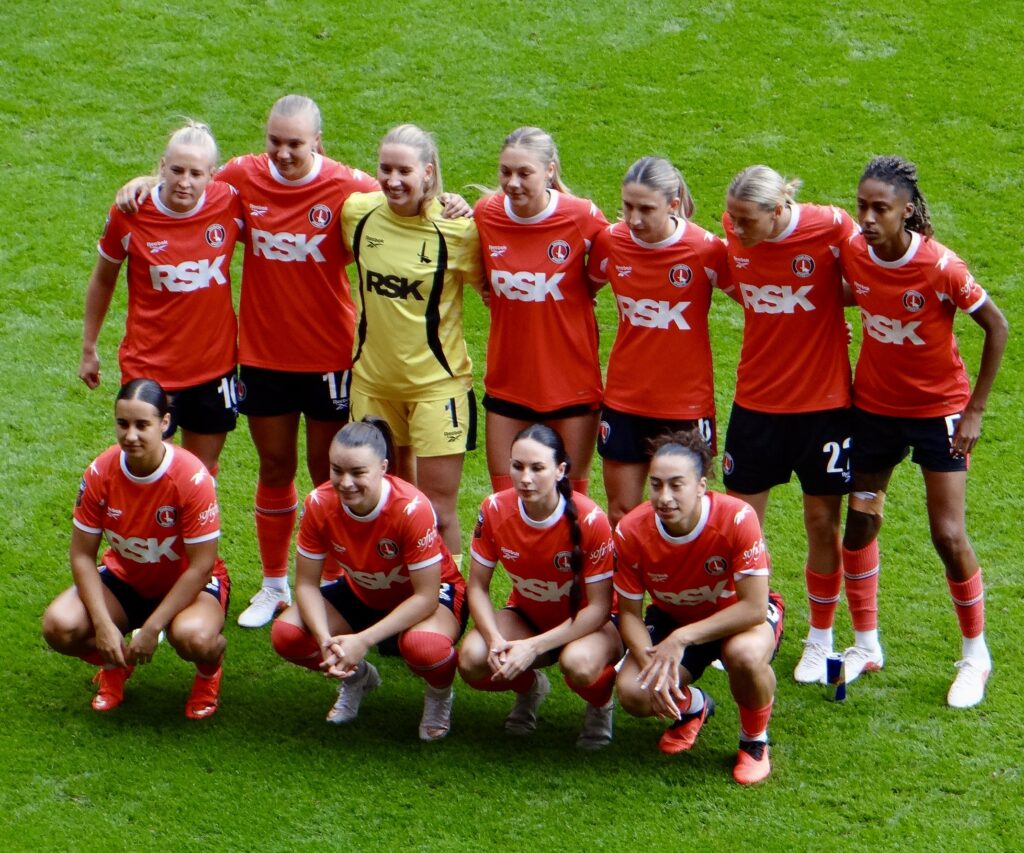
I wonder how you use the halftime team talk and whether the captain gets involved as well.
It’s an interesting question, and I think it’s really clear and concise in terms of how we try to articulate messages.
We’ve obviously got clips as well within the first half of the game.
So, do we try and utilise those? It depends on if it’s going to help the team.
I always look at what’s going to help the team.
Is it going in and having an arm around someone’s shoulder?
Is it a moment where we can fire them up a little bit more?
Depends on what I think they need to help them go out and perform in the second half.
And obviously, the result over the last couple of weeks, we conceded just before halftime, so straight away the players are probably feeling a little disappointed.
So it’s, right… how can we get them back to reset, and know that they’ve got my full trust and belief in what we’re trying to do, and nothing changes.
I’ve been in a lot of changing rooms as a player, and obviously I’ve seen different ways people have those team talks.
So I’ve been really deliberate in trying to make sure that players feel on top of the world and know exactly what we’re asking them. Going out in the second half with the belief from myself and my staff that all players are going to go out and deliver what we’ve asked.
I always look at what’s going to help the team.
karen hills, charlton
Is it going in and having an arm around someone’s shoulder?
Is it a moment where we can fire them up a little bit more?
Sounds like you’re more of a carrot than a stick, then.
Basically, yeah, it’s an interesting summary of it.
I know what will push people’s buttons, and there’s a modern player in that changing room, and a lot of players now have voices that have experience and been in these situations, whatever the game state looks like at halftime, and as a player you have to draw on those moments, experiences, and make sure that like you just do what you need to do.
I give them a couple of minutes to have those conversations individually as a group before we go in, and then they’re very open to listening and to taking on the information, and and then we come out and we’re together and we’re regrouped.
And the second half is 45 minutes, and off we go again.
And can you think of a specific example, either when you were a player or now as a coach, where the halftime team talk has made a real difference to the second half?
Yeah, I think there was probably one game.
We played a team probably two, three seasons ago now, and we just we weren’t at our best, and it was unacceptable.
I don’t know if we underestimated them.
I don’t know if we just didn’t show up.
So was like giving a little bit of a stern word say, like it’s not acceptable.
We haven’t trained like that this week.
Obviously, in so many words.
And to be fair to them, they took it on the chin.
They recognised that the performance wasn’t where it needed to be.
And I just made my point very clear that I was not obviously happy and disappointed.
And it needed to be better in the second half.
They went out and they definitely performed better in the second half.
We still lost the game, but the reaction what I saw from the players was a positive one, and that was the sort of reflection piece that you shouldn’t wait till halftime to get a rocket.
You need to start with that intensity at the start of the games.
But thankfully, I don’t haven’t needed to do that over the past two years or so.
EDER MAESTRE, LONDON CITY LIONESSES
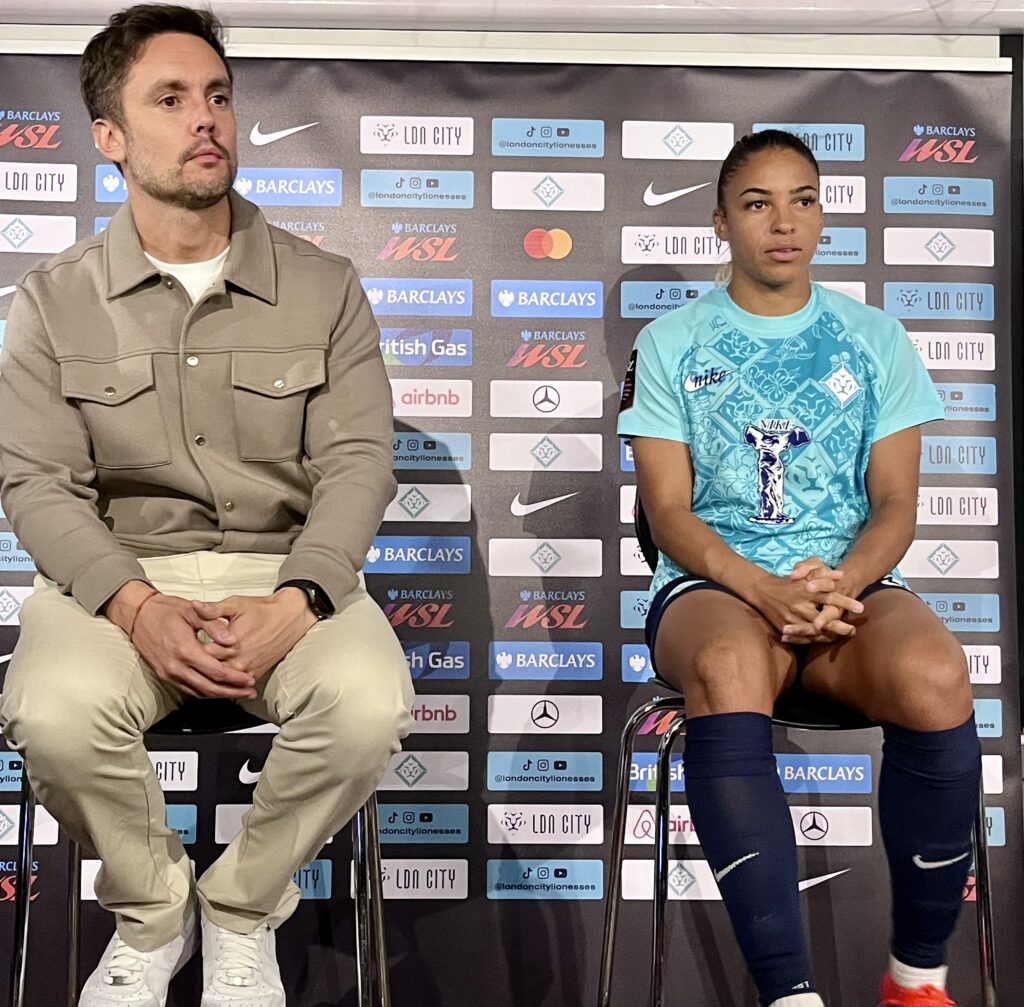
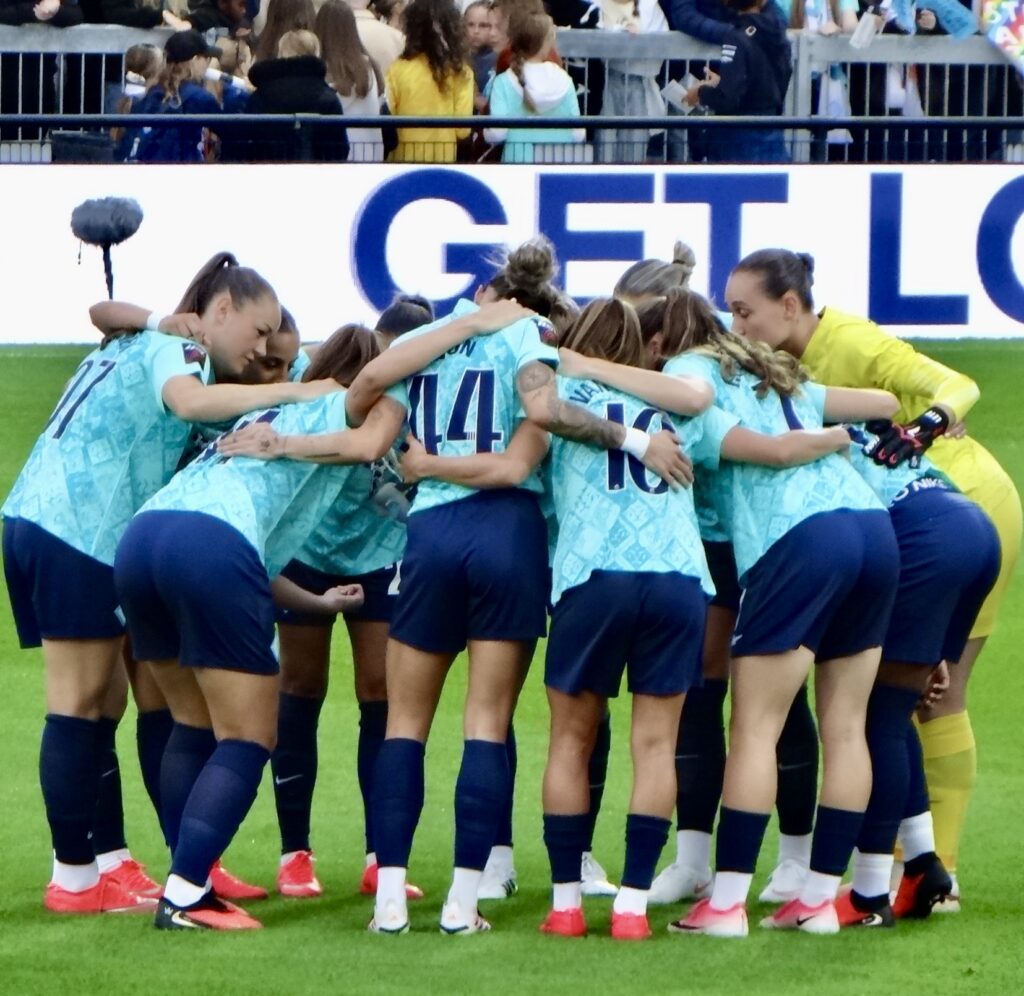
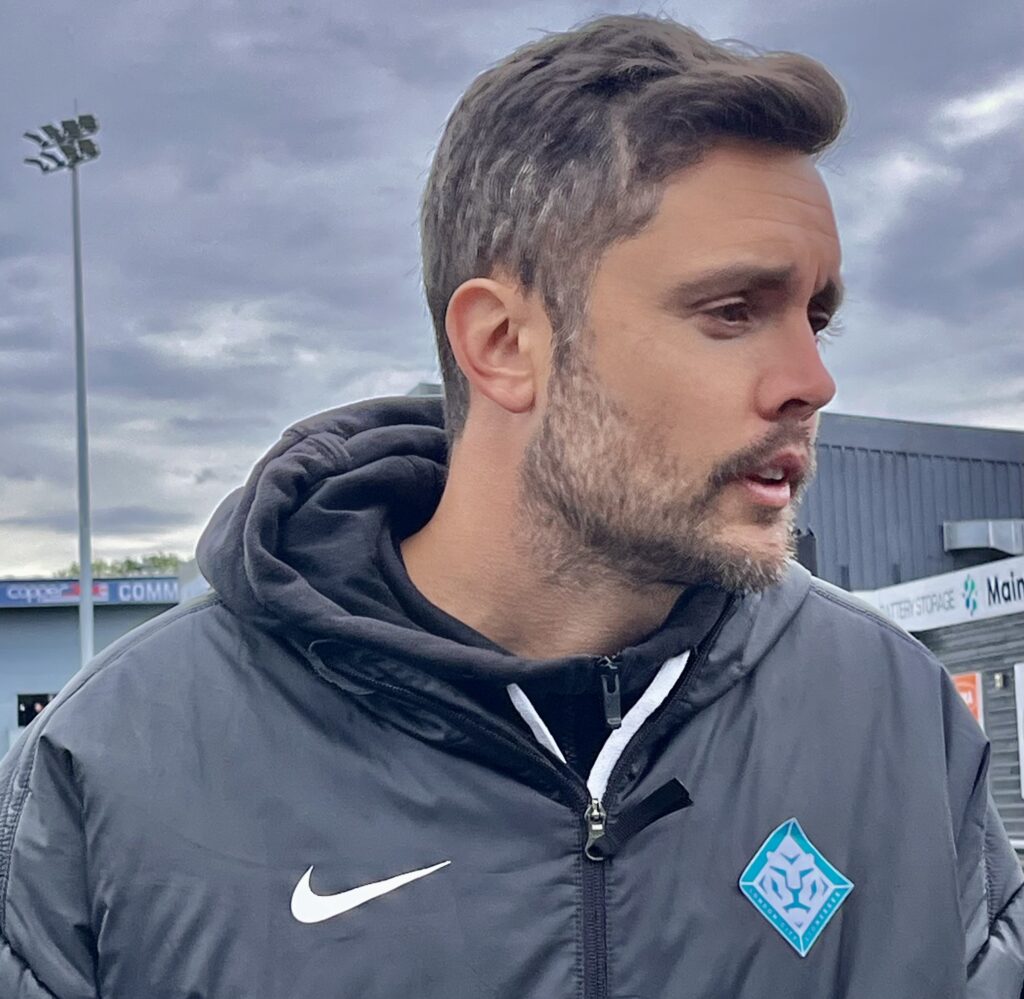
We’ve been talking to a few head coaches about halftime team talks. So I wonder if you could tell me about your own methods.
Well, first of all, is trying to understand the things that we are doing well and the other ones that maybe we can improve.
Just to clarify through a couple videos that can represent the main trends that maybe are working good to keep going with them and the other ones that maybe we can manage to manage better.
Finally, I think everyone has a game plan.
So the way to face this kind of moments about reinforcing the game plan, because sometimes it’s about little details.
And well, the more different is the opponent’ game plan, considering the things that you try to guess before the game, maybe the more.
You need to adjust with that new context, but in general, it’s about making a couple of details or work through a couple of details that sometimes when you are playing with this kind of exigencies, that details makes the difference.
And do you get your leadership group, your captains, involved in the halftime team talk as well?
I like having the feedback of the players because it’s about understanding the ones who are living the game.
So here we are to provide solutions.
There are many ways to afford the same outcome through different ways.
So the more resources I can bring to the team, the better in terms of suiting with the feelings that the players are having in the game, on the pitch, so it’s not something where I’m trying to put everything on the table.
It’s about understanding how they are feeling, trying to suit with the match plan that we had, and trying to read the better outcome.
We can have the first half just to receive the tempo of the match… and I’m very happy to find solutions in the second half.
eder maestre, london city lionesses
When you think about specific matches for London City, I was thinking of the Villa game at the end of last season, where the game flipped in the second half, and you suddenly became more dominant, and I wonder if there are times where the halftime completely changed the match.
Yeah, finally, it’s about this.
We can have the first half just to receive the tempo of the match, and from that keep going and keep building the things on the main trends we had established before.
And I’m very happy to find solutions in the second half.
But as you are mentioning, we were dominant enough to be more clinical even in the first half.
So it’s something we need to keep going and keep improving, because we cannot always wait to fix things in the second half.
Yeah, and if it’s 0-0 with a team like Spurs at halftime, it doesn’t mean anything because they’ve scored seven and four in the second half, which is kind of weird…
Yeah, of course.
Mostly, when you are gonna face these kind of things, we need to understand that the games are not gonna be in the same page we had in the days before, and we need to keep being more clinical in the box because sometimes the touches in the box are not easy to reach.
Every time the ball is in the in the box, we have to be more aggressive, and have more killer instinct.
ARTURO RUIZ, BRIGHTON
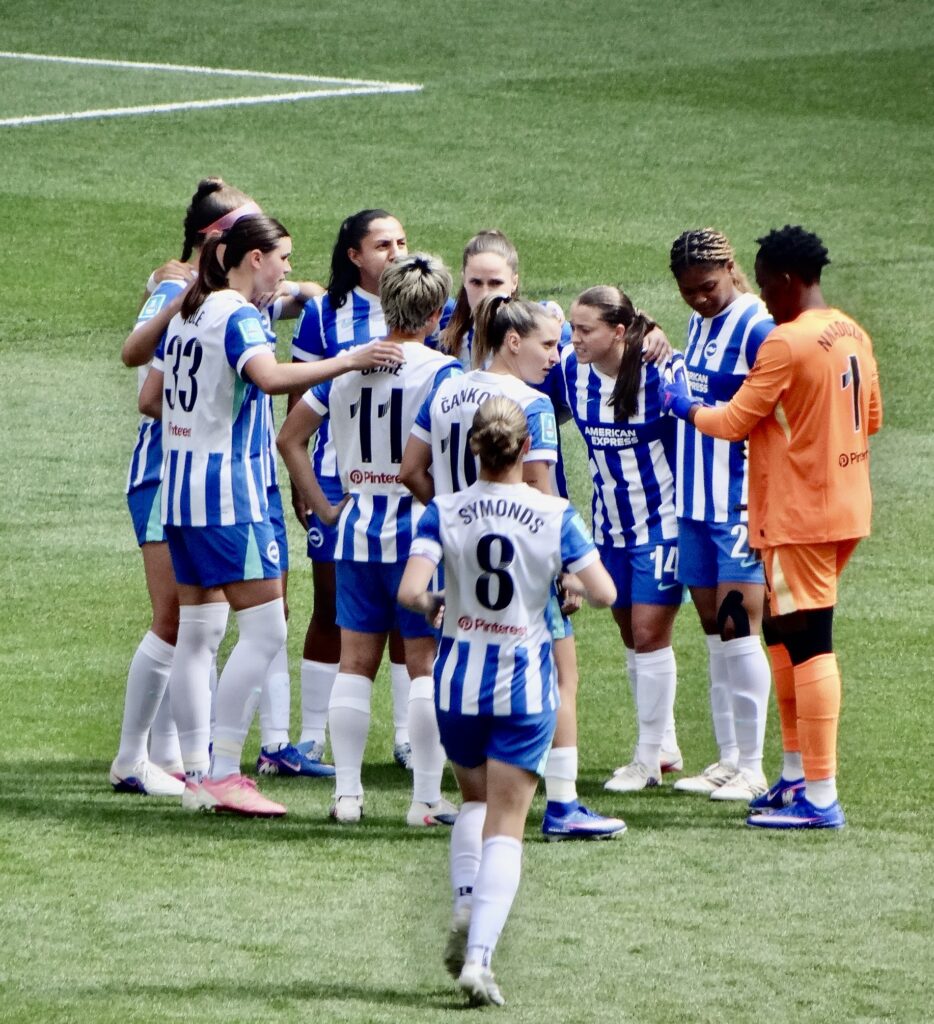

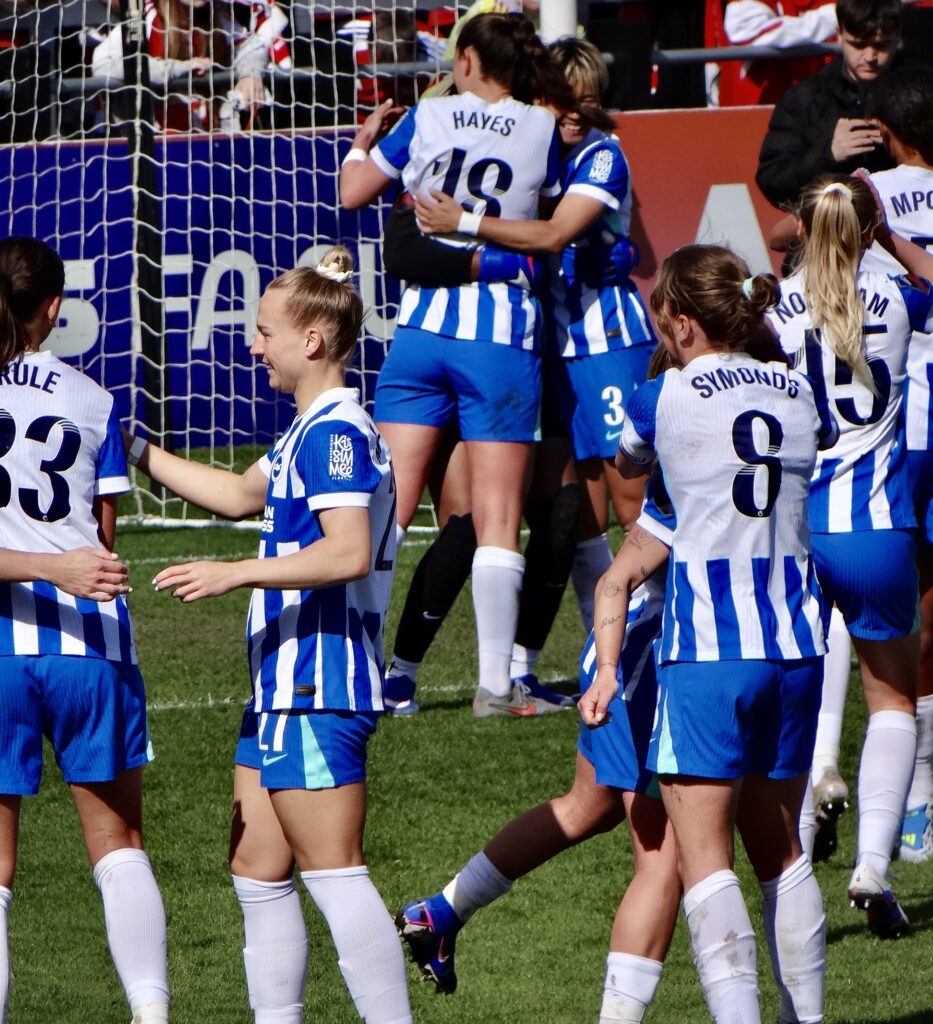
What approach do you take to halftime team talks? And what do you focus on talking about?
It’s very difficult to have the balance between the adaptation process and the time that the team needs to be built and the desire, the will to win every single game – that is the key that we need to balance at the moment.
We are performing well, we are very competitive in all the games. We want to be even more competitive and have more security and confidence in all the moments of the game in every single game.
But you know, a team with a long-term process – I always have that mentality, long-term process because I don’t believe in short projects and short process, I don’t believe in it.
It’s also hard when you have to win three points, every three, four days.
So that’s been an important message because as long as we are balanced and keep growing and keep progressing, keep team building, it’s good, but obviously the result affects but not that much because we are really into that idea.
And you can see how the players speak to me, how we speak to them, although we are not having the result that we want, because we have a really healthy communication and it’s really good.
I’m obviously prepared for every single game and to give the solution during the games.
arturo ruiz, brighton
We have a really good leadership group in which I feel a lot of confidence and I think that they are very comfortable with me and we will just keep building.
I just have that feeling that very soon are coming really good games.
It’s not easy to just have one month with that many games. So I’m really proud of the team and those have been the main patterns in these weeks.
So, for you, the long-term process is more important than anything you could say at halftime?
Obviously both things are important. I’m obviously prepared for every single game and to give the solution during the games.
But I put a focus on my conversations, my analysis, my daily basis, into building a strong future team.
We want it as soon as possible but I cannot guarantee if it’s going to be today or in one or two months from now.
I cannot say because it’s impossible, it’s not how it works and no coach can guarantee that.
So, yes, my work is on building a strong team with clear ideas for the future, knowing as well, that we need to be very ready for every single game and compete all of them very solidly and very well.
Photos: Helen M Jerome, Brighton