
PURPLE REIGN – Nikki Chaudhuri takes her seat beyond the boundary
The first Women’s Cricket World Cup was held in 1973. Over the past 53 years, the game has grown beyond all recognition.
Ahead of the T20 World Cup, the England and Wales Cricket Board (ECB) is recognising 53 women who have shaped cricket across both countries.
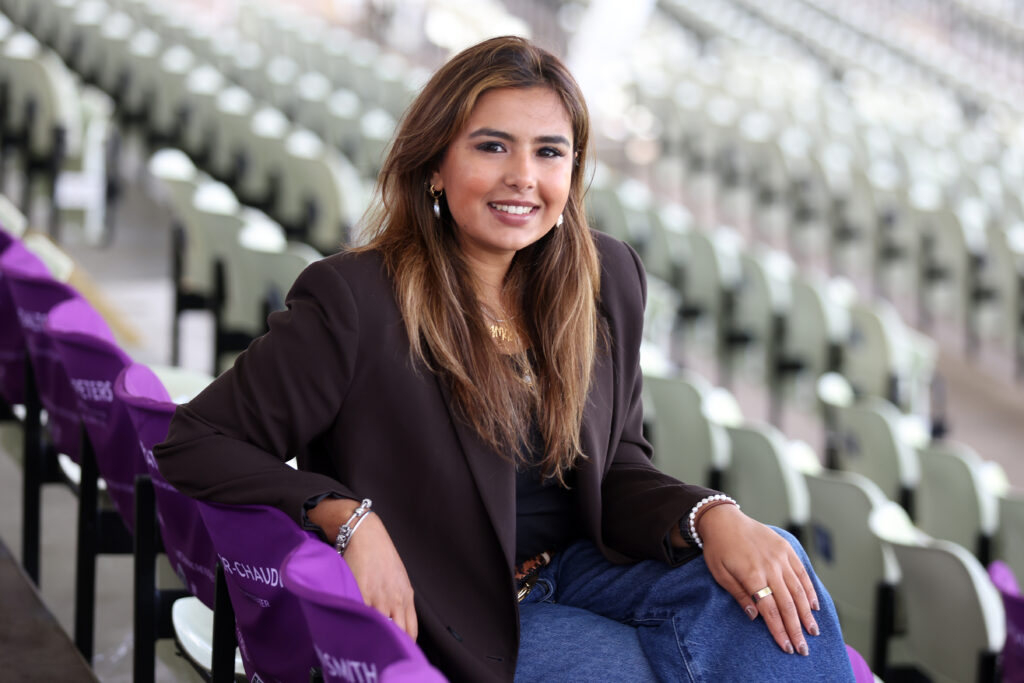
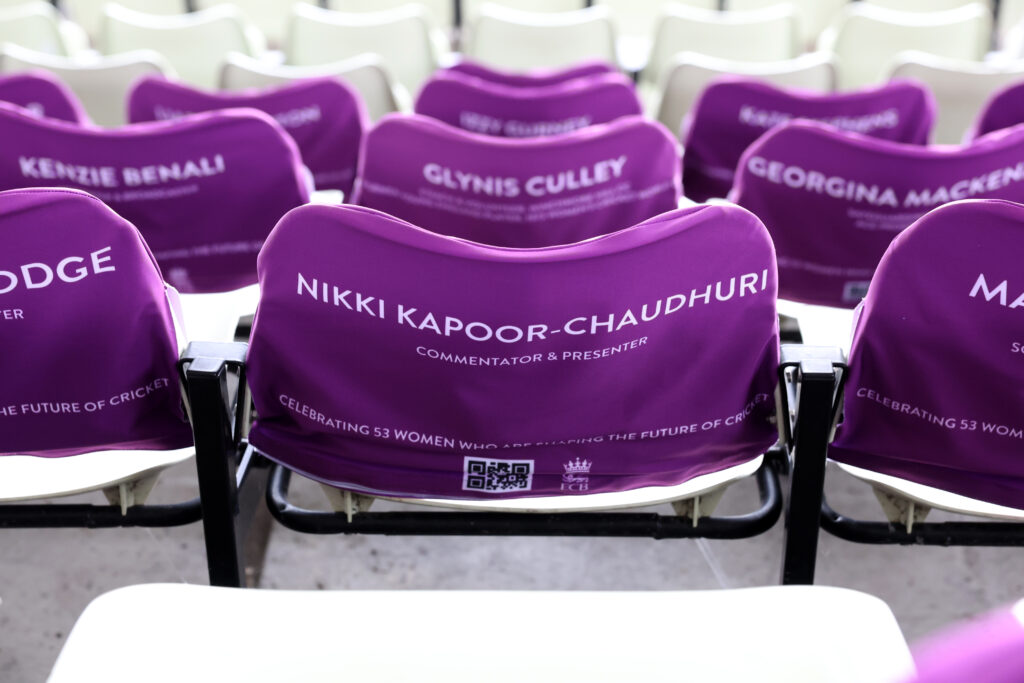
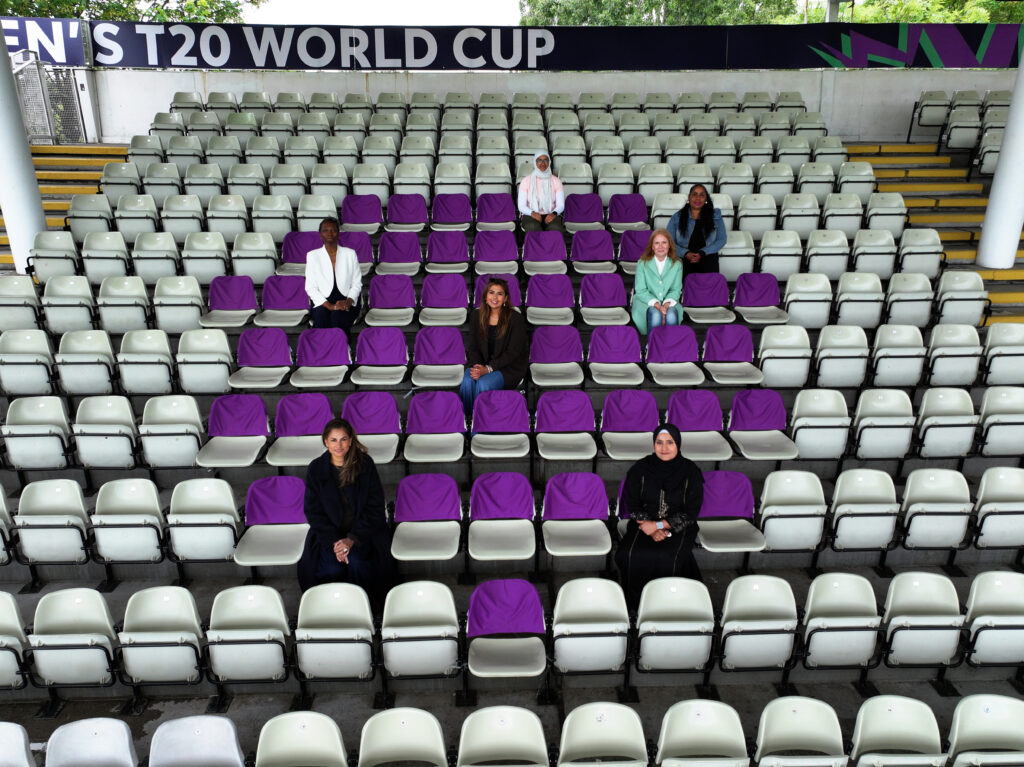
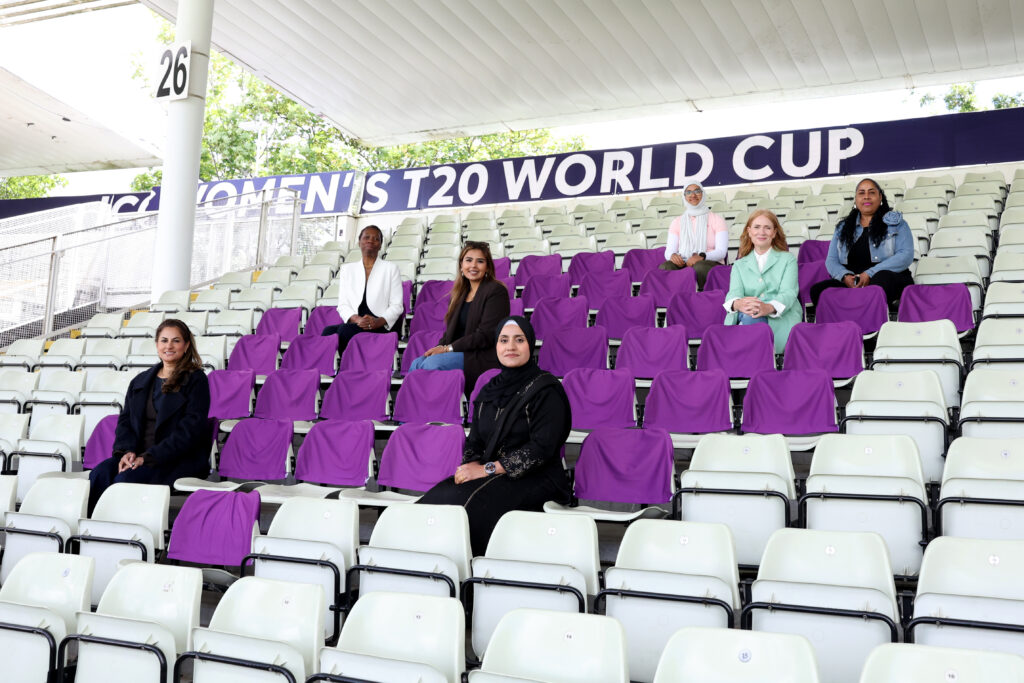
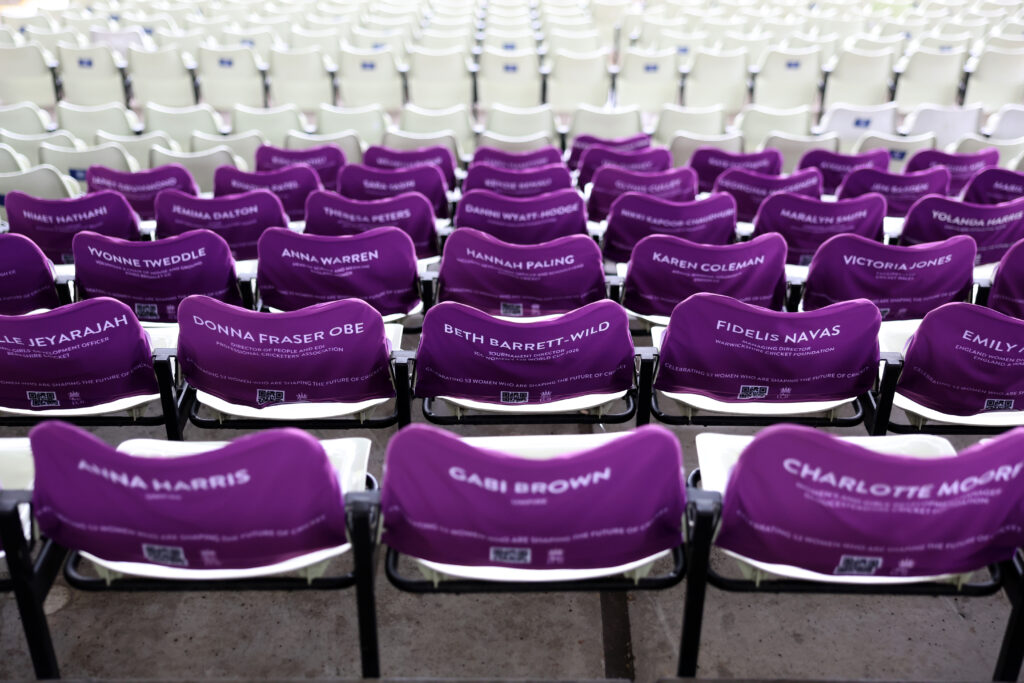
To celebrate, 53 seats at Edgbaston – where England lifted that first World Cup trophy in 1973 – have been turned purple, each honouring one of the women who has contributed to the diversity and depth of the cricket community over the years.
Each seat has its own QR code, taking fans to the story of the woman it represents.
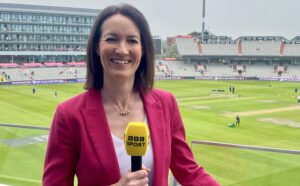
Clare McEwen speaks to commentator, broadcaster, and former cricketer Nikki Chaudhuri about having her own purple seat, the growth of women’s cricket and why she wants India to win the T20 World Cup.
You are one of the 53 women spotlighted at Edgbaston for the tournament. What does that mean to you?
Honestly, it’s so special.
I’m really honoured to be selected as one of the 53, just to think how far the women’s game has come.
When I picked up a bat and ball aged eight, playing cricket professionally wasn’t even in your wildest dreams. It just wasn’t an option.
It’s come on leaps and bounds.
Young girls can pick up a bat and say: I want to be the next Nat Sciver-Brunt, I want to be the next Danni Wyatt-Hodge or I want to bowl like Lauren Bell.
They can dream of representing England, playing franchise cricket, or being part of the domestic set up.
Providing those opportunities, being able to be contracted to counties, something that even 10 years ago didn’t exist.
Do you think it’s important that we understand more about the history of women’s cricket and how recent the progress is?
Oh, absolutely.
With the 53, we’re talking about it being 53 years since the first Women’s World Cup in England and Wales.
But even if you look at 2017, we’ve come on so much since then.
The platform, the voice women have in the game now and the exposure they’re getting… back in 2017, there was no WPL [Women’s Premier League, a T20 league in India].
There was no opportunity to play the Women’s Big Bash League [Australian T20 league].
And it’s all come on in the last 10 years.
And I think those competitions have been such contributing factors for the growth of the women’s game.
Investment is so important as well.
You need to have the correct investment, the right people involved – people who actually want women’s cricket, women’s and girls’ cricket to improve and have the platform it deserves.
It might have taken a bit of time to get here but we’re now definitely moving in the right direction.
In the last 10 years we’ve seen so much growth since that World Cup final at Lords, what do the next 10 years hold?
It’s very exciting and, from my point of view, now being able to work as a broadcaster.
To see more people go and try and get interested in that, pick up a mic or contribute as volunteers, coaches – we’ve come a long way and we should be really proud of it.
It’s exciting to think we’ve got a long journey ahead of us and it’s going to be really enjoyable.
That’s the first time we’ve seen any England cricket team on Piccadilly Lights.
nikki chaudhuri
It was a brilliant initiative and it looks amazing.
We’re seeing the same pattern of growth across women’s sport now.
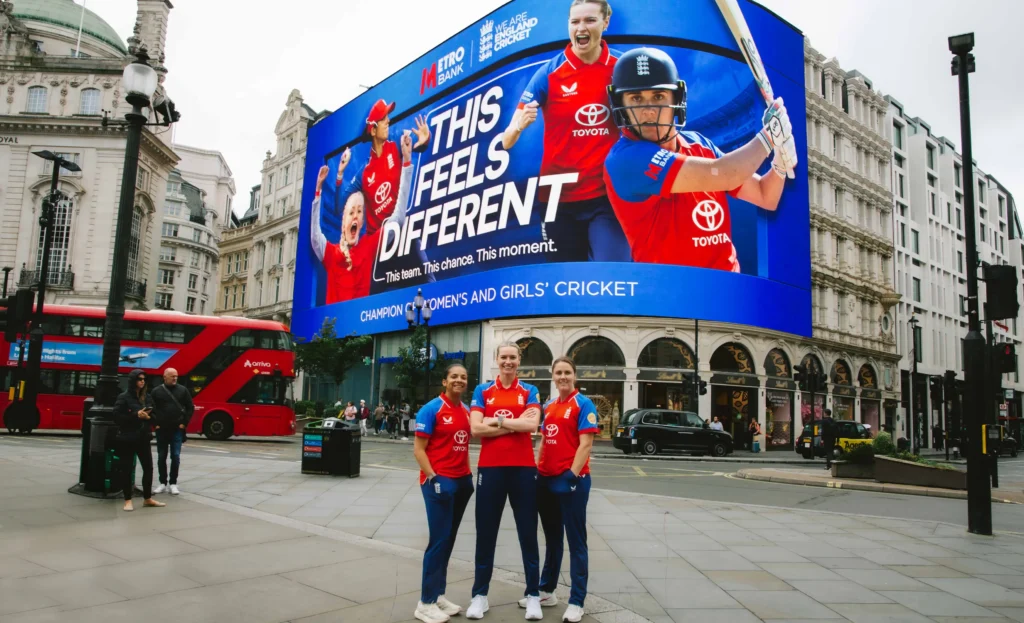
Like England women being on Piccadilly Lights last week, that being launched.
That’s the first time we’ve seen any England cricket team on Piccadilly Lights.
It was a brilliant initiative and it looks amazing.
So you’re just getting so much exposure ahead of the World Cup and it’s really inspirational.
Back in the day, when we picked up a bat and ball you didn’t really see many girls play.
Now you can get involved and go to women’s clubs or girls’ coaching camps and you’ve got all those opportunities. Whether you want to pick up the sport or be part of the sport in a different capacity.
Look at Anna Harris, for example. I played with Anna at county age group cricket at Sussex and she’s gone on to become an international umpire.
It’s incredible to think there’s opportunities for people like us, who have spent so much time in the game.
I played from eight-years-old until a couple of years ago – I’m 28 now, so from eight until 26 – we’ve dedicated so much of our time to the sport that we love.
One way or the other, it’s rewarding us back.
I think it’s important to know there are no boundaries now.
nikki chaudhuri
There is a path to get involved and have a voice – quite literally, pick up a mic and talk about the sport.
Does it feel like a responsibility, too, to open doors for others and show what’s possible?
Oh, 100%.
Especially in the broadcasting space, there’s very few women in that area.
And also from my background as a South Asian, there are very few – I could probably count on my hand.
I think it’s important to know there are no boundaries now.
There is a path to get involved and have a voice – quite literally, pick up a mic and talk about the sport.
Would it have changed eight-year-old Nikki’s perspective to hear more female voices around cricket
100%.
I don’t remember as a kid hearing many female voices on commentary.
I didn’t even think it was possible to become a commentator or a broadcaster in cricket unless you played international cricket.
That was the misconception that I think many have, that you need to have played international cricket.
I’m lucky to have played some level of county cricket and been associated with some really special clubs who have really helped shape my journey.
Surrey, for example, I owe them a lot to now be in a position where I can go and work in this space.
Now you hear female broadcasters when you’re watching big tournaments, World Cups and series.
Hearing their insight and contribution to the game is really inspirational and it’s really motivated me to keep going.
Tell me a bit more about moving into broadcasting. I’ve been looking at your day-in-the-life series on Instagram and really enjoying the behind-the-scenes videos.
Oh my gosh, I’m very new to this social media space, but I guess it’s quite interesting to see how it works.
It’s not just that you pick up a mic and start jabbering away, as much as it’s really enjoyable to yap – I feel like I could yap all day about cricket!
There’s also a lot of prep that goes on behind-the-scenes.
There’s technicalities as well if you’re doing TV broadcasting – understanding how to work with several voices in your ear, under time constraints and working with directors.
I think it actually helps having played cricket because you acquire so many transferable skills.
When you’re out in the middle and you’re in a run chase and keeping track of the scoreboard, what’s going on in the field, and how to get closer to your target.
You’re doing the same in broadcasting because you’ve got to keep track of what’s going on on camera, in your ear, when you have to throw to a break, when you’re doing an interview – so many transferable skills that the game has taught me.
Being in a position to say I’m off to Lord’s to commentate or my office is the Oval today – I’m so grateful to this sport.
nikki chaudhuri
I owe a lot to a bit of willow and leather.
I’m curious as to whether younger, newer fans want something different from commentary and exposure to the game?
I think the social media angle provides a different angle, right?
Because again, there’s not many women in the space and now you’re able to see what goes on behind-the-scenes – that insight and to know there’s an opportunity beyond playing.
I’m pretty sure there will be plenty of women and girls like me who’ve been involved in pathways and played first team cricket for their counties, who maybe don’t play any more, or who don’t want to play but still want to be associated with the sport.
I come from a cricketing background. My dad was a first-class cricketer in India, so I’ve literally been around cricket since I was in the room.
It’s a bit emotional for me because when my dad was a professional cricketer and back in the day to play the equivalent of a county championship game, players would earn around 3,600 rupees – that’s less than 30 quid for four days.
It’s ridiculous and crazy to think that the game has come on so much since then.
So now, me being in a position to say I’m off to Lord’s to commentate or my office is the Oval today – I’m so grateful to this sport.
It’s really changed not just my life but my family’s life as well.
I owe a lot to a bit of willow and leather.
What would make this World Cup feel like a big turning point in the history of the game or are we just on the right trajectory now?
I don’t know if I’m allowed to say this but I would quite like an India win. I know I should be saying England but I would quite like an India win.
I think this Indian side has been criticised a fair bit, especially in the last 10 to 15 years.
They were criticised for being bad in the field and not having intensity, for being slow off the mark with the bat, not being accurate when it came to the bowling department, not having that pace and that extra wow factor.
In the past they were reliant on the greats, Mithali Raj and Jhulan Goswami but if you look at every single department in the last 15 years, now everyone can contribute, everyone is super skilled in their own discipline.
They’ve come on hugely in the fielding department, for example – it’s really good to see.
So I think for me, I would really like to see India win because that’s a big turning point and is a dedication to their hard work over the last 10, 15 years.
It helps raise the standard of the women’s game in general.
If sides are really working hard on their disciplines and trying to raise their overall minimum level, then collectively, when each side goes and does the hard work to get better in more areas, they come together at big tournaments, you’re going to see good quality cricket.
That’s what people want to see.
That will translate to good entertainment – the higher the standard of cricket, the higher the entertainment.
I hope that anyone who scans that QR code and sees my story, knows there is an opportunity lying on the other side for them.
nikki chaudhuri
When someone scans that QR code on your purple seat at Edgbaston, what do you hope they take away from your story?
That you can have a voice in the sport.
It’s been a journey but when you put in the grind and you work hard…I’ve been told one sentence since I was a child, and that was, ‘if you work hard and you stay loyal to this sport, it will reward you in ways that you won’t expect’.
And that’s definitely something that I think has proven true.
It might not have been on the pitch, things didn’t go to plan there, but one way or the other, this sport will respect you if you stay true to it – and I think that’s what I’ve done.
I don’t think I’ve lost love for it. I’ve put in everything, whether playing or whether it was coming into broadcasting and going to my first commentary opportunity down at Hove.
So I think I’d like my story to represent that if you work hard, anything is possible.
Yeah, just do it from a good place, do it with loyalty, do it with good interest, and enjoy the entire process because the sport is wonderful.
It honestly has been life-changing for me and my family and I’m really grateful for it.
I hope that anyone who scans that QR code and sees my story, knows there is an opportunity lying on the other side for them.
Photos: ECB
To read the stories of the 53 and find out more about getting involved in cricket, visit www.ecb.co.uk/the53.
For full fixture and where to watch details, check out our tournament preview.
New to T20 cricket? Check out our quick start guide.
Click here for all our T20 coverage in one place.