
SWEAT AND CHEERS! Gigi Salmon on the Art of Tennis Commentary
From always packing a scarf to consuming endless pineapple chunks, Gigi Salmon gives Helen M Jerome her top tips for commentating – and presenting – at tennis tournaments around the world.
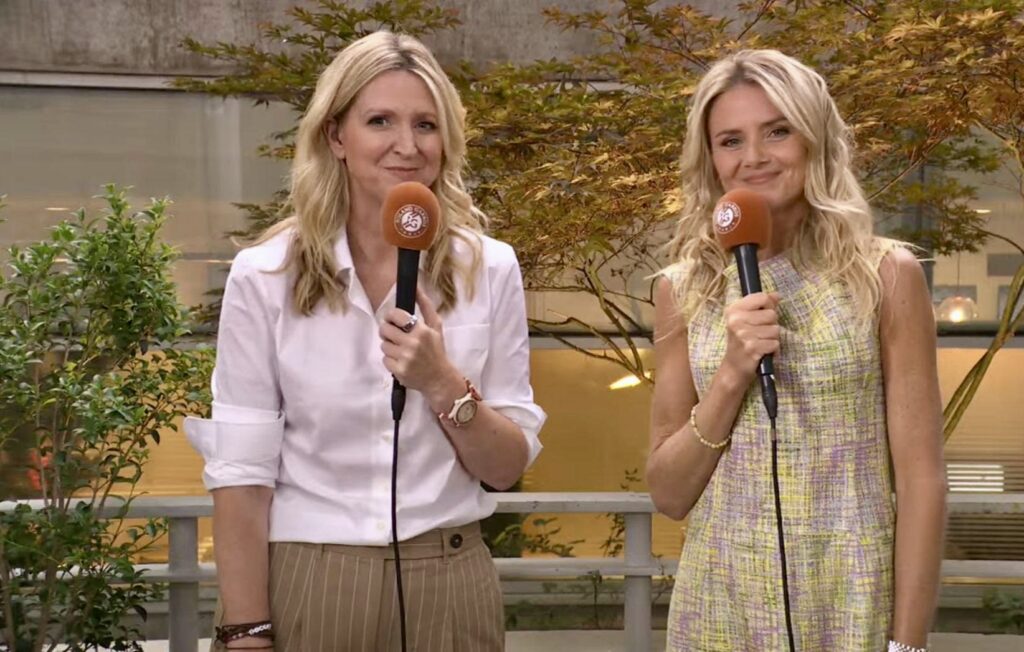
Gigi Salmon has always had a passion for sport. At university she ran the sports department of Oxford Brooke’s student radio station for three years. Her big breaks took her in different directions, from reporting and newsreading at TalkSport to presenting on Chelsea TV.
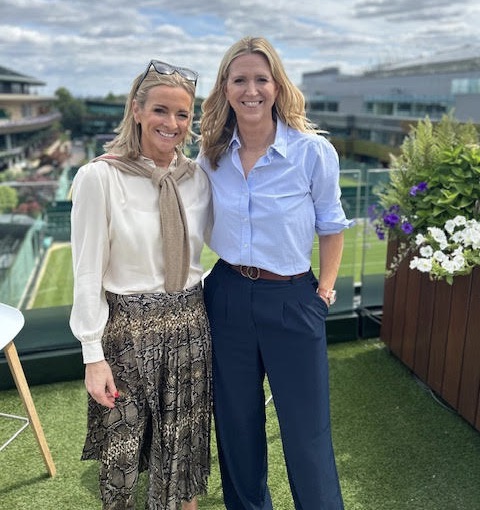
But she always longed to commentate on her real love, tennis. This started when she worked on the fledgling Radio Wimbledon at the All England Lawn Tennis Club, where her talent for commentating and presenting turned heads. So much so that she was grabbed by 5 Live, BBC Sport and Sky Sports. And she’s also worked for the Olympic Broadcast Services, across the 2016 Paralympic Games, 2020 Olympics and 2022 Winter Olympics, taking her from Rio and Tokyo to Beijing.
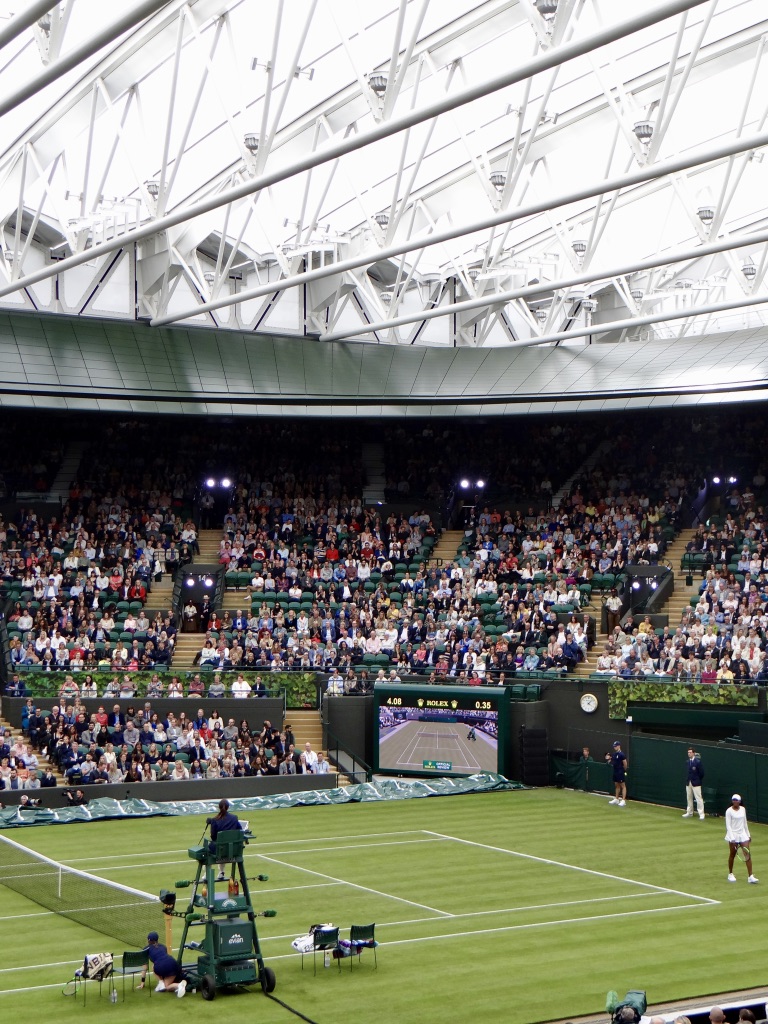
We spoke at Queen’s Club, during the HSBC women’s tennis tournament, sitting in a wind tunnel opposite the show court, the Andy Murray Arena.
If you’re a budding commentator or presenter, Gigi Salmon has some practical advice, so you might want to make notes… This is our conversation in full.
First of all, what’s the difference when you get to commentate on a home tournament like Wimbledon or Queens?
Gigi Salmon: I’ve never thought about the home tournament… possibly the expectations feel greater for Wimbledon compared to working at tennis tournaments throughout the year.
For those, you go and do what you do and you love it… and there’s a tennis match.
But at Wimbledon, it’s almost the external pressure.
Suddenly it’s a much bigger team and the expectations are bigger… and this is Wimbledon.
And in your mind, yes, it’s Wimbledon. But yes, it’s the Australian Open, and yes, it’s the US Open.
It does feel when you’re at home there’s obviously a bigger emphasis on the British players.
When you’re abroad, yes you’re focusing on them. But at Wimbledon it’s about the Brits and how are they going to do. And it depends who you’re working for, but with 5 Live the platform, you’re suddenly on the main station.
That brings its own pressure. It does feel different, but I’m not sure if that’s coming from me or if that’s coming from externally, the expectations… this is Wimbledon and it has to be very different.
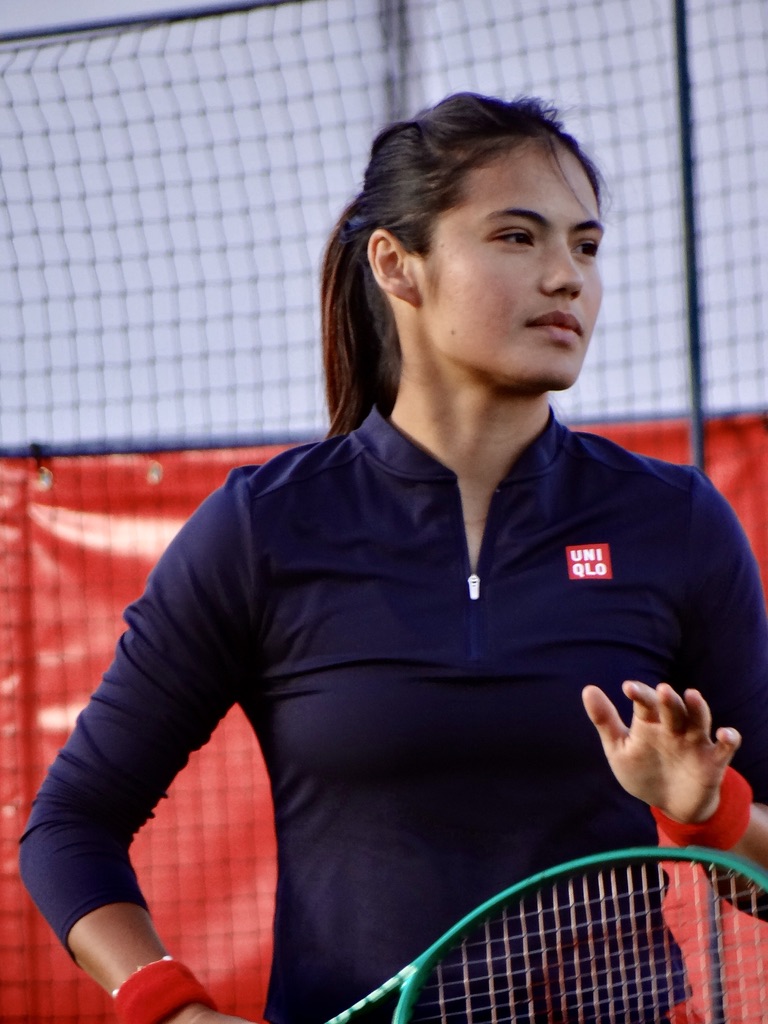
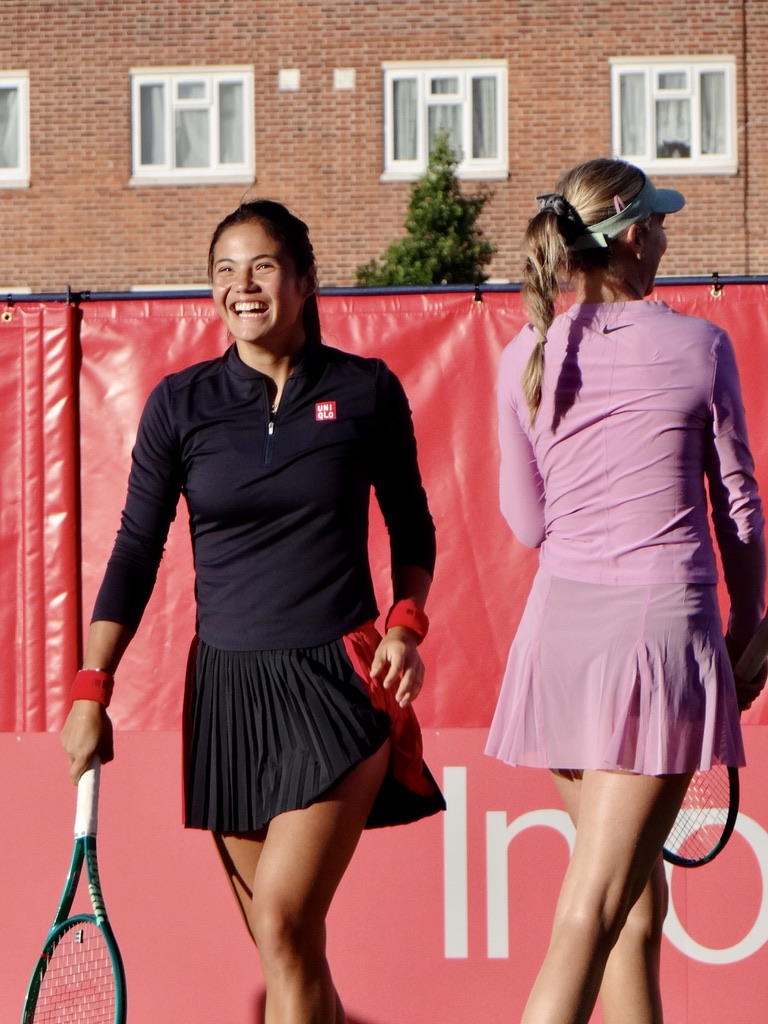
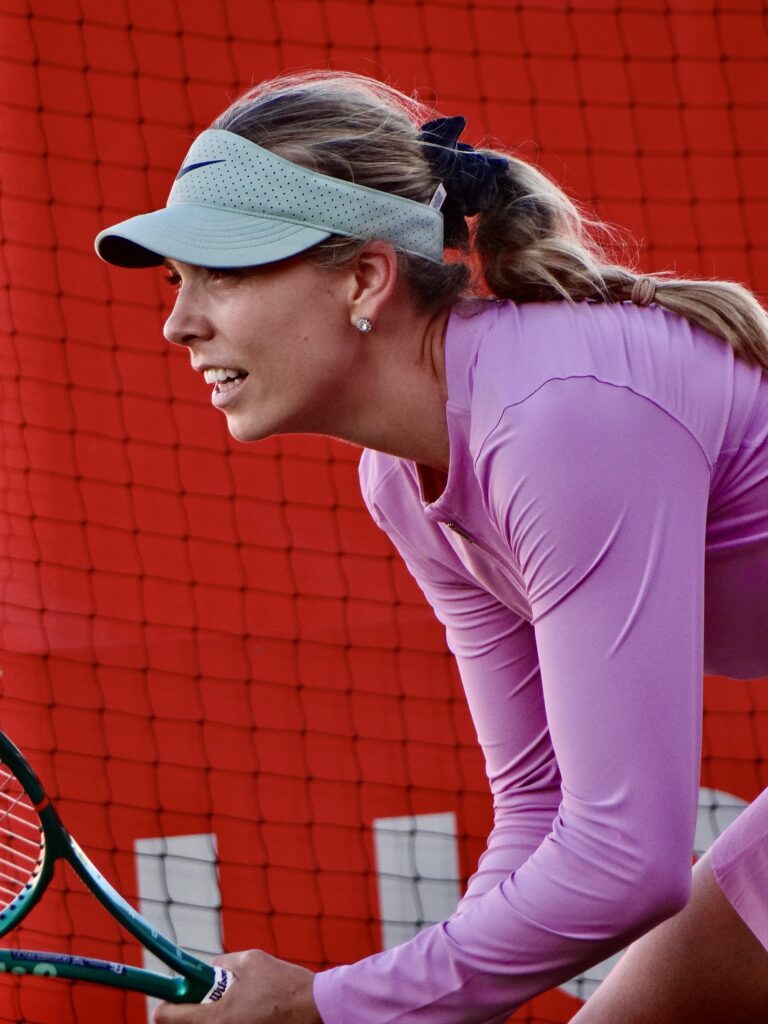
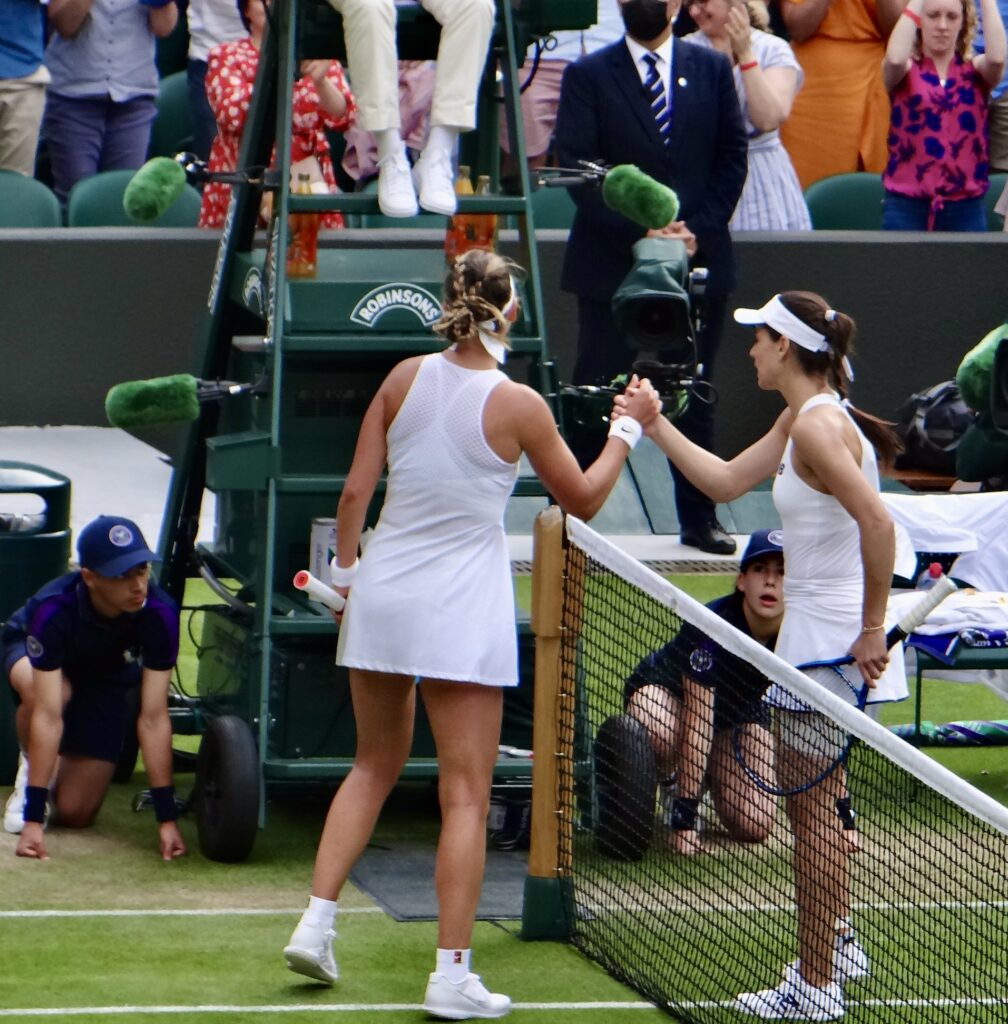
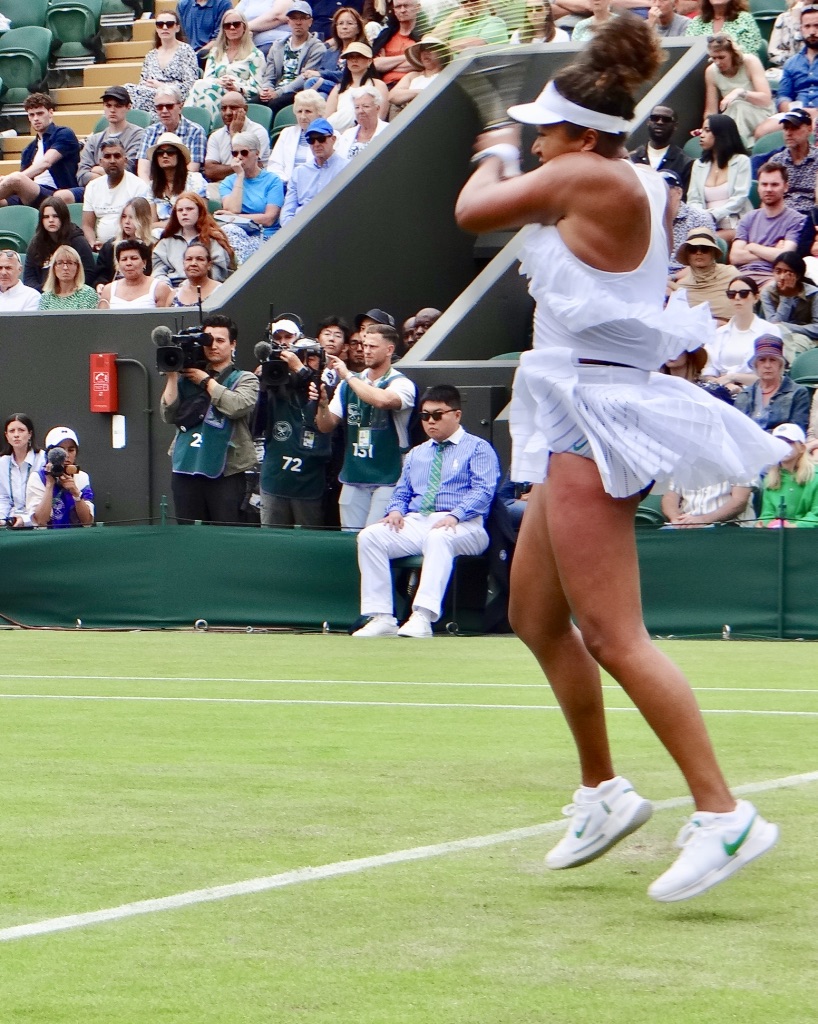
When it’s somebody like Emma Raducanu or Katie Boulter (above) playing, how hard is it for you to remain neutral?
I’m pretty good at remaining neutral. I think I always have been.
I let the pundit alongside me be like: ‘I’m unashamedly cheering for Emma’.
So it almost helps in the neutrality because they’ve gone that way.
I know I can lean a little bit that way, saying: we would love her to come through. It’d be great for her to get the results.
But I’m quite good at being at being neutral. For me it’s two players playing, and yes, I would love them to get that result, but luckily you bounce off who you’re next to and they’ll just be going for it and going crazy.
So the pundit is your alter ego in a way?
Yeah, a little bit.
When you’re sweltering at Roland Garros or the US or Aussie Open, what are the essential things you have with you?
Plus you’re presenting to camera sometimes, which brings another stress, doesn’t it?
Yeah, all the make-up melts and drips down your face.
Hair too?
Yes, hair. Suddenly, if you’re somewhere like Miami, it’s humid, suddenly you’re like this [mimes hair wildly out of control], you’re like: this is so awful.
You can feel the sweat dripping down your back and you just keep smiling going: no one can see it, it’s fine.
For radio, you have air conditioning and it’s freezing.
It might be 40 degrees outside, but about 15 in the commentary box.
The amount of times at the US Open, I put on a hoodie, I put on a scarf…
Then at the end of the match, my producer said: can you run down and interview X?
And I ran out dressed up for mid-winter.
And all these people in bikinis almost outside, look at me going: what’s wrong with her?
With the heat, you have to be very aware of the colours if you’re on camera.
What’s not going to show up?
We had one instance with Tim [Henman] at the US Open, he was wearing the wrong colour top to the point where during the VT Tim came out, Marion Bartoli came in, and we just didn’t mention it. Tim just stepped aside.
For radio, the interesting thing when you’re in a commentary box, is you have air conditioning and it’s freezing.
So it might be 40 degrees outside, but chances are it’s about 15 in the commentary box.
You need obviously a lot of water, whether you’re watching it or working on it.
But you need jumpers and scarves. The amount of times at the US Open, I put on a hoodie, I put on a scarf, I put on a hat once!
Then at the end of the match, my producer said quickly: can you run down and interview X?
And I ran out dressed up for mid-winter.
You’re hit by that hair dryer heat.
And all these people in bikinis almost outside, look at me going: what’s wrong with her?
So I would say you always have to have, if you’re working in a commentary box, a scarf.
People think I’m mad.
Wherever we are in the world, I have a jumper and scarf in my rucksack because it’s going to be cold.
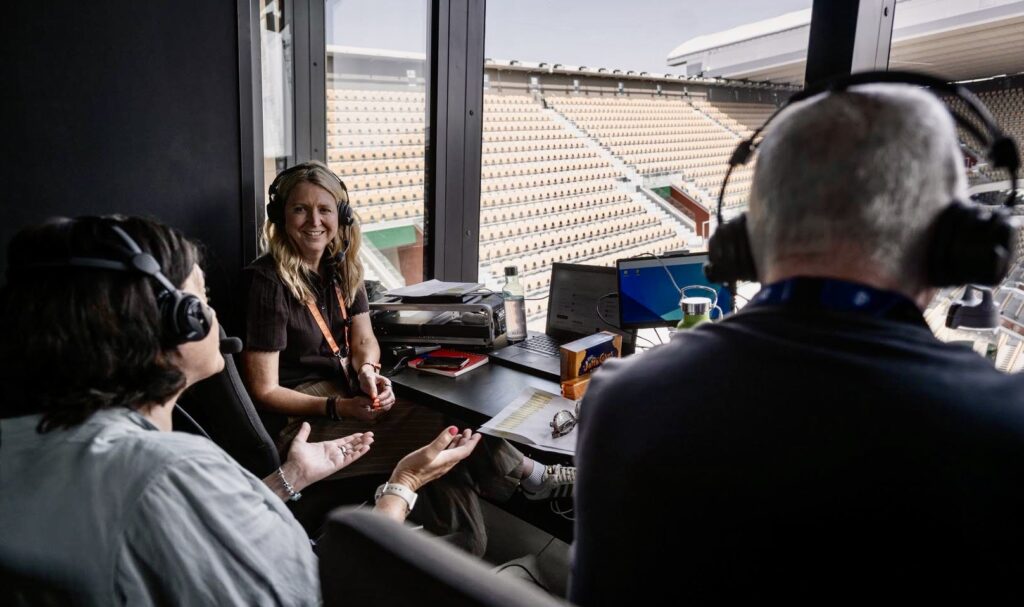
In terms of other kit, technical stuff, do you carry belt and braces stuff with you?
I’m not very technical and I’m very lucky that whether I’m doing commentary or presenting there’s a team who knows how things work.
I’m absolutely rubbish technically so there have been days obviously in the past where you have the kit and you set it up going to football matches and commentating.
You have all the kit, you’ve got to lock it in, you’ve got to dial it up.
And I became very good at that.
I knew exactly what did what.
But if something went wrong now, I’m probably not the best person to have in a technical crisis.
When I interviewed Emily Herbert about football commentary, the first items were things like chewing gum, so she doesn’t dry up.
Oh, that’s interesting.
No, I just don’t like chewing gum.
That’s probably very good.
There are, yes, certain things.
Towards the end of the year, I drink gallons of honey and camomile tea because it’s an antiseptic, it’s anti-inflammatory and it helps your voice.
If your voice goes, you can’t get it back.
It’s something I’ve learned over the years.
Once it’s gone, it’s gone.
Everyone’s like: what do I do?
There’s nothing you can do.
In Australia at the start of the year, I’d had flu before I went out.
A few of my friends were actually taking steroids they got from the doctor, which worked miraculously because everything loosens up.
There is nothing you can do, but yet, in terms of if you’re protecting your voice, then for me, it’s definitely honey, lemon, camomile.
I don’t really take lozenges as much, I just drink a lot of water.
Don’t have things like fizzy drinks, that tightens everything up.
Don’t have chocolate.
I’m giving my secrets!
That’s what we want, the secrets!
Definitely, towards the end of the year, I will always have the tea, the honey, camomile lift, because as I say once it’s gone it’s gone and the only thing that will get it back is rest… and also something that’s very good for vocal cords is pineapple.
Opera singers take pineapple because it lubricates the vocal cords. I try to eat a lot of pineapple, but normally you only do these things when it starts to go and then you’re like… arghhh!
Because especially in radio, you’re projecting and there’s so much stress put on your voice.
But I think it’s whatever works and you feel comfortable with, but certainly lozenges are good to have with you as well.
That’s really good tips just generally.
So how much do you prep for each match in time and depth because sometimes you could be doing multiple games on one day?
I over-prep and everyone will tell you that I over-prep and I use pen and paper.
I’m not a computer person.
I look like a child.
If you look at my notes, it’s the same as yours, except I use multi-colours.
So names in one colour, and then another colour just so things stand out.
I do a lot of prep. So it depends; Sky and 5 Live are two very different roles because for Sky I might have 32 matches to keep across.
So I’ll do a basic on every single match, I’ll do a head-to-head, ages, where they’ve been to before at that tournament, the best they’ve done, who they’ll face in the next round.
I just like to have a basic on everyone.
I like to get underneath a little bit and show the personality of the person because I want to bring people into tennis and I think a way of doing that is they’re humans and they’ve got silly quirks and they’ve got a dog called Sugar – which one of them does.
Then if I’m doing specific matches, I will spend probably about an hour on each match.
And that’s not just results.
I like to find out about the person.
I like the little personal facts, because a lot of people watching or listening will know when the forehand’s better than the backhand and they’ve got a really good serve.
I like to get underneath a little bit and show the personality of the person because I want to bring people into tennis and I think a way of doing that is they’re humans and they’ve got silly quirks and they’ve got a dog called Sugar – which one of them does.
They’ve always got a dog!
There’s creches at tournaments and now there’s always puppy areas as well.
So many dogs… but I like to find out, so it takes me a little longer, but I’d say probably about if 5 Live at Wimbledon say: right this is your commentary match, I’ll probably spend about an hour and a half doing notes on them.
When did your love affair with tennis start? Was it because you were playing?
Some people do think I played to a very basic level.
I’ve always loved sport.
From the age of 12, I wanted to do what I’m doing now.
I thought it would be in written, and newspapers.
I’ve always loved sport – and football and tennis were the two threaded through my career, and I started in football.
But I always loved tennis from watching it when I was young.
I made a demo on a cassette tape and I sent it to Wimbledon Radio as it was then.
And Steve Butterick, who was the head of Wimbledon Radio, took a chance on me and I’d never done it professionally before.
He just heard my tape.
He said years later he nearly didn’t give me the job because my voice was too deep and he didn’t think that would resonate on big points.
So I’m really glad he did.
It’s just been a love of watching it growing up, always wanting to be in sports journalism but I didn’t know which medium, and that’s developed in terms of written to radio to television.
But it’s a combination.
It must be complicated with the World Cup being on at the same time that you’re trying to follow the football as well as the tennis… or has that gone into the background?
Football’s gone back to being more of a kind of hobby.
For 20 years at Chelsea, it was my life.
I analysed everything.
Football was absolute.
Now my children who are 10 are obsessed with football.
So they’re carrying that mantle and telling me: did you know that that guy for South Africa plays for this… and did you know?
But with tennis, I’m saturated in it and I feel very lucky to have the opportunity now to focus on one sport, and in the case of Sky, build the channel to bring new people into tennis, to give the people who love it what they love, but also introduce it to new people who maybe didn’t think they could love it as we do.
So did you study sports journalism?
I did a degree in history of art, and publishing.
I didn’t want to do a journalism degree because I felt too many people were doing it, I wouldn’t have the opportunity, but publishing is very similar in terms of the writing, the editorial side.
So I did that, and history of art, I really loved the history of art trips.
If you’re doing geography, you’re going to Wales; doing history of art, you’re going to Madrid.
But I worked at the university, at Oxford Brookes.
I ran the sports department of the student radio station for three years.
So I kept that side and probably did more of that than my degree, but that’s fine.
I was working alongside it and never really took myself away from it.
It sounds like you did quite a bit of football stuff before you went into this?
It was all about football.
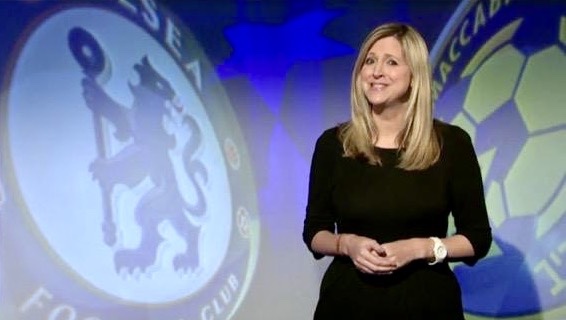
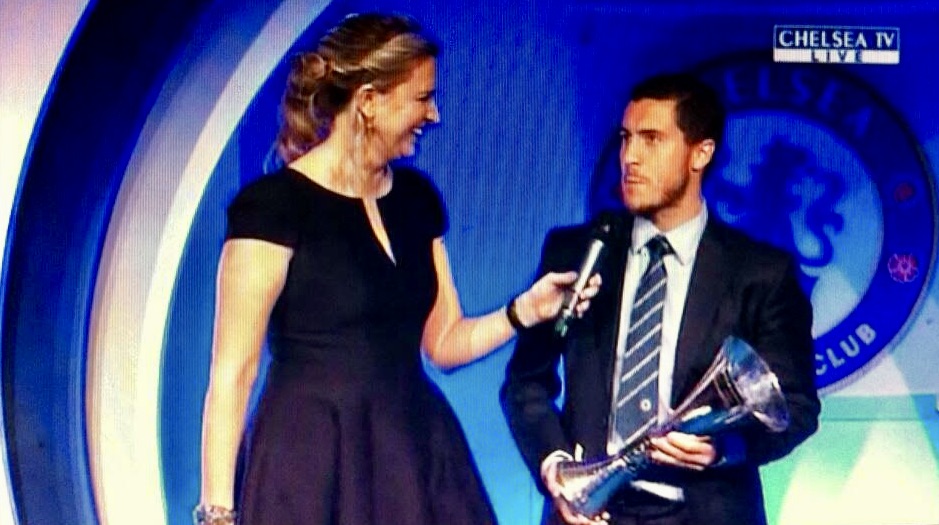
I got the opportunity to work at Chelsea Football Club and presented their TV channel through all the eras and the Champions League, Premier League, which was phenomenal.
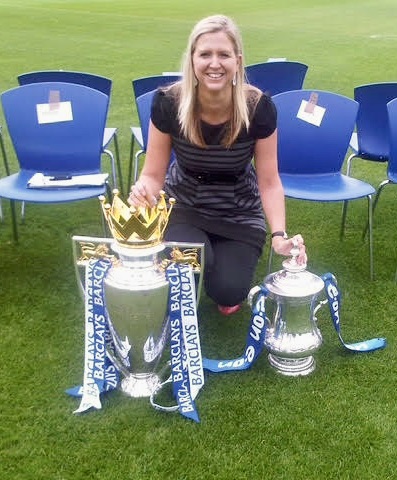
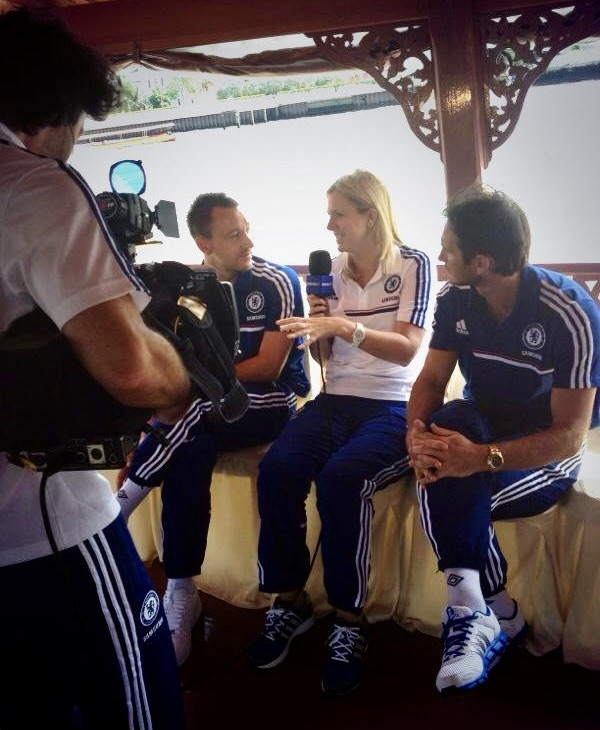
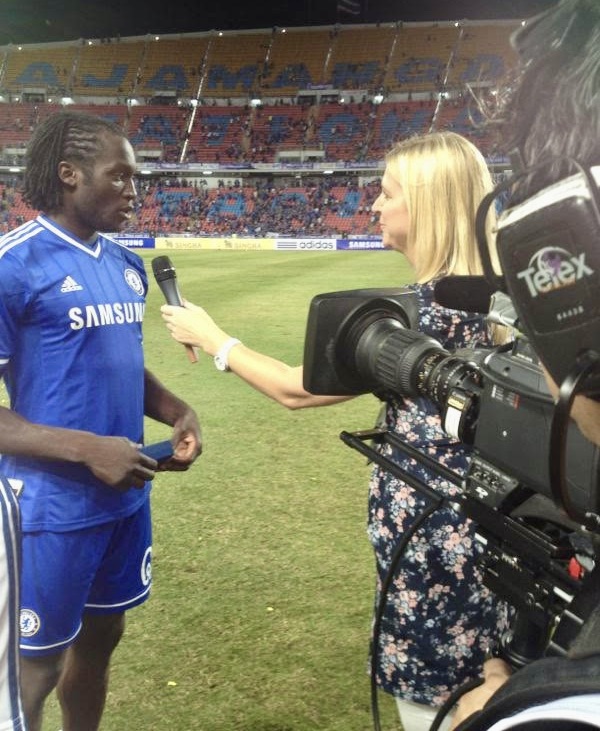
But I always loved tennis and that’s when I made that demo tape, got the opportunity at Wimbledon.
I was heard by a producer at 5 Live who met me on one of Chelsea’s pre-season summer tours… and asked: would I come and do a couple of events, a screen test, a demo at the Tour Finals.
I remember it was David Ferrer against Rafael Nadal that lasted about four and a half minutes.
I’d made all my notes in two hours.
At the Tour Finals it’s like tennis in a nightclub.
It’s very dark.
So I go into the commentary box, I’m very nervous.
I think: it’s the BBC and I’ve got my chance.
I have all my notes, can’t see a thing. Pitch black and I’m thinking: oh!
And I know it’s like a crutch, isn’t it? You know it, but it’s there.
But I remember it being pitch black, then the match being over in about 35 minutes, like 6-1, 6-0.
And I was like: not sure how that went!
So that was my first opportunity with 5 Live, then they offered me more and it gradually took over.
So it’s a mixture of luck and persistence, basically?
Yeah, hard work and persistence, I’d probably say.
I’m not sure the luck was there.
I suppose the timing in terms of Wimbledon Radio starting…
Yeah, and I think it was just an absolute passion.
This is what I wanted to do, I didn’t want to do anything else and I absolutely loved it.
You miss so many things in your life to keep pursuing this, but I just really wanted it and I worked really hard and went for the opportunities. And they came along and then you hope to make the best of it and it tracks from there really.
The commentators I’ve interviewed before have been doing team sports.
Obviously you’re now mainly doing solo, with a few doubles thrown in. So what is the difference?
I think there’s quite a big difference in commentating.
It’s interesting, I never commentated on football.
Everyone told me to, but I never wanted to.
So my football was all presenting.
And tennis is obviously both.
I love the fact you get lost in a world and for 90 minutes or three hours or 34 minutes – you’re just lost and it’s just you on your own or you with someone and you’re telling a story, you’re just painting a picture for someone that can’t see it.
In terms of what the difference is, for me commentary is painting a picture. I know television is slightly different, you say less, you have to fill in the gap, you say what they can’t see.
Radio for me – whether it’s a team or individual – is creating a story, weaving something, bringing people in.
I probably talk as much in an individual as you do in a team sport – but I think it’s just telling the story.
I love the fact you get lost in a world and for 90 minutes or three hours or 34 minutes – working padel as well – you’re just lost and it’s just you on your own or you with someone and you’re telling a story, you’re just painting a picture for someone that can’t see it.
There’s lots more women commentators now in all sorts of sports.
Can you look back and see a tipping point – or maybe a pioneer – for when that happened?
I don’t know about a pioneer.
People always ask me who I just looked up to and was there one person.
I just think it was sport and people in general that I focused on.
I remember at the time I was doing it that there weren’t many, especially in football, it was sort of tokenism.
That was a time before they had women commentating in football, which is why they were trying to push me into it.
But I didn’t want to do it and I always said: I’m not just going to do anything.
I wanted to do something I had a passion for, which was tennis commentary.
I don’t remember an exact tipping point, but I just remember noticing when I’d go to matches with Chelsea, there’d be more women pitchside and more women in the press room.
Still in tennis, there’s not an awful lot of female journalists when you look at press conferences.
Was there a tipping point?
There became a phase when ‘just get a woman in the role’.
And I don’t agree with that in the sense that I think don’t ‘just get a man in the role’.
I think it should be the best person for the job.
Wonderfully, more and more women wanted to do it and they probably saw other people in it and thought: there’s an opportunity and I can do it.
Some for the right reasons, some for the wrong reasons, but that’s the same as men, I think.
I don’t remember an exact tipping point, but I just remember noticing when I’d go to matches with Chelsea, there’d be more women pitchside and more women in the press room.
Still in tennis, there’s not an awful lot of female journalists when you look at press conferences.
But I think they just started to get the confidence, because they saw other people doing it.
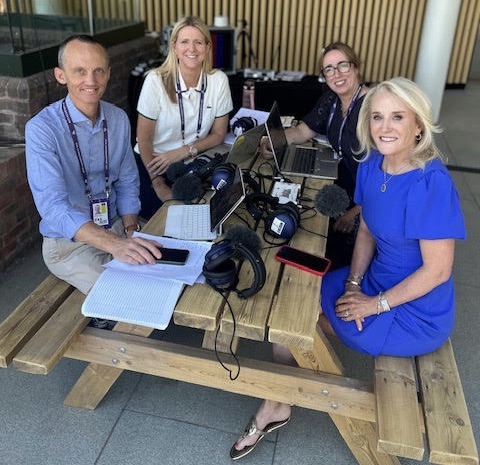
I spent yesterday with Rosanna Tennant, who was the F1 reporter for 5 Live.
We’d never met before, she just had a second child.
I’ve got a couple who are a bit older.
It was just nice speaking to someone who’s in another sport that’s very male-dominated, and how she’s forged a path and wants to help others.
I think we’re all the same.
If we can help people, great.
As long as they’re coming in for the right reasons.
That’s one of the reasons we do this so people can see they might be able to emulate you.
So in your career so far, what’s the proudest achievement? It doesn’t have to be a trophy, could just be something you’ve done or achieved.
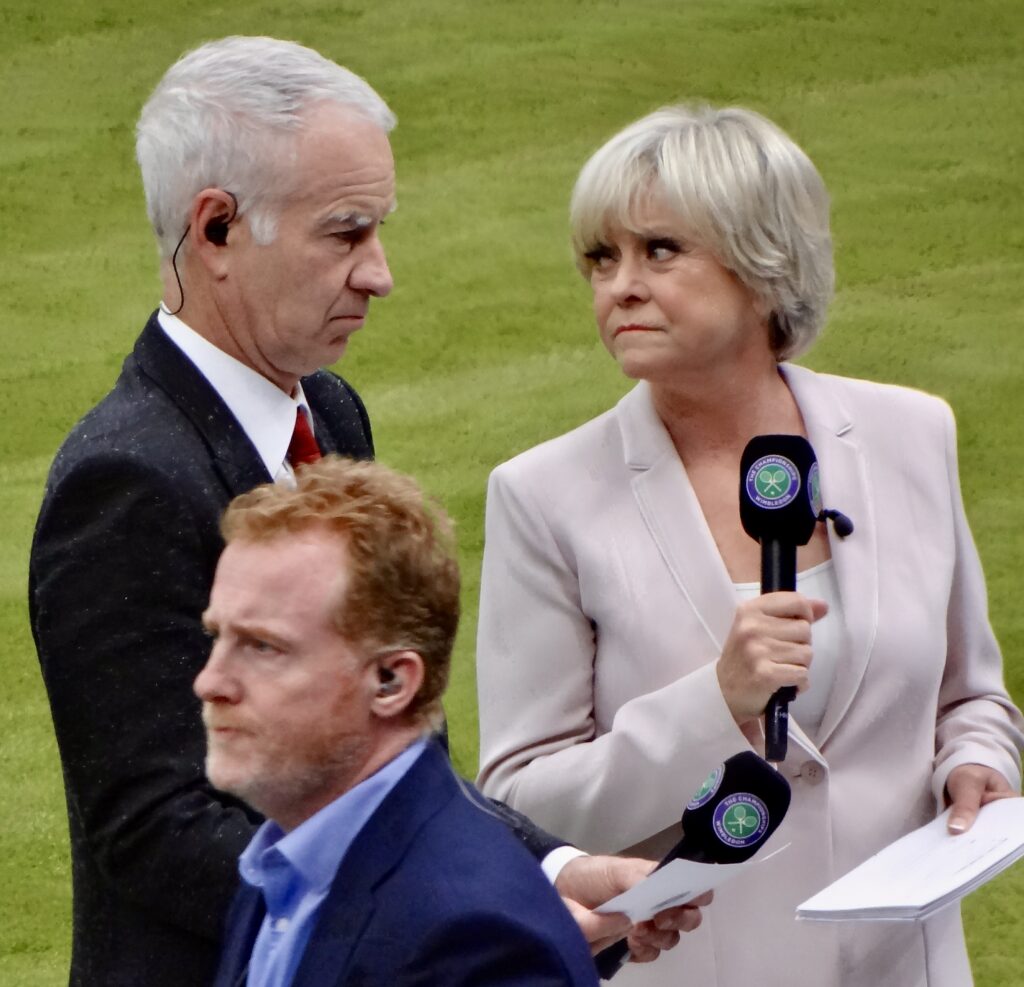
One moment that stands out is when I was doing Wimbledon commentary on BBC TV and I was on Centre court and it was quarter-finals, I was alongside Tracy Austin and John Mac [McEnroe] and I thought: oh, dear God.
Radio is brilliant, but suddenly I’m in this box and John McEnroe was a bit late because he’d been doing TV. And I think I had Sue Barker throwing to me and I thought: I genuinely can’t speak.
And they said Sue’s gonna throw to you. I was like: oh shoot, there’s Tracy and there’s John – who can be a bit prickly – and I thought: God, and there’s Centre Court!
That was a really big moment. I thought: wow, all that hard work and I’m sitting here.
When I was doing Wimbledon commentary on BBC TV and I was on Centre Court and it was quarter-finals, I was alongside Tracy Austin and John Mac [McEnroe] and I thought: oh, dear God.
That was a really big moment. I thought: wow, all that hard work and I’m sitting here.
I think also first presenting the BBC’s Eastbourne coverage.
With Chelsea it’s being part of the channel and presenting the shows when they won the Champions League in Munich and Premier League titles.
Then with Sky, being given the responsibility and the trust of starting a channel dedicated to the sport I love is amazing.
For someone to say: right, this is what we’re going to do, I want you to be part of it and build a team and grow this sport, that’s been an absolute honour.
A lot of people, because we’re so insular, only watch Wimbledon and they don’t think anything else has happened. So do you feel you have to slip in changes to the rules – like the last tie-break going to 10 rather than 7 – when you’re commentating?
Not so much that, but when you’re on 5 Live, you have to remember that your audience could be someone who switched on and doesn’t like tennis.
I think it depends what platform.
So Sky, not as much, because I think people watching Sky Sports Tennis love tennis, but every now and then I might say: okay, Tim, we’ve got people joining us all the time, so let’s just run through how this works. So I’ll always be aware that people are coming in.
If we’re on 5 Sports Extra, people have come to find us, but on 5 Live I’m very aware that it’s a general audience.
People have just got it on in the kitchen.
So I’m a bit more: it’s the best of this, they’ve done this before, this is what’s going to happen, and this is where we go to with this.
I’m a little bit more marking and signposting things on 5 Live, and sometimes we’re on Sky Sports Main Event, which is just in a pub somewhere.
I’ll always be conscious if it’s something a bit complicated to give the backstory or say: people are joining us all the time, why is it so special that we are here?
Which peers or people who came before do you admire?
It’s interesting, I get asked this a lot, but I never really looked at someone and wanted to replicate or I would just take things from everyone.
There’s a guy called Jon Driscoll, a football commentator.
We worked together at TalkSport and he was a massive influence earlier in my career. He might not be one of the biggest names, but he gave me a lot of advice in the early days.
And in tennis, there’s a guy called Nick Lester and we are very good friends.
We started Wimbledon together, and he’s someone I admire, respect and look up to.
It’s very important when you’re commentating to be yourself, and not be someone else.
It’s important your passion and personality come through.
So, just listen and look to lots of different people.
But I can say that for lots of people. Was there one person? Probably not.
It’s very important when you’re commentating to be yourself, and not be someone else.
It’s important your passion and personality come through.
So, just listen and look to lots of different people.
Then you pick up it and think: I don’t want to do that or I’d like to do that.
Do you prefer doing radio or TV. Because they’re very different, aren’t they?
Yeah, I think that’s why I love both.
I love the fact that on radio, you don’t need to worry about hair and make-up.
And you can go in in your tracksuit with your hair tied back, although there are webcams now.
Yeah, that’s the trouble, isn’t it?
Yeah. It’s a nightmare.
But I love radio, I like the fact that you’re describing.
As long as your voice sounds okay, you can paint the picture and I think it’s wonderful that people get drawn into what you’re describing.
But then I love TV for everything that comes with TV, that we can bring people in and they get to know Laura [Robson], Tim and I, and follow us through the year.
I love the fact that I’m still allowed to do a blend of both because they’re so different, but I love them equally for different reasons.
You mentioned being told your voice was too deep, whereas a lot of people now think for women commentators it’s better to have a slightly lower timbre.
And what about things like pacing? Do you get advice on that?
No, I think they’ve just given up on me.
I remember Rob Nothman, a wonderful man, someone I’ve taken a lot from when I started football reporting, he’d come with you to guide you.
And I heard a story that someone went to him for some training to do tennis commentary.
They said: I’d like to commentate like Gigi.
And he said: I can’t do that.
She just does her own thing!
In the early days with football commentary, Rob was brilliant on what they’re looking for in a football report and how it should be.
In terms of the style, I think they thought… maybe I’m a lost cause, I think they just let me go.
Is there more pressure on female commentators just because of the way society is?
I’d like to think these days, if you’re good enough it comes through and that’s male or female. You can be rubbish as a man or as a woman, but I don’t think as much anymore.
I think they appreciate that the people there are there for the right reason.
So I don’t think any woman should feel like there would be.
Early in your career, did you get any good constructive criticism?
I’m old and I can’t remember!
Or advice?
The advice is just to be you, because I think in the early days there’s lots of pressure.
When I was looking at television there were things like: maybe you don’t fit or you don’t look right, which can be quite hurtful when you’re young.
When I got into radio there was initially: we speak like this and this is how you sound. And I thought I’m just going to be me, and hopefully that works.
And if it doesn’t, I’m not sure what I can do about it, because I don’t want to sound like anyone else.
When I was looking at television there were things like: maybe you don’t fit or you don’t look right, which can be quite hurtful when you’re young.
I think the advice I’d give to anybody is: just be yourself and let your personality come through, and let people engage with you and feel like they know you.
I believe there is an art to commentary. And what do you think it is in your sphere, the art of tennis commentary?
Tennis commentary is very different to other sports because everyone does it very differently.
You listen to football commentary, it is the same.
Maybe someone speaks a little bit more, a little bit less, or they focus a little bit more outside of it.
I think with tennis, everyone does it very differently.
For me, I say what I see.
And it doesn’t work for everyone.
I do every shot of every point.
A couple of times in the past, they’ve said: maybe you don’t need to do every shot, but I’ve always gone back to it.
The art of tennis, I think it’s preparing.
It’s knowing your sport, knowing your subjects, then allowing yourself to block everything else out.
Have blinkers on and just get lost.
The art is you’re bringing something to life for someone who can’t see it for whatever reason.
and the art for me, I think is preparation.
I think it’s important to know your sport, be prepared, and ideally have a passion for that sport because that will always make commentary easier because you have a passion for it and you really want to see it come to life.
No-one has really taught me how to commentate.
I just say what I see and it’s developed from there.
I don’t know if that’s a good or bad template!
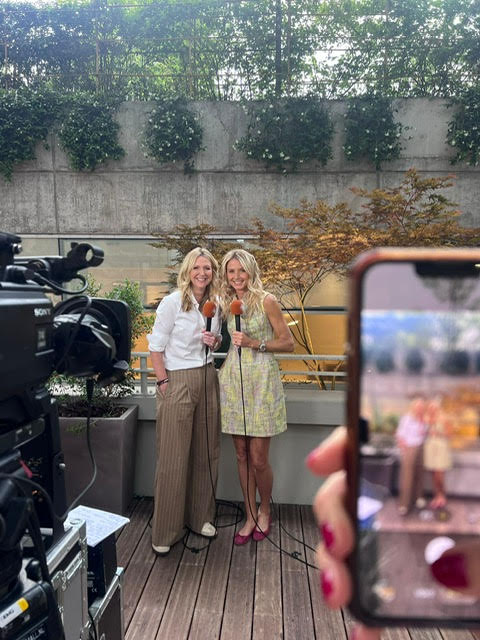
How can we get more women into this kind of role?
First, they’ve got to want to do it.
Again, don’t be saying: right, we’re going to make you a tennis commentator.
Hopefully, they feel they can approach people like myself or others.
People always say: how do I get into it?
I’m not quite sure.
It’s quite hard.
It can be a really long path.
It can be luck.
It can be an opportunity that comes up.
I think if you’ve got a passion for it and you love it, it will happen.
I’m a true believer that if you work hard enough for something you really want, it will.
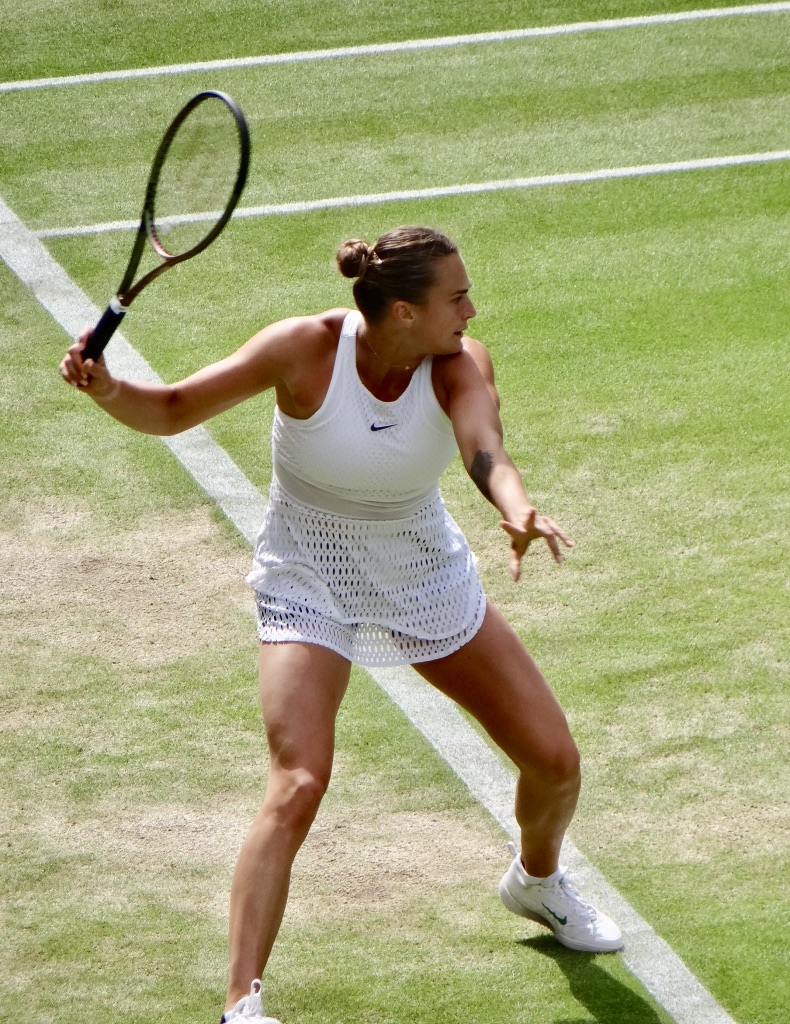
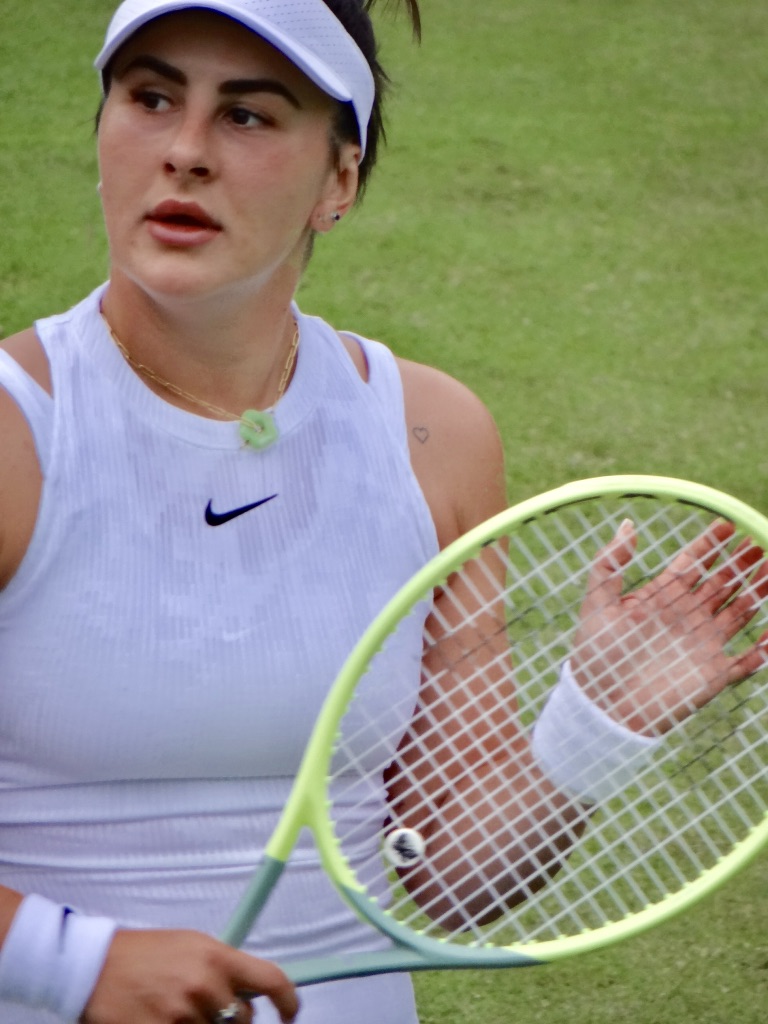
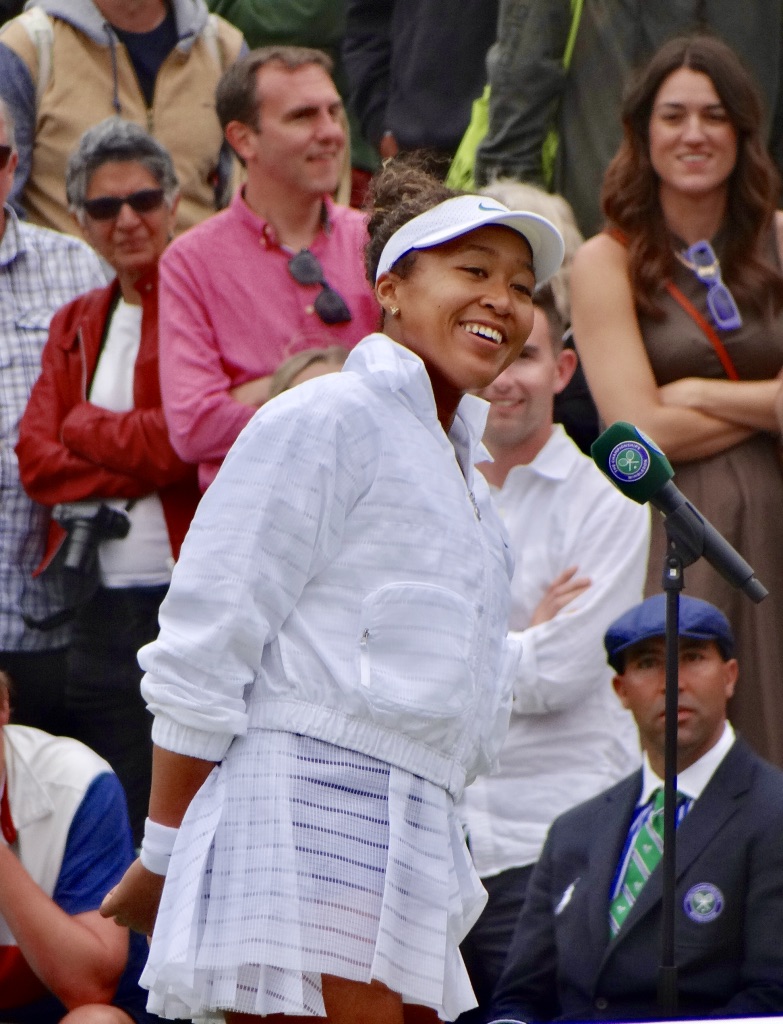
I’m not talking about the visualising that Bianca Andreescu (above, right) did with that US Open cheque.
She said: I visualised it. Then it came to me.
People always say: how do I get into it?
I’m not quite sure.
It’s quite hard.
It can be a really long path.
It can be luck.
It can be an opportunity that comes up.
I think if you’ve got a passion for it and you love it, it will happen.
I was like: wow, I think about a week after I was visualising things.
Like: is that going to happen?
I hope they feel they can reach out to us on social media, whoever they follow, and ask for help.
It’s tricky to get into it, but if they want to, local radio, not so much local papers any more, internships at places like the BBC, find a way in as a producer or a runner, then tell them what you want to do.
Sky give a lot of opportunities to people who come in and say: I’m in as a producer, but I actually want to present or report.
So it’s finding your way into the area you want to be in, then branching out from there.
What makes you love tennis so much?
I just love it.
I don’t even know why.
I love the sport.
I love the sound of the balls.
I just absolutely love the sport.
I love everything about it, whether it’s grass, clay, hardcourts.
I like the stories of the people.
And I love delving deep into what they go through.
I think it’s a very punishing sport, a very brutal sport.
I just love the art of it and I love being able to try and bring it to life.
I’m not a professional tennis player.
I play it to a very average level.
Some of my best friends play it really, really well.
I just absolutely love the sport.
I love everything about it, whether it’s grass, clay, hardcourts.
I like the stories of the people.
There is so much more to these people than just a forehand, backhand and serve.
And I love delving deep into what they go through.
I think it’s a very punishing sport, a very brutal sport.
I just love the art of it and I love being able to try and bring it to life.
It never stops, which is quite tough, but there isn’t anything I don’t like about it.
One last thing, because you’ve done a lot of presenting, what’s your favourite tennis interview?
There have been a lot.
In recent years, I’ve got to know Iga Swiatek really well, and she’s a wonderful person, and it’s great to dig below those layers.
It’s not just a person who looks down under a baseball cap.
There have been so many wonderful people I’ve had the pleasure of speaking to.
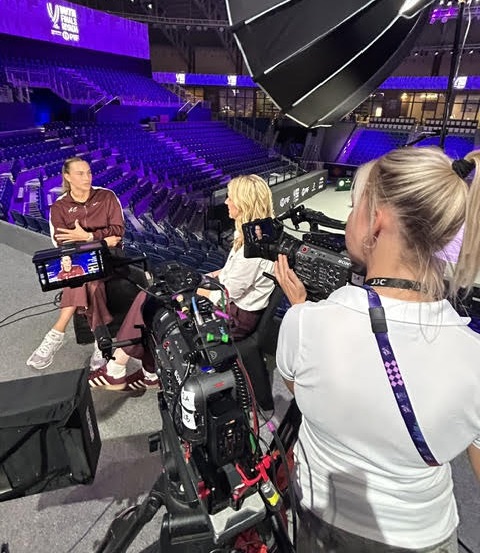
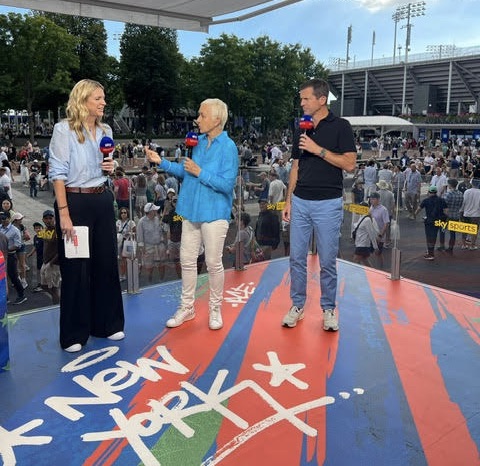
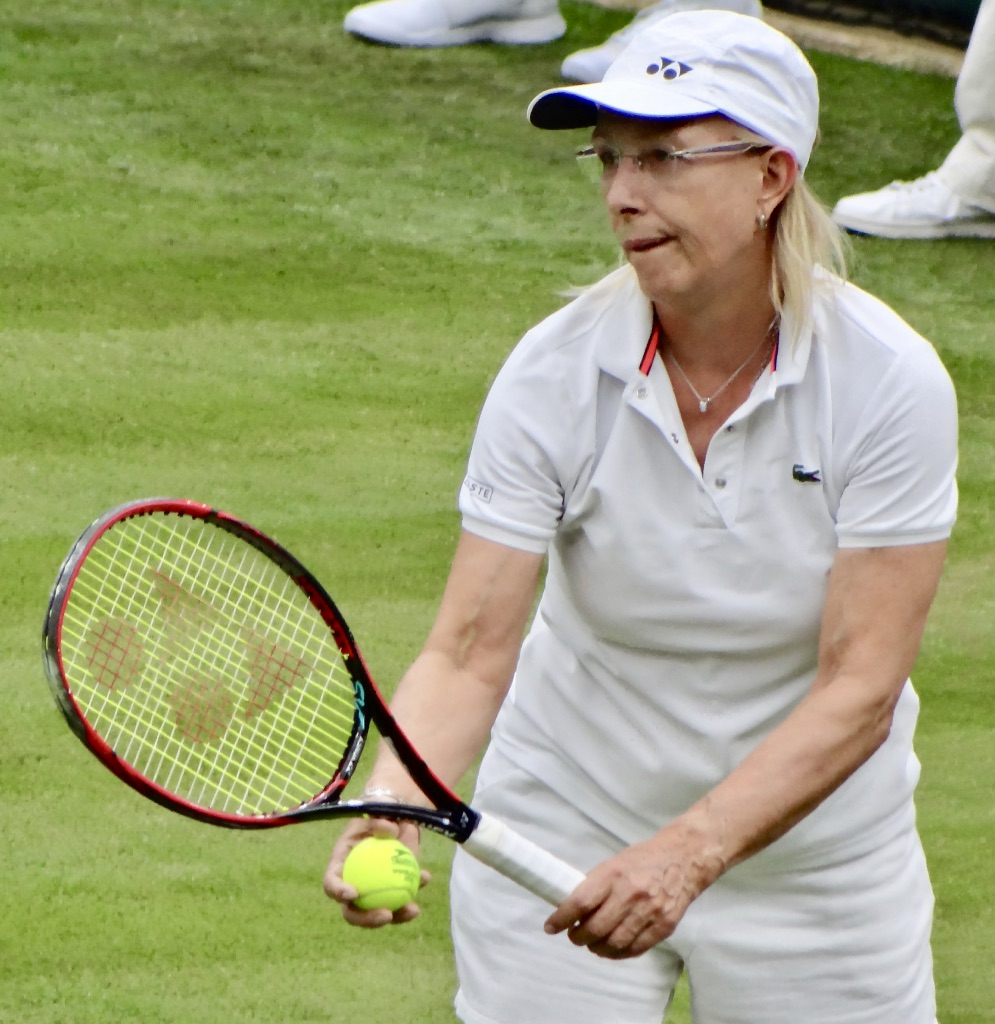
But I think I would say Martina Navratilova (above, with Gigi Salmon and Tim Henman).
When I started at Sky, before the channel launched, I was able to sit down with her for an hour.
I’d never met her, and I’ve always been quite scared of her.
I remember we sat down and I’d memorised all my questions.
I thought: I don’t want to look at anything.
I had nothing there.
I thought, we’re just going.
And we did an hour together.
It was amazing.
And at the end, she said: thank you for that.
She said: it’s so refreshing for someone not to have notes.
And it really was a wonderful feeling to be with someone who has achieved so much and we talked about everything from her beginnings and where she came from, and outside of tennis.
I’m very lucky to have got to interview so many people, but I think spending that hour with Martina and getting to know her was really special.
Photos: Gigi Salmon, Helen M Jerome